Evaluating Camping Prices Near You: Essential Factors That Shape Costs and What You Need to Know
Camping prices are a blend of your base accommodation, the amenities available on-site, the time of year, and the specific features of your chosen spot. Knowing these elements helps you get a good idea of what a trip will cost you nearby. This guide breaks down what influences the pricing for the best camping spots around, gives you a look at typical nightly costs for RV sites, tent spots, and cabins, and shows how amenities and timing can affect the final bill. You’ll learn a straightforward way to compare different sites—separating the basic site fees from extras like hookups, water park access, and planned activities—so you can book smarter and avoid any surprises. To make these ideas clearer, we’ll use Walnut Hills Family Campground (part of GatherGrounds Resorts) in Durand, Michigan, as a real-world example to illustrate price differences and booking choices based on amenities and site types. This guide is organized into five practical sections: the main things that drive prices, typical nightly cost ranges, how seasonal demand plays a role, the value and fees associated with amenities, and tips for saving money when you book your camping stays.
What Are the Main Factors Influencing Campground Rates Near You?
The primary factors that influence campground pricing are the foundational elements you should consider before booking: the type of accommodation, the amenities offered, the location, the season, and the specific features of the site itself. These all determine a site’s base rate and any premium add-ons. Think of each factor as a connected set: Accommodation type → dictates → infrastructure costs; Amenities → shape → perceived value and operational expenses; Location → impacts → demand and premium pricing. Understanding these connections will help you compare campgrounds by pinpointing exactly what’s driving the price differences.
Here’s a look at the main factors and how they typically affect both price and your overall experience.
- Accommodation type: Whether you choose an RV, tent, or cabin sets the baseline nightly rate, reflecting the infrastructure and upkeep involved.
- Amenities: Facilities like hookups, showers, and water parks add to operational costs and often increase site prices.
- Location and site features: Spots with waterfront views, extra privacy, or larger pads usually come with a premium due to higher demand and maintenance needs.
How Does Accommodation Type Affect Camping Prices?
The type of accommodation you select dictates the technical and service requirements that lead to cost variations: RV sites need hookups and sturdy pads, tent sites can range from very basic to more developed, and cabins involve furnishing and cleaning services.
An RV site equipped with full hookups requires connections for water, electricity, and sewer, which increases the costs for infrastructure and ongoing maintenance, and consequently, the nightly rates.
Primitive tent sites, with minimal infrastructure, are generally the most affordable option. Conversely, deluxe cabin rentals include amenities like linens, locks, and housekeeping, which naturally raise the per-night price.
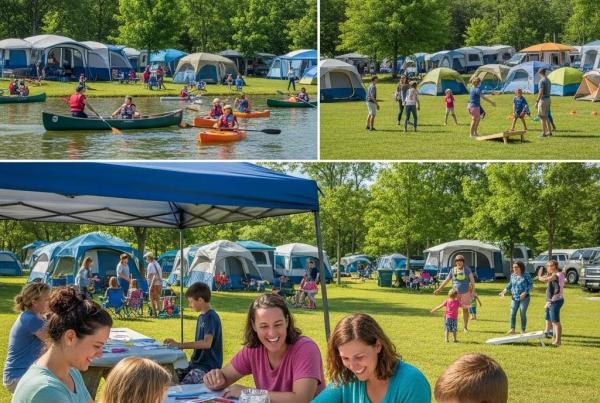
Walnut Hills Family Campground offers RV sites, tent sites, and cabins, providing a clear illustration of how different accommodation categories (such as RV sites with full hookups, primitive tent sites, and deluxe cabins) correspond to different price levels.
In What Ways Do Amenities Impact Campground Fees?

Amenities enhance the perceived value of a campground and often influence operational expenses, which are then reflected in guest pricing. Included amenities tend to raise the base price, while high-cost features might be offered separately as add-ons.
Features like updated bathrooms and showers, an on-site store, and playgrounds offer consistent value and are usually part of the overall site fee. However, amenities with significant operational costs—such as a Wibit water park—might be included for certain guests or require separate tickets.
The decision to include an amenity in the base price or charge for it separately is based on its maintenance, staffing, and liability costs, which campgrounds pass on to guests in various ways.
Using Walnut Hills’ Wibit water park and swimming lake as an example helps clarify how different access models work for various facilities.
How Much Does Camping Typically Cost Per Night?
Nightly rates can vary based on your accommodation choice and local market conditions. This basic comparison is helpful for quick budgeting and for answering common questions. The general price ranges give you a good idea of what to expect, depending on the features of your site and whether it includes hookups.
Here’s a practical comparison table that outlines typical attributes and nightly price ranges for different accommodation types, helping you estimate costs quickly.
Different types of accommodations come with predictable cost drivers and a range of nightly prices.
This table illustrates how different site types (like primitive tent sites versus full-hookup RV sites) fall into specific price brackets. Local demand and the time of year can cause these ranges to shift higher or lower.
What Is the Average Price for RV Sites, Tent Sites, and Cabin Rentals?
Average prices are a combination of the accommodation type, local market demand, and seasonal factors. RV sites typically fall into a mid-range price point with partial hookups, moving higher with full hookups. Tent sites are generally the most budget-friendly unless they offer waterfront or other premium features. Cabin prices can vary significantly based on their amenities and size.
Regional influences, such as demand patterns in Michigan and specific amenities offered by a campground, will determine where a particular site falls within the listed price ranges. Walnut Hills Family Campground, with its variety of RV sites, tent sites, and cabins, exemplifies how a single property can span multiple price points depending on site features and guest services.
How Do Hookup Options and Site Features Influence Nightly Rates?
The different levels of hookups create a clear pricing structure: starting from primitive (no hookups), moving to partial hookups, then full hookups, and finally, premium charges for waterfront or larger sites. Each step up adds a predictable increase based on the infrastructure costs involved.
Full hookups often add 20–60% to the cost of a primitive site due to the expenses of installation, water usage, and sewer management. Additional features like concrete pads, extra-wide sites, or premium views can further increase the rates. When you’re comparing sites, it’s helpful to separate the base site fees from any listed add-ons to get a true picture of the nightly cost before taxes and activity fees.
How Do Seasonal and Demand-Based Factors Change Camping Prices?

Seasonality and demand dictate when dynamic pricing and extra charges come into play. Peak summer periods and holiday weekends typically see higher rates, while shoulder seasons and weekdays usually offer lower prices. The relationship is quite direct: Peak season → higher occupancy → dynamic surcharge; Off-peak → lower demand → discounts. Campgrounds might use dynamic pricing tools that adjust rates as availability changes, so understanding the season and type of date is key to anticipating price adjustments.
This table clearly shows how timing affects pricing, helping you make informed decisions about balancing cost with factors like weather or crowd levels.
What Are Peak Season and Holiday Rate Impacts on Camping Costs?
Peak season and holiday surcharges are implemented because occupancy rates surge, and the marginal value of an additional booking increases, allowing campgrounds to capitalize on high demand with higher rates. These adjustments can include minimum-stay requirements, per-night surcharges, or dynamic pricing that adjusts based on occupancy levels.
Planning ahead and booking early can help you avoid the higher premiums of peak times. Conversely, last-minute availability might occasionally offer discounted rates if occupancy remains lower than expected.
How Do Off-Peak and Weekday Discounts Affect Pricing?
Off-peak and weekday discounts help lower the overall cost of camping by offering reduced rates, special promotions, or discounts for longer stays to boost occupancy during slower periods.
Common discount strategies include percentage-off promotions, lower rates from Monday to Thursday, and pricing that decreases the per-night cost for extended reservations. Checking a campground’s seasonal calendar and planning your trip during the shoulder seasons are practical ways to take advantage of these savings.
Which Amenities Add Value and Extra Costs to Your Camping Experience?
Amenities influence both the base price and any optional spending. Differentiating between amenities that are included and those that are add-on activities helps you estimate your total trip cost before you arrive.
Amenities can be categorized as either operationally light (like playgrounds and basic restrooms) or heavy-cost amenities (such as water parks and organized excursions) that often come with additional fees. The following table lists common amenities, indicating whether they are typically included or an add-on, and provides example costs to help you quantify their impact.
This table clarifies which amenities are likely to appear as separate charges on your booking and which are part of the site fee, helping you calculate your expected total costs.
Are Water Parks and Swimming Lakes Included or Extra-Cost Amenities?
Some campgrounds include access to lakes or pools within the site price, while others use a ticketing system for high-cost attractions. The model chosen depends on operational expenses, staffing needs, and liability considerations.
Water parks, like a Wibit attraction, might be included for all guests at properties that factor the cost into higher base rates, or they can serve as an additional revenue stream through per-guest fees.
At Walnut Hills Family Campground, the presence of a Wibit water park and a swimming lake demonstrates how a family-oriented amenity can be presented as either an inclusive benefit or an explicit add-on, depending on the campground’s pricing strategy.
What Are the Costs of River Float Trips and Organized Activities?
Organized activities are typically priced per participant and include equipment, instruction, and transportation. Pricing models commonly list per-person fees or per-trip rates and specify what’s included, such as shuttle service and safety gear.
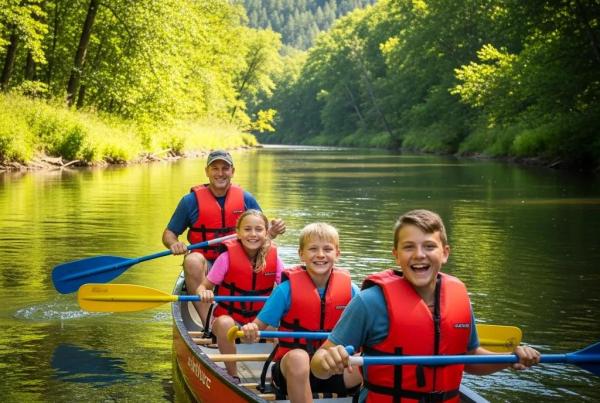
River float trips, often connected to a nearby waterway, usually involve a modest per-person charge that covers logistics and safety personnel.
When budgeting, consider organized activities as optional extras and confirm whether they require advance booking or have minimum participant requirements.
How Can You Save Money When Booking Your Camping Stay?
Saving money involves smart timing, leveraging loyalty programs, and understanding policies: book for weekdays or during shoulder seasons, sign up for campground notifications, and compare site types to avoid unnecessary add-ons. The following list offers practical strategies to reduce your total trip cost and explains why each approach can lower your final bill.
- Book weekdays or off-peak dates: Weekday stays often come with lower base rates and fewer additional charges.
- Choose primitive or partial-hookup sites: Opting for a simpler site reduces fees related to infrastructure.
- Look for multi-night or early-booking discounts: Campgrounds frequently offer incentives for longer stays and reservations made in advance.
Implementing these strategies helps you avoid peak season surcharges and optional activity fees, directly reducing your overall spending per trip.
What Discounts and Loyalty Programs Are Available?
Common discounts include early-bird pricing, seasonal promotions, and offers for loyal or repeat guests. Signing up for campground newsletters or their reservation systems often reveals these opportunities.
While private campgrounds and resort operators may have different programs, the general approach is consistent: subscribe, compare, and book during promotional periods to access lower rates. Walnut Hills Family Campground might offer discounts or booking policies that reduce rates for specific dates, so it’s always a good idea to check current rates and reservation options before finalizing your plans.
How Do Reservation and Cancellation Policies Affect Final Costs?
Reservation deposit requirements, cancellation deadlines, and no-show fees all impact the financial risk associated with a booking and can increase the effective cost if your plans change.
Flexible or refundable options typically have higher upfront rates, while non-refundable specials offer a lower base price but increase the potential financial loss if you need to cancel.
Understanding the policy terms—including deposit amounts, refund timelines, and transferability—allows you to calculate the true cost and select the booking option that best suits your risk tolerance.
Frequently Asked Questions
What are the best times to book a camping trip to save money?
The most cost-effective times to book a camping trip are during weekdays and the off-peak seasons. Weekdays generally feature lower rates due to decreased demand, while shoulder seasons—the periods between peak and off-peak times—often present special discounts. Furthermore, booking well in advance can help you secure early-bird rates or take advantage of promotional offers. By planning your trip during these times, you can significantly lower your overall camping expenses while still enjoying a fantastic experience.
How can I find out about special promotions or discounts at campgrounds?
To discover special promotions or discounts at campgrounds, consider subscribing to their newsletters or following them on social media. Many campgrounds announce exclusive deals, seasonal promotions, and loyalty programs through these channels. Additionally, regularly checking campground websites can provide insights into current offers. Engaging with local camping communities or online forums can also offer valuable tips for finding the best deals and lesser-known discounts.
What should I consider when choosing between different campground locations?
When selecting a campground location, think about factors like how close it is to attractions, natural features, and how easy it is to access. Evaluate the types of activities available nearby, such as hiking, fishing, or sightseeing, to ensure they match your interests. Also, consider the campground’s amenities and site features, as well as its reputation for cleanliness and safety. Finally, take into account the overall atmosphere and community vibe to find a location that fits your camping style.
Are there any hidden fees I should be aware of when booking a campsite?
Yes, there can be additional fees when booking a campsite. Common extra charges include fees for additional guests, pet fees, and costs for specific amenities like firewood or equipment rentals. Some campgrounds might also apply cleaning fees or surcharges for bookings during peak seasons. To avoid unexpected costs, carefully review the campground’s policies and inquire about any potential extra charges before finalizing your reservation.
How do I choose the right type of campsite for my needs?
Selecting the right type of campsite depends on your personal preferences and what you need. Consider factors like the size of your group, the level of comfort you’re looking for, and the amenities that are essential for your stay. For instance, RV sites offer more comfort and facilities, while primitive tent sites provide a more rustic experience. Also, think about your budget and the specific activities you plan to do, as these will influence your choice of campsite type.
What are the benefits of booking a campsite in advance?
Booking a campsite in advance offers several advantages, including securing your preferred site and avoiding last-minute price increases. Early reservations often come with discounts or promotional rates, allowing you to save money. Additionally, booking ahead ensures you have a spot during peak seasons when campgrounds can fill up quickly. This proactive approach also gives you ample time to plan your itinerary and prepare for your camping adventure.
How can I ensure a smooth check-in process at a campground?
To ensure a smooth check-in process at a campground, aim to arrive during the designated check-in hours and have your reservation details readily accessible. Familiarize yourself with the campground’s policies and procedures, which are often available on their website. If possible, contact the campground beforehand to confirm your reservation and ask any questions you may have. Being prepared and informed will help you navigate the check-in process efficiently and start your camping experience on a positive note.
Conclusion
Understanding the factors that influence camping prices empowers you to make smart choices for your outdoor adventures. By carefully considering accommodation types, amenities, and seasonal demand, you can optimize your camping experience while staying within your budget. Take the next step in planning your perfect getaway by exploring our comprehensive guides and resources. Start your journey toward memorable camping experiences today!