


Understanding How Campground Brokers Determine Prices to Optimize Property Sales Effectively
Figuring out the right price for your campground is key to selling it quickly, attracting the best buyers, and getting the most money for your property. When pricing reflects both how well your campground performs financially and its place in the market, you win. This guide breaks down how campground brokers and buyers calculate value using important metrics like Net Operating Income (NOI), Capitalization Rate (Cap Rate), recent sales of similar properties, and formal appraisals. We’ll show you how these methods translate into actual offers and listing strategies. If you’re tired of confusing offers or your property sitting on the market too long, you’ll learn the exact methods brokers use, which features matter most for price, and practical steps to get your finances and property in top shape to maximize your sale proceeds. We’ll walk you through broker pricing tactics, the direct-buy option some acquirers offer, and the step-by-step selling process so you can choose the path that best fits your goals. You’ll find clear checklists, comparison tables for different valuation and selling routes, and a close look at how GatherGrounds Resorts approaches acquisitions, showing how direct buyers factor in both financial and legacy aspects into their offers.
What Are the Key Campground Valuation Methods Used by Brokers?

Valuation methods provide a framework for pricing by turning your campground’s performance and market comparables into a solid dollar figure that buyers and brokers can work with. Brokers typically use Net Operating Income (NOI) to understand the property’s cash flow, then apply a Capitalization Rate (Cap Rate) to estimate its market value. They also look at comparable sales to see what similar campgrounds have recently sold for and may engage professional appraisers to back up their assumptions for lenders or more cautious buyers. Understanding each method helps you read offers and ask smart questions during negotiations. Below, we define each method, explain how they work together, and offer a handy comparison table to help you weigh the different approaches as you plan your sale.
How Is Net Operating Income Calculated for Campgrounds?
Net Operating Income (NOI) is what’s left of your campground’s total operating revenue after you subtract all the regular operating expenses. It shows the property’s cash flow before you account for loan payments and taxes. To figure out NOI, brokers add up all your income streams—like nightly site fees, long-term lease income, sales from your store or concessions, cabin rentals, and other services. Then, they subtract ongoing costs such as utilities, payroll, maintenance, property taxes, insurance, and management fees. For instance, a campground earning $700,000 in gross revenue with $300,000 in operating expenses would have an NOI of $400,000. This figure becomes the foundation for capitalization and comparisons with other investments. Having clear NOI reporting is crucial because buyers use it directly in their valuation formulas and to gauge how efficiently your property operates compared to others. This makes transparent categorization of revenue and expenses essential during the due diligence phase.
What Role Does Capitalization Rate Play in Pricing Campgrounds?
A Capitalization Rate (Cap Rate) translates your campground’s NOI into a market value by dividing the NOI by the chosen cap rate. It essentially shows the return an investor expects to get on the asset. In practice, Value = NOI / Cap Rate. So, a $400,000 NOI valued at an 8% cap rate suggests a market value of $5,000,000. However, the same $400,000 NOI at a 10% cap rate implies a value of $4,000,000. This clearly demonstrates how a buyer’s expectations and their perception of risk can significantly shift the price. Cap rates are influenced by factors like how easily the market can absorb properties, local demand, the condition of the property, and perceived operational risks. Lower cap rates generally indicate a stronger price and higher buyer confidence. Brokers will explain the reasoning behind the cap rate they use and adjust their listing strategy if market signals suggest that typical cap rate ranges are tightening or widening.
Enhancing Campsite Revenue Management with MERMCAMP
The model provides a practical and scalable approach for campsite operators to improve pricing, inventory management and business performance.
Indoor vs. outdoor hospitality: enhancing campsite revenue management implementation with MERMCAMP, S Janković, 2025
How Do Comparable Sales Influence Campground Valuation?
Comparable sales offer market validation by showing what buyers have recently paid for similar campgrounds. Brokers then adjust these comparables to account for differences in site count, revenue, amenities, and location. Brokers carefully select comparables that match key aspects like proximity to markets, number of sites, occupancy patterns, and the range of amenities. They then make upward or downward adjustments when significant differences exist that could impact revenue potential or the need for capital improvements. Since comparables can be scarce for unique or remote properties, brokers often combine this market evidence with income-based valuations to fill in any gaps. A practical checklist of comparables can help you understand which recent deals will most influence the perceived market value of your property during negotiations.
Different valuation methods measure distinct attributes and produce complementary perspectives.
This table clarifies that brokers use income, market, and independent analyses together to form robust pricing recommendations and counter-offers.
After assessing valuation mechanics, owners should also understand which property and market factors push brokers to favor one method over another.
Which Factors Affect Campground Value and Broker Pricing Strategies?
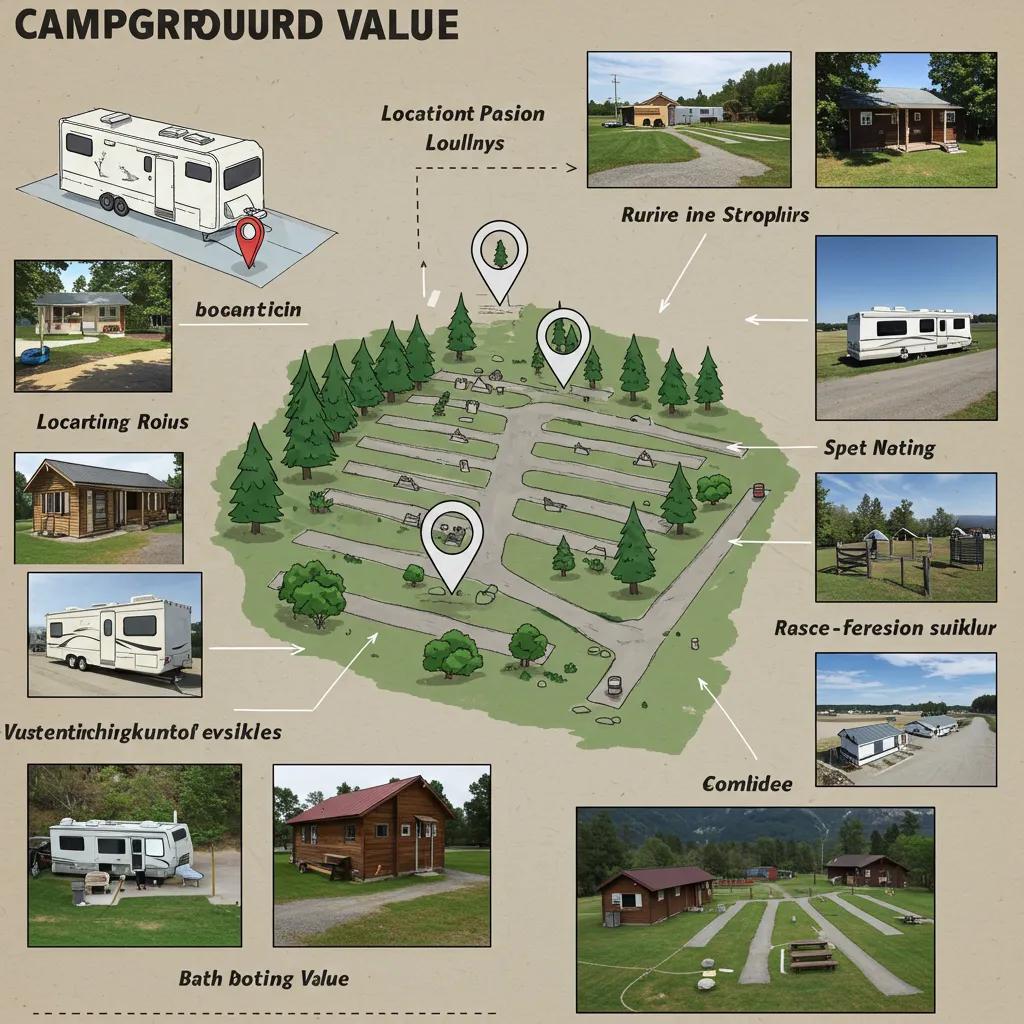
The characteristics of your property, the current market conditions, and intangible community or legacy value all play a role in how brokers set price ranges and prioritize valuation inputs. Location and seasonality directly influence demand and the rates you can charge, while amenities and infrastructure determine the potential for operational growth and the initial investment required by buyers. Solid financial records and a history of good occupancy reduce perceived risk and support higher valuation multiples. Conversely, deferred maintenance or environmental issues can lower offers or lead to more stringent contingency terms. Brokers carefully weigh these factors and will present a recommended price range that balances what the market will bear with your expectations and the allocation of risk during negotiations.
How Do Location and Market Trends Impact Campground Prices?
Location impacts both how likely your property is to be occupied and the types of buyers who will be interested. Properties near major cities or popular tourist routes can command higher per-site rates and attract institutional or strategic buyers. Remote parks, on the other hand, often appeal to niche buyers and tend to trade at wider cap rates. Market trends, such as growth in regional travel, changes in zoning laws, and local competition, directly affect expected occupancy and average daily rates, which brokers factor into their revenue projections. Seasonality is also critical: parks with strong demand during the shoulder seasons or those that operate year-round typically achieve higher valuations because their revenue streams are less volatile. Brokers use these location and trend signals to develop pricing strategies that align with realistic buyer interest and market benchmarks.
What Amenities and Infrastructure Increase Campground Value?
Amenities and core infrastructure significantly influence a buyer’s willingness to pay. They drive revenue, reduce the need for immediate capital expenditures, and enhance the guest experience. High-value features include full hookups, modern bathhouses, cabin rentals, reliable water and sewer systems, paved roads, and on-site retail or food services. Buyers often place more importance on infrastructure improvements than on cosmetic upgrades because these reduce their upfront capital costs and allow for higher occupancy or rates. Upgrades like expanding the number of full-hookup sites or installing dependable wastewater systems typically provide the strongest valuation increase relative to their cost. When you document your capital improvements and the remaining useful life of your systems, you provide your broker with strong evidence to justify a higher asking price.
This impact table shows owners which attributes to prioritize when preparing for sale and where broker valuation will pay close attention.
How Do Occupancy Rates and Financial Records Influence Pricing?
Consistent occupancy and well-organized financial records reduce perceived operational risk, allowing buyers to underwrite future cash flows with greater confidence. This typically leads to tighter cap rates and more favorable offers. Brokers examine occupancy trends, average daily rate (ADR) benchmarks, revenue per available site metrics, and seasonality patterns, alongside your P&Ls and tax returns. This helps them normalize any one-off expenses and arrive at a stabilized NOI. Clean, verifiable financial statements not only shorten the due diligence period but also broaden your buyer pool, as lenders and institutional buyers require reliable historical performance data. You should prepare spreadsheets that reconcile your reported revenue with bank statements and clearly identify any one-time expenses to present a clear picture of your earnings.
What Is the Effect of Legacy and Community Value on Broker Pricing?
Legacy and community value represent intangible strengths—such as local reputation, long-term guest loyalty, seasonal membership programs, or community events—that can elevate an otherwise average offer to a premium, depending on the buyer. Brokers recognize legacy value when marketing to buyers who appreciate stewardship or community continuity. They document these intangibles through guest satisfaction data, retention metrics, and examples of local partnerships. While legacy value rarely replaces hard financial metrics, it can influence non-price deal terms like transition commitments and earnouts. Sellers who can quantify guest programs and document community engagement provide brokers with a stronger narrative to attract mission-aligned buyers.
How Do Campground Brokers Structure Their Pricing Strategies to Optimize Sales?
Brokers develop pricing strategies that align the listing price, marketing approach, and negotiation tactics to generate buyer interest while maintaining your leverage when offers come in. Typical elements include setting a market-backed list price based on income and comparable analyses, choosing a sales model (exclusive listing, broad marketing, or auction/bid process), establishing commission structures that reward performance, and adjusting the price based on market feedback. Brokers also recommend presentation packages—clean financials, site maps, and summaries of capital improvements—that reduce buyer uncertainty and speed up qualified offers. The following lists and tables outline common commission ranges, marketing services, and pricing models that brokers use to optimize sale outcomes.
What Are Typical Broker Commission Rates for Campground Sales?
Broker commissions for campground or RV park transactions typically vary based on the deal size and the level of service provided. Brokers justify their fees by offering market access, buyer vetting, and negotiation expertise that can ultimately increase your net proceeds. Common commission rates range from about 5% to 10% of the transaction value. However, negotiated structures might include tiered percentages or a flat retainer plus a success fee for larger deals. Broker fees usually cover targeted marketing, managing the data room, qualifying buyers, coordinating due diligence, and supporting deal negotiations. Sellers can sometimes negotiate fees or opt for hybrid arrangements, but it’s important to weigh potential commission savings against the possibility of reduced market exposure or a longer sales timeline.
- Brokers commonly charge between 5% and 10% as a success fee on final sale price.
- Commission services typically include marketing, buyer screening, and negotiation management.
- Sellers can negotiate tiered fees or limited-scope engagements to control costs.
These ranges reflect the value brokers provide, but some sellers prefer direct buyers to avoid commissions and streamline transactions if timing or legacy concerns dominate their priorities.
How Do Brokers Balance Market Demand and Seller Expectations?
Brokers balance market demand and seller expectations by recommending a realistic price range supported by a blend of valuation data. They then execute marketing strategies that target likely buyer segments to create competitive interest. Tactics include initial market testing at a data-driven list price, confidential outreach to qualified investor groups, staged price reductions if market feedback suggests the property is overpriced, and timed auction processes when multiple qualified buyers are anticipated. Brokers also guide sellers on acceptable negotiation points—such as flexibility on contingencies, preferred closing timelines, and transition support—that can bridge valuation gaps without necessarily lowering the headline price. Continuous feedback from buyer interactions informs pricing adjustments and keeps seller expectations aligned with real-time market demand signals.
What Pricing Models Do Brokers Use to Maximize Sale Price?
Brokers utilize several pricing models depending on market conditions: a market-list strategy aims for broad, fair-market exposure; a premium-list approach tests the higher end of the market to see if buyers will pay more; and auction or sealed-bid processes are used when multiple buyers are expected. Each model has trade-offs: a market listing tends to attract wide interest and steady offers, a premium listing might achieve a higher price but risks a longer time on the market, and auctions can drive competitive bids but sometimes leave value on the table if buyer pools are limited. Brokers select the model based on the property’s uniqueness, the depth of the buyer pool, and the seller’s timing needs, then tailor the marketing and confidentiality controls accordingly.
What Are the Advantages and Disadvantages of Selling Through a Broker Versus Direct to Buyers?
Choosing between a brokered sale and a direct sale to an acquirer involves trade-offs concerning price, certainty, timeline, and control over legacy outcomes. Brokers can expand buyer reach and potentially achieve a higher price, while direct buyers often offer speed, certainty, and smoother transitions. This section compares costs, timelines, and typical pros and cons to help you decide which path best suits your priorities. The following comparison table and lists summarize typical commission ranges, timelines, and outcome trade-offs.
What Are the Benefits of Using a Campground Broker?
Using a broker offers sellers broader market exposure, professional negotiation to extract maximum value, and a managed due diligence process that reduces your workload. Brokers maintain buyer networks that can generate competitive offers and often present anonymized marketing packages to attract institutional and private buyers without compromising your confidentiality. A broker-managed sale also tends to provide more formal presale valuation support and staging assistance to highlight upside potential, which can translate into higher sale prices for owners willing to invest time and patience. You should weigh these benefits against commission costs and potentially longer sales cycles caused by market testing.
- Brokers increase exposure by tapping broad buyer networks.
- Brokers manage confidentiality and vet buyers to reduce risk.
- Brokered sales may yield higher final prices after competitive bidding.
How Does Selling Directly to Buyers Like GatherGrounds Resorts Differ?
Selling directly to an acquirer like GatherGrounds Resorts typically prioritizes speed, certainty, and stewardship considerations over maximizing a competitive market-driven price. This approach is often attractive to owners focused on preserving their legacy or achieving a rapid transition. GatherGrounds Resorts is a family-owned company that acquires and operates campgrounds and RV parks, modernizes amenities, and implements a customer service model designed to preserve guest experience and community ties. For owners who value continuity and a streamlined closing process without broker commissions, direct offers from such acquirers can be compelling. However, you should evaluate direct offers based on net proceeds and post-sale transition terms, not solely on the headline price. Considering both brokered and direct options in parallel can provide leverage and choice during negotiations.
When Should Campground Owners Choose Brokers Over Direct Sales?
Owners seeking to maximize their sale price and who are willing to endure a longer marketing process should favor broker representation, especially if the property has broad buyer appeal or significant upside potential that multiple buyers might competitively value. Conversely, owners prioritizing speed, certainty, or legacy preservation may prefer direct buyers. A hybrid pathway—marketing with a broker while remaining open to direct acquisition proposals—can capture the benefits of both. Key decision criteria include your desired timeline, tolerance for contingency risk, the importance of community stewardship, and your willingness to pay commissions in exchange for broader exposure. Aligning the selling route with your goals ensures the pricing strategy supports the intended outcome.
How Can Campground Owners Prepare to Sell for Top Dollar?
Preparation reduces leverage for buyers and clarifies value drivers. The most effective seller preparation focuses on organizing financials, completing high-impact property enhancements, and timing the market strategically. Sellers who present audited or well-organized financial statements, maintain or improve high-value infrastructure, and document guest programs and community relationships often achieve stronger pricing. The following sections provide actionable checklists for essential documents, prioritized enhancement recommendations with ROI considerations, and timing guidance tied to current market trends.
What Financial Documentation Is Essential for a Successful Sale?
- Provide 3–5 years of P&Ls and corresponding tax returns to demonstrate performance.
- Include occupancy and average rate trend reports to show seasonality and growth.
- Supply documented capital expenditures and maintenance records to justify condition claims.
Clear documentation builds trust and supports higher valuation multiples during negotiations.
How Can Property Enhancements Increase Campground Value?
Targeted enhancements that reduce buyer capital expenditure or directly increase revenue typically offer the best return when preparing to sell. Owners should prioritize infrastructure and amenity improvements that buyers value most. High-impact upgrades include adding or converting sites to full hookup, refurbishing bathhouses, improving wastewater systems, expanding cabin inventory, and upgrading reservation and property management systems. Cosmetic updates help with marketability but usually yield a lower valuation lift than structural or revenue-enhancing investments. Sellers should conduct cost-benefit analyses for improvements and consult with brokers on which projects buyers in the target market will reward most, to avoid over-capitalizing before the sale.
What Market Timing and Trends Should Sellers Consider?
Timing a sale around peak buyer activity—often in the off-season when buyers are planning for spring operations—or when market cap rates are compressing can influence the achieved price. Sellers should monitor regional transaction activity, cap rate trends, and financing availability to select optimal listing windows. Current market indicators in 2025 show cap rate ranges for many small-to-mid-size hospitality assets that vary by region, and buyer competition remains strongest where recreational travel and regional population growth intersect. Sellers should also account for local regulatory or zoning changes that could accelerate or delay buyer closings. Consulting a broker for current local market intelligence helps align listing timing with buyer appetite.
What Is the Step-by-Step Selling Process for Campgrounds Facilitated by Brokers?
A broker-facilitated sale typically progresses through preparation, confidential marketing, offer collection, due diligence, negotiation of the purchase agreement, and closing. Targeted seller actions are needed at each stage to maintain momentum and pricing. Timelines vary by market, but sellers should anticipate active marketing and buyer qualification to take several months, followed by a due diligence period during which robust documentation expedites closing. Below is a practical staged checklist and a numbered marketing timeline to guide your expectations and preparations.
What Are the Key Stages from Listing to Closing?
The journey from listing to closing follows distinct stages: preparing materials and valuation, confidential marketing to vetted buyers, negotiating and accepting an offer, due diligence involving documentation and inspections, finalizing the purchase agreement, and closing with post-sale transition planning. Preparation focuses on compiling financials and property documentation, while marketing emphasizes targeted outreach and anonymous teasers for buyer privacy. Once an offer is accepted, due diligence typically includes financial verification, title review, environmental assessments, and site inspections, which can uncover issues requiring price or term adjustments. Sellers who proactively address obvious deferred maintenance and organize their records often shorten timelines and reduce the risk of renegotiation.
- Preparation and valuation package assembly.
- Confidential marketing and buyer outreach.
- Offer review, negotiation, and LOI/executed contract.
- Due diligence with documentation and inspections.
- Final negotiations, closing, and transition.
This staged approach clarifies seller responsibilities at each milestone and helps manage expectations regarding timing and documentation needs.
How Does Due Diligence Affect Pricing and Sale Completion?
Due diligence verifies representations and often uncovers issues that lead to price adjustments, escrows, or specific contingencies. Common red flags include unresolved environmental concerns, title defects, unpermitted improvements, and inconsistent financial records. Buyers typically negotiate price reductions, repair escrows, or indemnities to address discovered risks. Therefore, sellers who preemptively remediate known issues or disclose them upfront can preserve value and avoid protracted renegotiations. Preparing an organized data room and responding quickly to buyer requests reduces friction and signals transaction readiness, which brokers use to reassure buyers and potentially tighten final deal terms.
What Legal Documentation Is Required in Campground Sales?
Core legal documents include a signed purchase and sale agreement detailing price, contingencies, closing date, and representations; title commitments and surveys to confirm chain of title and boundaries; environmental assessments when warranted; and leases or contracts that transfer with the property. Buyers commonly request seller representations and warranties, indemnities for pre-closing liabilities, and escrow arrangements for unresolved items. Because legal and regulatory requirements vary by jurisdiction, you should consult local counsel early to ensure all necessary disclosures are made and to draft agreements that protect your proceeds and limit post-closing exposure. Clear legal documentation supports smoother closings and reduces the chance of last-minute term changes that could affect price.
How Does GatherGrounds Resorts’ Direct Acquisition Process Influence Campground Pricing?
GatherGrounds Resorts approaches acquisitions as a family-owned operator focused on preserving guest experience and community continuity. This perspective influences how they value campgrounds beyond pure financial metrics. Their acquisition decisions blend standard financial analysis—including NOI and cap rate considerations—with non-financial assessments such as legacy alignment, amenity fit, and staff continuity to determine offer structure and transition commitments. GatherGrounds’ stated acquisition preference includes parks with over 130 sites, and they emphasize modernizing amenities and operating with a consistent customer service model after purchase. For sellers, this means offers from such direct buyers will often include terms that prioritize stewardship and a streamlined transition in exchange for negotiating on certain price elements.
How Does GatherGrounds Assess Campground Value Beyond Financials?
Beyond NOI and cap rate calculations, GatherGrounds values intangible assets like community reputation, staff expertise, guest loyalty programs, and alignment with their “GatherGrounds experience” operating model. These factors can favorably influence offer terms. Sellers can demonstrate intangible value by documenting guest retention metrics, membership or season-pass programs, staff tenure and training summaries, and examples of local partnerships or community events that drive non-monetary goodwill. When an acquirer prioritizes stewardship, these non-financial strengths can translate into better transition terms, retention commitments, or earnout structures that reflect long-term value preservation rather than headline price alone.
What Are GatherGrounds’ Acquisition Criteria and Pricing Approach?
GatherGrounds’ acquisition approach combines quantitative thresholds—such as targeting parks with at least 130 sites—with qualitative stewardship criteria that assess legacy fit and amenity modernization potential. Their pricing blends standard income-based valuation with an overlay for long-term operational fit. Their process emphasizes a streamlined direct-buy option as an alternative to brokered sales, offering sellers a potentially faster closing and an emphasis on preserving guest experience through modernization plans and staff continuity. Sellers should evaluate direct offers by comparing net proceeds after foregone broker marketing against the value of a faster, commission-free sale and the transition assurances offered by the acquirer.
How Does GatherGrounds Ensure a Smooth Transition for Sellers?
GatherGrounds focuses on transition practices that reduce seller anxiety. This includes commitments to retain existing teams when appropriate, communicating changes to guests in a planned manner, and implementing modernization in phases to preserve ongoing operations. They prioritize clear communication plans with staff and guests, documented transition timelines, and practical modernization roadmaps that balance capital improvements with sustained revenue stability. For sellers concerned about their legacy, these transition assurances—when documented in the purchase agreement—provide tangible value beyond price and can justify accepting a direct offer that aligns with long-term community stewardship goals.
This article has provided a structured overview of how campground brokers determine pricing, which factors most influence value, practical seller preparations, and how a direct buyer perspective—illustrated by GatherGrounds Resorts’ approach—intersects with traditional brokerage valuation. Armed with an understanding of NOI and cap rates, comparables, and a preparation checklist, you can engage brokers or direct buyers from a position of knowledge and negotiate the terms that best meet your financial and legacy objectives.
Frequently Asked Questions
What should campground owners do to prepare for a successful sale?
To prepare for a successful sale, campground owners should focus on organizing their financial documentation, enhancing property features, and timing the market effectively. This includes compiling 3–5 years of profit and loss statements, occupancy reports, and maintenance records. Additionally, making high-impact improvements, such as upgrading infrastructure and amenities, can significantly increase property value. Finally, monitoring market trends and aligning the sale with peak buyer activity can help maximize sale proceeds and attract serious buyers.
How can campground owners effectively market their property?
Effective marketing of a campground involves creating a comprehensive presentation package that highlights the property’s strengths, including financial performance, amenities, and community ties. Utilizing professional photography, engaging descriptions, and targeted outreach to potential buyers can enhance visibility. Brokers often employ anonymized marketing strategies to protect seller confidentiality while reaching a broad audience. Additionally, leveraging online platforms and social media can attract interest from diverse buyer segments, increasing the chances of a successful sale.
What are the common pitfalls to avoid when selling a campground?
Common pitfalls when selling a campground include inadequate financial documentation, neglecting necessary property improvements, and overpricing the property. Sellers should avoid presenting disorganized financial records, as this can deter potential buyers and prolong the sale process. Additionally, failing to address deferred maintenance or cosmetic issues can lead to lower offers. Lastly, setting an unrealistic price based on emotional attachment rather than market data can result in extended listing times and missed opportunities for competitive offers.
How do seasonal trends affect campground sales?
Seasonal trends significantly impact campground sales, as buyer interest often peaks during specific times of the year. For instance, many buyers look to acquire properties in the off-season to prepare for the upcoming peak season. Additionally, campgrounds with year-round appeal or strong shoulder-season demand typically command higher valuations. Sellers should consider these trends when timing their sale and may benefit from listing during periods of heightened buyer activity to maximize exposure and potential offers.
What role does community reputation play in campground sales?
Community reputation can greatly influence campground sales, as it reflects the property’s legacy and guest loyalty. A strong local reputation can attract buyers who value stewardship and continuity, potentially leading to higher offers. Sellers should document positive guest feedback, retention metrics, and community engagement initiatives to showcase this intangible value. Highlighting these aspects during negotiations can help justify pricing and attract buyers who prioritize maintaining the campground’s legacy and community ties.
What are the advantages of a hybrid selling approach?
A hybrid selling approach allows campground owners to market their property through a broker while remaining open to direct offers from acquirers. This strategy provides flexibility, enabling sellers to benefit from broader market exposure while also considering the speed and certainty of direct sales. By leveraging both channels, owners can compare offers and negotiate terms that align with their financial and legacy goals. This approach can maximize sale proceeds while accommodating various buyer preferences.
How can sellers ensure a smooth transition post-sale?
To ensure a smooth transition post-sale, sellers should prioritize clear communication with both staff and guests about changes in ownership. Documenting transition plans, including timelines for modernization and staff retention, can help maintain operational stability. Additionally, providing training and support for new management can ease the transition process. Sellers should also consider including transition commitments in the purchase agreement to reassure buyers and facilitate a seamless handover of operations and community relationships.
Conclusion
Understanding how campground brokers determine pricing is essential for owners looking to optimize their property sales. By leveraging key valuation methods such as NOI, Cap Rate, and comparable sales, sellers can make informed decisions that align with their financial and legacy goals. Engaging with a knowledgeable broker or considering direct buyers like GatherGrounds Resorts can streamline the selling process and enhance outcomes. Take the next step in your selling journey by exploring our resources or contacting a professional today.