How Appraisals Help Determine the Right Price for Your Campground or RV Park
Getting a professional appraisal for your campground or RV park is a smart move. It’s a structured valuation that quantifies market value using income, comparable sales, and cost analyses, helping you set a defensible asking price. This guide dives into how appraisals work for income-producing outdoor hospitality properties, why they’re key for negotiation and financing, and how you can prep to maximize your property’s value before a sale. Many owners worry about underpricing a legacy property or getting offers that don’t reflect true net operating income (NOI); accurate appraisals minimize these risks by translating operational performance and physical assets into a market-supported value. You’ll learn the main valuation methods, the roles of NOI and capitalization rates (cap rates), the most influential property and market factors, and actionable pre-sale steps—plus options for selling through brokers, agents, or direct buyers. We’ve included practical checklists, EAV-style tables that break down inputs like occupancy, site mix, and amenity-driven revenue, and targeted guidance on confidentiality and legacy preservation to help you move confidently from appraisal to sale.
Why Are Professional Campground Appraisals Essential for Sellers?
A campground or RV park appraisal is an independent, evidence-based assessment of fair market value. It synthesizes financial performance, market comparables, and physical asset condition to give sellers negotiation leverage. Appraisers gather NOI data, occupancy history, expense schedules, site counts, and recent sales of similar outdoor hospitality assets. They then apply appropriate valuation methods to arrive at an opinion of value that buyers and lenders respect. Sellers benefit because a professional appraisal supports asking price credibility, attracts qualified buyers, and can speed up financing and due diligence. The next sections will define appraisals in more detail and show how appraisers translate operating metrics into a defensible value.
What Is a Campground or RV Park Appraisal?
A campground or RV park appraisal is a formal report prepared by a credentialed appraiser experienced in commercial or outdoor hospitality valuation, specifically for income-producing properties. The typical deliverables include an executive summary, a description of the property and market, income and expense analysis, comparable sales data, valuation reconciliation, and any assumptions or limiting conditions. Appraisers usually present stabilized NOI schedules, adjustments for nonrecurring items, and sensitivity analyses for cap rates to show value ranges. Understanding the report’s components helps sellers anticipate buyer questions and present their property data in an appraisal-ready format.
How Does an Appraisal Establish Fair Market Value?
Appraisers establish fair market value by applying one or more valuation approaches—income capitalization, comparable sales, and cost—then reconciling the results based on data quality and market context. For income-oriented parks, the income capitalization approach links stabilized NOI to a market-derived cap rate to determine value. Comparable sales provide direct market anchors, adjusted for differences in size, amenities, and revenue. Appraisers weight these approaches according to their relevance: the income approach often dominates for profitable, stabilized parks, while comparable sales can be limited by transaction scarcity. This blend of methods turns operational metrics like occupancy and ancillary revenue into a defensible price range owners can use when negotiating offers.
What Are the Benefits of a Campground Appraisal for Sellers?
A professional appraisal offers concrete benefits: it backs your asking price with documented analysis, reduces the risk of lowball offers, and supports buyer financing by providing lender-acceptable valuation. Sellers who commission appraisals gain clarity on how specific improvements or deferred maintenance affect value, allowing them to prioritize pre-sale investments that yield the highest return. Appraisals also help streamline due diligence by anticipating buyer questions and providing organized financial and physical data upfront. With a clear appraisal in hand, sellers often experience quicker negotiations and fewer surprises during escrow.
Are Appraisals Necessary to Accurately Price My Campground or RV Park?
Yes—especially when your property’s value hinges on stabilized NOI, complex amenity mixes, or when financing and lender confidence are priorities—an appraisal is necessary to accurately price the asset. In simpler situations, like small parks with frequent comparables or when an owner seeks a quick market check, a broker opinion of value might suffice, but that approach carries more subjectivity. When legacy preservation, confidentiality, or a direct sale to a professional buyer is considered, appraisal credibility becomes especially important because it frames offers and transition terms. The appraisal’s evidence-based conclusions strengthen a seller’s negotiation position and can materially affect the final sale price.
After understanding appraisal benefits, some owners prefer to explore sale channels that use appraisal outcomes directly. GatherGrounds Resorts‘ direct acquisition of campgrounds and RV parks is a values-driven direct-buyer option that reviews appraisal outcomes to make fair, confidential offers while emphasizing a thoughtful transition and legacy preservation.
What Are the Main Campground and RV Park Valuation Methods?

Valuation for campgrounds and RV parks typically relies on three primary methods—Income Capitalization, Comparable Sales, and Cost—each using different inputs and serving distinct use cases. The income capitalization approach converts stabilized NOI into value using a market cap rate, the comparable sales approach adjusts recent transactions for differences in size and amenities, and the cost approach sums land value and replacement cost less depreciation. Appraisers choose and weight these methods depending on data reliability and property specifics; combined, they create a reconciled value range that accounts for both market evidence and asset characteristics. Below are focused explanations and an EAV-style comparison to help owners see which method applies to their park.
Different valuation methods are useful in different sale contexts:
This comparison highlights why income-based methods usually govern value for operating campgrounds, while sales and cost approaches provide supporting context.
How Does the Income Capitalization Approach Work?
The income capitalization approach derives value by dividing stabilized net operating income by a market-derived capitalization rate (Value = NOI / Cap Rate). NOI reflects recurring income less operating expenses, but before debt service and taxes. Appraisers normalize revenues by removing one-time items and adjusting owner-specific expenses to present a market-level NOI, then select a cap rate based on market risk, recent sales, and investor expectations. Typical adjustments include management fees, reserves for replacement, and a stabilized occupancy assumption to reflect normalized performance. A small change in NOI or cap rate can materially alter value, which is why presenting well-documented financials is critical.
What Is the Comparable Sales Approach for Campgrounds?
The comparable sales approach analyzes recent transactions of similar campgrounds or RV parks, then adjusts sale prices for differences in site count, amenity mix, location, and revenue profile to estimate value. Appraisers face challenges because campground transactions are less frequent than other commercial properties, so locating truly comparable sales often requires regional or comp-type adjustments. Useful comparables match site mix, hookup ratios, presence of cabins or glamping, and nearby demand drivers. Accurate adjustments for revenue-generating amenities and occupancy differences ensure comparable sales remain relevant evidence.
How Does the Cost Approach Affect Campground Valuation?
The cost approach totals land value plus the current replacement cost of improvements, then deducts depreciation to estimate value; it’s most applicable for new parks, unique assets, or where income data is unreliable. For older, income-producing parks, depreciation assumptions and functional obsolescence can make the cost approach less reflective of market perceptions. Appraisers use the cost approach as a floor or cross-check rather than the primary indicator for operating campgrounds with established cash flow. When capex has been recently invested (e.g., new cabins), the cost approach can document those asset values for buyers.
How Do Net Operating Income and Capitalization Rate Influence Value?
Net operating income is the core cash-flow metric that drives income-based valuation, while the capitalization rate translates perceived risk and return expectations into a multiplier that converts NOI into market value. The formula Value = NOI / Cap Rate demonstrates a direct relationship: increasing NOI or decreasing cap rate raises value. Sensitivity analysis often shows that a 5–10% change in NOI or a 0.5% movement in cap rate can change value materially, which is why both accurate financials and market-derived cap rate selection are essential. Sellers benefit from understanding how operational improvements or market shifts affect both NOI and cap rates.
This sensitivity table clarifies how small percentage shifts move significant dollar values and why targeted NOI improvements matter.
What Key Factors Influence Your Campground’s Market Value?
Market value for a campground or RV park is driven by a combination of property-specific metrics (site count, occupancy, amenities, condition) and market-level factors (local demand, regulatory environment, investor sentiment). Appraisers quantify these through measurable attributes—stabilized occupancy, average daily rates (ADR), ancillary revenue per site, and comparisons to recent market transactions. Owners who understand which factors weigh most heavily can prioritize improvements that yield the largest valuation impact. The next subsections break these factors into actionable attributes owners can control or document.
This table helps owners focus on measurable changes that appraisers and buyers will evaluate during valuation.
How Do Location and Amenities Affect Campground Pricing?
Location determines market demand through proximity to attractions, urban centers, and seasonal traffic patterns; parks nearer to high-demand recreational assets typically command higher ADR and occupancy, which increases NOI and value. Amenities such as full hookups, cabins, glamping, on-site retail, and EV charging create ancillary revenue streams and broaden customer segments, thereby uplifting effective revenue per available site. Appraisers adjust for these differences when using comparables and estimate amenity-driven revenue uplifts when projecting stabilized NOI. Comparing two parks with similar site counts but different amenity mixes often reveals substantial valuation divergence driven by ancillary income.
What Role Does Property Condition Play in Valuation?
Property condition affects valuation through required capital expenditure (capex) deductions or lower offers to compensate for deferred maintenance and functional obsolescence. Appraisers and buyers will estimate near-term capital needs—septic repairs, road resurfacing, utility upgrades—and reduce value to reflect the present cost of bringing the asset to market standard. Sellers who document recent capital investments and maintenance history can reduce perceived capex risk and preserve value. A clear condition checklist and cost estimates allow negotiated adjustments to be based on objective data rather than buyer assumptions.
How Do Occupancy Rates and Revenue Streams Impact Value?
Stabilized occupancy and diversified revenue streams directly determine NOI, which is the key input for income-capitalization valuations; higher occupancy and predictable ancillary income increase the numerator in the valuation formula. Appraisers normalize seasonal fluctuations to derive a stabilized operating profile, and they quantify ancillary revenues—retail, cabin rentals, event hosting—to capture the full revenue picture. Demonstrating consistent year-over-year occupancy growth or new ancillary revenue lines can materially increase appraised value because buyers pay for sustainable cash flow. Owners should track occupancy trends and clearly segment revenue streams for appraisal clarity.
How Do Current Market Trends Affect Campground Sale Prices?
Recent trends—such as growth in glamping demand, increased interest in EV charging and remote-work-friendly amenities, and broader outdoor recreation popularity—shift buyer expectations and can create valuation premiums for well-positioned parks. Market data through 2025 indicates rising investor interest in experiential outdoor assets, which often lowers cap rates for parks with modern amenities and strong demand profiles. Conversely, markets with weak demand or uncertain regulatory environments can widen cap rates and compress valuations. Appraisers factor trend-driven premiums or discounts into both cap rate selection and comparable adjustments.
How Can You Maximize Your Campground’s Value Before Selling?
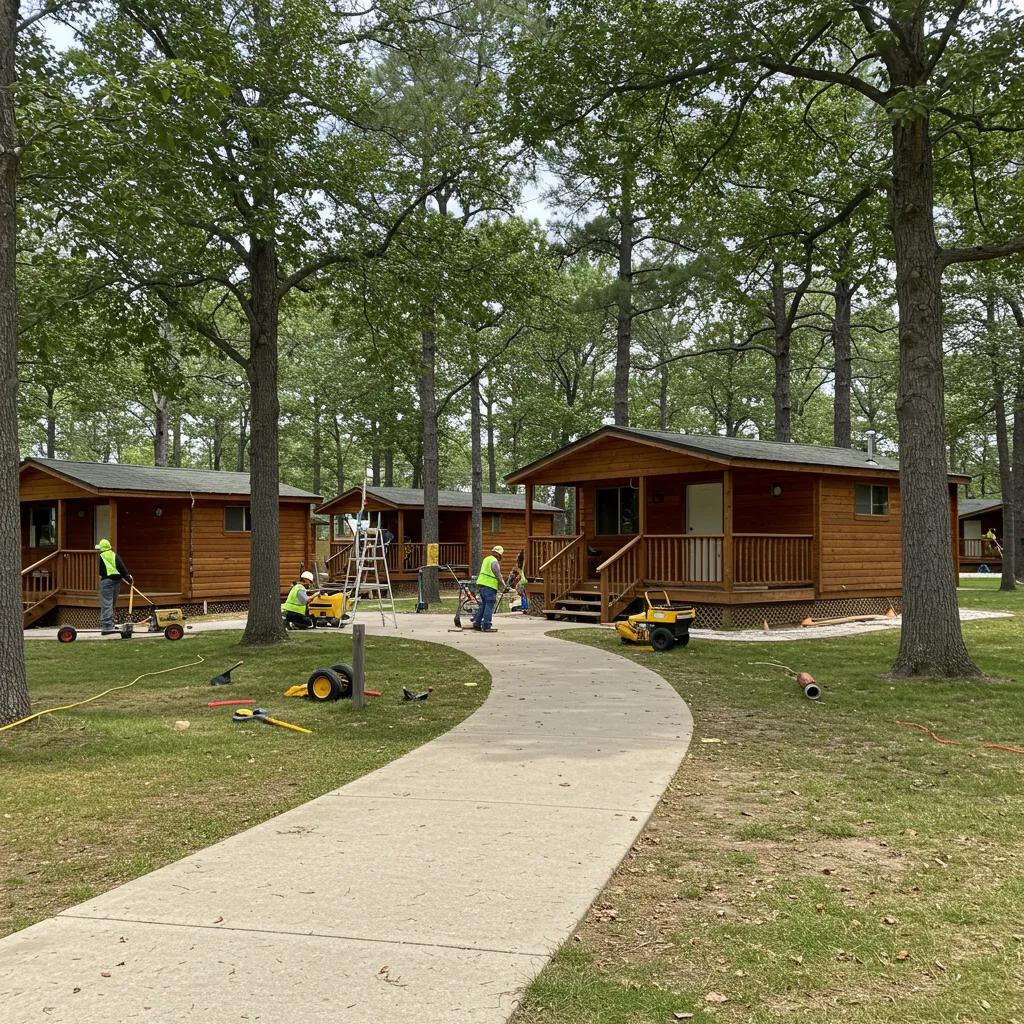
Preparing a campground for sale centers on targeted improvements that raise NOI, addressing deferred maintenance, and compiling organized documentation that speeds appraisal and buyer diligence. High-return operational changes—better revenue management, dynamic pricing, and adding high-margin ancillary services—often deliver immediate NOI uplift with modest capital outlay. Documentation that demonstrates consistent financial performance, occupancy reporting, and maintenance records reduces appraisal friction and supports stronger offers. Below are prioritized improvement suggestions, NOI optimization tactics, and a due diligence checklist owners can use to prepare.
A focused list identifies strategic improvements by typical ROI and impact on buyer perception.
- Site Upgrades: Improve pad grading and hookups to attract higher-paying RV guests and reduce maintenance costs.
- Amenity Additions: Add or enhance revenue-generating amenities such as cabins, glamping units, or on-site retail.
- Operational Systems: Implement dynamic pricing and reservation analytics to increase ADR and occupancy.
- Maintenance and Curb Appeal: Address visible repairs and landscaping to reduce perceived capex risk.
What Strategic Improvements Lead to Higher Appraisals?
Strategic capital investments that expand revenue per site or reduce operating costs tend to produce the best appraisal impact, such as upgrading electrical hookups, adding rentable cabins, or developing event spaces that increase ancillary revenue. When investments are documented with projected NOI contributions and realistic occupancy impacts, appraisers can incorporate them into stabilized projections. Prioritize improvements with quick payback periods and those that align with current market demand—glamping units or improved Wi-Fi for remote workers often perform well. Sellers should present before-and-after revenue scenarios so appraisers and buyers can see direct value effects.
How Can Optimizing Net Operating Income Increase Market Value?
Optimizing NOI involves raising revenues through better pricing, diversifying ancillary services, and reducing controllable expenses with efficient staffing and vendor contracts; even modest NOI increases flow directly to value via the cap rate formula. For example, a 10% increase in NOI at a 9% cap rate translates to a proportional jump in value, demonstrating why revenue-focused operational improvements are powerful. Tactics include segmented pricing by site quality, bundling packages, promoting midweek stays, and increasing retail or rental margins. Presenting these operational changes with documented revenue lift helps appraisers justify a higher stabilized NOI.
What Due Diligence Should Sellers Complete Before an Appraisal?
Sellers should compile a due diligence packet including title documents, zoning and permits, utility records, site plans, environmental reports, maintenance logs, and existing leases or vendor agreements to minimize surprises during appraisal and buyer review. Organized documentation allows the appraiser to verify income and expense claims quickly and reduces the need for conservative assumptions that lower value. Providing historical occupancy and ADR reports, vendor invoices, and a clear list of capital improvements helps defend the seller’s normalization adjustments. A prepared due diligence set speeds the sale process and improves buyer confidence.
How Should You Prepare Financial Records for a Campground Sale?
Prepare clear financial statements and schedules: a multi-year profit and loss statement, itemized operating expense schedules, occupancy and ADR reports, ancillary revenue breakdowns, tax returns, and any management agreements; include a reconciliation between tax and operating books. Normalize the P&L for owner-specific or nonrecurring expenses and be ready to explain seasonality, one-time repairs, and related-party transactions to appraisers and buyers. Well-documented financials allow appraisers to construct an accurate stabilized NOI and produce a narrower, more credible value range. Presenting a tidy financial packet demonstrates professionalism and reduces negotiation friction.
If you want assistance understanding how these NOI improvements affect offers, owners may request a confidential conversation with GatherGrounds Resorts’ direct acquisition of campgrounds and RV parks to discuss how operational changes translate to offer outcomes while maintaining privacy and legacy considerations.
Should You Sell Your Campground Through a Broker, Agent, or Direct Buyer?
Choosing a selling path depends on your priorities: maximizing net proceeds, timeline, confidentiality, or ensuring a legacy-focused transition. Brokers offer broad market exposure and negotiation services in exchange for commission fees and typically longer timelines; direct buyers can provide faster, confidential transactions with no broker commissions but may offer different price dynamics. To clarify trade-offs, the table below compares selling paths with practical criteria and includes a focused row describing GatherGrounds’ direct-buy approach for owners considering a legacy-preserving sale.
This comparison shows how seller goals should drive the choice of path rather than a one-size-fits-all answer.
What Are the Roles and Fees of Campground Brokers and Real Estate Agents?
Brokers and agents handle marketing, buyer qualification, negotiation, and transaction coordination in exchange for a commission—commonly a percentage of the sale price—and can justify fees when broader exposure increases competitive bidding and sale price. Specialized campground brokerages add industry-specific buyer networks that can find niche investors and operators, but commissions and marketing timelines can extend closing. Brokers are valuable when the market benefits from competitive visibility; they add less value if the seller prefers a confidential, expedited process. Understand fee structures and service scopes before deciding.
What Are the Advantages of Selling Directly to GatherGrounds Resorts?
Selling directly to GatherGrounds Resorts’ direct acquisition of campgrounds and RV parks can eliminate broker commissions, reduce marketing friction, and shorten timelines while offering a values-driven transition that emphasizes legacy preservation. As a family-owned, professional campground ownership group focused on parks with 130+ sites, this direct-buy approach aims to offer a streamlined, no-pressure selling process with attention to thoughtful transition details. Owners considering direct sale should weigh the value of reduced fees and confidentiality against potential differences in market-driven pricing. Direct transactions can be particularly attractive for owners prioritizing respectful handovers and efficient closings.
How Does Selling Without a Broker Save You Money and Time?
Selling without a broker can save on commission fees—often several percentage points of the sale price—and reduce the marketing and listing timeline because direct buyers perform targeted evaluations rather than broad-market campaigns. A direct sale often shortens negotiation cycles and closings by avoiding multiple showings and reactive offer processes, translating to fewer disruptions to operations and staff. However, sellers should ensure they receive fair offers by comparing direct proposals against appraisal results or informal market indications. Cost savings and faster closings are tangible benefits when the buyer is a qualified, serious acquirer.
How Does GatherGrounds Ensure a Thoughtful and Legacy-Preserving Transition?
GatherGrounds Resorts’ stated acquisition approach centers on preserving family and community values by emphasizing respectful transitions, engagement with existing staff and community stakeholders, and continuity of guest experience. Sellers should ask prospective buyers about transition plans, staff retention policies, and community engagement strategies to ensure the legacy of a family-owned campground is honored. Concrete questions include how the buyer plans to communicate with guests, manage staffing, and maintain amenity quality. Documenting these expectations in letter-of-intent or purchase agreements helps protect legacy outcomes.
What Are Common Seller Concerns About Campground Appraisals and Sales?
Sellers frequently worry about confidentiality, the level of financial transparency required, and the emotional aspects of selling a family-owned campground; addressing these concerns proactively helps preserve value and expedite the sale. Confidentiality practices such as NDAs and staged information releases protect operations and staff, while clear financial normalization and organized documentation reduce buyer suspicion and valuation discounts. Emotional concerns can be framed through legacy-preserving transaction terms and phased transition plans that give sellers control over how the story of the campground is passed on. The following subsections provide practical steps for each concern.
How Is Confidentiality Maintained During the Appraisal and Sale Process?
Confidentiality is typically maintained through use of non-disclosure agreements, limited targeted marketing to qualified buyers, and staged access to sensitive information during due diligence to minimize guest and staff disruption. Sellers can require NDAs before sharing detailed financials or operational data and can limit showings to off-peak times with pre-qualified buyers. Appraisers and potential buyers often accept virtual tours and redacted reports during early negotiation to preserve privacy. These measures help protect staff employment stability and guest impressions while keeping the sale process efficient.
What Financial Transparency Should Sellers Expect?
Buyers and appraisers will request P&Ls, tax returns, occupancy schedules, vendor contracts, and capital expenditure histories to verify NOI and identify any material risks; sellers should expect to present normalized financials that adjust for owner-specific items and one-time events. Normalization can include adjusting for owner salary, related-party transactions, or unique marketing expenditures to reflect market-level operating performance. Transparent, well-organized financials reduce conservative appraiser assumptions and support stronger offers. Preparing reconciliations and explanations in advance speeds the process and signals professionalism.
How Can Sellers Manage the Emotional Aspect of Selling a Family Campground?
Managing the emotional aspect involves early family conversations, documenting the property’s history, and specifying legacy-preserving items in sale negotiations—such as stewardship commitments, naming rights, or transitional engagement with staff and community. Sellers can request buyer commitments about operational continuity, staff retention, or guest experience preservation and include those in letters of intent. Involving advisors and establishing clear timelines and ceremonial handover plans can ease the transition emotionally. Practical planning paired with legal protections helps owners preserve the campground’s story while completing a business transfer.
Frequently Asked Questions
What Should I Look for in a Campground Appraiser?
When selecting a campground appraiser, prioritize their experience in outdoor hospitality and commercial property valuations. Look for credentials such as state licensure and membership in professional organizations like the Appraisal Institute. It’s beneficial to choose someone familiar with your specific market and property type, as they will understand local demand and comparable sales. Additionally, ask for references and examples of past appraisals to gauge their expertise and the quality of their reports. A qualified appraiser will provide a comprehensive analysis that accurately reflects your property’s value.
How Long Does the Appraisal Process Take?
The duration of the appraisal process can vary based on several factors, including the size and complexity of the campground or RV park. Typically, the on-site inspection may take a few hours, followed by a week or more for the appraiser to analyze data and compile the report. In cases where extensive research is needed, such as gathering comparable sales or assessing unique features, the process may take longer. Sellers should communicate with their appraiser to understand the timeline and ensure they are prepared for any necessary documentation.
What Documentation Should I Provide to the Appraiser?
To facilitate an accurate appraisal, provide comprehensive documentation that includes financial statements, tax returns, occupancy reports, and details about any recent capital improvements. Additionally, include maintenance records, vendor contracts, and any zoning or environmental reports that may affect the property. A well-organized due diligence packet helps the appraiser verify income and expenses, leading to a more precise valuation. Clear documentation not only supports the appraisal process but also enhances your credibility as a seller.
Can I Challenge an Appraisal If I Disagree with the Value?
Yes, if you disagree with the appraisal value, you can challenge it by providing additional evidence that supports a higher valuation. This may include recent comparable sales, updated financial data, or documentation of property improvements that were not considered. You can request a review from the appraiser or seek a second opinion from another qualified appraiser. However, be prepared to present your case clearly and substantiate your claims with relevant data to increase the likelihood of a successful challenge.
What Are the Common Mistakes to Avoid During the Appraisal Process?
Common mistakes during the appraisal process include failing to provide complete financial documentation, neglecting to address deferred maintenance, and not preparing the property for inspection. Sellers should avoid overestimating the value based on emotional attachment or anecdotal evidence. Additionally, not being transparent about property issues can lead to valuation discrepancies. To ensure a smooth appraisal, maintain open communication with the appraiser, provide accurate data, and address any potential concerns proactively.
How Can I Prepare My Campground for a Successful Appraisal?
Preparing your campground for a successful appraisal involves several strategic steps. Start by addressing any deferred maintenance and enhancing curb appeal through landscaping and repairs. Organize financial records, including profit and loss statements and occupancy reports, to present a clear picture of your property’s performance. Consider making targeted improvements that can increase net operating income, such as upgrading amenities or optimizing pricing strategies. Finally, ensure the property is clean and accessible for the appraiser’s visit to create a positive impression.
How Much Does an RV Park Appraisal Typically Cost?
Appraisal cost varies based on property size, complexity, and region because larger parks with numerous revenue streams, multiple structures, or environmental considerations require more analysis and site work. Factors that influence fee include number of sites, presence of cabins or rentals, availability of comparable sales, and required market research. Sellers should request scoped quotes from appraisers experienced in outdoor hospitality valuations and compare deliverables rather than price alone. A well-scoped appraisal saves time during negotiations and reduces downstream misunderstandings.
How Do You Value a Campground or RV Park for Sale?
A campground or RV park is valued using a combination of income capitalization, comparable sales, and cost approaches, with income-based methods usually dominant for stabilized, revenue-generating parks because NOI translates directly into buyer returns. Appraisers reconcile these approaches considering data quality to produce a defensible value range. Sellers should focus on documenting stabilized NOI and comparable evidence to strengthen income and sales-based conclusions. The detailed sections above explain each approach and when it applies.
What Factors Most Affect the Sale Price of a Campground?
The top factors that affect sale price are stabilized net operating income, site count and mix, location demand drivers, amenity-driven ancillary revenue, and property condition—each directly influencing NOIs and perceived risk. Cap rates reflect market risk appetite and also materially affect final price when applied to NOI. Demonstrating consistent occupancy, diversified revenue, and managed maintenance reduces perceived risks and tends to compress cap rates favorably. Owners who optimize these areas typically command stronger sale prices.
How Can I Avoid Broker Fees When Selling My Campground?
You can avoid broker fees by selling directly to a qualified buyer who conducts its own appraisal-based review and executes a purchase without listing the property; the trade-offs include potentially reduced market exposure and the need to validate fairness via appraisal or competitive offers. Direct buyers—such as GatherGrounds Resorts’ direct acquisition of campgrounds and RV parks—offer confidential, streamlined processes that remove the broker middleman while focusing on values-driven transitions. Sellers should compare direct offers to appraisal results and consider obtaining independent valuations to confirm fairness.
This article has presented appraisal mechanics, valuation methods, key value drivers, pre-sale preparation checklists, and objective comparisons of selling paths to empower campground and RV park owners with the knowledge needed to set accurate prices and negotiate confidently. The structured EAV tables, practical lists, and sensitivity examples aim to translate complex valuation concepts into actionable steps for sellers preparing for appraisal and sale.
Conclusion
Understanding the appraisal process is crucial for campground and RV park owners looking to set a fair market price and maximize their sale potential. By leveraging professional appraisals, sellers can gain valuable insights into their property’s value, ensuring they attract qualified buyers and secure favorable offers. Taking proactive steps to prepare for an appraisal can significantly enhance the perceived value of the property. For personalized guidance on navigating the appraisal and sale process, consider reaching out to GatherGrounds Resorts today.