

Budget-Friendly Camping Tips for Families to Find the Most Affordable Campground Options
Budget-friendly family camping means choosing lodging, activities, and planning strategies that minimize out-of-pocket costs while maximizing fun and safety for kids and adults. This guide shows families how to select the most affordable campground options, compare tent versus RV versus cabin costs, pack and plan to save money, and find local Michigan examples like Walnut Hills Family Campground in Durand, Michigan. Many parents worry about unexpected fees, gear costs, and boredom on a short trip; practical comparisons and ready-made checklists remove guesswork and reduce total trip spend. Below you’ll find step-by-step saving tactics, low-cost activity ideas, gear priorities, and local guidance to identify cheap family-friendly campgrounds, including how on-site amenities can cut daily expenses. Read on for cost comparisons, EAV tables that highlight price drivers, sample meal and packing strategies, plus short lists and tables optimized to help families plan affordable stays and book value-driven options.
How Can Families Choose the Most Affordable Camping Accommodations?
Affordable campground choice depends on three factors: nightly site fees, recurring extras (hookups, cleaning, pet fees), and how well the lodging fits family needs. Understanding these cost drivers explains why one accommodation can be cheaper overall even if its per-night rate looks similar to another. Families benefit when they match group size and comfort needs to the right format—tent, RV, or cabin—so the total weekend budget stays low. Below we compare key accommodation attributes and show practical examples families can use when evaluating options.
What Are the Cost Differences Between Tent Camping, RV Sites, and Cabin Rentals?
Tent camping typically features the lowest base site fee and few mandatory extras, while RV sites often add higher nightly rates for full hookups and space, and cabins may include cleaning or linen fees that raise the effective cost. Line-item fees—electric/water/sewer, parking, cleaning, pet charges—drive total spend beyond the posted nightly rate. For a weekend, tent camping tends to yield the smallest total outlay for small families, RVs add convenience but can cost more in fuel and site fees, and cabins offer comfort that can be cost-effective when a larger group shares the expense. These comparisons help families estimate a two-night budget aligned with their priorities and size, keeping the decision rooted in total cost rather than headline price.
Intro to comparative table: The table below contrasts accommodation types by typical cost drivers and family fit to clarify where savings usually occur.
This table highlights why comparing attributes rather than only nightly rates yields clearer budget decisions. Understanding these attributes sets up choices around comfort versus cost in the next subsection.
Why Is Tent Camping the Classic Budget-Friendly Option for Families?

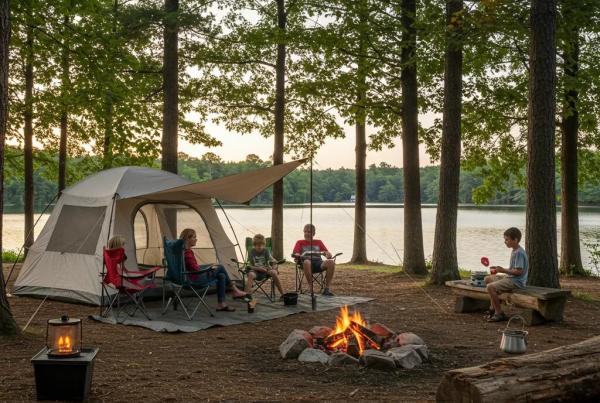
Tent camping reduces base lodging costs because sites rarely require hookups or cleaning fees, and shared gear cuts per-person expense. The mechanism of savings is simple: fewer mandatory extras plus the option to borrow or use multi-purpose items keeps upfront and recurring costs low. Families can increase comfort cheaply—insulating sleeping pads, a shared canopy, and group meal prep reduce trade-offs between comfort and price. Knowing how tent camping saves money helps families decide when to choose a tent site for a short, low-cost getaway and when other options might justify higher spend.
How Do RV Sites Offer Value for Families Traveling with Vehicles?
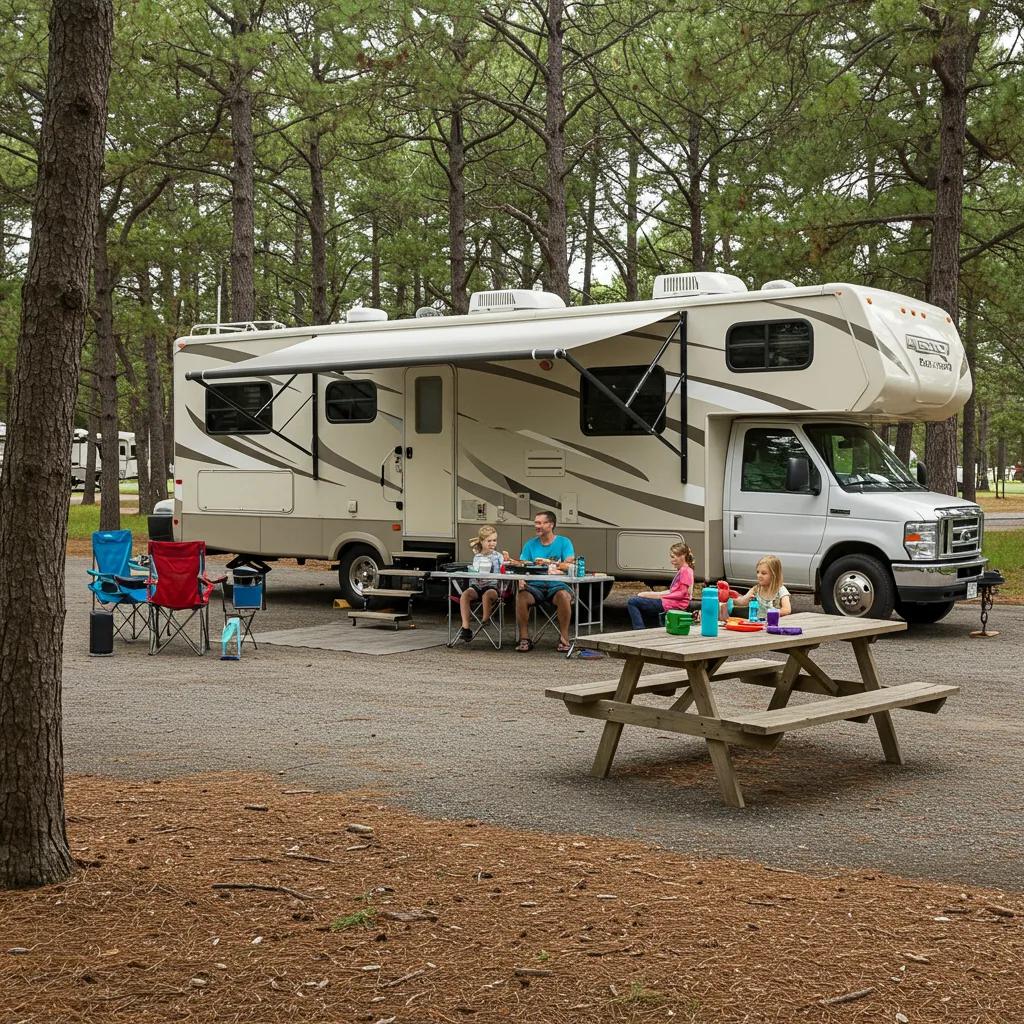
RV sites offer mechanics of convenience—onboard kitchens, familiar sleeping spaces, and storage—that reduce the need to buy gear or dine out, offsetting higher nightly fees in some cases. The trade-off is often higher nightly rates and fuel costs, but savings appear if a family avoids rental gear and restaurant meals. RV stays can be cost-effective for families traveling longer distances or needing accessible facilities, and membership discounts or boondocking alternatives can lower costs further. Understanding this cost-benefit balance helps families pick RV options only when convenience outweighs the higher direct fees.
Can Cabin Rentals Provide Comfort Without Breaking the Budget?
Cabin rentals consolidate costs by offering fixed sleeping and cooking spaces that can be shared across larger groups, which reduces per-person spending for short stays. The reason cabins sometimes end up affordable is economies of scale: a bigger family splits a single cabin rate versus multiple tent sites. Booking strategies such as midweek stays, off-peak dates, and choosing basic cabins without added amenities reduce the overall price. For families seeking comfort but watching the budget, small or basic cabin options can be the right compromise when shared across a group.
What Free and Low-Cost Activities Can Families Enjoy at Affordable Campgrounds?
Free and low-cost activities keep entertainment budgets small by relying on included amenities and nature-based pursuits that require minimal gear or fees. The mechanism is simple: campgrounds that include play zones and water access reduce the need to drive to paid attractions. Families who prioritize campgrounds with included amenities get more value per day and stretch their budget. Below we highlight common included activities and creative DIY ideas that maximize family fun without extra spending.
Which Included Amenities Make Family Camping More Affordable?
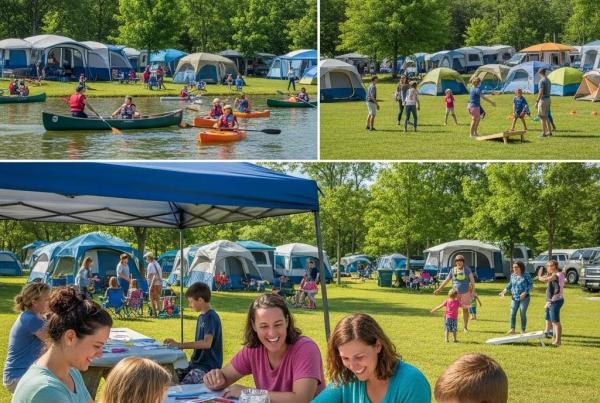
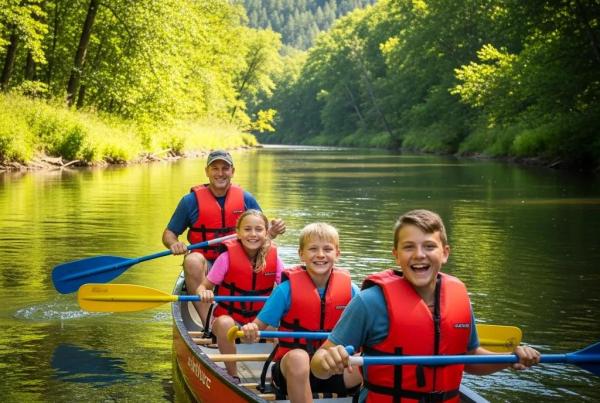
Included amenities—like water play, a swimming lake, playgrounds, and canoe access—replace paid outings and lower daily expenses for food and entertainment. At Walnut Hills Family Campground, included elements such as a Wibit water park, a swimming lake, canoe livery for the Shiawassee River, multiple playgrounds, and a dog park demonstrate how on-site offerings reduce outside spending by keeping kids entertained onsite. These meronymic features—Wibit water park, swimming lake, canoe livery—act as cost-offsets because families can skip paid pools or rentals elsewhere. Selecting campgrounds with strong included amenities is a practical strategy for budget-conscious families.
Intro to EAV table: The table below lists activities, typical cost expectations, and whether they’re usually included or extra at family-focused campgrounds.
This table clarifies which activities reduce the need for paid excursions and shows how included amenities can meaningfully lower daily trip spending. Choosing sites with these features often enables more affordable multi-day stays.
How Can Families Explore Nature Without Extra Costs?
Nature-based activities like short hikes, shoreline play, birdwatching, and pack-and-go scavenger hunts require minimal gear and no admission fees, offering high-value entertainment without raising the trip budget. The reason these activities are cost-effective is they use the campground’s existing natural assets and teach low-impact recreation that spans ages. Families should follow basic safety and leave-no-trace principles to protect sites and avoid fines. Emphasizing nature-based options provides low-cost variety that keeps children engaged across multiple days.
What Are Simple DIY Entertainment Ideas for Budget Camping?
DIY entertainment leverages common household items and simple setups to create memorable, low-cost family activities that reduce spending on paid attractions. Examples include flashlight tag, nature bingo, campfire story prompts, and craft projects using found natural materials; these games require minimal prep. A short materials list and quick setup instructions let parents rotate activities without extra purchases. With a few simple supplies and group coordination, DIY entertainment keeps the whole family engaged and lowers total recreational expenses.
How Can Families Save Money When Planning Their Camping Trips?
Saving money while planning a camping trip combines meal planning, smart packing, and timing stays during off-peak windows to minimize lodging fees and on-site spending. The mechanism of savings relies on preparation: pre-made meals and intentional gear choices reduce impulse purchases, while off-peak booking lowers nightly rates. Below are concrete planning steps families can implement immediately to shrink trip budgets without reducing fun.
What Are Smart Meal Planning Tips for Affordable Family Camping?
Meal planning cuts food costs by relying on bulk ingredients, make-ahead meals, and simple one-pot recipes that scale to family size and minimize per-person expense. Effective tactics include prepping breakfasts and dinners at home, using a single cooler with layered ice to reduce waste, and choosing meals that reuse ingredients across different dishes. These methods lower both grocery and on-site fuel costs and reduce time spent cooking, enabling more recreational time. Meal planning directly reduces the largest controllable daily expense while improving nutrition and variety.
- Prep-ahead dinners: Cook casseroles that reheat over a camp stove.
- Simple breakfasts: Use oatmeal or pre-mixed pancake batter to avoid extra ingredients.
- Shared snacks: Buy family-size portions and portion into reusable containers.
How Can Families Pack Smart to Avoid Extra Camping Gear Costs?
Packing smart prioritizes multi-use items and borrowing or renting rarely used gear to avoid one-off purchases that add up. Families should assemble a checklist focusing on shelter, layered sleep systems, shared cookware, and lightweight lighting, and mark items that can be rented locally. Multi-purpose items—like a tarp that becomes shelter and groundsheet—reduce the number of purchases needed. Packing strategically prevents last-minute gear buys that inflate the trip budget and ensures smoother family experiences.
When Are the Best Seasonal Deals and Off-Peak Savings Available?
Off-peak windows and midweek stays typically yield the lowest nightly rates because demand is lower, and campgrounds often run promotions during shoulder seasons to fill inventory. The reason this works is simple: supply and demand drive variable pricing, so shifting dates by a few days or choosing late spring/early fall can produce substantial savings. Families should watch for seasonal deals and consider midweek travel to capture reduced rates. These timing tactics make higher-amenity stays like cabins more accessible within a modest budget.
Where Can Families Find Cheap and Family-Friendly Campgrounds in Michigan?
Finding affordable, family-friendly campgrounds locally involves screening for included amenities, flexible accommodation types, and proximity to low-cost attractions that extend daily entertainment without added fees. The mechanism for local savings is combining on-site amenities with free nearby attractions to create a low-cost multi-day itinerary. Below we present a concrete local example and describe how to evaluate options when searching in Michigan.
What Makes Walnut Hills Family Campground an Affordable Choice in Durand, MI?
Walnut Hills Family Campground, operated by GatherGrounds Resorts in Durand, Michigan, offers a combination of diverse accommodation options—RV sites, tent camping areas, and cabin rentals—and family-focused amenities that reduce outside spending. Included features like a Wibit water park, a swimming lake, a canoe livery for the Shiawassee River, multiple playgrounds, and a dog park provide on-site entertainment that replaces paid day trips. This comprehensive family camping experience illustrates how on-site value can lower total trip costs for families prioritizing affordability and convenience.
How Do Walnut Hills’ Rates Compare for Tent Sites, RV Sites, and Cabins?
Rates vary by date and accommodation type, but the conceptual comparison follows the general pattern: tent sites usually have the lowest base rates, RV sites include hookup premiums, and cabins present a fixed cost that can be economical when split among a larger group. For exact pricing, families should consult the campground’s rates and offers to identify midweek or off-peak discounts and plan accordingly. Understanding where each option saves money helps families choose the best lodging for both comfort and budget.
What Nearby Free or Low-Cost Attractions Can Families Explore?
Combining Walnut Hills’ on-site amenities with nearby low-cost options extends family fun without raising daily costs; examples include river access for self-led paddling, local parks and trails for hikes, and community events that often have low admission. Families benefit by alternating on-site water play and playground time with brief local outings that require minimal travel. This mix leverages both campground meronyms and nearby free attractions to maximize entertainment value while keeping the trip affordable.
What Essential Gear Do Families Need for Budget-Friendly Camping Trips?
Essential gear for budget-friendly family camping focuses on multi-purpose, durable items that cover shelter, sleep, cooking, and light, allowing families to avoid redundant purchases and lower total gear spend. The mechanism of cost control is prioritizing high-impact items and leveraging rental/borrow options for rarely used equipment. Below are prioritized items and multi-use gear strategies that reduce long-term expense.
Which Camping Gear Items Are Must-Haves for Affordable Family Camping?
A core checklist includes a reliable shelter, insulated sleeping pads, shared cookware, a fuel-efficient stove, and portable lighting; these items deliver the most value per dollar and prevent costly last-minute buys. Cheap alternatives and DIY fixes—like using blankets for extra insulation or a tarp for sun/shade—work in many family contexts. Renting bulky items when necessary avoids upfront costs, and borrowing from friends fills seasonal gaps. Prioritizing these essentials keeps the family trip functional and affordable.
- Shelter: A tent or basic cabin reservation covers sleeping needs.
- Sleep systems: Insulated pads and warm bags prevent cold-related expenses.
- Cooking kit: One shared stove and pots reduce duplication.
How Can Families Use Multi-Purpose Gear to Save Money?
Multi-purpose gear like tarps that serve as shade, groundsheet, and rain shelter compresses multiple single-use purchases into one versatile item, reducing total spend and pack volume. Choosing versatile cookware that nests and repurposing containers for food storage and seating are additional examples. A few well-chosen multi-use pieces often replace several specialized items and deliver ongoing savings across multiple trips, solidifying a budget-friendly approach to family camping.
Frequently Asked Questions
What are the best times of year to find camping deals?
The best times to find camping deals typically fall during the shoulder seasons, which are late spring and early fall. During these periods, campgrounds often offer lower rates to attract visitors when demand is lower. Additionally, midweek stays can yield significant savings compared to weekend bookings. Families should keep an eye out for promotional offers or discounts during these times, as many campgrounds aim to fill their sites and may provide special rates to encourage bookings.
How can families ensure they have enough food while camping on a budget?
To ensure adequate food while camping on a budget, families should focus on meal planning and preparation. Preparing meals at home before the trip can save money and time. Opt for bulk ingredients and simple recipes that can be easily scaled. Utilizing a single cooler with layered ice can help keep perishables fresh longer. Additionally, packing snacks in reusable containers can minimize waste and reduce costs. This approach not only saves money but also enhances the overall camping experience by allowing more time for activities.
What are some tips for finding family-friendly campgrounds?
Finding family-friendly campgrounds involves researching amenities and activities that cater to children. Look for campgrounds that offer playgrounds, swimming areas, and organized activities. Online reviews and camping forums can provide insights into family experiences at specific sites. Additionally, consider campgrounds that are located near natural attractions, such as lakes or hiking trails, which can enhance the camping experience without incurring extra costs. Websites dedicated to camping can also filter options based on family-friendly criteria.
How can families make the most of their camping experience without overspending?
Families can maximize their camping experience without overspending by prioritizing free or low-cost activities. Engaging in nature-based pursuits like hiking, birdwatching, or scavenger hunts can provide entertainment without additional costs. Additionally, families can create DIY games and activities using common household items. Planning meals ahead of time and utilizing included campground amenities can also help keep expenses down while ensuring a fun and memorable trip. Emphasizing creativity and resourcefulness is key to enjoying camping on a budget.
What should families consider when choosing between tent camping, RV sites, and cabins?
When choosing between tent camping, RV sites, and cabins, families should consider their budget, comfort needs, and the size of their group. Tent camping is often the most affordable option, while RV sites provide convenience and amenities but may come with higher costs. Cabins can be economical for larger groups sharing the expense but may include additional fees. Evaluating the total cost, including any extra charges for amenities, will help families make an informed decision that aligns with their financial goals and comfort preferences.
How can families prepare for unexpected costs while camping?
To prepare for unexpected costs while camping, families should create a detailed budget that includes all potential expenses, such as campsite fees, food, activities, and gear. Setting aside a small emergency fund for unforeseen expenses can also be beneficial. Researching the campground’s policies on additional fees, such as cleaning or pet charges, can help avoid surprises. Additionally, families should consider bringing extra supplies or gear to minimize the need for last-minute purchases, ensuring a smoother and more affordable camping experience.
Conclusion
Choosing budget-friendly camping options allows families to enjoy memorable outdoor experiences without overspending. By understanding the cost dynamics of tent camping, RV sites, and cabin rentals, families can make informed decisions that align with their financial goals. Emphasizing included amenities and low-cost activities further enhances the value of each trip. Start planning your next affordable family camping adventure today and explore the possibilities that await!