Top Campground Safety Features: How They Protect Campers From Risks and Ensure Security
Campground safety features are the infrastructure, rules, and operational practices that reduce risk and keep campers secure while they enjoy outdoor recreation. This article explains what those safety features are, how they work, and the specific benefits they deliver so families and groups can plan safer trips. Readers will learn practical fire-safety controls, wildlife-mitigation tactics, access and surveillance strategies, water-park and lake protections, and emergency-preparedness measures tied to modern campground management. The guidance emphasizes mechanisms—containment, signage, supervised amenities, and staff response—that transform risk into manageable hazards and produce measurable safety outcomes. Below we map five core areas: fire safety, wildlife protection, security and access control, water-safety at inflatable parks and lakes, and emergency preparedness, with checklists, tables, and concise how-to steps for quick implementation. Each section uses concrete examples and recommended actions so campers and managers alike can apply the same principles at their sites.
What Are the Essential Fire Safety Features at Campgrounds?
Essential fire safety features at campgrounds are physical controls and operational rules that prevent ignition spread, allow rapid suppression, and reduce human error. These features combine designated fire pits, clearly posted campfire rules, accessible extinguishers, and staff inspection routines to limit wildfire risk and protect visitors. The immediate benefit is containment of open flames and rapid response capability, which lowers incident severity and supports quick evacuation when needed. Below we examine containment design, extinguisher placement, and enforceable rules, then present a compact reference table and a rules checklist to guide campers.
How Do Designated Fire Pits and Rings Prevent Wildfires?
Designated fire pits and rings are engineered containment features that concentrate heat, reduce ember escape, and keep flames off vegetation. They work by providing a metal or stone barrier that prevents ground scorches and directs ash into a controlled area, reducing accidental spread during gusty conditions. Proper placement—set back from tents, low-hanging branches, and flammable ground cover—minimizes ignition pathways and reduces ember transport. Understanding these placement and maintenance mechanics helps campers choose safe locations and comply with site rules to prevent wildfires.
Research into campsite fire hazards highlights the importance of understanding how fires can start and spread in these environments.
Analyzing Fire Hazards and Spread in Campsite Areas
1. The most common location for campsites is in forested or arborous areas. Given the regular use of combustible material by campers and the frequent use of campfires to cook, campsites become areas with a high propensity for the occurrence of fires. Moreover, fires occurring close to campsites can cause evacuations, disturbing their regular activities and jeopardizing tourism and likewise economic activities. While some campsites have tents and caravans within a secure distance of each other, many other campsites have the tents and caravans very concentrated in a limited area, making it much easier for fire to spread from a tent to the next. Despite the occurrence of several of these events, the associated risk is currently not well studied or documented. The work presented in this paper was performed within the Portuguese research projectFireCamp, whose main purpose was the analysis and documentation of the fire risk in campsites. Several topics were addressed and some of them will be presented within this paper, specifically: (1) understanding of the mechanisms associated to burning tents; (2) analysis of the combustibility of typical accessories used in campsites such as tents, sleeping bags or camping mattresses; (3) characterization of a campsite fuel cover and its surroundings via image analysis taken by unmanned aerial vehicles; and (4) modeling of fire spread in campsites. A pilot study was carried out between 2011 and 2014 in the Campsite of Côja, in Arganil—Coimbra—Portugal. Taking into consideration that external fires frequently threaten these sites, complementary to the analysis of the fuel distribution inside the campsite, the land use analysis in the surrounding area is also of great interest. Thus, a fuel map of the Campsite of Côja was produced based on a high-resolution map of the area obtained by aerial photography produced by drones. Based on this fuel map, a stochastic model was set up to predict the fire spread in the covered area. The results
Analysis of fire hazard in campsite areas, JR Azinheira, 2017
Where Are Fire Extinguishers Located for Emergency Use?
Fire extinguishers at well-managed campgrounds are positioned to be reachable from common facilities such as the registration area, bathhouses, and activity centers to enable rapid suppression of small fires. Typical extinguisher types are ABC-rated units suitable for most campground hazards, and they are maintained with inspection tags and visible signage for quick identification. Campers should learn the PASS technique—Pull, Aim, Squeeze, Sweep—and locate the nearest unit during check-in so they can act before fires escalate. Knowing extinguisher locations and basic use protocols supports on-site response and connects smoothly to staff-led emergency actions.
What Are the Campfire Rules to Ensure Safe Use?
Clear campfire rules reduce risky behavior by specifying supervision requirements, fuel limits, and extinguishing procedures that campers must follow each time they light a fire. Typical rules require that fires never be left unattended, that a water source or shovel be on hand, and that only approved fuels be burned to avoid excessive sparks or toxic smoke. A concise how-to for extinguishing a campfire is: drown with water, stir ashes, repeat until cool to touch; this stepwise routine prevents rekindling. These rules set expectations that campsite staff can enforce through signage and routine patrols, leading into wildlife and waste practices that further protect the area.
Different fire-safety features can be compared at a glance using the table below, which lists common assets, their typical locations, and operational notes.
This table helps campers and managers quickly find fire-control assets and supports safer behavior by clarifying where equipment and oversight are located. The comparison shows how containment, suppression tools, and staff oversight combine to reduce fire risk and set up the next area of concern: wildlife interactions.
How Do Campgrounds Protect Campers From Wildlife Risks?
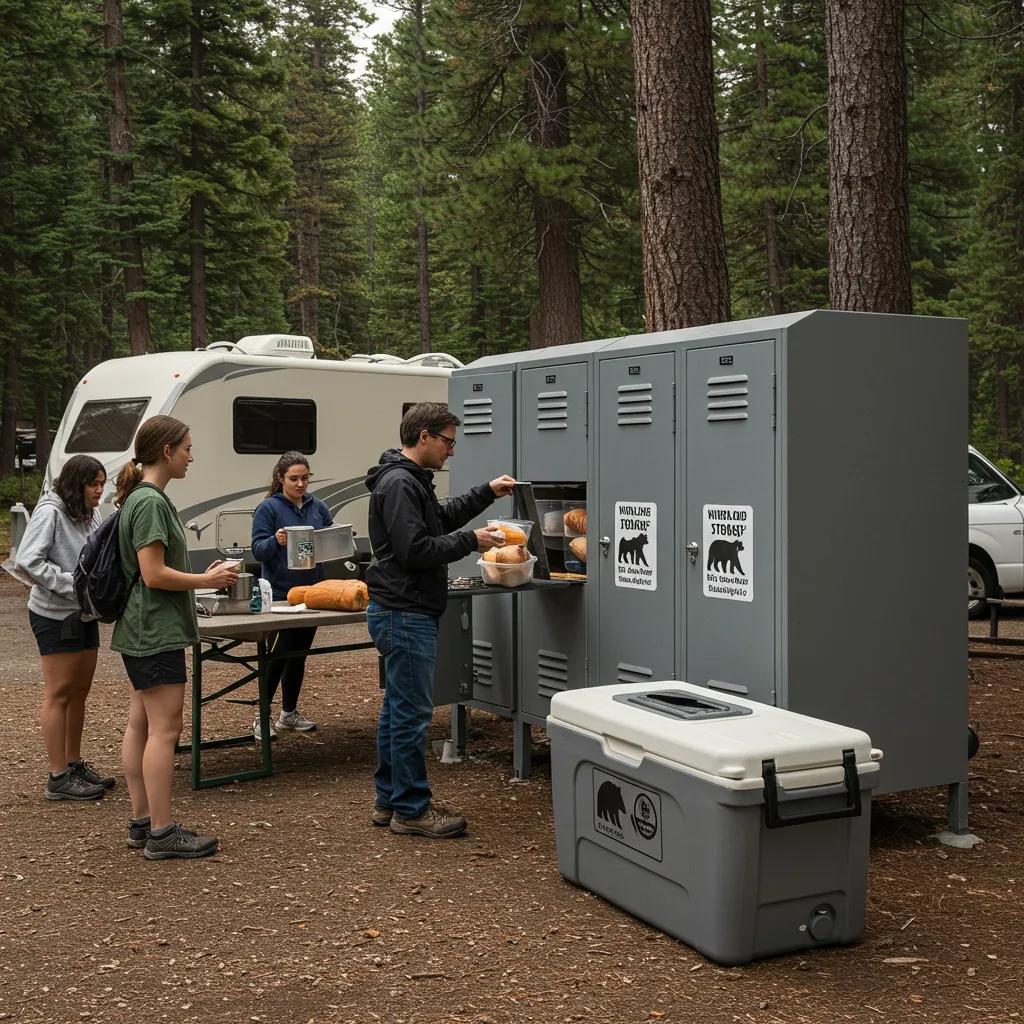
Campgrounds protect campers from wildlife risks by combining animal-resistant infrastructure, visitor behavior rules, and systematic waste control to reduce attractants and prevent encounters. These measures work because they interrupt the food-driven behaviors that commonly bring wildlife into human spaces, lowering both frequency and severity of incidents. Practical benefits include fewer nuisance visits, reduced property damage, and enhanced visitor safety through predictable, managed interactions. The following subsections cover food storage options, encounter-response steps, and waste-management practices that together form an effective wildlife-safety strategy.
What Are the Best Practices for Wildlife-Resistant Food Storage?
Wildlife-resistant food storage uses secured lockers, sealed coolers, or vehicle-only storage policies to deny animals access to human food and scented items that attract them to campsites. Bear-proof lockers are a top option where available, while vehicles and sealed hard-sided coolers act as alternatives in many campgrounds. Campers should avoid leaving food or toiletries unattended and should double-bag or containerize strong-smelling items to minimize scent trails. These storage habits reduce attraction and lead into clear encounter-response behaviors that protect people and animals alike.
Before addressing encounter response, compare common storage options for quick selection in the table below.
This comparison clarifies choices for campers planning packing and supports the next step: how to act during a wildlife sighting to keep everyone safe.
How Should Campers Respond to Wildlife Encounters?
When encountering wildlife, campers should follow a calm, distance-first protocol that prioritizes retreat and staff notification to reduce risk. Recommended steps are: stop and assess from a distance, make noise to advertise presence, back away slowly without turning your back, and report the sighting to campground staff if possible. Never feed wildlife or approach young animals, as this alters natural behavior and increases habituation to humans. These simple behavioral rules complement storage and waste practices and feed into site-level waste-management routines that further discourage animal visits.
How Does Waste Management Help Reduce Wildlife Attraction?
Effective waste management uses wildlife-resistant dumpsters, frequent collection schedules, and strict camper disposal rules to eliminate odors and food residues that draw animals into campsites. Covered, bear-proof dumpsters placed at strategic locations reduce nighttime foraging opportunities and the likelihood of animals learning human-food patterns. Campgrounds that enforce bagging rules and provide clear disposal signage make it easy for visitors to comply, cutting attraction points and the need for incident response. Proper waste control completes the wildlife-safety ecosystem and transitions naturally to how access and staffing improve overall security.
What Security Measures Ensure Campground Safety and Access Control?
Security measures in campgrounds are the combination of controlled access, visible staff presence, lighting, and surveillance that prevent unauthorized entry, reduce criminal opportunity, and increase visitor confidence. These systems function by limiting who can enter, deterring unwanted behavior through visibility, and capturing events for incident follow-up, which collectively enhance the safety of guests and their property. The ensuing paragraphs examine gated entry benefits, the daily role of staff and patrols, and how lighting and cameras are best deployed to balance privacy with protection.
How Does Gated Entry Enhance Campground Security?
Gated entry enhances security by controlling vehicle and pedestrian access, enabling staff to screen visitors during operating hours and record arrivals for accountability. A gate works in tandem with check-in procedures to manage who enters the property, reducing unauthorized overnight parking and transient traffic that can elevate risk. Proper signage and clear visitor instructions at gates help enforce rules and set expectations for behavior inside the campground. Controlled access leads into the broader topic of on-site staff and patrols that maintain safety through ongoing presence.
What Role Do On-Site Staff and Patrols Play in Safety?
On-site staff and patrols provide continuous monitoring, rapid incident response, and guest education that together reduce hazards and enforce campground policies. Staff visibility deters rule violations, enables quick assistance for medical or safety concerns, and offers a human contact point for reporting wildlife or facility issues. Training in routine checks, safety communication, and escalation procedures amplifies their effectiveness and builds trust with campers. The deterrence function of staff complements technological measures such as lighting and surveillance to create layered security.
How Do Lighting and Surveillance Systems Protect Campers?
Strategically placed lighting reduces trip hazards, improves wayfinding after dark, and deters opportunistic theft by increasing natural surveillance in common areas and pathways. Surveillance cameras, when used transparently and in public spaces, aid incident investigation and act as a deterrent while respecting visitor privacy in sleeping areas. Best practices include motion-activated lights on paths and consistent illumination of high-traffic hubs to balance energy use with safety benefits. Lighting and cameras form the technological layer that supports staff efforts and leads readers into specific water-safety controls for aquatic features.
Security tips for campers on securing their belongings are practical and actionable:
- Lock Vehicles and Secure Valuables: Store items out of sight and use locked compartments when possible.
- Use Provided Storage: Take advantage of campground lockers or secured storage areas if offered.
- Report Suspicious Activity: Notify on-site staff immediately to enable timely response.
These steps help visitors protect property and work in concert with gated entry and patrols to keep the campground safe for families and groups.
How Is Water Safety Managed at Campground Water Parks and Lakes?

Water safety management combines supervision, PFD enforcement, boundary marking, equipment checks, and emergency rescue readiness to prevent drowning and water-related injuries at both inflatable attractions and open-water lakes. These controls reduce drownings by ensuring swimmers are monitored, properly equipped, and confined to safe areas where rescue is practical. The section below breaks down rules at inflatable parks, lake boundary enforcement, and rental-craft protocols, and it uses a table to summarize water-safety controls across different attraction types. When describing water-park and lake safety, consider the example of the Wibit water park and supervised swimming lake at Walnut Hills Family Campground, where lifeguards, posted rules, and PFD enforcement illustrate these measures in practice.
What Are the Safety Rules at the Wibit Water Park?
Safety rules at an inflatable water park generally require adult supervision, age and size restrictions, proper swimwear, and no sharp objects to prevent injuries and equipment damage. Parks enforce maximum occupancy per module, require swim tests for unsupervised participants, and prohibit running or horseplay that leads to collisions. Staff supervision and posted rules create predictable behavior patterns that minimize risk, and pre-entry briefings reinforce safety expectations. These operational rules lead directly into lake boundary enforcement and mandatory life-jacket policies for open water.
Before comparing enforcement across water features, this table outlines common safety controls and how they are applied.
How Are Swimming Lake Boundaries and Life Jackets Enforced?
Swimming lake safety uses marked boundary buoys, designated swim zones, and mandatory PFDs for children or inexperienced swimmers to limit exposure to deeper water and boat traffic. Enforcement occurs through signage, staff monitoring during peak hours, and checks at rental points where PFDs are provided and fitted for size. Clear instructions on where to swim and when to wear a life jacket reduce confusion and enhance rescuer access in emergencies. These boundary measures connect to canoe and kayak rental protocols that emphasize pre-rental briefings and equipment inspections.
What Safety Measures Are in Place for Canoe and Kayak Rentals?
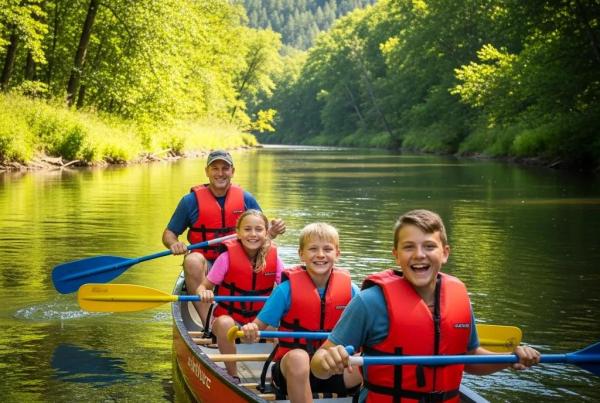
Rental programs for canoes and kayaks require a safety briefing, mandatory PFD use, weather checks, and equipment inspections to reduce capsizing risk and ensure prepared responses. Staff typically demonstrate re-entry techniques, check fit of PFDs, and confirm the renter’s basic experience before issuing craft. Weather and water-condition checks determine whether rentals proceed, and emergency procedures are reviewed with renters to enable rapid assistance. These rental safeguards complete the water-safety picture and transition naturally to emergency-preparedness features available on site.
What Emergency Preparedness Features Protect Campers in Crisis?
Emergency preparedness features are the documented response systems, staffed first aid points, communication protocols, and evacuation planning that enable rapid care and orderly departures during crises. These components reduce injury severity by providing immediate first response, clear instructions, and coordinated evacuation when necessary. The following subsections list first aid services, how contact procedures are communicated to guests, and the evacuation and weather-alert systems that together form an effective emergency response framework.
Where Are First Aid Stations Located and What Services Are Offered?
First aid stations at campgrounds provide basic care such as wound treatment, bandaging, and initial assessment, and may house AEDs and trained staff for immediate response. On-site First Aid availability helps stabilize common injuries until professional emergency services arrive and gives visitors reassurance that basic medical needs can be handled promptly. Campers should note first aid locations during check-in and ask staff about available supplies and escalation procedures for more serious incidents. Knowing these station locations and capabilities naturally leads into how emergency contact procedures are communicated to guests.
How Are Emergency Contact Procedures Communicated to Campers?
Emergency contact procedures are communicated through check-in briefings, posted maps, clearly marked signs, and staff directions so guests can quickly find help and follow instructions during an incident. Many campgrounds use orientation materials at arrival to highlight assembly points, emergency numbers, and staff roles, reinforcing this information with visible signage across the property. Guests are advised to save or note contact information provided at check-in and to ask staff about evacuation plans if unclear. Clear communication channels support orderly evacuation and weather-alert protocols described next.
What Are the Evacuation Routes and Weather Alert Systems?
Evacuation routes are pre-mapped paths leading to assembly points and safe zones, and weather-alert systems combine staff monitoring, public announcements, and on-site notification tools to warn guests of severe conditions. Routes are signed and kept clear through maintenance routines, and assembly points are chosen for accessibility and safety away from hazards such as slopes or flood zones. Campers should familiarize themselves with these routes and the location of assembly points upon arrival to improve readiness. For questions about on-site first aid availability or emergency planning during a stay, guests can inquire with campground staff or booking resources for up-to-date guidance specific to their visit.
Reserve your stay at Walnut Hills Family Campground to enjoy family-friendly amenities backed by clear safety protocols.
Frequently Asked Questions
What should I do if I encounter a wild animal while camping?
If you encounter a wild animal, remain calm and avoid sudden movements. Assess the situation from a safe distance and make noise to alert the animal of your presence. Slowly back away without turning your back on the animal. Do not attempt to feed or approach it, especially if it has young nearby. Report the sighting to campground staff to ensure they can monitor the situation and take necessary precautions to protect other campers.
How can I ensure my campsite is safe from fire hazards?
To ensure your campsite is safe from fire hazards, always use designated fire pits and follow campfire rules. Keep flammable materials away from the fire and never leave it unattended. Have a water source or shovel nearby for emergencies, and ensure the fire is completely extinguished before leaving. Familiarize yourself with the campground’s fire safety features, such as extinguisher locations and staff inspection routines, to enhance your safety while camping.
What are the best practices for disposing of waste at campgrounds?
Best practices for waste disposal at campgrounds include using wildlife-resistant dumpsters and following strict disposal rules. Always bag your trash securely and dispose of it in designated containers to minimize odors that attract wildlife. Avoid leaving food scraps or scented items in your campsite. Familiarize yourself with the campground’s waste management policies and ensure you comply with them to help maintain a safe and clean environment for all campers.
How can I prepare for emergencies while camping?
Preparing for emergencies while camping involves knowing the location of first aid stations, understanding emergency contact procedures, and familiarizing yourself with evacuation routes. During check-in, ask staff about available medical services and emergency protocols. Keep a list of emergency contacts handy and ensure your group knows how to reach help if needed. Being aware of weather alerts and having a plan for severe conditions can significantly enhance your safety during your stay.
What should I look for in a campground’s water safety measures?
When evaluating a campground’s water safety measures, check for lifeguard presence at swimming areas, clear signage indicating swim zones, and mandatory life jacket policies for inexperienced swimmers. Ensure that the campground conducts regular equipment checks and has emergency rescue protocols in place. Familiarize yourself with the safety rules specific to water features, such as inflatable parks or lakes, to ensure a safe and enjoyable experience while swimming or participating in water activities.
Are there specific rules for using campfire pits?
Yes, campfire pits come with specific rules to ensure safety. Common rules include never leaving a fire unattended, using only approved fuels, and having a water source or shovel nearby. Campers should also ensure that fires are kept at a manageable size and fully extinguished before leaving the site. Familiarizing yourself with these rules and adhering to them helps prevent wildfires and ensures a safe camping experience for everyone.
What security features should I expect at a campground?
At a well-managed campground, you can expect security features such as gated entry, visible staff presence, and surveillance systems. These measures help control access, deter unauthorized entry, and enhance overall safety. Look for well-lit pathways and common areas, as well as clear signage indicating rules and emergency procedures. Familiarizing yourself with these security features can help you feel more secure and confident during your camping experience.
Conclusion
Implementing robust campground safety features significantly enhances the security and enjoyment of outdoor experiences for families and groups. By understanding and utilizing fire safety, wildlife protection, security measures, water safety, and emergency preparedness, campers can minimize risks and ensure a memorable adventure. We encourage you to explore our campground offerings and familiarize yourself with these essential safety protocols. Reserve your stay today to experience a safe and enjoyable outdoor getaway.