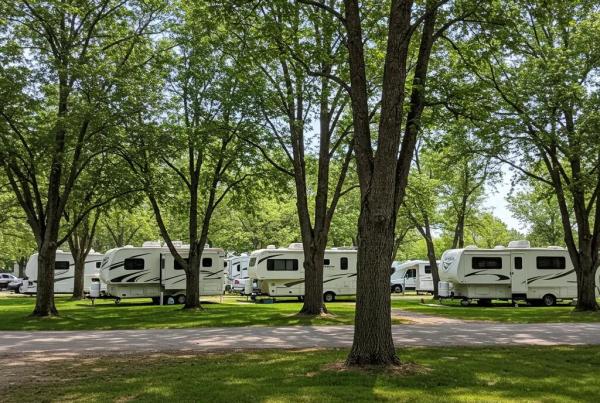


Understanding the Valuation Process: How to Price Your Campground or RV Park
Accurately valuing a campground or RV park means blending financial savvy with a deep understanding of on-the-ground operations and market dynamics. This valuation process translates your property’s performance into a solid, defensible market price. This guide will walk you through essential valuation concepts—Net Operating Income (NOI), capitalization rate (cap rate), comparable sales, and when to use discounted cash flow models—so you can confidently determine your campground or RV park’s true worth. We know many owners face the challenge of estimating fair market value while also preserving their legacy and minimizing disruption. That’s why this article provides step-by-step calculations, checklists, and comparisons of selling pathways designed to meet those priorities. If you’re considering a direct sale, GatherGrounds Resorts, a family-owned buyer, evaluates properties using standard valuation metrics and offers a direct acquisition path focused on stewardship and a straightforward, no-obligation conversation. We’ll cover core financial metrics, qualitative value drivers, essential preparation steps and documents, selling options (including brokered vs. direct sale), the GatherGrounds Resorts acquisition process, value-maximizing improvements, current 2025 market trends, and concise FAQs to help you make informed decisions. You’ll leave with practical formulas, checklists, and comparison tools to support a calm, informed pricing and exit strategy.
What Are the Core Financial Metrics for Campground and RV Park Valuation?

Net Operating Income (NOI) and capitalization rate (cap rate) are the fundamental financial metrics used to convert your campground’s earnings into market value. NOI measures your property’s recurring earnings, while the cap rate reflects the market’s required return. NOI is calculated by summing up stabilized gross revenue streams and then subtracting operating expenses, importantly excluding debt service and income taxes. This provides a consistent earnings figure that buyers use to compare assets. The cap rate, on the other hand, represents investor expectations for return based on the asset’s risk, location, and growth potential. By combining NOI and cap rate, you get the valuation formula: Value = NOI / Cap Rate. Understanding these metrics empowers you to run scenario analyses and strategically position improvements to boost NOI or reduce perceived risk, thereby compressing the cap rate and directly increasing your property’s value.
What Is Net Operating Income and How Do You Calculate It?
Net Operating Income (NOI) is essentially your property’s recurring pre-tax cash earnings after accounting for operating expenses. It serves as the primary earnings input for income-based valuations. To calculate NOI, aggregate your stabilized gross revenue—this includes site fees, cabin rentals, ancillary sales (like store or food & beverage), activity fees, and any other operating revenue. Then, subtract your recurring operating expenses, such as utilities, payroll, maintenance, supplies, insurance, and management fees. Crucially, exclude mortgage debt service and any owner’s personal expenses. Here’s a simple example: if a property generates $800,000 in gross revenue and operating expenses total $320,000, your NOI is $480,000. This figure becomes the foundation for capitalization or discounted cash flow approaches. Maintaining clear bookkeeping and consistent categories across multiple years will significantly improve NOI reliability and reduce potential valuation adjustments during due diligence.
Revenue and expense categories that contribute to NOI are critical for buyers and appraisers to verify, which naturally leads into how cap rate selection influences the application of NOI in a value calculation.
Revenue streams and typical operating expense lines used to compute NOI include:
- Site fees, cabin or glamping unit rentals, and nightly rates that form the bulk of your gross revenue.
- Ancillary revenue such as retail sales, food & beverage, equipment rentals, and activity fees that help diversify your income.
- Operating expenses including payroll, utilities, maintenance, insurance, and vendor contracts that reduce gross revenue down to NOI.
These specific line items are key indicators of NOI stability and, therefore, significantly affect how buyers will view future earnings in their valuation models.
This table illustrates how site scale impacts revenue, expenses, and the resulting NOI, which buyers use for their valuation models and comparative analysis.
How Does Capitalization Rate Affect Your Campground’s Value?
A capitalization rate (cap rate) is a market-derived percentage that converts NOI into an estimated value by reflecting investor-required returns and asset risk. Essentially, lower cap rates imply higher valuations for a given NOI. Cap rates can vary significantly based on location, asset quality, occupancy stability, growth prospects, and the broader interest rate environment. An asset with stable year-round revenue and strong amenity sets, for instance, typically attracts a compressed (lower) cap rate. Even small shifts in the cap rate can produce substantial valuation changes: for example, a $300,000 NOI at an 8% cap rate values the property at $3,750,000, while the same NOI at a 9% cap rate values it at $3,333,333—a material difference driven purely by perceived risk. Buyers and sellers should carefully evaluate local comparable transactions and market trends to select an appropriate cap rate. Remember, cap rate selection is a judgment call that combines quantitative comparable data with qualitative risk assessment.
Buyers will compare cap rates across similar assets to calibrate their offers, which directly ties into how NOI and cap rate combine to form a formal valuation.
This comparison highlights which attributes typically compress or expand cap rates and why buyers adjust their valuation multiples accordingly.
How Do NOI and Cap Rate Combine to Determine Property Value?
The valuation formula Value = NOI / Cap Rate directly converts earnings into a market price by dividing a property’s stabilized NOI by the chosen cap rate. This method is central to income-property valuation. For instance, using an NOI of $480,000 and a market cap rate of 8.5% produces a valuation of approximately $5,647,000. However, the same NOI at a 10% cap rate yields $4,800,000. This sensitivity clearly underscores the importance of both improving NOI and demonstrating lower risk to achieve premium pricing. While the NOI/cap-rate approach is common, owners should also consider sales-comparable analysis and discounted cash flow (DCF) models, especially if future capital projects or irregular revenue streams significantly impact earnings. Combining these methods and reconciling the outputs helps sellers present a defensible asking price and prepares them for buyer scrutiny during due diligence.
Scenario comparisons effectively illustrate how small changes in NOI or cap rate can produce meaningful valuation swings, and that naturally leads into the qualitative factors buyers assess beyond pure financials.
Which Factors Beyond Financials Influence Your Campground or RV Park’s Worth?
Qualitative, non-financial factors significantly shape a buyer’s perception of risk and growth potential, and consequently influence cap rate selection and final offers. These attributes include location, amenities, occupancy trends, the regulatory context, and demonstrated growth strategies. Location, for example, determines base demand through its proximity to attractions, travel corridors, and population centers. Amenities and the overall guest experience support higher average daily rates (ADR) and occupancy, while well-documented operational systems reduce perceived risk. Buyers also evaluate land use constraints, expansion potential, and community goodwill—elements that aren’t captured in a single-year NOI but are crucial for long-term value. Systematically cataloging these factors and packaging supporting evidence helps sellers minimize valuation discounts and improve negotiation outcomes.
How Does Location and Accessibility Impact Campground Value?
Location and accessibility are key drivers of demand intensity and seasonality, which in turn shape occupancy patterns and price elasticity. Proximity to national parks, scenic corridors, or regional attractions often supports higher ADRs and more predictable occupancy. Road access, clear signage, nearby services, and drive-time from urban markets all influence spontaneous bookings and repeat visitation. Remote properties, conversely, may require more intensive marketing efforts to achieve similar occupancy levels. Local demographics and travel trends also play a role in determining year-round demand versus highly seasonal peaks. Buyers use these signals to forecast stabilized revenue and to apply appropriate risk premiums. Evaluating and documenting your location’s strengths thoroughly prepares you to justify your pricing and identify targeted improvements that amplify those advantages.
What Amenities and Guest Experiences Drive Higher Valuation?
Amenities that enhance convenience, comfort, and offer unique stays—such as full hookups, high-quality restrooms, cabins or glamping units, on-site food or retail, and engaging recreational programming—tend to support higher ADRs and stronger repeat visitation, thereby improving NOI. Certain investments, like glamping units or well-branded cabin offerings, can command premium rates and diversify revenue beyond just nightly site fees. Infrastructure upgrades (sewer, water, electrical) also enable expansion and reduce capital risk for buyers. Guest experience factors, including cleanliness, staff professionalism, and consistent operations, translate into higher review scores and booking conversion rates, which buyers view as durable demand indicators. Prioritizing amenities that offer clear occupancy and rate uplift creates a stronger negotiating position and can justify a lower applied cap rate.
This EAV-style table clarifies which non-financial attributes most often shift buyer perception and valuation multipliers.
How Do Occupancy Rates and Revenue Streams Reflect Financial Health?
Occupancy rate and average daily rate (ADR) together determine your revenue per available site, which is the campground equivalent of RevPAR used in the lodging industry. Consistent occupancy with rising ADR indicates expanding market pricing power and a healthier NOI. Diversified revenue streams—from your store, F&B, rentals, or events—reduce reliance on seasonal nightly sales and lower cash-flow volatility, making projected earnings more bankable to buyers. Variability in occupancy, high cancellation rates, or concentrated single-channel bookings increase perceived risk and may prompt buyers to apply a higher cap rate. Tracking multi-year occupancy trends, booking lead times, and channel mix provides buyers with confidence in earnings stability and supports a stronger valuation.
These insights into occupancy and revenue directly link to how owners should prepare documentation to support their valuation claims, which is our next topic.
How Can You Prepare Your Campground or RV Park for an Accurate Valuation?
Preparing for valuation means assembling reliable historical financials, operational records, and property documentation. This allows buyers and appraisers to verify earnings and understand potential risks, ultimately reducing surprises and shortening the due diligence period. Essential documents include multi-year tax returns, profit & loss statements, occupancy reports, capital expenditure logs, site maps, leases, and vendor agreements. Organized records significantly increase buyer confidence and can reduce valuation discounts. Professional appraisals, market analyses, and third-party comparable sales data help calibrate expectations and support your asking price rationale. Systematic preparation, combined with targeted pre-sale improvements, positions you to receive competitive offers and expedite closing timelines.
Which Financial Documents Are Essential for Valuation?
Sellers should compile consistent financial records for at least the last three years. This includes tax returns, detailed profit & loss statements, balance sheets, payroll summaries, and bank statements that reconcile reported income. Operational reports such as occupancy by period, ADR trends, booking platform data, site maps, and capital expenditure histories allow buyers to accurately model future earnings and identify any deferred maintenance that could impact value. Lease agreements, permits, environmental assessments, and vendor/service contracts are necessary to assess liabilities and ongoing obligations. Providing a clear, annotated packet of these documents reduces friction during due diligence and signals professionalism to prospective buyers.
What Role Do Professional Appraisals and Market Analyses Play?
Professional appraisals, Broker Opinions of Value (BOV), and buyer-led financial analyses each play distinct roles. Appraisals provide formal, defensible valuations for lending and legal purposes. BOVs offer market-based pricing benchmarks. Buyer analyses reflect strategic fit and potential synergies. A formal appraisal is advisable when lender financing is anticipated or when transactional complexity is high, while BOVs can help set your asking price and marketing strategy. Engaging appraisers or brokers early provides valuable comparative sales data, local cap rate trends, and professional assumptions that strengthen your positioning during negotiations. Clear deliverables typically include a reconciled value range, comparable sales data, and supporting income capitalization or DCF models.
Assembling your documents and obtaining professional analyses naturally leads into deciding which selling pathway—broker, agent, or direct buyer—best aligns with your goals.
What Are Your Selling Options: Brokers, Agents, or Selling Directly to GatherGrounds Resorts?
Sellers typically choose between listing with a campground broker or real estate agent, pursuing a direct sale to a private buyer, or a hybrid approach. Each option involves tradeoffs regarding exposure, timing, fees, and control. Brokers and agents provide market reach, professional marketing, and negotiation experience, but they typically charge commissions and extend the market listing time. Direct sales to specialized buyers can offer speed, privacy, and reduced transaction friction, potentially delivering a quicker close and a transition that is sensitive to legacy concerns. To make the best decision, owners should weigh their priorities—maximum price versus time to close and stewardship—and examine typical commission ranges, timeline expectations, and buyer fit criteria.
What Are the Pros and Cons of Using Campground Brokers or Real Estate Agents?
Brokers and agents deliver access to a wider pool of buyers, professional marketing materials, and experienced negotiation that can drive competitive bidding. These advantages often lead to higher gross sale prices when the market responds favorably. However, brokers typically charge commissions and require a public marketing period that can lengthen the sale process and potentially expose operational uncertainties. Brokers are particularly useful for complex transactions, properties requiring broad exposure, or when owners want dedicated representation during negotiations. Sellers should evaluate potential brokers’ track records, fee structures, and marketing plans to determine if the additional commission aligns with the expected lift in sale proceeds.
- Brokers provide wide market exposure and negotiation expertise that can increase buyer competition.
- Brokers typically charge commissions that reduce net proceeds and require open-market listings that can lengthen timelines.
- Brokers are advisable when the property benefits from national exposure or when sellers seek professional representation through complex transactions.
These comparison points help owners assess whether a brokered listing or a direct sale better matches their priorities, and that leads into the direct buyer alternative.
How Does Selling Directly to GatherGrounds Resorts Benefit You?
Selling directly to GatherGrounds Resorts offers a family-owned acquisition pathway that emphasizes stewardship of the property and continuity. GatherGrounds positions itself to treat each acquisition as a legacy stewardship opportunity and values preserving property identity where feasible. Their small, close-knit team model allows sellers to speak directly with owners and operators rather than navigating corporate layers, which can speed communication and reduce negotiation friction. GatherGrounds focuses on acquiring parks with 130+ sites and often emphasizes thoughtful transition planning, which can include keeping existing teams in place and maintaining guest traditions to preserve continuity for staff and visitors. For sellers prioritizing a respectful handoff and a straightforward, no-obligation conversation, this direct option is a practical alternative to brokered listings.
How Do Commissions and Closing Times Differ Between Selling Options?
Selling pathways differ notably in commission structures, transaction timelines, and typical closing friction. Understanding these distinctions helps sellers align their timing and financial expectations. Brokered listings often involve a commission (industry ranges vary) and may require weeks to months of marketing before an acceptable offer emerges. In contrast, direct sales to specialized buyers usually shorten the time-to-close and reduce public exposure, though they may offer less competitive bidding. The tradeoffs include potential price maximization with brokers versus speed, privacy, and stewardship alignment with direct buyers. Sellers should evaluate net proceeds after fees alongside their desired timeline and legacy considerations. Preparing realistic timeline expectations and being transparent about deal breakers reduces negotiation delays and supports a smoother closing.
This comparison helps owners decide which pathway aligns with their priorities, such as price, timing, and preserving legacy.
What Is the GatherGrounds Resorts Acquisition Process for Sellers?
GatherGrounds Resorts’ acquisition process follows a stepwise evaluation that begins with a confidential fit conversation and proceeds through due diligence to a thoughtful transition. Their approach is framed as informational and stewardship-focused. The initial fit assessment examines high-level property characteristics—site count, location, basic financial metrics, and amenity profile—to determine strategic alignment. If a fit is established, the process moves into more detailed financial review and site visits, culminating in an offer and negotiated contingencies. Transition planning emphasizes preserving identity and staff where appropriate, with open communication plans for guests and the community to maintain continuity.
How Does the Initial Inquiry and Fit Assessment Work?
The initial inquiry with GatherGrounds Resorts typically starts with a confidential, no-obligation conversation where the seller provides high-level property details such as site count, general revenue ranges, location, and a brief description of amenities. This helps the buyer quickly assess strategic fit. GatherGrounds prefers parks with 130+ sites, so fit often hinges on size, regional location (particularly the upper Midwest), and amenity mix. The conversation aims to determine timing, seller priorities, and whether a more detailed information exchange is warranted, allowing both parties to decide on next steps without public marketing. This initial stage reduces wasted time and sets expectations for confidentiality and responsiveness.
What Are the Key Steps from Offer to Thoughtful Transition?
After fit is confirmed, GatherGrounds typically requests detailed financials and operational documents for due diligence, conducts site visits, and works through offer structure and contingencies. This stage clarifies any material issues and confirms valuation assumptions. Offers generally specify purchase price, earnest money, contingencies (e.g., title, environmental, financial verification), and proposed transition timelines. Negotiation focuses on preserving value and establishing mutually acceptable terms. Closing follows standard legal and escrow processes, after which transition planning addresses staff retention, guest communication, and operational handoff to minimize disruption. The process emphasizes a collaborative transition that respects the campground’s legacy, which many sellers prioritize when selecting a buyer.
How Does GatherGrounds Preserve Your Campground’s Legacy Post-Sale?
GatherGrounds Resorts frames acquisitions as stewardship opportunities that aim to preserve property identity, maintain guest traditions, and keep existing teams when feasible. Practical measures include retaining local staff, honoring established programming, and communicating continuity to guests. Their small team structure facilitates direct owner-to-owner dialogue that helps surface the elements of a property that define its character, enabling tailored transition plans rather than one-size-fits-all integrations. Examples of preservation practices include maintaining signage or name where appropriate, continuing popular events, and investing in targeted reinvestments that improve infrastructure while respecting guest expectations. This stewardship-focused approach reduces cultural shock for staff and visitors and supports smoother post-sale operations.
Owners evaluating buyer fit should weigh these stewardship practices against other sale priorities, and then prepare to implement targeted value-maximizing steps prior to listing or soliciting offers.
How Can You Maximize Your Campground or RV Park’s Value Before Selling?
Targeted improvements and operational refinements that increase NOI, reduce perceived risk, and document growth potential will generally yield the strongest impact on valuation. Focus on projects with measurable revenue uplift or cost reduction. High-return initiatives typically include site infrastructure upgrades, utility capacity improvements, adding higher-yield lodging options (cabins/glamping), and optimizing revenue management and online distribution to increase ADR and occupancy. Operational efficiencies—like better vendor contracts, improved staffing models, and automation—reduce operating expenses and improve reported NOI. Prioritizing projects with short payback periods and documenting projected returns makes it easier to show buyers upside and justify premium multiples.
What Improvements and Upgrades Yield the Best Return?
Improvements with high ROI often center on guest-facing amenities and infrastructure that enable higher rates or more nights sold. Examples include adding a limited number of glamping units or cabins, upgrading electrical and sewer for full-hookup sites, or improving restroom facilities. Cosmetic enhancements and landscaping can quickly improve reviews and conversion rates, while targeted utility investments permit higher-density use or seasonal extension. Owners should evaluate cost versus projected revenue uplift and prioritize upgrades that generate additional NOI within a short timeframe. Well-documented performance projections for each upgrade strengthen negotiation leverage.
How Can Operational Efficiencies Increase Net Operating Income?
Operational efficiencies that increase NOI include adopting booking and yield-management systems to optimize ADR, renegotiating vendor contracts to reduce variable costs, cross-training staff to lower payroll inefficiencies, and implementing preventative maintenance to avoid larger capital outlays. Automation of check-in/out and reservation workflows reduces labor hours and improves guest experience, which supports repeat bookings and referral business. Tracking key performance metrics and implementing simple cost controls can materially improve margins without major capital spend. Demonstrating documented cost savings and revenue uplift from operational changes provides buyers with confidence in stabilized NOI projections.
- Key operational steps include adopting an online booking engine, instituting yield-based pricing during high demand, and reducing manual administrative tasks through automation.
- Measurable outcomes include higher ADR, reduced cancellation rates, and lower labor cost per occupied night.
- Documenting these changes with before/after financials helps buyers validate claimed NOI improvements.
Why Is Marketing and Online Presence Important for Valuation?
A strong online presence and distribution strategy directly increases bookings, improves conversion rates, and provides verifiable booking data that buyers use to model revenue. High review scores and consistent digital availability reduce perceived demand risk. Channels to prioritize include your owned booking systems, major OTAs for reach, and reputation management to drive positive reviews and higher search visibility. Direct-booking percentages are important because they reduce commission costs and enhance margin stability; buyers often value properties with a healthy direct channel. Presenting clean, month-by-month booking data, channel mix, and review metrics gives buyers transparent evidence of demand and supports a stronger valuation.
These operational and marketing improvements must be considered alongside broader industry trends, which influence valuation norms in 2025.
What Are the 2025 Market Trends Affecting Campground and RV Park Valuation?
Several 2025 trends are reshaping valuation dynamics across outdoor hospitality: rising demand for glamping and experiential stays, increased importance of technology and booking systems, growing emphasis on sustainability, and shifting demographics favoring younger travelers seeking unique experiences. Glamping and upgraded cabins raise ADR potential, technology enhances operational efficiencies and data-driven pricing, and sustainability measures can lower running costs while appealing to eco-conscious guests. Demographic shifts toward Millennials and Gen Z elevate demand for experience-driven stays and digital-first booking flows. Owners who align asset improvements and operations with these trends often command stronger valuation multiples.
How Are Glamping and Luxury Amenities Influencing Prices?
Glamping and luxury amenities command premium night rates and attract a different, often higher-spend guest segment, increasing ADR and sometimes elongating shoulder seasons. These offerings can materially raise NOI when occupancy is sufficient to justify the initial capital investment. The tradeoff includes higher maintenance and furnishing costs, but carefully staged rollouts—starting with a few units—allow owners to test markets and measure uplift. Buyers view documented higher ADR from glamping favorably, provided the revenue is stable and margins are sustainable. As a result, properties that intelligently integrate luxury lodging can alter cap rate perception and increase value.
What Role Does Technology Integration Play in Valuation?
Technology—including online booking engines, channel managers, yield-management tools, automated guest communications, and point-of-sale systems—reduces labor costs, increases conversion rates, and provides granular booking data that underpins revenue forecasts. All of these factors improve the perceived quality of earnings. Automation streamlines operations, reduces late-night staffing needs, and improves guest experience, which supports repeat visitation and positive reviews. Buyers value clean, exportable booking and revenue data because it simplifies verification and reduces diligence timelines. Investments in technology that demonstrate measurable NOI improvements are often rewarded in valuations.
How Does Sustainability Impact Campground Worth?
Sustainability initiatives such as solar installations, water-saving systems, waste reduction programs, and native-land stewardship can reduce operating costs and appeal to eco-conscious travelers, creating both expense savings and demand uplift. Buyers may pay a premium for certified or demonstrably sustainable operations because lower utility costs and positive marketing differentiation reduce future operational risk. However, sellers should document actual savings and guest demand impacts rather than rely solely on assumptions. Practical upgrades that combine cost savings with marketing value tend to deliver the strongest valuation benefits.
What Demographic Shifts Are Driving Market Growth?
Demographic shifts toward Millennials and Gen Z participation in outdoor recreation are increasing demand for experience-driven, digitally bookable, and budget-flexible accommodations. These cohorts favor unique stays, social media-friendly amenities, and convenience. This change encourages owners to offer diversified lodging (glamping, cabins) and to prioritize online presence and mobile booking. Buyers assess how well a property is positioned for these trends when forecasting future ADR and occupancy growth. Aligning amenities and marketing to younger demographics can improve growth projections and reduce perceived obsolescence risk.
Frequently Asked Questions
What are the key improvements to consider before selling my campground?
Before selling your campground, focus on enhancements that can significantly boost Net Operating Income (NOI) and overall appeal. High-return improvements include upgrading amenities like glamping units or cabins, enhancing utility infrastructure, and optimizing guest experiences through better facilities. Additionally, operational efficiencies such as renegotiating vendor contracts or implementing automated booking systems can reduce costs and improve profitability. Documenting these changes with clear financial projections can help justify a higher asking price and attract more buyers.
How can I effectively market my campground to potential buyers?
To effectively market your campground, establish a strong online presence that showcases your property’s unique features and amenities. Utilize high-quality images, positive guest reviews, and detailed descriptions on your website and social media platforms. Engage with online travel agencies (OTAs) to increase visibility and bookings. Additionally, consider creating a comprehensive marketing packet that includes financial performance data, occupancy trends, and operational strengths to present to potential buyers, enhancing their confidence in your property’s value.
What role does guest experience play in campground valuation?
Guest experience significantly impacts campground valuation as it directly influences occupancy rates and repeat business. High-quality amenities, cleanliness, and exceptional customer service lead to positive reviews and higher average daily rates (ADR). Buyers often look for properties with a strong reputation for guest satisfaction, as this indicates stable demand and potential for revenue growth. Investing in staff training and maintaining high standards can enhance guest experiences, ultimately contributing to a higher valuation during the sale process.
How do seasonal trends affect campground pricing and valuation?
Seasonal trends can greatly influence campground pricing and valuation. Properties in high-demand areas may experience peak occupancy during certain seasons, leading to higher average daily rates (ADR) and increased revenue. Conversely, campgrounds with significant seasonal fluctuations may face challenges in maintaining consistent cash flow, which can lead to higher perceived risk and cap rates. Buyers will assess how well a property manages seasonality and whether it has strategies in place to maximize revenue during peak times while minimizing losses in off-peak seasons.
What are the benefits of obtaining a professional appraisal before selling?
Obtaining a professional appraisal before selling your campground provides a defensible valuation that can guide your asking price and negotiation strategy. An appraisal offers an objective assessment of your property’s worth based on comparable sales, market conditions, and financial performance. This can help you avoid overpricing or underpricing your property, ensuring you attract serious buyers. Additionally, having a formal appraisal can streamline the due diligence process, as it provides potential buyers with verified data that supports your valuation claims.
How can I assess the competitive landscape for my campground?
To assess the competitive landscape for your campground, conduct a thorough market analysis that includes identifying similar properties in your area, their pricing strategies, occupancy rates, and amenities offered. Utilize online resources, local real estate listings, and industry reports to gather data on competitors. Understanding their strengths and weaknesses can help you position your campground effectively, highlight unique selling points, and make informed decisions about pricing and improvements that can enhance your competitive edge in the market.
How Do I Determine the Value of My Campground or RV Park?
Determine value by calculating stabilized NOI, selecting an appropriate market cap rate, and applying Value = NOI / Cap Rate. Then, reconcile that figure with comparable sales and, if needed, DCF analysis for growth scenarios. Start by using multi-year averages for revenue and normalized expenses to derive a stabilized NOI. Research local cap rates through comparable transactions or broker input, and run sensitivity scenarios to show price ranges. For complex assets or when financing is likely, obtain a professional appraisal to validate your assumptions. This stepwise approach yields a defensible asking price and supports negotiations.
What Is a Good Cap Rate for an RV Park in 2025?
A good cap rate depends on location, asset quality, occupancy stability, and market conditions. In many markets, 2025 cap rates for well-performing RV parks and campgrounds often land within a moderate range, but local comparables and asset specifics drive the final selection. Factors pushing cap rates lower include strong demand drivers, documented NOI growth, and limited competition, while high seasonality or deferred capital needs push cap rates higher. Use local sales comps and broker/appraiser input to refine an initial cap-rate assumption and test valuation sensitivity across reasonable ranges.
Should I Use a Broker or Sell Directly to a Buyer Like GatherGrounds?
Choose a broker when you need broad market exposure, professional marketing, and potentially a higher sale price through competitive bidding. Consider a direct sale to a buyer like GatherGrounds Resorts if you prioritize speed, privacy, stewardship, and a collaborative transition. Evaluate your priorities (net proceeds vs. timeline and legacy) and compare estimated net proceeds after broker commissions against the advantages of a direct, confidential process. Initiating a confidential conversation with a direct buyer can be a low-friction way to test interest without committing to a full listing.
How Can I Calculate Net Operating Income for My Campground?
Calculate NOI by totaling stabilized gross revenue (site fees, rentals, ancillary sales) and subtracting recurring operating expenses (payroll, utilities, maintenance, insurance, management). Exclude debt service and income taxes. Use multi-year averages to smooth out abnormal years and adjust for one-time items or owner-specific expenses that should not be attributed to a buyer. Document each line item with supporting reports and bank statements to enable buyer verification. A clear NOI calculation reduces valuation disputes and speeds up due diligence.
What Documents Do I Need to Prepare for Selling My Campground?
Prepare, at a minimum: the last 3–5 years of tax returns, detailed profit & loss statements, balance sheets, occupancy reports, ADR and booking extracts, capital expenditure history, site maps and plats, lease agreements, permits, and vendor/service contracts. Organize these documents in a clean, dated packet and include explanatory notes for any irregular items or one-time expenses. Well-prepared documentation reduces diligence friction and supports a stronger buyer valuation.
- Financial Records: Tax returns, P&L, balance sheets.
- Operational Data: Occupancy, ADR, booking exports.
- Property Documents: Site maps, permits, leases.
Providing these organized documents enhances buyer confidence and shortens the time from offer to close.
Conclusion
Accurately valuing your campground or RV park is essential for maximizing its market potential and ensuring a smooth transition during the sale process. By understanding key financial metrics like Net Operating Income and capitalization rates, you can present a compelling case to potential buyers. Preparing thorough documentation and considering the right selling pathway will enhance your negotiation position and streamline the closing process. Take the next step towards a successful sale by exploring your options with GatherGrounds Resorts today.