Don’t Lose Value: Key Mistakes to Avoid When Selling Your RV Park
Selling an RV park or campground can feel like balancing a business sale with the preservation of a community you built, and owners often risk losing value when preventable mistakes occur. This article explains the most common pitfalls that cause value loss—improper valuation, weak financial preparation, deferred maintenance, legal oversights, and poor marketing—and gives practical, step-by-step actions to avoid them. Owners will learn how Net Operating Income (NOI) and cap rates drive price, which documents buyers expect, which property fixes move the needle, and how to manage compliance and due diligence to keep offers strong. The goal is to leave you with a prioritized pre-sale checklist, clear explanations of valuation mechanics, and concrete negotiation and marketing strategies so you can maximize proceeds without sacrificing legacy or staff continuity. Early in the process, consider a no-pressure conversation with a thoughtful buyer like GatherGrounds Resorts if you want an option that emphasizes legacy preservation while pursuing a fair transaction. Read on for action items, tables mapping valuation and documents to buyer impact, and lists that make pre-sale planning executable.
What Are the Most Common RV Park Selling Mistakes That Cause Value Loss?
Most sellers lose value through five predictable areas: inaccurate pricing, weak financial records, neglected property condition, legal/documentation gaps, and ineffective marketing or unqualified brokerage. These mistakes either shrink the buyer pool or create heavy contingencies that reduce the final sale price, and understanding them is the first step to prevention. The next sections break each category down with causes, examples, and remedies so you can prioritize fixes that protect both price and legacy. We begin with how improper valuation creates ripple effects that make offers smaller or rarer.
How Does Improper Valuation Impact Your RV Park Sale?
Improper valuation happens when sellers rely on emotion, outdated comps, or rule-of-thumb pricing rather than an income-based analysis, and this mispricing either chases qualified buyers away or leaves money on the table. When NOI and cap rate assumptions are incorrect, lender underwriting and investor offers will adjust downward, stretching time on market and inviting price reductions. For example, a modest 10% overstatement of NOI can create a perceived mismatch with market cap rates that leads buyers to reduce offers or increase contingencies. Correct valuation aligns seller expectations with buyer underwriting, creating a smoother negotiation and stronger offers that preserve value. Understanding valuation mechanics next informs what documentation you must prepare to substantiate your numbers.
Why Is Financial Preparation Crucial Before Selling Your Campground?

Financial preparation means assembling consistent P&L statements, tax returns, occupancy trends, and utility schedules that allow buyers and underwriters to verify NOI quickly, and this transparency reduces discounting and speeds up due diligence. Poorly organized or missing records force buyers to apply conservative adjustments or demand significant contingencies, which directly reduces the sale price or extends the closing timeline. By presenting reconciled historical financials and clear occupancy metrics, sellers demonstrate predictable cash flow and reduce the perceived risk embedded in offers. Preparing these records leads directly to the next priority: addressing physical issues buyers discover during inspections.
How Can Neglecting Property Condition Reduce Sale Price?
Neglected infrastructure and deferred maintenance convert into immediate buyer repair estimates, and buyers will either subtract those costs from offers or require escrow holdbacks that lower net proceeds. Visible problems—failed septic, potholed roads, aging bathhouses, or inconsistent hookups—present not just repair costs but operational risk that buyers price into cap rates. Simple documentation of recent repairs and maintenance programs reassures buyers and prevents aggressive adjustments to offers. Fixing high-impact items before listing generally preserves more value than steep post-offer negotiations, so prioritize infrastructure next.
What Legal and Documentation Errors Should Sellers Avoid?
Legal oversights such as unclear title, missing permits, undisclosed easements, or ambiguous lease arrangements can stop a sale in its tracks or force price reductions when buyers demand indemnities or credits. Lenders and buyers commonly pause or withdraw offers when title issues or unpermitted structures surface, because those problems increase closing risk and future liabilities. Proactive title review, verification of zoning and permits, and clear lease documentation for cabin or vendor relationships reduce friction during due diligence. Addressing these legal items early keeps the sale timeline predictable and prevents last-minute concessions.
How Do Marketing and Brokerage Choices Affect Your Sale Outcome?
Choosing the wrong brokerage or marketing approach limits exposure to qualified buyers, weakens negotiation positioning, and can artificially depress sale value by attracting unqualified offers that slow the process. General commercial listings may not reach specialized campground investors who underwrite NOI and amenities differently than typical commercial buyers. Hiring a broker with campground-specific experience or using targeted outreach preserves your negotiating leverage and reduces unnecessary price pressure. A specialized approach leads into the practical steps for establishing defensible pricing and documentation that buyers trust.
How Can You Avoid Improper Valuation and Pricing Mistakes When Selling Your RV Park?
Valuation should be driven by the income approach—NOI divided by market cap rate—supplemented by credible comps and a third-party appraisal when needed to support financing. A defensible price comes from three actions: validate NOI with clear financials, analyze market cap rates for similar recreational assets, and obtain a professional appraisal or broker valuation to anchor negotiations. These steps reduce buyer skepticism and minimize bid adjustments that cut value. Below is a compact comparison of common valuation approaches and how they typically affect RV park transactions.
What Is the Importance of Getting a Professional RV Park Appraisal?
A professional RV park appraisal provides independent validation of value by reconciling income, sales comps, and physical property factors, and lenders often rely on appraisals to underwrite loans. Appraisers experienced in recreational or hospitality assets apply appropriate cap rates and expense normalization, which helps avoid subjective buyer discounts during negotiations. Receiving an appraisal before marketing strengthens your position and reduces the chance of renegotiation after an offer, because buyers have fewer grounds to contest core assumptions. An appraisal also highlights vulnerabilities you can address pre-listing, smoothing the path from offer to close.
How Do NOI and Cap Rates Influence Your Campground’s Market Value?
NOI—revenues minus operating expenses, excluding financing—drives the income approach, and dividing stabilized NOI by an appropriate cap rate yields market value; small percentage shifts in either figure yield meaningful price changes. For example, a campground with $250,000 NOI priced at a 6% cap rate values at roughly $4.17M, whereas a 7% cap rate reduces value to about $3.57M, showing how market perception and asset quality matter. Buyers evaluate both historical NOI stability and growth potential when selecting a cap rate; amenities, location, and deferred maintenance all influence the rate applied. Clearly demonstrating stable NOI and low near-term capex needs preserves a lower cap rate and higher sale price.
What Are the Risks of Overpricing or Underpricing Your RV Park?
Overpricing reduces buyer interest and increases days on market, which often leads to lower eventual sale prices after staged reductions or stale-listing discounts, while underpricing can produce a fast sale but leaves money on the table. Sellers should avoid emotional pricing that reflects legacy rather than market fundamentals, and also resist panic offers that undervalue future earnings. Recommended practices include benchmarking to recent comps, using an appraisal, and setting a price range rather than a fixed figure to retain negotiation flexibility. Managing pricing discipline ensures you attract qualified buyers while keeping upward negotiation room.
How Can Market Trends Affect Your RV Park’s Sale Price?
Local demand trends, national camping interest, and interest-rate environments shift buyer pools and cap rates, and sellers should monitor current market conditions to time their listing strategically. Strong camping demand can compress cap rates and increase offers, while rising financing costs can reduce buyer purchasing power and lengthen sale timelines. Understanding both macro trends and local comparable activity helps you choose when to list or when to defer major capital projects to after a sale. Market trend awareness influences pricing strategy and the buyer outreach plan you adopt next.
What Financial Preparation Errors Should You Avoid to Maximize Your Campground’s Value?
Financial readiness begins with a consistent set of records that verify historic performance, and buyers expect clear P&L statements, tax returns, occupancy and reservation data, and itemized utility and payroll schedules. Missing or inconsistent financial records force buyers to apply conservative recasts that reduce perceived NOI and produce lower offers. Organizing documents in a structured data room with reconciled summaries speeds due diligence and preserves negotiating leverage. The following table links common financial documents to the buyer impact they have during underwriting.
Which Financial Records Are Essential for Selling an RV Park?
Sellers should prepare at minimum: three years of P&L statements, corresponding federal tax returns, occupancy and ADR or nightly rate data, utility and payroll ledgers, and capital expenditure records; together these documents substantiate NOI and future cash flow. Buyers use these records to underwrite loans and model post-acquisition performance, so gaps invite conservative assumptions and price reductions. Presenting reconciled numbers alongside explanatory notes for anomalies (one-time repairs, owner adjustments) helps buyers feel confident accepting reported NOI. Clear documentation shortens negotiations and supports a higher net sale outcome.
How Does Poor Bookkeeping Affect Buyer Confidence and Valuation?
Sloppy books create uncertainty about recurring income and expenses, prompting buyers to apply discounts or insist on escrowed holdbacks to cover perceived risk, which lowers actual proceeds. Common issues like inconsistent revenue recognition, uncleared owner draws, or missing receipts force buyers and brokers to perform time-consuming recasts that can materially reduce calculated NOI. Cleaning books, reconciling bank statements, and preparing explanatory schedules for any adjustments rehabilitates buyer trust and reduces hostile diligence findings. Improving bookkeeping is often one of the highest-return pre-sale tasks a seller can undertake.
What Are the Best Practices for Organizing Your Campground’s Financial Documents?
Adopt a simple folder structure: Executive Summary, P&L & Tax Returns, Occupancy & Reservations, Utilities & Payroll, Capital Projects, Leases & Agreements, and Permits & Title. Include a short executive summary that highlights normalized NOI, one-time items, seasonal revenue, and projected near-term capital needs to guide buyer review and reduce questions. Use consistent file naming and provide reconciled schedules that match bank and tax records to speed verification. A well-organized data room reduces time to close and preserves negotiating leverage by preventing buyer surprises.
How Can Financial Transparency Speed Up the Selling Process?
Transparency signals lower risk and shortens due diligence timelines, often resulting in cleaner offers with fewer contingencies and faster closings. Buyers facing clear, reconciled documentation are more likely to make confident offers and rely less on aggressive contingencies, which preserves sale value. Sellers who anticipate common underwriting questions—about leases, utility allocations, or major repairs—can preempt requests and compress the closing schedule. Preparing answers and documentation in advance reduces friction and increases the likelihood of receiving higher, cleaner offers.
How Does Property Condition Influence the Sale Price of Your RV Park?
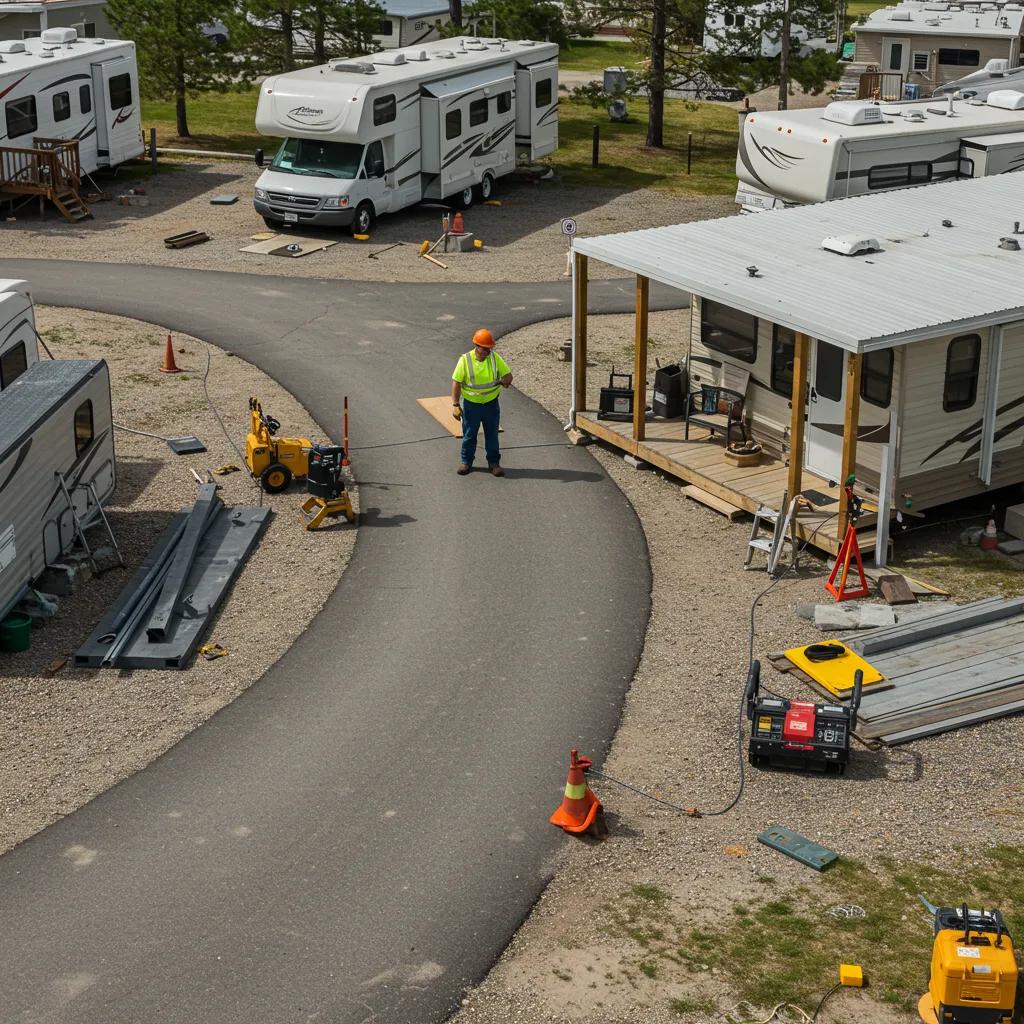
Property condition is a direct input into buyer capex expectations and perceived operational risk, and improvements or deferred maintenance change buyer-adjusted NOI and cap rate assumptions. Buyers price in near-term capital needs, so addressing high-impact maintenance prior to listing prevents steep offer discounts and escrow demands. Focus on safety and infrastructure first, then guest-facing upgrades that improve occupancy and average daily rate (ADR). Below is a cost-to-value comparison for common campground improvements to guide prioritization.
What Pre-Sale Maintenance Should You Complete Before Listing?
Prioritize items that affect safety, operations, and immediate guest functionality: repair failing septic or wastewater systems, fix critical electrical or water infrastructure, and ensure reliable hookups across sites. Document completed repairs with invoices and contractor warranties to reassure buyers and remove negotiation friction. Safety-related items often generate the largest immediate buyer adjustments if left unaddressed, so addressing them typically preserves more value than cosmetic upgrades. After addressing infrastructure, shift focus to amenity and curb appeal improvements.
How Can Upgrading Amenities Increase Your Campground’s Appeal?
Targeted amenity upgrades—such as improving bathhouse fixtures, adding rentable cabins, or enhancing family common areas—can increase ADR and occupancy, which in turn raises stabilized NOI and supports a higher valuation. Buyers respond to modern amenities because they signal lower near-term capital needs and stronger revenue upside, both of which tighten applicable cap rates. However, large new-build projects should be evaluated for return on investment pre-sale; modest, guest-facing improvements usually offer the best short-term value. Documenting amenity usage and revenue uplift from recent improvements strengthens buyer confidence.
Why Is Curb Appeal Important When Selling an RV Park?
Curb appeal shapes initial buyer perceptions during site visits and online listings, and high-quality photos with tidy landscaping, clear signage, and well-maintained entryways attract more qualified buyers and better offers. First impressions reduce perceived operational risk and make financials easier to sell to investors who rely partly on qualitative assessments. Low-cost fixes like refreshed signage, trimmed vegetation, and cleaned common areas often produce a disproportionate marketing uplift. Strong curb appeal leads naturally into higher-quality listing materials and buyer engagement strategies.
What Are Examples of Cost-Effective Improvements That Add Value?
Cost-effective, value-adding improvements include LED lighting upgrades, improved signage, site leveling, selective bathhouse refreshes, and documented repairs to roads or drainage systems; these typically require moderate investment and reduce buyer capex expectations. Prioritize items that impact guest stays and reduce immediate replacement needs for new owners. Keep records of costs and expected ROI to present to prospective buyers and brokers as part of your executive summary. Showing a modest, well-documented program of improvements reduces negotiation friction and preserves total sale value.
What Legal and Documentation Mistakes Can Cause Delays or Value Loss in RV Park Sales?
Legal and compliance issues such as unclear title, missing permits, unresolved liens, or zoning conflicts are common deal stoppers that cause buyers to withdraw or demand substantial price concessions. Proactively assembling title documents, permit histories, lease copies, and environmental reports mitigates these risks and demonstrates transparency during due diligence. Working early with a title company, land-use attorney, and environmental consultant helps identify and remediate red flags before they affect offers. The next table outlines required legal documents and buyer uses to help sellers prepare.
Which Legal Documents Are Required to Sell a Campground?
Sellers should assemble title and deed history, current leases and site contracts, copies of permits for septic, wells, and structures, utility agreements, and any franchise or vendor contracts; buyers expect clarity on these items. Missing or inconsistent documents prompt buyer requests for credits, escrow, or price reductions, and lenders may delay financing pending resolution. Prepare clear redlines and explanatory notes for any irregularities to reduce negotiation friction. Early engagement with a title company and attorney helps prioritize which items require immediate remediation.
How Can Zoning and Environmental Compliance Affect Your Sale?
Zoning restrictions, special use permits, wetlands, and waste-handling systems can limit future development or impose remediation obligations, prompting buyers to discount offers to cover potential costs or operational limits. Environmental liabilities in particular can scuttle underwriting or increase insurance costs for buyers, so early environmental screening is prudent. If problems exist, document remediation plans or allowable uses to reduce buyer uncertainty. Proactive verification of zoning and environmental status reduces last-minute concessions.
What Are Common Legal Pitfalls in Campground Transactions?
Typical pitfalls include undisclosed easements, unresolved contractor liens, unrecorded permits, or ambiguous lease terms that transfer unexpected obligations to buyers and create closing delays or price adjustments. These issues often surface late in diligence and force hurried negotiations that reduce net proceeds. Using professional title searches and clear seller disclosures minimizes surprises and protects value. Identifying potential encumbrances early lets you resolve or disclose them on your terms.
How Should You Prepare for Due Diligence Requests?
Assemble a digital data room with consistent folder names, an executive financial summary, copies of legal documents, maintenance logs, and recent contractor invoices; anticipate buyer timelines and be ready to respond within agreed windows. Clear, organized responses reduce buyer requests for extensions or escrow, and speed lenders’ underwriting processes. Prepare a short Q&A that addresses common diligence questions to reduce repetitive requests and maintain momentum. A well-managed due diligence phase often results in cleaner offers and fewer contingencies.
How Can Effective Marketing and Choosing the Right Broker Maximize Your RV Park Sale Value?
Targeted marketing and the right broker broaden exposure to qualified buyers, preserve negotiating leverage, and minimize time on market, all of which translate to higher sale prices and cleaner closings. Specialized campground brokers, business brokers with recreation experience, or seasoned commercial agents with a campground network can better qualify buyers and position the asset to active investors. A broker also coordinates valuation support, manages confidentiality, and handles negotiation tactics that preserve value. Below are risks of DIY sales and selection criteria for choosing the right advisor.
Selling without professional help exposes owners to limited reach, pricing errors, and negotiation disadvantages that often result in lower net proceeds and longer timelines. DIY listings typically fail to access specialized buyers, and owners negotiating individually risk making concessions that a broker would avoid. Professional brokers reduce these risks by pre-qualifying buyers, controlling information flow, and executing targeted marketing. Choosing the right advisor preserves value and reduces transactional headaches.
What Are the Risks of Selling Your RV Park Without Professional Help?
Attempting a sale without a specialist often limits buyer outreach to local or generalist audiences and increases the likelihood of receiving poorly qualified offers or losing time to unvetted inquiries. Owners may unintentionally disclose sensitive operational details or accept lowball offers under negotiation pressure, reducing final proceeds. Professional brokers reduce these risks by pre-qualifying buyers, controlling information flow, and executing targeted marketing. Choosing the right advisor preserves value and reduces transactional headaches.
How Do You Choose the Right Broker for Your Campground Sale?
Select a broker with proven campground or recreational property experience, a documented buyer network, expertise in valuation and financing for hospitality assets, and transparent fee and marketing plans. Ask for examples of similar transactions handled, a prospective marketing plan, and references for buyer qualification processes. Use an interview checklist that covers market reach, valuation methods, negotiation strategy, and confidentiality protocols. A well-chosen broker becomes a force-multiplier in achieving top-dollar sale outcomes.
What Marketing Strategies Attract Qualified Buyers for RV Parks?
Targeted marketing tactics include industry-specific listings, private outreach to campground investors, professionally produced financial teasers, and high-quality photography and drone footage that highlight amenities and occupancy patterns. Presenting a succinct executive summary with normalized NOI and documented occupancy trends quickly attracts investor attention and reduces low-quality inquiries. Combining confidentiality with buyer qualification ensures only serious, financed buyers engage. Effective marketing ultimately narrows the buyer pool to those who underwrite the asset properly and preserve seller value.
How Does a Broker Help You Avoid Common Selling Mistakes?
A broker brings market data, comparable sales, negotiation experience, and buyer vetting that prevent emotional pricing, unqualified offers, and weak documentation from eroding sale value. Brokers coordinate appraisals, suggest remediation priorities, and often have relationships with commercial appraisers, title companies, and lenders that speed closings. Their ability to manage timelines and buyer expectations reduces contingency demands and leverages competition to preserve price. With a broker in place, sellers focus on operations and documentation while marketing and negotiation are executed professionally.
After considering these options and the risks of selling without professional help, some owners prefer discussing alternatives such as an acquisition conversation with a thoughtful buyer. GatherGrounds Resorts offers one such option that emphasizes respectful transitions and legacy preservation.
Why Choose GatherGrounds Resorts for a Thoughtful and Value-Preserving RV Park Sale?
GatherGrounds Resorts is a family-owned professional campground management and ownership group that focuses on acquiring existing campgrounds and RV parks, with an emphasis on properties in the upper Midwest and assets meeting their acquisition profile. Their approach positions them as an alternative to transactional brokers or market listings for owners who prioritize preservation of legacy, continuity for staff and guests, and a no-pressure conversation about options. For owners who value a careful transition and professional management post-sale, understanding GatherGrounds’ core commitments helps evaluate whether a direct sale to an operator fits their goals. The next subsections explain how GatherGrounds approaches legacy, transition, modernization, and how to start a conversation.
How Does GatherGrounds Preserve Your Campground’s Legacy and Staff?
GatherGrounds describes a family-owned approach that emphasizes preserving a campground’s identity and making efforts to retain staff where practical, thereby reducing community disruption and protecting goodwill built by the seller. This continuity-oriented stance often reassures sellers concerned about guests and employees, and reduces the reputational costs that can accompany ownership changes. While specific outcomes depend on each transaction, the emphasis on respectful transition appears central to their acquisition philosophy. These preservation commitments inform how they structure early conversations with owners.
What Is a Thoughtful Transition and Why Does It Matter?
A thoughtful transition coordinates staff retention, guest communication, phased operational changes, and targeted investments in amenities to maintain occupancy and goodwill through ownership change, and this reduces revenue interruptions that could otherwise reduce realized sale value. Thoughtful transitions also mitigate tenant or vendor churn and preserve documented revenue streams that buyers and lenders value. For sellers, a planned transition reduces the emotional and operational burden of transfer and helps protect the asset’s long-term value. Sellers should evaluate transition plans as part of any offer consideration to ensure operational continuity.
How Does GatherGrounds Invest in Modernizing Acquired Campgrounds?
GatherGrounds focuses on professional management and modernization efforts that typically include operational improvements and targeted amenity upgrades to improve guest experience and long-term value, as indicated in their public descriptions. Modernization reduces immediate capital demands on new owners and can support higher ADR and occupancy over time when executed thoughtfully. Their reinvestment focus aims to balance preservation with enhancements that benefit both guests and the local community. Understanding a buyer’s modernization philosophy helps sellers anticipate post-sale plans.
How Can You Start a No-Pressure Conversation About Selling Your RV Park?
If you prefer a direct, no-pressure conversation about selling to an operator that emphasizes legacy and continuity, GatherGrounds invites owners to reach out and discuss goals, timelines, and preliminary metrics such as site count and recent NOI to determine fit. In an initial discussion you should be prepared to summarize P&L highlights, site count, occupancy seasonality, and major infrastructure items so the buyer can assess alignment with acquisition criteria. This exploratory step does not obligate you to sell, but it provides an additional option beyond conventional brokerage or listing. The next section summarizes action steps owners can take immediately to avoid losing value.
What Are the Key Takeaways to Avoid Losing Money When Selling Your RV Park?
To preserve value, focus your pre-sale work on three parallel tracks: establish defensible valuation via NOI documentation and appraisal, prepare complete financial and legal documentation, and address high-impact property maintenance and visible curb appeal. Organized preparation reduces buyer adjustments, shortens due diligence, and increases the likelihood of competitive offers that keep contingencies minimal. Prioritize high-return actions—clean books, fix safety and infrastructure issues, assemble title and permits, and hire a broker with campground expertise or evaluate thoughtful buyers who value legacy. The short checklists and timing guidance below help you convert these priorities into a practical plan.
A pre-sale checklist helps convert the article’s recommendations into a prioritized action list you can follow before listing or contacting buyers.
- Organize Financials: Reconcile P&L, gather tax returns, prepare occupancy and utility schedules.
- Address Infrastructure: Complete safety and major repairs for septic, water, roads, and hookups.
- Verify Legal Status: Run a title check, collect permits, and resolve liens or easements.
- Improve Presentation: Enhance curb appeal, update signage, and produce quality photos.
- Choose Advisor: Interview campground-experienced brokers or consider a conversation with a thoughtful operator.
How Can You Use a Pre-Sale Checklist to Prevent Common Errors?
Use a pre-sale checklist ordered by impact-to-cost: legal/title and safety items first, financial clarity next, then marketing and cosmetic enhancements; documenting progress prevents overlooked items that lead to last-minute concessions. Assign realistic timelines and collect invoices and warranties for completed work to provide to buyers. A prepared seller gets cleaner offers and avoids costly renegotiations triggered by surprise diligence items. Following this sequence streamlines the process and preserves the full value of your campground.
When Is the Best Time to Sell Your Campground for Maximum Value?
Consider market demand, seasonality, and when your financial records and physical condition are market-ready; in many markets, listing in a period of visible high occupancy or after completing key improvements can improve buyer interest and perceived stability. Also factor in interest-rate environments and recent comparable sales trends when timing a sale, because those external factors affect cap rates and buyer financing. Coordinate operational readiness—staffing and maintenance cycles—with your listing timeline to present the asset at peak condition. Timing choices should align with the readiness checklist to maximize offers.
How Can You Ensure a Smooth and Profitable RV Park Sale?
Be proactive: document finances, resolve legal issues, complete prioritized maintenance, craft a clear executive summary for buyers, and select advisors who understand campground assets—commercial appraisers, business brokers, environmental consultants, and title companies all play roles in a clean transaction. Anticipate common buyer questions and assemble an organized data room to maintain momentum during diligence. If preserving legacy is a priority, consider a no-pressure conversation with a thoughtful operator as one of several exit routes. Taking these steps increases the likelihood of a timely, high-value sale that honors both financial and personal goals.
Frequently Asked Questions
What should I do if I have deferred maintenance on my RV park?
Addressing deferred maintenance is crucial before selling your RV park. Start by identifying high-impact repairs that affect safety and guest experience, such as plumbing, electrical systems, and road conditions. Document all completed repairs with invoices and warranties to reassure potential buyers. By proactively fixing these issues, you can prevent significant price reductions and improve buyer confidence, ultimately preserving the value of your property during the sale process.
How can I effectively market my RV park to attract buyers?
To effectively market your RV park, focus on targeted strategies that highlight its unique features. Use high-quality photography and drone footage to showcase amenities and the surrounding environment. Create an executive summary that includes normalized NOI and occupancy trends to attract serious investors. Additionally, consider industry-specific listings and private outreach to campground investors to broaden your reach. A well-executed marketing plan can significantly enhance buyer interest and lead to better offers.
What role does a broker play in selling my RV park?
A broker specializing in campground sales can provide invaluable support throughout the selling process. They help you set a defensible price based on market data, manage buyer inquiries, and negotiate terms that protect your interests. Brokers also have access to a network of qualified buyers and can execute targeted marketing strategies that you might not reach on your own. Their expertise can streamline the sale, reduce time on the market, and ultimately maximize your sale price.
How can I prepare for buyer due diligence requests?
Preparing for buyer due diligence involves organizing all relevant documents in a digital data room. Include financial records, legal documents, maintenance logs, and any recent contractor invoices. Anticipate common buyer questions and prepare clear, concise answers to reduce repetitive requests. A well-organized approach not only speeds up the due diligence process but also enhances buyer confidence, leading to cleaner offers and fewer contingencies during negotiations.
What are the benefits of getting a professional appraisal before selling?
A professional appraisal provides an independent assessment of your RV park’s value, which can help you set a realistic asking price. Appraisers experienced in recreational properties consider factors like income, comparable sales, and property condition, which can prevent subjective buyer discounts during negotiations. Having an appraisal in hand before listing strengthens your position, reduces the likelihood of renegotiation after an offer, and highlights any vulnerabilities you may need to address prior to sale.
How can I ensure a smooth transition for staff and guests after the sale?
To ensure a smooth transition for staff and guests, develop a thoughtful transition plan that includes clear communication about ownership changes. Retaining key staff members can help maintain operational continuity and reassure guests. Consider phased operational changes and targeted investments in amenities to enhance guest experience during the transition. A well-structured plan not only preserves goodwill but also protects the long-term value of your RV park post-sale.
What are the common legal issues to address before selling my RV park?
Common legal issues to address before selling your RV park include ensuring clear title, verifying permits, and resolving any liens or easements. Conduct a thorough review of all legal documents, including leases and vendor contracts, to avoid surprises during the sale process. Engaging with a title company and legal counsel early can help identify and remediate potential red flags, ensuring a smoother transaction and protecting your sale value.
Conclusion
Maximizing the value of your RV park sale hinges on avoiding common pitfalls such as improper valuation, inadequate financial preparation, and neglecting property condition. By implementing a structured pre-sale checklist and engaging with knowledgeable professionals, you can enhance your negotiating position and attract serious buyers. If preserving your campground’s legacy is important to you, consider initiating a conversation with GatherGrounds Resorts for a thoughtful approach to your sale. Take the first step towards a successful transaction by exploring your options today.