Cabin camping means sleeping in a small building the campground provides: real beds, electric lights, usually air conditioning, and a door that locks. Tent camping means bringing your own shelter and sleeping on the ground, for a lower nightly rate and far more site choices. At Walnut Hills Family Campground in Durand, Michigan, both options sit on the same 42 acres and share the same spring-fed lake, Wibit floating water park, river float trips and weekend events. The choice comes down to who’s coming, what gear you own and how much weather you’re willing to sleep through.
Here is how tents and cabins compare at Walnut Hills, what each one actually includes, who should pick which, and a short guide to cabin tents vs dome tents for anyone bringing their own tent.
Cabin camping vs tent camping at a glance
| Camping cabin at Walnut Hills | Tent site at Walnut Hills | |
|---|---|---|
| How many | 2 cabins (sites 43 and 46) | 18 tent sites |
| Sleeping | Double bed plus a twin-over-twin bunk; sleeps 4 | Whatever you bring |
| Power and climate | Lights, air conditioning, fridge, microwave, coffee maker | 4 sites have electric; 14 are primitive |
| Bathroom | No plumbing; walk to the bathhouse | Walk to the bathhouse |
| Outside the door | Porch, fire ring, picnic table | Fire ring, picnic table |
| Bring | Linens, pillows, towels, food | Tent, sleeping gear, cooking gear |
| Pets | Not allowed in cabins | Welcome on a leash |
| Cost | Highest nightly rate; $75 refundable cleaning deposit | Lowest nightly rate |
| Best for | First-timers, grandparents, anyone without gear | Budget trips, frequent campers, dog owners |
Current rates for both are on the Walnut Hills rates page. Pricing is dynamic, so holiday weekends cost more and May, October and the weekends around Memorial Day and Labor Day cost less.
What is cabin camping like at Walnut Hills?
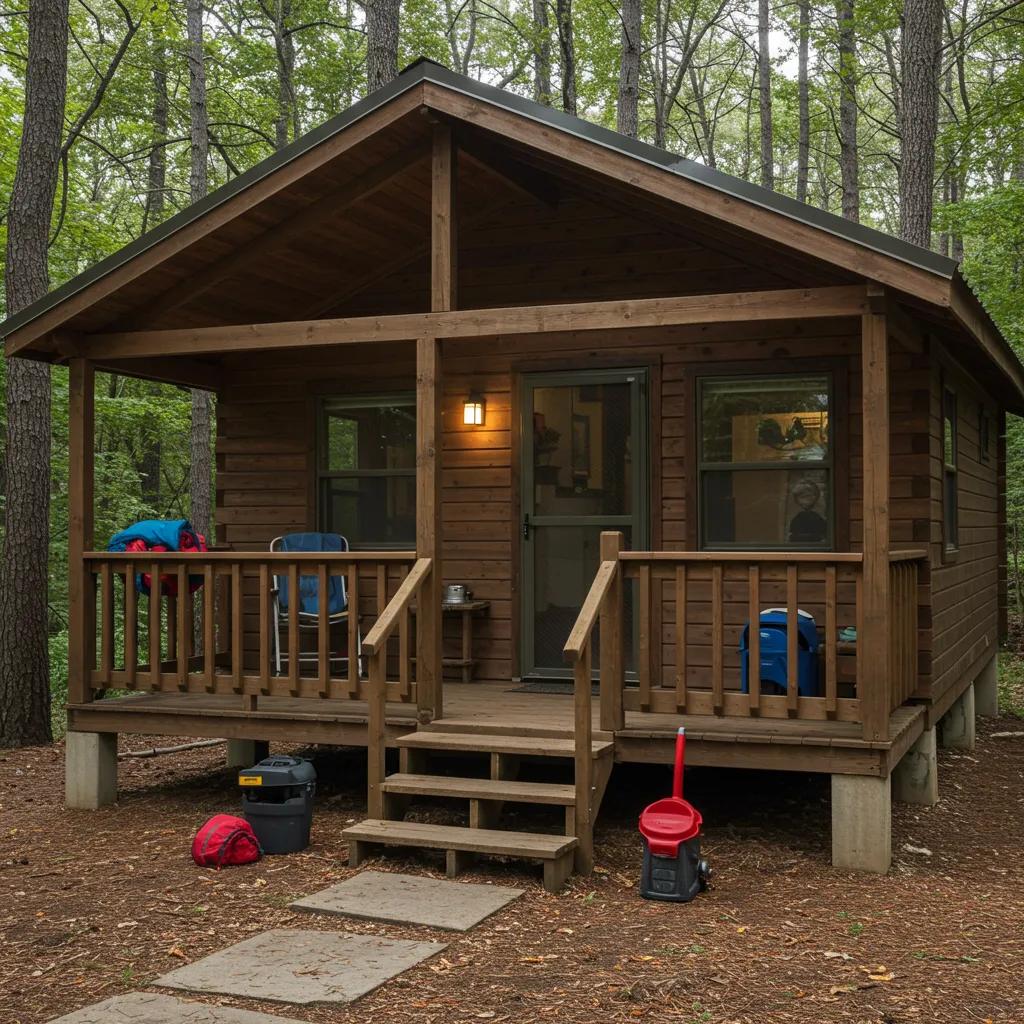
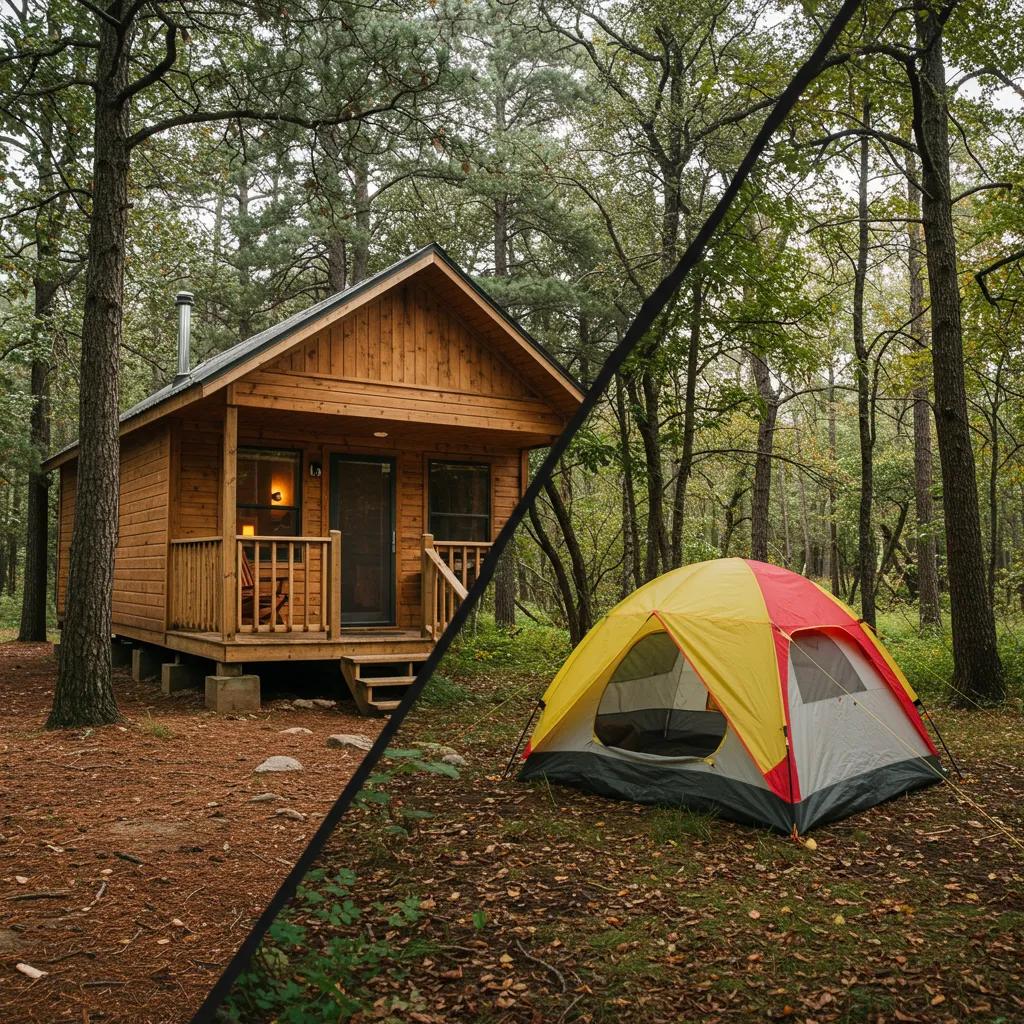
Our two cabins are what people in Michigan call camping cabins: one room, no plumbing, and everything else you need to skip the tent. Inside each one you’ll find lights, air conditioning, a table, a refrigerator, a microwave and a coffee maker, plus a double bed and a bunk bed with two twins. Each sleeps four. The interior is tongue-and-groove wood, the outside is painted red, and there’s a small front porch, a fire ring and a picnic table outside. You can scroll through photos of both cabins in our reservation system: click Book Now, then click the cabin on the map.
A few things first-time cabin campers should know:
- Bring your own bedding. We don’t supply sheets, blankets, pillows or towels. Many families bring sleeping bags and treat the cabin like a hard-sided tent.
- The bathhouse is a short walk. Cabin 46 is close to the main bathhouse, with a set of privies even closer. Cabin 43 is a little farther but still an easy walk. The bathhouse was fully renovated, with new showers, quality sink bays and private toilet stalls.
- Extra family members can tent beside the cabin. Larger families may pitch a small tent outside the cabin for the extra people; the extra-person and extra-tent rates are listed on the rates page.
- No pets in the cabins. Dogs are welcome on tent and RV sites, but not inside the cabins or the store. If you’re camping with a dog, see our guide to pet-friendly campgrounds with cabins in Michigan.
- Plan on a $75 refundable cleaning deposit, returned when you leave the cabin clean.
- Book early for holidays. With only two cabins, holiday weekends fill first, so reserve early. Weekends in general cost noticeably more than weeknights.
Who books them? A campground employee put it simply: the cabins are “a benefit to grandparents who do not have their own RVs, or other family members who are not typically campers but want to enjoy the family reunion.” First-time campers who don’t own gear yet are the other regulars.
What is tent camping like at Walnut Hills?
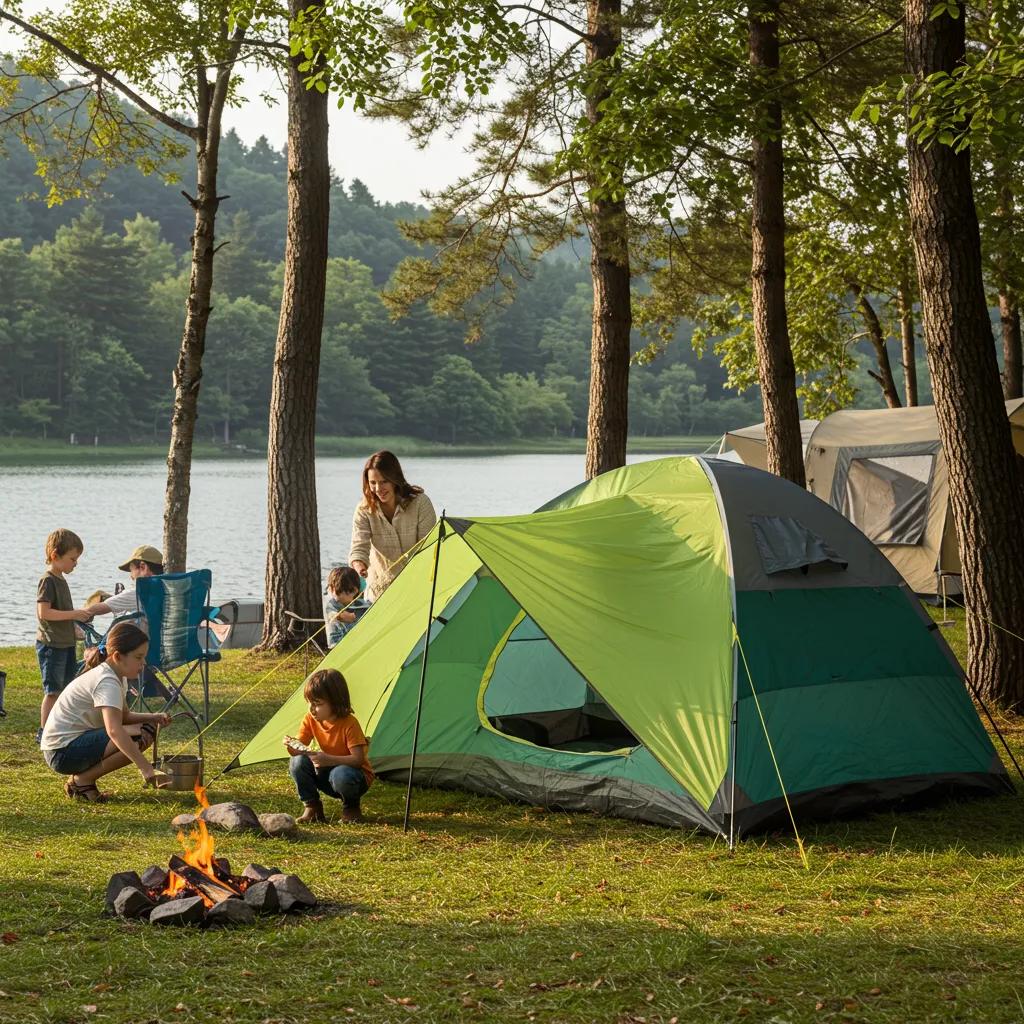
Walnut Hills has 18 tent sites, and they come in two kinds:
- Four electric tent sites sit near the main bathhouse, across the road from RV sites 186 to 193. They’re also across from the entertainment zone: Pavilion 2, the Kangaroo Jumper, the dog park, the gaga ball pit, the new playground and the ball field. If you want power for a fan or phone charger and a short walk to the showers, ask for these.
- Fourteen primitive tent sites have no water or electric, just a picnic table and fire ring. They’re the lowest-priced way to stay at the campground.
Every tent site includes the same access to the campground as an RV site or cabin: the beach, the Wibit (free for campers Tuesday through Thursday, a wristband fee Friday through Sunday), the arcade, the dog park, the events and the food trucks. The camp store sells firewood (outside firewood isn’t allowed in Michigan, and we’ll even deliver wood to your site), ice, forgotten essentials and hand-scooped ice cream.
Rates cover two adults and two children. Extra adults are $13 a night, extra children ages 3 to 17 are $9, and a second tent is $25 a night only when your group exceeds two adults and two kids.
Our team has noticed something about tent campers here: Walnut Hills has only a few tent sites with utilities, yet tent camping has grown every year. In a campground employee’s words, “a lot of that is driven by what there is to do there as opposed to having or not having the utilities on the sites.” For a campground with more electric tent sites and old-growth shade, our sister park The Oaks in Munith is the better fit; see our tent camping in Michigan guide.
Cabin or tent: which should you choose?
- First camping trip ever? Take the cabin. You’ll find out whether your family likes campground life without buying a tent, pads and sleeping bags first. Many campers follow a natural path: tent first, then weekend RV trips, then a seasonal site. The cabin lets you skip straight to the fun part once.
- Grandparents or a bad back in the group? Cabin. A real bed and air conditioning change the trip for someone who hasn’t slept on the ground in decades.
- Camping in May or October? Cabin, or a tent with cold-weather bags. Shoulder-season nights in mid-Michigan get cold, and the cabins’ A/C runs in the heat while the walls block the wind and rain. Those months also carry our lowest rates.
- Watching the budget? Tent. A primitive tent site is the cheapest way to camp here, and the Wibit is free on weekdays.
- Bringing the dog? Tent (or RV). Pets can’t stay in the cabins, but tent sites welcome leashed dogs, the fenced quarter-acre dog park (the one place dogs can be off leash) is a few steps from the electric tent sites, and dogs can swim in the Shiawassee River at the boat launch.
Can a group book tents and cabins together?
Yes, and family reunions do it all the time. A typical Walnut Hills reunion mixes three or four kinds of lodging:
- The grandparents take a camping cabin.
- Cousins with gear take the four electric tent sites across from sites 186 to 193.
- Families with RVs fill the full-hookup row at 186 to 193 and the row behind it, 171 to 178, right next door.
- Anyone who wants a kitchen and bathroom rents a delivered RV. Local delivery services such as Rolling Adventures RV set the camper up on your site before you arrive; our staff let them in that morning.
Groups that book 25 or more sites get one day of free pavilion rental during the stay. Book online around the same time so the system shows you adjoining sites, or call for a temporary three-day block. More in our group camping guide.
Cabin tent vs dome tent: which tent should you bring?
A lot of people searching “tents and cabins” are actually comparing two tent shapes, so here’s the short version.
| Cabin tent | Dome tent | |
|---|---|---|
| Shape | Near-vertical walls, flat-ish roof | Curved poles, tallest in the center |
| Headroom | Stand up almost anywhere inside; room dividers common | Full height only in the middle; sloped walls cut into cot space |
| Wind and rain | Catches more wind; best on sheltered, wooded sites | Sheds wind and water better; good for open or exposed sites |
| Setup | Bigger and heavier; easier with two people | Usually quicker and lighter |
| Best for | Families spending several nights in one spot | Couples, stormy forecasts, frequent moves |
At Walnut Hills, most of the campground sits under old-growth trees that were likely planted when the park was built in the 1960s, so a roomy cabin tent is a comfortable choice for a family staying several nights. The open, sunny ground near the swimming lake (RV sites 106 to 131) has sandy soil that doesn’t support big trees; if you end up anywhere open and breezy, a dome tent handles the wind better. Whatever you bring, pack a rainfly and a ground tarp: Michigan summers include thunderstorms.
What cabin and tent campers both get
Lodging changes your nights, not your days. Both groups spend them the same way:
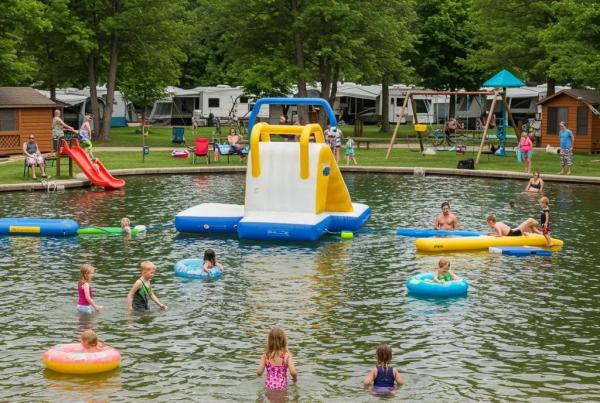
- The spring-fed swimming lake and sand beach, with cold spring pockets you can feel while swimming.
- The 14-piece Wibit, including the Action Tower XXL, two slides and a trampoline. Free for campers Tuesday through Thursday; ages 7 and up, guests under 16 with a parent present, and a monitor checks wristbands and life-jacket fit (the campground provides the jackets).
- River trips on the Shiawassee with Cheff’s Canoe Rental, which works out of our launch: two-hour and four-hour canoe and kayak floats, a two-hour tube float, or a 30- to 45-minute float within the campground.
- A food truck every weekend from Memorial Day through September, kids’ crafts at Pavilion 1, DJ dance parties and bands at Pavilion 2, and three Halloween weekends with a haunted trail.
- Stargazing from anywhere in the park; we’re remote enough that meteor showers are easy to see, and we keep a fleet of telescopes for a stargazing event.
See the full list on the amenities page and the site layout on the map and rules page.
Frequently asked questions
Do the Walnut Hills cabins have bathrooms or kitchens?
No. They’re camping cabins with no plumbing. You cook at the fire ring or with the microwave and coffee maker inside, and you use the renovated bathhouse a short walk away.
Is cabin camping or tent camping cheaper?
Tent camping. A primitive tent site is our lowest nightly rate, and the cabins are the highest, with weekends priced well above weeknights. Cabins can still be the cheaper trip overall if you’d otherwise have to buy tent gear. Our Michigan campground cabin prices guide breaks down what to expect.
Can I bring my dog if I rent a cabin?
Not into the cabin. Dogs are welcome on tent and RV sites on a leash, off leash in the fenced dog park, and in the river for a swim. The cabins, the store, the beach and the swim lake are people-only.
Can we pitch a tent next to our cabin?
Yes. Larger families can set up a small tent beside the cabin for the extra members. Extra-person and extra-tent fees are on the rates page.
Are there other Michigan campgrounds with cabins?
Yes, from state park mini cabins to private parks with larger units. Our Michigan campgrounds with cabins guide covers the options. The Oaks, our sister park, has no cabins; for a cabin stay with us, Walnut Hills is the park.