

Top Complaints Campers Voice About Local Campgrounds: A Guide to Common Issues and Solutions
Campers often run into a few recurring issues that can make or break a trip, turning a restorative escape into a frustrating ordeal. Knowing these common problems helps families and RVers pick the right spot and prepare for a great stay. This guide dives into the most frequent campground complaints—like noise, cleanliness, amenities, connectivity, safety, and booking hiccups—and offers practical fixes for both campers and managers. We’ll break down each complaint, explain why it matters, and then connect proven etiquette, maintenance, and communication strategies to real-world actions you can take to minimize the chances of a less-than-ideal visit. Early on, we’ll also touch on Ridge Ranch Campground‘s family-focused features and camping experiences to show how a specific place aligns with these best practices. You’ll find clear definitions, ways to report issues, maintenance checklists, and etiquette rules designed to boost satisfaction and cut down on conflicts for everyone at the campground.
What Are the Most Common Complaints Campers Have About Local Campgrounds?
Campers most frequently voice concerns in five main areas: noise, cleanliness, unreliable amenities and connectivity, safety/service failures, and confusion around reservations or pricing. These issues usually stem from expectations not being met or rules not being consistently applied, both of which directly diminish the perceived value and enjoyment of a stay. Understanding these categories helps campers anticipate potential problems and helps managers focus their preventive efforts. The list below outlines these recurring issues, setting the stage for us to explore specific solutions.
Campers report the most frequent complaints in the following ranked order:
- Noise disturbances from loud neighbors, music, or generators that disrupt sleep and family time.
- Poor cleanliness in restrooms, showers, and common areas, which impacts comfort and confidence in hygiene.
- Broken or unreliable amenities like weak Wi-Fi, faulty electrical hookups, and worn-out recreational equipment.
- Safety and security concerns, such as insufficient lighting or slow staff response to incidents.
- Confusing reservation rules, hidden fees, or inconsistent site assignments that lead to disputes.
These core complaint types highlight themes of expectation, enforcement, and maintenance, which we’ll explore further in the upcoming sections, starting with the specific noise issues campers mention most often.
Which Noise Issues Do Campers Encounter Most Often?
Noise complaints typically revolve around late-night music, loud conversations, generators running after dark, and unsupervised group events that extend beyond quiet hours. Campers often describe a direct link between noise and reduced sleep quality, leading to lower satisfaction and more negative reviews. Families and light sleepers are particularly sensitive to sudden, loud noises, while full-time RVers might find the hum of generators running at various times to be a persistent annoyance. Recognizing these common noise sources helps clarify which etiquette rules and enforcement steps can effectively reduce conflict at a campground.
Typical scenarios include nightly music from nearby campsites, generators operating beyond reasonable hours, and boisterous group activities after posted quiet times. These patterns naturally lead to the establishment and enforcement of clear quiet hours and generator guidelines, which we will detail in the next section.
How Does Campground Cleanliness Affect Camper Satisfaction?
Cleanliness plays a crucial role in how comfortable campers feel using communal facilities. Dirty restrooms or overflowing trash bins can raise health concerns and erode trust in management. Cleanliness serves as a signal of operational competence, and when campers see well-maintained facilities, they report a greater willingness to return and recommend the site. The hygiene of restrooms and showers, the efficiency of trash collection, and effective pest control are frequently cited as deciding factors in reviews and word-of-mouth referrals. Because cleanliness impacts both guest perception and public health, it’s a top priority for campers and operations alike.
Improving cleanliness requires scheduled inspections, clearly defined staff responsibilities, and accessible channels for guests to report issues, which leads us to a more in-depth look at maintenance protocols later in the article.
What Problems Arise from Poor Campground Amenities?
Failures in amenities—such as unreliable Wi-Fi, inconsistent electrical hookups, and broken recreational equipment—disproportionately affect different guest segments. For those working remotely or families with multiple devices, Wi-Fi reliability is essential; for RVers, safe and functional electrical hookups are non-negotiable. Shortcomings in amenities can create cascading problems: a faulty hookup might damage equipment, while poor Wi-Fi can disrupt work or event planning. Identifying which amenities are most important to specific guest groups helps campgrounds prioritize investments and communicate realistic expectations to visitors.
Understanding which amenities are prone to issues informs practical fixes and sets the stage for facility-specific offerings and planned upgrades, including how some campgrounds are addressing recreational expectations.
Why Do Campers Report Bad Experiences and How Can They Be Avoided?
Many negative camping experiences can be traced back to four root causes: unclear rules, inconsistent enforcement, deferred maintenance, and poor communication. A root cause analysis helps identify priority actions such as clearer policies, staff training, regular inspections, and transparent booking information. Prevention is key—establishing quiet hours, enforcing pet and generator policies, keeping facilities serviced, and presenting reservation terms clearly. When these systems are in place and consistently applied, the number of avoidable complaints drops significantly.
With those underlying causes in mind, the next section will delve into the impact of noise and provide etiquette rules and enforcement tactics that can resolve most interpersonal conflicts.
How Does Noise Impact Campground Experiences and What Are Effective Etiquette Rules?

Noise at campgrounds can negatively affect rest, safety, and neighborly relations, as unexpected or prolonged sounds can elevate stress and interrupt planned activities. Noise undermines relaxation and sleep, and it can escalate disputes if not managed through clear policies and calm mediation. Effective etiquette rules, combined with consistent quiet hours and reporting processes, reduce the frequency of noise incidents and improve overall guest satisfaction. Below, we define quiet-hour frameworks, pet-related noise controls, and generator guidelines that form an operational noise-management toolkit.
Campground noise management should incorporate the following etiquette principles to set clear expectations for guests:
- Quiet hours should be clearly posted and communicated at check-in so guests understand when to lower noise levels.
- Generators and amplified sound must be limited to designated hours to protect neighbors’ sleep and comfort.
- Courtesy toward nearby sites, including minimizing late-night foot traffic and loud conversations, helps prevent avoidable conflicts.
These etiquette principles naturally lead to operational tactics such as signage, staff mediation practices, and escalation pathways that help staff manage violations without confrontation.
What Are Quiet Hours and How Do They Help Manage Loud Neighbors?
Quiet hours are a specific time window during which amplified music, loud gatherings, and other disruptive activities are prohibited to ensure rest and comfort. Quiet hours create predictable low-noise periods that reduce conflicts and establish shared expectations for behavior. Typical quiet-hour schedules aim to balance evening socializing with overnight rest, and enforcement relies on signage, communication at check-in, and staff follow-up when complaints arise. Clear, consistent quiet hours make it easier for managers to mediate disputes and for neighbors to self-regulate their social behavior.
Enforcement typically begins with a friendly staff reminder and can escalate to mediation or site reassignment if disturbances persist, making reliable reporting channels and trained staff essential for an effective quiet-hour policy.
How Are Pet Policies Enforced to Prevent Noise and Disturbances?
Pet noise often stems from unsupervised barking or guests failing to keep animals leashed and quiet, and strict pet rules help minimize these disturbances. Pet policies require leash rules, waste removal, and designated pet areas to reduce noise and nuisance. Enforcing these rules involves clear signage, reminders at check-in, providing pet-waste stations, and implementing progressive responses to violations. When owners understand the expectations and consequences, pet-related noise decreases, and shared spaces remain pleasant for all guests.
Combining proactive communication with consistent rule application helps minimize pet conflicts and preserves a family-friendly environment, which directly connects to the next section on generator use guidelines.
What Guidelines Exist for Generator Use to Minimize Noise Complaints?
Generator guidelines restrict hours of operation, specify acceptable placement relative to neighboring sites, and set expectations for mufflers or sound-shielding where appropriate. Generator rules reduce persistent mechanical noise that can disturb sleep and conversation, especially overnight. Recommended practices include designating daytime-only hours, requiring quiet operation modes, and advising proper distance and orientation away from neighboring tent or RV sites. Staff should inform guests of these rules at check-in and respond promptly to reports of excessive generator noise.
Practical alternatives—such as battery storage solutions or campsite power planning—can help guests avoid needing generators during quiet hours, and these solutions contribute to better relations among campers.
Why Is Campground Cleanliness a Top Concern and How Is It Maintained?

Cleanliness is paramount because it directly impacts health, comfort, and perceived value. Spotless amenities signal attentive management and reduce the likelihood of pest or sanitation problems. Cleanliness builds guest confidence and leads to positive reviews, and maintaining high standards involves scheduled cleaning, frequent inspections, and prompt repair timelines. An operational cleanliness plan includes staff roles, documented procedures, and guest reporting channels that ensure issues are addressed when found. The table below summarizes recommended facility standards and maintenance schedules for clarity.
What Standards Define Spotless Restrooms and Shower Facilities?
Spotless restrooms are characterized by the absence of visible debris, fully stocked supplies, functional locks, neutral odors, and prompt repair of fixtures; measurable standards make cleanliness auditable. Standards enable consistent inspections that prevent minor issues from escalating into major complaints. Practical indicators include hourly or multi-hour checks during high-traffic seasons, immediate replacement of consumables, and a documented repair turnaround target for plumbing or lighting issues. Clear reporting mechanisms allow guests to flag problems and trigger swift staff action that maintains confidence.
When restrooms reliably meet these standards, guest satisfaction improves, and cleaning becomes a visible service pillar rather than an unseen operational cost.
How Is Waste Management Handled to Keep Campgrounds Tidy?
Effective waste management involves placing clearly marked, frequently located receptacles in strategic spots, scheduling regular emptying, and providing safe disposal for hazardous items like propane cylinders and batteries. Waste protocols reduce overflowing bins and wildlife attractants that degrade the campsite environment. Best practices include signage that promotes pack-in/pack-out principles, separate streams for recycling where feasible, and staff rounds timed to coincide with peak usage patterns. Providing clear guidance to guests and visible, well-maintained receptacles helps minimize litter and improve the overall appearance of the property.
Consistent waste handling prevents minor cleanliness issues from becoming larger sanitation concerns and directly relates to guest responsibilities, which we’ll discuss next.
What Role Do Campers Play in Maintaining Campsite Cleanliness?
Campers are partners in maintaining cleanliness through pack-in/pack-out practices, proper firepit cleanup, secure food storage, and prompt pet waste removal; their actions significantly influence the shared environment. Camper responsibilities support operational efforts by reducing staff workload and preserving shared spaces. A simple guest checklist—deposit trash in proper bins, extinguish and tidy firepits, store food securely, and report facility issues—helps keep campsites tidy and minimizes pest problems. Encouraging this culture through friendly reminders at booking and check-in aligns guest behavior with staff maintenance schedules.
When campers adhere to these practices, the campground operates more efficiently, and all visitors benefit from cleaner facilities and a safer environment.
What Are Common Complaints About Campground Amenities and Connectivity?
Complaints about amenities and connectivity often focus on unreliable Wi-Fi, inconsistent electrical hookups, limited recreational equipment, and a lack of clear information about what is available. Amenity failures impair guest activities and can lead to negative reviews when expectations don’t match reality. Campgrounds that clearly document amenity specifications, maintain inspection records, and invest in scalable connectivity solutions reduce friction. Below is a comparative table that matches common amenities to performance expectations and guest benefits.
How Important Is Reliable Wi-Fi for Campers and How Is It Provided?
Reliable Wi-Fi is increasingly important for families, remote workers, and event organizers, with expectations varying by user segment: remote workers need stable upstream speeds, while leisure users prioritize streaming capability. Wi-Fi provision involves choices in network topology, such as concentrated hotspots, site-wide mesh solutions, or limited-access areas; each approach has trade-offs in cost and coverage. Campgrounds should clarify whether connectivity is basic or work-grade and offer mitigation tips like recommended work-friendly sites or signal-boosting solutions guests can use. Transparent communication about network performance helps prevent mismatched expectations.
When Wi-Fi is limited, offering alternatives like clear recommendations for offline activities helps guests adapt and prevents satisfaction from declining.
What Recreational Facilities Are Expected and How Does Ridge Ranch Meet These Needs?
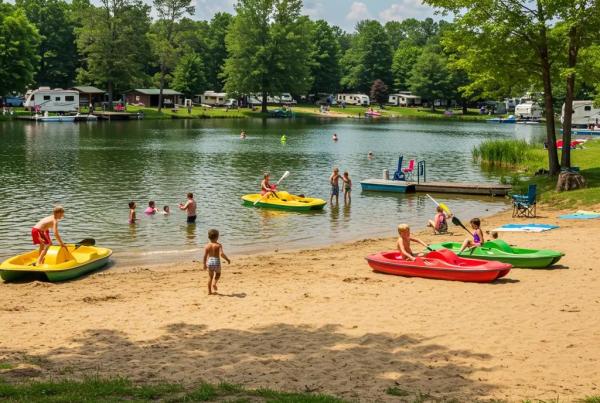
Families commonly expect water access, playgrounds, sports courts, and equipment rentals to keep children and adults engaged. Ridge Ranch Campground offers several of these amenities, including a 17-acre lake, paddleboat and canoe rentals, playgrounds, horseshoes, volleyball, basketball courts, and planned events. Recreational provisioning supports family satisfaction by providing structured options for daytime activities and evening events. Ridge Ranch’s current mix of lake activities and courts addresses many common family expectations, and planned future enhancements, including an arcade and a Wibit waterpark, are positioned to broaden activity offerings in the coming seasons.
These recreational options reduce amenity complaints by giving guests clear on-site choices and scheduled events that provide low-effort entertainment for diverse age groups.
How Are Electrical Hookups Maintained for Safe and Consistent Use?
Electrical hookup problems typically arise from wear and tear, improper connections, or overloaded systems, and routine inspection plus clear labeling helps reduce these failures. Hookup maintenance requires scheduled testing of pedestals, visible amperage labels, and rapid repair workflows to address faulty outlets. Campgrounds should maintain logs of inspections, provide guidance on proper extension cords and surge protection, and respond quickly to reported issues to protect guest equipment. Educating guests on safe hookup practices also reduces misuse-related failures and supports consistent operation.
When inspection and repair protocols are documented and visible to guests, confidence in electrical safety increases, and complaint rates decline.
How Do Safety, Security, and Staff Interactions Influence Camper Satisfaction?
Safety and staff interactions significantly shape perceptions of professionalism and responsiveness. Visible security measures, clear emergency procedures, and friendly staff dramatically lower complaint rates. Safety measures protect campers and reassure families, while staff responsiveness resolves minor issues before they escalate into formal complaints. A transparent approach to reservations and pricing further prevents disputes by aligning expectations with deliverables. Below are concrete measures and staff practices that enhance guest trust and decrease conflict.
Key safety and staffing practices include the following operational priorities:
- Maintain clear signage, adequate lighting, and defined access points to enhance safety and reduce accidental entry into private areas.
- Train staff in mediation, facility triage, and timely communication to ensure small problems are resolved quickly.
- Publish reservation terms and pricing policies in plain language to prevent misunderstandings about fees, cancellations, or site assignments.
These operational priorities form the foundation of a service model that proactively prevents many common complaints and improves guest perceptions.
What Safety Measures Are in Place to Protect Campers?
Common safety measures include perimeter and path lighting, marked emergency exits, posted emergency contact procedures, and access-control practices that limit unauthorized entry. Safety infrastructure lowers risk and increases guest comfort, especially for families arriving at night or those using waterfront areas. Communicating these measures at check-in and via on-site signage reassures guests and provides clear steps to follow in emergencies. Regular drills and collaboration with local emergency services enhance preparedness and close response gaps.
Visible safety measures paired with clear guidance reduce the likelihood that guests will perceive the campground as unsafe.
How Does Friendly and Responsive Staff Improve the Camping Experience?
Staff who respond quickly to maintenance and conflict reports prevent minor irritations from becoming larger problems and can transform a negative incident into a positive service recovery. Responsive staff build guest trust through prompt attention, empathetic communication, and fair mediation. Training front-line employees in de-escalation, inspection protocols, and communication channels ensures problems are resolved efficiently. Examples include same-day repair of critical amenities and calm mediation during noise disputes, both of which restore guest satisfaction quickly.
When staff interactions are positive and predictable, guests feel supported and are more likely to overlook minor issues.
Why Are Transparent Reservation and Pricing Policies Important?
Unclear booking terms, surprise fees, and opaque cancellation rules create avoidable disputes that can sour a stay before it even begins, so transparent policies reduce friction and set clear expectations. Transparent policies minimize complaints by ensuring guests understand cancellation windows, extra fees, and site assignment practices before arrival. Best practice is to present key terms prominently during booking and to reiterate them at check-in, creating redundancy that prevents misunderstanding. Clear policies also make staff mediation easier because everyone references the same published rules.
Transparency in booking builds trust and reduces administrative disputes that distract from delivering a quality on-site experience.
How Does Ridge Ranch Campground Address and Prevent Common Camper Complaints?
Ridge Ranch Campground implements practical policies and amenity investments that directly address common complaint categories, using clear rules, routine maintenance, and family-focused programming to prevent issues. Ridge Ranch’s approach combines operational standards, staff responsiveness, and amenity offerings designed to reduce noise, cleanliness, amenity, and safety complaints. The table below summarizes how specific complaints map to Ridge Ranch policies and the value those policies deliver to guests.
What Noise Control Policies Does Ridge Ranch Enforce?
Ridge Ranch enforces quiet hours and communicates event schedules to minimize late-night disturbances and maintain restful family areas. Noise-control policies rely on posted quiet windows, staff reminders at check-in, and mediation when complaints arise. The campground balances planned social activities—such as family-oriented events—with enforced overnight quiet periods so that guests can choose the level of activity they prefer. Clear communication about these policies reduces surprises and encourages voluntary compliance from visitors.
When guests are aware of the event and quiet hour schedules upon arrival, they can plan accordingly and avoid conflicts that might otherwise lead to complaints.
How Does Ridge Ranch Ensure Clean and Well-Maintained Facilities?
Ridge Ranch conducts daily cleaning rounds for restrooms and trash collection, supplemented by scheduled inspections to identify issues early and keep communal spaces presentable. Maintenance protocols include documented cleaning cadences, staff checklists, and a guest reporting pathway for prompt corrective action. Regular upkeep of showers, toilets, and waste stations preserves hygiene and minimizes negative feedback. Visible staff activity and quick resolution of reported problems reinforce guests’ perception of a clean, well-cared-for site.
These routines combine preventive maintenance with reactive responsiveness to ensure facilities remain in good condition throughout the season.
What Amenities and Connectivity Solutions Does Ridge Ranch Offer?
Ridge Ranch provides a range of family-focused amenities, including RV and tent sites, seasonal sites, paddleboat and canoe rentals, fishing access, playgrounds, horseshoes, volleyball, basketball courts, and planned events such as DJ nights, karaoke, bingo, and crafts. Amenity provisioning supports diverse guest activities and reduces boredom-related complaints by offering on-site options. The campground is also planning enhancements to broaden its family appeal, with an arcade and a Wibit waterpark slated for future development. These additions aim to expand recreational choices, while existing amenities already meet many expectations for family stays.
By combining current activity options with planned investments, Ridge Ranch works to minimize amenity-related complaints and increase guest retention.
How Does Ridge Ranch Prioritize Camper Safety and Service Excellence?
Ridge Ranch emphasizes friendly, responsive staff interactions and clear operational procedures to proactively manage safety and service concerns. Safety and service practices include visible staff presence, posted emergency procedures, and a culture of timely maintenance. Staff are trained to mediate neighbor disputes and handle facility repairs quickly, which reduces escalation and complaint volume. Transparent communication about reservation terms and available services further prevents misunderstandings that could lead to dissatisfaction.
These service-oriented measures create a predictable guest experience and reduce the number of avoidable complaints through consistent action.
What Are the Best Practices for Campground Etiquette to Avoid Common Complaints?
A concise etiquette guide helps prevent many complaints by setting clear expectations for behavior regarding noise, pets, waste, and generators. Etiquette improves neighborly relations and reduces incidents that require staff intervention. The list below provides practical dos and don’ts that campers can follow to minimize their impact on others and help campgrounds maintain a clean, quiet, and safe environment.
Follow this practical etiquette checklist to reduce complaints and show respect for fellow campers:
- Keep amplified music and loud conversations to a minimum during posted quiet hours to avoid disturbing others.
- Supervise pets at all times, keep them leashed where required, and promptly dispose of pet waste in designated receptacles.
- Pack-in and pack-out all personal trash, extinguish and tidy firepits before leaving them unattended, and secure food to avoid attracting wildlife.
- Limit generator use to allowed hours and position power units away from neighboring tents or RVs to reduce mechanical noise.
How Can Campers Respect Quiet Hours and Neighbor Privacy?
Respecting quiet hours involves planning social activities for daytime or early evening, using headphones for audio after quiet-hour start times, and being mindful of foot traffic and lighting. Respectful behavior maintains sleep and privacy for others and prevents escalation to formal complaints. If a dispute arises, approaching the neighbor politely or reporting it to staff provides a calm path to resolution. Guests who model this behavior contribute to a community culture that values rest and mutual respect.
Consistent adherence to quiet-hour norms keeps shared spaces peaceful and allows everyone to enjoy their stay.
What Are Responsible Pet Ownership Rules at Campgrounds?
Responsible pet ownership means keeping animals under control, ensuring vaccinations are current, cleaning up waste immediately, and supervising pets to prevent barking or roaming. Pet responsibilities protect other guests and local wildlife while preserving sanitary conditions. Campgrounds can support pet owners with convenient waste stations and designated relief areas, which reduce friction and help owners comply with rules. Following these practices minimizes pet-related complaints and supports a family-friendly environment.
Clear pet rules and consistent enforcement keep shared areas pleasant for both pet owners and non-pet guests.
How Should Campers Manage Waste and Keep Campsites Tidy?
Campers should follow pack-in/pack-out principles, use provided trash and recycling stations correctly, extinguish firepits thoroughly, and store food in wildlife-proof containers. Waste management behavior prevents litter and wildlife attractants that degrade site quality. Bringing basic supplies such as trash bags, a small rake for firepit cleanup, and sealed containers for food helps campers leave sites in excellent condition. Reporting overflowing bins or facility issues to staff ensures problems are addressed promptly.
When every camper takes responsibility for their waste, the entire campground stays cleaner and safer.
What Are the Guidelines for Generator Use and Other Noise Sources?
Generator use should be limited to published daytime hours, placed on stable ground away from adjacent campsites, and equipped with proper mufflers or sound attenuation measures where possible. Generator guidelines reduce sustained mechanical noise that impacts sleep and neighbor comfort. For audio devices, using headphones and keeping speaker volumes low after dusk preserves tranquility. Offering quieter alternatives and clear rules prevents conflicts and supports a restful environment for all guests.
Following these guidelines lowers the incidence of generator and audio-related complaints and improves overall campsite harmony.
Campers who follow these etiquette practices and managers who maintain clear policies together create safer, cleaner, and quieter campgrounds that enhance the camping experience for everyone. For families and seasonal visitors looking to book a stay, Ridge Ranch Campground highlights its camping experiences and seasonal sites as part of its family-focused offerings and encourages prospective guests to check availability and reserve through Ridge Ranch’s reservations page to plan a stay aligned with these guidelines.
Frequently Asked Questions
What should I do if I encounter noise disturbances during my stay?
If you experience noise disturbances, first try to address the issue directly by politely asking the source to lower their volume. If that doesn’t work or if you feel uncomfortable approaching them, report the issue to campground staff. They are trained to handle such situations and can mediate conflicts effectively. Most campgrounds have established quiet hours, and staff can remind guests of these rules to ensure a peaceful environment for everyone.
How can I ensure my campsite is clean and well-maintained during my stay?
To keep your campsite clean, follow the pack-in/pack-out principle, which means taking all your trash with you when you leave. Use designated trash and recycling bins, and clean up after cooking or using firepits. Additionally, report any cleanliness issues, such as overflowing bins or dirty facilities, to campground staff so they can address them promptly. Your efforts contribute to a pleasant environment for all campers.
What are the best practices for using generators at campgrounds?
When using a generator, adhere to the campground’s specific guidelines regarding operational hours and placement. Typically, generators should only be used during designated daytime hours and positioned away from neighboring sites to minimize noise. Consider using quieter models or sound shields to further reduce disturbances. Always check with campground staff for any additional rules or recommendations to ensure a harmonious camping experience for everyone.
How can I find out about the amenities available at a campground before booking?
Before booking, check the campground’s official website or contact their office directly for detailed information about available amenities. Look for descriptions of facilities such as Wi-Fi, electrical hookups, recreational equipment, and any planned activities. Many campgrounds also provide reviews and testimonials from previous guests, which can give you insight into the quality and reliability of their amenities. This information helps set realistic expectations for your stay.
What should I do if I feel unsafe at a campground?
If you feel unsafe at any point during your stay, immediately contact campground staff or security personnel. They are trained to handle safety concerns and can provide assistance or reassurance. Familiarize yourself with the campground’s emergency procedures and contact information for local authorities. It’s also a good idea to stay in well-lit areas and keep your campsite secure, especially at night, to enhance your safety while camping.
How can I contribute to a positive camping experience for everyone?
To foster a positive camping environment, practice good etiquette by respecting quiet hours, keeping noise levels down, and supervising pets. Clean up after yourself and dispose of waste properly. Communicate openly with fellow campers and staff if issues arise, and be willing to compromise. By being considerate and following campground rules, you help create a friendly atmosphere that enhances the experience for all visitors.
What are the common pet policies at campgrounds?
Common pet policies at campgrounds typically require pets to be leashed at all times, cleaned up after, and kept quiet to avoid disturbing other guests. Some campgrounds may have designated pet areas or specific rules regarding pet sizes and breeds. Always check the campground’s pet policy before your visit to ensure compliance and to help maintain a pleasant environment for both pet owners and non-pet guests.
Conclusion
By understanding and addressing common campground complaints, both campers and managers can enhance the overall camping experience. Implementing clear policies, maintaining cleanliness, and fostering open communication significantly improve guest satisfaction and reduce conflicts. For those looking to enjoy a family-friendly camping adventure, Ridge Ranch Campground offers a range of amenities and activities tailored to meet diverse needs. Explore our reservation options today to secure your perfect getaway.