

What Family Amenities Can You Expect at Nearby Campgrounds? Find Out Now!
Families choosing a campground want clear expectations: safe play for kids, reliable comfort, and activities that keep everyone engaged. This guide explains what “family amenities” means, why specific features matter for parents and children, and how those amenities translate into a better weekend or week away. You will learn which water features, play areas, comfort facilities, organized events, and accommodation types make a campground family-friendly, plus practical checklists to compare sites near you. The article maps essential amenity categories, activities that entertain kids, accommodation options that fit different family needs, regional considerations for Michigan trips, and a prioritized decision checklist to simplify booking. Throughout, we use semantic terms like Wibit water park, swimming lake, river floats, RV sites, tent sites, and cabins to link features to family outcomes. Read on for concrete examples, comparison tables, and quick lists you can use to evaluate nearby campgrounds for your next family trip.
What Are the Essential Family-Friendly Amenities at Top Campgrounds?
Essential family-friendly amenities are the on-site services and features that directly support safety, entertainment, and convenience for parents and children. These amenities work by providing supervised play (lifeguards, designated kid areas), purpose-built entertainment (water parks, playgrounds), and basic comforts (clean restrooms, stores) that reduce friction during a stay. Families experience less stress and more fun when campgrounds combine engaging activities with accessible comfort facilities, which improves overall satisfaction and repeat visits.
Families typically expect these core amenities:
- Water play options: Safe swimming areas and inflatable water parks for supervised play.
- Playgrounds and courts: Age-appropriate playgrounds and sports courts for activity and socializing.
- Comfort facilities: Renovated restrooms, hot showers, laundry, and a campground store for essentials.
- Safety features: Lifeguards, clear signage, and well-lit common areas for family peace of mind.
- Organized programming: Crafts, scavenger hunts, and themed events that create family memories.
The table below compares common amenities and notes the features parents most often verify before booking.
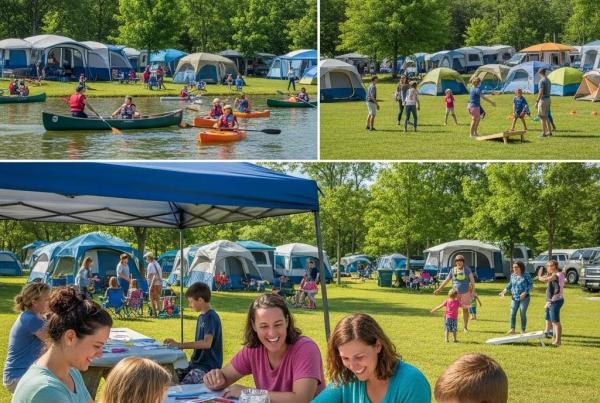
This table clarifies which amenity details to confirm and why they matter for family safety and convenience. For a real-world example of an amenity lineup, some family campgrounds operate on multi-acre sites and explicitly list features such as a Wibit water park, a swimming lake, renovated bathrooms and showers, multiple playgrounds, and sports courts, illustrating how these elements form a family-focused offering.
Which Water Features Make Campgrounds Ideal for Families?

Water features—pools, Wibit inflatable parks, swimming lakes, and splash pads—are central to family enjoyment because they combine play value with skill-appropriate zones and supervision. A well-designed water area separates shallow and deep sections, provides lifeguard coverage, and schedules age-specific sessions to reduce crowding and increase safety.
Parents should verify whether inflatables are professionally maintained, whether lifejackets are available, and how swim areas are monitored; these details influence which children can participate and at what times. Understanding water safety protocols at a campground helps families plan daily schedules and pack appropriate flotation gear for younger swimmers.
How Do Playgrounds and Sports Courts Enhance Family Camping Experiences?

Playgrounds and sports courts keep kids active, encourage peer interaction, and create easy opportunities for parents to join in or relax nearby. Equipment variety—slides, climbing structures, swings—serves different age groups while courts for sand volleyball, basketball, and gaga ball support family tournaments and group games.
Campgrounds that provide clear age separation and soft surfacing reduce injury risk and make supervision more manageable for caregivers. Scheduling short family tournaments or pickup games can structure the day and help families build shared memories without extensive planning.
What Comfort Facilities Should Families Expect at Campgrounds?
Comfort facilities include renovated restrooms and showers, laundry, a campground store, and basic connectivity; these services shorten supply lists and improve daily living on site. Clean, well-lit bathrooms with family changing areas and accessible layouts let caregivers handle meals, naps, and hygiene quickly so kids can return to play.
Laundry and a stocked store reduce the need to pack excess clothing or perishables, and modest Wi-Fi coverage aids coordination or entertainment during downtimes. Before booking, families should verify cleanliness standards and whether family-oriented fixtures—like baby changing stations—are available to avoid surprises on arrival.
Which Activities Keep Kids Entertained at Family Campgrounds?
Organized activities and nature-based adventures combine to keep children engaged while giving parents structure and downtime during a stay. Organized events—crafts, scavenger hunts, themed weekends, movie nights, and family trivia—create predictable highlights and often require minimal planning from families. Nature-based options—river floats, guided hikes, wildlife viewing—connect kids to the outdoors, teach basic skills, and vary by season and regional features. A balanced schedule helps families rotate between structured programming and free play so both energetic and quieter kids find satisfying options throughout the day.
What Organized Events and Themed Weekends Are Popular for Families?
Popular organized offerings include daytime crafts, evening family dances, scavenger hunts, and themed festivals that appeal to broad age ranges. These events often follow a schedule—morning crafts, afternoon sports, evening movies or DJ parties—and may require sign-ups for limited activities like special meals or boat trips. Families should check event calendars in advance to reserve slots for high-demand activities and avoid disappointment on busy weekends. Event programming enhances the sense of community and helps children make friends quickly while parents enjoy shared experiences.
The table below summarizes typical family activities, duration expectations, and age suitability to help parents plan a daily itinerary.
This activity quick-guide outlines time commitments and preparation needs so families can align energy levels and equipment before arrival.
How Do Campgrounds Incorporate Nature-Based Adventures for Families?
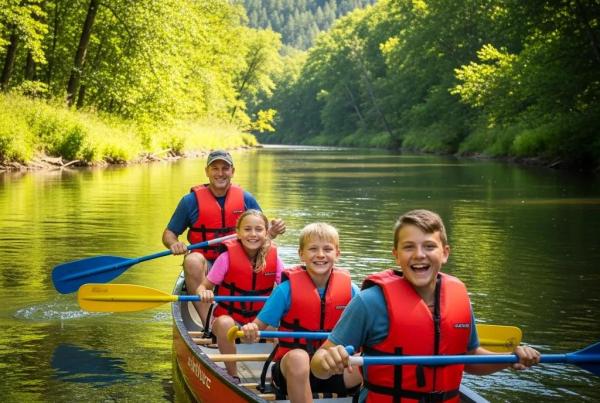
Nature-based adventures leverage local geography—rivers, lakes, trails—to provide hands-on outdoor learning and exploration for children. Typical offerings include guided hikes identifying flora and fauna, canoe or kayak rentals for supervised river floats, and short interpretive programs that teach outdoor safety and stewardship. Safety provisions like lifejackets, guided leaders, and route difficulty ratings are essential to match activities to family ages and abilities. In Michigan, river floats and lake access have particular appeal, and families should ask about rental availability and guided trip options when booking.
What Accommodation Options Are Best for Families at Campgrounds?
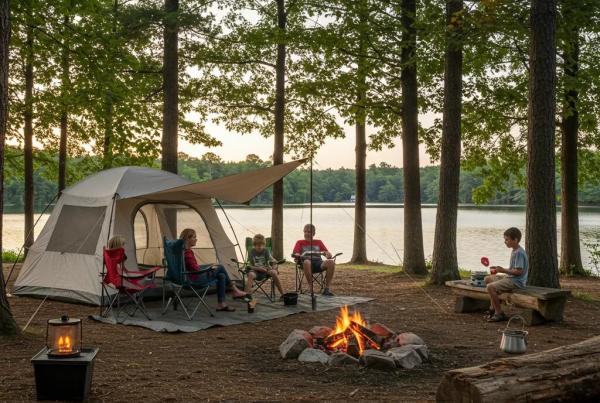
Accommodation choices—RV sites, tent sites, and cabins—balance comfort, cost, and the family’s outdoor experience, with each option offering tradeoffs in privacy, facilities access, and packing requirements. RV sites usually provide hookups and more living amenities for families who want convenience and a stable base, while tent sites offer a more traditional camping experience and lower cost but require more gear. Cabins combine the ease of a room with the outdoors and are ideal for mixed-age groups or families new to camping who prefer beds and basic kitchen facilities.
Use this comparison to determine which lodging type best aligns with family size, comfort expectations, and equipment levels.
This table helps families weigh space and amenity tradeoffs against budget and experience goals. For example, some family campgrounds explicitly list RV sites, tent sites, and cabins among their accommodation types, showing how each option fits different family preferences.
How Do RV Sites and Tent Camping Cater to Family Needs?
RV and tent camping cater to families through site selection features like level ground, picnic areas, shade, and proximity to restrooms or play areas. RV sites with full hookups simplify meal prep and sanitation for families with infants or those who prefer appliances, while larger tent sites offer space for family tents and play but require efficient packing of bedding and cooking gear. Parents should select sites near playgrounds if they want quick supervision or choose quieter, more secluded spots for restful nights. Practical considerations—greywater rules, generator hours, and parking—affect daily life and should be checked before arrival.
Why Are Cabin Rentals and Glamping Popular Among Families?
Cabin rentals and glamping options reduce packing stress by providing beds, basic kitchens, and shelter from weather, making them attractive to families with small children or those new to outdoor stays. Cabins often include accessible entry, heating, and private bathrooms, which help caregivers manage naps and late-night needs without campsite chores. Glamping blends comfort with novelty—often providing unique sleeping arrangements and curated furniture—so families get an outdoor feel without primitive conditions. Choosing cabins or glamping can be a strategic way to introduce young children to camping while maintaining essential creature comforts.
How Can You Choose the Best Family Campground in Michigan?
Choosing the best Michigan campground means matching local features—river access, inland lakes, seasonal events—with family priorities like safety, distance from home, and on-site programming. Focus on proximity to rivers or lakes if water play and floats are a top priority, check seasonal calendars for themed weekends, and confirm safety staffing like lifeguards and renovated facilities. Comparing campgrounds by the mix of water features, events, and comfort services reveals which sites will deliver the most value for your family trip.
Walnut Hills Family Campground in Durand, Michigan, offers a Michigan-focused example: the property lists a Wibit water park, a swimming lake, renovated bathrooms and showers, multiple playgrounds, and sports courts across 42 acres, plus organized activities and Shiawassee River float options. Evaluating these specific amenities alongside distance and event scheduling helps families prioritize what matters most for their trip.
What Amenities Set Michigan Family Campgrounds Apart?
Michigan campgrounds often highlight inland lakes, river floats, seasonal festivals, and accessible nature trails that reflect regional outdoor assets. These amenities are particularly valuable for families because they pair easy water access with wildlife observation and a variety of seasonal programming—making Michigan a strong choice for multi-day family camping. When selecting a Michigan site, prioritize shore quality, boat or canoe rental availability, and event calendars that align with school holidays to maximize family enjoyment. Local nature education programs can also enrich a trip by giving children structured learning in outdoor settings.
How Does Walnut Hills Family Campground Compare to Other Resorts?
Walnut Hills serves as a factual example of a family-focused Michigan campground with clear amenity categories: water (Wibit, swimming lake), play (multiple playgrounds, sports courts), comfort (renovated restrooms and showers, campground store), and events (themed weekends and river floats). These features address common family needs—supervised water play, varied age-appropriate recreation, and practical facilities—making it straightforward to compare against other regional options. Families prioritizing on-site water parks and river access will find this kind of amenity mix particularly compelling when evaluating nearby campgrounds.
What Should Families Look for When Selecting a Campground?
When selecting a campground, prioritize safety, water features, clean restrooms, and age-appropriate activities while balancing travel time and budget to create a manageable and enjoyable trip. Asking targeted questions—Are lifeguards on duty? Are restrooms renovated and family-friendly? What events run on our dates?—streamlines decision-making and reduces post-booking surprises. Use a short packing checklist and verification list to confirm accommodation and amenity details before arrival so the family can focus on activities rather than logistics.
Top verification checklist:
- Safety staffing: Confirm lifeguards and first-aid procedures are on site.
- Water quality and supervision: Verify swim area design and flotation availability.
- Sanitation standards: Ask about restroom renovations and family changing areas.
- Activity schedule: Review themed weekends and organized events for your dates.
Following this prioritized checklist reduces stress and ensures key family needs are met. A final practical packing list helps families arrive prepared for varied campground conditions.
Families should pack these essentials:
- Lifejackets and basic water safety gear for young swimmers.
- Layered clothing and rain protection for variable Michigan weather.
- Basic first-aid and hygiene supplies to complement campground services.
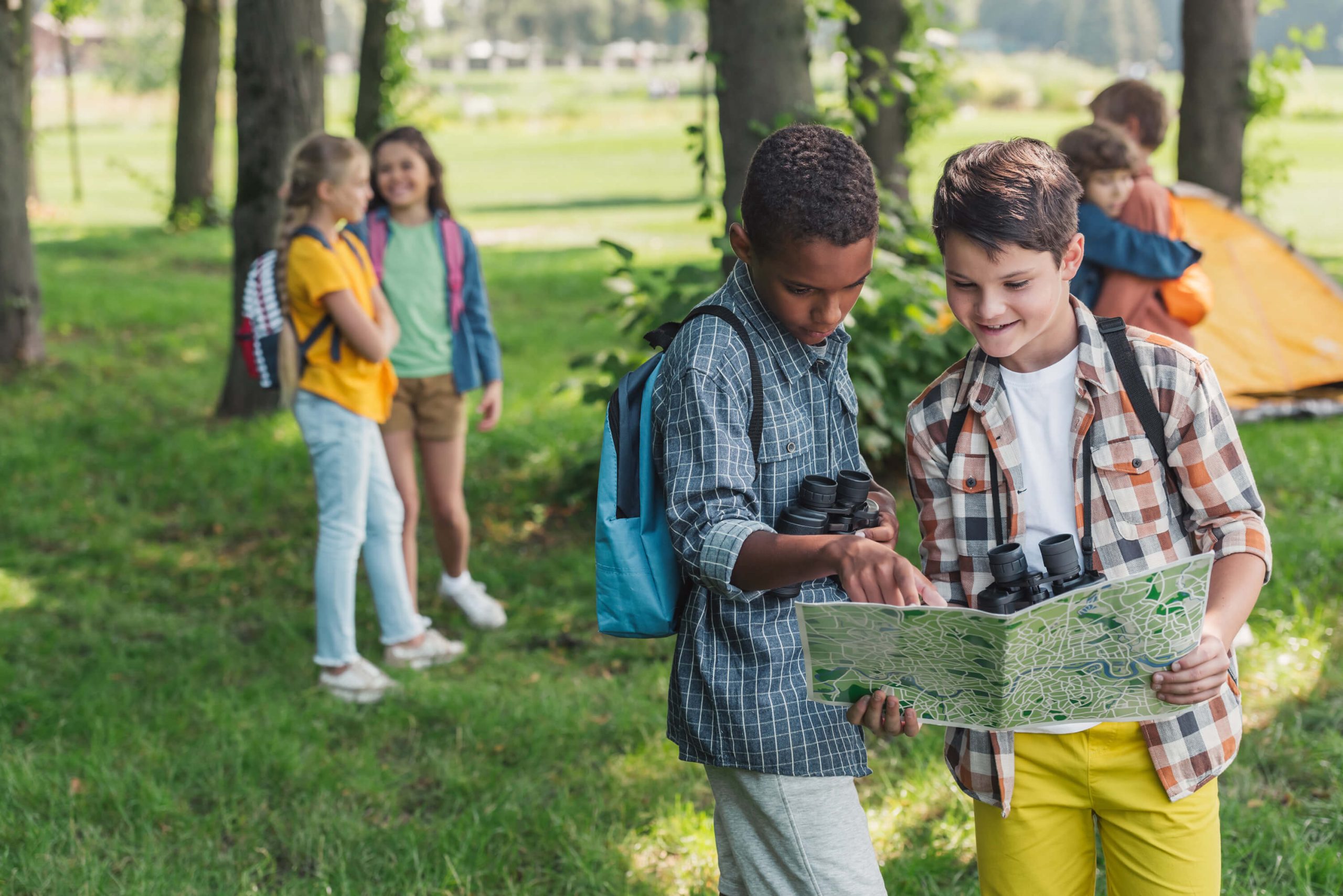
- Activity gear (balls, binoculars, daypack) to join scheduled events and nature adventures.
These items, combined with confirmation of campground amenities and schedules, help families maximize enjoyment and minimize unexpected hassles during their stay.
Families interested in checking availability for specific family-friendly campgrounds can consult the GatherGrounds Resorts website or the Walnut Hills Family Campground Google Business Profile for current reservation options and event calendars.
Frequently Asked Questions
What should families consider when planning meals at campgrounds?
When planning meals at campgrounds, families should consider the available cooking facilities, such as grills or fire pits, and whether they need to bring their own cooking equipment. It’s also important to check if the campground has a store for last-minute supplies. Meal planning should include easy-to-cook options that require minimal preparation, as well as snacks for active days. Additionally, families should consider dietary restrictions and pack accordingly to ensure everyone has enjoyable meal options during their stay.
Are there any age restrictions for activities at family campgrounds?
Many family campgrounds have age restrictions for certain activities to ensure safety and enjoyment. For example, water activities like tubing or kayaking may require participants to be a certain age or wear life jackets. Similarly, organized events may have age-appropriate groupings to ensure that all children can participate safely. Families should check the campground’s guidelines or ask staff about specific age restrictions for activities they are interested in to avoid disappointment.
How can families ensure a safe camping experience for children?
To ensure a safe camping experience for children, families should prioritize campgrounds with safety features such as lifeguards at water areas, well-lit paths, and clear signage. It’s also essential to review safety protocols for activities, such as life jacket requirements for water sports. Parents should establish rules for children regarding staying within designated areas and communicating with adults. Additionally, packing a basic first-aid kit and discussing emergency procedures can help families feel more secure during their camping trip.
What are the benefits of organized events for families at campgrounds?
Organized events at campgrounds provide structured activities that enhance family bonding and create lasting memories. These events, such as crafts, scavenger hunts, and themed nights, offer opportunities for children to socialize and engage in fun, supervised activities. They also allow parents to relax or participate alongside their kids. Organized programming can help families plan their days, ensuring a balance between structured fun and free play, which is especially beneficial for families with varying energy levels and interests.
How do families find the best campground for their needs?
To find the best campground for their needs, families should start by identifying their priorities, such as proximity to water features, safety amenities, and available activities. Researching online reviews and checking campground websites for detailed amenity lists can provide valuable insights. Additionally, families should consider their budget and travel distance. Creating a checklist of must-have features and comparing multiple campgrounds can help streamline the decision-making process and ensure a satisfying camping experience.
What should families pack for a camping trip with children?
When packing for a camping trip with children, families should include essentials like layered clothing for varying weather, life jackets for water activities, and basic first-aid supplies. It’s also wise to pack snacks, activity gear (like balls or binoculars), and personal hygiene items. Families should consider bringing comfort items, such as favorite blankets or toys, to help children feel secure in a new environment. A well-thought-out packing list can help ensure that families are prepared for both planned activities and unexpected situations.
Conclusion
Choosing a family-friendly campground ensures a memorable experience filled with safety, comfort, and engaging activities for all ages. By prioritizing essential amenities like water play, organized events, and clean facilities, families can enjoy a stress-free getaway that fosters connection and fun. Explore our curated list of top campgrounds to find the perfect fit for your next adventure. Start planning your family trip today and create lasting memories in the great outdoors!