

How Pet-Friendly Camping Options Differ Across Michigan’s Top Campgrounds and Parks
Pet-friendly camping in Michigan means more than just allowing dogs on site; it covers leash rules, designated pet zones, amenities like water access and waste stations, and lodging restrictions that affect RV, tent, and cabin stays. This guide explains how pet policies and amenities vary between Michigan State Parks and private campgrounds, and why those differences matter for families planning trips with dogs. You will learn clear comparisons of leash requirements and pet fees, see which amenities matter most for pet comfort, understand RV-specific considerations, and get practical booking and etiquette tips for camping with pets in Michigan. The article compares policy baselines, lists common and rare pet amenities, highlights dog-friendly locations, and offers a step-by-step approach to booking pet-friendly sites. Throughout, keywords like Michigan dog friendly camping rules, pet amenities campgrounds Michigan, and booking pet friendly campsites Michigan are used to help you find the right location and plan a safe stay. By the end you’ll have a concise checklist and examples to choose the campsite that best fits your pet’s needs.
What Are the Key Differences in Pet Policies Among Michigan Campgrounds and State Parks?
Pet policy differences hinge on ownership and management: Michigan State Parks follow standardized Department of Natural Resources rules focused on safety and conservation, while private campgrounds set variable policies emphasizing guest experience and amenities. State parks typically require leashes of a set maximum length, restrict pets from buildings and some beaches, and enforce cleanup; private campgrounds often add amenities and different rules for unattended pets or cabins. Understanding these policy drivers helps campers pick sites that balance freedom, amenities, and regulatory compliance. The next sections break this comparison down into how state park rules apply, how private sites can differ, and which common restrictions to expect.
Which Michigan State Parks Allow Pets and What Are Their Rules?
State parks generally allow pets on leash in most outdoor areas but prohibit them in buildings, public beaches in some seasons, and designated wildlife zones, protecting sensitive habitats and visitors. Leash-length rules and waste cleanup requirements are enforced to reduce wildlife disturbance and visitor conflicts, and pets are typically not allowed in park-operated lodges or indoor facilities. Campers should always check current Michigan Department of Natural Resources policy before arrival and expect to carry proof of vaccinations and control measures. Knowing these baseline rules makes it easier to compare private options that may offer extra flexibility or amenities for pets.
How Do Private Campgrounds Like Walnut Hills Family Campground Accommodate Pets Differently?

Private campgrounds can tailor pet rules to guest expectations, often providing dedicated dog areas, on-site conveniences, and family-friendly activities that include pets in supervised spaces. For example, Walnut Hills Family Campground, operated by GatherGrounds Resorts in Durand, Michigan, offers a secure, fenced dog run, convenient water stations, and readily available pet waste bags, which illustrate how private venues add comfort for pet owners. Private sites may also set different unattended-pet policies and may permit pets in certain cabins when state parks would not. These amenity-driven differences explain why many pet owners prefer private campgrounds for convenience and social dog play, while others choose state parks for natural trails and fewer built amenities.
What Are Common Pet Restrictions Across Michigan Campgrounds?
Common restrictions across both state and private sites include leash requirements, noise and quiet-hour enforcement, size or breed limitations in some private facilities, and prohibitions on pets in certain structures or sensitive areas to protect wildlife. Campers should expect clear signage about leash length, rules about leaving pets unattended, and potential pet fees or deposits at private campgrounds. Adhering to these restrictions reduces fines and preserves access for all visitors, and prepares owners for questions when booking. Observing basic etiquette like immediate waste cleanup and noise control supports continued pet access across Michigan campgrounds.
What Pet-Friendly Amenities Should Campers Expect at Michigan’s Top Campgrounds?
Pet amenities vary from minimal (waste bag stations) to extensive (large fenced dog parks and pet services), reflecting whether a property prioritizes pet travel convenience or wilderness experience. Key amenities that influence comfort include designated dog parks or off-leash zones, waste disposal stations, water access and spigots near sites, shaded areas and proximity to trails, and pet-friendly lodging options. Evaluating these amenities before booking ensures your pet will have safe exercise options and owners will have the tools to maintain hygiene and comfort during the stay. The next subsections examine dog parks, basic pet-care facilities, and which accommodation types commonly accept pets.
How Do Dog Parks and Off-Leash Areas Vary Across Campgrounds?
Dog parks at private campgrounds range from small fenced runs to large multi-acre areas with separate spaces for small and large dogs, offering structured play and socialization while reducing on-leash conflicts. Design features that matter include double-gated entries, clear signage, shaded resting zones, and durable fencing; these reduce escape risk and help owners supervise play safely. Some state parks allow off-leash exercise in limited backcountry areas, but many do not provide fenced areas, making private campground dog parks a key differentiator. Considering these features helps owners pick sites that match their dog’s temperament and exercise needs.
The table above summarizes which amenities are typically available and highlights how private campgrounds like Walnut Hills tend to provide extra pet conveniences. Next, we’ll cover facilities that support everyday pet care.
What Facilities Support Pet Care, Such as Waste Stations and Water Access?
Waste bag stations and dedicated disposal points are now standard at many private campgrounds and increasingly available at developed state park areas; they directly support sanitation and are essential for courteous pet ownership. Water spigots near campsites and common-area fill stations reduce stress during hot weather and simplify hydration for dogs during day hikes. When evaluating listings, note placement of waste stations and water access relative to walkways and sites, and prefer sites with shaded seating near walking routes for rest between activities. These practical facilities often determine whether a campsite is truly pet-friendly versus merely pet-allowing.
Which Campgrounds Offer Pet-Friendly Accommodation Types Like RV Sites, Tents, and Cabins?
Accommodation types differ in pet rules: RV and tent sites commonly accept dogs with leash and waste rules, while cabins are often the most restricted or may require additional fees, cleaning deposits, or size limits to minimize wear and conflicts. RV sites at private resorts typically have larger pads and closer proximity to dog areas, while state park RV sites emphasize natural spacing and trail access. When planning, ask whether cabins permit pets, whether there are fees, and whether there are cleaning protocols to avoid surprises at check-in. Choosing the right accommodation type balances convenience, cost, and compliance for a smooth pet-friendly stay.
How Does RV Camping With Pets Differ Across Michigan Campgrounds?
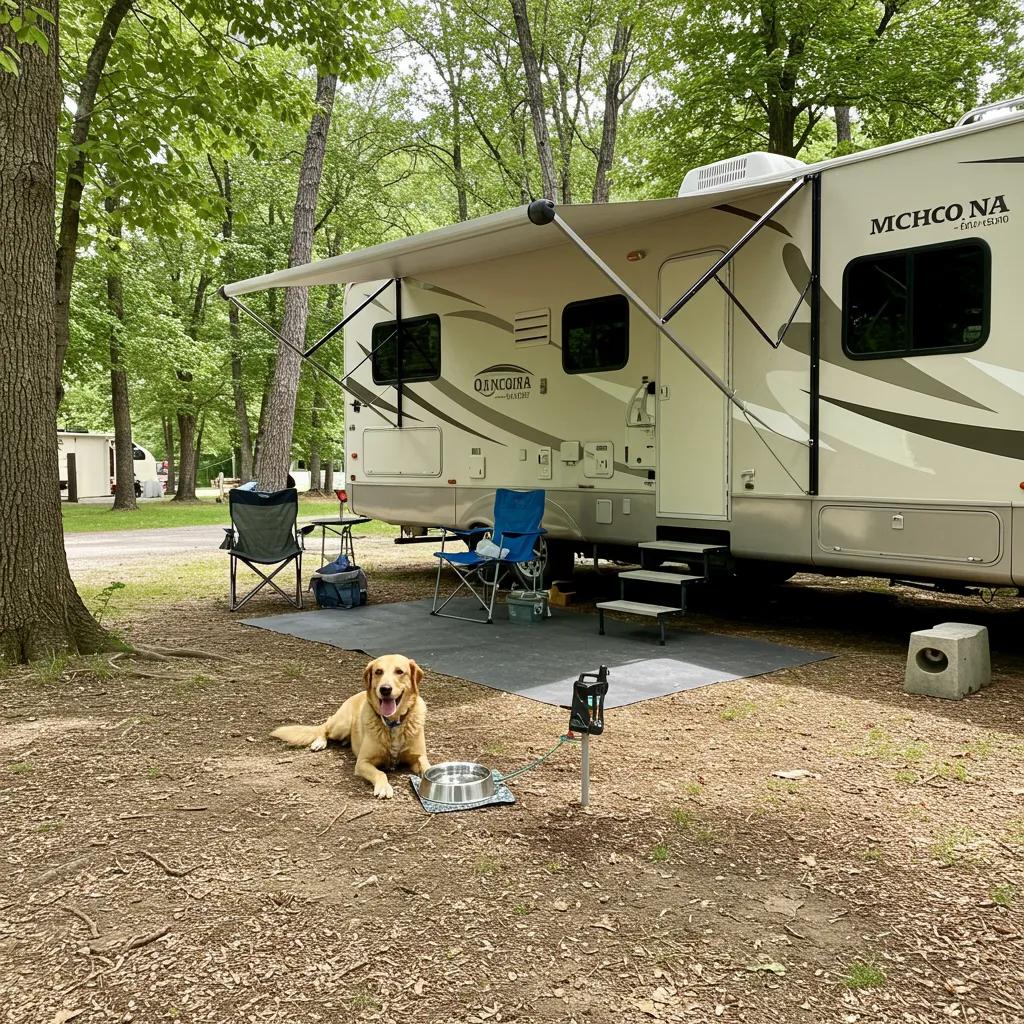
RV camping with pets focuses on site-level features that support mobility, shade, and secure outdoor space; full hookups, larger site sizes, and proximity to walking areas increase comfort and reduce stress for pets. These functional differences stem from campground design priorities: private resorts may prioritize convenience features for families with pets, while state parks emphasize preserved landscapes and trail access. RV owners should evaluate site orientation, tie-off options, and access to nearby dog exercise areas before booking, as these factors directly impact daily routines and pet wellbeing. The following subsections list amenities that make RV stays more comfortable and contrast policy impacts.
What Amenities Make RV Camping More Comfortable for Pets in Michigan?
Full hookups, level pads with ample shaded outdoor space, and nearby walking routes reduce logistical hassles and help maintain a pet’s routine during RV travel. Proximity to on-site dog areas and waste stations simplifies exercise and cleanup, while secure tie-off points and shaded patios keep pets safe and cool. Owners should also check for water availability and shaded common areas that reduce heat risk on summer trips. Evaluating these amenities before arrival makes RV camping with pets more predictable and enjoyable for both pets and owners.
This quick reference maps accommodation types to typical pet rules and helps RV travelers set expectations about flexibility and costs. Next, we’ll review how policies differ operationally between state parks and private resorts.
How Do Pet Policies Impact RV Campers at State Parks Versus Private Resorts?
State parks enforce standardized rules that may limit cabin pet access and prioritize leash compliance on trails, which can restrict some RV campers who want off-leash options; private resorts often offer more flexible on-site dog amenities but may charge pet fees. Enforcement style differs as well: state park rangers focus on habitat protection and consistent regulation across locations, while private campground staff may allow more tailored solutions like reserved dog runs or supervised playgroups. RV owners weighing options should consider whether they prefer predictable, conservation-focused rules or amenity-rich private resorts that ease daily pet care. Booking decisions hinge on balancing regulatory constraints with available conveniences for pets.
Where Are the Best Dog-Friendly Camping Locations in Michigan?
“Best” dog-friendly locations combine accessible trails, reliable water access, generous pet amenities, and clear pet policies that fit your dog’s needs, whether you prioritize social off-leash play or quiet natural areas. A short curated mix of private campgrounds and state parks gives options for different travel styles, from families wanting kid-friendly activities alongside pet amenities to owners seeking remote trails. The subsections below highlight Walnut Hills as a prominent private example, compare other private properties in general terms, and list state parks that are consistently popular with dog owners. Use these examples to match your priorities with available features.
What Makes Walnut Hills Family Campground a Premier Pet-Friendly Destination?
Walnut Hills Family Campground in Durand, operated by GatherGrounds Resorts, exemplifies private-campground pet amenities with a large dog park and a secure fenced dog run that supports safe off-leash play for families. The property provides convenient water stations and readily available pet waste bags, and it accommodates RV, tent, and cabin stays which helps families keep pets together during multi-night visits. Those features reduce the planning burden for pet owners and improve on-site hygiene and pet comfort compared with minimal-service locations. For families ready to book a pet-friendly RV, tent, or cabin site, Walnut Hills offers a practical, amenity-forward option to consider as a next step.
How Do Other Top Campgrounds Like Leelanau Pines Compare for Pet Owners?
Other private campgrounds may excel in different areas, such as expansive trail networks, beach or water access, or quieter campsites that appeal to shy or older dogs; these properties can be stronger for owners who prioritize natural settings over built pet amenities. When comparing sites, look for trail proximity, shade coverage, and whether the campground actively maintains pet facilities like bag stations and fenced runs. Choosing between private campgrounds often comes down to preferred balance of social dog play versus access to natural water or trail features. Assessing these trade-offs helps select the right setting for your dog’s temperament and your family’s plans.
Which Michigan State Parks Are Most Popular for Camping With Dogs?
Several Michigan State Parks are favored by dog owners for their extensive trail systems, lake access, and wide campsites that enable easy walking and exploration while maintaining leash rules; these parks offer reliable outdoor experiences for active dogs. Expect clear limitations for indoor areas and seasonal beach restrictions, but enjoy the broad trail networks and natural scenery that many owners prioritize. Always verify current Department of Natural Resources rules before arrival to confirm pet access and any seasonal changes. Selecting a state park often prioritizes natural adventure and trail variety over built dog amenities.
What Are Essential Tips for Planning a Stress-Free Pet-Friendly Camping Trip in Michigan?
Planning reduces surprises: verify pet rules, pack appropriate supplies, arrange local services, and prepare your pet for campground etiquette and safety to ensure a smooth trip. Practical steps include confirming vaccination records, bringing extra food and medication, ensuring secure ID tags, and mapping nearby veterinary and supply options. Following etiquette like leash control, waste cleanup, and noise management maintains good access for pet owners statewide. The next H3s provide concrete etiquette, local-service guidance, and efficient booking strategies.
How to Prepare for Pet Etiquette and Safety at Michigan Campgrounds?
Responsible pet etiquette begins with leash compliance and immediate waste cleanup to protect wildlife and maintain neighborly relations; these behaviors reduce complaints and preserve pet access across campgrounds. Prepare for wildlife encounters by securing food and supervising pets near trails and water, and monitor for heat stress with frequent water breaks and shaded rest. Train basic recall and quiet behaviors before arrival to minimize off-site incidents and enforce quiet-hour compliance. These simple preparations help ensure a safe, respectful stay that keeps pet-friendly options open statewide.
- Pack these essential items before arrival:
- Proof of vaccinations and ID tags in case of separation.
- Sturdy leash, collar, and harness for control and safety.
- Bedding, bowls, extra food, medications, and a basic first-aid kit.
Following this packing checklist helps avoid emergency searches for supplies during remote stays and supports a comfortable experience for pets and owners alike.
What Local Pet Services Should Campers Know Near Popular Campgrounds?
Identifying nearby veterinarians, emergency clinics, and pet supply stores before arrival reduces stress if an issue arises and ensures access to medications or specialty food during multi-day trips. Use local business listings to note service hours and distances from your campsite, and store contact details offline in case of limited connectivity. For remote campgrounds, bring backups of food and necessary supplies to avoid mid-trip shortages. Planning these service points ahead of time increases preparedness and keeps your trip focused on recreation.
How to Book Pet-Friendly Campsites and Cabins in Michigan Efficiently?
Efficient booking means using search filters for pet-friendly options, confirming pet rules and any fees in writing, and selecting sites near desired amenities like trails or dog runs to reduce on-site commuting. Ask about cabin pet policies, cleaning fees, and whether the site enforces size or breed restrictions, and request clarification on unattended-pet rules. Book early for peak summer weekends and specify pet needs when reserving to secure suitable sites. After confirming, prepare reservation notes and reminders to streamline arrival and reduce last-minute complications for families traveling with pets.
Frequently Asked Questions
What should I consider when choosing a pet-friendly campground in Michigan?
When selecting a pet-friendly campground, consider factors such as leash requirements, available amenities like dog parks and waste stations, and the campground’s overall pet policy. Evaluate the proximity of walking trails and water access, as well as any restrictions on pet sizes or breeds. Additionally, check for nearby veterinary services in case of emergencies. Understanding these elements will help ensure a comfortable and enjoyable experience for both you and your pet during your camping trip.
Are there specific breeds or sizes of dogs that are not allowed at certain campgrounds?
Yes, some private campgrounds in Michigan may impose restrictions on specific dog breeds or sizes due to insurance policies or safety concerns. These limitations can vary widely between campgrounds, so it’s essential to check the individual campground’s pet policy before booking. If you have a larger or specific breed, contacting the campground directly for clarification can help avoid any surprises upon arrival.
How can I ensure my pet is safe and comfortable while camping?
To keep your pet safe and comfortable while camping, ensure they have a secure leash and harness, and provide plenty of water and shade during hot weather. Bring familiar items like their bedding and toys to create a comforting environment. Regular breaks for exercise and bathroom needs are crucial, as is monitoring your pet for signs of stress or discomfort. Familiarizing your pet with basic commands can also enhance safety during your outdoor adventures.
What are the best times of year for pet-friendly camping in Michigan?
The best times for pet-friendly camping in Michigan are typically late spring through early fall, when the weather is mild and outdoor activities are plentiful. Late spring (May to June) offers blooming landscapes, while early fall (September to October) provides cooler temperatures and beautiful foliage. However, always check campground policies regarding seasonal pet restrictions, especially during peak summer months when some areas may have specific rules for pets on beaches or trails.
Can I leave my pet unattended at the campsite?
Leaving pets unattended at campsites is generally discouraged and may be prohibited by many campgrounds. If you must leave your pet, ensure they are secured in a safe area, such as a crate or a pet-friendly tent, and check the campground’s specific policies regarding unattended pets. It’s best to plan activities that allow you to keep your pet with you or arrange for a pet-sitter if you need to be away for an extended period.
What should I pack for my pet when going camping?
When camping with your pet, pack essential items such as a sturdy leash, collar, and ID tags, along with food, water, bowls, and any medications. Bring bedding or a favorite blanket to provide comfort, as well as waste bags for cleanup. A first-aid kit tailored for pets can be invaluable in case of minor injuries. Additionally, consider packing toys to keep your pet entertained and help them adjust to the new environment.
Are there any local regulations I should be aware of when camping with pets in Michigan?
Yes, local regulations regarding pets can vary by campground and state park. Common rules include leash requirements, restrictions on pet access to certain areas (like beaches or buildings), and cleanup policies. It’s crucial to familiarize yourself with the specific regulations of the campground you plan to visit, as well as any seasonal changes that may affect pet access. Checking the Michigan Department of Natural Resources website can provide up-to-date information on state park policies.
Conclusion
Choosing the right pet-friendly campground in Michigan enhances your outdoor experience by ensuring your furry friends are comfortable and well-cared for. Understanding the differences in pet policies and amenities between state parks and private campgrounds allows you to make informed decisions that suit your family’s needs. By exploring options like Walnut Hills Family Campground, you can find the perfect balance of convenience and natural beauty for your next adventure. Start planning your pet-friendly camping trip today to create unforgettable memories with your beloved pets!