The best time to camp in Michigan depends on what you want from the trip. For swimming and water parks, late June through mid-August is the sweet spot, with highs in the low 80s and lake water finally warm. For the best all-around weather, September wins: warm days, cool nights for sleeping, fewer bugs and fewer storms. For quiet and the lowest rates, May before Memorial Day and October are the deal windows, and October adds fall color.
Michigan’s camping season is short. Our parks, Walnut Hills Family Campground in Durand and The Oaks Campground in Munith, are open May 1 to October 20, like most private campgrounds in the state. Below is what the weather does in each of those months, how it changes what’s open and fun at the campground, and what to do when a forecast turns bad mid-trip.
Michigan camping weather by month
These are the 1991 to 2020 climate normals for Lansing, about 30 miles from Walnut Hills and 45 miles from The Oaks; both parks run a few degrees either side of these numbers.
| Month | Average high / low | Rain (inches) | What it means at the campground |
|---|---|---|---|
| May | 69° / 48° | 3.7 | Cool nights, quiet park, often-discounted rates; lake still cold |
| June | 79° / 57° | 3.8 | Beach season starts; events and food trucks every weekend |
| July | 83° / 61° | 2.9 | Peak water-park weather; afternoon storms possible |
| August | 81° / 60° | 3.5 | Warmest lake water; river levels depend on rain |
| September | 74° / 52° | 2.8 | Best overall month; Halloween weekends begin |
| October | 61° / 41° | 3.2 | Quiet, often discounted, fall color; parks close Oct 20 |

May: quiet, often discounted and cool at night
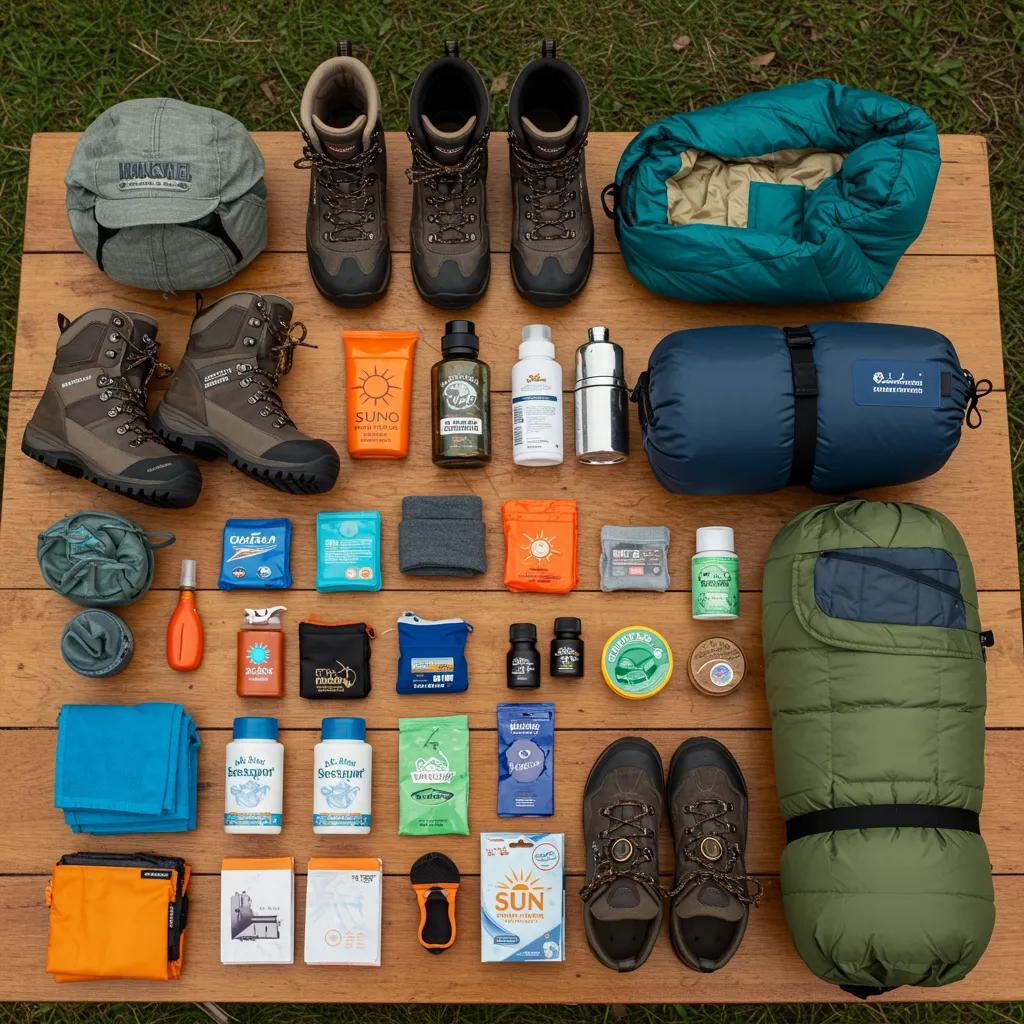
May is the opening month, and before Memorial Day weekend it is one of the two cheapest times to camp. Our parks use dynamic pricing: a base rate with a premium on high-demand dates and a discount on slow ones, and May before the holiday typically prices below base. The trade-off is weather. Days are often pleasant, but nights drop into the 40s, and the spring-fed lakes are too cold for most swimmers. Bring a warm sleeping bag or run the furnace.
What’s good in May: the river. Spring flows are faster and deeper on the Shiawassee, which our team says is “better suited for canoes and kayaks” than tubes, and Cheff’s Canoe Rental runs from the Walnut Hills launch starting in April. The grounds are quiet, the bugs haven’t arrived, and riverfront and lakefront sites are easy to get. Memorial Day weekend itself is a peak holiday with a golf cart parade, a kids’ bike parade and a DJ dance party, and it books early.
June: the start of beach season
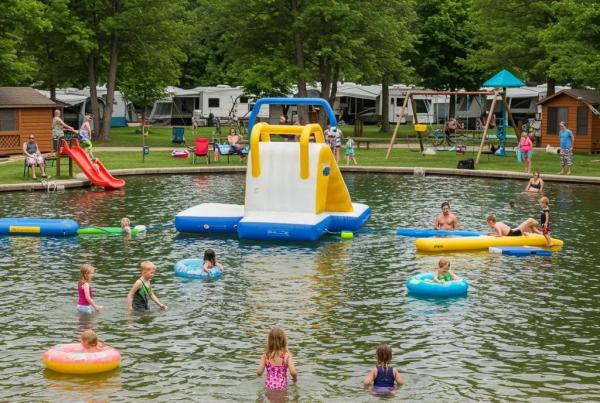
June warms fast. Highs reach the upper 70s, nights are comfortable, and the swim lakes are usable by mid-month. At Walnut Hills, the Wibit floating water park is open Tuesday through Sunday and free for campers Tuesday, Wednesday and Thursday, so a midweek June stay gets the best of the season at the lowest cost. Food trucks run every weekend from Memorial Day on, and the event calendar fills in with tie-dye, kids’ crafts at Pavilion 1, kickball and the Father’s Day pig roast.
One deal window to know about: the weekend right after Memorial Day is usually priced below base. Same park, same amenities, good weather, fewer people.
July and August: peak season and afternoon storms
These are the warmest months, with highs around 80 to 83 and lake water at its best. It is also when the campground is fullest: most summer weekends sell out, so book early and expect holiday pricing on the Fourth. What makes the heat easy to take is that the Walnut Hills lake is spring-fed and stays cool, with cold pockets you can feel where the springs come up. The Oaks’ swim lake is fed by an artesian spring as well.
Summer weather here comes with afternoon and evening thunderstorms. They are usually short, but they are the reason to keep an eye on the radar and to know the lightning rules below. July and August are also peak mosquito months; dusk is the worst hour, so bring repellent and a screen tent if you tent camp.
River note: the Shiawassee is at its best for tubing from June into early August. In a dry year, levels drop from mid-August on and the float gets slow; in a wet year it stays good through September. Friends of the Shiawassee posts river conditions online, and a 3-D virtual tour of the river is linked from the Walnut Hills home page.
September: the best month to camp in Michigan
If you only camp once, make it September. Highs in the mid-70s, lows in the low 50s, the driest month of the season on average, and almost no mosquitoes once the first cool nights hit. The water is still warm enough for the beach into mid-month, and the campground is busier than May but calmer than July.
The calendar is strong, too. Food trucks keep running through the end of September. Labor Day weekend has a DJ dance party and a Monday breakfast truck, and the weekends just before and just after Labor Day typically price below base. Then the Halloween season starts: at Walnut Hills the three Haunted Trail weekends ran September 19, September 26 and October 3 in 2026, with site decorating contests, trick-or-treating on closed roads and a haunted trail that gets scarier as the evening goes on. Those weekends book far in advance. The Oaks holds its one Halloween weekend on the last weekend of September going forward. Our fall and Halloween camping guide has the details.
October: fall color and the quietest camping of the year
October is the other deal window, and the one our team recommends to anyone who wants the campground mostly to themselves. Rates drop below base, weekends outside the final Halloween weekend are quiet, and at The Oaks, as one campground employee put it, “you would typically only see seasonal campers camping there in October.” Southern Michigan’s fall color peaks later than up north, usually in the second half of October and wrapping up around Halloween, so a mid-October weekend lines up with the leaves.
The Oaks is the better fall-color park. Its 120 acres of trails run through forest and grassland, and you can ride them by golf cart or bike with the leaves turning overhead. It is also crane season: the thousands of sandhill cranes at Haehnle Sanctuary next door peak in late October and November, and the public viewing area is a short drive out the front of the park. At Walnut Hills, the Shiawassee River trail and the Reed Road nature area a few minutes away give you the same thing on a smaller scale. Pack for 40-degree nights, and plan on an RV furnace or a cabin; the two Walnut Hills camping cabins have air conditioning; ask the office about heat before booking one late in the season. Both parks close for the season October 20.
Can you camp in Michigan in winter?
Not at our parks. Walnut Hills and The Oaks close October 20 and reopen May 1, and most private Michigan campgrounds do the same. Seasonal campers can leave their RV on site over the winter at no charge, but the water is off and the park is closed to overnight stays. If you want a winter trip, a handful of Michigan state parks keep campgrounds open year-round; the DNR’s rates and operating dates page lists which ones.
What to do if the weather turns bad while camping
Michigan weather changes quickly, and a bad forecast is not a reason to cancel. Here is how to handle the common problems. Like most campgrounds, we don’t offer weather refunds, so a little planning goes a long way.
Before you go
- Check the forecast at 72, 48 and 24 hours out, and turn on severe-weather alerts for Shiawassee County (Walnut Hills) or Jackson County (The Oaks) on your phone.
- Pack layers, a rain shell and a second pair of shoes, whatever the month. A 20-degree swing between afternoon and 3 a.m. is normal here.
- If you’re tent camping and the forecast is wet, consider one of the Walnut Hills camping cabins or an electric tent site so you can run a fan or a small heater.
Thunderstorms and lightning
The National Weather Service rule is simple: “When you hear thunder, immediately move to safe shelter.” Safe shelter is “a substantial building with electricity or plumbing or an enclosed, metal-topped vehicle with windows up.” That means your RV, your car or the bathhouse, not a tent, not under a tree and not an open-sided pavilion. Wait at least 30 minutes after the last thunder before heading back out. The Wibit, the Aquaglide and the beaches clear when lightning is near, and staff will tell you when they reopen.
Wind
Roll in RV awnings and take down canopies before the storm, not during it. Stake tents at every point and move anything light into a vehicle. Both parks have a lot of old-growth trees, which is part of their appeal, so after a windy night look up before you set up chairs under a limb.
Rain
Set up with drainage in mind: pitch the tent on the high side of the site and keep gear off the ground. Then use the rainy day. At Walnut Hills the arcade in the store is the usual refuge, scooped ice cream helps, and the kids’ craft at Pavilion 1 runs under a roof on Saturdays. Rain also tends to be short here; a wet morning often turns into a fine afternoon on the lake.
Cold snaps
May and October nights can dip near freezing. Sleep in dry clothes, insulate under you as well as over you, and never run a fuel heater or grill inside a tent or RV. Firewood is sold at the store; outside firewood can’t be brought into Michigan campgrounds.
Which season fits your trip?
- Swimming, the Wibit or Aquaglide, tubing: late June through mid-August, with Tuesday to Thursday for the free Wibit days.
- Best weather, fewest bugs, strong events: September.
- Lowest rates and an easy site choice: May before Memorial Day, the weekend after Memorial Day, the weekends around Labor Day, and October.
- Fall color and quiet: mid-October at The Oaks.
- Halloween: the last two weekends of September and the first of October at Walnut Hills, the last weekend of September at The Oaks. Book months ahead.
Check dates and site types on the Walnut Hills rates page and The Oaks rates page.
Frequently asked questions
What is the warmest month to camp in Michigan?
July, with average highs around 83 in the Lansing area and the warmest lake water in late July and August.
When is camping season in Michigan?
Most private campgrounds open around May 1 and close in mid to late October. Ours run May 1 to October 20. Michigan state parks vary, and a few stay open year-round.
Is it too cold to camp in Michigan in May or October?
Not in an RV or with the right gear. Expect highs in the 60s and lows in the 40s, and the occasional night near freezing. Those are also the two lowest-priced months of the season.
Do campgrounds give refunds for bad weather?
Generally no, and that’s true at our parks too. The good news is that Michigan rain is usually short, and an RV, a cabin or a well-pitched tent handles most of it; watching the forecast and packing layers covers the rest.
Are the water parks open in September?
No. At Walnut Hills and The Oaks, Labor Day is the water park’s last day. September still has the beaches, river floats at Walnut Hills (water levels permitting) and the start of the Halloween weekends.
Who can use the Wibit and Aquaglide?
Ages 7 and up, with a parent present for kids under 16 and a campground-provided life jacket for everyone. The Walnut Hills Wibit is open Tuesday through Sunday; The Oaks’ Aquaglide is open Thursday through Sunday plus holiday Mondays.