Key Metrics to Consider When Determining Your Campground or RV Park’s Value
Figuring out what your campground or RV park is truly worth involves understanding what a savvy buyer would pay for both the property and the business itself. This is primarily driven by your Net Operating Income (NOI) and a market-determined capitalization rate. This guide will walk you through how to accurately assess your campground or RV park’s value by examining key financial metrics, operational performance indicators, and the non-financial aspects that sway buyer offers. Many owners wonder how things like revenue, occupancy rates, and one-time owner expenses impact an offer. We’ll show you how to normalize your financials, pick the right cap rate or multiplier, and present your documentation in a way that minimizes buyer risk. You’ll discover practical valuation formulas, see example calculations using 2025 benchmarks, get a seller preparation checklist, and learn steps to boost your value before you even list. We also cover the selling process and answer common seller questions, highlighting how a family-owned buyer like GatherGrounds Resorts can be a resource for owners considering a respectful, no-obligation conversation about selling their campground or RV park. Keep reading for metric definitions, EAV comparison tables, checklists, and actionable steps to improve your asking price and streamline due diligence.
What Are the Most Important Financial Metrics for Campground Valuation?

To start understanding financial metrics, let’s focus on Net Operating Income (NOI). This figure summarizes your property’s recurring cash flow and is the foundation for income-based valuations. NOI bridges the gap between your revenue and operating expenses. Buyers then use this normalized NOI, along with a market-derived cap rate or multiplier, to quickly arrive at a defensible offer. This section defines each primary metric, provides formulas, and offers example calculations and 2025 benchmark ranges so you can see how your park measures up against market expectations. Below is a concise comparison of the key metrics that buyers and brokers use when valuing campgrounds and RV parks.
These metrics work together: NOI provides the earnings foundation, cap rates reflect market risk, and multipliers or price-per-pad offer quick comparative context. Knowing which metric a prospective buyer prioritizes will help you prepare targeted documentation and set realistic price expectations.
How Is Net Operating Income Calculated and Why Does It Matter?
Net Operating Income (NOI) represents the recurring cash flow your campground generates from its operations after deducting operating expenses, but before accounting for financing and taxes. NOI is crucial because it’s the primary figure buyers use, along with a capitalization rate, to estimate property value. A higher, stable NOI typically leads to stronger offers. To calculate NOI, sum up all operating revenue (site fees, cabin rentals, store sales, ancillary services) and subtract recurring operating expenses (payroll, utilities, repairs). Then, normalize for owner-specific perks and one-time items. For instance, a park with $600,000 in gross revenue and $320,000 in operating expenses yields $280,000 in NOI. Buyers will scrutinize this figure for sustainability and seasonality. Clear documentation of your revenue streams and transparent add-backs reduce buyer risk and support more robust valuation multiples.
What Is the Capitalization Rate and How Does It Affect Your RV Park’s Value?
A capitalization rate (cap rate) signifies the rate of return a buyer expects on a real estate investment. It’s calculated by dividing NOI by the purchase price, directly linking income to value. The cap rate chosen reflects perceived risk, local market dynamics, and the quality of the asset. Lower cap rates suggest higher valuations for the same NOI, while higher cap rates indicate lower valuations. In the current 2025 market, comparable cap rates for stable, well-located campgrounds typically range between 8% and 10%. However, exceptional coastal or high-demand parks might trade at tighter spreads, while those with higher risk or infrastructure challenges could command wider spreads. For example, an NOI of $280,000 at a 9% cap rate values a property at approximately $3.11 million, whereas the same NOI at a 10% cap rate values it at $2.8 million. Buyers adjust cap rates based on factors like occupancy consistency, property condition, and regulatory exposure.
How Does EBITDA Compare to NOI in Campground Valuation?
EBITDA measures operational earnings before non-operational charges and can differ from NOI because it accounts differently for owner compensation, interest, taxes, depreciation, and amortization. Operational buyers and brokers often prefer EBITDA during transaction negotiations because it highlights the cash available to service buyer-level debt and operations, and it better captures add-backs for discretionary owner expenses. Real estate-focused buyers using cap rates prefer NOI because it isolates property-level income without owner-specific financial decisions. A park showing $280,000 NOI might report a higher EBITDA after adding back owner draws and non-recurring costs, which, if well-documented, can justify a higher purchase price in negotiations. Presenting both NOI and EBITDA with clear reconciliations provides buyers with clarity and reduces valuation disputes.
What Role Do Gross Sales Multipliers and Price Per Pad Play in Valuation?
Gross sales multipliers and price-per-pad offer quick comparative valuation checks by linking price to topline revenue or site count, rather than normalized earnings. They are particularly useful when NOI data is limited or when markets emphasize relative comparisons. A gross sales multiplier applies a market multiple to annual gross revenue, which can be helpful for smaller or atypical parks where expenses fluctuate significantly. Price-per-pad benchmarks convert the total price into a per-site figure and are often used by buyers assessing scale and site-level economics; parks with premium amenities or cabins command higher per-pad values. Their limitations include sensitivity to differing expense structures and seasonal revenue, so multipliers should always be cross-checked with NOI-based valuations. Use these approaches as sanity checks alongside income-based methods to triangulate a defensible asking price.
How Do Revenue, Occupancy, and Site Performance Influence Your Campground’s Worth?
Revenue per site, occupancy rate, and average daily rate (ADR) are the operational levers that scale into NOI. Improvements in these key performance indicators (KPIs) directly translate into higher valuations by increasing earnings. Revenue per site is a function of ADR multiplied by occupancy and length of stay; optimizing price segmentation, managing seasonality, and offering add-on services can all boost per-site revenue. Buyers carefully evaluate historical occupancy trends and per-site revenue stability to forecast future NOI. Stable, diversified revenue streams reduce perceived risk and lead to tighter cap rates. Tracking and presenting clear KPI reports—revenue per site, occupancy percentage, ADR, and ancillary revenue—enables buyers to model future cash flows with greater confidence and often results in improved offer terms.
Which Non-Financial Factors Significantly Influence Campground and RV Park Value?
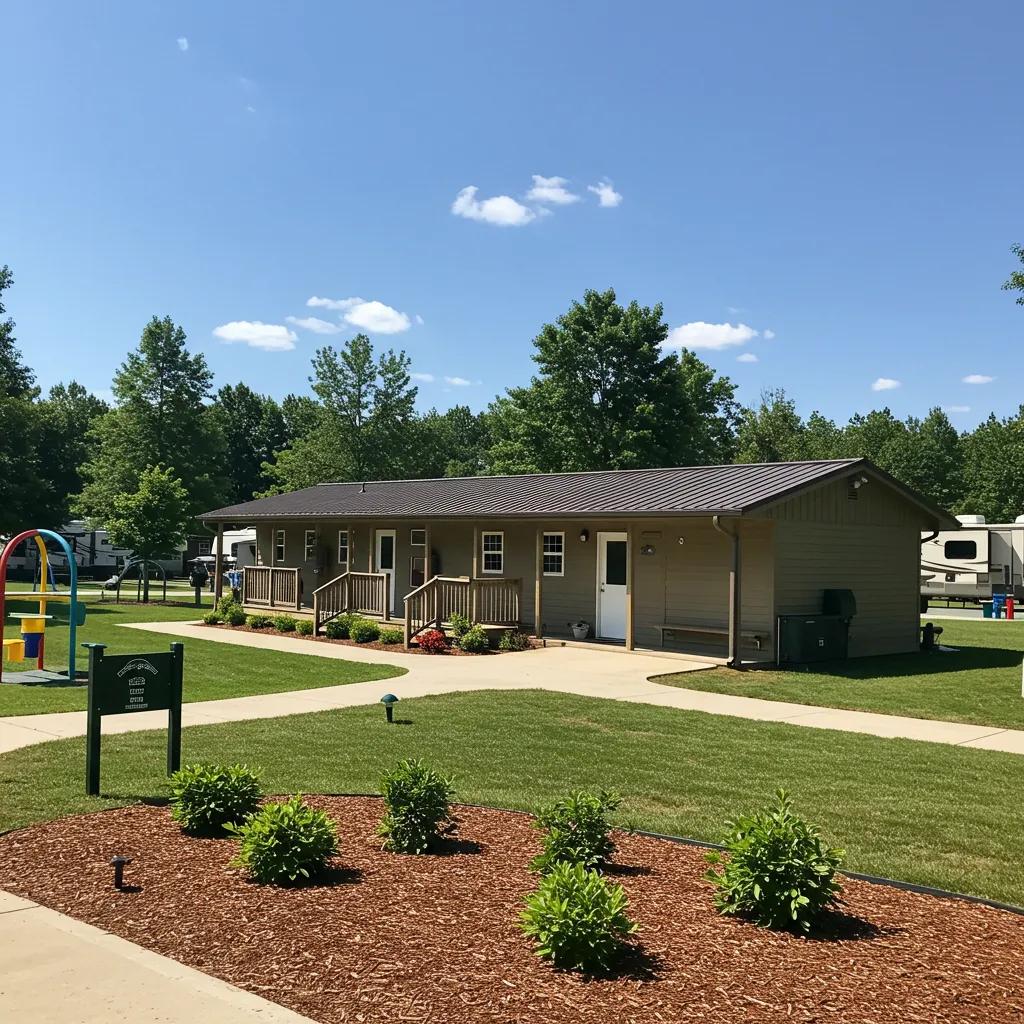
Non-financial attributes like location, amenities, permits, and expansion potential shape demand and perceived risk. Buyers quantify these factors by adjusting cap rates or including offer contingencies. These elements determine whether a buyer foresees predictable cash flow or significant near-term capital outlays, and they influence financing availability and the size of the buyer pool. The qualitative impact of each factor can be translated into valuation adjustments—location premiums, reserves for utility upgrades, or discounts for permitting uncertainty—and should be documented to support a higher asking price. The table below maps primary non-financial factors to why they matter and their typical impact on valuation.
Understanding how buyers interpret these non-financial attributes helps owners prioritize improvements and document strengths during the marketing phase. Explicitly addressing permitting, utility capacity, and amenity condition reduces perceived risk and often leads to better offers.
How Does Location and Accessibility Impact Your Campground’s Market Value?
Location and accessibility dictate the size of your addressable market and seasonal demand, serving as principal drivers for both occupancy and ADR. Proximity to major highways, popular attractions, population centers, and natural amenities increases visitation frequency and willingness to pay. Conversely, restricted access or remote locations can depress price-per-site and amplify seasonality risk. Buyers model these effects through revenue forecasts and adjust cap rates to reflect demand certainty; areas with constrained supply often command a premium. Owners can enhance perceived accessibility through improved signage, better road approaches, and clearer mapping. These are relatively low-cost actions that can reduce buyer hesitation and produce measurable valuation uplift.
What Amenities and Technology Features Increase Campground Appeal and Value?
High-impact amenities—such as full hookups, clean bathhouses, recreational facilities, and modern cabin inventory—can raise ADR and length of stay. Technology features—like online booking, dynamic pricing, and park management systems—improve yield management and operational efficiency. Amenities generate ancillary revenue streams from equipment rentals, on-site retail, and paid activities. Technology reduces friction for guests and increases direct bookings, which in turn improves profit margins. Buyers value parks with a proven track record of amenity-driven revenue uplift because it lowers execution risk for scaling. Prioritizing improvements with a high ROI, such as upgraded bathhouses or reliable Wi-Fi, typically increases both NOI and buyer confidence.
How Do Compliance, Permits, and Utility Infrastructure Affect Valuation?
Permitting status, environmental compliance, and utility capacity are critical deal points. Unresolved issues can delay financing or necessitate capital holds, and buyers will price these risks into their offers through either price reductions or escrowed reserves. Common red flags include lack of clear title, zoning inconsistencies, septic or sewer limitations, and stormwater concerns. These issues can reduce buyer competition and tighten financing options. Comprehensive documentation—including permits, inspection reports, utility bills, and any mitigation plans—reduces perceived risk and shortens due diligence timelines. Addressing infrastructure gaps before marketing, or presenting staged upgrade budgets, often leads to more favorable cap-rate assumptions.
Why Are Renovations, Upgrades, and Expansion Potential Critical to Value?
Renovations and expansion options increase projected revenue and reduce perceived operational risk. Buyers are willing to pay premiums for assets with credible upside and ready-to-execute plans. Improvements that directly enhance the guest experience—such as modern bathhouses, improved site layouts, and added lodging options—tend to deliver the highest NOI uplift per dollar invested. Expansion potential, such as room for additional pads or glamping units, is modeled in pro formas and can materially increase valuation through future revenue scenarios. Buyers incorporate these capital plans into their valuations by adjusting expected growth rates and demonstrating a willingness to accept lower initial cap rates when a clear execution path exists.
How Can Campground Owners Prepare Their Property Financially and Physically for Sale?
Preparing for sale begins with organized financial records and a prioritized list of physical improvements that can boost valuation while minimizing time on market. Buyers expect clean, normalized financials, supporting documentation for revenue streams, and clear records of capital expenditures and permits. The absence of these items increases perceived risk and can lead to lower offers. This section provides a seller-ready checklist of documents and improvements, explains how to normalize financials by removing owner-specific expenses, and highlights which physical upgrades typically yield the best valuation returns. Owners who prepare their documentation and present actionable improvement plans often achieve faster sales and stronger offers.
Organizing your records into a single, clearly labeled data room and preparing a brief executive summary of operations helps buyers evaluate your property quickly and often speeds up due diligence. Below are practical steps sellers should follow in advance of listing.
- Gather three to five years of profit and loss statements, tax returns, and occupancy reports to establish consistent revenue trends.
- Normalize owner-specific expenses, such as personal draws and related-party charges, to showcase true operating performance.
- Document capital improvements, permits, and utility service records to minimize technical questions during buyer due diligence.
What Financial Documents Are Essential for an Accurate Valuation?
Buyers expect a comprehensive documentation package that demonstrates historical performance, recurring expenses, and asset condition. The absence of these items can prolong due diligence and depress offers. Essential documents include three to five years of P&Ls, corresponding tax returns, occupancy and ADR reports, utility and maintenance records, rent rolls for leased sites, and capital expenditure histories. Each document answers buyer questions about revenue sustainability, expense normalization, and capital needs, allowing buyers to model forward NOI with confidence. Organizing documents in a clear data room and providing reconciliations between P&Ls and tax returns streamlines negotiations and reduces opportunities for price adjustments.
How Should Owners Optimize Financials by Adjusting Personal Expenses and Documenting Income?
Optimizing your financials involves identifying and documenting add-backs that are non-recurring or owner-specific, such as personal vehicle expenses, family payroll, and discretionary owner perks. Then, prepare a normalized NOI reconciliation. Buyers expect transparency: each add-back must have a clear business justification and supporting documentation, like invoices or contracts. A simple normalized NOI example can illustrate the effect: add back $40,000 of owner-drawn expenses to reported NOI and present the adjusted figure with notes; this often raises EBITDA and supports stronger offers. Consistent, well-justified adjustments reduce valuation disputes and demonstrate professional stewardship of operations.
What Property Maintenance and Enhancements Maximize Sale Price?
Prioritize maintenance and enhancements that visibly improve the guest experience and reduce near-term capital needs. This includes upgraded bathhouses, repaired sites, reliable hookups, improved landscaping, and clear signage. Quick wins like fresh paint, repaired pavements, and cleaned common areas enhance first impressions and listing photos. Medium investments, such as full-hookup upgrades or new cabins, can produce measurable ADR increases. Presenting before-and-after photos, cost summaries, and projected incremental revenue from each improvement helps buyers model ROI and justify higher offers. A prioritized list of quick wins and medium-term projects helps sellers allocate limited capital for the greatest valuation impact.
What Is the Step-by-Step Selling Process for Campgrounds and RV Parks?
The selling process follows a predictable sequence: prepare and document, market and qualify buyers, negotiate terms, complete due diligence, close the transaction, and perform a transition. Understanding each milestone and the roles of brokers, appraisers, lenders, and buyers helps owners control timing and outcomes. Common pitfalls—such as weak documentation, unresolved permitting issues, or unrealistic pricing—can be avoided through early preparation and transparent communication. The numbered checklist below outlines the major process stages and seller actions to keep the transaction moving smoothly.
- Preparation: Assemble financials, permits, and a concise operations summary to present to buyers.
- Marketing and Buyer Screening: Use targeted outreach or brokers to find qualified buyers and gather proof of funds.
- Negotiation and Letter of Intent: Agree on price, contingencies, and transition terms before due diligence begins.
- Due Diligence and Closing: Provide requested documentation, resolve inspections, and move to closing with clear deliverables.
- Transition: Execute the agreed handover, including staff communications and guest notifications.
How Do Real Estate Agents and Campground Brokerages Assist in the Selling Process?
Real estate agents and specialized campground brokerages offer market pricing guidance, buyer qualification, marketing execution, and negotiation support tailored to outdoor hospitality assets. Brokers can identify qualified buyers, manage confidentiality, benchmark comparable sales, and structure deal terms to preserve seller outcomes like transition roles or legacy protections. Commission considerations vary by service level and market, but the value lies in improved buyer reach, reduced negotiation friction, and experienced deal management. Sellers should evaluate broker track records in campground transactions and balance commission costs against potential upside in sale price and process efficiency.
What Due Diligence Should Sellers Expect During a Sale?
Buyers typically request a range of items during due diligence, including financial verification, environmental assessments, title and zoning documents, site inspections, utility capacity reports, and staffing information. The timeline for due diligence varies, but preparing a data room with organized documents and designating a point person to respond to questions can accelerate the process. Common snag points include discrepancies between P&Ls and tax returns, unclear permitting, or deferred maintenance requiring repair estimates. Anticipating these requests and addressing them proactively reduces negotiation leverage for buyers and shortens closing timelines.
How Does Negotiation and Closing Work in Campground Sales?
Negotiation centers on price, contingencies, transition terms, and the allocation of repair or capital responsibilities. Buyers may exchange price for more favorable transition guarantees or extended seller consulting. Closing steps typically include finalizing purchase agreements, resolving escrow items, transferring titles, and satisfying lender conditions where applicable. Sellers can use negotiation levers—price, earnest money, closing timeline, and transition involvement—to align buyer incentives with legacy preservation goals. Clear checklists for closing deliverables and explicit transition timelines help ensure a smooth handover for staff and guests.
Why Should You Consider Selling Your Campground to GatherGrounds Resorts?
GatherGrounds Resorts positions itself as a family-owned buyer dedicated to preserving the identity and traditions of acquired campgrounds and RV parks while investing in modern amenities and operations. For owners seeking a respectful exit rather than a transaction with a large investment firm, GatherGrounds offers the acquisition of campgrounds and RV parks from owners who have a stated preference for properties with 130+ sites and a commitment to thoughtful transitions. The buyer emphasizes legacy preservation, staff continuity where possible, and open communication with returning guests to maintain goodwill and minimize disruption. Owners who value continuity, community relationships, and a collaborative handover may find this acquisition approach aligns well with their objectives.
How Does GatherGrounds Resorts Preserve Your Campground’s Legacy and Traditions?
GatherGrounds Resorts highlights practices designed to protect a park’s core identity and community. This includes efforts to retain key staff, continue signature guest programs, and communicate changes transparently to returning visitors. Preserving traditions reduces reputational risk and maintains occupancy patterns that support stable NOI, which in turn positively affects valuation. The buyer’s approach typically involves consultant periods for outgoing owners to transfer knowledge and documented plans for honoring on-site customs. When buyers explicitly value intangible community goodwill, owners can often negotiate terms that protect legacy elements as part of the transition.
What Are the Benefits of Selling to a Buyer Focused on 130+ Site Campgrounds?
A buyer specializing in larger parks brings operational scale, investment capacity, and systems that can enhance margins and fund capital projects. This often results in smoother integration and more predictable execution. Operational fit reduces integration friction, allowing improvements and marketing initiatives to proceed without excessive owner involvement, and scale enables better vendor pricing and technology investments. For sellers, this fit can translate into transaction efficiency, fewer contingencies, and the confidence that the property will be managed in a way that sustains community relationships. Buyers focused on parks of similar scale typically model post-acquisition capex and NOI uplift more precisely, which can support competitive offers.
How Does GatherGrounds Ensure a Smooth Transition for Owners, Staff, and Guests?
GatherGrounds Resorts outlines transition planning steps that include phased handovers, direct staff retention offers where appropriate, structured guest communication plans, and optional owner consulting periods to transfer operational knowledge. These measures reduce disruption, preserve customer relationships, and help maintain reservation continuity, which is critical for sustaining revenue during ownership change. A clear transition timeline and documentation of key operational procedures allow buyers to retain institutional knowledge and reassure both staff and guests. Owners can negotiate specific transition guarantees and consulting arrangements to protect ongoing community ties and operational stability.
How Can You Maximize Your Campground’s Value Before Selling?
Maximizing value requires tactical financial moves, targeted amenity investments, and market-informed pricing strategies that increase NOI and reduce perceived risk. Actions that raise revenue per site, improve occupancy, and diversify income streams—such as introducing seasonal pricing, adding ancillary services, or improving cabins—have direct valuation benefits. Equally important is presenting a market-based narrative supported by recent trends and local comps so buyers can justify a tighter cap rate. Below are targeted strategies owners can implement to bolster their sale price.
- Implement pricing strategies that optimize ADR and occupancy by season and segment.
- Reduce controllable operating expenses through vendor renegotiation and process efficiencies.
- Add ancillary revenue streams such as retail, equipment rental, or premium services to increase per-guest spend.
What Financial Strategies Boost Campground Profit Margins and NOI?
Pricing optimization, expense control, and revenue diversification are primary levers to boost profit margins and NOI prior to sale. Use segmented pricing to capture higher ADR during peak demand, implement dynamic pricing where feasible, and reduce variable costs through vendor consolidation and efficient staffing models. Introducing or expanding ancillary revenue—on-site retail, paid activities, laundry, or premium services—adds high-margin income with relatively low incremental cost. Demonstrating consistent, year-over-year margin improvement makes your property more attractive to buyers and can justify lower cap rates or higher multiples.
How Do Upgrading Amenities and Enhancing Guest Experience Increase Value?
Targeted amenity upgrades raise ADR and length of stay while improving guest satisfaction and repeat visitation, which directly increases revenue per site. High-impact examples include modern bathhouses, reliable full hookups, upgraded cabin units, and better on-site recreational offerings; each improvement can be modeled with expected ADR uplift and occupancy gains. Enhancing guest experience through staff training and streamlined check-in processes improves reviews and direct bookings, lowering distribution costs. Quantifying the expected ROI for each upgrade in a short pro forma helps buyers see clear upside and supports more favorable valuation assumptions.
Why Is Market Analysis and Trend Awareness Important for Maximizing Sale Price?
Current market data and trend awareness inform realistic pricing, cap-rate selection, and buyer targeting. Trends like remote work, longer stays, and elevated outdoor recreation demand can boost buyer appetite in 2025. Benchmark local comps, analyze recent sales, and review regional occupancy trends to justify your asking price and the cap rate you expect. Presenting a succinct market analysis with comparable metrics—revenue per site, cap-rate evidence, and price-per-pad comps—gives buyers a framework for value and often reduces negotiation friction. Staying aligned with contemporary market realities positions your property for a timely sale at competitive terms.
What Are Common Questions About Campground Valuation and Selling?
Sellers frequently ask concise, practical questions about valuation calculations, cap rates, required documents, and steps to increase profitability. Direct answers reduce confusion and speed decision-making. This FAQ-style section provides short, actionable responses that owners can use immediately during early-stage planning and buyer conversations. It also offers guidance on next steps and encourages owners to seek tailored assessments when their situation requires specific modeling or local nuance. Owners can use these answers to prepare for buyer inquiries and streamline the selling timeline.
How Do You Calculate the Value of a Campground or RV Park?
Calculate value by normalizing NOI to reflect sustainable operating performance, then applying an appropriate cap rate or multiplier to convert that NOI into a price estimate. Step 1: Compile three to five years of revenue and expense records and adjust for owner-specific or one-time items to determine normalized NOI. Step 2: Select a cap rate based on market comparables and asset risk profile and divide NOI by that cap rate to estimate value. For example, $280,000 normalized NOI ÷ 0.09 cap rate = approximately $3.11 million estimated value.
What Is a Good Cap Rate for an RV Park in 2025?
A good cap rate in 2025 commonly ranges between 8% and 10% for stable, well-located campgrounds, with variations driven by location, operating stability, and required capital investments. High-quality assets with consistent occupancy and strong amenities can achieve cap rates at the tighter end of the range, while parks with regulatory or infrastructure risks trade at higher cap rates. Regional market dynamics and recent transactions should guide cap-rate selection; presenting evidence of comparable sales supports your cap-rate assumptions during negotiations. Discussing cap-rate rationale transparently with buyers reduces valuation disputes.
Which Financial Documents Do I Need to Sell My RV Park?
Essential documents include three to five years of profit and loss statements, corresponding tax returns, occupancy and ADR reports, utility and maintenance records, permits and inspection reports, and any leases or management agreements. These documents allow buyers and lenders to verify revenue streams, expense baselines, regulatory compliance, and capital needs, forming the backbone of due diligence. Organize documents in a clear data room with reconciliations, which accelerates diligence and reduces opportunities for price adjustments. Providing standardized reports demonstrates operational competence and increases buyer confidence.
How Can I Increase My Campground’s Profitability Before Selling?
Focus on revenue levers and cost controls: implement segmented pricing and dynamic ADR strategies, add ancillary paid services, optimize staffing and vendor contracts, and invest in high-ROI amenities that raise ADR and occupancy. Track key metrics—revenue per site, occupancy rate, ADR, and ancillary revenue share—and present trends showing improvement. Small investments in guest experience and operational efficiency often yield disproportionate NOI gains relative to cost, making them attractive pre-sale moves. Demonstrated margin improvement positions your asset for stronger valuation multiples.
What Factors Affect the Sale Price of a Campground?
Sale price is driven by an interplay of normalized NOI, chosen cap rate or multiplier, location quality, amenities, regulatory standing, utility capacity, property condition, and expansion potential. Buyers weigh each factor and adjust price or contingencies to reflect perceived risk and upside; for example, unresolved permitting reduces buyer competition and often lowers offers. Addressing high-impact weaknesses and documenting strengths—especially intangible community goodwill and staff continuity—can materially improve offers. Preparing tailored responses and documentation for each factor reduces buyer leverage and supports a higher sale price.
What Factors Affect the Sale Price of a Campground?
Sale price is driven by an interplay of normalized NOI, chosen cap rate or multiplier, location quality, amenities, regulatory standing, utility capacity, property condition, and expansion potential. Buyers weigh each factor and adjust price or contingencies to reflect perceived risk and upside; for example, unresolved permitting reduces buyer competition and often lowers offers. Addressing high-impact weaknesses and documenting strengths—especially intangible community goodwill and staff continuity—can materially improve offers. Preparing tailored responses and documentation for each factor reduces buyer leverage and supports a higher sale price.
This article covers core financial metrics, operational KPIs, non-financial value drivers, seller preparation checklists, and process steps to help owners determine and maximize their campground or RV park’s value. Owners ready for a tailored, no-obligation conversation can consider discussing next steps with a family-owned acquirer that focuses on thoughtful transitions and the acquisition of campgrounds and RV parks from owners as one potential path forward.
Frequently Asked Questions
What are the key operational KPIs to track for campground valuation?
Key operational KPIs include occupancy rate, average daily rate (ADR), revenue per site, and length of stay. These metrics provide insights into how well the campground is performing and its potential for generating income. Tracking these KPIs helps owners identify trends, optimize pricing strategies, and enhance guest experiences. By presenting clear data on these metrics, sellers can demonstrate the campground’s operational efficiency and revenue potential to prospective buyers, ultimately influencing the valuation positively.
How can seasonal trends impact campground valuation?
Seasonal trends significantly affect campground valuation as they influence occupancy rates and revenue generation. Campgrounds in regions with distinct seasons may experience fluctuations in demand, impacting overall income. Buyers will assess historical occupancy data to understand how well the property performs during peak and off-peak seasons. Owners can enhance valuation by demonstrating effective strategies for managing seasonality, such as offering off-season promotions or diversifying services to attract visitors year-round, thereby stabilizing income streams.
What role does guest satisfaction play in campground valuation?
Guest satisfaction is crucial for campground valuation as it directly impacts repeat business, online reviews, and overall reputation. High satisfaction levels often lead to increased occupancy rates and higher average daily rates (ADR). Buyers will look for evidence of positive guest experiences, such as reviews and ratings, as indicators of future revenue potential. Implementing feedback mechanisms and continuously improving guest services can enhance satisfaction, making the property more attractive to potential buyers and justifying a higher valuation.
How do local market conditions affect campground sales?
Local market conditions, including competition, economic trends, and tourism demand, play a vital role in campground sales. A strong local economy and high tourism rates can drive up property values, while oversaturation of campgrounds in an area may depress prices. Buyers will analyze local market data to assess the campground’s competitive position and growth potential. Owners should stay informed about local trends and adjust their marketing strategies accordingly to maximize their property’s appeal and valuation in the current market landscape.
What improvements can increase a campground’s value before selling?
Improvements that can increase a campground’s value include upgrading amenities, enhancing guest experiences, and optimizing operational efficiency. High-impact upgrades like modern bathhouses, reliable Wi-Fi, and recreational facilities can attract more guests and justify higher rates. Additionally, improving landscaping and signage can enhance curb appeal. Owners should also consider implementing energy-efficient systems to reduce operating costs. Documenting the ROI of these improvements can help demonstrate value to potential buyers and support a higher asking price.
How can owners effectively market their campground for sale?
Effective marketing of a campground for sale involves showcasing its unique features, financial performance, and growth potential. Owners should prepare a comprehensive marketing package that includes detailed financial documents, operational metrics, and high-quality images of the property. Utilizing online platforms, social media, and targeted outreach to potential buyers can increase visibility. Engaging a specialized campground broker can also enhance marketing efforts by leveraging their network and expertise in the outdoor hospitality market, ultimately attracting qualified buyers.
What are common pitfalls to avoid when selling a campground?
Common pitfalls when selling a campground include inadequate documentation, unrealistic pricing, and failing to address maintenance issues. Sellers should ensure that all financial records are organized and transparent to build buyer confidence. Setting an asking price based on market analysis rather than personal expectations is crucial. Additionally, neglecting necessary repairs or upgrades can deter buyers and lower offers. Proactively addressing these issues and preparing a thorough sales strategy can help avoid complications and lead to a smoother transaction process.
Conclusion
This article covers core financial metrics, operational KPIs, non-financial value drivers, seller preparation checklists, and process steps to help owners determine and maximize their campground or RV park’s value. By understanding these elements, owners can enhance their property’s appeal and secure better offers in the market. For those ready to explore their options, consider reaching out to a family-owned acquirer focused on thoughtful transitions. Take the next step towards maximizing your campground’s value today.