What Factors Influence RV Resort Sale Price? A Complete Guide to RV Park Valuation and Selling
Selling an RV resort is more than just putting a number on a listing; it requires a deep understanding of how buyers assess operating performance, physical assets, and market comparables to determine a sale price. This guide breaks down what influences an RV park’s sale price, covering key valuation methods like Net Operating Income (NOI) and capitalization rates, practical steps for sellers to prepare, and the typical transaction roadmap you can expect. Many campground owners find it challenging to organize their financial records and showcase the park’s true income potential. Accurate valuation is crucial for protecting your financial outcomes and the legacy of your property. We’ll walk you through valuation formulas, the primary physical and operational factors that drive buyer offers, a seller-focused due-diligence checklist, the typical sale process timeline, and current 2025 market trends that impact cap-rate expectations. We also address seller concerns about staff and community continuity, and present a family-owned buyer profile to illustrate a respectful acquisition approach. Throughout, we use keywords like RV park net operating income calculation, campground capitalization rate explained, and RV park due diligence checklist for sellers to provide you with precise, actionable guidance.
How Is RV Park Valuation Determined? Key Methods and Metrics
Valuing an RV park typically hinges on its income-generating capacity and how buyers price that income against market risk. The core method converts Net Operating Income (NOI) into an enterprise value using capitalization rates. Alternative approaches include revenue/EBITDA multiples and price-per-pad comparisons. Investors rely on consistent operating statements to calculate NOI (gross revenue minus operating expenses, excluding financing and depreciation) and then divide that NOI by a market-derived cap rate to estimate value. Using multiple methods provides cross-checks: cap-rate analysis highlights stable cash flow, revenue or EBITDA multiples are useful when comparable sales are scarce, and price-per-pad offers quick market context. This section defines each method, presents simple formulas, and provides examples so you can understand the practical mechanics buyers use when making offers. The following subsections delve deeper into NOI, cap rates, alternative multiples, and the role of comparable sales with more actionable detail.
What Is Net Operating Income and How Does It Affect Sale Price?
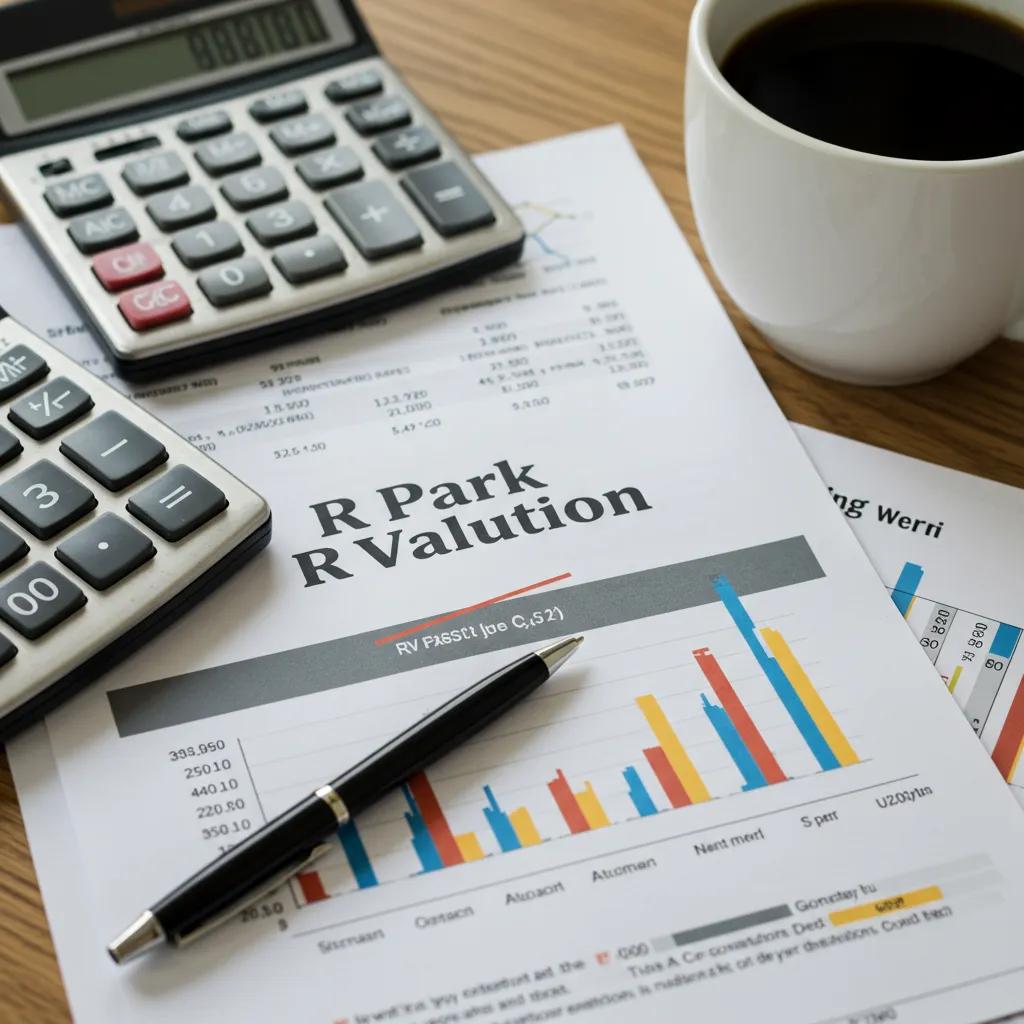
Net Operating Income (NOI) is your park’s annual operating revenue minus its recurring operating expenses, and it directly influences value because buyers base their capitalization on this cash flow. NOI excludes financing costs and non-cash items like depreciation, focusing instead on sustainable income from site fees, transient stays, cabin rentals, hookups, on-site store revenue, and ancillary services, minus expenses like utilities, maintenance, payroll, and management. Accurate NOI depends on well-organized P&Ls and reconciled occupancy and ADR reports. Common seller mistakes include mixing owner perks into operating expenses or omitting seasonal revenue spikes, which can understate NOI and lower your valuation. Here’s a simple calculation example: if gross revenue is $600,000 and operating expenses are $300,000, your NOI is $300,000. This figure is the starting point for cap-rate or multiple-based valuation. Preparing clear, audited income and expense documentation directly boosts buyer confidence and typically increases the sale price.
How Do Capitalization Rates Influence RV Resort Value?
A capitalization rate (cap rate) reflects the buyer’s required return relative to perceived risk. Your value is calculated as NOI divided by the cap rate: . This means cap rates are a direct lever on your sale price. Lower cap rates (e.g., 6%) result in higher valuations for the same NOI compared to higher cap rates (e.g., 10%). Cap-rate levels fluctuate based on asset quality, location strength, market liquidity, and growth prospects. Buyers compress cap rates for resorts with stable, diversified revenue streams, premium amenities, and strong occupancy trends. Conversely, riskier assets with deferred maintenance or unstable demand face higher cap rates. Understanding the prevailing cap-rate bands in your market helps you set realistic expectations and guides which improvements can meaningfully compress the cap rate and increase your sale price.
The following table illustrates how NOI converts to value using simple example numbers. Different valuation methods are compared for clarity.
What Other Valuation Multiples Are Used in RV Park Market Value Assessment?
Beyond NOI and cap-rate approaches, buyers sometimes use revenue multiples, EBITDA multiples, or price-per-pad when comps or market conventions favor those metrics. Each offers a different perspective on value. Revenue multiples are straightforward when operating margins are consistent, but they can be misleading if expense ratios vary between properties. EBITDA multiples attempt to adjust for different operating structures and managerial efficiencies. Price-per-pad is commonly used for quick benchmarking in markets with frequent transactions, but it doesn’t account for revenue mix or the utility of ancillary income streams like cabins and glamping. Buyers select a method based on data availability, asset type, and the relative importance of cash flow stability versus growth potential. For instance, a high-amenity resort might justify an EBITDA multiple premium over a basic park. Presenting multiple normalized metrics helps buyers triangulate value rather than relying on a single shorthand.
How Do Comparable Sales and Market Data Affect Valuation?
Comparable sales (comps) provide market context by showing what buyers have recently paid for similar assets. Adjustments are made for differences in size, amenities, location, and condition to arrive at an adjusted comp price. Sources for comps include broker records, transaction databases, and local market knowledge. Limitations arise when comps are scarce or outdated, forcing buyers to weigh NOI/cap methods more heavily. Adjustments typically account for differences such as site count, presence of cabins or glamping, utility infrastructure, and proximity to demand drivers. For example, a comp near a national park might carry a premium that needs to be scaled for a property in a less-trafficked region. When comps are weak, buyers cross-check with NOI/cap calculations and revenue multiples to ensure offers reflect both market reality and cash-flow fundamentals. Clear documentation of recent capital expenditures and permitted expansions helps sellers justify upward adjustments to comp-based valuations.
What Are the Primary Factors Affecting Campground Sale Price?
Your campground’s sale price is shaped by a blend of tangible asset quality and intangible operational strengths. Location, amenities, occupancy, property condition, and expansion potential are primary determinants because they directly impact sustainable income and perceived upside. Buyers assess whether the park is situated near enduring demand drivers, whether its infrastructure meets modern guest expectations, and whether the operation shows steady occupancy and efficient margins. Physical condition and deferred maintenance lead to immediate deductions in offers, while permitted expansion capacity adds a premium because it signals future revenue growth without significant entitlement risk. Understanding how each factor influences buyer preferences helps you prioritize improvements and documentation that will deliver the most price uplift.
How Does Location Impact RV Resort Sale Price?
Location influences demand patterns and investor confidence. Proximity to national parks, lakes, highways, or regional draw events drives higher occupancy and allows for higher average daily rates, which boosts NOI and valuation models. Accessibility—good roads and clear signage—increases off-season and shoulder-season visitation, while remote properties face narrower buyer pools and higher perceived risk. Regional market strength and demographics, such as nearby population centers or tourist demographics that align with RV/travel behaviors, affect year-round demand and financing availability. You should document visitor origin data, event calendars, and traffic counts when available, as buyers use these metrics to forecast sustainable occupancy. A strong location narrative with supporting visitation and demographic data often results in lower cap rates and higher sale prices.
Which Amenities and Infrastructure Increase RV Park Value?
Amenities like full hookups, modern bathhouses, rentable cabins or glamping units, reliable high-speed Wi-Fi, and EV charging stations enhance guest satisfaction and command higher rates, translating directly into greater NOI and stronger valuations. Infrastructure—sewer, water, road quality, and utility reliability—reduces perceived operational risk and therefore compresses cap rates, while dated utilities or poor road access often prompt buyer deductions. Amenities vary in ROI: safety and code-compliant upgrades typically yield immediate buyer confidence, while revenue-generating additions like cabins or glamping can materially increase ADR and off-season revenue. Prioritizing improvements that both raise income potential and reduce buyer risk offers the largest impact on price, especially when documented with projected incremental revenue. Buyers frequently pay premiums for parks with diversified lodging options that appeal to broader demographics.
How Do Occupancy Rates and Operational Efficiency Influence Price?
Occupancy and operational efficiency are central because they determine sustainable revenue and margins. Consistently high occupancy percentages and effective expense management translate into higher NOI and better treatment by multiples/cap rates. Buyers look for multi-year occupancy and ADR trends rather than single-season spikes. Well-documented reservation data, channel distribution strategies, and expense control measures increase confidence in projected cash flows. Operational efficiencies—such as automated booking systems, effective staffing models, and controlled utility costs—improve EBITDA margins and make the property more attractive to cash-flow-focused buyers. You should prepare rigorous occupancy reports and demonstrate repeat guest metrics, as visible operating improvements often convert into higher sale prices. Presenting normalized financials that account for owner-specific perks and one-time expenses further clarifies true operational performance.
Why Is Property Condition and Expansion Potential Important?
Property condition affects immediate capital needs and influences buyer adjustments. Visible deferred maintenance—septic issues, damaged hookups, worn roads—translates into negotiated price reductions or repair escrows at closing. Conversely, permitted expansion capacity or undeveloped acreage with clear zoning advantages provides buyers the option to increase site count, add cabins, or develop new amenity clusters, improving future NOI and supporting a valuation premium. Buyers evaluate permitting history, environmental constraints, and utility extension costs to judge how feasible and costly expansion would be. Sellers who resolve visible maintenance issues, secure basic permit research, and present a realistic plan for phased development often unlock higher offers by reducing execution risk. Clear records of capital expenditures and any recent infrastructure upgrades help demonstrate stewardship and reduce price haircuts for condition-related concerns.
How Can Campground Owners Prepare Their RV Park for a Successful Sale?
Preparing your campground for sale is a methodical process of documenting income, correcting critical maintenance, and packaging the asset with clear operational records so buyers can underwrite confidently. Your goal is to maximize perceived NOI and minimize perceived risks. Organizing historical P&Ls, occupancy and ADR reports, tax returns, and bank statements establishes credibility, while addressing safety and code compliance removes immediate buyer deductions. You should prioritize improvements with the highest ROI—bathhouse rehab, hookup repairs, and reservation system upgrades—while avoiding overcapitalization that won’t significantly impact buyers. Legal clarity on title, easements, and permits accelerates due diligence and reduces contingencies that can depress offers. Below is a practical document-and-improvement checklist mapping items to expected seller actions and impacts.
Here’s an immediate seller checklist for quick action before outreach:
- Organize P&Ls, tax returns, bank statements, and occupancy reports for the last three years.
- Repair or document fixes to critical infrastructure such as hookups, septic, and main access roads.
- Compile permits, environmental assessments, title documents, and vendor contracts for review.
- Prepare clear site maps, capital expenditure histories, and a list of revenue-generating amenities.
- Invest in professional photography and a concise marketing summary that highlights demand drivers.
After preparing your financial and property records, you’ll often benefit from a respectful buyer conversation. As an example of a family-oriented acquirer, GatherGrounds Resorts offers confidential, no-pressure conversations and can assist owners in organizing financial records, advising on high-impact improvements, and conducting a thoughtful transition. GatherGrounds focuses on acquiring campgrounds and RV parks, enhancing amenities, and preserving the legacy and values of properties—particularly those with larger site counts—so owners seeking a family-owned buyer may find that approach aligns with preservation-focused sale goals. Organizing records and prioritized improvements first positions you to engage potential buyers like GatherGrounds from a position of strength and clarity.
What Is the Typical RV Park Selling Process? Step-by-Step Roadmap for Sellers
The selling process generally follows a predictable path: initial outreach and valuation, marketing and confidential exposure, buyer due diligence, negotiation of purchase terms, and closing with a planned transition. Each phase has distinct deliverables and timelines. Initial contact often involves a confidential information package and a preliminary valuation based on supplied P&Ls, occupancy data, and high-level property descriptions. You should expect NDAs before sharing detailed records. During due diligence, buyers perform physical inspections, review permits and title, and confirm environmental and septic conditions, while lenders and appraisers may run parallel analyses. Negotiations cover price, contingencies, transition terms for staff, and earnest money. The purchase agreement defines obligations and closing mechanics. A clear transition plan protects staff and guest continuity and often represents a major negotiation element for sellers who wish to preserve the park’s legacy.
How Do Sellers Initiate Contact and Valuation with Buyers?
You initiate contact by preparing a concise information packet—normalized P&Ls, your last three years of tax returns, recent occupancy and ADR reports, a site map, and a high-level list of amenities—and sending it under an NDA to prospective buyers or brokers for initial screening. Buyers typically request that packet to perform a desktop valuation, which uses NOI and comparable market data to produce a preliminary range. This screening narrows interested parties before site visits. Confidentiality is a consistent concern, so NDAs and staged data rooms are standard to protect staff and customer relationships during marketing. A clear, honest packet shortens the screening process and often leads to faster, stronger offers because buyers can underwrite with fewer unknowns.
What Role Does Due Diligence Play in Selling an RV Resort?
Due diligence allows buyers to validate the representations in your financials and to inspect physical and legal conditions that could affect price or deal structure. It typically covers physical inspections, document reviews, environmental reports, and permit confirmations. Physical inspections focus on roads, hookups, bathhouses, septic systems, and utility reliability. Document reviews include tax records, leases, vendor contracts, and insurance claims histories that reveal recurring liabilities or hidden expenses. Environmental and septic assessments are common contingencies, especially for parks with lakeside access or older infrastructure, and their findings can prompt negotiated repairs, credits, or price reductions. Sellers who proactively prepare and disclose issues often shorten diligence and preserve buyer confidence, reducing the likelihood of last-minute price adjustments.
How Are Negotiations and Closing Handled in RV Park Sales?
Negotiations typically revolve around price, contingencies (financing, inspections, environmental), earnest money, and transition terms for staff, with purchase agreements spelling out timeline, escrow instructions, and allocation of closing costs. Common deal structures include straightforward cash purchases, seller financing for a portion of the sale, or phased transitions where the seller remains to assist during an agreed handover period. Each structure affects tax outcomes and timeline expectations. Closing requires clear title, resolved liens, transfer of permits where possible, and coordination of escrow and utility transfers. Delays often stem from title issues or unresolved environmental conditions. A structured negotiation strategy—presenting normalized financials, transparent capital needs, and a realistic transition plan—helps you secure fair offers and smoother closings. For owners seeking an initial valuation conversation, buyers like GatherGrounds Resorts can provide a preliminary, no-pressure valuation discussion to help frame expectations before formal listing or broad marketing.
Why Choose GatherGrounds Resorts as Your RV Park Buyer? Our Family-Owned Acquisition Approach
GatherGrounds Resorts is a family-owned company focused on acquiring and operating campgrounds and RV parks with an emphasis on enhancing amenities while preserving community traditions and values. This makes us a distinctive buyer option for owners prioritizing legacy and thoughtful transitions. Our business model centers on purchasing existing properties—particularly those with larger site counts—and investing in modern amenities and operational improvements to maintain a family-friendly atmosphere that resonates with returning guests. GatherGrounds positions itself as an acquirer rather than a large institutional firm, providing sellers the assurance that staff retention, program continuity, and gradual operational handovers are central to our transition plan. This company narrative offers owners a pathway to preserve legacy elements while realizing the financial benefits of a sale in markets where family-oriented stewardship matters to the seller and community.
How Does GatherGrounds Preserve Campground Legacy and Values?
GatherGrounds emphasizes operational continuity and respect for traditions by maintaining the guest experience and retaining key staff whenever feasible, helping to preserve the campground’s identity after sale. Our approach often involves phased handovers, open communication with local communities, and retention of programs that define a park’s character. This reassures sellers and guests that the property’s legacy will continue. This stewardship-oriented posture reduces friction in negotiations for owners concerned about legacy preservation and supports smoother transitions that protect occupancy and guest loyalty. For many sellers, knowing the buyer prioritizes family-friendly values and community continuity is as important as the financial terms.
What Are GatherGrounds’ Acquisition Criteria for RV Resorts?
GatherGrounds typically focuses on acquiring campgrounds and RV parks that meet a minimum scale threshold and align with regional preferences, with a noted interest in properties that have substantial site counts consistent with our operational model. Our screening emphasizes parks where investing in amenities and infrastructure can materially improve guest experience and revenue, particularly in markets where family visitation patterns and regional demand support growth. During initial screening, we request essential documents—financials, occupancy data, and site maps—to evaluate fit and provide a preliminary valuation, helping sellers quickly self-assess whether their park aligns with GatherGrounds’ acquisition profile. Owners with parks near GatherGrounds’ preferred regions and larger site counts may find an efficient, legacy-focused buyer match.
How Does GatherGrounds Ensure a Thoughtful Transition for Sellers?
To ensure a respectful handover, GatherGrounds employs phased operational transitions that can include seller involvement for a defined period, tailored staff retention plans, and community communication strategies that honor local traditions and staff relationships. We aim to minimize disruption to day-to-day operations and guest experiences while implementing gradual improvements to amenities and reservations systems, which maintains occupancy during the ownership change. Post-sale, GatherGrounds provides oversight and quality assurance to ensure service levels remain consistent with prior expectations, which helps preserve both revenue streams and community trust. These commitments make our offers attractive to owners who prioritize both fair financial outcomes and the continued wellbeing of their campground’s community.
What Are the Current RV Park Market Trends and Investment Outlook for 2025 and Beyond?

The RV resort market in 2025 continues to show resilience with sustained consumer interest in outdoor travel and diversified lodging experiences. Investors increasingly favor assets that combine stable cash flow with amenity-driven upside. Demographic shifts—such as broader adoption of RV travel among younger cohorts and continued strong interest from under-55 travelers—have expanded demand beyond traditional retiree segments, encouraging investments in tech-enabled booking, glamping, and flexible lodging options. Cap-rate expectations vary by asset quality and region; premium resorts with strong occupancy and diversified income streams trade at lower cap rates, while basic parks and those with higher operational risk command higher yields. Emerging amenities such as glamping units, EV charging, and robust connectivity compress cap rates by improving ADR and lengthening stays. The following table summarizes cap-rate bands and what drives differences in 2025 valuation expectations.
How Is the RV Resort Market Growing and What Are Key Demographics?
Current market indicators point to steady demand for outdoor lodging, with growth driven by younger travelers and families seeking flexible vacation formats, increasing both transient stays and longer seasonal bookings. Demographics show a widening base of RV users, including millennials and Gen X families who value alternative lodging and technology-enabled reservation experiences. This shifts amenity preferences toward connectivity and comfort options. Market growth is supported by industry trends in RV shipments and broader leisure travel recovery. Parks that adapt their offerings to multi-generational guests capture both higher occupancy and diversified revenue. You should highlight demographic data and booking trends in your sales materials to demonstrate sustainable demand to prospective buyers.
What Are Typical Cap Rate Ranges and Financial Expectations in 2025?
Cap-rate ranges in 2025 reflect a spectrum of risk and asset quality: premium resorts typically trade at lower cap rates due to predictable NOI and growth prospects, whereas basic parks or those with structural issues attract higher required returns. Buyers assess regional liquidity, recent comp transactions, and expected NOI growth to set cap-rate assumptions. Demonstrating stable multi-year NOI growth and documented expansion potential can shift a property toward more favorable cap-rate treatment. Practical valuation examples—pairing your park’s NOI with relevant cap-rate scenarios—help set bid/ask expectations and guide negotiation positioning. Understanding and presenting realistic cap-rate assumptions allows you to justify asking prices and anticipate buyer reasoning during offers.
Which Emerging Amenities and Features Are Driving Higher Sale Prices?
Amenities that increase per-stay revenue and broaden market appeal—such as glamping units, modern cabins, high-quality bathhouses, EV charging, and high-speed internet—are driving buyer willingness to pay premiums because they expand ADR and off-season demand. Technology investments like online booking platforms, dynamic pricing tools, and integrated channel management also raise operational efficiency and guest conversion, further improving NOI and valuation. Costs vary by amenity, but buyers often value scalable, revenue-generating features that have demonstrable payback timelines. For example, adding a cluster of rentable cabins can produce outsized ADR gains compared with purely cosmetic upgrades. You should present projected incremental revenue scenarios for new amenities to persuade buyers that cap-rate compression is justified.
What Are Common Seller Concerns and How Can They Be Addressed?
Sellers commonly worry about receiving fair pricing, the fate of employees and ongoing operations, and realistic timelines for sale. Each concern is addressable through transparent valuation practices, negotiated transition terms, and thorough pre-sale preparation. Ensuring fair pricing involves presenting normalized financials, using multiple valuation methods, and seeking third-party validation when needed. Staff and operational continuity can be negotiated into purchase agreements with retention incentives, phased transitions, or documented operational handoffs that protect both employee livelihoods and guest service levels. Realistic timelines hinge on issue resolution before listing—title clarity, permitting research, and remediation of major infrastructure problems shorten due diligence and closing periods. The subsections below outline concrete steps to mitigate these common seller concerns.
How Can Sellers Ensure Fair Pricing and Valuation Accuracy?
You can ensure fair pricing by compiling normalized P&Ls, engaging qualified brokers or appraisers for independent valuations, and presenting multiple valuation metrics—NOI/cap-rate, revenue or EBITDA multiples, and price-per-pad—to triangulate a defensible asking range. Normalizing income and expense statements (removing owner benefits, one-time repairs, and nonrecurring items) clarifies true operating performance and prevents mispricing. Requesting detailed, itemized offers and encouraging buyers to disclose valuation assumptions helps reveal lowball offers that rely on unsupported risk premiums. Using third-party validation, such as an appraisal or broker market study, can strengthen your negotiation posture and reduce the likelihood of protracted back-and-forth over price.
What Happens to Employees and Operations After Sale?
Employee outcomes and operational continuity are negotiable elements of purchase agreements and typically fall into retention, phased transition, or replacement scenarios depending on buyer strategy and seller preferences. Clear terms protect staff and guest experience. You can negotiate retention clauses, transitional employment arrangements, or severance provisions into the agreement. Buyers who prioritize legacy preservation often commit to retaining key staff to maintain institutional knowledge. Open communication with employees during the sale process—balanced with confidentiality requirements—helps minimize turnover risk and preserve reservation continuity. Documenting existing SOPs and training materials further smooths operational handover and reduces service interruptions that could harm revenue.
How Long Does It Typically Take to Sell an RV Resort?
Typical timelines from initial outreach to closing vary, but a realistic range is often several months to a year, depending on market conditions, property complexity, and buyer financing. Preparation significantly shortens that timeline. Pre-sale preparation (document organization, repairs, and legal checks) can take weeks to months, marketing and buyer screening often take 1–3 months, due diligence and negotiation commonly add another 1–3 months, and closing logistics plus transition planning can take several additional weeks. Delays are commonly caused by title issues, environmental findings, or lender timelines, whereas sellers who present clear, organized documentation and resolved legal matters frequently accelerate the process. Proactive preparation and candid disclosure are the best ways to reduce timeline variability and move to a timely close.
This article has provided you with a structured, practical roadmap to RV park valuation and the selling process for owners evaluating their options in the current market. Owners seeking a confidential, no-pressure conversation with a family-owned acquirer that focuses on preserving campground legacy and improving amenities can request an introductory discussion with GatherGrounds Resorts to explore fit and preliminary valuation.
Frequently Asked Questions
What are the key documents needed for selling an RV park?
When selling an RV park, essential documents include normalized profit and loss statements for the last three years, occupancy and average daily rate (ADR) reports, tax returns, and a site map. Additionally, permits, title documents, and any environmental assessments are crucial for ensuring a smooth transaction. These documents help establish credibility with potential buyers and facilitate their due diligence process, ultimately leading to a more favorable sale outcome.
How can sellers improve their RV park’s appeal before selling?
Sellers can enhance their RV park’s appeal by addressing critical maintenance issues, upgrading amenities, and improving operational efficiencies. Key improvements might include renovating bathhouses, repairing hookups, and investing in modern booking systems. Additionally, presenting a well-maintained property with clear documentation of income and occupancy trends can significantly boost buyer confidence and potentially increase the sale price. Prioritizing high-return improvements is essential for maximizing perceived value.
What role does community reputation play in RV park sales?
The community reputation of an RV park can significantly influence its sale price and buyer interest. A well-regarded park with positive guest reviews and strong local ties often commands higher offers, as buyers are more confident in its ongoing success. Sellers should highlight community engagement, guest loyalty, and any awards or recognitions received in their marketing materials. A strong reputation can also ease buyer concerns about operational continuity and staff retention.
How do seasonal trends affect RV park valuations?
Seasonal trends play a crucial role in RV park valuations, as they directly impact occupancy rates and revenue potential. Parks with consistent year-round demand or those located near popular attractions may see higher valuations due to stable cash flow. Conversely, parks that experience significant seasonal fluctuations may require buyers to factor in potential revenue dips. Sellers should provide detailed occupancy reports that illustrate seasonal patterns to help buyers understand the park’s income potential.
What are common pitfalls sellers should avoid during the sale process?
Sellers should avoid common pitfalls such as failing to organize financial records, neglecting necessary repairs, and underestimating the importance of clear communication with potential buyers. Inaccurate or incomplete documentation can lead to mistrust and lower offers. Additionally, overlooking the need for a well-structured transition plan can disrupt operations and affect guest experiences. Proactive preparation and transparency are key to a successful sale.
How can sellers effectively market their RV park to potential buyers?
Effective marketing of an RV park involves creating a compelling information package that highlights key financial metrics, occupancy trends, and unique selling points such as amenities and location. Professional photography and engaging descriptions can enhance the property’s appeal. Utilizing online platforms, working with experienced brokers, and leveraging social media can also broaden exposure. Tailoring marketing efforts to target family-oriented buyers, like GatherGrounds Resorts, can further align with the seller’s goals.
What should sellers expect during the negotiation phase of the sale?
During the negotiation phase, sellers should expect discussions around price, contingencies, and transition terms. Buyers will likely request detailed financial information and may propose adjustments based on their due diligence findings. It’s essential for sellers to remain flexible and open to negotiations while also being clear about their minimum acceptable terms. A well-prepared seller with organized documentation can navigate this phase more effectively, leading to a smoother transaction process.
Conclusion
Understanding the factors that influence RV resort sale prices empowers you to maximize your property’s value and ensure a successful transaction. By leveraging insights on valuation methods, market trends, and operational efficiencies, sellers can present their parks in the best light to potential buyers. Engaging with a family-oriented buyer like GatherGrounds Resorts can facilitate a smooth transition while preserving the legacy of the campground. Reach out today to explore how we can assist you in achieving your selling goals.