

Discover Campgrounds Welcoming Both Tents and RVs Near You
Finding campgrounds that welcome both tents and RVs near you means balancing campsite types, amenities, and booking tactics so mixed groups can camp together comfortably. This article shows how to identify combined tent and RV campgrounds, what physical features and policies to check, and pragmatic search methods that surface nearby options for families and groups searching for “campgrounds that accommodate both tents and RVs” or “RV and tent friendly campsites near me.” Many groups struggle to reserve adjacent spots or confirm whether tenters can set up beside RVs; this guide resolves those pain points with step-by-step search and booking actions. You will learn what features make a site mixed-use, where to find regional options in Michigan and Ohio, the shared amenities to expect, and how to lock in adjacent or paired sites for groups. Practical examples include a local case study of Walnut Hills Family Campground operated by GatherGrounds Resorts, with notes on site types and on-site activities families often look for.
What Are Combined Tent and RV Campgrounds?
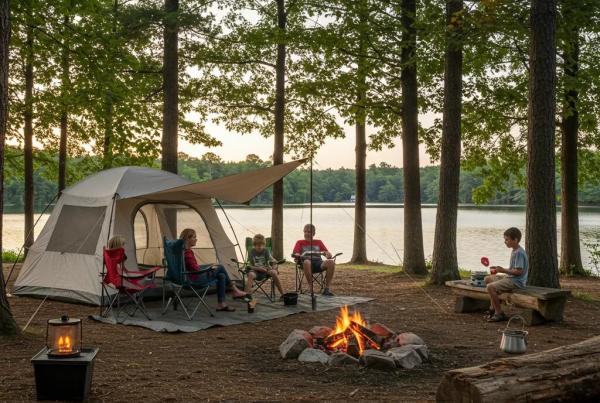
Combined tent and RV campgrounds are facilities that intentionally offer multiple site types and policies allowing both tent camping and RV hookups in the same park, creating flexible options for mixed groups. These places work by providing distinct site classes—primitive tent pads, 30 AMP or 50 AMP RV sites, and full-hookup lots—so groups can choose comfort levels while sharing common areas. The main benefit is flexibility: parties with different equipment and budgets can stay together and join the same activities. Understanding these core elements helps you filter searches and ensures everyone in the group has suitable accommodations.
What Features Make a Campground Tent and RV Friendly?
A campground becomes tent- and RV-friendly through site design, infrastructure, and clear policies that permit both camping styles in proximity. Key physical features include variable hookups (30 AMP, 50 AMP, full hookups), roomy site dimensions or paired sites, dedicated tent pads, and accessible shared facilities such as restrooms and laundry. Site descriptions that list maximum vehicle length and note tent compatibility are crucial when screening options. To confirm compatibility, ask the park office about site adjacency and whether tent stakes are allowed on particular sites, which leads to practical booking checks in the next section.
- Common onsite features to check before booking:
Hookup Types: Whether sites list 30 AMP, 50 AMP, or full-hookup availability.
Site Size & Layout: If sites specify max vehicle length and tent pad presence.
Policy Notes: Rules about pitching tents on RV pads and reserving adjacent sites.
These features guide choosing spots that fit mixed setups and prepare you to contact staff for confirmation.
Can You Pitch a Tent on an RV Site?
Yes — sometimes you can pitch a tent on an RV site, but it depends on campground policy, site layout, and safety considerations. Many parks allow a small tent beside an RV on a full-hookup site if there is sufficient cleared space and if campsite rules permit extra occupants or additional tent fees. Always verify by checking site photos and the site notes on reservations, and call the campground office to confirm allowances and any extra fees. Confirming these details prevents surprises and sets expectations before arrival, and it naturally leads to searching methods that surface sites with clear tent-friendly notes.
What Are the Benefits of Camping with Both Tents and RVs?

Mixed camping blends affordability and comfort: tent campers enjoy low-cost, close-to-nature stays while RV campers bring amenities like refrigeration and indoor sleeping, allowing groups to accommodate varied preferences. This setup enables shared family activities and easier logistics for kids and older members, while offering cost savings by mixing site types instead of booking all full-hookup lots. Mixed trips also expand social options: during the day everyone can join lake or trail activities while sleeping arrangements differ. These advantages clarify why many families seek “family camping resorts with mixed sites” when planning group outings.
Where to Find Family Campgrounds with Tent and RV Options Near You?
Finding nearby mixed campgrounds uses map-based platforms, targeted queries, and local profiles that mention site variety or policies, which makes “near me” searches effective when location services are enabled. Start with reservation platforms and campground websites that offer filters for “RV hookups” or “tent sites,” then switch to map view to spot adjacent available sites. Also check the campground’s Google Business Profile for photos and key descriptors, and consider state park listings for regional options in Michigan and Ohio. These search actions help you compile a short list for direct confirmation calls.
How to Search for Campgrounds That Allow Both Tents and RVs Nearby?
Use a concise, repeatable search routine that combines keywords, filters, and map inspection to find mixed-site parks quickly. First, run queries such as “campgrounds that accommodate both tents and RVs near me” and “RV and tent friendly campsites near [your region]” on reservation platforms. Second, turn on map view to inspect site layouts and proximity between available sites. Third, call the campground office to ask about site adjacency and policies for tents on RV spaces. Calling ahead frequently resolves ambiguities that listings alone cannot clarify, which prepares you to compare specific facilities.
- Search: Use targeted phrases like “campgrounds that accommodate both tents and RVs.”
- Filter: Apply filters for hookups and tent availability on booking platforms.
- Map: Use map view to identify adjacent or grouped sites.
- Confirm: Call the campground office to verify combined-site policies.
These steps increase the odds of securing paired sites for your group.
What Are the Best Campgrounds for Tents and RVs in Michigan and Ohio?
Regional options favor parks with water access, family programming, and a variety of site types that suit mixed groups; prioritize places that list tent pads and multiple hookup options. In Michigan and Ohio, look for family campgrounds offering swimming areas, river access, and playgrounds since these features serve both tent and RV campers equally. When evaluating options, focus on whether a park publishes site maps, photos, and clear policy notes that indicate tent compatibility. Local reviews and business profiles often reveal whether a campground routinely accommodates mixed bookings, guiding your shortlist.
How Does Walnut Hills Family Campground Accommodate Mixed Camping Groups?
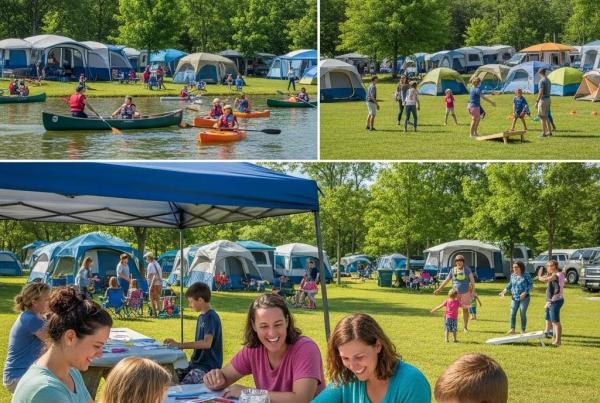
Walnut Hills Family Campground, operated by GatherGrounds Resorts, provides diverse site choices and family-focused amenities that support mixed camping groups seeking both tents and RVs. The park lists RV options with 30 AMP and 50 AMP hookups and offers primitive tent camping plus cabin alternatives that serve families seeking a “glamping” option. Shared amenities at Walnut Hills—such as a Wibit water park, a swimming lake, and on-site canoe and kayak rentals for Shiawassee River floats—give tent and RV campers the same activity access. For groups planning mixed reservations, contacting the campground to request adjacent RV and Tent Sites or inquire about cabin availability is a practical next step.
The campground’s site comparison helps visualize options before you call.
What Amenities and Activities Are Available for Both Tent and RV Campers?
Shared amenities make combined trips succeed by offering activities and facilities both tenters and RVers can use, improving social cohesion and convenience. Typical cross-cutting amenities include swimming lakes, water parks, playgrounds, dog parks, and equipment rentals that make the same experiences available to everyone regardless of site type. When evaluating parks, check amenity lists and schedule of family events so you know what communal options exist. Concrete examples and access rules help families plan gear and safety measures before arrival.
Which Water Activities Can Tent and RV Campers Enjoy Together?

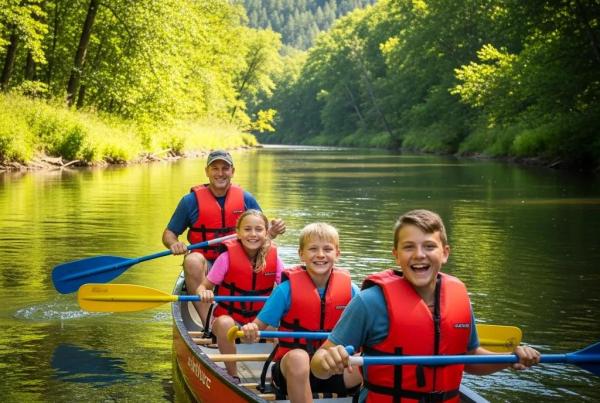
Water options such as a supervised swimming lake, inflatable obstacle courses, and river float trips create shared experiences that work for mixed groups of tent and RV campers. Many family campgrounds offer a Wibit water park and swimming lake where both tent and RV guests can swim and play under posted safety rules, and onsite canoe and kayak rentals support river floats on waterways like the Shiawassee River. Always follow lifejacket rules and age recommendations, and plan staggered launch times when groups bring both small children and older paddlers. Knowing water activity details helps groups pack appropriate safety gear.
What Land-Based Amenities Support Mixed Camping Groups?
Land amenities such as playgrounds, sports courts, game rooms, and family event programming enable group interaction and accommodate varied activity levels among tent and RV campers. Facilities like sand volleyball, basketball courts, horseshoes, gaga ball, and a ball field provide low-barrier participation for all ages, while a game room and weekend family events create scheduled social opportunities. Accessibility features and renovated facilities also matter for families with different mobility needs. Checking amenity lists and event calendars helps you build an itinerary that keeps both tenters and RVers engaged.
How to Book Combined Tent and RV Sites for Your Group Camping Trip?
Booking mixed-site trips combines online filtering with direct communication to secure adjacent sites or group blocks, ensuring your party camps together and shares activities. Begin by searching platforms or campground pages with map view enabled to identify available adjacent sites, then use booking tools to reserve both an RV and Tent Sites at the same time where possible. If the platform lacks adjacency selection, call the park office to request paired sites, group rates, or a block reservation. Clear pre-arrival coordination reduces onsite confusion and makes setup faster for mixed groups.
What Are the Steps to Reserve Tent and RV Sites Together Online?
Follow a repeatable sequence for online booking that balances platform tools with human confirmation to lock in mixed-site reservations. First, filter results for desired hookup types and tent availability, then switch to map view and note site numbers that sit next to each other. Next, attempt to reserve both an RV and a Tent Sites simultaneously; if the system prevents this, capture the booking references and call the campground office to request adjacency or to place a group hold. Documenting site numbers and confirming them with staff provides the outcome of securing paired spots.
- Filter: Select hookup and tent site filters on reservation platforms.
- Map: Identify adjacent site numbers using map view.
- Reserve: Book available RV and Tent Sites together when possible.
- Confirm: Call the office with booking numbers to request adjacency or group-rate inquiry.
Executing these steps ensures your group’s sites are coordinated before arrival.
How Can You Plan a Group Camping Trip with Mixed Site Preferences?
Planning a mixed trip needs coordination on sleeping arrangements, meals, and common meeting points so tent and RV campers share activities without logistical friction. Assign roles—meal lead, activity lead, and gear coordinator—to avoid duplicated supplies and to manage shared resources such as grills or coolers. Plan meals that fit camp kitchens or shared picnic areas and set clear arrival windows for morning setup. These preparations make mixed camping smoother and feed into the final step: verifying policies and contacting the campground.
What Are Common FAQs About Booking Combined Tent and RV Campgrounds?
Common booking questions center on adjacency, extra tent fees, pet rules, and hookup availability; short answers help readers decide what to ask when booking. Many parks permit adjacent bookings but require a phone request; some charge an additional tent fee on RV pads; pet policies vary so confirm breed or leash rules; and hookups are subject to availability and should be confirmed when booking. These concise Q&A items prepare group leaders to ask specific, actionable questions when they contact camp staff.
Quick Q&A for common concerns:
- Can I reserve adjacent sites? Ask the campground office to place grouped sites or a block hold.
- Are tents allowed on RV sites? Policies vary; confirm with site notes or staff.
- Are pets allowed? Check the park’s pet policy before booking.
- Are hookups guaranteed? Confirm hookup type in the site description and reservation confirmation.
Why Choose GatherGrounds Resorts for Your Combined Tent and RV Camping Experience?
GatherGrounds Resorts focuses on family-oriented camping experiences and operates locations that intentionally support mixed-site stays, blending modernized facilities with activity-rich programming. Walnut Hills Family Campground, a flagship GatherGrounds location, exemplifies this approach by offering RV and Tent Sites, Cabins, and amenities that let mixed groups share activities while choosing site types that match their needs. The company emphasizes renovated facilities and family events that create a welcoming atmosphere for combined camping parties. If you want a nearby example of a mixed-use family campground with varied accommodations, GatherGrounds Resorts’ Walnut Hills is a practical option to explore for reservations.
How Does Walnut Hills Family Campground Stand Out for Mixed Camping?
Walnut Hills stands out through its range of site types and family-friendly amenities that serve both tent and RV campers equally, providing practical infrastructure and communal activities that promote group cohesion. Site options include RV and Tent Sites with 30 AMP and 50 AMP hookups and primitive tent camping, alongside Cabins that offer a glamping alternative for mixed groups. On-site features such as a Wibit water park, a swimming lake, and canoe and kayak rentals for river floats create shared experiences for all guests. When arranging a mixed stay, requesting adjacent RV and Tent Sites or exploring cabin availability helps guarantee everyone’s preferences are met.
What Family-Friendly Values Does GatherGrounds Emphasize?
GatherGrounds emphasizes family-first values, modernized camp facilities, and programming designed to create lasting memories across generations without compromising choices for tents or RVs. The operator focuses on maintaining active family events, safe play spaces, and amenity access that lets both tent campers and RV guests participate equally in on-site activities. These values support groups who want a comfortable, activity-rich camping experience while preserving the diversity of campsite options. For groups ready to plan, contacting GatherGrounds Resorts’ Walnut Hills Family Campground about mixed reservations and group-rate inquiries is a useful next step in securing the right combination of RV and Tent Sites, Cabins, and activity bookings.
Frequently Asked Questions
What should I consider when choosing a campground for mixed camping?
When selecting a campground that accommodates both tents and RVs, consider factors such as site layout, amenities, and policies. Look for campgrounds that offer a variety of site types, including primitive tent pads and full-hookup RV sites. Check for shared facilities like restrooms, showers, and recreational areas that cater to both camping styles. Additionally, inquire about the campground’s rules regarding tent placement on RV sites and the availability of adjacent sites to ensure your group can camp together comfortably.
How can I ensure my group has adjacent sites when booking?
To secure adjacent sites for your group, start by using online booking platforms that allow you to filter for both tent and RV sites. After identifying potential sites, contact the campground directly to request adjacent reservations. Many campgrounds require a phone call to confirm group bookings or to place a block hold. Document the site numbers and any confirmation details to ensure your group can camp close together, enhancing the overall experience.
Are there any additional fees for pitching a tent on an RV site?
Many campgrounds may charge an additional fee for pitching a tent on an RV site, depending on their policies. It’s essential to check the campground’s rules regarding extra occupants and tent fees when making your reservation. Some parks allow tents on RV sites without extra charges, while others may have specific guidelines or fees. Always confirm these details with the campground staff to avoid unexpected costs upon arrival.
What types of activities can mixed camping groups enjoy together?
Mixed camping groups can enjoy a variety of activities that cater to both tent and RV campers. Common options include swimming in lakes or pools, participating in organized family events, and enjoying recreational facilities like playgrounds and sports courts. Many campgrounds also offer equipment rentals for activities such as canoeing or kayaking. Engaging in shared activities fosters camaraderie and ensures that everyone, regardless of their camping style, can participate in the fun.
How do I find campgrounds that specifically cater to families?
To find family-friendly campgrounds that accommodate both tents and RVs, start by searching online using specific keywords like “family campgrounds with tent and RV options.” Utilize campground review sites and social media platforms to read about other families’ experiences. Additionally, check local tourism websites and state park listings, as they often highlight family-oriented facilities and activities. Look for campgrounds that emphasize amenities such as playgrounds, swimming areas, and organized events for children.
What should I pack for a mixed camping trip?
Packing for a mixed camping trip requires careful consideration to ensure everyone has what they need. Essential items include camping gear like tents, sleeping bags, and cooking equipment for tent campers, while RV campers should bring necessary supplies for their vehicles. Shared items like coolers, grills, and games can enhance the group experience. Don’t forget to pack safety gear for water activities, first aid kits, and any personal items that cater to the diverse needs of your group, ensuring a comfortable and enjoyable trip for all.
How can I prepare for potential weather changes during our camping trip?
Preparing for weather changes during your camping trip is crucial for ensuring comfort and safety. Check the weather forecast leading up to your trip and pack accordingly, including rain gear, warm layers, and sun protection. Consider bringing tarps or canopies for additional shelter. It’s also wise to have a backup plan for activities in case of inclement weather. Ensure that your group is aware of safety protocols for severe weather, such as seeking shelter or staying indoors during storms, to keep everyone safe and informed.
Conclusion
Choosing a campground that accommodates both tents and RVs allows for a flexible and enjoyable experience for mixed groups, enhancing the overall camping adventure. By understanding key features and policies, families can ensure everyone has suitable accommodations while enjoying shared activities. To start planning your next trip, explore our recommended campgrounds that cater to both camping styles. Contact us today to secure your ideal campsite and create lasting memories with your loved ones.