
A camping gear checklist for a Michigan campground comes down to six groups: shelter and sleep, a camp kitchen, basic tools, clothing for weather that swings 30 degrees in a day, lights and power, and the gear for whatever you came to do. Below is the full list, what to pack for camping at a drive-up family campground like Walnut Hills Family Campground in Durand, what you can leave home because the camp store has it, and how the list changes for spring, fall, RVs and national park trips.
The camping gear checklist
Shelter and sleep
- Tent with rain fly and stakes, plus a few spare stakes
- Ground tarp or footprint, tucked under the tent so it doesn’t catch rain
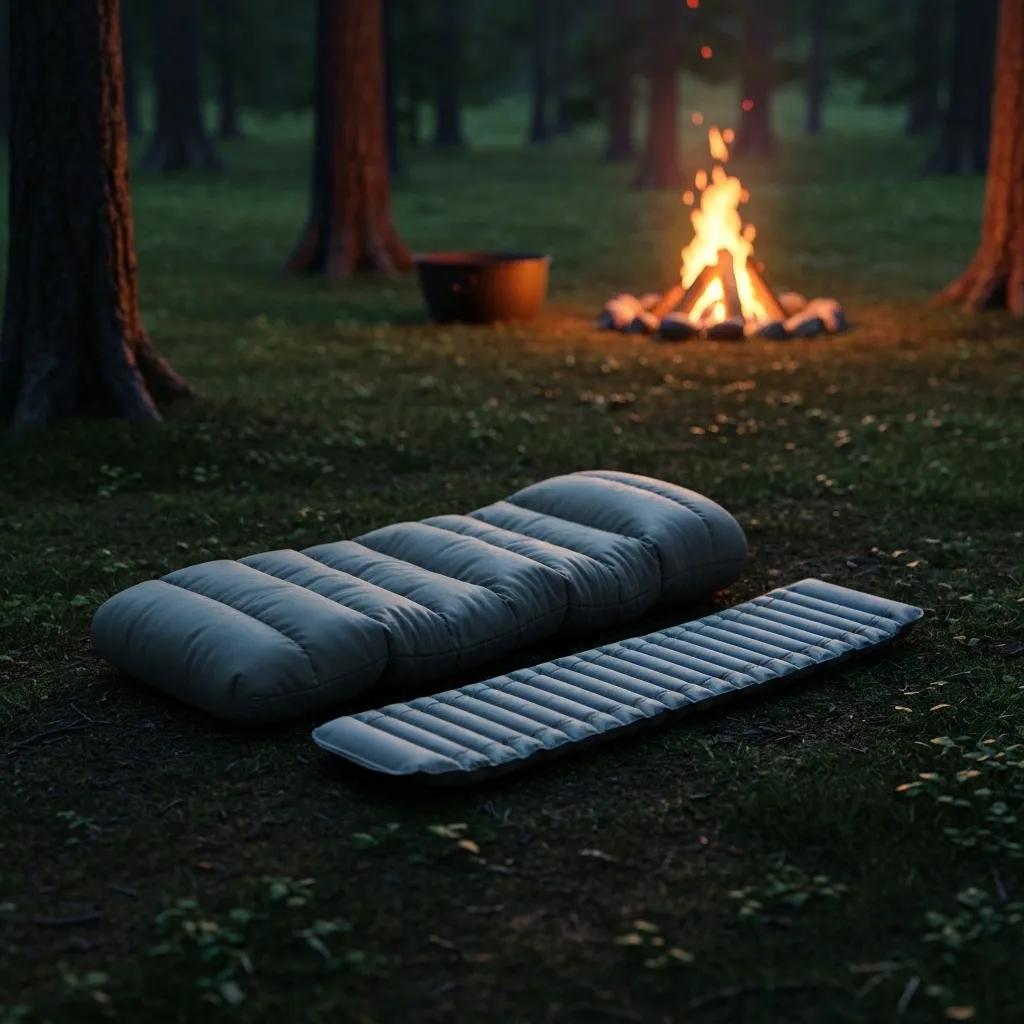
- Sleeping bags rated for 40°F or colder for May, September and October nights
- Sleeping pads or an air mattress, plus a pump
- Pillows and a small mallet for stakes
- If you’re renting a cabin: sheets, blankets and pillows. The two camping cabins at Walnut Hills have beds, a fridge, microwave, coffee maker and air conditioning, but no linens and no bathroom.
Camp kitchen
- Two-burner propane stove and fuel, or a cast-iron skillet and grate for the fire ring
- Cooler, with a second small cooler for drinks so the food cooler stays shut
- Pot, pan, spatula, tongs, knife and a cutting board
- Plates, cups, utensils, dish tub, biodegradable soap, sponge and a towel
- Roasting sticks, aluminum foil, zip bags, trash bags and paper towels
- Water jug. Most Walnut Hills tent sites are primitive, so tent campers fill up and carry water back to the site.
- Tablecloth and clips for the picnic table (every site has one)
Tools and safety
- Lighter, matches and fire starters
- Multi-tool or knife, duct tape and a small repair kit
- First-aid kit with tweezers for ticks, antihistamine and blister care
- Headlamp and lantern with spare batteries, or a rechargeable lantern and power bank
- Bug spray, sunscreen, hat and sunglasses
- Bucket or water jug for dousing the fire
Clothing
- Layers: T-shirts, a fleece or hoodie, and a rain jacket, even in July
- Swimsuits and towels, plus water shoes for the lake and river
- Closed-toe shoes for around the fire, sandals for the beach
- Warm sleep clothes, a knit hat and wool socks for shoulder-season nights
Camp comfort
- Camp chairs and a folding table
- Pop-up canopy or tarp for shade on the open sites near the lake
- Bikes and helmets; cards, a frisbee and a ball for the field

What are the essential camping tools?
Strip the list down and five tools carry most trips: a reliable lighter plus a backup way to start a fire, a knife or multi-tool, a headlamp, a first-aid kit and duct tape. Those cover the National Park Service’s core “ten essentials” that still matter at a developed campground (fire, repair kit, illumination, first aid). The other half of the ten, navigation, water treatment and emergency shelter, is for backcountry trips and you can skip them at a campground with marked roads, drinking water and a store a short walk away. A hatchet is optional at a campground that sells firewood.
What is the best food to pack for camping?
The best food to pack for camping is food that’s mostly prepared before you leave and cooks in one pan or on a stick. A family menu that works for a three-night stay:
- Breakfast: eggs pre-cracked into a jar, pre-cooked bacon or sausage, tortillas, oatmeal packets, fruit, coffee.
- Lunch: sandwich fixings, cheese, crackers, carrots, chips and trail mix for the beach cooler.
- Dinner: foil-packet meals (chicken or sausage, potatoes and vegetables) that go straight on the coals, pre-made chili to reheat, hot dogs and brats, and one steak-and-corn night.
- Snacks and dessert: s’mores supplies, popcorn for the fire, and a watermelon.
Freeze meat and pre-made meals before packing so they act as ice for the first day. At Walnut Hills you can plan on skipping at least one meal: there’s a food truck every Saturday from Memorial Day through the end of September, often a Friday dinner truck, and often a Sunday breakfast truck so nobody has to cook while packing up. The camp store sells ice, firewood, snacks, novelty and hand-scooped ice cream, and a local farm market a few minutes from the campground sells local produce and meat if you’d rather shop nearby than haul a week of groceries. See the Walnut Hills events page for the food truck schedule.
What to pack for camping at Walnut Hills
A few items are specific to how people spend their time at Walnut Hills:
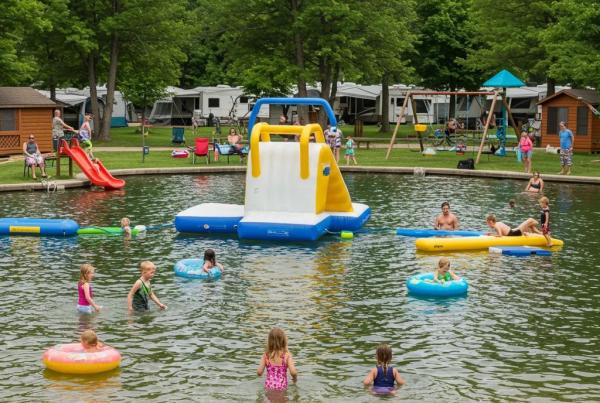
- For the Wibit floating water park: swimsuits, water shoes and a towel per person. It’s for ages 7 and up, with a parent on hand for anyone under 16, and a monitor watches the water. Don’t pack life jackets for it. The campground provides Wibit-designed jackets that won’t snag on the pieces, and personal jackets aren’t allowed on the park. Everyone checks in at the store for a wristband, waiver and short safety video. It’s free for campers Tuesday through Thursday. The spring-fed lake stays cool, and you’ll swim through cold pockets where the springs come up, so a towel and a warm layer for afterward are worth it.
- For a river float: dry bags, sunscreen, water shoes that stay on your feet, and a hat with a strap. Cheff’s Canoe Rental, which runs float trips from the campground launch, provides life jackets and boats. If you bring your own tubes or kayaks, bring your own life jackets; grown-ups on tube floats often bring a small cooler with its own tube. Our float trip booking guide explains the options.
- For a themed weekend: a plain cotton T-shirt per person for tie-dye (the store sells them too), a costume if you’re coming for one of the three Halloween weekends, and decorations if you want to enter the site decorating contest. Bike parades on holiday weekends mean streamers and tape.
- For stargazing: a blanket. Both parks are remote with little light pollution, and Walnut Hills has a fleet of telescopes and a stargazing event on the calendar.
- With a dog: leash, waste bags, a tie-out, and a towel for after a swim in the river. Dogs stay leashed around the park and run free in the fenced dog park, which has tunnels, waste-bag stations and picnic tables. The river is the dog swimming spot; the swim lake and beach are for people.
- With your own golf cart: proof of insurance for the $25-a-night pass. Carts aren’t driven after dark, so skip the headlight upgrade.
- Leave at home: firewood (outside wood isn’t allowed at our Michigan parks; the store sells it and delivers to your site), fireworks (not allowed at any of our parks) and anything that needs Wi-Fi, because Walnut Hills has none. Download the movies before you leave.
What you can skip because the camp store has it
Weekend campers lean on the store more than seasonals do, which is why the stores at all three GatherGrounds parks were renovated to carry the things people forget. Expect ice, firewood, bait and fishing tackle, groceries and snacks, RV upkeep supplies, pop, ice cream and apparel. If you forget a lighter, a can opener or sunscreen, you’re a golf cart ride from a fix, not a 20-minute drive. What the store doesn’t carry: tents, sleeping bags, stoves or camp chairs, so those have to come with you.

Spring and fall camping gear for Michigan
May and October are the best-value months at our parks, and the gear list shifts toward staying warm and dry:
- A sleeping bag rated 20°F to 30°F, or a 40°F bag with a fleece liner. Frost is possible in early May and mid-October.
- A tarp rigged over the picnic table, because spring rain is a given.
- Waterproof boots, a rain jacket and a change of shoes.
- For tent campers, a small heater is not an option on most Walnut Hills tent sites; only 4 of the 18 have electric. The two cabins are the warm alternative.
- In fall, extra layers for the evening events: the Halloween haunted trail runs 7:30 to 9:30 pm on three late-September and early-October weekends.
RV camping equipment checklist
RV campers can skip the shelter list but need their own set:
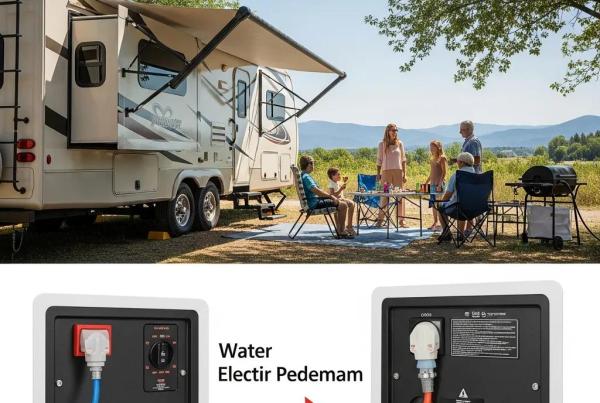
- Fresh-water hose with a pressure regulator, and a separate sewer hose with fittings for the full-hookup sites (80 of them at Walnut Hills, all 50 amp)
- 30-to-50 amp adapter, surge protector and a long enough power cord
- Leveling blocks, wheel chocks and a cordless drill for the stabilizers
- Tank treatment and RV-safe toilet paper; the store carries RV upkeep supplies if you run out
Arriving with a big rig? Don’t turn into the parking lot at the entrance; it’s built for cars. Drive straight toward the gate, which you can see from the road. For hookup details, see our full hookup camping guide.
Eco-friendly camping supplies worth switching to
Sustainable camping gear doesn’t need a special shopping trip. The swaps that make the biggest difference at a campground are reusable plates and cups instead of paper and foam, a refillable water jug instead of cases of bottles, biodegradable dish soap and shampoo, rechargeable lanterns and a power bank instead of disposable batteries, and reef-safe sunscreen for the lake. Buy firewood where you burn it: Michigan asks campers not to move firewood, because invasive insects and diseases that travel in it have killed millions of the state’s trees. Keeping Walnut Hills’ old-growth trees healthy is part of why outside wood isn’t allowed.
Camping gear for national park trips vs. a Michigan campground
If this checklist is for a national park trip rather than a campground weekend, add the backcountry half of the ten essentials: a map and compass or GPS, a water filter or treatment tablets, extra food, and an emergency shelter or space blanket. In bear country, such as Yosemite or Grand Teton, you’ll also need to use a bear canister or the park’s food lockers. At a drive-up Michigan campground you can leave all of that behind: the water is potable, the roads are marked, and the wildlife you’ll meet are deer grazing the farm field behind the back row of sites in the morning.
Camping checklist FAQ
What should I pack for a 3-day camping trip?
Everything on the checklist above, with three dinners, three breakfasts and lunch supplies for the cooler. Plan one food truck meal if you’re at Walnut Hills on a weekend.
Do I need to bring life jackets?
Not for the Wibit; the campground provides them, and personal jackets aren’t allowed on it. Cheff’s provides life jackets for its float trips. Bring your own for your own boats or tubes.
Can I bring my own firewood to a Michigan campground?
Not to ours. Outside firewood isn’t allowed at Walnut Hills or The Oaks; the camp store sells it, and at Walnut Hills it can be delivered to your site.
What do I need for a camping cabin?
Bedding and pillows, towels, toiletries and a flashlight for the walk to the bathhouse. The cabins have beds, a fridge, microwave, coffee maker and air conditioning, with a fire ring and picnic table outside.