

Evaluating Campground Safety Near Interstate 80: Are Campgrounds Near I-80 Safer Than Those Farther Away?
Campgrounds situated near major highways like Interstate 80 naturally bring up questions about safety and comfort for families, RV adventurers, and tent campers. It’s a balance between the convenience of easy access and concerns about noise and security. This article dives into whether campgrounds close to I-80 are actually safer than those located further afield. We’ll explore the specific safety trade-offs, explain how factors like traffic exposure, noise, and emergency access can influence risk, and outline practical ways to manage these aspects. You’ll discover which measurable elements truly matter—distance, natural barriers, staff availability, lighting, and emergency plans—and how they combine to impact real-world safety and family comfort. We’ve broken down the topic into clear sections: how highway proximity affects safety, essential security measures, managing noise for families, the convenience versus safety balance, amenity-based safety at Ridge Ranch Campground in Newton Falls, Ohio, comparative safety metrics, and quick FAQ answers. Throughout, you’ll find targeted advice for choosing the best sites and concrete examples of how mitigation strategies and amenities at campgrounds like Ridge Ranch can help you find a safe, comfortable camping spot near the Ohio Turnpike and I-80.
How Does Proximity to I-80 Affect Campground Safety?
Being close to I-80 can influence campground safety by changing your exposure to vehicle traffic, noise, and light, while also potentially improving emergency response times due to quicker access for rapid responders. The distance and the lay of the land play a big role in how much traffic vibration and sound reach your campsite. Natural features like trees or water can also help soften sound transmission, leading to better sleep and a greater sense of safety. Understanding these dynamics helps families and campground managers weigh the pros and cons when comparing I-80-adjacent sites with more remote options. The following paragraphs will break down common safety worries, explain how a spacious layout—like Ridge Ranch Campground’s 76-acre property with its 17-acre lake—can help reduce risks, and detail effective natural and structural barriers that can lessen the impact of the highway.
What Are the Common Safety Concerns Near Highways?
When camping near highways, common concerns often revolve around noise and disrupted sleep, increased risks at campground entrances due to traffic, light pollution affecting visibility and wildlife, and a general feeling of reduced privacy or security. Noise can interrupt sleep patterns, especially for children, and poorly designed entrances near highway ramps can increase the chance of vehicle conflicts or unauthorized access. Light pollution and glare can make nighttime supervision of play areas or lake access more challenging, and sometimes the perception of risk can deter families even when actual incidents are low. Recognizing these concerns naturally leads to exploring how specific campground designs and policies can effectively minimize those risks for visitors.
How Does Ridge Ranch Campground Address Highway Proximity Risks?
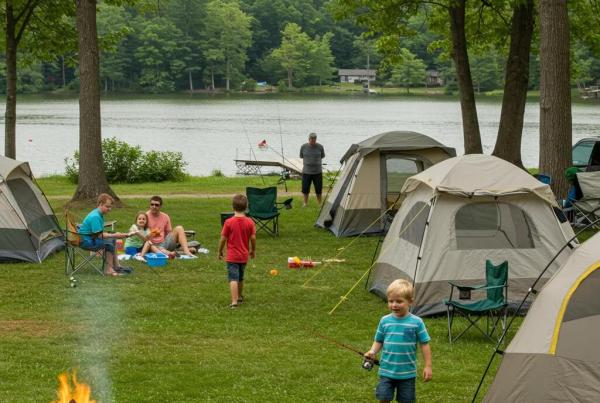
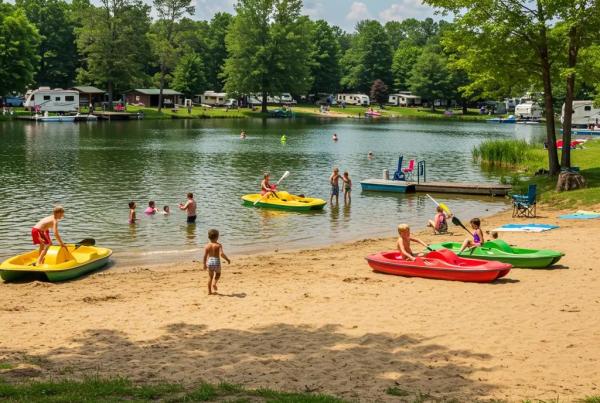
Ridge Ranch Campground tackles the risks associated with highway proximity primarily through its generous size and thoughtful layout: a 76-acre property centered around a 17-acre lake and sandy beach creates a significant natural buffer between the interstate and areas where families gather. A larger property allows for campsites to be positioned further from the highway corridor, with tent and RV sites oriented towards the lake to minimize exposure to traffic noise and light. The presence of on-site staff and family-focused programming further enhances safety by increasing supervised activities and natural surveillance, contributing to both security and a more peaceful, community-oriented atmosphere in the evenings. These design choices offer a great example of the mitigation strategies campers should inquire about when evaluating safety near I-80.
What Natural and Structural Noise Barriers Reduce Highway Impact?

Natural elements like dense tree lines, bodies of water, and changes in elevation are excellent at absorbing and scattering highway noise, which significantly improves the perceived quietness at campsites. Structural solutions, such as earthen berms, staggered placement of cabins or RVs, and positioning service buildings between the highway and sleeping areas, can act as effective acoustic shields. The orientation of your site—whether it’s facing the lake or communal areas are situated downwind from the highway—can reduce direct sound paths and enhance family comfort. Reviewing these types of barriers can help you identify campgrounds that have intentionally worked to reduce highway noise, rather than just relying on distance alone.
What Security Measures Ensure Safety at Campgrounds Near I-80?
Effective security measures are key to reducing crime, preventing unauthorized access, and ensuring quick response times, all of which contribute to making campgrounds near highways safer when these measures are actively managed. Visible on-site staff, controlled access points, consistent lighting, and clear emergency protocols create a layered defense that deters incidents and ensures timely assistance. The following subsections will explain how staff presence acts as a deterrent, why controlled access and lighting are important, and how emergency preparedness connects campground operations with local services. Understanding these security features will help families choose campgrounds that prioritize safety without compromising the convenience of an I-80 location.
How Does On-Site Staff Presence Enhance Campground Security?
- The presence of staff reduces crime and misbehavior.
- Staff provide rapid assistance and local knowledge for emergencies.
- Staff lead supervised activities that increase natural surveillance.
Having on-site staff and hosts significantly boosts security by conducting regular patrols, staffing a front desk or camp store where concerns can be reported, and offering direct assistance to guests, which shortens incident response times. Staff interactions help build rapport with campers, fostering informal surveillance and enabling quicker identification of unusual activity or safety hazards. Staffed programming, especially family-oriented events, concentrates supervised activities and increases natural oversight across the property. Evaluating staffing patterns and visible presence during peak hours is a great way for families to gauge a campground’s security approach.
What Role Do Gated Access and Lighting Play in Safety?
- Look for clear entry procedures and monitored gates.
- Verify lighting covers paths, parking, and communal areas.
- Check that lighting design minimizes direct glare into campsites.
Gated access, when paired with clear signage and staff monitoring, helps reduce unauthorized overnight vehicles and clarifies operating hours, enhancing guest safety and accountability. Adequate lighting—uniform, glare-managed illumination for paths, parking, and common areas—minimizes trip hazards and improves visibility without creating excessive light pollution near sleeping areas. Families should look for well-maintained pathway lights, strategically placed fixtures near playgrounds and bathhouses, and entry controls that strike a balance between accessibility and security. A simple checklist can be a helpful tool for evaluating these physical controls before you book.
How Are Emergency Preparedness and Guest Safety Protocols Implemented?
- Confirm posted emergency procedures and muster locations.
- Verify staff training and availability of first-aid supplies.
- Ask how the campground coordinates with local EMS.
Emergency preparedness at campgrounds involves having well-defined evacuation plans, clearly posted emergency contact procedures, readily available first-aid supplies, and staff trained to coordinate effectively with local emergency services. Campgrounds benefit greatly from documented relationships with nearby EMS and clear signage directing guests to muster points or the main office during emergencies. Communicating these protocols to guests—through check-in materials, signage, and staff briefings—minimizes confusion and speeds up response times. Asking campgrounds about their emergency plans and proximity to local services is a practical step families can take when evaluating safety near highways.
Are Noise Levels at Campgrounds Near I-80 Manageable for Families?
Noise levels near I-80 can often be managed effectively for families when campgrounds combine strategic site placement, natural buffers, and clear policies like quiet hours to ensure restful evenings. Noise management is both an engineering and an operational challenge: site layout and vegetation help reduce sound transmission, while policies and guest expectations help control evening behavior. The following subsections will detail techniques used at well-managed campgrounds, outline quiet-hour practices and advice for selecting the best sites, and explain how noise can impact the family camping experience. Addressing noise proactively ensures that the convenience of highway proximity doesn’t come at the expense of sleep and relaxation.
What Noise Reduction Techniques Does Ridge Ranch Use?
Ridge Ranch Campground leverages its expansive 76-acre layout and the central 17-acre lake as natural sound buffers, effectively distancing family activity areas from the highway and reducing perceived noise for lakeside sites and the sandy beach. By orienting recreational zones toward the water, quieter sleeping sites are positioned further from traffic sound paths, and lines of vegetation offer additional sound absorption. Ridge Ranch’s array of family-friendly activities also concentrates evening programming centrally, which helps establish predictable quiet periods at dispersed overnight sites. These techniques showcase practical, property-level design choices that families can prioritize when selecting a campsite near I-80.
How Do Quiet Hours and Site Placement Minimize Disturbance?
- Typical quiet hours protect late-night sleep.
- Requesting buffer-oriented sites reduces exposure.
- Confirm enforcement to ensure restful stays.
Quiet hours establish clear expectations for noise reduction, usually during late evening and overnight periods, and effective campgrounds communicate these hours clearly at the time of booking and upon check-in. Site placement further amplifies the impact of these policies: sites located away from central activity hubs and oriented with natural buffers are less likely to experience noise spillover. Families should request quieter sites when booking—such as lakeside or interior pads—and confirm how quiet hours are enforced to protect children’s sleep. Combining clear policies with thoughtful physical placement makes noise levels predictable and manageable for family campers.
How Does Noise Impact Family Camping Experiences?
Excessive noise can disrupt family routines, interfere with children’s sleep, and limit opportunities for relaxed conversations around the campfire. However, manageable noise can be effectively mitigated with simple strategies like earplugs, white-noise devices, and strategic site selection. Families often value predictable quiet periods more than absolute silence, and supervised evening programming can encourage community norms that protect rest. Preparing with noise-reduction tools and requesting appropriate sites can transform the convenience of quick I-80 access into a comfortable family stay. These mitigation tactics naturally lead into the benefits of on-site amenities that further enhance safety and comfort.
Why Are Campgrounds Near I-80 Convenient Yet Safe for Families?
Campgrounds near I-80 offer undeniable convenience benefits—shorter travel times, easy access for family vehicles and RVs, and straightforward navigation—which can absolutely coexist with safety when design and operations prioritize mitigation and supervision. Good management pairs accessibility with layered safety measures: strategic site placement, staffed programming, and clear protocols that keep families secure without sacrificing the travel advantages of Interstate proximity. The following sections will explore family-focused activities that create supervised environments, typical protections for play and water areas, and how a community-oriented approach fosters a welcoming, secure atmosphere.
What Family-Friendly Activities Promote a Safe Environment?

Supervised, scheduled events—like organized games, crafts, and communal gatherings—create natural oversight and make it easier for staff to keep an eye on large numbers of families. These activities encourage positive community behavior, help concentrate quieter nighttime hours, and provide structured options for children instead of unsupervised roaming near roadways. At Ridge Ranch Campground, family programming includes DJ nights, karaoke, bingo, crafts, paddleboat and canoe rentals, fishing, playgrounds, and sports courts. All of these activities concentrate engagement in supervised zones and foster a sense of community presence. These programming choices support both enjoyment and informal safety through focused staff attention and neighborly oversight.
How Are Play Areas and Lake Access Secured for Children?
- Ask about designated swim zones and signage.
- Verify lifejacket policies and supervision options.
- Prefer camps with clear physical boundaries for play areas.
Securing play areas and lake access involves a combination of physical controls, clear signage, and supervision: fences or designated swim zones help prevent accidental movement towards roads, posted rules guide parent expectations, and lifeguard coverage or staff supervision may be available during busy swimming periods. Families should inquire about lifejacket policies, swim area markers, and whether staff monitor lake activity during peak times. Clear access controls and visible rules enhance safety for children and make lakeside recreation a lower-risk activity for family groups.
How Does Ridge Ranch Foster a Welcoming and Secure Community?
Ridge Ranch Campground cultivates a welcoming and secure community by blending its amenity-rich environment with staffed events that encourage neighborly interaction and consistent supervision. The property’s activities and centralized recreational spaces concentrate family presence and establish predictable patterns that staff can easily monitor. This combination of community programming and on-site services—along with the property’s lake and beach—builds natural oversight, which enhances both security and family comfort. Understanding these elements helps families select campgrounds that prioritize both fun and safe community living.
What Amenities at Ridge Ranch Campground Support a Safe and Comfortable Stay?
Amenities that contribute to safety include reliable utility hookups, modern centralized facilities, supervised recreational areas, and planned future enhancements that can introduce even more supervised attractions. Full hookups for RVs reduce the need for generators and associated hazards, modern bathhouses and well-maintained paths minimize trip and sanitation risks, and a variety of activities encourage supervised engagement. Upcoming additions like the Wibit waterpark and arcade are expected to incorporate safety design features and supervised play, further boosting family confidence. The following subsections will detail how full hookup RV sites, modern facilities, and future enhancements contribute to a safer stay for families near I-80.
How Do Full Hookup RV Sites Enhance Security and Convenience?
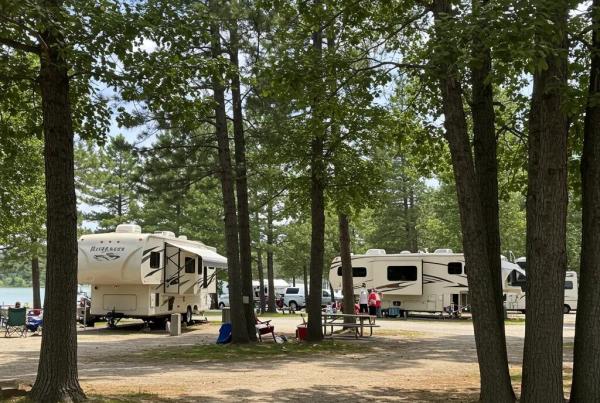
Full hookup RV sites offer stable power, fresh water, and sewage connections, which significantly reduce the need for portable generators and improvised wiring, thereby lowering fire and trip hazards. Organized RV pad layouts create clearly defined vehicle circulation paths and consistent spacing between units, improving maneuverability and reducing the chance of accidental collisions. For families, full hookups enable longer stays with predictable utility access and safer overnight comfort, complementing other safety measures like staff presence and site orientation away from the highway. Choosing an RV site with full hookups is a practical step toward a safer, more convenient camping experience.
What Modern Facilities Maintain Cleanliness and Safety Standards?
Modern restrooms, showers, and sanitation systems help minimize health risks by providing reliable clean water and effective waste management, while well-maintained walkways and lighting reduce trip hazards, especially during nighttime movement. Regular maintenance schedules and prompt repairs ensure that communal areas remain hygienic and safe for both children and adults. Campgrounds that prioritize modern facilities also tend to communicate their maintenance practices to guests, which builds confidence in on-site safety and cleanliness. These operational standards form a baseline expectation for families evaluating campgrounds near busy routes like I-80.
How Will Future Enhancements Like the Wibit Waterpark Improve Safety?
Planned attractions such as a Wibit waterpark and an arcade will introduce supervised recreational options that can concentrate family activity in staffed areas, allowing for organized lifeguard or attendant coverage and clearer perimeter control. Properly designed water attractions typically feature soft edges, designated shallow zones, and lifejacket policies that reduce injury risk and make water play safer for children. When campgrounds incorporate attractions with explicit safety planning, they enhance family confidence and offer more supervised alternatives to dispersed, less-controlled waterfront play. These enhancements typically complement existing safety infrastructure rather than replace it.
How Does Ridge Ranch Compare to Other Campgrounds Near I-80 on Safety Metrics?
Ridge Ranch’s substantial acreage, central lake, and family-focused programming position it favorably on key safety metrics such as noise buffering, supervised activity density, and structured RV infrastructure. Its larger parcel size and concentrated recreational hubs effectively reduce highway exposure for overnight sites, while full hookup RV sites and organized amenities enhance convenience and hazard reduction. Comparing these metrics—buffers, staffing, lighting, and policies—provides families with a practical framework for evaluating the relative safety of I-80-adjacent campgrounds. The following subsections highlight measurable differences and explain how to interpret online reviews for valuable safety insights.
What Are Key Safety and Noise Differences Between Ridge Ranch and Nearby Campgrounds?
Key differences often include the acreage (larger properties like Ridge Ranch offer more buffer space), the presence of a sizable lake that acts as a natural barrier to highway sound, and the breadth of family programming that concentrates supervision. Smaller or older campgrounds near I-80 might have fewer organized activities, limited buffer vegetation, and fewer full hookup pads, which can translate into higher perceptible noise levels and fewer supervised hours. Evaluating these attributes clearly shows how physical site design and operational choices directly impact safety and family suitability. These comparisons help families prioritize which campground features are most important for their needs.
How Do Online Reviews Reflect Safety Perceptions at Ridge Ranch?
- Look for recent reviewer mentions of staff responsiveness.
- Note specific references to noise, lighting, and supervision.
- Balance review quantity with recency for the best signal.
Online reviews typically offer practical safety signals: comments about quiet nights, staff responsiveness, observed supervision of activities, and whether children’s areas feel secure. The volume and recency of reviews are important—consistent recent reports praising staff presence and low noise complaints indicate maintained standards, while sporadic or dated reviews provide less reliable evidence. Readers should scan reviews for mentions of how staff handle emergencies, noise issues, or lighting problems, and prioritize concrete, behavior-based comments over general sentiment. Interpreting reviews in this way provides valuable context beyond facility lists and official descriptions.
Frequently Asked Questions
What should families consider when choosing a campground near I-80?
When selecting a campground near I-80, families should carefully consider several factors, including the campground’s layout, its distance from the highway, and the presence of natural buffers like trees or water features. It’s also important to check for on-site staff, security measures, and amenities that promote safety, such as well-lit paths and supervised recreational areas. Additionally, inquiring about noise management policies and emergency protocols will help ensure a comfortable and secure camping experience.
How can families ensure their children are safe while camping near highways?
To keep children safe while camping near highways, families should look for campgrounds that offer designated play areas, clear signage, and supervision policies for swimming and recreational activities. It’s essential to confirm that the campground has safety measures in place, such as lifejacket requirements for water activities and fenced-off play zones. Participating in organized activities can also help keep children within sight and reduce the risk of them wandering near roadways.
What are the benefits of choosing a campground with staff presence?
A campground with a visible staff presence significantly enhances safety by providing immediate assistance and supervision for guests. Staff can monitor activities, enforce rules, and respond quickly to emergencies, all of which contribute to creating a secure environment. Furthermore, staff-led programs foster community engagement and encourage families to participate in organized activities, further promoting safety through natural oversight. Families should prioritize campgrounds that emphasize staff availability and community-oriented programming.
How do campgrounds manage noise levels for a better camping experience?
Campgrounds manage noise levels through strategic site placement, natural barriers like trees and water, and policies such as quiet hours. By orienting sleeping areas away from the highway and utilizing vegetation to absorb sound, campgrounds can significantly reduce noise disturbances. Additionally, enforcing quiet hours helps maintain a peaceful atmosphere during nighttime, allowing families to enjoy restful sleep. Inquiring about these noise management strategies can help families choose a more comfortable camping experience.
What role do emergency protocols play in campground safety?
Emergency protocols are absolutely crucial for ensuring guest safety at campgrounds, especially those located near highways. Campgrounds should have clear evacuation plans, posted emergency contact information, and trained staff ready to assist in emergencies. Effective communication of these protocols to guests—through signage and orientation—minimizes confusion during critical situations. Families should always ask about the campground’s emergency preparedness measures to ensure they align with their safety expectations.
How can families assess the overall safety of a campground before booking?
Families can assess campground safety by researching online reviews, focusing specifically on comments about staff responsiveness, noise levels, and security measures. Additionally, they should inquire about specific safety features, such as lighting, gated access, and supervision of recreational areas. Comparing safety metrics, like the size of the property and the presence of natural buffers, can also provide valuable insights. A thorough evaluation of these factors will help families make informed decisions when booking their camping experience.
Is It Safe to Camp Near a Highway Like I-80?
Yes—it is safe to camp near a highway like I-80 when campgrounds implement layered mitigation strategies: distance and orientation, natural buffers, staffed supervision, and clear emergency protocols. To ensure your safety, confirm that the campground places sleeping sites away from the highway, enforces quiet hours, maintains a visible staff presence, and provides emergency contact procedures. Asking targeted questions during booking and selecting buffer-oriented sites can effectively convert convenience into a safe family experience. These measures are the immediate steps families should take when considering an I-80-adjacent campground.
How Can Campers Reduce Highway Noise While Camping?
Campers can reduce highway noise by selecting sites situated away from road-facing edges, requesting lakeside or interior sites, using earplugs or portable white-noise machines, and scheduling quiet evenings. Campers should also inquire about the campground’s vegetation buffers, berms, and the orientation of common areas relative to the highway. Combining personal tactics with thoughtful site selection significantly lowers perceived noise and improves sleep quality for families. These practical mitigations complement campground-level measures and make highway-adjacent stays more restful.
What Security Features Should Families Look for in Ohio Campgrounds?
- Confirm visible staff hours and patrol frequency.
- Verify entry controls and lighting coverage.
- Ask about playground and lake supervision policies.
Families should look for visible on-site staff, clear entry procedures (such as gates or monitored access), consistent pathway and common-area lighting, supervised recreational programming, and posted emergency procedures. Verifying playground and lake access controls—like designated swim zones and lifejacket policies—is also essential for child safety. Asking about these features before booking gives families confidence that the campground meets basic security and child-safety expectations. A short checklist can help streamline this verification process.
How Does Ridge Ranch Ensure Emergency Support Near I-80?
- Ask about staff training and first-aid availability.
- Confirm how the campground communicates emergency procedures.
- Ask for guidance on nearest emergency services to the property.
Ridge Ranch Campground supports guest safety through its on-site staff presence and a design that places activity hubs and supervised recreation within the property’s 76-acre footprint, which helps concentrate oversight and response capability. The campground’s size and family programming encourage centralized supervision, and its location in Newton Falls, Ohio, provides regional accessibility that can benefit emergency coordination. Guests should confirm specific emergency procedures and local service connections at booking to ensure those supports match their expectations. Verifying these details connects property features to practical emergency readiness.
Conclusion
Choosing campgrounds near Interstate 80 can offer families convenient access while still prioritizing safety through thoughtful design and management. By understanding the key factors that influence safety—such as site placement, natural buffers, and staff presence—campers can make informed decisions for a comfortable stay. Ridge Ranch Campground serves as an excellent example of how amenities and programming can enhance both security and enjoyment for families. Explore your options today to find the perfect campground that beautifully balances convenience and safety for your next adventure.