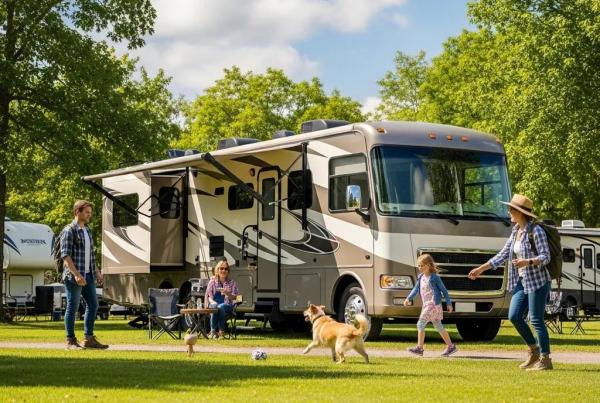


Why Full Hook-Up RV Sites Enhance Your Camping Experience at The Oaks Campground
Full hook-up RV sites provide potable water, reliable electrical service, and direct sewer disposal to deliver a campsite with home-like utilities while you remain outdoors. The bundled water, electric (30‑amp or 50‑amp), and sewer connections reduce tasks such as hauling water, rationing usage, or frequent dump runs, which frees time for recreation and rest. This guide explains what full hook-up sites include, the practical benefits for families and long-stay travelers, how to compare full versus partial or no hook-up options, and the booking and site features to consider. The Oaks Campground by GatherGrounds pairs full hook-up sites with family-focused amenities and is within driving distance of major Midwestern cities. Continue for technical specifications, safety recommendations, planning checklists, and practical tips for full hook-up RV camping at The Oaks.
What Are Full Hook-Up RV Sites and What Do They Include?
A full hook-up RV site delivers three primary connections—freshwater, electrical service, and sewer—direct to the pad so routine operations require minimal setup. The potable water spigot supplies pressurised water; the electrical pedestal provides either 30‑amp or 50‑amp service for appliances; and the sewer drop or dedicated sewer connection permits grey‑ and black‑tank discharge without trips to a central dump. Together these connections reduce daily chores and support longer, more comfortable stays for families, remote workers, and road trippers. Below is a concise explanation of each component and a quick reference summarising typical technical attributes before we examine each connection in practical terms.
A short table summarises standard technical attributes for quick comparison and planning.
This table clarifies expectations at a full hook-up site and informs preparation of hoses, adapters, and surge protection for safe operation. Next we will unpack how each hook-up functions in daily use and the practical scenarios where they matter most.
What Is a Full Hook-Up Campsite: Water, Electric, and Sewer Connections Explained
A full hook-up campsite supplies on‑site potable water via a pressurised spigot, an electrical pedestal with specified amperage, and a sewer discharge point that accepts waste directly from the RV tanks. The water connection supports showers, dishwashing, and pet care without refilling onboard tanks; the sewer connection permits continuous disposal of black and grey water, reducing maintenance time. Recommended precautions include using a potable‑rated water hose, installing a water pressure regulator to protect RV plumbing, and selecting proper fittings for a secure sewer seal. These measures protect systems and ensure reliable operation; the next subsection explains how electrical amperage affects appliance performance and comfort.
How Do 30-Amp and 50-Amp Electrical Hook-Ups Support Your RV Appliances?
Campground electrical service commonly comes in two configurations: 30‑amp and 50‑amp, each supporting different loads and appliance combinations. A 30‑amp pedestal typically supplies up to 3,600 watts and can run essentials such as a small air conditioner, microwave, and refrigerator but may be challenged by multiple heavy loads simultaneously. A 50‑amp connection delivers two 120V hot legs plus neutral for up to 12,000 watts total, supporting larger RVs with multiple air conditioners, electric heaters, and high‑draw appliances without frequent breaker trips—important for extended stays in variable weather. Campers should employ a surge protector and an electrical meter or monitor to verify pedestal output and protect onboard systems; matching amperage to your load is essential to realise the comfort and convenience benefits of full hook‑ups.
What Are the Key Benefits of Full Hook-Up Camping?
Full hook-up sites remove daily friction by providing continuous access to water, stable electrical power, and convenient waste disposal. That readiness reduces time spent on chores, improves appliance reliability, and enables longer or less constrained itineraries. For families, travellers with pets, and remote workers, the result is fewer interruptions and a predictable routine that supports cooking, hygiene, climate control, and entertainment.
Full hook-up sites deliver several distinct advantages:
- Unlimited Water Access: Continuous potable water supports showers, cooking, and cleaning without constant refilling concerns.
- Consistent Power Supply: Reliable 30-amp or 50-amp service powers air conditioning, kitchen appliances, and electronics for comfortable stays.
- Effortless Waste Management: On-site sewer connections eliminate frequent trips to dump stations and simplify sanitation tasks.
These features combine to enable longer, more comfortable stays and reduce planning friction; next we will examine how unlimited water access specifically improves day‑to‑day camping comfort.
How Does Unlimited Water Access Improve Your Camping Comfort?
Unlimited on‑site water converts routine tasks into low‑effort activities, making mornings and mealtimes more efficient and predictable. With dependable pressure, campers can take hot showers, run sinks or dishwashers, and provide pets with fresh water without rationing or frequent refills; this is particularly valuable for families and multi‑day stays where hygiene is a priority. Practical precautions include using a water pressure regulator to avoid overpressurising RV plumbing and a potable‑rated hose to prevent contamination. Reducing time spent managing water supplies frees hours for recreation and relaxation, and sets up the comparable benefits delivered by steady electrical power.
Why Is Consistent Power Supply Essential for Extended RV Stays?
Consistent electrical service ensures critical systems—climate control, refrigeration, medical devices, and charging stations—operate reliably over longer stays. Stable 30‑amp or 50‑amp power lets you run air conditioning on hot days, maintain safe food temperatures, and support remote work equipment such as laptops and Wi‑Fi routers. Employing surge protection and verifying pedestal output mitigates risk from voltage irregularities and preserves onboard electronics. When water and power are dependable, campers can prioritise activities rather than utility management; the following section contextualises these advantages at a specific campground.
How Do Full Hook-Up Sites at The Oaks Campground Enhance Your Stay?
Full hook‑up sites at The Oaks Campground by GatherGrounds integrate on‑site utilities with family‑centred amenities to provide a low‑stress base for recreation and relaxation. The Oaks pairs full hook‑up services with facilities such as a swimming lake, golf cart trails, a fishing pond, playgrounds, pavilions, and a camp store, allowing families to move quickly from basic needs to leisure without long drives. The campground’s location within driving distance of major Midwestern cities and proximity to natural areas increases options for day trips while preserving the convenience of home‑like utilities on site. For multi‑day or weekend plans, the combination of full hook‑ups and onsite amenities supports both active days and restful evenings, making full hook‑up bookings a practical choice for many travellers.
Below is a short bulleted list of The Oaks’ complementary amenities and how they integrate with full hook-ups.
- Swimming lake provides a quick way to cool off after setting up without needing to leave the campground.
- Golf cart trails allow easy transport between sites and amenities while minimizing car use during your stay.
- Fishing pond and playgrounds offer low-effort entertainment for all ages close to your site.
These amenities reduce the need to drive off‑site and encourage longer, more relaxed stays; the following subsection explains how specific amenities pair with full hook‑ups in everyday camp life.
What Amenities Complement Full Hook-Up RV Sites at The Oaks?

Onsite amenities at The Oaks convert the convenience of full hook‑ups into a broader vacation experience by placing activities and services within walking distance or a short golf‑cart ride from your rig. After a shower using your site’s potable connection you can access the swimming lake, or take the family to playgrounds and pavilions for meals with minimal preparation. The camp store and planned additions—such as a Wibit water park scheduled for 2026—expand onsite entertainment and reduce the need for off‑site excursions. Site photos and an amenities gallery set expectations; selecting a site near preferred features maximises convenience and enjoyment.
How Do Full Hook-Ups Enable More Time for Local Activities and Relaxation?
Full hook‑ups remove common time sinks—filling water tanks, conserving electricity, and hauling waste—so campers spend less time on maintenance and more on hiking, fishing, or relaxing. A typical comparison shows campers at non‑hook‑up sites may spend an extra hour or more per day on utility tasks, whereas a full hook‑up site reduces that burden and enables longer excursions or more restful evenings. Suggested activities include exploring nearby natural areas, using on‑site trails, or lakeside relaxation following a brief maintenance‑free routine at the site. These time savings are a practical reason families and extended‑stay travellers prefer full hook‑up sites.
How to Choose Between Full, Partial, and No Hook-Up RV Sites?
Selection among full, partial, and no hook‑up sites depends on trip length, RV size and electrical demands, and desired comfort level. Key decision criteria include required utilities, expected frequency of maintenance tasks, and planned activities.
Full hook‑up sites are best for longer stays, families, and RVs with higher electrical loads. Partial hook‑up sites (commonly water and electric only) suit shorter trips or RVs that can manage sewer with portable tanks. No hook‑up or primitive sites fit tent campers or experienced RVers prepared to handle utilities manually.
Below is a compact comparison table to support quick decision‑making.
This table contrasts site types to clarify use cases and trade‑offs.
Comparing these options in context ensures you select the site that aligns with your itinerary, RV systems, and comfort requirements. The next subsection outlines safety tips and essential gear for full hook‑up occupancy.
What Are the Differences and Use Cases for Each Hook-Up Type?
Full hook‑up sites include water, electric, and sewer and suit campers who prefer low‑maintenance stays and consistent appliance operation. Partial hook‑ups generally provide water and electric only and work for short stays or smaller RVs. No hook‑up sites are appropriate for tent campers or those seeking maximum self‑sufficiency; users must supply water, power (solar or generator), and manage waste. Choosing depends on trip duration, comfort preferences, and RV capabilities—for example, a family anticipating multiple nights with several appliances benefits from a 50‑amp full hook‑up, while a weekend traveller with a small camper may be satisfied with a partial hook‑up.
What Safety Tips and Essential Gear Should You Know for Full Hook-Ups?
Safe use of full hook‑ups requires modest gear investment and routine checks to prevent damage and maintain sanitation. Essential items include a surge protector to guard against voltage spikes, a potable‑rated water hose and a pressure regulator to prevent plumbing stress, and a quality sewer hose with support fittings for a secure, leak‑free connection. Carry basic cleaning supplies for sewer use and follow site‑specific instructions to avoid cross‑contamination and preserve campground infrastructure. Adhering to these precautions protects RV systems and preserves the convenience of full hook‑ups; next we will review planning and booking procedures for The Oaks Campground.
How Can You Plan and Book Your Full Hook-Up RV Trip to The Oaks Campground?
Plan a full hook‑up stay by confirming site dimensions, slide‑out clearance, and electrical requirements before reserving to ensure your RV fits and power needs are met. When booking, verify site type (pull‑thru versus back‑in), amperage availability, and any seasonal notes that affect availability. Prepare a packing checklist that includes hoses, regulators, and surge protection to simplify arrival and setup. The Oaks Campground by GatherGrounds lists full hook‑up sites alongside family‑focused amenities; campers are advised to reserve early during peak seasons due to the campground’s proximity to regional population centres.
What Are the Site Features, Dimensions, and Booking Process?
Before reserving, measure your RV including tow vehicle and slide‑outs and determine whether a pull‑thru or back‑in site is required to simplify arrival. Booking typically requires selecting the site type, confirming amperage and sewer availability, and noting any rules on generators or pets. Arrive with a checklist to speed setup and reduce surprises. At check‑in, confirm site hookups, test the electrical pedestal with a meter or surge protector, and inspect the sewer connection for accessibility. Early reservations are recommended for peak periods given the campground’s family‑focused amenities and regional appeal; following these steps ensures you match your RV to an appropriate full hook‑up site.
How to Maximize Your Experience with The Oaks’ Amenities and Nearby Attractions?
Maximise your stay by designing an itinerary that blends onsite amenities with short excursions to nearby natural areas, relying on full hook‑ups to reduce daily chores and free time for swimming, fishing, or trail rides. A weekend plan may prioritise the swimming lake and playgrounds; a week‑long stay can add day trips to regional parks and extended fishing outings, all supported by on‑site utilities. Pack gear for leisure (bicycles, fishing equipment) and comfort (pressure regulator, surge protector), and position your site to balance sun exposure and proximity to preferred amenities. Booking a full hook‑up site for multi‑day stays enables more flexible itineraries and less daily maintenance.
What Are the Most Common Questions About Full Hook-Up RV Sites?
Campers commonly ask what a full hook‑up includes, whether pets are permitted, how seasonal availability affects reservations, and which safety measures the campground recommends. The Oaks Campground supports family stays with comprehensive amenities and full hook‑up sites that simplify multi‑day trips; campers should confirm pet policies and seasonal patterns when reserving. Below are concise Q&A items addressing common concerns and guiding practical decisions for booking and preparation.
- What is included in a full hook-up site? A full hook-up site includes potable water, electrical service (30-amp or 50-amp), and a sewer connection for direct waste disposal.
- Are pets allowed at full hook-up sites? Pet allowances vary by campground; at The Oaks Campground pet policies are part of site selection criteria so campers should confirm rules when reserving.
- How does seasonal availability affect booking? Peak seasons fill faster, so early reservations are advised to secure full hook-up sites and preferred locations.
What Do Campers Ask About Full Hook-Up Sites and Pet Policies?
Campers frequently inquire whether pets are permitted at full hook‑up sites and whether pet presence affects site selection or additional rules. Confirming pet policies in advance ensures compliance with campground regulations and a smooth arrival. Pet‑friendly sites typically require leashing and prompt waste removal and may affect proximity to playgrounds or high‑traffic areas; selecting a site with sufficient space and separation supports pet welfare and campground harmony. Bring familiar pet supplies, shade, and portable water bowls, and verify specific pet rules when booking to avoid unforeseen issues.
How Does The Oaks Address Seasonal Availability and Specific Amenities?
The Oaks Campground experiences seasonal demand driven by regional travel patterns and family programming; campers should reserve full hook‑up sites well in advance for peak weekends and holidays. The campground’s amenity roadmap includes current offerings such as a swimming lake and planned enhancements like a Wibit water park scheduled for 2026, which may affect future demand and booking priority. Checking availability early and aligning travel dates with desired activities increases the likelihood of securing a suitable full hook‑up site and streamlines trip planning.
Frequently Asked Questions
What should I bring for a full hook-up RV site stay?
Pack essential gear to ensure efficient setup and safe operation: a potable‑rated water hose for drinking water, a water pressure regulator to protect RV plumbing, a quality sewer hose with proper fittings, and a surge protector to safeguard electrical systems. Having these items on hand reduces setup time and prevents common service issues.
Can I use my generator at a full hook-up site?
Generator use depends on campground policy. Many campgrounds, including The Oaks, may restrict generator operation to limit noise and preserve a restful environment. Confirm generator rules when booking. If generators are permitted, ensure they are well‑maintained and operated quietly to comply with noise regulations and avoid disturbing neighbouring campers.
How do I ensure my RV fits the site dimensions?
Measure your RV’s total length, including tow vehicle and slide‑outs, and confirm the site type (pull‑thru or back‑in) when booking. Review the campground’s width and length specifications and consider turning radius and clearance requirements. If uncertain, contact the campground directly for assistance in selecting a suitable site for your configuration.
What are the best practices for maintaining hygiene at a full hook-up site?
Maintain hygiene by using a potable water hose for drinking and cooking and storing it properly between uses. Keep cleaning supplies available to sanitise the sewer connection area after dumping, and routinely inspect connections for leaks to avoid odours. Practising good personal hygiene and keeping the living area clean will enhance comfort throughout your stay.
Are there any restrictions on the types of RVs allowed at full hook-up sites?
RV restrictions vary by campground. The Oaks Campground may apply guidelines regarding RV size, age, or type. Verify campground policies when reserving to ensure your RV meets site criteria. Some sites have limits or specific requirements for motorhomes, travel trailers, or fifth wheels.
What activities can I enjoy near The Oaks Campground?
The Oaks offers a range of onsite activities including a swimming lake, fishing pond, and golf cart trails, enabling convenient leisure without leaving the campground. Nearby natural areas provide options for hiking, biking, and wildlife observation. Families can use playgrounds and pavilions for picnics and gatherings, supporting varied recreational plans during a stay.
Conclusion
Selecting a full hook‑up RV site at The Oaks Campground enhances the camping experience by providing the essential utilities that support comfort and convenience. With unlimited water access, dependable electrical service, and straightforward waste management, you can prioritise outdoor activities over utility maintenance. These combined amenities support longer, more enjoyable stays for families and travellers. Book your full hook‑up site and discover the balance of relaxation and recreation available at The Oaks.