Ohio State Park Campgrounds: Can They Fit Your Large Group or RV?

Ohio’s state park campgrounds offer a diverse range of site sizes, utility options, and group capacities. To determine if a park can host your large group or big rig, you’ll need to check specific campground listings and rules before you arrive. This guide breaks down what typical Ohio State Park campgrounds provide for RV camping and group stays, outlines common limitations and practical workarounds, and compares public park options with a private alternative, Ridge Ranch Campground by GatherGrounds. Many campers struggle to match their rig length, hookup needs, and group logistics to available sites. This article solves that by detailing RV site features, occupancy and vehicle policies, booking best practices, and on-site activity trade-offs. You’ll find comparison tables, checklist-style planning steps, and quick answers designed for featured snippets to help you choose between state-managed campgrounds and private campgrounds that advertise larger pads and full hookups. The following sections cover RV-specific features, group suitability and rules, a direct comparison to Ridge Ranch Campground by GatherGrounds, booking and planning guidance, and family-friendly activity considerations to help you plan an Ohio camping trip for large parties or oversized RVs.

What Are the Key Features of Ohio State Park Campgrounds for RV Camping?

Ohio State Park campgrounds generally offer basic electrical service, water access at many sites, and shared sewer facilities at dump stations, with individual site features varying by park and loop. The primary factor determining suitability is site design—pad length, surface type, and whether a site is pull-through or back-in dictate maneuverability and whether a rig fits without obstructing roads. The specific advantage for RV campers is predictable infrastructure: understanding common attributes allows you to select sites that match your rig length and hookup needs, reducing arrival-day surprises. Familiarizing yourself with typical hookups, surface types, and length ranges prepares you to compare parks and private campgrounds effectively and naturally leads into identifying where full hookups are most likely to be found within the system.

Common campground features across Ohio State Parks include electrical hookups (often 20/30/50 amp), centralized water access, seasonal or year-round dump stations, and a mix of paved and gravel pads. These infrastructure elements influence which rigs are comfortable for overnight stays and which parks can support extended RV trips. Understanding how pad design and loop width affect turning radius helps campers choose appropriate sites or request assistance from park staff when making reservations. The next subsection details the frequency of full hookups and where to expect them.

Which Ohio State Parks Offer Full Hookup RV Sites?

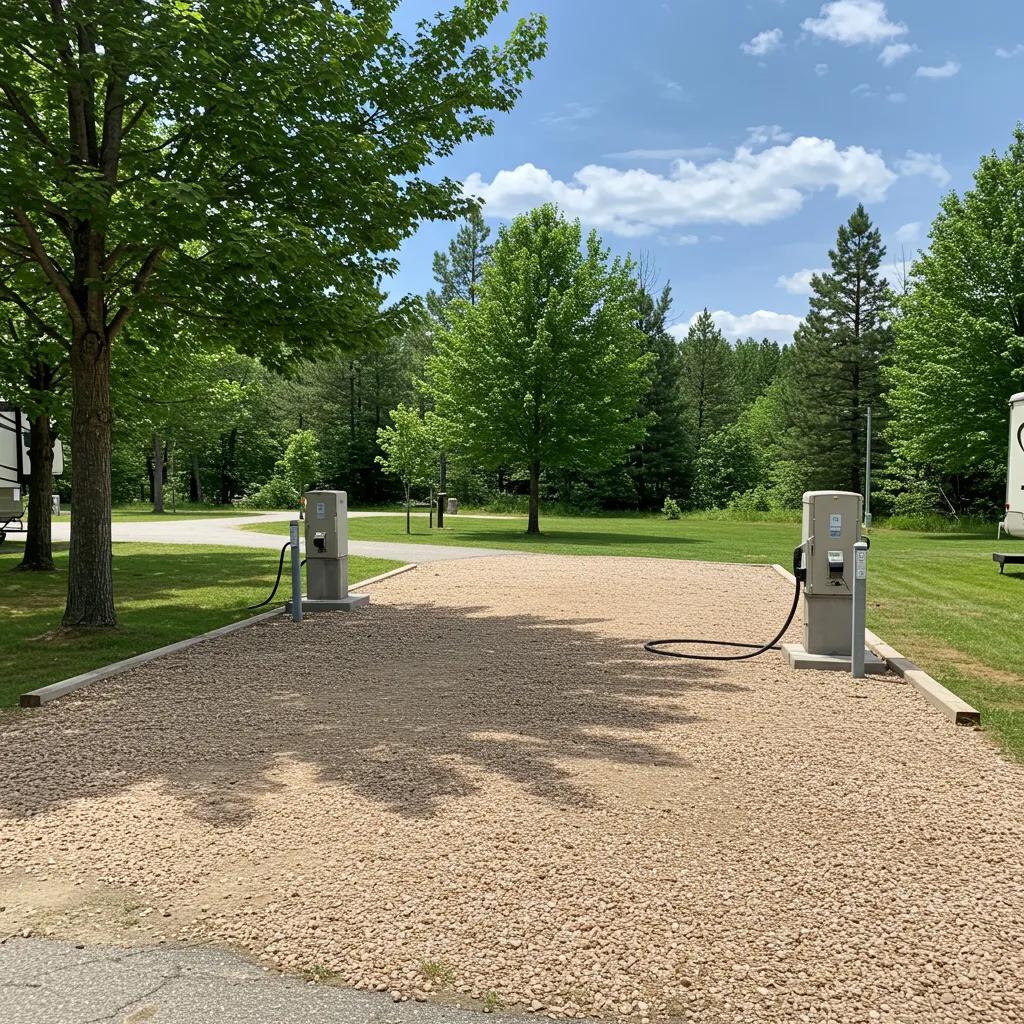
Spacious RV site with full hookups in an Ohio state park, featuring electrical and water connections

Ohio State Parks occasionally offer full hookup RV sites, though availability varies and is typically concentrated in parks with more developed campground infrastructure. Full hookups generally mean electric, water, and sewer access at or near the site; parks with modernized loops or family campground areas are the most likely candidates. This availability provides RV campers with the convenience of on-site services and reduces the need to use a shared dump station upon departure. Because availability isn’t universal, campers should search individual park campground maps and amenity listings to confirm which parks offer full hookups before booking.

Many parks feature a mix of full-hookup loops with primitive or electric-only loops, offering options for different camper types and family groups. If a full-hookup site is essential for comfort or medical reasons, prioritize parks advertising these sites and confirm pad size and type. Understanding the distribution of full hookups across the system transitions into the next practical topic: typical site lengths and how they impact big rigs.

What Are the Typical RV Site Sizes and Length Limits in Ohio State Parks?

Typical RV site lengths in state-managed campgrounds vary, commonly ranging from moderate family-sized pads to fewer extended pads designed to accommodate long motorhomes or trailers; parks often list maximum recommended vehicle lengths in their site descriptions. Site length determines whether a big rig, complete with tow vehicle and slide-outs, can safely occupy a site without blocking access roads, and it directly influences reservation choices for multi-vehicle groups. Pads may be paved or gravel and can vary in width; wider paved pads improve maneuvering for multi-axle motorhomes and trailers. Checking official site length figures and opting for pull-through or extended pads when available reduces the risk of your rig exceeding a site’s practical capacity.

Because published site lengths differ, campers should measure their total rig-plus-tow length and compare it to the park’s listed maximums before confirming a reservation. If published maximums are unclear, contacting the park office for guidance and requesting a specific site or loop with larger pads is recommended. This site-size planning naturally leads to tips for handling the largest rigs in state parks, which the next subsection covers.

How Do Ohio State Parks Support Big Rig and Multi-Axle Motorhomes?

State parks support big rigs primarily through pull-through sites, wider loop roads, and a limited number of extra-large pads, though not every park offers these features, and many sites are best suited for family-sized RVs. Maneuverability is the key factor: pull-through sites eliminate backing challenges, paved pads and generous setbacks reduce sway risk, and accessible road geometry allows drivers to avoid tight turns. The benefit is predictable access in parks that have intentionally designed for larger rigs, but availability is limited and often booked early in peak season. Practical tactics—reserving pull-through sites, arriving during daylight, and requesting staff assistance—improve the odds your big rig will fit comfortably.

When parks lack sufficiently large pads, alternative solutions include reserving adjacent multiple sites where permitted or selecting private campgrounds with advertised oversized pads. Confirming park policies on combining sites and noting road width limitations helps groups plan arrival sequences and unloading procedures. Understanding rules for big rigs sets the stage for the next major topic: how Ohio State Parks handle large group camping overall.

Ridge Ranch Campground by GatherGrounds offers a private alternative that advertises larger pads and extensive hookup options, which can be appealing when a state park’s site sizes or utilities are insufficient. The campground lists RV sites (many with full hookups – electric, sewer, water) and Full hookup RV sites with 50/30/20 amp electric, city water, and sewer connections, which support larger rigs and extended stays more consistently than many public campgrounds. The mechanism is infrastructure provisioning: extra electrical capacity, on-site sewer access, and larger pad footprints reduce generator reliance and simplify hookups for multi-axle motorhomes. The benefit for RV travelers is enhanced comfort and predictable service access, particularly for big-rig setups that require longer, wider pads. These features make Ridge Ranch a practical alternative when state park pads and hookups don’t meet a group’s operational needs.

When planning for large rigs, selecting a site with advertised 50-amp service and generous pad length minimizes setup time and reduces maneuvering stress. Confirming pad dimensions and utility placement during reservation aids compatibility planning and informs whether towing vehicles can remain attached or require separate parking.

How Suitable Are Ohio State Parks for Large Group Camping?

Ohio State Parks can accommodate large groups in designated group campsites and picnic pavilions at some locations, but suitability depends on official group size limits, vehicle allowances, and permit requirements set at the park level. The mechanism for group suitability is capacity management: parks balance environmental protection and visitor experience through per-site occupancy rules and reservation windows, which preserve safety and minimize resource strain. The practical benefit for organizers is access to hiking, beaches, and trail systems that are well-suited for groups, with campground infrastructure supporting gatherings when group sites are available. Understanding typical limits and where dedicated group areas exist clarifies whether state parks will meet reunion, retreat, or organizational needs.

Group camping suitability hinges on whether a park offers dedicated group loops or reservable pavilions; when they do, amenities often include larger parking areas, centralized restrooms, and group fire rings. For groups exceeding per-site occupancy limits, parks may require a group permit or reservation that consolidates multiple sites under one booking. Reviewing park-specific group policies and advance reservation procedures helps organizers plan logistics and arrival sequencing. The following subsection outlines common limits and reservation expectations.

What Are the Group Size Limits and Rules in Ohio State Park Campgrounds?

Group size limits commonly include per-site occupancy caps and vehicle limits per campsite, with stricter restrictions for primitive loops and more generous allowances in group-designated areas; parks may require permits or a consolidated group reservation for gatherings exceeding standard site caps. The purpose is to manage campground capacity and reduce environmental impact, and the benefit is predictable expectations for noise, parking, and waste management. Typical rules specify a maximum number of people and vehicles per standard campsite and separate rules for group sites, which can allow higher occupancy but may incur additional fees or require permits. Organizers should confirm exact numbers with the park and reserve group sites early, especially for holiday weekends.

When parks lack clear online information, contacting the park office or reservation staff clarifies whether multiple adjacent sites can be reserved for a single group and if exceptions are possible with permits. Knowing vehicle and occupancy constraints informs transportation plans and guest communications, minimizing last-minute issues. After confirming limits, it’s helpful to know which parks provide explicit group facilities such as pavilions.

Which Ohio State Parks Provide Dedicated Group Camping Areas or Pavilions?

A selection of Ohio State Parks offer reservable group camping areas or picnic pavilions suitable for reunions and large gatherings; these facilities often include larger parking zones, centralized restrooms, and space for group activities. The mechanism that enhances group usability is consolidated infrastructure: a pavilion plus adjacent group sites centralizes logistics and simplifies food preparation, programming, and signage. The benefit is reduced coordination complexity for group leaders and a clearer enforcement path for park staff to manage large events. When pavilions are available, they typically require advance reservations and sometimes insurance or permit documentation for very large events.

Because pavilion availability is limited and seasonally popular, groups should identify parks with group facilities early and understand reservation windows and any deposit or permit requirements. Some parks also offer on-site grills, picnic tables, and proximity to trails or beaches that are well-suited for mixed-age groups. Knowing where group pavilions are located naturally leads into understanding common group-friendly activities in state parks.

What Group-Friendly Activities and Amenities Are Available in Ohio State Parks?

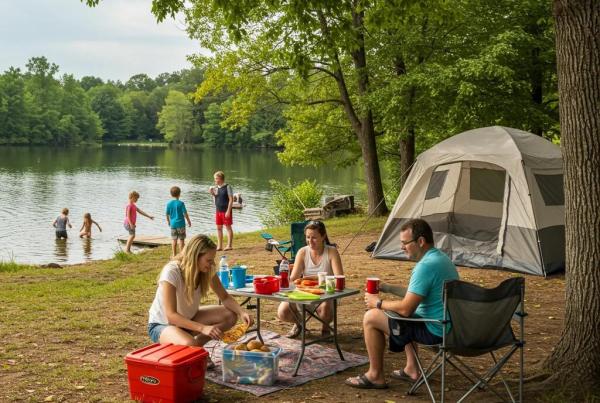
Families enjoying a picnic in a group camping area at an Ohio state park

Ohio State Parks commonly feature trails, beaches, boat ramps, picnic areas, and interpretive programs that can accommodate large groups seeking outdoor activities and guided experiences. The mechanism for group engagement is shared amenities: trails and beaches support many simultaneous users without site-level overcrowding, while interpretive or ranger-led programs can be scheduled to provide group-focused experiences. The benefit to groups is a wide range of activities suitable for different ages and mobility levels, from fishing and swimming to nature walks and team games. Seasonality is important—beach and boating access are most useful in warmer months, while trails and interpretive programs can extend appeal across seasons.

Group leaders should align their activity plan with available amenities—selecting parks with boat ramps or lakes if water activities are a priority, or those with extensive trail networks for hiking-based gatherings. Coordinating arrival times and activity rotations reduces pressure on limited facilities like boat ramps or picnic shelters. With rules and activities in mind, comparing state parks to private campgrounds that emphasize group services can reveal trade-offs in convenience and programming.

For groups seeking simplified logistics, Ridge Ranch Campground by GatherGrounds offers Group Reservations and pavilion rentals alongside a streamlined Online Reservations process to centralize bookings and reduce coordination burden. The campground’s group-focused areas and pavilion rental options provide a private setting where event programming and centralized parking tend to be easier to manage than across multiple public campsites. Using Online Reservations for group blocks helps organizers confirm site adjacency and any special needs in advance, which reduces day-of coordination. This private alternative can be especially useful when a state park’s pavilion inventory or permit process doesn’t match event timing or group size.

How Does Ridge Ranch Campground Compare to Ohio State Parks for Large Groups and RVs?

FeatureRidge Ranch Campground ValueTypical Ohio State Park Value
Full hookupsMany RV sites with full hookups (electric, sewer, water)Select parks; limited distribution
Site pad sizeExtra-large pads and big-rig accommodations advertisedMixed; fewer extended pads available
Group facilitiesDedicated pavilion rentals and group reservation optionsSome parks offer pavilions; availability varies
On-site recreation17-acre lake, beach, rentals, playgrounds, sports courtsTrails, beaches, interpretive programs; varies by park

What RV Amenities and Site Sizes Does Ridge Ranch Offer Compared to State Parks?

Ridge Ranch Campground by GatherGrounds lists RV sites (many with full hookups – electric, sewer, water) and Full hookup RV sites with 50/30/20 amp electric, city water, and sewer connections, which support larger rigs and extended stays more consistently than many public campgrounds. The mechanism is infrastructure provisioning: extra electrical capacity, on-site sewer access, and larger pad footprints reduce generator reliance and simplify hookups for multi-axle motorhomes. The benefit for RV travelers is enhanced comfort and predictable service access, particularly for big-rig setups that require longer, wider pads. These features make Ridge Ranch a practical alternative when state park pads and hookups don’t meet a group’s operational needs.

When planning for large rigs, selecting a site with advertised 50-amp service and generous pad length minimizes setup time and reduces maneuvering stress. Confirming pad dimensions and utility placement during reservation aids compatibility planning and informs whether towing vehicles can remain attached or require separate parking.

How Does Ridge Ranch Accommodate Larger Groups Differently Than Ohio State Parks?

Ridge Ranch offers Group Reservations and pavilion rentals that centralize group logistics in a private, managed environment, simplifying meal planning, programming, and parking compared with coordinating multiple individual state park sites. The mechanism here is concentrated service: private venues can offer reservable pavilions, on-site staff coordination, and event programming tailored to family reunions or group retreats. The benefit is reduced administrative overhead for organizers and clearer rules for event operation, from parking to activities. Private sites often allow organizers to book adjacent large pads and take advantage of centralized amenities that support multi-generational groups.

Group organizers value the ability to use Online Reservations to block multiple sites and reserve pavilion space, which streamlines confirming site adjacency and utility needs. This approach contrasts with state park processes where occupancy limits and separate site reservations can complicate coordination for large parties.

What Unique Recreational Features Does Ridge Ranch Provide Beyond State Parks?

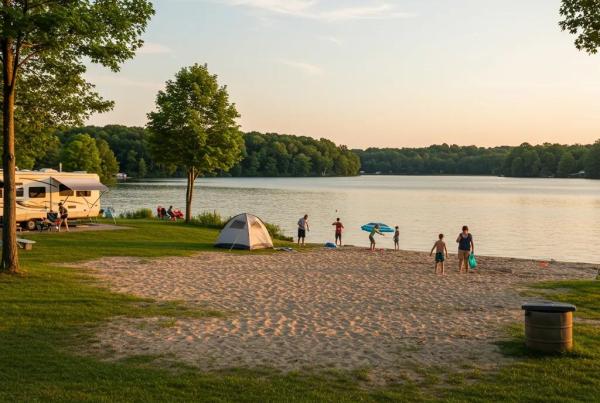
Ridge Ranch features a 17-acre lake with a sandy beach and swimming deck, paddleboat and canoe rentals, playgrounds, and sports courts that collectively offer on-site recreation designed for family and group engagement. The mechanism of enhanced guest experience is integrated amenities that allow families to remain within the campground for most daytime activities, reducing travel logistics and increasing program flexibility. The benefit to groups is easy access to water-based recreation, organized activities, and planned entertainment that can accommodate varied ages and interests. Ridge Ranch also notes planned 2026 additions—a Wibit waterpark and arcade—that suggest expanding family entertainment options beyond what many state parks provide.

These concentrated recreational investments create repeatable, program-friendly experiences for groups that prefer activity-rich stays, while state parks continue to provide more dispersed, natural recreation opportunities like hiking and wildlife viewing.

What Are the Common Camping Rules and Restrictions for Large Groups and RVs in Ohio State Parks?

Common rules and restrictions in Ohio State Parks address vehicle counts, per-site occupancy, quiet hours, pets, and environmental protections, and they serve to preserve park resources while ensuring fair access. The mechanism is regulatory management: occupancy and vehicle caps protect facilities and maintain safety, while behavior rules like quiet hours and leash laws preserve visitor experience. The benefit for campers is predictability—knowing standard rules helps groups plan parking, sleeping arrangements, and activity schedules without violating park policies. Understanding these rules ahead of time reduces the risk of citations or being asked to relocate upon arrival.

Parks typically enforce quiet hours and pet regulations and limit the number of vehicles per site, so groups must plan parking and shuttle arrangements if multiple cars are arriving. These operational constraints affect arrival times, site setup, and the feasibility of hosting on-site events; consequently, organizers should match their plans to park policies. The next subsections detail vehicle and occupancy rules, behavioral policies, and how these constraints change trip planning.

What Are Vehicle and Occupancy Limits per Campsite in Ohio State Parks?

Vehicle and occupancy limits per campsite in state parks commonly include a maximum number of people and a prescribed number of vehicles per site, with additional vehicles sometimes allowed in overflow lots or via special permits for group sites. The purpose is to limit congestion and preserve campsite integrity, and the benefit is clearer expectations for parking and site capacity. Standard sites often have a two-vehicle norm plus an allowance for towed vehicles attached to an RV, while group sites may allow more vehicles but typically require a consolidated reservation or permit. Organizers should verify vehicle limits for each park and consider carpooling, shuttle plans, or separate parking arrangements to remain compliant.

If a group anticipates extra vehicles, contacting park staff to request an exception or identify overflow parking areas is recommended well before arrival. Proactive planning of vehicle logistics reduces time spent rearranging cars and limits stress during check-in. Understanding behavioral rules also affects how groups prepare for a multi-day stay.

How Do Ohio State Parks Manage Quiet Hours, Pets, and Other Group Camping Rules?

Ohio State Parks enforce quiet hours, leash and pet-cleanup rules, and restrictions on amplified sound or large generators to maintain a safe and pleasant environment for all visitors; these policies are enforced by rangers and park staff. The mechanism of enforcement is park regulations aimed at balancing recreation with conservation, and the benefit to campers is a predictable, family-friendly atmosphere. Quiet hours typically occur overnight with stricter enforcement in developed campgrounds, while pet policies commonly require pets to be leashed and supervised at all times with prompt waste removal. Group organizers should communicate rules to attendees and plan quieter nighttime transitions and pet supervision accordingly.

Adhering to these rules prevents complaints and potential fines and preserves the group’s access to the site; planning activities and meal schedules around quiet hours allows groups to remain compliant. The next subsection explains how rules influence planning for large RVs and groups.

How Do These Rules Affect Planning for Large RVs and Groups?

Rules on vehicle limits, occupancy, and quiet hours directly influence site selection, arrival sequencing, and activity planning for large RVs and groups; they require organizers to match reservation choices to group size and vehicle counts. The mechanism for operational compliance is advance coordination—measuring rigs, confirming site types, and checking permit requirements ensures logistical feasibility. The benefit is smoother arrivals, less site swapping, and fewer conflicts with park staff or other campers. Organizers should include rig length verification, vehicle allocation, and a quiet-hours plan in their pre-trip checklist to avoid last-minute disruptions.

Documenting vehicle arrangements and communicating expected arrival windows to group members reduces congestion at check-in and allows staff to assist with final placements. With planning addressed, readers will want to know where to find campgrounds that reliably provide full hookups and large pads.

Where Can Families and Groups Find the Best Ohio Campgrounds with Full Hookups and Large Sites?

Families and groups find the best match by prioritizing campgrounds that list full hookups, extra-long pads, and group facilities, then comparing those features against travel logistics and desired on-site activities. The mechanism is decision-by-attributes: filtering campgrounds by attributes—hookup availability, max RV length, group facilities, and proximity to major routes—yields a shortlist that meets specific operational needs. The benefit is a focused search that balances convenience, recreational offerings, and rig compatibility, saving time and ensuring your group’s requirements are met. The following decision table summarizes key attributes to check when comparing private and state options.

CampgroundFull Hookups (Y/N)Max RV LengthGroup FacilitiesNear Interstate-80 (Y/N)
Ridge Ranch Campground by GatherGroundsY (many RV sites with full hookups – electric, sewer, water)Extra-large pads advertisedGroup Reservations / Pavilion RentalsY (strategic location near Interstate-80 referenced)
Typical Ohio State ParkSometimes (select parks)Variable; few extra-large pads availableSome parks have pavilionsVaries by park
Other private campgroundsOften Y (varies by property)Often longer padsOften provide pavilions and eventsVaries by property

Which Private Campgrounds in Ohio Offer Superior RV and Group Camping Facilities?

Private campgrounds that prioritize RV and group camping advertise full hookups, larger pad footprints, pull-through sites, and explicit group services; these features are the main criteria for a superior private option. The mechanism is capital investment in infrastructure—private operators build larger pads and install full-service utilities to attract families and long-term stays. The benefit is greater predictability: advertised hookups and pad sizes let organizers commit to large rigs and multiple adjacent sites. When evaluating private campgrounds, compare their stated hookup prevalence, pad dimensions, and pavilion availability to determine if they meet your group’s operational and comfort requirements.

Using explicit selection criteria—hookup type, pad length, pull-through availability, and group amenities—shortens the vetting process and reduces the chance of surprise site limitations. Next, consider which amenities most benefit multi-generational groups.

What Amenities Make These Campgrounds Ideal for Families and Large Groups?

Key amenities for group-friendly campgrounds include reservable pavilions, on-site water recreation, playgrounds, sports courts, and program schedules that provide structured activities for multiple age groups. The mechanism for group appeal is diversified programming and infrastructure that supports simultaneous activities without interfering with campsite privacy. The benefit is convenience and entertainment: families can rotate between water-based recreation, playground time, and group events without leaving the facility. Amenities that minimize external travel—on-site rentals, courts, and event programming—maximize group cohesion and simplify logistics.

Prioritizing campgrounds that combine full hookups with family-centered recreation reduces planning complexity and increases the likelihood that all group members—from kids to elders—will find enjoyable activities. Travel logistics matter next, especially proximity to major routes.

How Does Location Near Interstate-80 Benefit RV Travelers and Groups?

Location near Interstate-80 offers faster access for long-distance RVers and simplified arrival for group members traveling separately, reducing drive time and complexity for multi-vehicle convoys. The mechanism is transportation convenience—proximity to a major corridor shortens transfer time from highway to campground and simplifies emergency reroutes. The benefit is lower travel stress for group members arriving on different schedules and easier staging for larger rigs that may prefer highway-grade approaches. For one-night stops or multi-day stays with members joining from distant locations, an Interstate-80–adjacent campground reduces transit time and makes daytime arrivals feasible.

Choosing a campground near a major highway also helps groups coordinate supply runs and potential medical or mechanical assistance if needed, improving resilience during multi-day events. This travel logic leads into concrete planning and booking steps.

How Can You Plan and Book Your Large Group or RV Camping Trip in Ohio State Parks or Ridge Ranch?

Planning and booking for large groups or big rigs requires early reservations, accurate rig measurements, clear communication with park or campground staff, and contingency plans for vehicle overflow or weather. The mechanism for success is organized preparation: matching rig dimensions to site listings, reserving group-capable sites well in advance, and documenting vehicle allocations avoids last-minute conflicts. The practical benefit is a smoother check-in, compliant stays, and predictable use of utilities and shared facilities. Below are stepwise best practices followed by a summary of how Ridge Ranch facilitates online group reservations.

Campground reservation checklist for large groups and RVs:

  1. Measure total rig + tow length and note width and height for site compatibility.
  2. Review campsite descriptions for hookups, pad type, and pull-through availability.
  3. Reserve early and request adjacent sites or a group/pavilion reservation when available.
  4. Confirm vehicle limits and overflow parking options with park staff before arrival.

What Are the Best Practices for Reserving Large Group Sites in Ohio State Parks?

Reserve group sites as early as possible and verify park-specific reservation windows, deposit requirements, and permit procedures to secure necessary capacity and comply with regulations. The mechanism for success is early engagement: parks that require permits or consolidated reservations for groups often have limited availability, and deposits lock in dates. The benefit is predictability of site adjacency and compliance with vehicle and occupancy limits. Documenting arrival times, providing a guest list if required, and confirming any event-related permits ensures the group meets park expectations and avoids last-minute denials.

If state park listings are ambiguous about group accommodations, call the park office to confirm policies and request site recommendations for rigs and adjacency. Clear communication reduces day-of confusion and positions organizers to troubleshoot before arrival.

How Does Ridge Ranch Facilitate Online Reservations for RV and Group Camping?

Ridge Ranch Campground by GatherGrounds supports group coordination through Online Reservations and explicit Group Reservations / Pavilion Rentals designed to centralize booking and confirm site adjacency. The mechanism is an online booking workflow that allows organizers to block multiple sites and secure pavilion space, which simplifies payment and logistics for large parties. The benefit is administrative ease—organizers can confirm exact site types, hookups, and centralized meeting space without coordinating individual bookings across many campers. Using Online Reservations helps ensure group needs for hookups and parking are addressed in advance.

For larger events, asking the campground about specific pad dimensions, proximity of reserved sites, and any group rules when completing Online Reservations ensures expectations align with on-site realities. With bookings secured, finalize the packing and operational checklist described next.

What Should You Consider When Preparing for Your Ohio Camping Trip?

When preparing, verify rig measurements against site specifications, review campground rules on quiet hours and pets, confirm reservation details and arrival windows, and prepare a packing list that anticipates group needs and shared equipment. The mechanism for a successful trip is cross-checking logistics: documentation of vehicle lengths, generator policies, and potluck or catering plans prevents onsite friction. The benefit is fewer surprises and a more enjoyable stay for all participants. Include contingency items—extra tie-downs, extension hoses for water, sewer adapters, and lighting—to handle last-minute adjustments.

Communicate expectations to group members in advance—arrival times, vehicle parking plans, and shared responsibilities—and include emergency contacts and a simple event schedule to keep the group coordinated. With these steps complete, consider on-site activities to enhance the experience.

What Family-Friendly Activities and Attractions Enhance the Camping Experience Near Ohio State Parks and Ridge Ranch?

Family-friendly activities and local attractions expand the value of a camping trip by offering varied entertainment that suits multiple ages and interests, from water recreation to playgrounds and local sightseeing. The mechanism for family engagement is activity diversity—combining on-site recreation with nearby attractions sustains interest over multi-day stays and gives groups options in varied weather. The benefit is stronger group satisfaction and reduced travel during the visit, particularly when campgrounds provide rentals and scheduled programming. The following subsections list Ridge Ranch’s on-site offerings, nearby attraction types, and a comparison with state park activities.

What On-Site Activities Are Available for Families and Groups at Ridge Ranch?

Ridge Ranch Campground by GatherGrounds provides a 17-acre lake with a sandy beach and swimming deck, paddleboat and canoe rentals, playgrounds, and sports courts that serve as immediate, family-friendly activities within the campground property. The mechanism is amenity clustering: having water recreation, play structures, and courts on-site allows families to stagger activities across ages without significant travel. The benefit is convenience—parents can supervise multiple activities from a central location while guests enjoy varied options for entertainment. Planned additions like a Wibit waterpark and arcade (noted as planned for 2026) further diversify on-site options for multigenerational groups.

Which Nearby Attractions Complement Your Ohio Camping Trip?

Nearby attractions for campground stays typically include regional parks, small museums, family-friendly nature centers, and local recreational amenities that add cultural or scenic variety to a camping itinerary. The mechanism is geographic complementarity—local points of interest broaden the trip beyond on-site recreation and offer easy half-day outings. The benefit is flexibility: groups can alternate between concentrated campground activities and short excursions that satisfy different interests and energy levels. Choosing attractions within a 30–60 minute drive maximizes day-use time while minimizing transit complications for large groups.

Grouping attractions by family appeal—kids’ museums, scenic overlooks, and easy hiking trails—helps organizers plan balanced days that alternate high-energy activities with relaxed downtime back at the campground. Knowing available activities frames final day-of logistics and departure planning.

How Do These Activities Compare to Those Offered at Ohio State Parks?

Activities at Ridge Ranch tend to be amenity-driven—beach, rentals, playgrounds, sports courts, and planned entertainment—whereas Ohio State Parks emphasize natural assets like trails, wide beaches, and interpretive programs that connect visitors to regional ecology. The mechanism for this difference is investment focus: private campgrounds often invest in built attractions that provide predictable entertainment, while parks invest in preserving and presenting natural features. The benefit for families is choice: private campgrounds offer convenience and structured play options, while state parks provide immersion in natural landscapes and opportunities for wildlife observation. Matching your group’s preferences for built amenities versus natural settings guides the choice between these options.

The classification and organization of state parks can reflect differing state values and attitudes toward natural resource use. For example, the creation and organization of Maumee Bay State Park in Ohio, Indiana Dunes State Park, and William C. Sterling State Park in Michigan can highlight distinct approaches to managing recreational areas and wilderness.

Classification of Michigan, Indiana, and Ohio State Parks

State parks constitute a valuable portion of the United States’ national, regional, state, local, and private lands devoted to the conservation and preservation of nature and American culture. State parks also represent state values through their display of special natural, cultural, and historic characteristics. Thus, it is important to consider how citizens and policy makers value their natural areas at the state level. This study maintains that there are fifty different state park systems in the United States. Each system and park represents different ideals and attitudes toward the use of natural resources and unique wilderness areas. These sentiments convey state and public values of recreational areas. This thesis examines how the creation and organization of Maumee Bay State Park in Ohio, Indiana Dunes State Park, and William C. Sterling State Park in Michigan reflect differ

“The Show Windows of a State”: A Comparative Study on Classification of Michigan, Indiana, and Ohio State Parks, 2006
  1. Key takeaways: Verify rig sizes, confirm hookups and pad types, reserve group facilities early, and weigh the trade-off between private-campground convenience and state-park natural settings.
  2. Action step: Use measurements and the checklists above to narrow options and secure reservations well before your intended travel dates.
  3. Final note: For groups prioritizing full hookups, extra-large pads, and centralized programming, Ridge Ranch Campground by GatherGrounds represents a private alternative to consider alongside Ohio State Parks.

Frequently Asked Questions

What should I consider when choosing a campground for a large group?

When selecting a campground for a large group, consider factors such as group size limits, available amenities, and site configurations. Look for campgrounds that offer dedicated group sites or pavilions, as these can facilitate gatherings and activities. Additionally, check for vehicle limits per site and the availability of full hookups, which can enhance comfort for RV users. Proximity to recreational activities and local attractions is also important to ensure a variety of options for your group during the stay.

How can I ensure my RV fits the campground’s requirements?

To ensure your RV fits the campground’s requirements, measure the total length of your rig, including any tow vehicles or trailers. Compare these measurements against the campground’s published site length limits. It’s also wise to inquire about the width and surface type of the pads, as these factors can affect maneuverability. If in doubt, contact the campground directly for guidance on suitable sites for your specific RV size and configuration.

Are there any additional fees for group camping in Ohio State Parks?

Yes, some Ohio State Parks may charge additional fees for group camping, especially if your group exceeds the standard occupancy limits or requires special permits. These fees can vary by park and may include costs for reserving group sites or pavilions. It’s essential to review the specific park’s policies and fees when planning your trip, as this will help you budget accordingly and avoid unexpected costs during your stay.

What are the best times to book a campground for large groups?

The best times to book a campground for large groups are during the off-peak seasons, typically in spring and fall, when demand is lower. For summer bookings, especially around holidays, it’s advisable to reserve sites as early as possible—often several months in advance. This ensures you secure the necessary accommodations and facilities for your group. Additionally, consider weekdays for potentially less crowded conditions and better availability.

What types of activities can large groups enjoy at Ohio State Parks?

Large groups at Ohio State Parks can enjoy a variety of activities, including hiking, fishing, swimming, and picnicking. Many parks offer trails suitable for different skill levels, as well as access to lakes and rivers for water activities. Group-friendly amenities like picnic pavilions and fire rings enhance the experience, allowing for organized meals and gatherings. Additionally, some parks provide interpretive programs and ranger-led activities that can be tailored to group interests.

How do I handle meal planning for a large group camping trip?

Handling meal planning for a large group camping trip involves coordinating menus that are easy to prepare and serve. Consider group potlucks where each member brings a dish, or plan simple meals that can be cooked in bulk, such as casseroles or grilled items. Make a detailed shopping list and assign responsibilities for food preparation and cooking. Additionally, ensure you have adequate cooking equipment and storage for perishables, and consider dietary restrictions within the group to accommodate everyone.

What should I do if the campground is fully booked?

If the campground is fully booked, consider alternative options such as nearby campgrounds or private facilities that may have availability. You can also check for cancellations at your desired campground, as spots may open up closer to your travel date. Additionally, look into state parks that offer first-come, first-served sites, or consider adjusting your travel dates to less popular times. Lastly, reaching out to local tourism offices can provide insights into other nearby camping options.

Conclusion

Ohio State Park campgrounds offer a range of features that can accommodate large groups and RVs, making them a viable option for memorable outdoor experiences. Understanding site attributes, group policies, and available amenities enhances your planning and ensures a smooth camping trip. For those seeking more tailored accommodations, Ridge Ranch Campground provides additional conveniences like full hookups and dedicated group facilities. Start planning your next adventure by exploring our campground options today.