
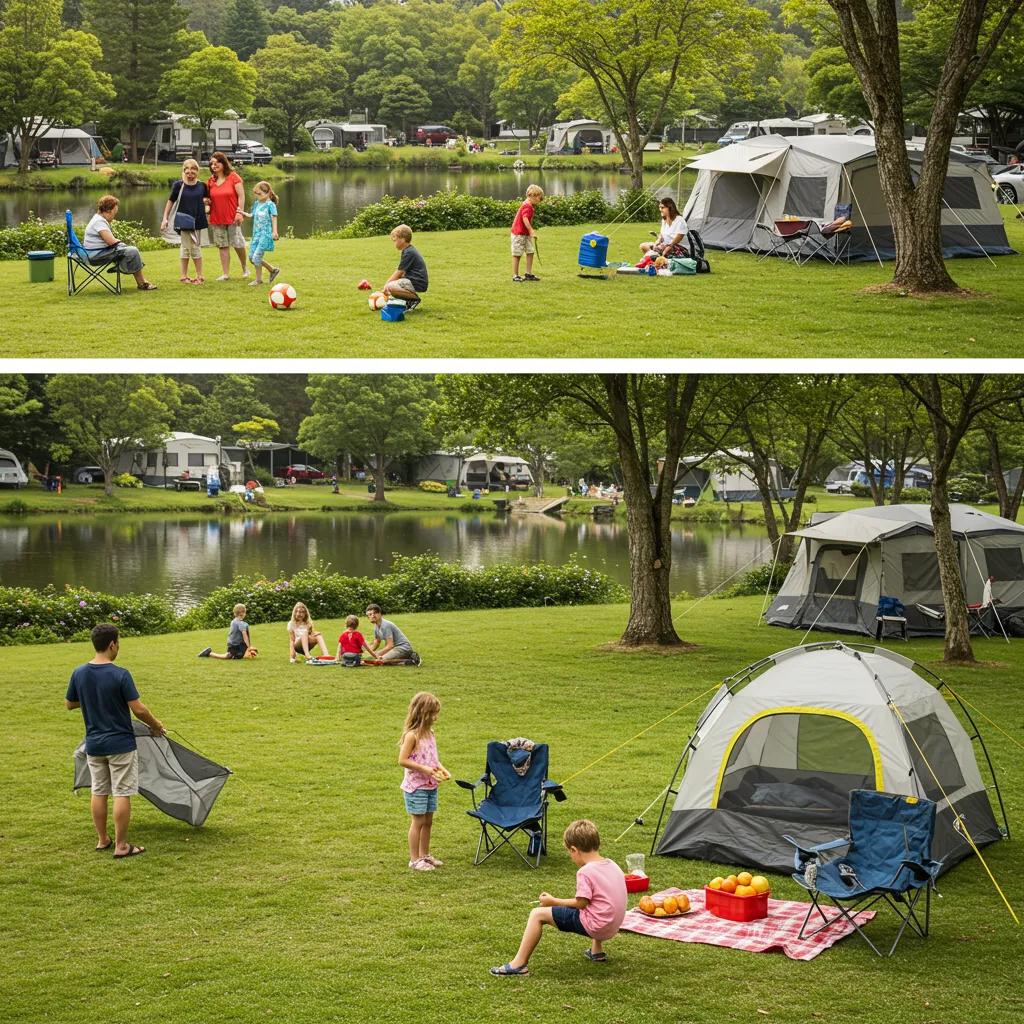
What Makes Campgrounds Ideal for Family Fun? Family-Friendly Campground Amenities and Kids Activities Explained
A family-friendly campground brings together safety, a variety of activities, and comfortable stays to craft an easygoing outdoor escape that everyone from parents to kids and even extended family will love. This guide dives into what makes campgrounds perfect for family adventures by outlining key amenities, highlighting kids’ activities that create cherished memories, comparing lodging choices, and detailing safety and cleanliness standards so you can pick with confidence. Many families find it tough to balance kids’ boundless energy with parents’ need to unwind; campgrounds that offer supervised water fun, playgrounds, and planned events alongside dependable facilities solve that challenge. Keep reading for practical checklists, activity ideas tailored to different ages, and planning steps that connect amenities to real family benefits. We’ll cover essential amenities, activities just for kids, lodging options, safety and cleanliness considerations, and planning tools—including how to use a campground events calendar and online booking to make reserving simple. Throughout, you’ll find helpful advice woven in with keywords like campgrounds with family amenities, family camping Michigan with water park, and kids activities at Walnut Hills Campground to help you plan a fantastic family trip.
What Are the Essential Family-Friendly Campground Amenities?
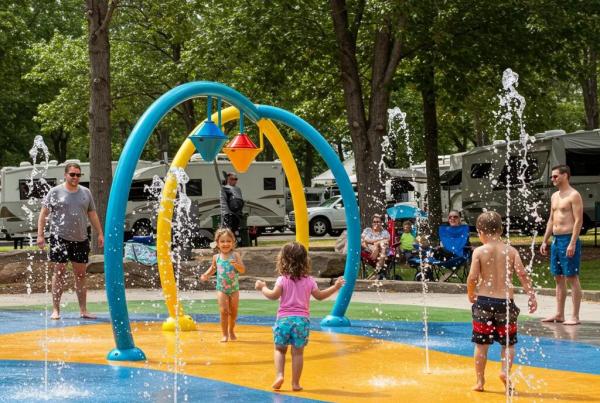
Family-friendly campground amenities are the physical features and services that make things easier, keep kids safe, and create chances for shared fun. They work by offering supervised play, convenient facilities, and options for all ages, keeping parents relaxed and kids entertained. These amenities deliver clear advantages: water play for cooling off, playgrounds for imaginative adventures, sports areas for family games, and clean restrooms for comfort and health. Here’s a quick rundown of top amenities most families look for and why they’re key for a stress-free stay.
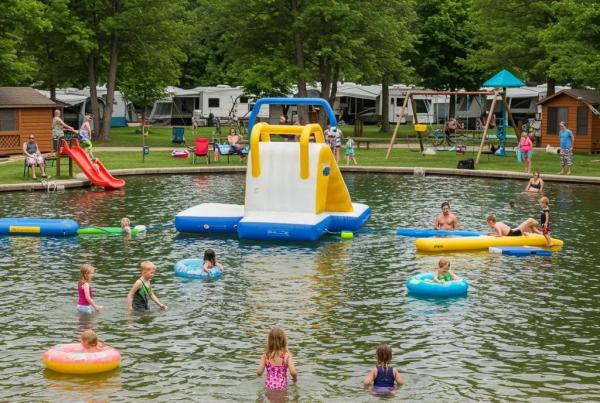
- Wibit-style inflatable water features provide supervised, active water play that entertains older kids and creates picture-perfect family moments.
- Shallow swimming lakes offer safe swimming zones and natural exploration for younger children under supervision.
- Playgrounds, game rooms, and sports courts enable multi-age play and give parents structured supervision opportunities.
- Clean, renovated bathrooms and a campground store reduce daily hassles and increase comfort for families with small children.
These essentials directly contribute to ease of supervision, convenience, and enjoyment for everyone, no matter their age. The next section will explore which water features are best suited for different age groups.
Which Water Features Make Campgrounds Perfect for Kids?
Water features like inflatable obstacle courses, supervised swimming lakes, and shallow pools engage kids through play while offering cooling and exercise benefits. Each type works differently depending on age and supervision needs. Inflatable courses (Wibit-style) are a hit with elementary-aged children and teens who love balance challenges and friendly competition. Swimming lakes with gently sloped entries are ideal for toddlers and younger swimmers when lifeguards or adults are present. Safety features—like clearly marked depth changes, available life jackets, and staffed swim times—minimize risks and boost parent confidence. Modern family-focused campgrounds often feature designated shallow zones and regular lifeguard coverage, allowing parents to relax while their children splash and play.
Before we move on to play areas, let’s consider how playgrounds and sports amenities expand family options beyond water-based fun.
How Do Playgrounds and Sports Facilities Enhance Family Fun?
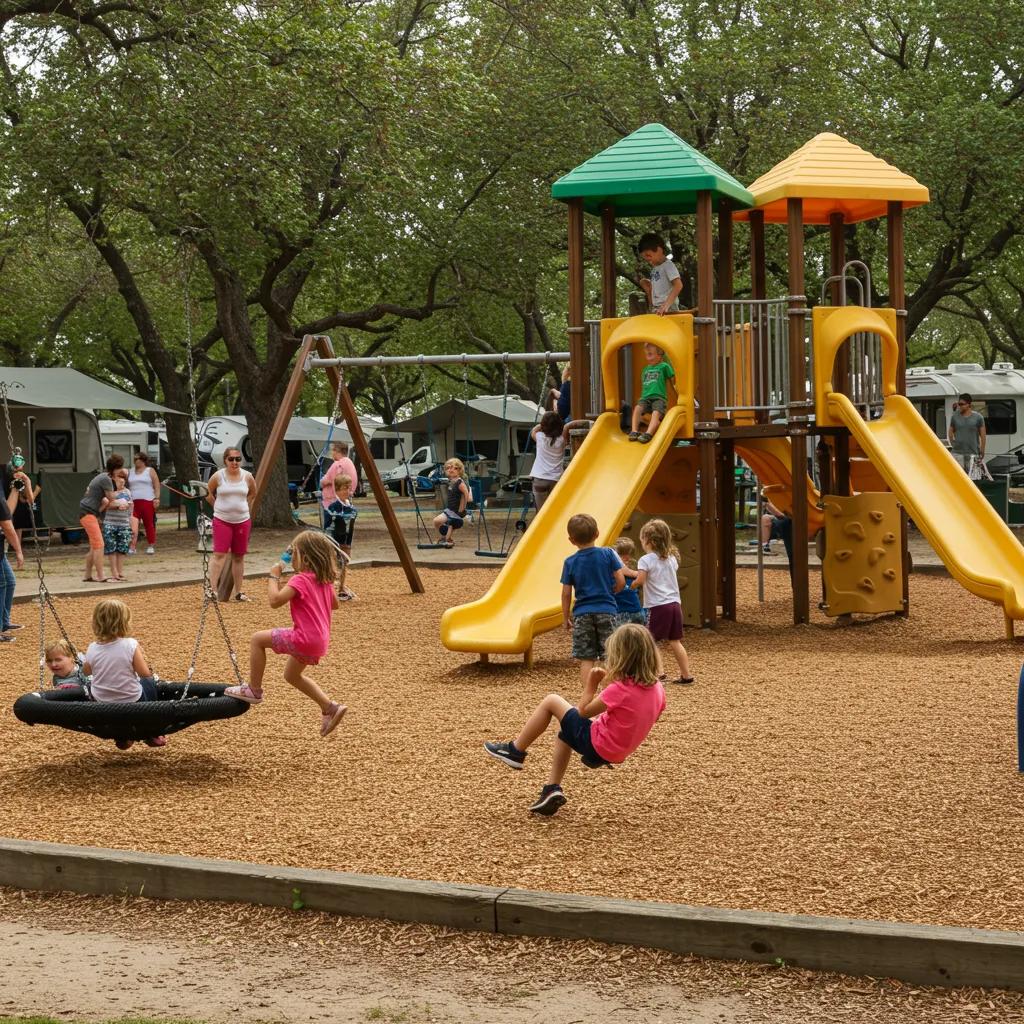
Playgrounds and sports facilities offer structured physical outlets that foster family bonding by letting parents join in games, supervise from nearby, or host friendly competitions for all ages. Features like multiple play structures, gaga ball pits, sand volleyball courts, and ball fields allow different age groups to play at the same time while keeping activities centralized for easier supervision. Sports courts encourage family tournaments and provide regular exercise, while shaded seating and picnic areas let caregivers rest nearby. These facilities transform a camping weekend into a flexible play space where children can burn energy and families can build shared traditions through casual games and scheduled matches.
Next, clean and safe facilities form the foundation of any family-first campground, protecting health and easing parental worries.
Why Are Clean and Safe Facilities Crucial for Family Campgrounds?
Visible safety measures and high cleanliness standards build trust and encourage repeat visits because parents prioritize hygiene and predictable risk management when booking. Regular cleaning schedules for restrooms, secure fencing around play areas, and good lighting in common spaces reduce health risks and nighttime anxieties. Clear emergency procedures, readily available first-aid supplies, and staff training are practical indicators families use to gauge a campground’s commitment to safety. When cleanliness and safety are top priorities, parents can focus on creating family memories instead of dealing with minor daily inconveniences, which is often why these features sway the decision toward one campground over another.
To help you compare amenity types at a glance, the table below shows common family amenities, the ages they’re suitable for, and the direct family benefits they provide.
This comparison clearly shows how specific amenity features align with different age groups and family needs, helping families decide what matters most for their trip.
After reviewing amenities, families often look for concrete activity ideas that turn those features into unforgettable experiences.
What Kids Camping Activities Create Memorable Family Experiences?
Kids camping activities are organized programs and self-guided options that blend play, learning, and family interaction. They work by offering structured engagement that suits various developmental stages and attention spans. Organized events like crafts, scavenger hunts, and themed weekends provide safe, staff-led experiences that keep younger children happily occupied while parents can relax. Self-guided options such as nature walks, river floats, and playground time allow families to set their own pace and incorporate downtime. Below is a table to help match activities with ages and packing needs, so families can choose activities that maximize fun and minimize last-minute scrambling.
Which Organized Events and Crafts Engage Children at Campgrounds?
Organized events—crafts, scavenger hunts, tie-dye sessions, and kid-friendly classes—engage children by offering supervised, goal-oriented activities that foster creativity and peer interaction. These events are typically designed for specific age groups, with shorter sessions for toddlers and more involved tasks for older kids. They also reduce the need for parents to supply materials, as guided kits or staffed stations are provided. Event structures often include sign-up periods and clear start times to manage capacity and safety, which reassures parents about supervision levels. Families find that scheduled crafts and parades create shared memories and offer predictable downtime, making them a key part of many weekend itineraries.
Research indicates that organized recreational activities can serve as a significant comparative advantage for camping businesses, offering a structured framework for engaging children and enhancing the overall family experience.
Children’s Recreation: A Comparative Advantage for Camping Businesses
The contribution of this research is twofold: First, from a theoretical point of view, by suggesting resort mini clubs as a comparative advantage tool for the camping industry. Second, from a practical point of view, by providing a framework for campsite owners to develop and implement children’s recreation activities.
To complement structured events, outdoor games and evening entertainment extend family connection through active play and relaxed evenings.
How Do Outdoor Games and Evening Entertainment Add Value?
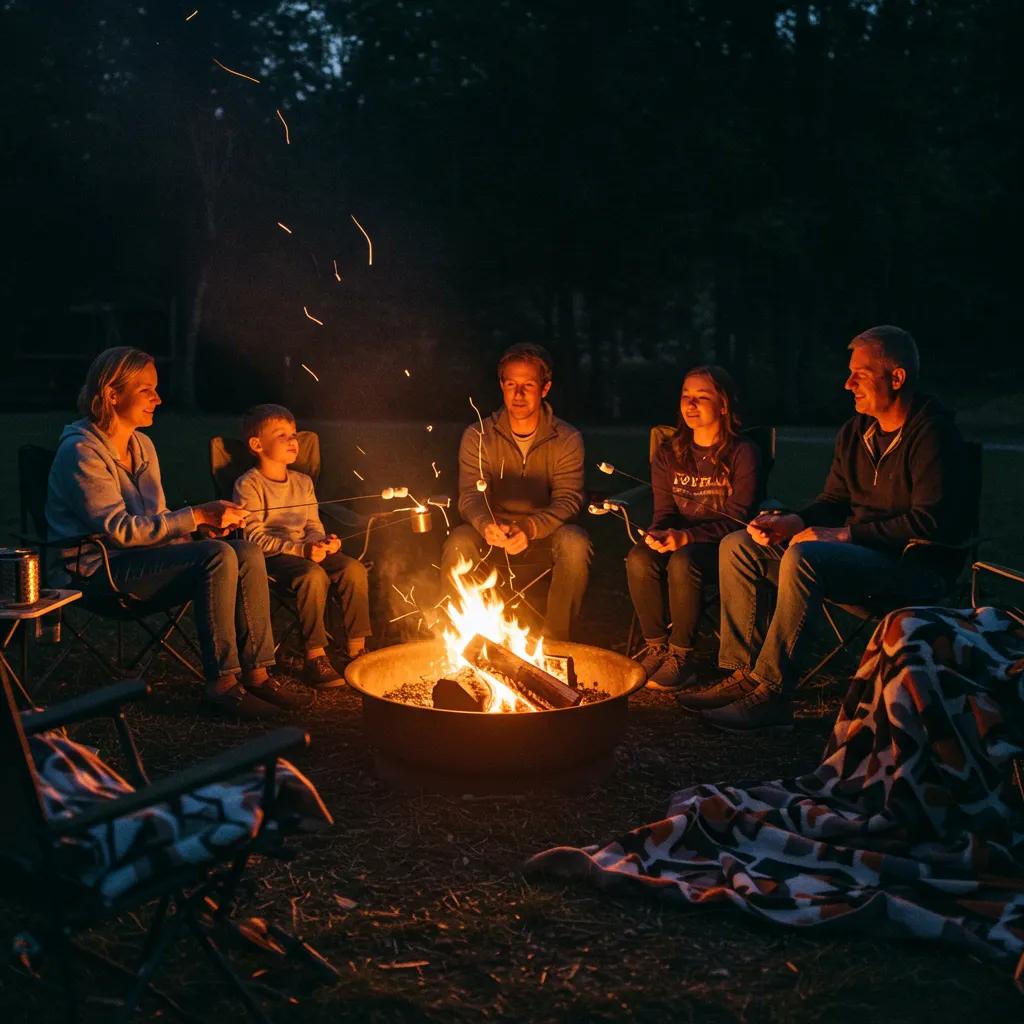
Outdoor daytime games like kickball, tug-of-war, and family relay races promote teamwork and keep kids physically active. Evening options such as campfire storytelling, singalongs, and family movie nights offer calmer bonding opportunities. Scheduling a mix—energetic daytime play followed by quieter evening events—helps families balance children’s sleep needs with the desire for shared rituals. Organizers often provide equipment loans and designated spaces for these activities, which reduces planning friction for parents and encourages neighbors to join in. These varied activity types ensure every family member finds something enjoyable, from toddlers to teens.
Below is a planning-focused activity table to make it easier to select and pack for chosen events.
This quick reference helps families match activities to ages and reduces packing guesswork for a smoother trip.
How Do Accommodation Options Affect Family Camping Comfort?
Accommodation choices—RV sites, tent sites, and cabins/glamping—determine comfort levels, packing needs, and the ease of family routines. The right choice depends on family size, desired convenience, and experience level. RV sites offer hookups and household conveniences that reduce setup time and are well-suited for longer stays or families who need storage and electricity. Tent sites connect families to nature at a lower cost, allowing flexible campsite selection near play areas. Cabins and glamping rentals provide home-like amenities that ease transitions for young children and multigenerational groups. The short table below compares these lodging options to help you decide based on comfort, privacy, and cost trade-offs.
What Are the Benefits of RV, Tent, and Cabin Rentals for Families?
RV sites give families access to electricity, shelter from weather, and convenient storage, simplifying meal routines and bedtimes for young children. Tent camping places families directly in nature, encouraging lightweight packing and outdoor skills, often with lower nightly costs and more flexible locations near playgrounds. Cabin rentals offer fixed beds, weatherproof shelter, and sometimes private restrooms, making them ideal for parents seeking ease and comfort without sacrificing outdoor access. Families should choose sites near amenities—playgrounds, bathrooms, or lakes—when prioritizing short walks and easy supervision.
Walnut Hills Family Campground offers a mix of RV, tent, and cabin options that exemplify these benefits, making it straightforward for families to select the lodging style that best fits their needs.
How Does Glamping Combine Comfort with Outdoor Adventure?
Glamping blends home comforts like beds, heating, and simple kitchenettes with outdoor immersion, reducing setup time and lowering the barrier for families new to camping. These accommodations appeal to multigenerational groups and parents who want easy bedtimes and shelter while keeping children close to nature. Glamping units typically provide insulated structures, bedding, and basic amenities that streamline weekends and free families to focus on activities rather than chores. For families balancing toddler naps and teen schedules, glamping often offers the best compromise between convenience and an authentic outdoor experience.
Research into glamping specifically highlights its appeal to families seeking a comfortable yet adventurous outdoor experience, with studies examining their willingness to pay for such accommodations.
Family Vacationers’ Willingness to Pay for Glamping Travel Sites
The study examines family vacationers’ willingness to pay for glamping travel sites, using a family functioning segmentation approach. Glamping offers a unique blend of camping and luxury, appealing to families seeking convenient and comfortable outdoor experiences. The research identifies key factors influencing families’ decisions to choose glamping, providing insights for the development of satisfactory family vacation packages.
To help you choose, the table below outlines lodging options, their attributes, and the benefits for families.
With lodging chosen, safety and cleanliness become the deciding factors that keep families returning.
Why Is Safety and Cleanliness Vital for Family-Friendly Campgrounds?
Visible safety measures and high cleanliness standards build trust and reduce parental stress. They work by minimizing health risks and clarifying expectations for children’s behavior. Campgrounds that advertise renovated bathrooms, routine cleaning, clear signage, and staff-led supervision earn higher booking confidence from families. Practical markers—well-lit paths, fenced playgrounds, and accessible first-aid—translate into measurable reductions in minor incidents and quicker responses when problems occur. The next subsections list specific safety features and explain how clean facilities influence the overall family experience.
What Safety Features Should Families Look for in Campgrounds?
Families should look for lifeguarded water zones, fenced play areas, clear depth markers, visible staff or ranger presence, and posted emergency procedures. These features reduce risk and increase caregiver confidence. Lifeguards and scheduled swim times directly lower drowning risk, while fenced play spaces prevent unsupervised wandering near roadways or water. Good signage describing rules and a clear staff contact process speed emergency responses and clarify expectations for guests. Asking about these practices before booking helps families choose campgrounds that prioritize active safety management.
Below is a short checklist of core safety features to verify before your arrival.
- Lifeguards or supervised swim times
- Fenced and age-appropriate play areas
- Clear signage and posted emergency procedures
- Well-lit common areas and staffed office presence
Confirming these items makes it easier to enjoy activities without constant worry.
How Do Clean Facilities Improve the Family Camping Experience?
Clean, renovated restrooms, reliable waste disposal, and hygienic food-service areas directly impact family comfort by reducing illness risk and daily friction during multi-day stays. When restrooms are well-maintained, parents spend less time on cleanups and more time enjoying activities, and children learn better hygiene habits. Visible maintenance schedules and recent renovations signal a campground’s operational competence, which often correlates with better overall guest experiences. Asking about restroom updates and trash management practices is a simple way families can evaluate campground cleanliness before booking.
To illustrate cleanliness priorities, the following brief table contrasts facility features with their impact on families.
Clean and safe facilities support relaxation and positive memories that encourage families to return.
How Can Families Plan the Best Camping Trip for Fun and Relaxation?
Effective family planning combines a compact packing strategy, safety preparation, and smart use of reservation tools to align stays with family needs and campground programming. This approach reduces friction and maximizes downtime for parents. A concise packing checklist tailored to different ages streamlines preparation, while checking the campground’s events schedule helps families pick weekends with kid-friendly programming. Using online reservations and the resort’s event calendar simplifies securing sites near amenities and signing up for organized activities in advance, which is especially useful for busy weekend events. Below are targeted packing tips and a short planning checklist to make your next family camping trip restful and fun.
What Are Essential Packing and Safety Tips for Family Camping?
Pack essentials that support basic safety and comfort: a well-stocked first-aid kit, age-appropriate life jackets, sunscreen, insect repellent, and layered clothing for variable weather. For younger children, include familiar sleep items and a small nightlight to ease bedtime transitions. Older kids might need activity-specific gear like water shoes or sports equipment. Keep an emergency contact list and park rules accessible, and establish campsite boundaries so children understand supervised areas. Preparing these items in advance lets families enjoy activities without last-minute runs to the camp store.
The concept of “Van Life” emphasizes child-centered tourism, highlighting how immersive family travel in nature can foster significant developmental benefits for children, aligning with the goal of creating memorable and enriching camping experiences.
Van Life: A Child-Centered Tourism Model for Family Fun and Development
Van Life, defined as short-term, vehicle-based travel involving family participation and nature immersion, offers educational and emotional benefits for children. Despite its growing global appeal, this model remains largely unexamined in the Iranian context. Using a qualitative, exploratory-descriptive design, the study collected data from 15 families and 25 children aged 6–12 years who had engaged in Van Life-style travel. Data were gathered through semi-structured interviews, participant observation, and children’s drawings and were analyzed thematically. The findings indicate that Van Life positively contributes to children’s development in four domains: emotional (increased self-confidence and emotional regulation), cognitive (hands-on problem-solving and nature-based learning), social (strengthened family bonds and cultural openness), and environmental (awareness of
The packing list below organizes essentials by category for quick reference.
- First-aid kit, prescription meds, and emergency contact list
- Life jackets, water shoes, and sunscreen for aquatic activities
- Comfortable shoes, layered clothing, and nightlights for kids
- Reusable water bottles, snacks, and quick meals for easy family dining
These items reduce stress and keep the focus on shared experiences rather than logistics.
How Do Online Reservations and Event Calendars Simplify Planning?
Online reservations guarantee your preferred site type and location, while event calendars allow families to align stays with organized programming and peak activity times. Together, they reduce uncertainty and planning friction. Booking in advance secures sites close to playgrounds or lakes, minimizing walk times and supervision challenges. Event calendars let parents reserve spots or plan around kids’ crafts, evening shows, and special weekend themes. For convenience, check the campground operator’s website and event listings to confirm programmed activities and any sign-up requirements well before arrival. Using these tools transforms fragmented planning into a predictable, family-friendly itinerary and simplifies last-minute adjustments.
For families ready to book, online reservations and an events calendar on the campground operator’s website streamline the process and make it easier to lock in weekends that match your family’s interests and age groups.
Frequently Asked Questions
What types of organized activities are typically available for kids at family campgrounds?
Family campgrounds often offer a variety of organized activities designed to engage children of different ages. These can include arts and crafts sessions, scavenger hunts, nature walks, and themed weekends. Such activities are usually supervised by staff, ensuring safety while allowing parents to relax. The structured nature of these events helps children develop social skills and creativity, making them a valuable part of the camping experience. Families can check the campground’s event calendar for specific offerings during their stay.
How can families ensure they choose a campground that meets their specific needs?
To select a campground that aligns with family needs, consider factors such as amenities, safety features, and accommodation types. Research campgrounds that offer family-friendly amenities like playgrounds, swimming areas, and organized activities. Additionally, inquire about safety measures, such as lifeguards and clean facilities. Reading reviews from other families can provide insights into the campground’s suitability. Finally, using online reservation tools can help secure a site that meets your family’s preferences and requirements.
What should families consider when packing for a camping trip?
When packing for a camping trip, families should focus on essentials that ensure comfort and safety. This includes a well-stocked first-aid kit, age-appropriate life jackets, sunscreen, and insect repellent. For younger children, familiar sleep items and nightlights can ease bedtime transitions. Additionally, packing layered clothing for varying weather conditions and comfortable shoes for outdoor activities is crucial. Creating a checklist tailored to each family member’s needs can streamline the packing process and reduce last-minute stress.
How do campgrounds typically handle cleanliness and hygiene?
Campgrounds prioritize cleanliness and hygiene by implementing regular maintenance schedules for restrooms and common areas. Many facilities have staff dedicated to cleaning and sanitizing high-traffic areas, ensuring a safe environment for families. Campgrounds may also provide clear signage regarding hygiene practices and waste disposal. Families can inquire about the campground’s cleaning protocols before booking to ensure that hygiene standards meet their expectations, which can significantly enhance their overall camping experience.
What are the advantages of choosing glamping over traditional camping?
Glamping offers a unique blend of comfort and outdoor adventure, making it an appealing option for families. Unlike traditional camping, glamping accommodations often include amenities like beds, heating, and kitchenettes, which reduce setup time and enhance convenience. This style of camping allows families to enjoy nature without sacrificing comfort, making it particularly suitable for those with young children or multigenerational groups. Glamping can also provide a more accessible introduction to camping for families new to the experience.
How can families make the most of their camping experience?
To maximize their camping experience, families should plan ahead by reviewing the campground’s amenities and event calendar. Engaging in organized activities and outdoor games can foster family bonding and create lasting memories. Additionally, establishing a flexible schedule that balances active play with downtime can help accommodate children’s needs. Packing thoughtfully and ensuring safety measures are in place will also contribute to a more enjoyable and stress-free camping trip.
Conclusion
Choosing a family-friendly campground ensures a memorable outdoor experience filled with safety, engaging activities, and comfortable accommodations. By prioritizing amenities like clean facilities, organized events, and diverse lodging options, families can create lasting memories while enjoying quality time together. Take the next step in planning your perfect getaway by exploring our curated list of top-rated campgrounds that cater to families. Start your adventure today and make unforgettable memories in nature!