
Discover Peak Season Prices for Dog-Friendly Campgrounds Near You: Your Guide to Michigan Family Camping Rates and Policies
Peak season for dog-friendly camping in Michigan means high demand, fuller campgrounds, and clearer tradeoffs between price, amenities, and pet rules. This guide explains what “peak season” typically means in Michigan, how site types (RV, tent, cabin) differ in cost and rules, and how pet policies — including dedicated dog-park amenities — shape your planning and packing. You will learn practical steps to compare peak-season prices near you, understand common extra fees that affect total cost, and follow a simple booking checklist to secure the best value for family trips with dogs. The article covers four focused areas: peak-season dates and rates, Walnut Hills Family Campground pet policies and dog-park details, family-focused activities that maximize value, and step-by-step booking and planning tactics for peak-season stays. Throughout, semantic signals such as site type comparisons, pet-policy attributes, and local Shiawassee River activities appear to help you find dog-friendly camping options and plan an enjoyable family stay.
What Are the Peak Season Dates and Rates for Dog-Friendly Campgrounds in Michigan?
Peak season refers to the months and holiday windows when Michigan weather, school breaks, and outdoor activity demand drive highest campsite occupancy and pricing. Peak season typically spans late spring through early fall, driven by warm-weather recreation and popular holiday weekends; this seasonal demand increases nightly rates and reduces available walk-up inventory. Understanding peak-season timing helps planners optimize dates for cost and convenience, because shifting a trip by a few days or choosing mid-week arrivals often reduces nightly rates and improves campsite choice. Below are practical comparisons by site type so you can assess what to expect when searching for dog-friendly campground rates.
Different site types produce different price behaviors and amenity profiles during peak season; the table below summarizes how campgrounds commonly present those differences and what to check in reservation details.
This comparison highlights that site-type, hookups, and amenities directly affect the price you pay during peak season, so confirming attributes in the reservation reduces surprises and supports better budgeting for families and pets.
When Is Peak Season for Michigan Campgrounds?
Peak season in Michigan generally centers on the warm months when outdoor recreation peaks and school vacations occur, making weekends and holiday periods the busiest and most expensive times. The mechanism is straightforward: better weather and vacation schedules raise demand, which leads many campgrounds to apply dynamic pricing or limited availability windows. For planners, targeting shoulder-season dates or mid-week stays reduces crowding and can lower nightly costs while preserving good weather for water-based activities. Monitoring campground calendars and being flexible by a few days is a practical tactic to avoid the highest peak-season premiums and secure the sites you want.
How Much Do RV and Tent Sites Cost During Peak Season?
RV and tent pricing during peak season depends on hookups, site size, and proximity to high-demand amenities like waterfront access or water parks, and rates are frequently posted by site type on reservation pages. RV sites that include full hookups or premium placement typically carry higher nightly rates than basic tent sites; tent sites near lakes or play areas command a premium compared with more secluded tent pads. Families should confirm what base rates include — for example, whether two adults and two children are covered — and review extra-charge policies for additional guests or vehicles. Comparing advertised site attributes before booking clarifies the true value and avoids last-minute fee surprises.
What Are Cabin Rental Prices and Pet Restrictions in Peak Season?
Cabin pricing in peak season is usually higher than basic campsites due to built-in shelter, amenities, and limited inventory, and cabins often follow a separate pricing table from RV and tent sites. Importantly, many campgrounds restrict pets in cabins; for planners with dogs, the policy framework usually lists “no pets in cabins” as a firm rule and suggests alternative options such as reserving an RV or tent site or arranging pet care. Families should weigh cabin comfort against pet restrictions and consider whether a cabin-for-people plus an adjoining pet-friendly site is available. Checking cabin-specific rules and available alternatives helps you pick lodging that aligns with both family comfort and pet needs.
What Additional Fees Should Campers Expect?
Campground reservation totals often include several add-on fees that affect peak-season budgeting, and knowing these common charges lets you compare true cost across properties.
The next list outlines typical extra fees and how they are applied at reservation time.
- Per-pet fees or pet deposits may apply and are often listed in reservation details.
- Extra guest or vehicle fees are charged per person or per vehicle beyond the base allowance.
- Amenity rentals and service fees (such as canoe or kayak rentals, firewood, or cleaning) are added at checkout.
These fee types are commonly applied either per night or per stay, and clarifying the billing method when you book prevents unexpected charges. Reviewing the reservation summary and asking about fee timing ensures accurate budgeting for a peak-season trip.
What Is the Pet Policy at Walnut Hills Family Campground for Dog Owners?
A clear pet policy defines safe, enjoyable stays and sets expectations for behavior, leash use, and permitted areas, and pet policies at family campgrounds work by balancing dog access with facility integrity. Walnut Hills Family Campground, a GatherGrounds Resorts flagship property in Durand, Michigan that spans 42 acres, positions itself as dog-friendly through specific amenities like a large dog park while maintaining rules to protect guests and pets. Knowing these rules helps dog owners plan transfers between activities, select appropriate sites, and pack necessary supplies for compliance and comfort. Below is a focused EAV-style table outlining Walnut Hills’ pet-related attributes for quick scanning before you book.
This table shows how pet rules and fee practices organize canine access at Walnut Hills and why checking reservation terms is important to avoid surprises during peak season.
What Are the General Rules for Camping with Dogs at Walnut Hills?
General rules for dogs at Walnut Hills emphasize supervision, sanitation, and respectful behavior to keep shared spaces safe and pleasant for all guests. Dog owners are expected to keep dogs under control, remove waste promptly into designated receptacles, and follow posted behavior standards that protect children and other animals. Enforcement aims to preserve open recreation spaces and the campground’s family-friendly environment, and staff generally advise quiet hours and behavior interventions when necessary. Understanding and following these rules ensures dogs remain welcome and that families can continue to enjoy shared campground facilities.
What Amenities Does the Walnut Hills Dog Park Offer?
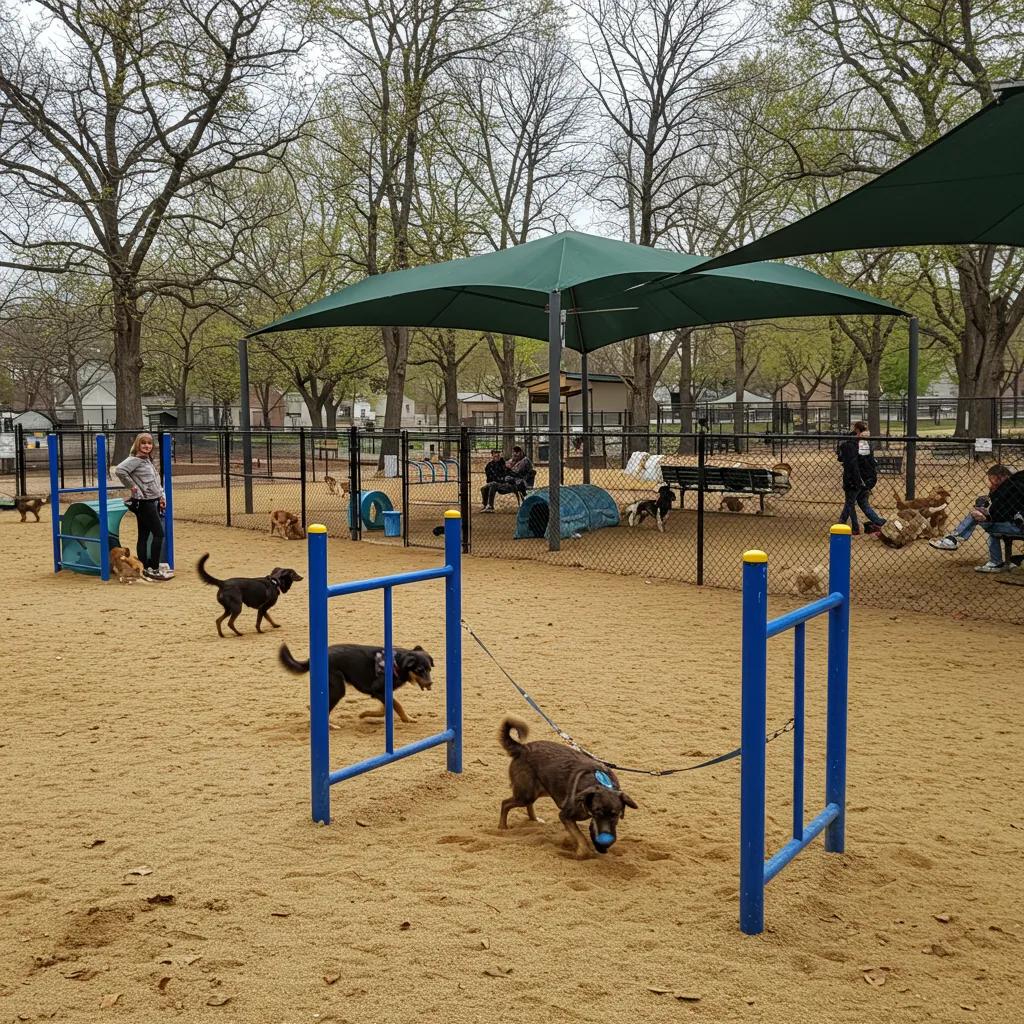
The on-site dog park at Walnut Hills is described as a large, dedicated area designed for off-leash play and socialization, and it supports active, supervised canine recreation away from primary family spaces. Key amenities highlighted include open play fields, basic agility or enrichment features, shaded seating for owners, and nearby wash or cleanup stations to maintain hygiene after play. Suggested image alt-text for dog-park photos could read: “Large fenced dog park with open play area and shaded seating at Walnut Hills Family Campground.” Using the dog park at recommended times and following posted rules improves safety and enjoyment for both dogs and owners.
Are There Any Pet Fees or Site Restrictions?
Pet-related fees and site restrictions are explicitly documented in campground policies to set transparent expectations for dog-owning guests and to cover additional cleaning or facility use costs. At Walnut Hills, pet fees are applied as a per-pet charge (the exact amount is detailed at booking), cabins do not allow pets, and certain premium site types may have specific restrictions or capacity limits. Reading the reservation terms for your selected site clarifies fee application (per night or per stay) and keeps total costs predictable. When planning, factor pet fees into your nightly budget to avoid surprises at checkout.
What Dog-Friendly Activities Are Available On-Site and Nearby?
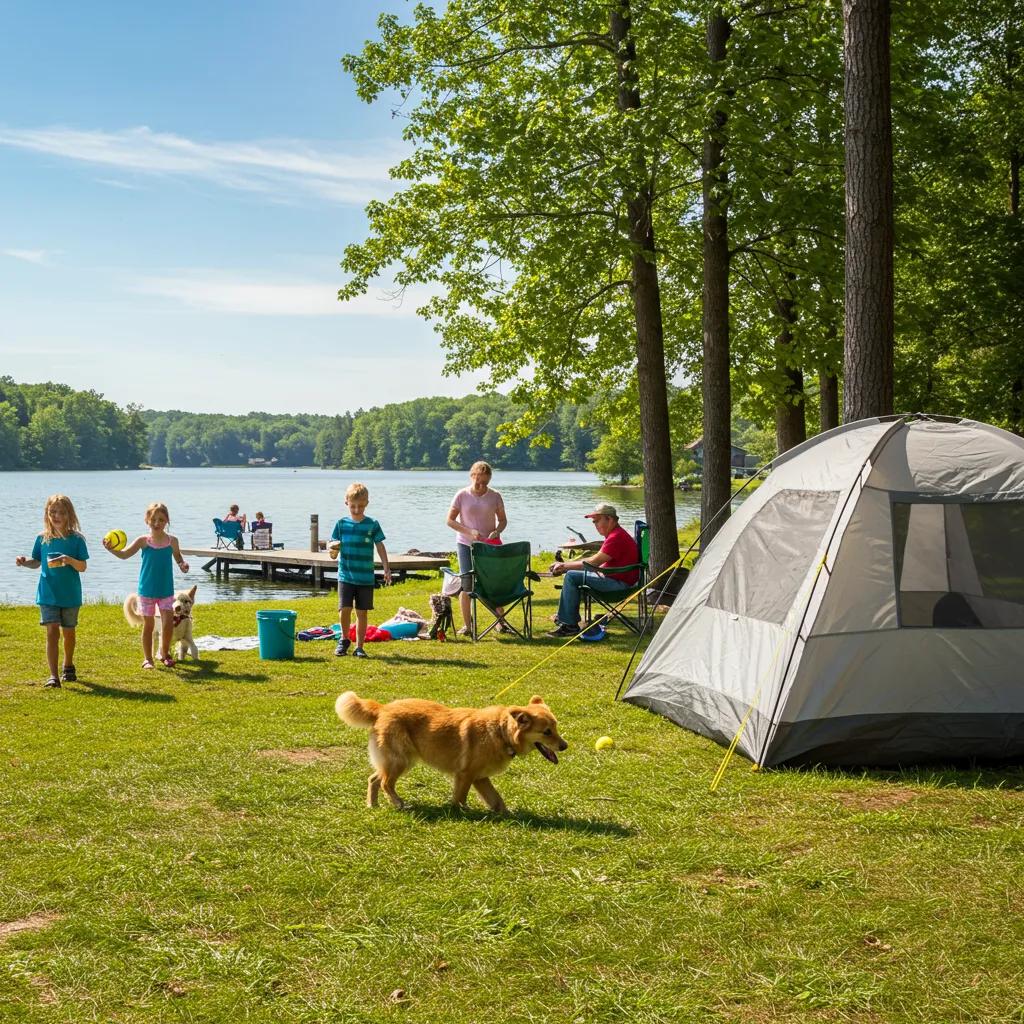
Dog-friendly activities at and near the campground combine structured play and nature access to keep dogs engaged while families enjoy recreational programming. On-site, dogs can use the large dog park and join leash-walks to lakefront areas where pets are permitted, and nearby, the Shiawassee River offers paddling routes for supervised water experiences when safety considerations are met. Safety tips for water activities include using canine life vests and checking current conditions before launching, as river currents can vary. Planning activities that match your dog’s temperament and fitness helps maximize enjoyment for the whole family.
How Can Families Maximize Their Camping Experience at Dog-Friendly Michigan Campgrounds?
Maximizing a family camping trip with dogs means pairing kid-focused attractions with pet-safe amenities so everyone can participate in meaningful activities without conflict. Walnut Hills centers family entertainment on multi-generational offerings such as a Wibit water park, swimming lake, game room, and weekend events, all organized to accommodate both children and supervised pets in appropriate areas. Balancing scheduled activities with unstructured time, packing dog supplies, and choosing a site near desired amenities reduces transit and keeps the day flowing smoothly.
To make comparisons easier, the table below summarizes accommodation tradeoffs families face when deciding between RV sites, tent sites, and cabins at a dog-friendly property.
This comparison clarifies that the accommodation you choose directly affects both family convenience and whether your dog can join the stay, helping you match lodging to expectations and activities.
What Family Activities Are Offered at Walnut Hills?
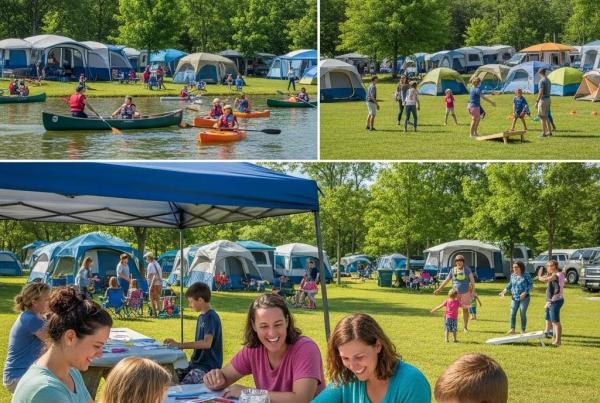
Walnut Hills provides a range of family-focused attractions that deliver daylong engagement for all ages while enabling parallel dog-friendly options in designated areas. Key features include a Wibit water park on a swimming lake for supervised aquatic play, playgrounds and sports courts for active children, and an indoor game room for mixed-weather recreation. For families, structuring daily plans with one central activity (for example, water play in the morning and a river float in the afternoon) reduces logistical friction and lets dogs rest between outings. Coordinating pet care time with activity schedules keeps the whole group energized and safe.
How Can You Enjoy Shiawassee River Float Trips and Canoe Rentals?
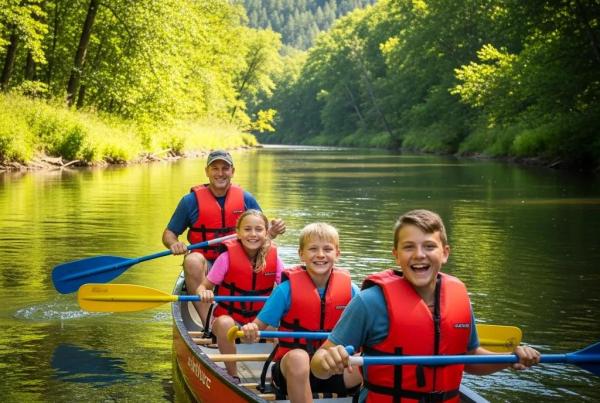
Float trips and canoe or kayak rentals on the Shiawassee River provide a low-impact, scenic way to experience Michigan waterways, and campground-based rental services simplify logistics. The process typically involves reserving a craft in advance, receiving basic safety instruction, and following local guidance on currents and access points; dogs may be allowed on watercraft when owners provide appropriate flotation and manage their pets’ comfort. Bringing a canine life vest, a leash, and a small towel ensures that both pet and owner stay safe and dry; check the rental provider’s animal policies during booking for final confirmation. Planning a float as part of a half-day schedule pairs well with on-site playground or leisure time for other family members.
What Weekend Events and Food Options Are Available?
Weekend programming at family campgrounds often comprises themed family activities, kids’ crafts, and vendor food options that create communal experiences while offering convenience for mealtimes. Weekend events may include scheduled games, entertainment near central amenities, and rotating food trucks or campground store offerings that reduce the need to prepare every meal onsite. Dog etiquette during events generally requires leashing and close supervision to ensure safe interaction with crowds, and organizers typically mark event boundaries where pets are or are not permitted. Reviewing the campground’s weekend calendar when you arrive helps you plan meals and participation while keeping pets comfortable and contained.
How Do You Book and Plan Your Stay at Dog-Friendly Campgrounds Like Walnut Hills?
A reliable booking process structures checkable availability, clear fee disclosure, and straightforward payment so families can reserve peak-season dates with confidence. For Walnut Hills Family Campground, the recommended approach is to use the campground’s online reservation system to view site inventories, confirm pet allowances, and see any per-pet fees listed at checkout; booking early during peak season increases your chances of preferred sites.
Below is a practical, numbered walkthrough of the typical online reservation flow you should use when planning a peak-season family trip with dogs.
- Check Date Availability and Site Types: Select your desired arrival and departure dates and filter for RV, tent, or pet-allowed sites.
- Select Site and Review Attributes: Confirm hookups, max occupancy, and pet permissions for the specific site listing.
- Review Fees and Policies: Look at base rate, per-pet fees, extra-guest charges, and cancellation terms before payment.
- Complete Payment and Save Confirmation: Finalize booking and record confirmation details to support arrival and any future changes.
Following these steps reduces uncertainty and aligns expectations about fees, pet rules, and site amenities.
What Is the Online Reservation Process for Peak Season Camping?
The online reservation process converts availability, policy transparency, and payment into a confirmed stay, and the key mechanism is selecting the correct site type and confirming pet allowances during checkout. Deposits or prepayments are common during peak season to secure inventory, and reservation screens commonly display exact charge breakdowns that include pet fees, extras, and taxes. Families should retain a copy of the confirmation and the stated cancellation policy to reference for changes or disputes. Checking the reservation summary before completing payment ensures you accept all terms and understand financial commitments.
What Are the Cancellation and Change Policies?
Cancellation and change policies define how refundable your reservation is and what penalties apply for date adjustments, and they typically state windows for refunds and fees. Common practice is to offer partial refunds outside a set cancellation window while charging either a fee or forfeiture for late cancellations; change policies often permit date swaps subject to availability and price differences. For peak-season travel, flexible planning and earlier bookings reduce the risk of lost deposits, and documenting policy details at booking helps you make informed choices about trip insurance or alternative dates. Reviewing the policy at the time of reservation protects you from unexpected financial outcomes.
How Can You Find the Best Rates and Availability?
Securing the best peak-season rates requires active planning strategies that leverage timing, flexibility, and alerts rather than last-minute searches when inventory is lowest. The following list contains practical tactics you can apply to improve value and increase chances of getting pet-friendly sites during peak windows.
- Book Early: Reserve as soon as dates are known to capture preferred sites and standard rates.
- Be Flexible with Dates: Shift stays to mid-week or shoulder-season days to lower nightly rates.
- Monitor Availability and Alerts: Use campground notifications or social channels to catch cancellations and special offers.
Using these methods increases your ability to lock in lower peak-season pricing and preferred locations while ensuring pet allowances meet your needs.
For families seeking a single, family-focused option that includes pet-friendly features and a wide range of activities, Walnut Hills Family Campground — a GatherGrounds Resorts property in Durand, Michigan — offers a comprehensive family camping experience with a large dog park, Wibit water park, swimming lake, canoe and kayak rentals for Shiawassee River floats, renovated bathroom facilities, a campground store, playgrounds, and weekend events. To secure peak-season dates and confirm site-specific pet rules and any per-pet fees, use the campground’s online reservation system and review the posted rate and policy details when booking.
Frequently Asked Questions
What Should I Pack for a Camping Trip with My Dog?
When camping with your dog, it’s essential to pack items that ensure their comfort and safety. Bring a sturdy leash, a collar with ID tags, and a comfortable bed or blanket for them to rest on. Don’t forget food, water, and bowls, as well as any medications your dog may need. Additionally, consider packing waste bags for clean-up, a first-aid kit, and toys to keep your dog entertained. If your dog enjoys swimming, a canine life vest can be a great safety addition for water activities.
Are There Specific Dog Breeds That Are Not Allowed at Campgrounds?
Many campgrounds have breed restrictions based on local regulations or insurance policies. Commonly restricted breeds may include those considered aggressive, such as Pit Bulls, Rottweilers, or Doberman Pinschers. It’s crucial to check the specific campground’s pet policy before booking to ensure your dog is welcome. If your dog belongs to a restricted breed, consider contacting the campground directly to discuss any potential exceptions or alternative accommodations that may be available.
How Can I Ensure My Dog Stays Safe Around Other Campers?
To keep your dog safe and ensure a pleasant experience for everyone, always supervise your dog in shared spaces. Use a leash in common areas and be mindful of other pets and children. Training your dog to respond to commands can help manage their behavior around unfamiliar people and animals. Additionally, consider using a muzzle if your dog is anxious or reactive. Always clean up after your dog to maintain a clean environment and respect fellow campers.
What Are the Best Practices for Hiking with Dogs?
When hiking with your dog, choose trails that are dog-friendly and check for any specific regulations. Keep your dog on a leash to prevent them from wandering off or encountering wildlife. Bring plenty of water for both you and your dog, and take breaks to allow them to rest. Be aware of the weather conditions, as extreme heat can be dangerous for dogs. Lastly, pack a first-aid kit and familiarize yourself with basic canine first-aid procedures in case of emergencies.
Can I Leave My Dog Unattended at the Campsite?
Leaving your dog unattended at a campsite is generally not recommended, as it can lead to anxiety or unwanted behavior. If you must leave your dog, ensure they are in a secure area, such as a crate or a tent, and provide them with water and comfort items. However, it’s best to arrange for someone to check on them or take them along for activities. Always follow campground rules regarding pet supervision to avoid potential issues with other guests.
What Should I Do If My Dog Gets Lost While Camping?
If your dog goes missing while camping, remain calm and act quickly. Start by searching the immediate area, calling their name, and using familiar commands. Inform campground staff and fellow campers about your lost dog, as they can help keep an eye out. Utilize social media or local community groups to spread the word. Having a recent photo and your dog’s identification tags can assist in recovery efforts. Consider microchipping your dog for added security in case they wander off.
Conclusion
Planning a family camping trip with dogs at Michigan’s dog-friendly campgrounds offers numerous benefits, including access to pet-friendly amenities and engaging activities for all ages. Understanding peak-season pricing, site types, and pet policies ensures a smooth and enjoyable experience for both families and their furry companions. To make the most of your adventure, explore the online reservation system for Walnut Hills Family Campground and secure your ideal site today. Embrace the opportunity to create lasting memories in nature with your loved ones and pets.