What Influences Campground Property Value? Insights From Real Estate Agents on Valuation and Selling
Campground property value reflects a combination of financial performance, physical assets, regulatory status, and marketplace demand. Owners who understand these drivers can make strategic choices that materially improve sale outcomes.
This article explains what agents and buyers analyze when valuing campgrounds and RV parks, how income, comparables, and cost approaches produce price estimates, and which property attributes—from hookups and bathhouses to zoning and accessibility—most strongly affect offers. Owners face both financial and legacy considerations when selling; this guide promises actionable calculations, prioritized improvement recommendations, and a practical checklist for preparing a park for market. We’ll cover how Net Operating Income (NOI) and cap rates translate to value, how comparable sales and replacement-cost perspectives are used, how market trends in 2025 shape buyer demand and cap rate benchmarks, and what sellers should gather before engaging brokers or a direct buyer. Throughout, the focus is on clear, buyer-oriented valuation mechanics, plus specific next steps for owners ready to explore sale options or confidential conversations about acquisition.
How Do Real Estate Agents Determine Campground and RV Park Value?

The primary valuation methods agents use are the income approach (NOI and cap rate), comparable sales (market comps adjusted for differences), and the cost approach (land plus replacement cost minus depreciation). Agents select the most relevant approach based on whether the property is a stabilized income producer, a unique site with few comps, or a newer development where replacement cost is informative. Using these methods together gives a triangulated value estimate that accounts for cash flow, market precedent, and physical replacement economics. The next subsections explain each approach, provide a worked example for the income method, and show how agents combine methods to produce a defensible listing or offer price.
What Is the Income Approach and How Are NOI and Cap Rate Calculated?
The income approach values a campground by converting expected Net Operating Income (NOI) into a capitalized value using a market cap rate, where Value = NOI / Cap Rate. NOI is gross revenue from sites, cabins, store sales, and events minus operating expenses such as payroll, utilities, maintenance, and property taxes; lenders and investors focus on normalized NOI that excludes one-time items.
For example, a park with normalized NOI of $200,000 and a 8% cap rate would produce a value estimate of $2,500,000; at a 10% cap rate the same NOI implies $2,000,000, illustrating sensitivity to perceived risk. Agents stress sensitivity analysis because cap rate selection reflects market comparables, borrower financing conditions, and property-specific risk factors. Understanding NOI components helps sellers identify where small improvements in revenue or expense control can disproportionately affect value.
Before the example calculation below, review a typical NOI component table to see how revenue and expenses aggregate and which lines most affect valuation.
This table shows which revenue streams typically dominate NOI and why agents request line-item detail to normalize earnings before applying a cap rate.
How Does the Comparable Sales Approach Affect Campground Valuation?
Comparable sales valuation relies on recent transactions of similar campgrounds or RV parks, adjusting sale prices for differences in site count, amenity mix, infrastructure quality, and location desirability. Agents identify comps from industry sale databases, specialized brokers, and industry networks, then convert sales into per-site metrics or per-acre metrics and apply adjustments for date of sale and included assets.
Because campground transactions are infrequent, adjustments are often substantial and require conservative judgment; agents commonly blend comparable-derived indications with income-based results to reduce dispersion. The limited pool of true comparables means agents place higher weight on well-documented sales within a reasonable geographic and operational profile.
A short list of typical adjustment factors helps clarify how comparables are tuned:
- Site Count Differential: Adjust price per site for economies of scale and management overhead.
- Amenity Differences: Increase or decrease for bathhouses, cabins, lakefront, or luxury features.
- Infrastructure Quality: Account for sewer, water, and electrical upgrades included in the sale.
These adjustment categories guide how a raw comparable sale is converted into a viable benchmark for a target property and lead into why the cost approach can validate valuations when comps are sparse.
What Role Does the Cost Approach Play in Valuing Campground Land and Improvements?
The cost approach calculates value as the market value of the land plus the replacement cost of improvements, minus physical depreciation and functional obsolescence; it is most useful for unique properties, new builds, or when improvements represent substantial investment relative to income. Agents and appraisers estimate current construction or replacement costs for bathhouses, utility loops, cabins, and site development, then apply depreciation schedules to reflect age and condition.
Cost approach is frequently used as a ceiling check against income or comparable-based values, particularly when recent sales are limited or when public policy changes affect land values. When depreciation is high or the park lacks income history, the cost approach provides a clear accounting of the capital required to recreate the asset.
A practical outcome of the cost approach is its ability to inform negotiation on major CAPEX items: if replacement cost less depreciation exceeds buyer comfort, sellers may need to adjust price expectations or complete upgrades before marketing.
What Key Factors Influence the Market Value of Campgrounds and RV Parks?
Market value for campgrounds depends on location, accessibility, amenity mix, infrastructure quality, property condition, and legal/regulatory status, each influencing either revenue potential or buyer risk perception. Location drives demand through proximity to attractions, major travel routes, and regional tourism trends; accessibility affects occupancy and guest mix, which in turn affects average daily rate (ADR).
Amenities such as full hookups, bathhouses, and cabins raise revenue per site and broaden the buyer pool, while strong infrastructure mitigates near-term capital needs and lowers perceived risk. Property condition and deferred maintenance inform capex adjustments in offers, and zoning or permit constraints can limit future development, reducing the value multiple buyers will accept. The subsections below break these factors down with regional context and improvement prioritization.
How Does Location and Accessibility Impact Campground Property Value?
Location determines the size and stability of the demand pool; properties near lakes, state parks, or major tourist corridors typically command higher occupancy and ADR, while rural or hard-to-reach parks often face seasonal or limited demand.
Accessibility includes road quality, signage, and travel time to major highways; better accessibility increases drive-market catchment and repeat visitation.
Seasonality is particularly relevant in the Upper Midwest, where winter closures or short operating seasons compress revenue into fewer months and influence normalized NOI. Agents model seasonality into cash flow projections and adjust cap rates upward for parks with concentrated seasonal revenue, making location and accessibility primary determinants of buyer interest.
A practical implication is that modest investments in signage, road improvements, or shuttle access that reduce travel friction can meaningfully increase occupancy and should be evaluated for ROI before listing. Improved access often transitions a property into a different buyer segment with stronger valuation multiples.
Which Amenities and Infrastructure Increase RV Park and Campground Worth?
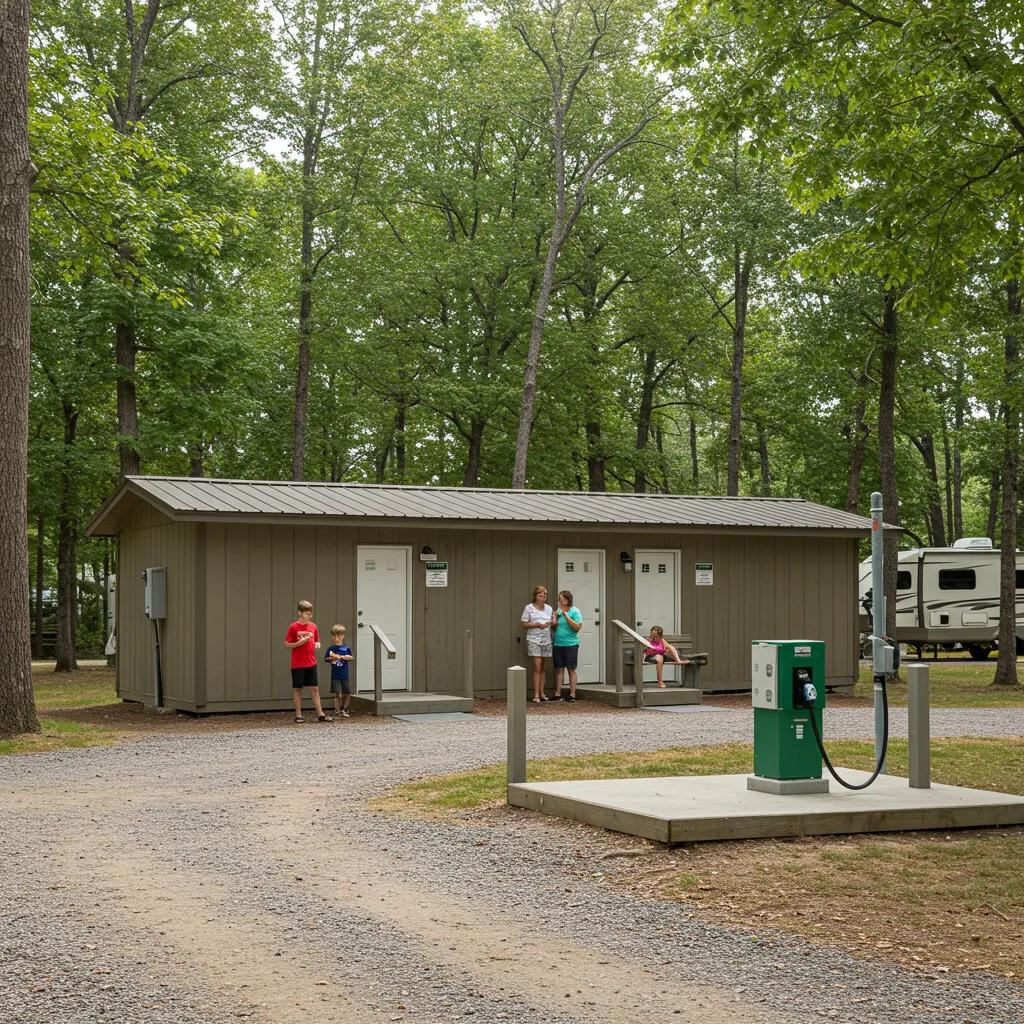
Certain amenities and infrastructure elements reliably increase value because they expand revenue potential, reduce capital uncertainty, or attract higher-spending guests. High-value amenities include full utility hookups (sewer, water, electric pads), modern bathhouses, rentable cabins, waterfront or recreation features, and on-site retail or food services.
Infrastructure such as reliable septic or municipal sewer, redundant power, and metered utilities reduces buyer-anticipated CAPEX and can lower the effective cap rate. Owners should prioritize improvements that either unlock new revenue streams or significantly reduce immediate capital expenditures for a buyer.
Introductory table comparing common upgrades helps owners prioritize investments before sale.
This table shows that investments vary widely; owners should target improvements with the strongest cost-to-value ratios and consider leaving ultra-large projects to buyers if they depress near-term return on capital.
How Does Property Condition Affect Valuation?
Property condition influences buyer risk and often results in immediate adjustments to offers to cover anticipated near-term capital needs; deferred maintenance can lower NOI through reduced occupancy and increased operating expenses, while structural issues shift negotiation toward escrow reserves or price reductions.
Common condition-related concerns include aging bathhouses, failing septic systems, storm-damaged roads, and electrical deficiencies at pads. Buyers will estimate near-term CAPEX needed and subtract that from the offer or increase the cap rate to reflect execution risk.
Sellers who proactively address high-impact deferred maintenance items often receive stronger offers and avoid protracted renegotiation. A well-ordered disclosure package and documented recent repairs reduce perceived risk and create smoother due diligence, which can translate to faster closings and tighter bid spread among competing buyers.
What Legal and Zoning Considerations Influence Campground Value?
Zoning, conditional use permits, environmental constraints, septic and groundwater regulations, and title encumbrances materially affect marketability and financing; restrictions on permitted uses or difficulties obtaining expansions can reduce buyer interest and limit future upside.
Agents verify municipal zoning classifications, special-use permits, and any recent variances that enable campground operations; lenders and buyers require clear documentation of permitted uses to underwrite deals.
Environmental liabilities such as wetlands, floodplain designations, or historic contamination can limit usable acreage and reduce valuation multiples. Clear, organized permitting and environmental records help preserve value by reducing buyer uncertainty and facilitating lender approvals.
Sellers should compile zoning approvals, permit histories, and environmental reports early to avoid surprises in diligence and to present a confident value proposition to potential buyers.
How Do Financial Performance and Market Trends Affect Campground Valuation?
Financial performance and contemporary market trends directly shape valuation by influencing NOI expectations, cap rate selection, and buyer pool composition. Net Operating Income is the central metric used in income-based valuations; revenue diversification (sites, cabins, retail, events) and disciplined expense management strengthen NOI and therefore value.
Why Is Net Operating Income Critical for Assessing Campground Profitability?
NOI captures the recurring economic return of the property before financing and taxes, making it the anchor for income-based valuations where Value = NOI / Cap Rate. Investors and lenders focus on normalized NOI, which adjusts reported earnings for owner-specific items, one-time improvements, and discretionary expenses to reflect sustainable cash flow.
Normalization might add back owner perks, adjust for below-market management fees, or remove capital improvements from operating line items. Because NOI variability increases perceived risk, properties with stable and diversified NOI profiles typically qualify for lower cap rates and command higher values.
Explaining normalization and add-backs in advance can often increase a property’s market value by clarifying sustainable earnings and reducing perceived volatility for buyers.
How Do Revenue Streams and Expense Management Impact Property Value?
Revenue mix—primarily site fees, cabin rentals, store sales, and events—determines top-line stability and margins, with ancillary revenues often carrying higher relative margins than site fees. Expense categories such as payroll, utilities, insurance, and maintenance are predictable levers; improving occupancy, optimizing dynamic pricing, and adding higher-margin ancillary services increase NOI more efficiently than sole reliance on rate hikes.
Effective expense management includes preventive maintenance schedules, utility metering, and staffing models that scale with occupancy.
This mapping helps owners prioritize revenue growth strategies and expense controls that most effectively raise valuation through higher NOI.
What Current Market Trends Are Driving Demand for Campgrounds and RV Parks?
Recent trends driving demand include steady interest in outdoor recreation, demographic groups seeking socially distanced travel options, and an expanding base of RV owners who prefer campground stays that offer improved amenities. These trends have increased buyer interest from specialized operators and private buyers, affecting cap rate benchmarks and widening the buyer pool for well-located, amenity-rich parks.
In 2025 many market observers reference cap rate ranges around 8–10% for stabilized parks, with lower cap rates in high-demand leisure markets and higher cap rates for rural or highly seasonal properties. Agents incorporate these trend signals into valuation models to calibrate cap rates and to position properties strategically to the right buyer segment.
Understanding trend-driven buyer behavior allows sellers to time improvements and marketing to capture peak buyer demand and more competitive valuation multiples.
What Role Do Real Estate Agents and Brokers Play in Selling Campgrounds?
Real estate agents and brokers provide valuation guidance, targeted marketing to qualified buyers, negotiation expertise, and due diligence management; they serve as principal coordinators between sellers, buyers, lenders, and consultants. A specialty campground broker brings industry-specific transaction experience, access to niche buyer networks, and the ability to construct pro formas that highlight transferable NOI.
How Do Agents Assess and Advise on Campground Valuation?
Agents combine income, comparable, and cost approaches to recommend a listing price that reflects market reality and seller objectives; they underwrite realistic pro forma projections, normalize historical financials, and apply market cap rates adjusted for property-specific risk. Brokers prepare comparative analyses that adjust sale prices per site or per acre and construct sensitivity tables to show how different NOI scenarios and cap rates affect value.
They also guide which improvements will meaningfully lift value and which are better deferred to a buyer, advising the seller on the cost-benefit of pre-listing capital expenditures. The agent’s advisory role is both analytical and strategic, aligning market positioning with a realistic sales timeline.
What Should Sellers Expect When Working With a Campground Real Estate Agent?
Sellers should anticipate a staged process: confidential initial evaluation, document collection and normalization of financials, targeted marketing to qualified buyers, negotiated offers, due diligence coordination, and closing logistics. Agents request organized documentation—P&Ls, tax returns, occupancy and ADR reports, utility bills, permits, and maintenance logs—to support valuation and buyer underwriting.
Confidentiality is often maintained via selective marketing and vetted NDAs. Brokers manage buyer qualification, present offers with comparative rationale, and help negotiate terms that reflect seller priorities such as price, transition support, and legacy provisions. Understanding this staged flow reduces surprises and improves the efficiency of the sale.
A short practical checklist helps sellers prepare for the brokered sale process.
- Assemble financials: P&Ls, tax returns, and occupancy reports.
- Compile operational records: Permits, maintenance logs, and staff agreements.
- Clarify seller priorities: Price, timeline, and desired legacy outcomes.
How to Choose the Right Broker for Your RV Park Sale?
Selecting the right broker requires evaluating transaction experience in campground and RV park sales, depth of buyer networks, demonstrated marketing plans, client references, and clear communication regarding fees and process. Owners should request sample marketing packages, ask for comparable closed sales, and assess the broker’s approach to confidentiality and buyer vetting.
Red flags include brokers lacking industry-specific comps or those who cannot articulate a targeted marketing strategy for outdoor hospitality assets. In some circumstances—for example when a direct buyer can preserve legacy and offer streamlined transition—sellers may consider a direct sale; evaluating both brokered and direct-sale pathways can reveal which route best aligns with financial and emotional objectives.
Comparing broker proposals side-by-side using consistent metrics (expected timeline, marketing reach, buyer screening process) will reveal the best fit and informs a decision whether to pursue a traditional brokered sale or a direct transaction.
How Can Campground Owners Prepare Their Property to Maximize Sale Value?
Owners maximize sale value by assembling thorough financial and operational documentation, prioritizing strategic improvements with strong cost-to-value ratios, and crafting a thoughtful transition plan that reassures buyers about continuity. Buyers look for organized P&Ls, tax returns, occupancy and ADR data, utility histories, permits, and maintenance records; providing these upfront reduces friction during diligence and often lowers perceived risk.
What Financial Documents Are Needed for Selling a Campground?
Buyers expect a concise, well-organized set of documents: recent profit & loss statements, federal tax returns, occupancy and ADR reports, booking channel summaries, utility bills, payroll records, maintenance logs, insurance policies, and copies of permits and zoning approvals. These items allow buyers to verify NOI, assess seasonality, and understand operating expense baselines; agents use them to prepare normalized financials and pro forma forecasts for interested parties.
Organizing documents into a digital data room with clear labeling accelerates due diligence and reduces buyer pushback. Sellers should also prepare reconciliation notes that explain any add-backs or owner-specific adjustments to ensure transparency.
Providing these materials early signals professionalism, reduces timeline risk, and frequently results in cleaner, stronger offers.
Which Strategic Improvements Can Increase Campground Value Before Listing?
Owners should prioritize improvements that either increase revenue or reduce buyer-anticipated near-term CAPEX: bathhouse upgrades, targeted hookup expansions, wastewater improvements, refurbished roads and signage, and a small set of rentable cabins typically provide strong returns.
Cosmetic upgrades and guest-experience investments—modern restrooms, playgrounds, and improved trails—can increase occupancy and guest satisfaction with relatively modest cost. Major projects like full-scale expansion or extensive regrading should be evaluated carefully; sometimes deferring large projects to the buyer yields a higher return on investment.
Use the EAV table below to compare installation cost ranges to expected valuation uplift for common upgrades.
This comparison helps owners prioritize projects with the best balance of cost, timing, and expected valuation impact.
After assembling documents and considering improvements, sellers who prefer a low-pressure conversation about options may find value in speaking with operators who emphasize stewardship and legacy continuity. GatherGrounds Resorts offers a no-obligation conversation and can assist sellers with a document checklist and confidential valuation discussion to explore whether a direct acquisition makes sense for their goals.
How Does a Thoughtful Transition Benefit Sellers and Preserve Campground Legacy?
A planned transition that preserves staff continuity, maintains guest experience, and honors community relationships reduces operational risk and can improve sale terms by increasing buyer confidence. Transition agreements commonly include phased handovers, staff retention incentives, and communications plans that notify guests and partners about continuity of operations.
Sellers who negotiate explicit stewardship commitments—such as maintaining traditions or investing in guest experience—often achieve non-financial satisfaction and can attract buyers willing to pay a premium for continuity. Thoughtful transition planning also shortens post-close integration and reduces disruptions that might otherwise depress revenue in the first year after sale.
Discussing transition expectations early in negotiations and documenting agreed support mechanisms helps both parties set realistic timelines and protects the campground’s legacy through ownership change.
What Is GatherGrounds Resorts’ Approach to Valuing and Acquiring Campgrounds?
GatherGrounds Resorts’ acquisition service for campgrounds and RV parks applies a buyer-operator perspective that prioritizes operational potential, stewardship fit, and portfolio compatibility when evaluating properties. As a family-owned professional campground management and ownership group that actively acquires quality properties (specifically campgrounds and RV parks with over 130 sites in the Upper Midwest), GatherGrounds emphasizes legacy preservation, keeping strong teams in place, and investing where it matters for guests and staff. Their valuation lens blends income-based underwriting with operational assessments to identify turnaround potential and long-term stewardship opportunities.
How Does GatherGrounds Evaluate Campgrounds Differently From Traditional Brokers?
GatherGrounds evaluates properties from an operator’s viewpoint—focusing on NOI potential, operational efficiencies, and cultural fit within a family-owned stewardship model—whereas brokers primarily produce market-facing valuations to attract buyers. Their emphasis is on long-term guest experience investments, team retention, and aligning acquisitions with portfolio strategy, including a preference for larger parks above a site-count threshold.
This buyer-centric approach often leads to offers that reflect not just current cash flows but also the value of operational improvements and legacy preservation. Sellers considering an acquisition from an operator like GatherGrounds should expect evaluation criteria that include both financial metrics and an assessment of stewardship compatibility.
What Can Sellers Expect During the GatherGrounds Acquisition Process?
Sellers engaging with GatherGrounds can expect an initial confidential conversation, a request for organized financial and operational documents, a valuation phase that considers NOI, cap rate, and operational fit, a formal offer when appropriate, followed by due diligence and a collaborative transition planning period. The process emphasizes confidentiality and a no-obligation conversation to explore options without pressure.
Typical documentation requested aligns with standard due diligence needs: P&Ls, tax returns, occupancy data, permits, and maintenance logs. Communication during the process focuses on transparency, timelines, and how transition provisions can preserve staff and guest experience post-closing.
This stepwise approach reduces surprises and frames the transaction around operational continuity and long-term stewardship rather than solely a financial transfer.
How Does GatherGrounds Preserve Campground Legacy and Support Staff and Guests?
GatherGrounds’ stewardship commitments include keeping great teams in place when practical, investing strategically in guest-facing amenities, and honoring existing traditions valued by guests and local communities. Preservation strategies may include employee retention packages, phased investment plans to improve facilities without disrupting operations, and communication plans that reassure guests and local partners about service continuity.
Sellers concerned about continuity can negotiate specific transition terms that are built into offer letters, ensuring that stewardship promises translate into measurable commitments during closing and beyond.
What Are Common Questions About Campground Valuation and Selling?
Sellers commonly ask about cap rate benchmarks, primary valuation drivers, profitability expectations, and typical annual revenue ranges; concise, practical answers help owners set realistic expectations and identify next steps. Below are clear responses to these recurring questions, using current market context and realistic illustrative examples to show how NOI and cap rates interact and why property-specific review is essential.
How Do You Calculate a Good Cap Rate for an RV Park?
A “good” cap rate depends on market risk and property quality; in 2025 benchmark cap rates for stabilized campgrounds often fall in the 8–10% range, with lower cap rates in high-demand leisure areas and higher rates for rural or highly seasonal parks. Calculate value by dividing normalized NOI by the selected cap rate (Value = NOI / Cap Rate). For example, a $180,000 NOI at a 9% cap rate implies a value of $2,000,000.
Factors that push cap rates lower include stable year-round demand, high-quality amenities, and strong infrastructure, while higher cap rates reflect increased operational risk or anticipated near-term CAPEX. Understanding cap rate drivers helps sellers frame pricing expectations and identify where operational improvements can meaningfully compress the applicable cap rate.
What Factors Most Influence Campground Property Value?
Key influencers include location and accessibility, amenity mix and infrastructure quality, property condition and deferred maintenance, financial performance (NOI), and legal or zoning constraints. Each factor affects either revenue potential or buyer risk assessment: location and amenities drive ADR and occupancy, while condition and permits affect short-term CAPEX and financing feasibility.
Sellers should prioritize improvements and documentation that most directly increase NOI or reduce buyer uncertainty to maximize sale outcomes.
Is Selling a Campground a Profitable Investment?
Selling can be profitable for owners when market timing, NOI performance, and buyer demand align; owners with stable cash flow, limited near-term CAPEX needs, and strong local demand tend to realize the best outcomes. Buyers seek properties where operational improvements or economies of scale can increase NOI, creating scenarios where sellers and buyers both capture value.
Considerations such as retirement timing, legacy priorities, and market trends should guide decisions; some sellers obtain better outcomes through a direct sale to an operator that preserves legacy and expedites closing, while others benefit from brokered marketing that creates competitive bidding.
A balanced evaluation of financials and seller objectives clarifies whether selling now or holding for additional NOI improvements will produce superior long-term results.
How Much Does an RV Park Typically Make Annually?
Annual revenue and NOI vary widely based on site count, occupancy, ADR, seasonality, and amenity mix; a meaningful estimate requires reviewing property-specific financials. For illustration only, a mid-sized park with a mix of daily sites and rentable cabins can produce a broad range of top-line revenue, and after operating expenses, normalized NOI is the crucial figure used to determine value via cap rates.
Sellers should provide actual P&Ls and occupancy data for accurate valuation; high variability means examples are illustrative rather than definitive. Providing well-organized financials enables buyers and agents to produce realistic pro formas, which ultimately determine achievable sale prices.
For owners ready to discuss confidential valuation options or to explore a direct, stewardship-focused pathway, requesting a no-obligation conversation about GatherGrounds Resorts’ acquisition process can clarify next steps and provide a tailored document checklist for valuation preparation.
GatherGrounds Resorts offers an opportunity for owners to evaluate exit options with a family-owned operator that emphasizes stewardship, preservation, and respectful transitions.
Frequently Asked Questions
What are the most common mistakes sellers make when valuing their campground?
One of the most common mistakes sellers make is overestimating their campground’s value based on emotional attachment rather than objective financial metrics. Many owners fail to normalize their Net Operating Income (NOI) by excluding personal expenses or one-time revenue spikes, leading to inflated valuations. Additionally, neglecting to consider the condition of the property and necessary repairs can result in unrealistic pricing. Sellers should also avoid ignoring market trends and comparable sales data, which are crucial for setting a competitive price.
How can campground owners improve their property value before selling?
Campground owners can enhance their property value by focusing on strategic improvements that yield high returns. Upgrading amenities such as bathhouses, adding full utility hookups, and improving signage can significantly boost guest satisfaction and occupancy rates. Additionally, addressing deferred maintenance issues and ensuring the property is well-maintained can reduce perceived risk for buyers. Owners should also compile organized financial documentation to present a clear picture of the campground’s performance, which can instill confidence in potential buyers.
What role does seasonality play in campground valuation?
Seasonality can significantly impact campground valuation as it affects revenue consistency and occupancy rates. Properties in regions with distinct seasons may experience fluctuating demand, leading to lower normalized NOI during off-peak months. Buyers often adjust their cap rate expectations based on seasonality, with higher cap rates applied to properties with concentrated seasonal revenue. Sellers should be transparent about their seasonal performance and consider strategies to diversify revenue streams, such as hosting events or offering off-season promotions, to enhance appeal.
How important is the campground’s online presence in the selling process?
A strong online presence is increasingly vital in the selling process, as potential buyers often research properties online before making inquiries. A well-designed website, active social media profiles, and positive online reviews can enhance visibility and attract interest. Additionally, showcasing high-quality images and detailed descriptions of amenities can help convey the campground’s value. Sellers should ensure that their online listings are up-to-date and reflect the property’s strengths to create a favorable first impression on prospective buyers.
What should sellers know about the legal aspects of selling a campground?
Sellers must be aware of various legal considerations when selling a campground, including zoning regulations, permits, and environmental compliance. Clear documentation of zoning classifications and any special-use permits is essential for facilitating the sale and ensuring that buyers can operate the property as intended. Additionally, sellers should disclose any environmental liabilities or title encumbrances that could affect the property’s value. Engaging a real estate attorney familiar with campground transactions can help navigate these complexities and protect the seller’s interests.
How can sellers effectively communicate their campground’s value to potential buyers?
Sellers can effectively communicate their campground’s value by presenting a comprehensive and organized package of financial documents, including profit and loss statements, occupancy reports, and maintenance logs. Highlighting unique selling points, such as location advantages, revenue diversification, and recent improvements, can also enhance perceived value. Additionally, providing a clear narrative about the campground’s history, community ties, and potential for growth can resonate with buyers. Engaging a knowledgeable real estate agent can further help articulate value propositions and market the property effectively.
Conclusion
Understanding the factors that influence campground property value empowers owners to make informed decisions that enhance their sale outcomes. By focusing on key elements such as financial performance, property condition, and market trends, sellers can strategically position their campgrounds for maximum appeal. For those ready to explore their options, a conversation with GatherGrounds Resorts can provide valuable insights and tailored guidance. Take the first step towards a successful sale by reaching out today.