


Understanding Campground Property Value: Key Factors and Valuation Methods Agents Use for Accurate Appraisals
Campground property value is the market price a knowledgeable buyer or appraiser assigns to an outdoor hospitality asset based on its income, comparables, replacement cost, and operational characteristics. This article explains how agents determine value using income-based calculations like Net Operating Income (NOI) and capitalization (cap) rates, the sales-comparison and cost approaches, and the practical adjustments agents make for seasonality, amenities, and regulatory constraints. Owners who ask “how do you value a campground” will learn concrete formulas, the most influential physical and financial factors, and actionable steps to prepare records and improve sale outcomes. The piece maps the appraisal workflow—from collecting financial documents to normalizing NOI and estimating cap-rate ranges in the current 2025 market environment—and offers seller-focused guidance on repairs, amenity investments, and buyer selection. Finally, this guide outlines how direct buyers and family-owned acquirers evaluate parks and what sellers can expect when requesting a no-obligation valuation. Read on for method-by-method explanations, checklists, and example tables to support a confident, evidence-based sale.
What Are the Main Campground Valuation Methods Used by Agents?
Valuation for campground real estate typically relies on three core approaches: the income approach (NOI ÷ Cap Rate), the sales comparison approach (adjusted comps), and the cost approach (replacement cost less depreciation). Agents use the income approach when stable revenue streams exist because it translates operating performance into a market value via a cap rate that reflects risk. The sales comparison approach is applied when recent, similar campground sales are available, and adjustments account for differences in site count, amenities, and location. The cost approach is most relevant for newer or specialty properties where replacement cost of improvements gives a reliable floor value. Understanding how these methods interact helps sellers and agents triangulate a defensible asking price and prepare for buyer due diligence.
How Is Net Operating Income Calculated and Used in Valuation?
Net Operating Income (NOI) is a core financial metric used to value income-producing campgrounds: . Agents define gross revenue to include nightly/site fees, long-stay rents, ancillary sales (store, rentals, events), and other predictable income, and they exclude financing costs and owner perks when normalizing results. Typical operating expense categories include utilities, maintenance, management fees, payroll, property taxes, insurance, and supplies, and agents review multi-year P&Ls to smooth seasonality. A concise example: if a campground reports $600,000 gross revenue and $240,000 operating expenses, normalized NOI equals $360,000, which then feeds into an income-capitalization calculation to estimate market value. Proper NOI normalization requires documenting non-recurring items and related-party adjustments to produce a repeatable cash flow figure that buyers trust.
What Role Does the Capitalization Rate Play in RV Park Appraisals?
The capitalization rate, or cap rate, is a market-derived percentage that expresses the expected rate of return a buyer requires on an income-producing property: . A lower cap rate implies higher value for a given NOI because buyers accept lower yield in exchange for lower perceived risk or superior growth potential; conversely, higher cap rates reduce valuations. In 2025, buyers and agents consider interest-rate-driven market dynamics, occupancy stability, site mix, and amenity quality when selecting a cap rate; benchmark ranges for RV parks vary by region and risk profile. For example, applying a 7.0% cap rate to a $360,000 NOI produces an estimated value of $5,142,857; adjusting the cap rate upward or downward illustrates sensitivity to perceived risk and market liquidity. Agents document cap-rate selection and compare sensitivity scenarios for transparent negotiation.
The selection and application of capitalization rates are critical components in determining property value, as they directly influence the income-capitalization calculation.
Direct Conversion Ratios and Capitalization Rates in Property Appraisal
The various methods of selecting capitalization rates were discussed and, where justified, criticized. Then, theoretical aspects of gross income multipliers were considered.
After a brief discussion of the data and relevant statistical concepts, extensive empirical analysis, using regression and correlation models as well as the average multiplier, followed.
Assuming that the objective of a capitalization device is to predict a market value, the most probable selling price, it follows that capitalization rate
How Do Sales Comparison and Cost Approaches Affect Campground Value?
The sales comparison approach uses recent comparable sales adjusted for differences in site count, amenity package, access, and physical condition to estimate value per site or overall price. Agents identify true comparables—similar market, size, and use—then adjust for positive or negative differences such as waterfront access, paved roads, or upgraded bathhouses. The cost approach estimates the replacement cost of tangible improvements minus depreciation plus land value, and it is particularly useful for unique properties or when improvements are new. Each approach has limits: comps can be scarce for remote or very large parks, and cost approach ignores market demand; therefore, practitioners commonly triangulate results from all three to create a final opinion of value. This multi-method cross-check reduces valuation risk and strengthens seller positioning.
Different valuation methods link specific inputs to outcomes, illustrated below in a clear example table showing how agents convert financial and physical inputs into estimated value.
This table demonstrates how different inputs yield different value estimates and why agents synthesize methods to form a reconciled opinion of value.
Which Key Factors Most Influence Campground Property Value?
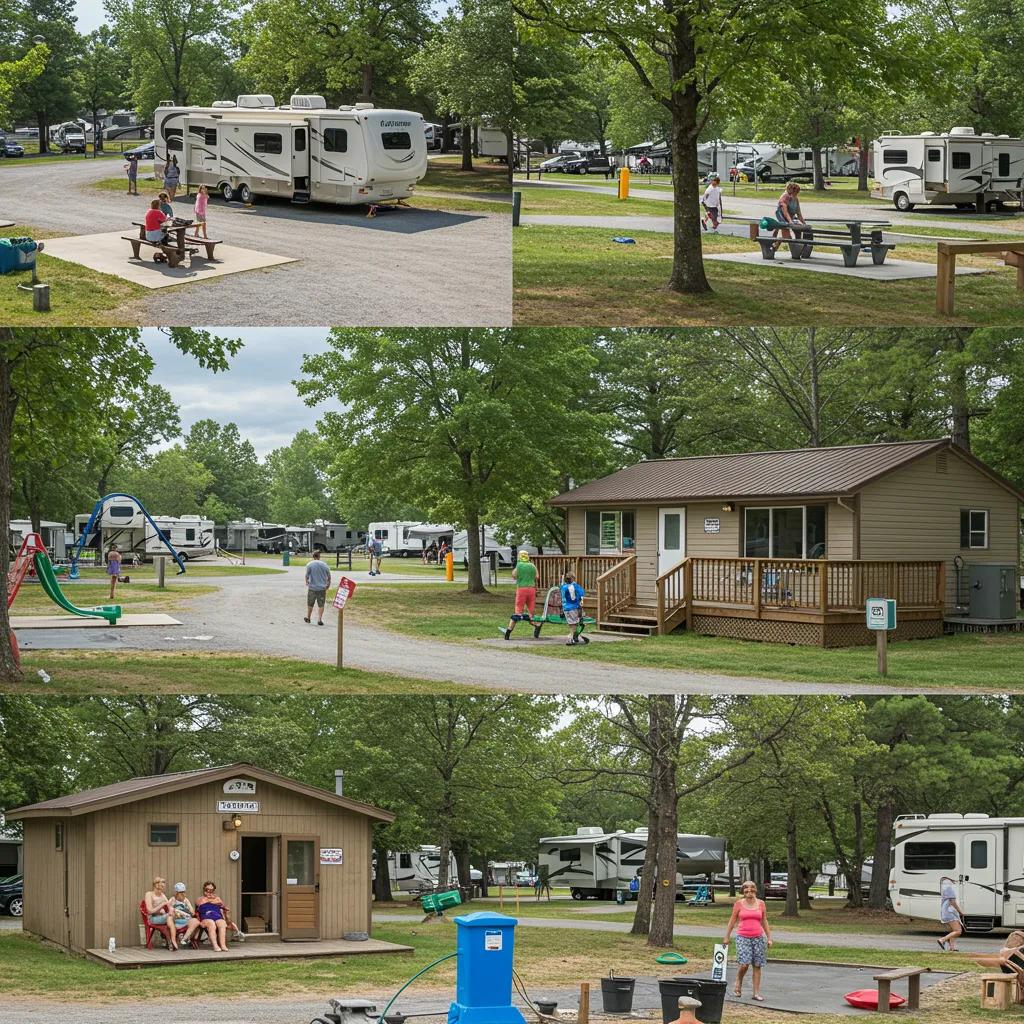
Campground value hinges on location, infrastructure and amenities, occupancy and revenue diversity, regulatory environment, and property condition; together these determine buyer interest and cap-rate selection. Location and access drive baseline demand—proximity to highways, attractions, and population centers increases booking potential and per-site value. Infrastructure such as full hookups, reliable sewer and water, and strong electrical capacity reduces buyer capex and raises perceived value. Amenities that diversify revenue—store, event spaces, glamping units, high-speed Wi-Fi and EV charging—expand target markets and can justify higher prices. Regulatory clarity and compliant permits lower transaction risk, while deferred maintenance increases immediate capex needs and depresses offers. Agents weigh these factors qualitatively and quantitatively to adjust NOI projections and comparables.
Key site and amenity impacts are often compared to prioritize seller improvements, summarized in the table below to show relative influence.
This comparison helps sellers focus on improvements and documentation that produce the largest value uplift for potential buyers.
After considering these factors, many owners prefer a simplified selling route to avoid broker listing complexity. A direct buyer who evaluates the same core factors—location, amenities, occupancy, zoning, and condition—can offer a streamlined alternative to a brokered sale. GatherGrounds Resorts, for example, evaluates parks with an emphasis on preservation of character and prefers properties with large site counts, and this direct-buyer route can reduce listing friction for owners seeking a thoughtful transition.
How Does Location and Accessibility Impact Campground Value?
Location determines the demand curve for campsite nights and the seasonal profile of revenue; proximity to major roads, state parks, lakes, or tourist nodes typically increases occupancy and per-site pricing. Accessibility also shapes the target demographic—weekend travelers, families, or RV full-timers—and affects marketing reach and booking windows. Waterfront or scenic properties often command substantial premiums compared with inland or remote sites because demand is less elastic and occupancy is more stable. Seasonality linked to climate or regional tourism patterns requires agents to normalize multi-year revenue streams to estimate sustainable NOI. Understanding location-driven demand helps sellers and agents forecast revenue and select the most appropriate valuation approach.
What Amenities and Infrastructure Increase Campground Worth?
Physical infrastructure—reliable water, sewer, electric hookups, and sufficient site spacing—forms the base expectation for most buyers and directly impacts operating costs and revenue. High-value amenities include modern bathhouses, full hook-ups, glamping units, heated pools, high-speed Wi-Fi, and EV charging; these features allow higher nightly rates and attract broader demographics. Upgrades that improve guest experience often translate into higher occupancy and ancillary sales, increasing normalized NOI and lowering perceived risk. Buyers also value documented capacity for future expansion; robust utility infrastructure that supports additional sites or units enhances both current and prospective valuation. Prioritizing infrastructure and select amenity investments can deliver measurable returns in sale price.
How Do Emerging Amenities Like Glamping and High-Speed Wi-Fi Affect Value?
Emerging amenities such as glamping pods and robust internet access materially affect per-site revenue and appeal to newer camper cohorts seeking comfort and connectivity. Glamping typically yields higher average daily rates and longer stays, while high-speed Wi-Fi enables remote-worker stays and extended seasonal occupancy, stabilizing revenue. Buyers model these amenities into projected NOI by estimating incremental occupancy and rate uplift, then applying conservative adoption curves to avoid over-optimistic forecasts. Capital and operating costs must be weighed—glamping units have upfront costs and maintenance, while Wi-Fi improvements require ongoing bandwidth and support—but carefully deployed modern amenities often generate a favorable return on investment and broaden buyer pools.
Why Are Occupancy Rates and Revenue Streams Critical to Valuation?
Occupancy rate is the principal driver of gross revenue for campgrounds; it determines how rate structure translates into annual income and the stability of cash flows used in NOI calculations. Seasonal variability requires averaging over multiple years and excluding anomalous spikes or dips to present a normalized revenue profile. Ancillary revenue—store sales, equipment rentals, event fees, and long-stay contracts—diversifies income and reduces exposure to nightly rate volatility, increasing buyer confidence. Agents analyze occupancy curves by season, site type, and channel to forecast sustainable income and to stress-test assumptions for buyer presentations. Clear multi-year records of occupancy and ancillary sales allow more precise valuation and reduce discounting for uncertainty.
How Do Zoning, Permits, and Regulations Influence Campground Appraisals?
Zoning and permits dictate allowable uses, expansion potential, and the ease of obtaining environmental or infrastructure approvals—all of which affect future upside and transaction risk. Properties with clear, transferable permits for septic, shoreland construction, or event hosting are more attractive because they lower contingency costs and expedite post-sale plans. Conversely, restrictive zoning or ambiguous compliance histories increase due-diligence costs and can force buyers to apply larger cap-rate discounts. Agents recommend sellers compile permit histories, environmental studies, and municipal correspondence to demonstrate regulatory clarity; doing so reduces perceived risk and supports higher valuations. Regulatory certainty converts to lower required returns from buyers and therefore higher market value.
What Is the Effect of Property Condition and Maintenance on Value?
Deferred maintenance surfaces as immediate buyer capex and directly reduces offers or raises conditions placed on closing, because buyers internalize repair timelines and budgets into their valuations. Typical deferred items include road resurfacing, bathhouse upgrades, electrical panel replacements, and septic or well remediation—each with distinct cost and time implications. Sellers face a decision framework: repair pre-sale if the expected uplift exceeds the cost and time, or adjust price downward and disclose issues transparently to avoid surprises during buyer due diligence. Well-documented maintenance schedules, recent capital improvements, and realistic reserve planning increase buyer confidence and often yield better offers with fewer contingencies.
How Do Real Estate Agents and Brokers Determine Campground Property Value?
Agents and brokers follow a repeatable workflow: collect multi-year financials and operational records, normalize income and expenses to calculate NOI, search and adjust comparables, select an appropriate cap rate, and reconcile income, sales-comparison, and cost approaches into a final opinion of value. They also perform market analysis to account for interest-rate environment, demographic demand, and local tourism trends that affect buyer pools. Brokers prepare offering memoranda that present adjusted NOI, cap-rate rationale, and scenario analyses to show sensitivity to occupancy and rate changes. This structured process creates transparency for both buyer and seller and frames negotiation around documented assumptions.
What Financial Documents Are Essential for Accurate Campground Appraisals?
Accurate appraisals require at minimum 3 to 5 years of financial history including profit & loss statements, tax returns, occupancy and reservation records, utility bills, payroll summaries, and capital expenditure histories. These documents let agents separate operating performance from owner-specific perks and identify non-recurring items that distort NOI. A clear checklist and organized files speed appraisal and reduce time spent on requests during due diligence. Agents frequently ask sellers to reconcile records and provide explanations for large variances; this diligence increases appraisal credibility and narrows valuation gaps between parties.
Providing these records in an organized format reduces friction in appraisal and supports stronger offers.
How Do Agents Adjust Valuations Based on Market Trends and Financial Performance?
Agents implement scenario analysis to reflect market trend drivers such as interest-rate shifts, occupancy normalization after anomalous years, and inflationary expense pressure. They stress-test the income approach by applying different cap-rate scenarios and occupancy-rate sensitivities to show upside and downside valuations. Market comparables are adjusted for temporal differences and for changes in supply/demand dynamics, and agents document the rationale behind each adjustment to maintain defensibility. Transparent scenario modeling helps both sellers and buyers evaluate risk and identify negotiation levers beyond headline price.
How Can Campground Owners Prepare Their Property for a Profitable Sale?
Preparation centers on financial cleanup, targeted capital improvements, strong marketing presentation, and a decision framework for choosing between a broker or a direct buyer. Financial cleanup includes reconciling books, separating personal or related-party expenses, and compiling multi-year occupancy and ancillary revenue records. Cost-effective property improvements—landscaping, signage, bathhouse refreshes, and clarifying site layouts—often yield outsized value increases relative to investment. High-quality photography and staged listings that highlight key amenities and guest experience raise buyer interest and perceived value. Finally, owners should weigh time-to-close and legacy priorities when deciding whether to list with a broker or consider direct-buyer offers.
What Financial Preparation Steps Maximize Campground Value?
Owners should normalize income and expenses, remove or clearly document owner benefits (free rent, family payroll), and reconcile bank and accounting records to present a clean, repeatable NOI. Preparing a capex log and reserve analysis clarifies future investment needs for buyers and reduces surprise adjustments in underwriting. Quick wins include digitizing reservation histories, separating ancillary revenue streams in P&L categories, and addressing obvious accounting misclassifications. Where needed, a professional accounting review can create buyer-trusted statements that reduce discounts taken for uncertainty and accelerate closing.
How Can Enhancing Property Appeal Improve Sale Price?
Targeted, cost-effective improvements often yield measurable sale-price uplift by improving first impressions and guest satisfaction metrics. Examples include resurfacing visible roads, refreshing bathhouses, adding clear signage, delineating campsites, and selective landscaping to enhance curb appeal. Sellers should prioritize items that directly affect nightly rate or occupancy—like upgraded hookups or bathhouse cleanliness—over cosmetic projects with lower ROI. Professional photography and guest-experience narratives in marketing materials translate physical improvements into perceived higher value for buyers and negotiators.
Owners preparing to sell can also consider a direct valuation option in parallel with listing. GatherGrounds Resorts offers a no-obligation valuation and a friendly consultative walkthrough of documents as an alternative to a brokered listing. This direct-buyer route can be suitable for owners seeking a thoughtful transition and a simplified process, and it allows comparison of offers to determine the best path forward.
When Should Owners Consider Working with a Campground Broker or Buyer?
Choice depends on timing, price expectations, and legacy concerns: owners seeking maximum market price and broad exposure often list with a broker, while those needing a faster close, simpler negotiations, or an assured transition may prefer a direct buyer. Brokers can access wider buyer pools and competitive tension, which may push prices higher but typically involve commissions and longer marketing periods. Direct buyers can present simpler terms and direct owner-to-owner conversations that prioritize continuity and character preservation. Owners should evaluate offers not only on price but on terms, timeline, transition plans, and post-sale intentions to choose the best fit.
What Are the Current Campground Real Estate Market Trends Affecting Valuation in 2025?
The 2025 market reflects a post-pandemic normalization with interest-rate sensitivity, shifting cap-rate expectations, and changing demand driven by demographics and remote-work trends. Higher interest rates in recent cycles have increased borrowing costs and widened cap rates in many markets, putting downward pressure on valuations where financing is necessary. Yet sustained demand from younger demographics and remote workers supports longer stays and ancillary revenue growth, particularly where campgrounds have invested in connectivity and comfort-focused amenities. Agents blend these forces into valuation scenarios to set realistic expectations and to identify investments that most effectively increase NOI and buyer interest.
How Are Interest Rates Impacting Campground Sales and Valuations?
Rising interest rates increase the cost of acquisition financing and can push cap rates higher as buyers demand greater returns, which directly reduces valuations when using income-capitalization formulas. Agents often model valuation sensitivity by showing how a 50–100 basis point cap-rate shift affects price for a given NOI. Sellers can mitigate rate-driven pressure by demonstrating strong occupancy trends, diversified ancillary revenue, or offering seller financing structures where feasible. Clear presentation of stable, normalized NOI helps counteract market rate impacts by reducing perceived risk and supporting lower cap rates.
What Camper Demographics and Preferences Are Shaping Demand?
Millennials and Gen Z campers prioritize experience, convenience, and connectivity—favoring glamping options, on-site activities, and reliable Wi-Fi—while older RV owners emphasize full hookups and long-stay comforts. Remote workers drive extended-stay demand and willingness to pay for connectivity and workspace amenities, changing average length-of-stay metrics. These demographic shifts affect which amenities produce the highest ROI and which buyer pools (institutional vs. private) are most interested. Owners and agents who align amenity investments with these preferences can position a property to capture higher per-site revenues and varied buyer interest.
How Are Remote Work and Extended-Stay Trends Influencing Campground Value?
Remote work increases demand for month-to-month stays and off-season bookings, smoothing occupancy curves and enhancing NOI predictability in many markets. Operators can monetize this trend with monthly rate structures, workspace amenities, and marketing that targets remote workers seeking nature-adjacent living. Buyers incorporate extended-stay projections conservatively into NOI to avoid overstatement, but demonstrated adoption and multi-year trends can materially improve valuation. Infrastructure that supports longer stays—reliable internet, comfortable units, and laundry facilities—becomes a tangible value driver in underwriting assumptions.
What Emerging Amenities Are Driving Market Value Increases?
In 2025, high-impact amenities include glamping units, robust high-speed Wi-Fi, EV charging, upgraded bathhouses, and curated guest activities; these features generate higher ADRs (average daily rates) and attract less price-sensitive segments. Prioritizing amenities that align with target demographics and operational capabilities produces the best ROI—for instance, modest glamping inventory can deliver outsized per-site revenue with limited footprint. Agents advise prioritizing scalable amenities that diversify income without imposing disproportionate operational complexity. Sellers should document performance metrics from amenity pilots to justify projected NOI uplifts to buyers.
Why Is Selling Your Campground to GatherGrounds Resorts a Unique Opportunity?
GatherGrounds Resorts presents a direct-buyer option grounded in family ownership and a mission of thoughtful transitions that emphasize preservation of a park’s character and legacy. As a family-owned campground management and ownership group focused on acquiring and operating campgrounds and RV parks primarily in upper Midwest states, GatherGrounds positions itself as an alternative to brokered listings and corporate chain acquisitions. The company prefers parks with larger site counts, typically focusing on properties with over 130 sites, and emphasizes direct seller interaction so owners negotiate with decision-makers rather than intermediaries. For sellers prioritizing a respectful handoff and continuity for guests and staff, this approach offers a distinct path in the market.
How Does GatherGrounds Ensure a Thoughtful and Respectful Transition?
GatherGrounds describes its acquisition process as centered on thoughtful transition planning that respects owner legacy and park character, engaging directly with sellers to understand the property’s story and community role. This emphasis on continuity commonly includes collaborative planning around onboarding and maintaining community-facing features that define a campground’s identity. While specific operational steps vary by park, the underlying rationale is that preserving character supports long-term guest loyalty and aligns with the company’s stewardship-focused acquisition philosophy. Sellers who value a structured, respectful transfer of ownership can expect direct dialogue with GatherGrounds to explore transition details.
What Makes GatherGrounds’ Family-Owned Approach Different from Brokers and Corporate Buyers?
A family-owned buyer often signals simpler decision-making processes and a personal stake in preserving the park’s community and features, which differs from the layered approvals typical of corporate chains or the market-exposure approach of brokers. Direct buyer transactions with family-owned groups can reduce negotiation complexity and offer owners clearer communication with acquiring parties. This model may appeal to owners who want to ensure the property’s character is maintained and who prefer hands-on interactions with new operators. Sellers should weigh these qualitative benefits alongside price and terms when considering offers.
How Does GatherGrounds Preserve the Character and Legacy of Acquired Campgrounds?
GatherGrounds emphasizes preservation of character as a stated acquisition priority, aiming to honor the features and community aspects that made a park valuable to its guests and staff. Preservation activities can include maintaining signature physical features, retaining community-oriented programming, and working with sellers on transition details to protect legacy elements. Direct engagement between seller and buyer allows for tailored transition planning that reflects the park’s history and local expectations. For many owners, this focus on continuity is a core reason to consider a direct sale to a family-owned operator.
What Are the Steps to Get a Fair Campground Valuation and Start the Selling Process?
A clear, stepwise process helps owners obtain reliable valuations: compile multi-year financials, calculate and normalize NOI, gather occupancy and permit documentation, run comparable-sales and income models, then request a valuation and review offers. Being proactive with documentation and minor repairs shortens due diligence timelines and supports stronger offers. Sellers should compare multiple valuation scenarios and consider both brokered listings and direct-buyer offers to evaluate trade-offs in price, timing, and transition terms. The steps below give a concise roadmap to begin the process and to prepare for realistic buyer conversations.
- Compile documents: P&L, tax returns, occupancy logs, utility bills, payroll, and capex history.
- Normalize NOI: adjust for non-recurring items and owner perks to present repeatable cash flow.
- Run methods: apply income, sales-comparison, and cost approaches to triangulate value.
- Request valuation: solicit offers from brokers and direct buyers to compare terms and timelines.
- Conduct due diligence: prepare for site visits, permits review, and negotiation of terms.
How Can Owners Request a No-Obligation Valuation from GatherGrounds Resorts?
To request a no-obligation valuation from GatherGrounds Resorts, sellers should prepare a concise initial inquiry that includes property name, approximate site count, high-level revenue figures, and location context; attaching a recent P&L and occupancy summary helps expedite review. GatherGrounds maintains a sell-your-campground contact path for owners interested in exploring direct sale options and values direct interaction with owners and operators during the initial discussion. Expect an initial review of documents followed by clarifying questions; this early engagement helps both parties identify fit before committing to site visits or formal offers. Clear, organized submissions speed the valuation process and set expectations for next steps.
What Information and Documents Should Sellers Provide for Accurate Appraisals?
Sellers should assemble the essential documents listed earlier—3–5 years of P&Ls and tax returns, occupancy/reservation reports, utility bills, payroll summaries, and capex histories—along with permit records and any environmental or municipal correspondence. Organizing files and providing a one-page executive summary of operations and recent improvements helps underwriters and buyers quickly grasp key value drivers. Normalizing documents to show repeatable income and clearly documenting related-party transactions prevents misinterpretation during review. Well-prepared documentation reduces the need for extensive follow-up and increases buyer confidence in valuation.
What Should Sellers Expect During the Valuation and Acquisition Process?
Typical milestones include an initial inquiry and document review, desktop valuation and indicative offer, site visit and due diligence, firm offer and negotiation, and closing with required contingencies satisfied. Timelines vary with complexity, but transparent documentation and timely responses to requests shorten the process; typical due diligence covers inspections, title review, permit verification, and financial reconciliation. Sellers should anticipate reasonable contingencies related to environmental or permitting issues and plan for negotiation on transition terms such as staff retention or phased handover. Open communication and realistic expectations foster smoother transactions and reduce last-minute renegotiations.
The valuation process is fundamentally a structured translation of operational performance and physical attributes into monetary terms, and owners who prepare documentation, prioritize impactful improvements, and consider both brokered and direct-buyer options are best positioned to achieve fair, efficient sales outcomes.
Frequently Asked Questions
What are the benefits of using the income approach for campground valuation?
The income approach is particularly beneficial for campgrounds with stable revenue streams, as it translates operational performance into market value. By calculating the Net Operating Income (NOI) and applying a capitalization rate, sellers can derive a clear estimate of their property’s worth based on its income-generating potential. This method is favored by buyers looking for investment opportunities, as it provides a straightforward assessment of expected returns. Additionally, it helps sellers understand how their operational efficiency impacts overall value, guiding them in making strategic improvements.
How can campground owners enhance their property’s appeal before selling?
Enhancing a campground’s appeal can significantly impact its sale price. Owners should focus on cost-effective improvements that boost first impressions and guest satisfaction, such as landscaping, signage, and upgrading facilities like bathhouses. Additionally, ensuring that amenities are well-maintained and that the property is clean and organized can attract more buyers. Professional photography and marketing materials that highlight unique features and guest experiences can also elevate perceived value. By prioritizing these enhancements, sellers can create a more attractive offering that resonates with potential buyers.
What role does seasonality play in campground valuation?
Seasonality is a critical factor in campground valuation, as it affects occupancy rates and revenue streams throughout the year. Campgrounds in tourist-heavy areas may experience peak seasons that significantly boost income, while off-peak periods can lead to lower occupancy and revenue. Agents often normalize income over multiple years to account for these fluctuations, providing a clearer picture of sustainable NOI. Understanding seasonal trends helps sellers and buyers forecast revenue accurately and select appropriate valuation methods, ensuring that the campground’s value reflects its true earning potential.
How do zoning and regulatory factors impact campground sales?
Zoning and regulatory factors play a significant role in campground sales, as they dictate what activities are permissible on the property and influence future development potential. Properties with clear zoning designations and transferable permits are generally more attractive to buyers, as they reduce uncertainty and potential costs associated with compliance. Conversely, ambiguous zoning or restrictive regulations can deter buyers and necessitate larger cap-rate discounts. Sellers should compile documentation related to zoning and permits to demonstrate regulatory clarity, which can enhance marketability and support higher valuations.
What should sellers expect during the due diligence process?
During the due diligence process, sellers can expect a thorough review of financial records, property conditions, and compliance with regulations. Buyers will typically request access to multi-year financial statements, occupancy reports, and maintenance records to assess the campground’s performance and potential risks. Site visits may also be conducted to evaluate physical conditions and amenities. Sellers should be prepared to address any concerns that arise and provide clear documentation to facilitate a smooth process. Open communication and transparency can help build trust and expedite negotiations.
How can campground owners effectively market their property for sale?
Effective marketing of a campground involves showcasing its unique features and potential to attract buyers. Owners should create high-quality listings that include professional photographs, detailed descriptions of amenities, and highlights of the campground’s location and community engagement. Utilizing online platforms, social media, and targeted advertising can broaden reach and attract diverse buyer pools. Additionally, providing a clear narrative about the campground’s history and legacy can resonate with potential buyers looking for a meaningful investment. Engaging a real estate agent with experience in campground sales can also enhance marketing efforts.
What are the advantages of selling to a direct buyer like GatherGrounds Resorts?
Selling to a direct buyer like GatherGrounds Resorts offers several advantages, including a streamlined process and a focus on preserving the campground’s character and legacy. Direct buyers often provide simpler terms and quicker closings compared to traditional brokered sales, reducing the complexity and time involved in the transaction. Additionally, GatherGrounds emphasizes respectful transitions, ensuring that the unique aspects of the campground are maintained. This approach can be particularly appealing to sellers who prioritize continuity for their guests and staff, making it a thoughtful alternative to corporate acquisitions.
Conclusion
Understanding the key factors and valuation methods for campground properties empowers owners to make informed decisions that enhance their selling potential. By leveraging insights on income, comparables, and property condition, sellers can position their campgrounds for optimal market value. Engaging with GatherGrounds Resorts offers a unique opportunity for a respectful and thoughtful transition, ensuring the legacy of your property is preserved. Start your journey towards a successful sale by reaching out for a no-obligation valuation today.