

Campground Brokers vs. Traditional Real Estate Agents: Key Differences for Selling Your Campground
Many campground owners face a pivotal choice when preparing to sell: list with a traditional real estate agent, engage a specialized campground broker, or pursue a direct sale to a buyer. This article explains those three seller pathways, why they differ, and how commission structures, time-to-close, buyer qualification, and legacy preservation influence the right decision for your property. You will learn what agents typically provide, where specialized brokers add measurable value, and when a direct buyer can be the fastest, most confidential route to a sale. The guide maps valuation drivers such as NOI and cap rate, practical preparation steps to maximize proceeds, and current 2025 market trends that shape buyer appetite. Finally, we outline how a direct acquisition process works and when a no-obligation conversation about a direct purchase may be the best next step for owners seeking a streamlined exit strategy.
What Does a Traditional Real Estate Agent Offer When Selling a Campground?
A traditional real estate agent provides listing, marketing, and negotiation services that apply broadly across residential and some commercial property types, delivering broad market exposure through standard listing channels and buyer outreach. Agents use multiple listing systems and general advertising to attract a wide audience, which can increase exposure but may not target specialized campground investors. The specific benefit is access to local buyer pools and familiarity with general sale mechanics, which helps sellers who need a simple, open-market process. Understanding these baseline services clarifies why some owners prefer specialized brokers or direct buyers for complex campground assets.
How Do Real Estate Agents Handle Commercial Campground Sales?
Real estate agents handling commercial campground listings typically adapt residential workflows to the commercial context by preparing disclosures, coordinating showings, and liaising with legal and lending professionals, but they may lack specialized campground networks.
This approach works for sellers prioritizing broad exposure, yet it can yield longer time-to-close because agents often must identify and educate prospective buyers unfamiliar with campground operations. Those timing and buyer-qualification gaps lead many owners to consider more specialized alternatives.
What Are the Typical Commission Structures and Fees for Real Estate Agents?
Agents typically charge a percentage commission on sale proceeds, often structured as a negotiable rate paid from seller proceeds and sometimes shared with cooperating brokers; for commercial assets the percentages vary and can include additional marketing or transaction fees. Typical commission scenarios for larger, non-institutional properties often range from mid-single digits to low double digits as a percentage of sale price, and sellers should budget for transaction-related costs that reduce net proceeds.
Commission math directly affects the seller’s final cash at closing: deducting a commission from gross proceeds lowers the available capital for owners exiting the business. Understanding these fee dynamics helps owners compare net outcomes across sale pathways.
This table clarifies where fees commonly appear in agent-driven sales and why sellers calculate commissions when comparing options.
What Are the Limitations of Using General Real Estate Agents for Campgrounds?
General agents often lack industry-specific networks, campground valuation experience, and operational nuance, which can lead to mispricing or marketing to ill-suited buyer types and longer sale timelines. Because campgrounds and RV parks involve unique revenue streams, permits, and seasonal occupancy dynamics, inexperienced agents can underrepresent NOI drivers and amenities that add value. Sellers may therefore face multiple rounds of buyer education, increased due diligence friction, and offers from buyers without operational intent. Recognizing these limitations helps owners decide whether a specialized broker or direct buyer will better preserve value and reduce time-to-close.
What Are the Benefits of Using a Specialized Campground Broker?
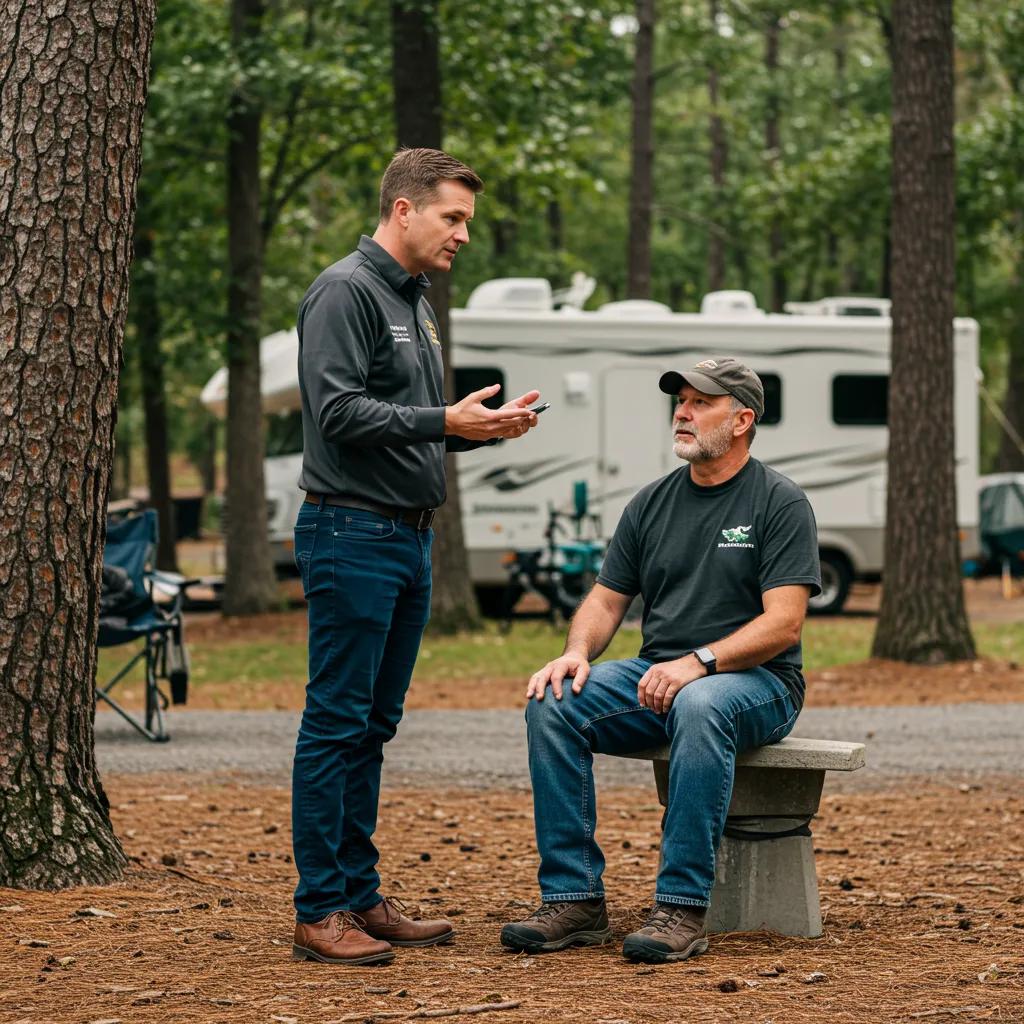
A specialized campground broker brings targeted market knowledge, valuation methods tailored to campgrounds, and a curated network of qualified investors and operators that improve the likelihood of a timely, price-accurate sale. Brokers focused on RV parks and campgrounds understand how NOI, site mix, amenities, and permit status affect cap rate assumptions and buyer interest. This specialization translates into more precise pricing, targeted marketing to strategic buyers, and transaction support that anticipates campground-specific due diligence.
Sellers who want price maximization and competitive buyer bidding often find specialized brokers deliver measurable advantages.
How Do Campground Brokers Differ from Traditional Agents?
Campground brokers are hyponyms of real estate professionals who concentrate on outdoor hospitality and RV park assets, using industry-specific valuation tools and buyer networks distinct from general agents. They assess NOI, occupancy trends, and site-count implications to set pricing and employ marketing channels that reach experienced campground operators and institutional buyers. Brokers also pre-qualify prospects to reduce unproductive showings and focus on buyers who understand permit and utility issues.
This specialization shortens time-to-close for seller-ready properties and often results in better-aligned offers.
This specialization mirrors how intermediaries function in other niche tourism markets.
Specialized Brokers in Tourism: The Role of Intermediaries
In the tourism sector, there are wholesalers, who are tour operators, and retailers, who are travel agents. Specialized brokers are also present in the tourism sector. These agents act as intermediaries between buyers and sellers, facilitating transactions and providing expertise in specific markets.
Traditional and modern tour operators in agritourism, J Uglis, 2017
What Common Brokerage Agreements and Exclusivity Terms?
Brokerage agreements for specialized brokers commonly include exclusivity clauses, defined listing durations, and negotiated commission rates tied to sale milestones, and sellers should closely review termination and marketing expense clauses. Typical exclusivity periods can vary, and agreements often specify responsibilities for confidentiality and buyer qualification.
Sellers can negotiate caps on marketing fees or sunset clauses that protect them if the broker fails to perform. Watching for these contract elements lets owners preserve flexibility while leveraging broker expertise.
This table highlights the practical attributes sellers should evaluate when reviewing brokerage agreements.
How Do Broker Commissions Compare to Agent Fees?
Specialized broker commissions are often similar in structure to agent fees but can be justified by higher valuation accuracy and access to qualified buyers, impacting net proceeds versus potential sale price uplift. While brokers may charge comparable percentage rates, their ability to secure competitive offers from industry buyers can offset commissions through higher sale prices or faster closings. Sellers should run example calculations comparing net proceeds after commissions under both general agent and specialized broker scenarios. These comparisons help determine whether the broker’s specialized market access translates into a superior financial outcome.
After reviewing broker benefits and limits, some owners prefer an alternative: a direct sale to a buyer who offers a streamlined, commission-free process. GatherGrounds Resorts offers a Campground Acquisition Service that acts as a direct buyer, positioning itself as a family-owned operator focused on preserving property legacy while investing in modernization. For owners seeking to avoid commissions and pursue a confidential, faster transition, a direct acquisition presents a distinct option worth comparing to traditional brokered strategies.
Why Choose GatherGrounds’ Direct Acquisition Model Over Brokers and Agents?
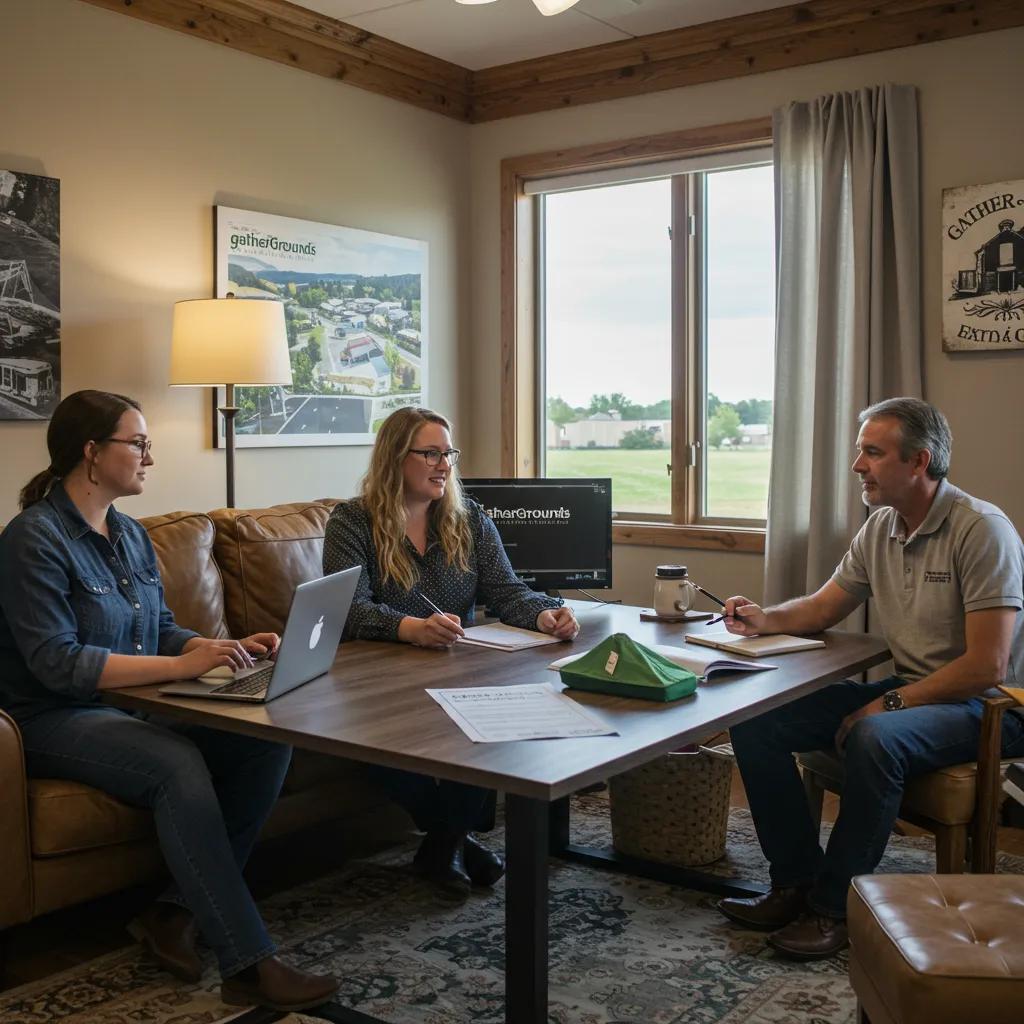
GatherGrounds’ direct acquisition model is a direct-buyer pathway that reduces transaction layers by purchasing campgrounds outright, offering owners a commission-free alternative focused on thoughtful transitions and legacy preservation. The mechanism is straightforward: GatherGrounds evaluates properties, makes an offer, and plans a transition that preserves community identity while investing in modernization where appropriate. This yields benefits such as reduced fees, faster closing timelines, and confidentiality, which matter to owners prioritizing legacy and minimal operational disruption. Understanding this model clarifies when a direct sale can meet seller objectives more efficiently than listing.
What Makes GatherGrounds a Unique Buyer for Campgrounds and RV Parks?
GatherGrounds Resorts is a family-owned buyer that emphasizes preserving legacy and family values while modernizing amenities and guest experiences, creating continuity for staff and loyal guests. This buyer profile aligns with owners who value cultural and operational continuity and who prefer a purchaser that will steward the property identity rather than rebrand it. GatherGrounds focuses on properties with 130+ sites and operating assets in the upper Midwest states, matching buyers and sellers where scale and regional focus generate operational synergies. That combination of family ownership and operational intent differentiates the direct acquisition model from anonymous institutional buyers.
How Does the GatherGrounds Streamlined Sale Process Work?
The GatherGrounds sale process begins with a no-obligation conversation, followed by a confidential evaluation of financials, site count, and permits, and culminates in a direct offer and transition plan that aims to reduce friction and close efficiently.
Typical steps include an initial information review, site visit or virtual assessment, offer formulation based on NOI and site characteristics, and coordinated closing with transition planning for staff and guest communications. GatherGrounds emphasizes confidentiality and a thoughtful transition to maintain legacy while implementing modernization investments. Sellers who prioritize a streamlined, commission-free path often find this direct process reduces complexity and timeline.
What Types of Campgrounds Does GatherGrounds Prefer to Acquire?
GatherGrounds prefers campgrounds and RV parks with 130+ sites located in the upper Midwest states and seeks properties with operational stability, permit clarity, and potential for amenity upgrades that drive guest satisfaction and revenue growth. The preference for larger site counts reflects the buyer’s operational model and ability to invest in modernization at scale, which supports improved NOI and long-term returns. Sellers with properties meeting these criteria can expect offers that account for both current performance and planned capital improvements. Understanding these acquisition thresholds helps owners quickly determine if a direct sale is a viable path.
How Can You Maximize Your Campground’s Value Before Selling?
Maximizing a campground’s sale value requires focusing on net operating income (NOI), improving amenities and occupancy, and preparing clear financial and operational documentation that buyers can trust. NOI determines valuation through cap rate application: NOI → determines → valuation when buyers apply market cap rates to projected net income. Addressing deferred maintenance, streamlining permit documentation, and showcasing reliable guest data all reduce buyer perceived risk and increase offers. This preparation not only raises potential sale price, it shortens due diligence and improves buyer confidence.
What Key Factors Influence Campground Valuation?
Valuation drivers include NOI, cap rate, site count, occupancy trends, and amenity mix; together these factors shape investor assumptions about future cash flow and risk. NOI is calculated as revenue minus operating expenses and forms the numerator when applying a cap rate to estimate price. Cap rates in the current 2025 market commonly range in a band that reflects market demand and property risk, meaning higher NOI or lower perceived risk typically yields higher value. Amenities that diversify revenue—such as hookups, cabins, or year-round features—also increase valuation by boosting occupancy and per-site income.
This table summarizes how operational components feed into valuation and why preparing each driver matters.
How Should You Prepare Your Campground for a Successful Sale?
Preparation includes organizing historical financials, occupancy and guest data, maintenance records, and permit documentation; cleaning up deferred maintenance and presenting a prioritized capital plan increases buyer confidence.
Sellers should compile at least three years of financial statements, itemize revenue streams, and create a concise data room for buyer review.
Addressing obvious repairs and clarifying permit or environmental questions before listing or contacting buyers reduces contingencies and supports stronger offers.
Owners preparing these materials often find shorter due diligence periods and smoother closings.
After owners implement general preparation steps, direct buyers like GatherGrounds incorporate those documents into their evaluation, using organized financials and maintenance records to speed offer formulation and reduce the need for protracted due diligence.
What Are the Common Seller Concerns When Choosing Between Brokers, Agents, and Direct Buyers?
Sellers commonly worry about commissions and fees, avoiding unqualified buyers, sale timelines, and preserving the property’s legacy and community identity through transition. Each pathway addresses these concerns differently: agents broaden exposure but incur commissions, specialized brokers add targeted networks at a fee, and direct buyers offer speed and confidentiality but may trade off competitive bidding. Understanding these trade-offs enables sellers to match their priorities—financial optimization, speed, or legacy—with the sale method that best meets their objectives. The rest of this section explores calculations and practical vetting steps owners can use.
How Do Commissions and Fees Impact Your Net Sale Proceeds?
Commissions reduce net proceeds directly as percentage-based costs deducted from gross sale price, and the difference between paying a commission and pursuing a commission-free direct sale can be material depending on sale price and commission rate. For example, a 6% commission on a large campground sale can equal hundreds of thousands of dollars, which underlines why owners run net-proceeds scenarios. Comparing hypothetical offers after fees—listing with an agent versus a direct purchase—helps quantify the trade-off between potential higher gross price from competitive listings and lower net proceeds after commissions. Sellers should model both pathways to make an informed choice.
How Can You Avoid Unqualified Buyers and Lengthy Sale Processes?
Avoiding unqualified buyers requires pre-qualification steps such as proof of funds, buyer experience verification, and limiting marketing to vetted networks or using confidentiality provisions to control information flow. Sellers can require NDAs before sharing sensitive data and request prequalification letters or LOIs that confirm buyer intent. Setting clear timelines and using exclusivity clauses with performance benchmarks helps prevent endless marketing without results. Applying these vetting and contractual tools reduces the risk of wasted time and ensures buyers engage in good-faith negotiations.
How Important Is Preserving Your Campground’s Legacy and Identity?
Preserving legacy and identity is often crucial to owners and local communities, affecting decisions about buyer selection and transition terms; buyers can commit to stewardship measures such as staff retention, name preservation, or phased modernization to honor that legacy. Sellers valuing legacy should prioritize buyers with compatible philosophies, such as family-owned operators, and include preservation expectations in negotiations. Those commitments can be as important as financial terms for many owners.
What Are the Current Market Trends Affecting Campground and RV Park Sales?
Current 2025 market conditions show sustained institutional interest in outdoor hospitality and RV parks, with cap rate ranges and demand dynamics reflecting risk, regional trends, and property scale. Institutional investors often seek scale and stabilized assets, while private buyers and operators pursue operational upside through modernization and amenity investments. Market cap rates, buyer competition, and guest demand all influence timing and expected sale prices, making 2025 a moment where sellers can benefit from informed positioning and preparation. The sections below unpack cap rates, institutional roles, and industry growth.
How Are Cap Rates and Market Demand Shaping Sales in 2025?
Cap rates in 2025 for RV parks and campgrounds typically reflect investor perceptions of cash-flow stability and market risk; current ranges suggest a band where higher-quality, stabilized assets can command lower cap rates while riskier properties trade at higher rates. NOI → divided by → cap rate produces valuation estimates, so small improvements in NOI or perceived risk reduction can meaningfully affect price. Market demand, including guest trends and regional tourism growth, shortens timelines for desirable properties and increases competitive bidding, which can improve seller outcomes if the property is well-prepared.
What Role Do Institutional Investors Play in the Campground Market?
Institutional investors bring capital and a preference for scale, often targeting stabilized parks or portfolios with potential for professionalized management and upgrades; their activity increases overall demand and can push valuations for larger properties. Institutions favor roll-up or operational efficiency strategies and typically pursue assets with reliable NOI and growth potential. For local owners, institutional interest can create bidding competition or strategic sale options, but it may also change buyer expectations around documentation, reporting, and standardized operations. Knowing institutional patterns helps sellers position properties to attract the right buyer type.
How Is the Outdoor Hospitality Industry Growing and Evolving?
The outdoor hospitality sector is evolving with guest preferences toward upgraded amenities, digital reservation systems, and diversified accommodations, driving revenue-per-site improvements and operational complexity for owners and buyers. Industry growth metrics indicate steady demand increases that reward investments in guest experience and infrastructure. Sellers who modernize facilities and demonstrate adoption of contemporary management systems often see better offers. These industry shifts mean valuation drivers now include not only site count and NOI but also technology adoption and amenity competitiveness.
Frequently Asked Questions
What Should I Consider When Choosing Between a Broker and a Direct Buyer?
When deciding between a broker and a direct buyer, consider your priorities such as speed, confidentiality, and financial outcomes. Brokers can provide broader market exposure and potentially higher sale prices through competitive bidding, but they come with commission fees. In contrast, direct buyers like GatherGrounds offer a streamlined, commission-free process that focuses on preserving your campground’s legacy. Assess your goals, the complexity of your property, and how quickly you want to sell to make the best choice.
How Can I Prepare My Campground for a Direct Sale?
Preparing your campground for a direct sale involves organizing financial records, maintenance documentation, and occupancy data. Address any deferred maintenance and ensure that permits are clear and up-to-date. Presenting a well-maintained property with comprehensive documentation can enhance buyer confidence and streamline the evaluation process. This preparation not only helps in securing a better offer but also expedites the closing process, making it smoother for both parties.
What Are the Risks of Selling Directly Without a Broker?
Selling directly without a broker can pose risks such as limited market exposure and the potential for unqualified buyers. Without a broker’s expertise, you may miss out on strategic pricing and marketing opportunities that attract serious buyers. Additionally, navigating the legal and financial complexities of a sale can be challenging without professional guidance. It’s essential to weigh these risks against the benefits of a commission-free sale to determine the best approach for your situation.
How Do I Evaluate Offers from Potential Buyers?
Evaluating offers from potential buyers involves more than just looking at the price. Consider the buyer’s financial qualifications, their intent for the property, and any contingencies attached to the offer. Assess how each offer aligns with your goals, such as preserving your campground’s legacy or achieving a quick sale. It may also be beneficial to consult with a financial advisor or real estate professional to ensure you make an informed decision that meets your needs.
What Are the Benefits of a No-Obligation Conversation with GatherGrounds?
A no-obligation conversation with GatherGrounds allows you to explore your options without any pressure to sell. This initial discussion provides an opportunity to share key details about your campground and understand how GatherGrounds can support your selling process. It helps clarify your goals, assess the fit for a direct sale, and outline potential next steps, all while maintaining confidentiality. This approach ensures you have the information needed to make an informed decision.
How Can Market Trends Affect My Campground Sale?
Market trends can significantly impact your campground sale by influencing buyer demand, pricing, and the overall selling process. For instance, if there is a growing interest in outdoor hospitality, you may benefit from increased competition among buyers, potentially leading to higher offers. Conversely, economic downturns or shifts in consumer preferences can affect valuations and buyer willingness. Staying informed about current market conditions can help you time your sale effectively and maximize your proceeds.
What Is the Difference Between a Campground Broker and a Real Estate Agent?
A campground broker specializes in outdoor hospitality sales and brings targeted buyer networks and valuation methods, while a real estate agent provides general listing and marketing services across property types without the same industry depth. Brokers focus on NOI-driven valuation and institutional or operator buyers; agents provide broad exposure through standard listing channels. Sellers with complex operational assets or seeking industry-specific buyers often benefit more from a specialized broker.
Do I Need a Broker to Sell My Campground?
You need a broker when your primary goals are price maximization and access to specialized buyers who understand campground economics; you may not need a broker if you prioritize a confidential, fast sale or want to avoid commissions and have an eligible buyer. Criteria for choosing a broker include property uniqueness, expected buyer competition, and readiness for open-market exposure. Owners should assess whether broker expertise will likely increase net proceeds enough to justify commission costs.
How Much Do Campground Brokers Charge Compared to Agents?
Broker and agent fees are both negotiable percentage-based structures that impact net proceeds, though brokers may justify fees by securing more targeted buyers and higher offers. Typical fee ranges depend on property size and marketAn agent provides broad exposure through standard listing channels. Sellers with complex operational assets or seeking industry-specific buyers often benefit more from a specialized broker. and market conditions, and sellers should run net-proceeds scenarios to compare outcomes between brokered listings and direct sale offers. Understanding fee structure helps owners make data-driven decisions about which sale route offers the best financial and non-financial return.
Is It Better to Sell Directly to a Company Like GatherGrounds?
Selling directly to a company like GatherGrounds can be better for owners prioritizing speed, confidentiality, and legacy preservation, while listing with a broker may yield higher gross price through competitive bidding in some cases. Direct sale pros include avoiding commissions, receiving a streamlined purchase process, and working with an operator committed to thoughtful transitions. Listing pros include broader market exposure and the potential for multiple competing offers. Sellers should weigh these trade-offs against their personal priorities and timeline.
How Can You Start the Process of Selling Your Campground with GatherGrounds?
Starting a direct sale exploration with GatherGrounds begins with a confidential, no-obligation conversation where owners share high-level information about site count, high-level financials, and location to determine mutual fit and next steps. This initial interaction is structured to preserve confidentiality while enabling an efficient evaluation of acquisition potential. If both parties see alignment, GatherGrounds proceeds with a more detailed review and offer process designed to minimize friction and honor legacy considerations. Owners considering a direct sale should prepare concise financial summaries to accelerate evaluation.
What Does a No-Obligation Conversation with GatherGrounds Involve?
A no-obligation conversation involves a confidential exchange of property basics—site count, high-level financials, and permit status—followed by a discussion of seller priorities and possible timelines; it does not commit the owner to sell. GatherGrounds uses this initial information to determine whether a property fits its acquisition criteria and to outline a preliminary evaluation timeline. The conversation focuses on preserving legacy, expected next steps, and confidentiality assurances so owners can explore options without pressure.
How Do You Contact GatherGrounds to Explore Direct Acquisition?
Owners can initiate contact through GatherGrounds Resorts’ sell-your-campground channels and provide suggested initial information, including site count, high-level financials, and general location to speed early evaluation and determine fit with their Campground Acquisition Service. Preparing a concise summary of NOI trends, recent capital expenditures, and permits will make the initial review more productive. A no-obligation conversation helps owners compare direct acquisition against brokered listing alternatives and decide the best path forward for their exit strategy.
Conclusion
Choosing the right pathway to sell your campground can significantly impact your financial outcome and legacy preservation. Whether you opt for a specialized broker, a traditional agent, or a direct buyer like GatherGrounds, understanding the nuances of each option empowers you to make an informed decision. By prioritizing your unique needs and goals, you can navigate the selling process with confidence and clarity. Start your journey today by reaching out to GatherGrounds for a no-obligation conversation about your campground’s potential sale.