Understanding the Essential Factors That Determine Your RV Park’s Selling Price
Your RV park or campground’s selling price is essentially what a willing buyer will pay for it, based on how well it performs financially and its unique qualities. This guide breaks down the two main categories that shape that price: the financial metrics buyers use to assess income and risk, and the non-financial elements like location, amenities, how full it is, and its potential for growth. You’ll learn how buyers translate Net Operating Income (NOI), Capitalization Rate (Cap Rate), and Gross Revenue Multiplier (GRM) into offers. We’ll also cover which operational and amenity upgrades tend to boost value the most, and what practical steps you can take to get ready for the due diligence process. This article maps out the valuation math, how to consider comparable sales, a checklist of essential documents, legal preparedness, current 2025 market trends, and actionable ways to maximize your price before you even list. Throughout, you’ll find clear definitions, formula examples, prioritization tables, and lists designed to help you quickly estimate your RV park’s value and present a strong case to buyers.
What Are the Key Financial Metrics for RV Park Valuation?
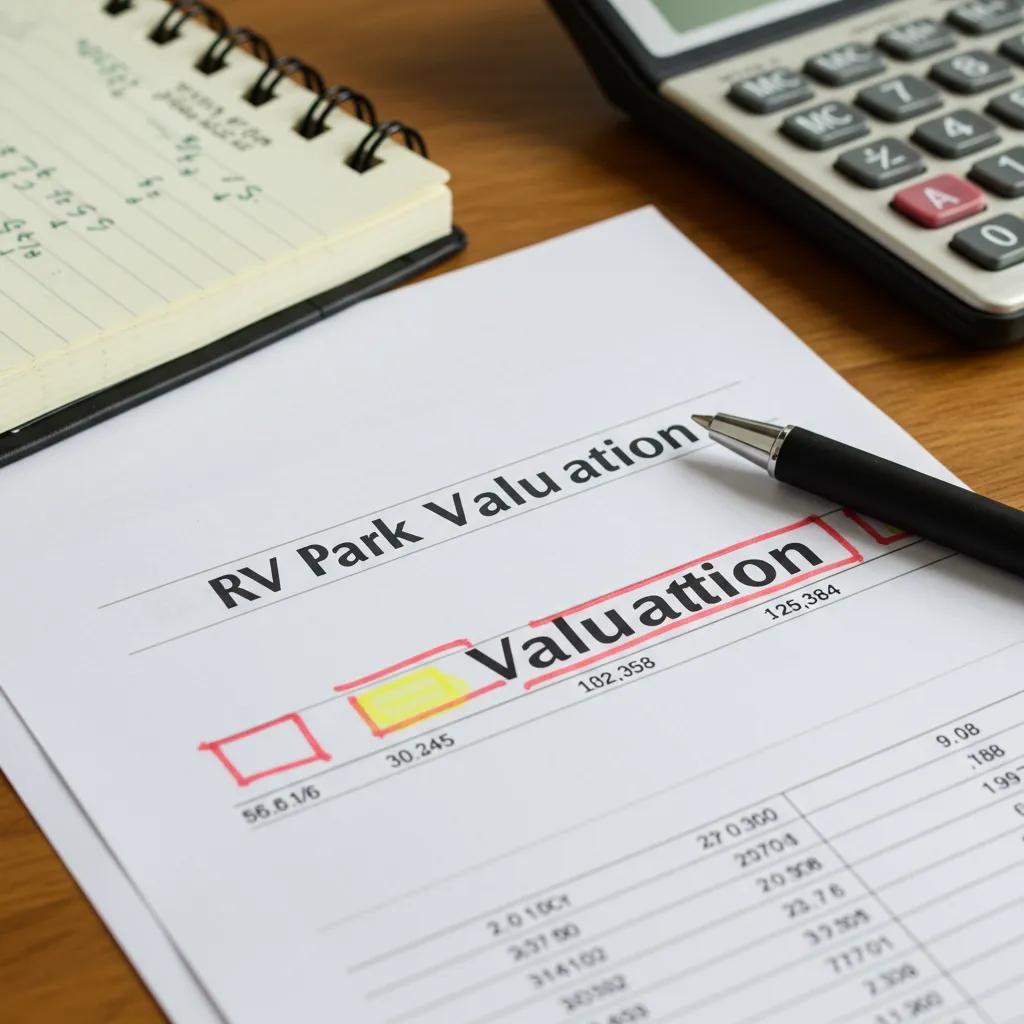
This section explains the core financial metrics that turn your campground’s performance into a price and why buyers rely on them to compare different properties. These metrics quantify what buyers can expect in returns and the risks involved, translating your historical revenue and expenses into a valuation multiple or yield. Understanding these metrics will help you evaluate offers, prepare your financials for due diligence, and pinpoint which aspects of your operation most directly influence your selling price. Below, we define NOI, Cap Rate, GRM, and comparable sales data, complete with formulas, brief examples, and a practical table showing how these numbers lead to an indicative value.
Net Operating Income (NOI) is the income your property generates from operations after deducting operating expenses, but before accounting for debt service and capital expenditures. NOI represents the asset’s consistent cash flow before financing. Buyers use it as the numerator in cap-rate-based valuations. Buyers view NOI as the reliable operational yield after they’ve adjusted for one-time items and normalized management fees, so presenting a clear NOI simplifies their underwriting and leads to clearer offers.
How Is Net Operating Income Calculated for RV Parks?
Net Operating Income (NOI) quantifies your recurring operating cash flow by subtracting operating expenses from your gross operating revenue, excluding debt and capital expenditures. For RV parks, revenue typically includes site fees, cabin rentals, store sales, and other income like event hosting. Expenses usually cover payroll, utilities, repairs, property management, insurance, and routine maintenance. For example, a park with $800,000 in gross revenue and $320,000 in operating expenses yields an NOI of $480,000. Buyers will adjust NOI during due diligence for any non-recurring owner benefits or underreported expenses, so it’s important to reconcile your P&Ls and maintain consistent accounting to support the NOI you present.
What Role Does Capitalization Rate Play in Pricing?
The capitalization rate (Cap Rate) converts NOI into an asset price using the formula Price = NOI / Cap Rate. This makes the cap rate a benchmark for buyer yield that reflects their perception of risk and current market conditions. The cap rate relates to market yield expectations; a lower cap rate means a higher price for the same NOI, while a higher cap rate means a lower price. In the 2025 market, cap rates for outdoor hospitality assets have shifted due to financing conditions and perceived operational risk. Therefore, expect buyers’ cap-rate assumptions to incorporate recent comparable sales and local demand. For instance, an NOI of $480,000 at a 7.5% cap rate implies a price of approximately $6.4 million, while the same NOI at an 8.5% cap rate implies about $5.65 million, clearly illustrating how sensitive pricing is to cap-rate movements.
Assessing Spatial Variability of Capitalization Rates for Property Valuation
The capitalization rate is a key metric used in real estate valuation to determine the potential return on an investment property. It is calculated by dividing the Net Operating Income (NOI) by the property’s market value. Buyers use capitalization rates to assess the risk and potential profitability of an investment. Factors such as location, property condition, market demand, and economic conditions can influence the capitalization rate.
How Do Gross Revenue Multipliers Affect RV Park Value?
The Gross Revenue Multiplier (GRM) is a simpler valuation shortcut where Price = Sales Price / Gross Revenue. It’s often used when NOI is inconsistent or when comparables are quoted in revenue multiples. GRM relates to gross revenue comparables; it’s easier to calculate but less precise because it doesn’t account for the expense structure. For parks with similar amenity mixes, buyers sometimes use GRM to screen deals before moving to NOI-based underwriting. For example, a park generating $1,000,000 in gross revenue and selling at a 4× GRM implies a price of $4,000,000. While GRM can be useful for quick estimates, sellers benefit more from presenting a clean NOI because it reflects operational efficiency and is preferred for detailed offers.
Different valuation metrics offer complementary perspectives on value, and underwriters often cross-check them against comparable sales to triangulate a price.
The table above illustrates how each metric functions in valuation and why presenting both revenue and clean operating expense details strengthens your negotiating position.
When buyers evaluate offers, many use NOI and cap rate as their primary inputs. For owners considering a direct sale, a buyer like GatherGrounds Resorts evaluates NOI, cap rate expectations, and comparables as part of its acquisition underwriting for Campground and RV Park Acquisition Service. You can discuss valuation metrics and how they apply to your property during a no-pressure conversation with GatherGrounds to understand a realistic offer range.
Estimating Capitalization Rate in Real Estate Property Analysis
The capitalization rate represents the relationship between the net operating income generated by a property and its market value. It is a fundamental concept in real estate appraisal and investment analysis, used to estimate the rate of return on an investment. Calculating the capitalization rate involves dividing the annual income by the property’s value, providing a benchmark for comparing investment opportunities.
Which Non-Financial Factors Influence Your Campground’s Selling Price?
Non-financial attributes often create price premiums or discounts because they influence a buyer’s willingness to pay, even when the financials are similar. Factors like location, the mix of amenities, occupancy patterns, and growth potential shape operational risk and upside. Buyers are willing to pay more for parks that require less immediate capital investment and align with their strategic goals. Presenting clear narratives about these non-financial strengths, backed by data, helps translate qualitative advantages into higher offers.
How Does Location Impact RV Park Valuation?
Location affects seasonal demand, the types of guests you attract, and the pool of potential buyers. Proximity to highways, attractions, and urban centers increases visibility and revenue potential. Location dictates your demand profile and pricing power, so parks near national/state parks or major tourist corridors typically command higher occupancy and Average Daily Rate (ADR). The local regulatory environment, zoning flexibility, and demographic trends also influence value. Favorable local rules for expansions or adding more units translate into measurable upside. You should document your park’s access, nearby attractions, and local demand drivers to justify location-based premiums to buyers.
What Amenities Increase Campground Value?

High-impact amenities—like full hookups, quality restrooms, reliable Wi-Fi, on-site stores, glamping units, and EV charging—enhance the guest experience and allow you to charge premium rates, directly supporting revenue growth. Amenities increase what guests are willing to pay. Market trends show that glamping and EV readiness attract longer stays and higher ADR. Buyers typically assign dollar premiums for infrastructure that reduces their near-term capital needs, so presenting recent amenity investments with receipts and usage data strengthens your price claims. Highlighting amenity-driven revenue streams in your sales package makes the value proposition more tangible.
How Do Occupancy Rates and Guest Experience Affect Price?
Occupancy metrics and guest satisfaction data directly feed into revenue forecasts and perceived operating risk. Consistent occupancy with positive reviews suggests stable cash flow and less downside risk. Occupancy influences projected revenue and underwriter confidence. Buyers often normalize occupancy for seasonality to avoid penalizing parks with short peak windows. You should provide average occupancy, ADR, seasonal curves, and guest review summaries to demonstrate sustainable performance. Clear occupancy documentation reduces uncertainty and can lead to more favorable cap-rate assumptions in offers.
What Growth Potential Should Sellers Highlight?
Buyers pay for scalable upside, such as additional developable sites, rezoning possibilities, ancillary revenue streams (like a store or events), and packages designed for extended-stay guests. Growth potential adds future cash-flow upside. You should quantify potential incremental revenue from logical projects (e.g., adding 10 sites or a glamping cluster) with rough timelines and cost estimates. Demonstrating realistic, permitted, or pre-approved expansion scenarios converts speculative value into underwriter-appreciated upside, improving offers.
Investigating Non-Financial Value Drivers in Business Valuation
Non-financial value drivers are increasingly recognized as significant factors influencing a company’s overall value. These drivers can include aspects such as brand reputation, customer satisfaction, innovation capabilities, and environmental, social, and governance (ESG) performance. While financial metrics are crucial, these non-financial elements can provide a more comprehensive understanding of a business’s long-term potential and sustainability.
How Can You Prepare Your RV Park for a Successful Sale?
Preparation shortens due diligence timelines, improves perceived certainty, and often increases your net proceeds by enabling higher offers. Preparation involves organizing your financials, prioritizing cost-effective property improvements, and ensuring you’re legally and regulatorily ready. The steps below provide a prioritized checklist to get your campground ready for sale, maximize buyer confidence, and minimize negotiation friction.
What Financial Documents Are Essential for Selling?
Buyers expect a consistent set of financial records: historical Profit & Loss statements, tax returns, rent-roll-like records for site income, occupancy histories, utility bills, and vendor contracts. Financial documents provide verifiable operational history. Supplying 3–5 years of P&Ls (reconciled to tax returns) and a clear occupancy schedule reduces questions about revenue sustainability. You should prepare a standardized P&L, explain any one-off items, and create a simple summary that maps revenue streams to line items. This speeds up underwriting and supports a stronger valuation.
Essential financial documents to prepare before diligence:
- Three to five years of audited or reconciled Profit & Loss statements.
- Owner tax returns and year-to-date income statements.
- Occupancy logs, ADR summaries, and ancillary revenue breakdowns.
Having these items ready shortens due diligence and presents a professional sales package that encourages competitive bids.
Which Property Improvements Maximize Selling Price?
Cost-effective improvements that reduce buyer capital needs or increase immediate revenue often provide the best return before a sale. Prioritize infrastructure fixes (sewer, electrical hookups), reliable Wi-Fi, upgraded restrooms, and targeted amenity investments like glamping conversions or EV chargers. Improvements change a buyer’s perceived readiness and immediate revenue potential. Small-to-medium capital projects that enhance the guest experience and reduce capital contingencies typically yield the strongest purchaser response. Use the table below to prioritize improvements by cost/time versus expected buyer appeal.
GatherGrounds Resorts offers guidance and a streamlined process for sellers through its Campground and RV Park Acquisition Service. We can review your documents during a no-pressure conversation to help you understand which investments matter most for your property.
What Legal Considerations Should Owners Know Before Selling?
Common legal issues that surface during due diligence include zoning limitations, easements, environmental reports, permits, and title irregularities. Legal readiness reduces closing delays and buyer contingencies. Preparing permits, site plans, environmental assessments, and complete title documentation in advance minimizes surprises. You should obtain copies of all permits, recent inspections, and any agreements affecting use or access, and proactively disclose any known issues to avoid post-offer renegotiation and maintain buyer trust.
Key legal items to prepare:
- Zoning and use permits, including any variances or conditional-use approvals.
- Easement and access agreements, along with title history documentation.
- Environmental reports and recent inspection findings.
Preparing these items makes the due diligence phase more efficient and supports a timely transaction.
Why Sell Directly to GatherGrounds Resorts Instead of Using Brokers?
Selling directly to a strategic buyer changes the transaction dynamics by reducing intermediaries, potentially shortening timelines, and allowing for private, negotiated transfers. A direct sale to an operator-focused buyer aligns operational continuity objectives with seller legacy concerns and can avoid the public exposure and listing cycles associated with brokerage-led sales. Below, we compare the factual trade-offs between brokered listings and direct sales and describe GatherGrounds’ acquisition approach.
How Does GatherGrounds Preserve Your Campground’s Legacy?
GatherGrounds Resorts positions its acquisitions around operational continuity and community fit, emphasizing the preservation of traditions and the ongoing guest experience. Legacy preservation means maintaining operations and community relationships post-sale. Practical actions can include retaining key staff, keeping programming that guests expect, and integrating the park into a family-owned operator’s portfolio with similar service standards. Owners concerned about preserving a campground’s identity can raise these concerns in a conversational, no-pressure discussion with GatherGrounds as part of evaluating fit.
What Are the Benefits of Direct Communication with GatherGrounds?
Direct communication with a buyer like GatherGrounds reduces layers of approval and often accelerates decision-making, confidentiality, and personalized transition planning. Direct negotiation enables faster resolutions and customized terms, allowing sellers to discuss legacy, transition timelines, and operational continuance without public listing exposure. This streamlined approach can shorten the overall timeline from inquiry to closing and keep sensitive financials private during initial discussions.
Which Campgrounds Does GatherGrounds Target for Acquisition?
GatherGrounds targets campgrounds and RV parks that fit our operational scale and strategic fit criteria, with a stated interest in parks having more than 130 sites and attributes that align with community preservation goals. Our targeting criteria include site count and cultural fit. Owners of larger parks and those focused on long-term, community-oriented operation are encouraged to initiate a conversation. Non-financial fit characteristics—such as amenity mix and staff continuity—also influence our acquisition interest.
How Does Selling to GatherGrounds Compare to Traditional Broker Fees?
Selling through a broker introduces public marketing, listing exposure, and commission structures. In contrast, a direct buyer negotiation can reduce intermediaries and simplify the negotiation process. This trade-off affects confidentiality and timing more than the basic arithmetic of fees. Brokered sale trade-offs include commissions, extended marketing time, and public listing exposure, while direct sales emphasize speed, privacy, and simplified negotiation. You should compare net proceeds after fees and timeline expectations to determine the best route for your objectives.
What Are the Current Market Trends Affecting RV Park Selling Prices in 2025?
2025 market dynamics reflect higher financing costs, pockets of occupancy softening, and demand drivers such as remote work and evolving travel preferences that affect valuations. Understanding how interest rates, occupancy cycles, and demand trends interact helps sellers time improvements, frame marketing narratives, and set realistic price expectations. This section summarizes those trends and provides seller-focused implications.
How Do Interest Rates Impact Buyer Demand and Valuation?
Interest rates affect buyer financing costs and, consequently, buyer required returns. Higher borrowing costs typically push cap rates upward and prices downward for a given NOI. Interest rate changes alter buyer yield requirements and cap-rate assumptions, meaning sellers may see more conservative offers when financing is expensive. You can mitigate rate-driven downward pressure by offering flexible financing structures, demonstrating strong stabilized NOI, or emphasizing non-debt-dependent buyer profiles to maintain competitive bids.
What Is the Effect of Occupancy Softening on RV Park Prices?
When occupancy softens, revenue forecasts become more conservative, and buyers may discount the price or require larger reserves, compressing offers. Occupancy softening reduces forward revenue confidence. You should provide contextual data that distinguishes temporary softness from structural decline, such as seasonally normalized occupancy charts and marketing initiatives underway. Demonstrating active steps to stabilize occupancy—through pricing adjustments, targeted promotions—helps reassure buyers and limits valuation discounting.
How Are Remote Work and Outdoor Travel Trends Shaping Value?
Remote work and the preference for outdoor, extended-stay travel support demand for work-friendly amenities and longer-stay accommodations, increasing the value of parks that cater to these segments. Remote-work trends boost demand for long-stay packages and reliable connectivity. Amenities like high-quality Wi-Fi, workspaces, and flexible site layouts capture this market. Owners who document extended-stay revenue and present packages for remote workers can show sustainable ADR increases, making the park more attractive to buyers focused on future-proof demand.
Market-driven seller actions for 2025:
- Emphasize remote-work amenities and long-stay revenue in your marketing materials.
- Normalize occupancy for seasonality and present multi-year trends.
- Consider modest seller-financing options or flexible terms to bridge financing gaps in a higher-rate environment.
These steps help you navigate 2025 market realities and position your park for competitive offers.
How Can You Maximize Your RV Park’s Value Before Selling?
Maximizing value involves a blend of operational improvements, targeted amenities, and stronger marketing and presentation to buyers, all aimed at increasing NOI or reducing perceived risk. Focus on quick-win operational efficiencies, mid-range amenity upgrades with strong buyer appeal, and presentation assets that make underwriting straightforward. The items below are prioritized by expected buyer reaction and typical time-to-value.
What Operational Efficiencies Boost Campground Profitability?
Operational improvements that increase margins include renegotiating vendor contracts, adopting dynamic pricing for peak windows, optimizing staffing schedules, and implementing energy-saving measures. Operational efficiencies improve NOI and buyer perception. Simple wins like procurement consolidation and seasonal staffing optimization often produce immediate margin improvements. Documenting implemented efficiency measures with before-and-after performance helps buyers validate sustained NOI increases and reduces negotiation discounts based on perceived operational risk.
How Can Upgrading Amenities Increase Buyer Interest?
Mid-range amenity upgrades—improved Wi-Fi, EV charging, restrooms, and selective glamping units—tend to offer the best combination of buyer appeal and manageable capital outlay. Amenity upgrades increase guest willingness-to-pay and extended-stay demand. Improvements that reduce near-term capital needs for buyers or that unlock higher ADR typically produce the strongest valuation uplift. You should document costs, permitting status, and projected revenue impact to present a clear ROI story to prospective buyers.
What Marketing Steps Help Showcase Your Park’s Value?
A professional sales package should include a concise executive summary, a clean P&L with explanations, high-quality photos and virtual tours, occupancy curves, guest-review summaries, and a prioritized list of recent improvements. Marketing steps present the park’s narrative and mitigants to buyer risk. Presenting a single, coherent sales packet reduces buyer questions and expedites offers. Use testimonials and before/after imagery where available to visually demonstrate improvements and guest satisfaction.
Marketing package checklist:
- Executive summary and one-page financial highlights.
- Clean P&Ls reconciled to tax returns and occupancy/ADR trends.
- Photo set, amenity list, and documented recent capital investments.
What Is the Step-by-Step Process to Sell Your RV Park?
A clear process map reduces uncertainty: initial outreach and valuation conversation, document exchange and preliminary offer, due diligence and engineering/environmental reviews, and closing with transition planning. Knowing the typical steps helps owners prepare documents and timelines that keep transactions efficient. Below are the practical stages you should expect and prepare for.
How Do You Initiate a No-Pressure Conversation with GatherGrounds?
Initiating a no-pressure conversation typically means preparing a concise summary of your property’s size, site count, recent financial highlights (NOI or gross revenue), and strategic goals for the sale, then contacting us to schedule an introductory call. For owners, preparing a one-page summary and key questions speeds the initial evaluation and ensures that early discussions focus on fit and value rather than exhaustive due diligence. GatherGrounds offers an invitation to discuss properties and priorities through its Campground and RV Park Acquisition Service in a no-pressure context, where you can explore options and understand valuation approaches.
What Due Diligence Should Sellers Expect?
Due diligence commonly covers financial verification, title and legal review, environmental assessments, site inspections, and operational interviews. You should expect requests for historical P&Ls, tax returns, occupancy and reservation data, vendor contracts, permits, site plans, and maintenance records. Preparing these documents early shortens the diligence window. Being transparent about known issues and providing remediation documentation reduces renegotiation and speeds closing.
How Does the Closing Process Work When Selling to GatherGrounds?
Closing typically follows signed agreements, completion of conditions precedent, escrow mechanics, and transition planning for operations and staff handoff. You should expect to coordinate title transfer documentation, finalize financial adjustments, and implement an agreed transition plan that addresses staff, reservation handover, and guest communications. Practical transition planning that maintains continuity of service and protects guest relationships helps preserve value during the change of ownership and supports a smoother handoff.
Typical closing steps to prepare for:
- Execute purchase agreement and deposit into escrow.
- Complete remaining diligence items and satisfy closing conditions.
- Coordinate title transfer, financial adjustments, and transition of operations.
These steps help you anticipate timing and responsibilities, reducing surprises at the finish line.
Frequently Asked Questions
What are the common mistakes to avoid when selling an RV park?
Common mistakes include failing to prepare accurate financial records, neglecting necessary property improvements, and not understanding market conditions. Sellers often underestimate the importance of presenting a clean and organized financial history, which can lead to lower offers. Additionally, overlooking essential repairs or upgrades can deter potential buyers. It’s crucial to stay informed about current market trends and buyer expectations to avoid pricing the property incorrectly. Engaging with professionals who specialize in RV park sales can help mitigate these risks.
How can sellers effectively market their RV park to potential buyers?
Effective marketing involves creating a comprehensive sales package that highlights the park’s unique features, financial performance, and growth potential. High-quality photos, virtual tours, and detailed descriptions of amenities can attract interest. Additionally, showcasing positive guest reviews and occupancy trends can enhance credibility. Utilizing online platforms, social media, and targeted advertising can broaden reach. Networking with industry contacts and attending relevant trade shows can also connect sellers with potential buyers. A well-crafted marketing strategy is essential for maximizing visibility and interest.
What role does guest satisfaction play in the selling process?
Guest satisfaction significantly impacts the perceived value of an RV park. High ratings and positive reviews can enhance buyer confidence, indicating stable revenue and operational efficiency. Buyers often look for evidence of guest satisfaction through online reviews, occupancy rates, and repeat visitor statistics. Demonstrating a strong track record of guest experiences can justify higher asking prices and reduce perceived risks. Sellers should compile guest feedback and highlight any awards or recognitions received to strengthen their sales narrative.
How can sellers determine the right asking price for their RV park?
Determining the right asking price involves a thorough analysis of financial metrics, comparable sales, and market conditions. Sellers should calculate key financial indicators like NOI, Cap Rate, and GRM, and compare them with similar properties in the area. Engaging a professional appraiser or real estate agent with RV park expertise can provide valuable insights. Additionally, considering non-financial factors such as location, amenities, and growth potential can help establish a competitive price that attracts buyers while maximizing returns.
What are the benefits of preparing a detailed sales package?
A detailed sales package streamlines the selling process by providing potential buyers with all necessary information upfront. It typically includes financial statements, occupancy data, property descriptions, and improvement records. This transparency builds trust and reduces the likelihood of renegotiation during due diligence. A well-organized package can expedite buyer decision-making, leading to quicker offers and potentially higher sale prices. Including visual elements like photos and virtual tours can also enhance appeal and engagement with prospective buyers.
What should sellers know about the legal aspects of selling an RV park?
Sellers must be aware of various legal considerations, including zoning regulations, permits, and title issues. Preparing all necessary legal documents in advance can prevent delays during the closing process. It’s essential to disclose any known legal issues to maintain buyer trust and avoid complications later. Consulting with a real estate attorney experienced in campground sales can help navigate these complexities and ensure compliance with local laws, ultimately facilitating a smoother transaction.
Conclusion
Understanding the essential factors that determine your RV park’s selling price empowers you to maximize your property’s value effectively. By leveraging key financial metrics and highlighting non-financial attributes, you can present a compelling case to potential buyers. Engaging in a no-pressure conversation with GatherGrounds Resorts can provide valuable insights and tailored strategies for your unique situation. Take the first step towards a successful sale by reaching out today.