

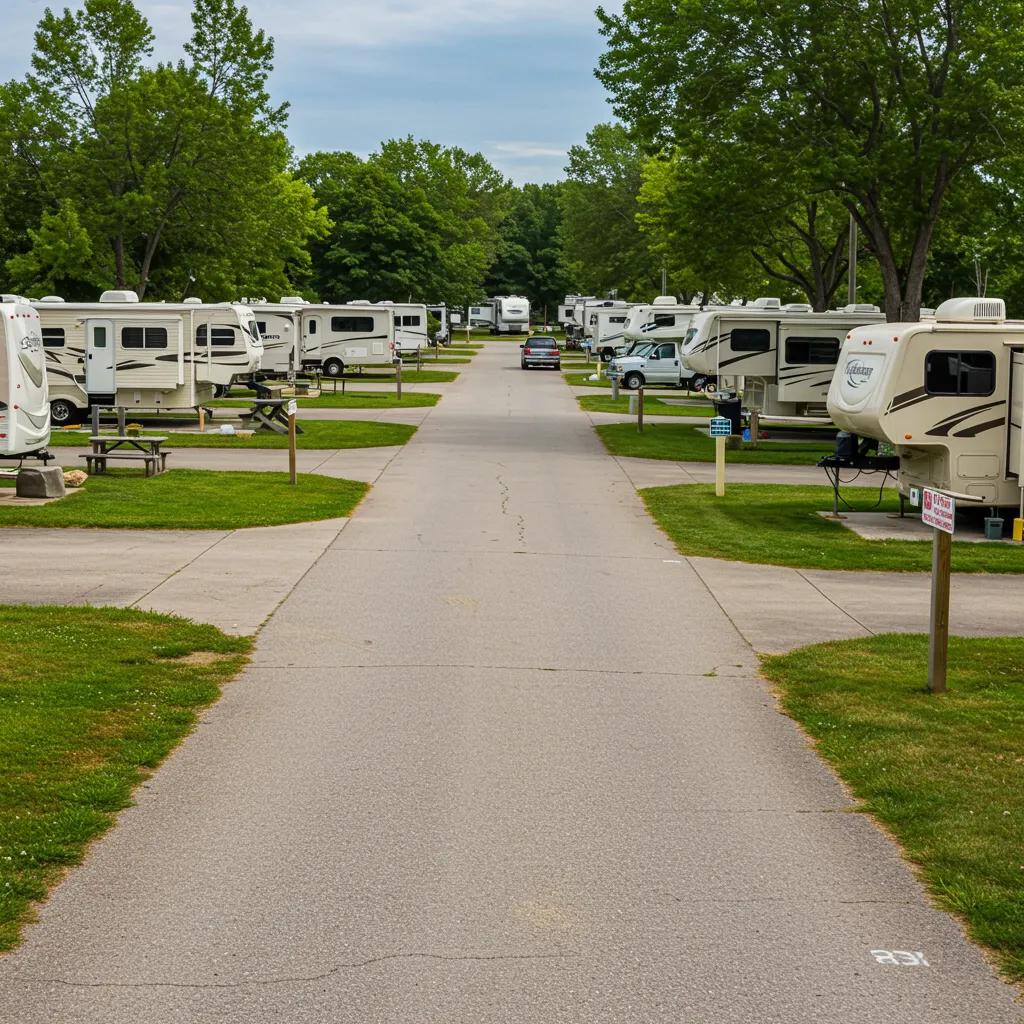
Key Pricing Mistakes RV Park Sellers Make and How to Avoid Them Successfully
Selling an RV park is as much a financial exercise as it is an operational handoff, and pricing mistakes can cost sellers both time and tens to hundreds of thousands of dollars. This article teaches campground owners the most common pricing errors, the valuation mechanics buyers use (NOI, cap rate, comparable sales), and step-by-step actions to present a defensible asking price. Key concepts such as net operating income, capitalization rate, comparable-sales analysis, and how property condition and documentation influence buyer offers are explained in practical terms. After defining the problems and remedies, the guide maps specific preparation steps—financial cleanup, market analysis, and targeted repairs—that improve buyer confidence and sale outcomes. To reassure owners considering a direct sale option, we briefly note GatherGrounds Resorts’ family-owned, values-driven buyer profile and its focus on thoughtful transitions for properties over 130 sites, while keeping the primary emphasis on valuation and pricing guidance.
What Are the Most Common RV Park Pricing Mistakes Sellers Make?

Pricing mistakes often stem from mixing emotional value with market value, creating a gap between expectation and what buyers will pay. Sellers frequently rely on anecdotal pride-of-ownership adjustments instead of objective metrics like NOI and market cap rates, which reduces credibility during due diligence. Understanding these common errors helps owners prioritize fixes that materially affect price and sale cadence. Below is a concise list of the top mistakes to watch for and their direct consequences.
- Unrealistic asking price based on owner sentiment rather than market data.
- Ignoring deferred maintenance that reduces buyer underwriting assumptions.
- Presenting unorganized or commingled financials that distort NOI.
- Overvaluing owner-specific or sentimental upgrades that buyers won’t recoup.
- Neglecting current market trends and relying on outdated comp sets.
These five items summarize frequent pitfalls; the next subsections unpack each mistake, starting with the impact of an unrealistic price and how it shapes buyer behavior.
How Does Setting an Unrealistic Price Impact Your Sale?
An unrealistic asking price either deters buyers or invites low offers, and both outcomes extend time on market and create negotiation fatigue. Overpricing signals to buyers that due diligence will uncover unsupported claims, prompting lowball offers or conditional bids with repair allowances; underpricing leaves money on the table and may attract opportunistic buyers. A practical sanity check pairs an NOI-based valuation with recent comparable sales and current cap-rate benchmarks to set a defensible range. Sellers should run a simple NOI / cap rate calculation and cross-check 2–3 local comps before naming a price. This process narrows the gap between expectation and market reality and prepares sellers for a quicker, cleaner sale.
Why Is Ignoring Property Condition a Pricing Error?
Property condition directly influences buyer risk assumptions and applied cap rates, because deferred maintenance converts into immediate capital outlays for a new owner. Issues such as failing septic systems, pothuned roads, outdated hookups, or noncompliant permits prompt buyers to either reduce offers or lower cap-rate expectations to compensate for perceived operational risk. Documenting recent repairs, providing inspection-ready records, and prioritizing high-impact fixes reduces buyer contingencies and preserves asking price. Preparing a concise repairs log and budget estimate helps buyers see projected spend and reduces surprise allowances during underwriting, which improves perceived value.
How Do Unorganized Financials Lead to Valuation Errors?
Messy financials obscure an accurate Net Operating Income, the fundamental driver for most income-based valuations, and create unnecessary discounts during underwriting. Common red flags include commingled personal expenses, missing rent-roll details, one-off vendor payments coded as recurring expenses, and incomplete occupancy records. Correcting these issues—separating owner draws, standardizing categories, and producing a clear three-year P&L—often raises verified NOI and buyer confidence. Presenting clean statements speeds diligence and reduces the leverage buyers use to lower price or add contingencies.
What Are the Risks of Overestimating Personal Upgrades?
Owners sometimes assume bespoke or sentimental improvements will transfer at full cost, but buyer valuations focus on market-recoupable capital improvements and revenue-producing upgrades. Custom décor, owner-only amenities, or personally tailored facilities often add little to market comparables unless they increase revenue or reduce operating costs. To translate upgrades into price, sellers should document hard costs, expected revenue uplift, and comparable amenity valuation in the local market. Framing upgrades as revenue drivers or cost-savers helps buyers attribute a measurable value during underwriting.
How Does Neglecting Market Trends Affect Your Asking Price?
Failing to use current market data—especially 2025 cap rate shifts and revenue-multiple trends—results in misaligned expectations and stalled negotiations. Recent trends indicate cap-rate adjustments in response to financing costs and shifting investor risk appetites, so using stale benchmarks inflates asking prices. Sellers must source recent regional comps, adjust for property scale and amenity mix, and monitor cap-rate movements to align price with buyer expectations. Updating assumptions with current trend data prevents last-minute valuation surprises and positions sellers to negotiate from a data-backed range.
How Is an RV Park Valued for Sale? Understanding Key Valuation Methods

Valuation for RV parks centers on three primary approaches: income-based (NOI/cap rate), comparable-sales, and revenue multiples; each measures value from a different perspective and serves as cross-checks against one another. Income-based methods calculate Net Operating Income and apply a market-appropriate capitalization rate to determine value, reflecting investor yield expectations. Comparable-sales use similar property transactions to establish market arms-length pricing, while revenue multiples provide a quick sanity check for smaller portfolios. Understanding when to use each approach helps sellers present a defensible price and anticipate buyer underwriting.
This comparison clarifies why buyers typically start with NOI/cap-rate and then validate with comps and revenue multiples; the next subsections define NOI, cap rates, and practical comp selection.
What Is Net Operating Income and Why Does It Matter?
Net Operating Income (NOI) equals gross revenue minus operating expenses, excluding financing and income taxes, and it represents the cash a buyer can expect to operate the park. NOI is central because income-based buyers use it to apply a cap rate and calculate value, creating a direct mathematical link between park performance and price. For example, a park with $500,000 NOI at a 7% cap rate suggests a valuation near $7.14 million. Sellers can improve perceived NOI by normalizing one-time expenses, separating personal costs, and documenting sustainable revenue streams, which directly increases market value.
Assessing Spatial Variability of Capitalization Rates in Property Valuation
The capitalization rate is a critical indicator that is used extensively for property valuation. This paper assesses the spatial variability of capitalization rates in two distinct areas: an urban and a rural area in South Korea. The capitalization rate is calculated by dividing the net operating income by the property’s market value.
Assessing the Spatial Variability of Capitalization Rates., 2023
The capitalization rate expresses investor return expectations and converts NOI into a valuation via Value = NOI / Cap Rate, so small shifts in cap rate materially affect price. In current 2025 market context, cap rates have trended modestly higher for outdoor hospitality assets as investors price in financing and operational risk, which can lower valuation multiples compared with prior years. Buyers assign cap rates based on location, park quality, and perceived risk; a lower cap rate increases value while a higher cap rate reduces it. Sellers should benchmark local cap rates and be prepared to justify a lower cap rate via strong occupancy, recent upgrades, or stable cash flow.
How Do Comparable Sales and Market Analysis Affect Pricing?
Comparable sales validate or adjust income-based valuations by showing what buyers have recently paid for similar parks in the same market, considering size, amenities, and location. A good comp matches site count, amenity mix, and regional demand; when comps are scarce, adjustments for scale and amenities become critical to avoid misleading comparisons. Sellers should assemble 2–4 comps and document differences so buyers can reconcile the NOI/cap valuation with actual market transactions. Using comps as sanity checks reduces the risk of overpricing and strengthens negotiation credibility.
Comparable-Sales Method for Valuing Condemned Property
The comparable-sales method is a widely accepted approach for determining the fair market value of property, generally through evidence of comparable sales. However, courts may depart from the comparable-sales method when specific circumstances warrant it, as seen in cases like Capital Properties, Inc. v. United States.
Constitutional Law-Comparable-Sales Method Proper for Valuing Condemned Property, 1995
How Can Campground Owners Avoid Pricing Mistakes Successfully?
Avoiding pricing errors requires a disciplined process of objective valuation, financial transparency, targeted property improvements, and understanding buyer preferences. Owners should combine an income-based valuation (NOI/cap rate) with contemporaneous comps and present clear financial packets to reduce buyer uncertainty. Addressing the main sources of discounting—deferred maintenance, poor documentation, and outdated market assumptions—improves offers and shortens time to close. The practical steps below help sellers prevent common pitfalls and improve sale outcomes through proactive preparation.
- Conduct an NOI-based valuation and cross-check with recent comps.
- Clean and standardize financials, separating personal expenses.
- Prioritize repairs with highest buyer sensitivity and document costs.
Implementing these steps creates a defensible asking price and reduces negotiation friction. For sellers seeking an external valuation tailored to legacy-focused transitions, GatherGrounds Resorts offers a Campground Acquisition process where an initial conversation, financial review, site visit, and transparent offer sequence can validate pricing and simplify the sale.
What Is GatherGrounds Resorts’ Expert Valuation Process?
GatherGrounds Resorts’ valuation process follows a staged approach: initial no-pressure conversation, confidential review of financials, on-site assessment, and a clear offer informed by operational reality and legacy goals. This sequence aligns with best practices for accurate pricing because it blends financial normalization with on-the-ground condition assessment, producing offers grounded in documented NOI and market context. As a family-owned buyer emphasizing thoughtful transitions, GatherGrounds positions its Campground Acquisition approach as a direct alternative to brokered sales, reducing fees and operational disruption. Sellers benefit from a transparent process that respects community values while delivering a practical valuation timeline.
How Can Streamlining Financials Improve Your Sale Outcome?
Streamlined financials reduce buyer skepticism, speed due diligence, and often lead to higher verified NOI, which increases valuation. Key actions include preparing three years of P&L statements, separating personal expenses from business costs, compiling rent rolls with site-level rates and occupancy, and providing tax returns to corroborate performance. Creating a concise seller data packet with standardized categories and explanatory notes clarifies recurring versus one-time items and reduces buyer adjustment requests. Presenting these documents up front signals professionalism and encourages offers closer to your asking price.
Income Approach to Technology Valuation: Calculating Excess Earnings
Therefore, the excess earnings are calculated by subtracting the net operating profit less taxes (NOPLAT) from the net income. The net operating profit less taxes (NOPLAT) is calculated by subtracting the taxes from the net operating profit. The net income is calculated by subtracting the interest expense from the net operating profit.
A comparative study on methods of income approach to technology valuation, 2012
What Are the Benefits of Selling Directly Without Brokers or Agents?
Selling directly to a qualified buyer typically reduces fees, shortens timelines, and allows greater control over the transition, which can preserve intangible value such as community ties. Direct sales often avoid listing exposure that attracts lowball opportunistic bids and instead focus on a negotiated, confidential transfer that prioritizes continuity. For many sellers, a direct sale is optimal when the buyer is demonstrated to be values-driven and capable of a thoughtful transition, making legacy preservation a practical outcome. Comparing brokered and direct-sale pathways helps owners choose the route that maximizes net proceeds and minimizes disruption.
What Financial Preparation Steps Help Maximize Your Campground Sale Value?
Financial preparation combines document organization, normalization of earnings, and credible forecasting to present a reliable performance picture to buyers. Buyers prioritize clear P&L statements, rent rolls, occupancy trends, and tax returns because these items verify NOI and highlight operational stability. The table below shows essential financial documents, why each matters, and how each influences price to help owners assemble a compelling seller packet before marketing or direct inquiry.
This inventory clarifies which documents to prioritize; the following subsections describe organization tips, market analysis, and how to adjust price based on revenue and expenses.
How Should You Organize Your Financial Statements Before Selling?
Organize financials into a concise seller data packet with a clear table of contents, standardized line items, and explanatory notes for anomalies; this presentation reduces buyer uncertainty and speeds review. Include three years of P&Ls, corresponding tax returns, current rent rolls broken out by site type, and occupancy reports; add monthly cash-flow summaries for the latest 12 months to show seasonality. Use consistent accounting categories and annotate one-off items that should be normalized, such as owner draws or unusual repairs. A well-structured packet saves time in diligence and supports asking price integrity.
Why Is Accurate Market Analysis Essential for Pricing?
Accurate market analysis grounds your asking price in local demand dynamics, comparable transactions, and demographic trends that influence travel and occupancy patterns. Good data sources include regional sale records, local tourism trends, and competitor amenity inventories, which together help you select appropriate comps and set realistic revenue projections. Documenting demand drivers—nearby attractions, traffic counts, or demographic shifts—helps justify a cap-rate or revenue multiple you request. A current market analysis prevents reliance on outdated benchmarks and aligns expectations with active buyers.
How Do You Adjust Pricing Based on Revenue and Expenses?
Pricing adapts to variations in NOI by normalizing one-time expenses, forecasting realistic revenue scenarios, and modeling sensitivity to occupancy or rate changes. Normalize by removing owner-specific or nonrecurring costs, and then present conservative, base-case, and upside revenue scenarios tied to occupancy and rate assumptions. Small changes in NOI produce proportional valuation shifts via the cap-rate formula, so clearly showing how projected increases or decreases in NOI affect value helps buyers and sellers find an acceptable range. Transparent sensitivity analysis reduces negotiation surprises.
What Legal and Documentation Pitfalls Affect RV Park Pricing?
Legal and documentation issues—title defects, missing permits, zoning noncompliance, and complex leases—are transaction killers or levers for buyers to reduce price. Buyers evaluate transferability, potential remediation costs, and operational restrictions during underwriting; unresolved legal items convert to price discounts or escrow holdbacks. Proactively identifying and addressing legal matters before marketing your park preserves value and shortens closing timelines. The following subsections detail title and permit concerns, key zoning and lease issues, and how proper documentation prevents pricing delays.
How Do Titles, Deeds, and Permits Influence Sale Value?
Clear title and properly recorded deeds reduce buyer risk because they confirm transferable ownership and reveal encumbrances that might limit future use; missing permits or unrecorded easements introduce remediation costs. Common red flags include unresolved liens, easements that limit development, and retroactive permit requirements for structures or utilities. Addressing these issues in advance—via title cure, permit regularization, or documented disclosures—reduces buyer contingencies and preserves price. Buyers typically discount for unknown legal exposure, so proactive remediation supports a stronger offer.
What Zoning and Lease Issues Should Sellers Address?
Zoning restrictions, conditional-use permits, and tenant lease terms can materially affect a park’s operational freedom and projected NOI, impacting buyer underwriting. Examples include grandfathered uses that may not transfer, leases with unfavorable termination provisions, or municipal limitations on service expansions. Reviewing zoning compliance, documenting any nonconforming uses, and clarifying tenant obligations reduces uncertainty and helps buyers model future cash flow. Clear lease abstracts and zoning summaries enable buyers to price risk accurately instead of layering punitive discounts.
How Can Proper Documentation Prevent Pricing Delays?
A comprehensive documentation checklist—title reports, permit files, lease abstracts, utility agreements, and environmental disclosures—streamlines due diligence and prevents last-minute renegotiation of price. Prepared documents reduce buyer discovery of hidden issues that typically translate into price reductions or holdbacks at closing. Offering transparency upfront builds credibility and often results in cleaner offers with fewer contingencies. Sellers who assemble complete documentation systems minimize negotiation windows and accelerate closings.
How Does Property Condition Impact RV Park Pricing and Buyer Interest?
Property condition signals ongoing operational risk and affects both cap-rate application and buyer willingness to close quickly; good condition reduces perceived risk and commands stronger offers. Buyers focus on critical systems—septic, water, electrical—along with site infrastructure like roads and drainage, because these determine near-term capital needs. Strategically investing in high-ROI upgrades and preparing the park for inspection increase buyer confidence and can raise net sale proceeds. The table below compares common condition issues, typical remediation cost ranges, and estimated value impact to prioritize seller investments.
This comparison helps owners decide which repairs to prioritize; the subsequent subsections outline maintenance priorities, amenity ROI, and staged preparation plans.
What Maintenance Issues Lower Your Park’s Value?
Critical system failures—septic, water supply, electrical distribution, and poor drainage—directly reduce usable sites and increase buyer capital expenditure estimates, prompting price reductions. Site infrastructure problems such as eroded roads, inadequate parking, or safety hazards raise immediate remediation costs and can deter financing. Buyers typically apply repair allowances or reduction in cap-rate if inspections reveal major issues, so addressing these items before marketing preserves sale value. Prioritizing critical-system inspections and producing repair estimates helps buyers underwrite with confidence.
How Do Upgrades and Amenities Affect Pricing?
Upgrades that demonstrably increase revenue—improved hookups, reliable Wi-Fi, modern bathhouses—tend to deliver the best ROI in a sale context, because they attract higher rates and broader guest segments. Owner-preference renovations with little observable revenue uplift yield limited valuation benefit. Documenting upgrade costs, projected revenue uplift, and showing comparable amenity premiums in local comps helps buyers attribute value. Targeted amenity investments tied to measurable occupancy or rate increases support a stronger asking price.
What Are Best Practices for Preparing Your Property for Sale?
Adopt a staged plan—6 months, 3 months, and 1 month—focusing on high-impact repairs, documentation, and curb appeal to maximize buyer interest and minimize inspection surprises. Six months out, address critical systems and compile legal and financial documents; three months out, complete amenity fixes and create a site maintenance log; one month out, deep-clean, update signage, and prepare a seller data packet for buyer review. Budget modest contingencies for last-minute fixes and provide invoices and warranties where possible. A staged approach reduces last-minute negotiations and preserves asking price.
Why Choose GatherGrounds Resorts for a Smooth and Fair RV Park Sale?
GatherGrounds Resorts positions itself as a family-owned, values-driven direct buyer focused on preserving campground legacy and facilitating thoughtful transitions, offering sellers an alternative to brokered sales. For owners seeking a confidential, direct route, GatherGrounds’ Campground Acquisition model emphasizes transparent valuation, reduced transaction complexity, and respect for community character. This buyer profile appeals to sellers who prioritize continuity and wish to avoid long listing cycles or broker fees while ensuring an operator with aligned values continues the park’s tradition.
How Does GatherGrounds Preserve Your Campground’s Legacy?
GatherGrounds emphasizes maintaining campground character through operations continuity and community engagement practices rather than aggressive rebranding, aiming to preserve traditions important to current owners and guests. This approach reassures sellers that intangible community value is considered alongside financial valuation, reducing seller anxiety about post-sale changes. While details of operational plans vary by property, the core practice is to balance operational improvements with sensitivity to legacy. Sellers who value continuity often find this alignment reduces transitional friction.
What Makes GatherGrounds’ Direct Sale Process Advantageous?
A direct sale to GatherGrounds can simplify negotiation, reduce intermediary fees, and speed closing through a transparent sequence of initial conversation, financial review, site visit, and a clear offer. This streamlined path tends to minimize operational disruption and confidential exposure, providing owners a pragmatic alternative to a public listing. The process is structured to respect the seller’s timeline and to focus on preserving community and operational stability during transition. For many sellers, the direct approach yields a quicker, cleaner transaction.
How Can Sellers Start the Conversation with GatherGrounds?
Sellers interested in a direct purchase conversation should prepare basic property statistics and a succinct financial snapshot—site count, average occupancy, recent P&Ls, and notable capital improvements—to facilitate an efficient initial review. GatherGrounds’ Sell Your Campground landing page serves as a contact point for owners to begin a no-pressure conversation about acquisition options, and their Campground Acquisition offering is positioned as a direct buyer alternative to brokers. Having these documents ready accelerates the valuation process and leads to more accurate, timely offers for properties that align with their acquisition focus.
Frequently Asked Questions
What should I consider when preparing my RV park for sale?
Preparing your RV park for sale involves several key steps. Start by addressing any deferred maintenance issues, as these can significantly impact buyer interest and pricing. Organize your financial documents, including profit and loss statements, rent rolls, and occupancy reports, to present a clear picture of your park’s performance. Additionally, consider enhancing curb appeal through landscaping and minor repairs. A well-prepared property not only attracts more buyers but can also lead to higher offers and a smoother transaction process.
How can I determine the right asking price for my RV park?
To determine the right asking price for your RV park, utilize a combination of valuation methods. Start with an income-based approach by calculating your Net Operating Income (NOI) and applying a market-appropriate capitalization rate. Additionally, research comparable sales in your area to see what similar parks have sold for recently. This dual approach helps ensure your asking price is grounded in both financial performance and market realities, making it more attractive to potential buyers.
What role does buyer perception play in RV park sales?
Buyer perception plays a crucial role in RV park sales, as it influences their willingness to make an offer and the price they are willing to pay. Factors such as property condition, financial transparency, and market positioning can significantly affect how buyers view the value of your park. A well-maintained property with organized financials fosters confidence and can lead to higher offers. Conversely, any signs of neglect or disorganization may lead buyers to perceive the property as a risk, potentially lowering their offers.
What are the benefits of using a direct buyer like GatherGrounds Resorts?
Using a direct buyer like GatherGrounds Resorts offers several advantages for RV park sellers. This approach typically reduces transaction complexity and eliminates broker fees, allowing sellers to retain more of their sale proceeds. GatherGrounds focuses on preserving the campground’s legacy and ensuring a smooth transition, which can be particularly appealing for sellers concerned about the future of their property. Additionally, the direct process often leads to quicker closings and less operational disruption, making it a practical choice for many owners.
How can I improve my RV park’s appeal to potential buyers?
Improving your RV park’s appeal to potential buyers involves both physical and operational enhancements. Start by addressing any maintenance issues, as a well-kept property signals to buyers that it has been cared for. Consider upgrading amenities that can enhance guest experience, such as modern bathhouses or improved hookups. Additionally, presenting clear and organized financial documentation can boost buyer confidence. Finally, enhancing the park’s curb appeal through landscaping and signage can create a positive first impression, making your property more attractive to prospective buyers.
What common legal issues should I be aware of when selling my RV park?
When selling your RV park, be aware of common legal issues that can affect the sale process. These include title defects, missing permits, and zoning compliance issues. Buyers will conduct due diligence to assess any potential legal risks, and unresolved issues can lead to price reductions or even derail the sale. It’s advisable to proactively address these matters by ensuring clear titles, obtaining necessary permits, and confirming zoning compliance before marketing your property. This preparation can help streamline the sale and preserve your park’s value.
How does market analysis influence my RV park’s pricing strategy?
Market analysis is essential for developing an effective pricing strategy for your RV park. By examining local demand dynamics, recent comparable sales, and demographic trends, you can set a realistic asking price that aligns with current market conditions. A thorough market analysis helps identify the strengths and weaknesses of your property relative to competitors, allowing you to adjust your pricing and marketing strategies accordingly. This data-driven approach not only enhances your credibility with buyers but also minimizes the risk of overpricing or underpricing your park.
Conclusion
Understanding and avoiding common pricing mistakes is crucial for RV park sellers aiming to maximize their sale value. By focusing on objective valuation methods, transparent financials, and property condition, owners can significantly enhance buyer confidence and streamline the sale process. Engaging with a values-driven buyer like GatherGrounds Resorts can further ensure a smooth transition while preserving the campground’s legacy. Start your journey towards a successful sale by exploring our Campground Acquisition options today.