

How Campground Brokers Simplify Selling RV Parks: A Complete Guide for Campground Owners
Selling an RV park or campground demands a deep understanding of hospitality real estate, established buyer networks, and precise valuation methods. A campground broker is the expert who brings these critical capabilities together for sellers. In this guide, you’ll discover what a campground broker does, how they determine value using NOI and market comparables, the typical step-by-step selling timeline, and how a direct buyer option stacks up against a brokered listing for owners focused on legacy. Many owners worry about preserving their staff, community ties, and the property’s unique character while still achieving a fair price. This article explores both broker-led and direct-sale routes, outlining the trade-offs involved. You’ll find clear checklists, a comparison of valuation methods, timeline tables to manage expectations, and practical advice on preparing records and infrastructure to maximize your property’s value. Later sections contrast brokered sales with direct acquisition offers, including how GatherGrounds Resorts’ Campground Acquisition Service approaches thoughtful transitions for family-owned properties. Read on for operational, financial, and legacy-focused guidance to help you decide whether to list with a broker or pursue a direct sale.
What Is a Campground Broker and How Do They Simplify the Selling Process?
A campground broker is a specialist in RV park and campground transactions. They connect sellers with qualified buyers, prepare the property for market, and manage valuation, marketing, negotiation, and due diligence coordination. By leveraging market knowledge, extensive buyer networks, and proven valuation frameworks—like income-based approaches tied to net operating income (NOI) and cap rates—a broker significantly reduces deal friction and increases the likelihood of a timely, higher-value sale. Brokers also meticulously vet purchasers and structure offers to shield sellers from unreliable contingencies, thereby maintaining momentum through to closing. Understanding this role helps clarify why some owners opt for a broker while others consider direct buyers. The next section details the practical services brokers offer and the fee structures you can anticipate from a listing agreement.
What Services Do Campground Brokers Provide to RV Park Sellers?

Campground brokers offer a comprehensive suite of specialized services that address both the financial and operational facets of a sale, from accurate valuation to buyer qualification and closing management. They meticulously analyze financial records, occupancy trends, and amenity inventories to craft a compelling offering memorandum and to price the property competitively against market comparables. Brokers also orchestrate targeted marketing campaigns to investor and operator networks, conduct thorough buyer screening and proof-of-funds checks, and expertly manage negotiation and closing logistics, significantly reducing the seller’s time commitment. These services accelerate the sales process and minimize the risk of failed transactions. The next subsection explains how broker commissions and fees typically impact your net proceeds.
- Brokers provide expert valuation, targeted marketing, buyer vetting, and skilled negotiation services.
- Brokers develop comprehensive offering memoranda and coordinate all due diligence materials.
- Brokers manage escrow communications and closing deliverables, substantially reducing seller workload.
This list highlights the primary areas where brokers deliver significant value and leads directly into a discussion about how their fees affect your net proceeds.
How Do Broker Commissions and Fees Affect Your Sale?
Broker commissions are typically structured as a percentage of the final sale price, directly reducing your net proceeds. However, this investment often secures broader market exposure and fosters competitive bidding, which can ultimately increase the gross sale price and the certainty of closing. Common commission ranges can vary based on the market and the complexity of the deal. Sellers should expect negotiable structures that are tied to the specific services provided, and some fees may encompass marketing expenses or transaction management. It’s crucial to run a simple net-proceeds scenario, comparing a higher gross sale minus commission to a lower direct offer that bypasses commission costs. Understanding these fee components empowers sellers to determine if the premium achieved through a broker justifies the commission expense. The following section outlines the typical broker-facilitated selling steps and timelines, allowing you to set realistic expectations.
How Does Selling Your RV Park Through a Broker Compare to Selling Directly?
Selling through a campground broker emphasizes broad market exposure, competitive bidding, and professional transaction management. In contrast, selling directly to a buyer prioritizes speed, simplicity, and often stewardship-oriented transitions. Brokered listings have the potential to yield higher sale prices when competition emerges, but they may require more time and incur commission costs. Direct sales typically close faster and involve fewer intermediaries, which appeals to owners who prioritize continuity and minimal disruption.
The table below offers a clear comparison of broker listings versus direct buyer sales across key seller attributes.
This comparison clearly illustrates how cost, timing, and stewardship outcomes differ by route and introduces a brief example of direct-sale economics to highlight potential savings.
What Are the Benefits of Using Campground Broker Services?
Engaging a specialized campground broker grants sellers access to extensive buyer networks, invaluable expertise in pricing using NOI and market comparables, and professional negotiation skills that minimize fall-throughs and unexpected legal issues. Brokers also expertly package operational data into a compelling offering memorandum, making the property highly attractive to institutional and operator buyers. They can also advise on optimal timing to maximize valuations within current market conditions. For sellers aiming for top dollar through a competitive process, a broker can create and manage that environment. Conversely, owners seeking a quicker, simpler process should carefully weigh these benefits against commission costs. The next subsection examines how selling directly to a buyer like GatherGrounds Resorts alters these trade-offs.
- Access to targeted buyer networks significantly increases competitive offers.
- Professional pricing and marketing strategies enhance perceived property value.
- Expert transaction management reduces seller time commitment and legal risk.
These benefits explain why many owners accept commission costs and lead directly into how direct buyers present a compelling alternative.
How Does Selling Directly to GatherGrounds Resorts Simplify the Sale?
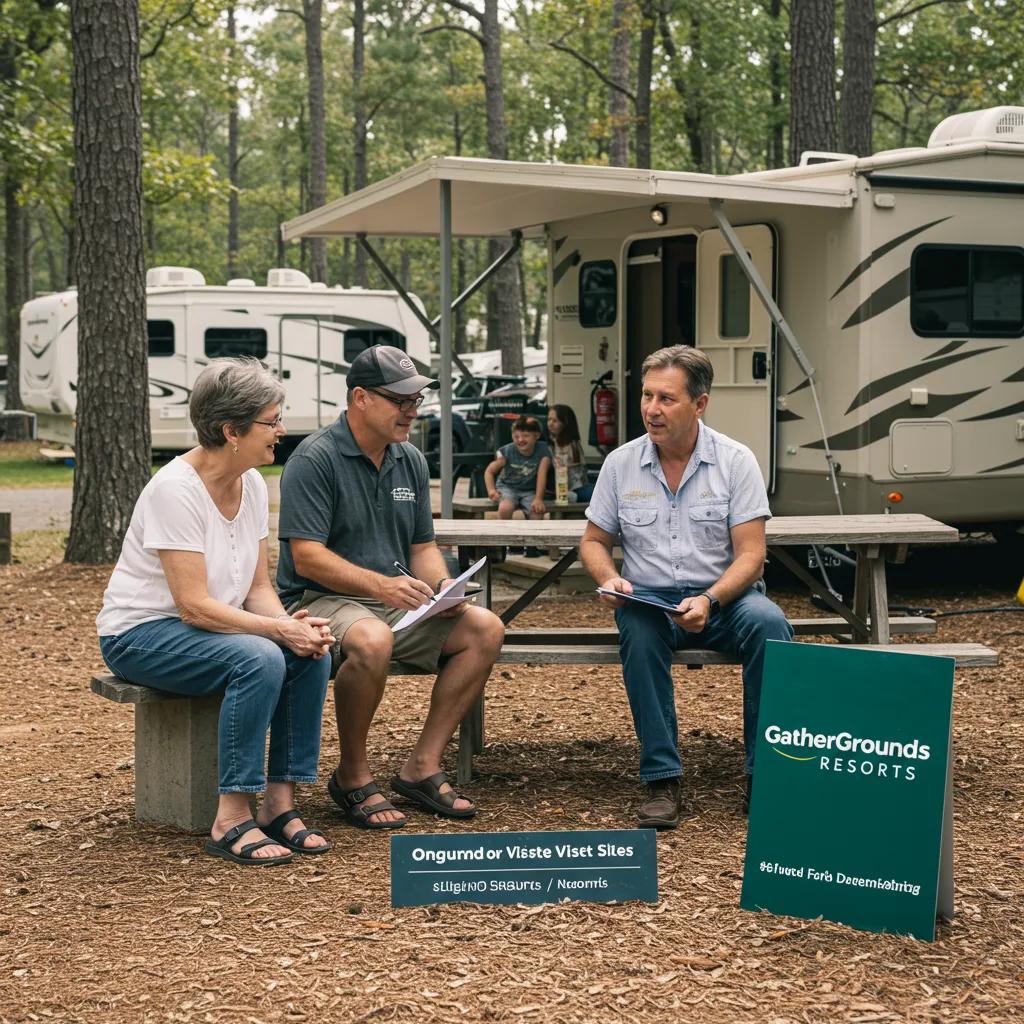
Selling directly to a specialized buyer like GatherGrounds Resorts streamlines the chain of approvals, reduces negotiation layers, and can provide a clearer timeline and offer structure for sellers who value a thoughtful transition. GatherGrounds Resorts’ Campground Acquisition Service is positioned as a family-owned acquirer dedicated to stewardship and continuity. This approach can effectively ease seller concerns about staff and community outcomes while offering a faster closing than a traditional full market listing. A direct offer from such a buyer often eliminates marketing time and reduces contingency risk, as the buyer is evaluating the property without the need to assemble a third-party financing syndicate or manage an extensive bidding process. Understanding these distinct advantages helps sellers determine when a direct sale might better align with their specific goals. The next subsection quantifies commission comparisons to illustrate real-world net differences.
How Do Broker Commissions Compare to Direct Sale Savings?
Comparing the impact of typical broker commissions to direct-sale savings can be illustrated with a simple numeric scenario: assume a $3,000,000 asking price, a 6% broker commission, and a direct buyer offer that is 5% lower but incurs no commission. With a brokered sale at the full asking price, the commission amounts to $180,000. In contrast, with a direct sale at 5% lower ($2,850,000) and no commission, the seller nets $2,850,000—which is $30,000 more than accepting a brokered sale at full price. Non-monetary trade-offs include the potential for a higher final price through competitive bidding and different due diligence scopes. Sellers should model scenarios using their expected sale price ranges and carefully consider legacy and certainty factors. The next major section explains the valuation methods brokers employ to establish those price expectations.
How Do Campground Brokers Help You Accurately Value Your RV Park?
Brokers utilize three primary valuation methods—income (capitalization of NOI), sales comparables, and replacement cost—to triangulate a market value that accurately reflects cash flow, market demand, and asset condition. The income approach centers on stabilized net operating income and an appropriate capitalization rate derived from comparable transactions. Sales comparables rely on recent park sales with necessary adjustments for differences in site count and amenities. Replacement cost considers the expense of rebuilding or replacing assets, particularly when comparables are scarce. Each method requires specific inputs such as NOI, site count, occupancy rates, average daily rate (ADR), and local cap rate assumptions. Therefore, accurate financial records and a clear inventory of assets are absolutely essential. The table below breaks down these methods, their typical inputs, and how brokers apply them.
This comparison clearly demonstrates why brokers often blend these methods to produce a defensible asking price and leads into how brokers leverage seller records and market data to refine those valuations.
What Are the Common RV Park Valuation Methods Used by Brokers?
The income approach calculates value by dividing stabilized Net Operating Income (NOI) by a market-derived capitalization rate (cap rate), directly linking property cash flow to investor return expectations. Sales comparables require identifying recent campground transactions and making adjustments for differences in site count, amenities, and location; however, a scarcity of comparable sales can limit precision in niche markets. Replacement-cost analysis estimates the cost to rebuild or replace park assets and is most relevant when income data is unreliable or for specialized facilities. Brokers select the primary method based on data availability and buyer expectations. The next subsection details the specific financial records and metrics that enable the accurate application of these methods.
Understanding Cap Rates and NOI for Hotel Valuation
brokers utilized cap rates when determining a hotels value. The capitalization rate (cap rate) is a rate of return used to convert a single year’s net operating income (NOI) into a value. The cap rate and NOI to determine a hotel’s estimated value.
Intangible assets and hotel value, 2012
How Do Brokers Use Financial Records and Market Data in Valuation?
Brokers rely on meticulously organized P&L statements, comprehensive occupancy reports, nightly rate histories, detailed ancillary revenue streams, and thorough maintenance records to model realistic NOI projections and pro forma adjustments. Key operating metrics include occupancy percentage, average nightly rate (ADR), ancillary revenue per site, utility cost trends, and historical capital expenditure schedules. Market data, such as regional cap rates, recent campground sales, and tourism demand trends, informs cap rate selection and risk adjustments. Preparing these documents and standardizing metrics before marketing significantly strengthens a broker’s valuation argument and reduces negotiation friction. The next subsection explains specific seller actions that boost value prior to listing.
Hotel Valuation: Cap Rates, NOI, and Transaction Costs
of an overall capitalization rate (OAR) – or cap rate for short. The cap rate is a measure of the rate of return on a real estate investment. It is calculated by dividing the net operating income (NOI) by the property’s market value. The cap rate is used to estimate the value of a property by dividing the NOI by the cap rate. Next, assumed transaction costs (for example, broker and legal fees) are deducted from the estimated value.
Valuation of hotel assets, 2017
How Can You Maximize Your Campground’s Value Before Selling?
Prioritize improvements and documentation that directly impact NOI and buyer perception: refine bookkeeping into clear P&L statements, resolve deferred maintenance issues that limit capacity, and meticulously document opportunities for revenue growth, such as expanded amenity offerings. Low-cost, high-impact upgrades—like enhanced reservation systems, clear site numbering, and improved guest services—can elevate occupancy and ADR while signaling strong management to potential buyers. Sellers should also prepare a concise capital improvement history and forecasts to present a realistic near-term capex plan, and create an operations manual that eases transition risk for buyers. These proactive steps both increase demonstrated cash flow and reduce buyer due diligence friction, leading directly into the brokered selling workflow explained next.
What Is the Step-by-Step Selling Process When Working with Campground Brokers?
Working with a campground broker typically involves a structured process: initial engagement and valuation, preparation of an offering package and marketing, buyer outreach and negotiations, and finally, due diligence through to closing and transition planning. Each phase includes clearly defined seller deliverables and expected timelines, which help owners plan for staffing, tax, and emotional transitions. Below is a timeline-style table mapping key steps to their respective goals, deliverables, and expected durations, so sellers can clearly understand what to anticipate at each milestone.
This timeline clarifies the distinct phases and typical durations involved, transitioning into practical preparation advice for sellers working with brokers.
How Do You Prepare Your Campground for Sale with a Broker?
Preparation centers on meticulously organizing financial records, compiling comprehensive operational documentation, and addressing visible property issues that might reduce perceived risk. Sellers should produce at least 2–3 years of P&Ls, occupancy and rate histories, staff summaries, utility and maintenance logs, and a documented list of capital improvements. Physical preparation includes prioritized repairs to essential systems like water, septic, and electrical, along with clear guest-facing upgrades that enhance curb appeal and the overall guest experience. A well-prepared property and complete documentation significantly shorten marketing time and support stronger valuation claims, which naturally leads to the legal and tax considerations sellers must address.
- Gather P&Ls, occupancy reports, and ancillary revenue documentation.
- Create a detailed inventory of amenities and a comprehensive capital improvements history.
- Address any deferred maintenance affecting health, safety, or operational capacity.
This checklist highlights key preparation priorities and sets the stage for discussing the legal and financial considerations that follow.
What Legal and Financial Considerations Should Sellers Know?
Sellers must confirm clear title, thoroughly review all leases and vendor contracts, evaluate environmental and zoning compliance, and consult tax professionals regarding capital gains and potential 1031 exchange opportunities. Environmental concerns—such as wetlands, septic systems, or fuel storage—can introduce additional diligence steps and costs, so pre-listing assessments of known risk areas are crucial to avoid surprises. Sellers should also understand escrow mechanics, the allocation of closing costs, and potential seller-financing structures that may broaden buyer interest. Addressing legal and tax items proactively reduces negotiation delays and moves the transaction toward a smooth closing. The next subsection explains how brokers effectively vet buyers and manage competing offers.
How Do Brokers Qualify Buyers and Manage Offers?
Brokers protect sellers by rigorously verifying buyer financial capacity through proof-of-funds, lender pre-approvals, or demonstrated operating experience, and by carefully evaluating contingency risk that could potentially extend or derail the closing process. Offer management often involves a comparative analysis of price, contingencies, financing certainty, and proposed timelines, enabling sellers to weigh net proceeds against closing risk. Brokers also skillfully negotiate earnest-money amounts, inspection windows, and closing conditions to enhance certainty and align buyer incentives with a timely close. This robust buyer qualification process leads directly into the next major section, which contrasts brokered transactions with a direct acquisition approach that prioritizes stewardship and speed.
How Does GatherGrounds Resorts’ Direct Acquisition Model Offer a Thoughtful Transition?
GatherGrounds Resorts presents its Campground Acquisition Service as a family-owned direct buyer dedicated to preserving the core essence of the properties it acquires while simplifying the seller’s experience. This model emphasizes direct negotiation without multiple intermediary layers, transparent offers, and a keen focus on staff and community continuity. These aspects can be particularly appealing to owners who prioritize legacy and a low-disruption exit. GatherGrounds actively seeks campgrounds with established scale, and their stated preference includes properties with 130 or more sites within their target region. The following subsections detail what makes this approach trusted, the key selection criteria, and how the company typically structures an acquisition to reassure sellers during the transition.
What Makes GatherGrounds Resorts a Trusted Buyer for Family-Owned Campgrounds?
As a family-owned buyer, GatherGrounds Resorts champions stewardship and continuity as fundamental values, focusing on preserving guest experience and long-standing community relationships post-acquisition. Sellers concerned about staff retention, maintaining cherished traditions, and protecting the property’s unique character may find a direct buyer with a stewardship-focused approach more aligned with their non-financial exit goals. Because the transaction is direct, negotiations can concentrate on transition details—such as staff offers and phased stewardship commitments—rather than solely on price competition. If a seller’s paramount priorities include continuity and care for their legacy, the direct buyer pathway discussed here often provides the reassurance that aligns perfectly with those objectives.
What Are the Key Criteria GatherGrounds Uses to Select Campgrounds?
GatherGrounds typically evaluates site count, geographic fit, and property characteristics when assessing acquisition suitability, with a clear threshold of 130 or more sites often mentioned for target properties. Preference is given to parks boasting natural features, established guest demand, and operational records that demonstrate stable NOI and efficient operational systems. Their geographic focus centers on upper Midwest markets where GatherGrounds concentrates its expertise, aligning buyer knowledge with local market dynamics. Sellers can use these criteria to self-assess their property’s fit before initiating conversations, which transitions to how GatherGrounds manages acquisitions to ensure smooth transitions.
Profit Center Analysis and RevPAC in Private Campgrounds
The annual RevPAC (net revenue generated during the year per available campsite) is a key performance indicator for campgrounds. This metric helps in understanding the revenue-generating potential of each campsite and can be used to compare performance across different campgrounds or over time. Analyzing profit centers within private campgrounds is crucial for identifying which services or amenities are most profitable and where improvements can be made to increase overall profitability.
Profit center analysis within private campgrounds, 1996
How Does GatherGrounds Ensure a Smooth and Transparent Acquisition Process?
GatherGrounds is committed to providing clear timelines, transparent offers, and structured due diligence that minimizes uncertainty for sellers while respecting community and staff continuity considerations. Typical steps include an initial property review, an offer process focused on key transition terms, coordinated due diligence that leverages seller-provided records to shorten timelines, and planned communication with staff and the community to ensure seamless continuity. By presenting a direct buyer route with these predictable steps, sellers gain a valuable alternative to longer broker listings when simplicity and stewardship are paramount; the next section outlines market trends affecting sales in 2025 that influence both brokered and direct strategies.
What Are Current Market Trends Affecting Campground Sales in 2025?
In 2025, the outdoor hospitality sector continues to demonstrate remarkable resilience, fueled by sustained RV demand, a growing appetite for experiential stays, and increasing investor interest in campground portfolios. These trends are intensifying buyer competition in many markets, driving cap rates inward for well-positioned assets while also attracting institutional buyers who can significantly alter transaction dynamics and diligence expectations. Concurrently, regulatory complexity and local zoning scrutiny have escalated, which introduces greater transaction risk for properties with unclear permits or environmental concerns. Understanding these prevailing market forces empowers sellers to choose the optimal timing and route—whether a brokered listing or a direct sale—to align with their specific goals for price, speed, and legacy preservation.
How Is the Outdoor Hospitality Industry Evolving and Impacting Sales?
Key demand drivers include a larger demographic of RV travelers seeking extended stays and experiential amenities, which elevates the value of parks capable of demonstrating diversified revenue streams beyond just nightly rents. Operators are increasingly investing in upgraded amenities, advanced reservation technology, and curated guest experiences. Consequently, buyers are paying premiums for parks with proven growth programs and robust ancillary revenues. Professional management and consolidated portfolios are becoming more prevalent, meaning individual owners must emphasize unique guest experiences and distinct operational strengths to command top prices. These evolving buyer preferences underscore the importance for sellers to prioritize documented growth strategies and operational clarity in their sale preparation.
What Challenges Do Sellers Face with New Regulations and Investor Interest?
Sellers are encountering heightened scrutiny regarding local zoning, environmental compliance, and wastewater or septic capacity. Unresolved regulatory issues can significantly extend due diligence periods and negatively impact buyer pricing. Institutional investor interest raises expectations for standardized reporting, audited financials, and professional management practices, which can present challenges for legacy family-run operations lacking formal systems. These pressures make pre-listing remediation and clear, comprehensive documentation even more valuable when preparing to sell. Sensible remediation efforts can reduce negotiation friction and effectively preserve value. The next subsection provides a strategic exit planning checklist to help sellers effectively time and prepare their sale.
How Can Sellers Strategically Plan Their Exit in Today’s Market?
A well-defined 6–12 month exit plan should encompass financial cleanup (standardized P&Ls and occupancy metrics), prioritized capital repairs to eliminate major diligence issues, and a clear marketing decision—broker listing, direct sale, or hybrid—aligned with the seller’s objectives for price, time, and legacy. Sellers should identify their top three priorities (e.g., maximum net proceeds, quick close, or stewardship) and select the route that best matches those goals, while simultaneously preparing targeted documentation to support their valuation. Engaging advisors—a broker, attorney, and CPA—early in the process ensures the sale aligns with tax and legal goals and minimizes last-minute surprises. Proactive planning reduces stress and significantly increases the likelihood of a successful, timely sale that meets both financial and non-financial seller objectives.
What Common Questions Do Campground Owners Have About Brokers and Selling RV Parks?
Campground owners frequently inquire about finding the right broker, the feasibility of selling without one, expected timelines, and what negotiation and closing processes entail. Providing concise answers to these questions is crucial for setting realistic expectations. The following subsections address each of these common owner questions with practical vetting criteria, a direct confirmation regarding DIY sales, timeline estimates, and negotiation guidance that sellers can use for preparation. These points conclude the guide by reinforcing the key decision factors owners should weigh when choosing between a brokered listing and a direct sale option.
How Do I Find the Right Campground Broker for My Property?
Identifying the right broker involves carefully vetting their relevant transaction experience, regional market knowledge, and communication approach to ensure they can effectively reach appropriate buyer pools and clearly articulate your park’s value. Request references for closed transactions, sample offering memoranda, and a detailed marketing plan that includes buyer targeting and expected timelines. Evaluate whether the broker has experience with properties similar in site count and amenity mix, and confirm their fee structures and seller expectations are transparent. A thorough vetting process minimizes the risk of misaligned marketing strategies and leads directly into a definitive answer on selling without a broker.
- Request references and examples of closed sales in similar markets.
- Ask for a proposed marketing plan and a list of target buyers.
- Confirm the fee structure and estimated timeline before signing an engagement agreement.
This vetting checklist helps you select a broker who aligns with your property and goals, transitioning to the question of whether selling without a broker is feasible.
Can I Sell My RV Park Without a Broker?
Yes, you can sell your RV park without a broker, but doing so requires owners to assume full responsibility for valuation, marketing, buyer vetting, negotiation, and due diligence management—tasks that a broker typically handles. The advantages of a DIY sale include saving commission costs and retaining complete control. However, the disadvantages involve limited market reach, an increased transaction workload, and a higher risk of deal failures due to poorly vetted buyers. Selling directly to a qualified buyer presents a viable alternative to DIY marketing and can offer speed and stewardship benefits when the buyer is a suitable match. If you plan a DIY sale, prepare the same comprehensive financial and property documentation that brokers require, and consider seeking selective professional support for legal and tax matters to mitigate risk.
How Long Does It Typically Take to Sell an RV Park Through a Broker?
Typical brokered-sale timelines range from six months to a year or more, depending on market demand, property complexity, and buyer financing availability. Well-prepared properties with strong financial records can often close more quickly. Factors that accelerate closing include clean financial records, minimal deferred maintenance, strong buyer financing availability, and effective marketing. Conversely, factors that can delay closing include environmental issues, zoning complications, and thin markets for specialized properties. Understanding these variables is essential for setting realistic expectations and determining whether a direct sale or a hybrid approach might better meet your timing goals. The final subsection explains the negotiation and closing steps sellers should anticipate.
What Should I Expect During the Negotiation and Closing Process?
Negotiation typically commences with one or more offers and progresses to an agreement on price, contingencies, earnest money, and a diligence period. Sellers should anticipate requests for financial verification, site inspections, environmental reports, and reviews of leases or vendor contracts. Escrow and closing logistics require coordination of title transfer, allocation of closing costs, payoff of encumbrances, and any agreed-upon seller transition obligations. Sellers should prepare a negotiation checklist that addresses their bottom-line price, acceptable contingencies, desired closing timeline, and any legacy-related terms, such as staff retention or phased transitions. Clearly defined negotiation priorities facilitate smoother closings and reduce the risk of last-minute breakdowns that can erode value or derail a deal.
- Be prepared for extensive document requests and inspection-based contingencies.
- Define your non-negotiable terms and acceptable concessions before offers are received.
- Coordinate closely with legal and tax advisors early to ensure a clean closing process.
These steps complete the practical guidance owners need to thoughtfully evaluate brokered and direct-sale options and to prepare for a successful transaction.
Frequently Asked Questions
What should I consider when preparing my campground for sale?
When preparing your campground for sale, focus on meticulously organizing financial records, addressing any outstanding maintenance issues, and enhancing curb appeal. Gather at least two to three years of profit and loss statements, occupancy reports, and a comprehensive list of capital improvements. Prioritize repairs that impact health and safety, and consider low-cost upgrades that can significantly improve the guest experience. A well-prepared property not only shortens marketing time but also supports stronger valuation claims, making it far more attractive to potential buyers.
How can I ensure a smooth transition for staff and community during the sale?
To ensure a smooth transition for staff and the community, maintain open communication with your team about the sale process and its implications for them. If feasible, involve the buyer in discussions regarding staff retention and community relationships. Emphasizing the importance of operational continuity and community ties can help reassure both employees and local stakeholders. A direct buyer focused on stewardship, such as GatherGrounds Resorts, may also prioritize these aspects, thereby facilitating an easier transition for everyone involved.
What are the potential risks of selling directly to a buyer?
Selling directly to a buyer can present risks such as limited market exposure and the potential for lower offers compared to a competitive brokered sale. Additionally, without a broker’s specialized expertise, you may encounter challenges in negotiating terms, effectively vetting the buyer’s financial capability, and managing the due diligence process. However, if the buyer is well-qualified and aligns with your values, a direct sale can also offer significant benefits like a quicker closing and reduced transaction complexity. It’s essential to carefully weigh these risks against your priorities before making a decision.
How do I evaluate the financial health of my campground before selling?
To accurately evaluate the financial health of your campground, meticulously analyze key metrics such as net operating income (NOI), occupancy rates, and average daily rates (ADR). Review your profit and loss statements for at least the past two to three years, and thoroughly assess any ancillary revenue streams. Understanding these figures is crucial for setting a realistic asking price and preparing for discussions with potential buyers. Furthermore, consider consulting a broker for a professional valuation to ensure you accurately represent your campground’s financial status.
What are the common pitfalls to avoid when selling an RV park?
Common pitfalls when selling an RV park include inadequate preparation of financial records, neglecting necessary repairs, and failing to fully understand current market conditions. Sellers often underestimate the critical importance of clear documentation and may overlook the necessity of a thorough valuation. Additionally, lacking a clear, targeted marketing strategy can significantly limit buyer interest. Engaging a knowledgeable broker can help you navigate these challenges effectively and avoid costly mistakes, ensuring a smoother selling process and ultimately better outcomes.
How can I maximize the sale price of my campground?
To maximize the sale price of your campground, concentrate on enhancing its appeal through strategic improvements and comprehensive documentation. Address deferred maintenance, upgrade amenities, and ensure your financial records are exceptionally clear and well-organized. Highlight unique features that effectively differentiate your property in the market. Furthermore, consider timing your sale to coincide with peak demand periods within the outdoor hospitality sector. Engaging a broker with a robust marketing strategy can also help attract competitive offers, ultimately driving up the sale price.
Conclusion
Engaging a campground broker can significantly streamline the selling process, providing specialized expertise that enhances market exposure and buyer negotiation. By thoroughly understanding the distinct benefits of both brokered and direct sales, campground owners can make informed decisions that align perfectly with their financial and legacy goals. Whether your priority is maximizing sale price or ensuring a smooth, seamless transition, the right approach can lead to a highly successful outcome. Explore your options today to discover the best path forward for your campground sale.