
Most camping in Michigan needs no camping permit at all. At a private campground such as Walnut Hills Family Campground in Durand, you reserve a site and show up; there is no state permit, no Recreation Passport and no paperwork beyond your booking. Permits come into play on public land: a Recreation Passport for vehicle entry to state parks and state forest campgrounds, a free registration card for dispersed camping on state forest land, and backcountry permits at a few national park sites. Below is what each kind of Michigan camping permit is, how to get it, and how other states handle the same question.
Do you need a camping permit in Michigan?
It depends on who owns the land. Here is the short version:
| Where you camp | Permit or pass needed | Cost |
|---|---|---|
| Private campground (Walnut Hills, The Oaks) | None. Just a reservation. | Site rate only |
| Michigan state park or recreation area campground | Campsite reservation plus a Recreation Passport on your vehicle | Nightly fee plus the Passport |
| State forest campground (rustic) | Recreation Passport; most sites are first-come, first-served | Nightly fee plus the Passport |
| Dispersed camping on state forest land | Free camp registration card posted at your site | Free |
| National forest (Huron-Manistee, Hiawatha, Ottawa) | Developed campgrounds take reservations or fees; dispersed camping generally needs no permit | Varies; dispersed is free |
| National park backcountry (Pictured Rocks, Isle Royale) | Backcountry camping permit, reserved in advance | Reservation and per-person fees |
The Recreation Passport is the piece most first-time Michigan campers miss. It is a vehicle pass, not a camping permit. Michigan residents buy it with their license plate renewal through the Secretary of State for $15 a year (a $5 convenience fee applies if you buy it at the park instead). Non-residents pay $42 for an annual passport or $12 for a day. It covers entry to all 103 state parks and recreation areas and more than 140 state forest campgrounds, and camping fees are charged on top of it. It does not matter at a private campground, where the gate opens for your license plate because you booked, not because of a sticker.

How do you get a camping permit?
Each type of Michigan camping permit comes from a different place.
Michigan state park campsite reservations
Book at midnrreservations.com up to six months ahead. The reservation is your permit to occupy the site; print or save the confirmation and put the Recreation Passport on your vehicle before you arrive. Summer weekends at the popular parks fill the day they open, so set a reminder for the six-month mark. Our Michigan state park reservations guide walks through the system, and the state park campground rates article covers what the nights cost.
Dispersed camping on state forest land
The Michigan DNR lets you camp on state forest land away from developed campgrounds if you fill out a camp registration card and post it prominently at your site for the whole stay. It is free, printable from the DNR website or available at DNR offices, and the DNR suggests keeping it in a zip-top bag so it stays legible. Rules that come with it: your site must be more than a mile from a state forest campground, it cannot be inside a state park, recreation area, state forest campground or state game area, and you cannot camp where “No Camping” is posted.
National forests
Michigan’s three national forests allow dispersed camping without a permit as a rule, with stay limits (the Huron-Manistee caps dispersed camping at 16 consecutive days, versus 14 in a developed campground) and the usual pack-it-out expectations. Developed national forest campgrounds charge nightly fees and many take reservations on Recreation.gov. Our national forest campground guide covers those options.
National park backcountry permits
Pictured Rocks National Lakeshore requires a backcountry camping permit for every overnight stay in the backcountry, year-round, reserved on Recreation.gov or by phone. The fee is a $15 reservation fee plus $5 per person per night. Isle Royale also requires a camping permit; check the park’s website for the current process before you book the ferry.
A private campground
Reserve online or by phone and you are done. At Walnut Hills there is no office check-in: the gate reads the license plate you gave us when you booked. If you are arriving after the store closes, call ahead to pre-check in and the gate will open for you. Rates are dynamic, so holiday weekends cost more and May, October and the weekends around Memorial Day and Labor Day cost less; see the Walnut Hills rates page.
What is a campground permit?
People use “campground permit” to mean two different things.
- For campers, it usually means the permit or reservation that lets you occupy a site: a state park reservation, a state forest registration card or a national park backcountry permit. At a private campground, your booking confirmation is the only “permit” you hold.
- For the campground itself, it means the license the park operates under. In Michigan, campgrounds are licensed by the Department of Environment, Great Lakes, and Energy (EGLE), and the local health department inspects them every year. That license is why a licensed campground has approved water, sewer and electrical systems, posted rules and a site capacity it has to respect.
Some of the rules you meet at a Michigan campground trace back to that state oversight. Our team explains it to seasonal campers this way: the state treats a campground as a place to camp rather than a place to live, so a seasonal site stays a campsite. Sheds are capped at 99 square feet (a 12 by 8 shed is fine; a 10 by 10 is not), there are no mailboxes, and a camper stays a camper rather than growing a built-on room. Site capacity is regulated too, which is why visitors register at the store before they come in; it keeps the park from feeling crowded. None of that is a permit you need to carry. It is simply how a licensed Michigan campground runs.

What permits do you need to open a campground in Michigan?
If you are on the other side of the counter, the state’s rules are specific. Under Michigan’s campground regulations (Act 368, Part 125), any property with five or more campsites or five or more recreational units needs an EGLE campground license. The path, per EGLE:
- Local zoning approval from your township or city, which is separate from the health rules.
- An EGLE construction permit. Plans showing roads, utilities, site numbers and dimensions are submitted online; the fee is $965 for a new campground, and projects over $15,000 need plans stamped by a Michigan-licensed engineer. Campsites must be at least 1,200 square feet with 15 feet of road frontage, and roads at least 20 feet wide.
- Local health department permits for wells (campground water must meet Type II public water supply standards), septic evaluations and privies if used.
- Electrical and plumbing approvals, a construction affidavit and the license application.
- An annual EGLE license, renewed each year based on the health department’s inspection.
EGLE notes that plan review can take several months, so start early.
What is dispersed camping, and does it need a permit?
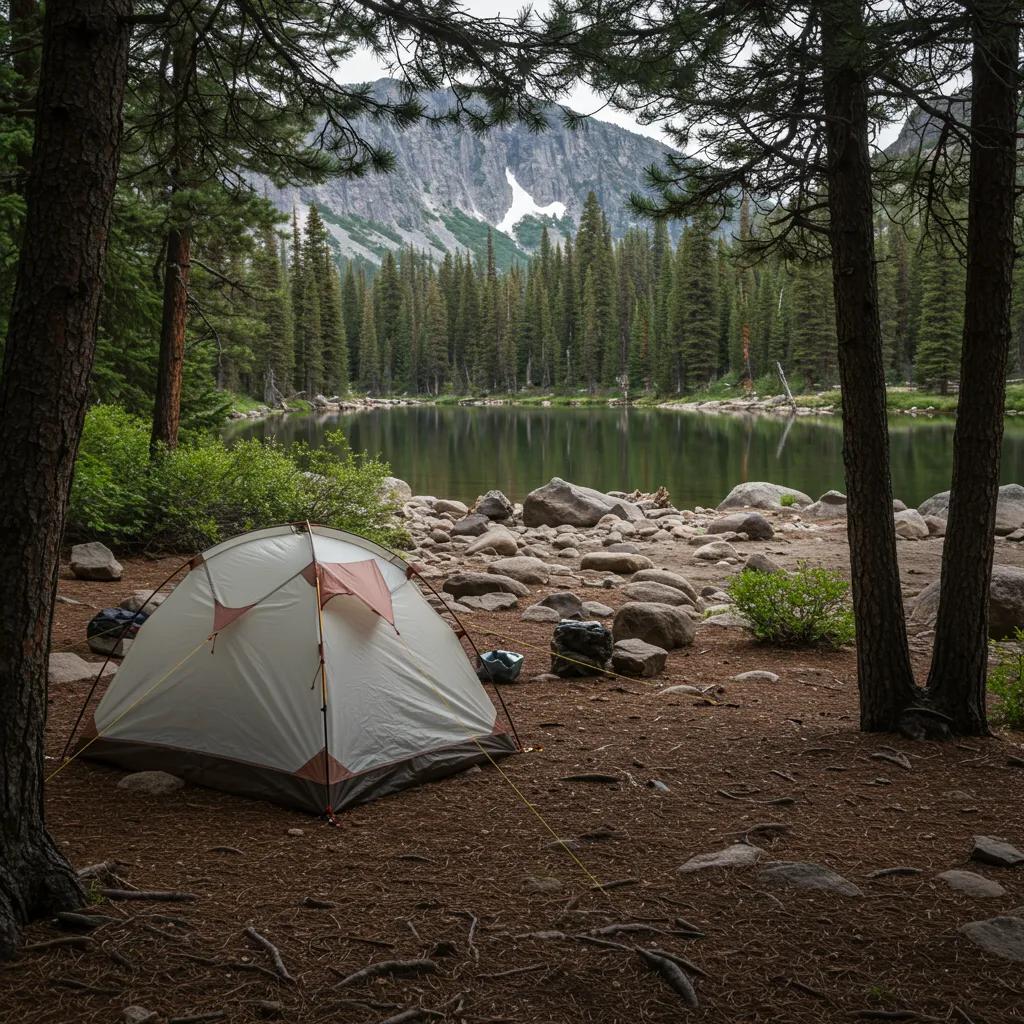
Dispersed camping means camping outside a developed campground, with no designated site, no restroom, no water and no fee. You pick a legal spot on public land, pack in everything and pack out everything. In Michigan it is allowed on most state forest land (with the free registration card described above) and in the national forests (generally no permit). It is not allowed in state parks and recreation areas or on state game areas.
It is a different experience from a campground: no fire rings, no bathhouse and no neighbors, which is exactly what some people want. Families with young kids usually prefer a developed campground, and that is where Walnut Hills fits: a fire ring and picnic table on every site, a renovated bathhouse, a spring-fed swimming lake and weekend events. For a middle ground, the primitive tent sites at Walnut Hills (14 of our 18 tent sites have no hookups) give a tent-only feel with facilities a short walk away.
Do you need a permit for a campfire in Michigan?
Not for a campfire at a campground. You use the fire ring on your site and follow the park’s guidelines: fires stay in the ring and attended, and outside firewood isn’t allowed (it carries tree pests, and Michigan is tightening its firewood rules), so buy a bundle at the camp store. At Walnut Hills the store sells firewood and will deliver it to your site. The Michigan DNR burn permit system is for open burning of yard debris, and the DNR only issues those permits for counties in the Upper Peninsula and the northern Lower Peninsula; in southern Michigan, debris burning goes through your local fire department. Dry spells can bring temporary fire restrictions on public land, so check the DNR or forest website before a dispersed trip. Our Michigan campfire rules article has the details.
Camping permit requirements by state: the general pattern
Michigan’s setup is typical of how most states work, which helps if you camp across state lines:
- State parks almost everywhere require a campsite reservation or on-arrival registration, and many states also charge a vehicle entry fee or sell an annual pass similar to Michigan’s Recreation Passport.
- State forests and state trust lands vary the most. Some states, like Michigan, allow free dispersed camping with a registration card; others require a paid annual permit or allow camping only in designated sites.
- National forests and BLM land follow federal rules: dispersed camping is usually free with a stay limit (often 14 to 16 days), while popular wilderness areas may use quota permits.
- National parks require reservations for most developed campgrounds and permits for backcountry travel, usually through Recreation.gov.
- Private campgrounds need no permit in any state. Your reservation is the whole process.
Always confirm with the agency that manages the specific land; rules change by season and district.
Camping permit FAQ
Do I need a Recreation Passport to camp at Walnut Hills?
No. The Recreation Passport is for vehicle entry to Michigan state parks and state forest campgrounds. It has no role at a private campground.
How far in advance can I reserve a Michigan state park campsite?
Six months ahead through the DNR reservation system. Private campgrounds set their own windows; Walnut Hills takes reservations well ahead, and the three Halloween weekends in September and October book far in advance.
Can I camp anywhere in a Michigan state forest for free?
On most state forest land, yes, with the free DNR camp registration card posted at your site, more than a mile from a state forest campground and outside parks, recreation areas and game areas.
Where do I find Walnut Hills’ rules?
On the map and rules page: quiet hours are 11 PM to 8 AM so everyone sleeps, kids and bikes are back at the site by dusk, and golf carts park for the night at dark. For a look at what’s on site, see Walnut Hills amenities.