Selling Your Campground: Why Choosing the Right Broker Matters Over Traditional Agents
Campground owners face a distinct decision when preparing to sell: use a general commercial real estate agent, hire a specialized campground broker, or pursue a direct buyer. This article explains how those choices differ in expertise, buyer networks, valuation methods, and transaction mechanics so sellers can protect value and preserve legacy when they sell their RV park or campground. You will learn practical comparisons, current 2025 market implications for pricing and finance, valuation basics (NOI, cap rates, revenue multiples), and an actionable decision framework that maps property types and owner goals to the best sales route. The guide then walks through a step-by-step direct-sale process for owners who prefer a confidential, stewardship-focused buyer. Finally, we’ll cover broker selection criteria, FSBO risks, and concise FAQs to help you make an informed choice about selling your campground in 2025.
What Are the Key Differences Between Campground Brokers and Traditional Real Estate Agents?
Campground brokers specialize in outdoor hospitality transactions and bring industry-specific valuation models, buyer networks, and marketing channels focused on RV parks and campgrounds. Traditional real estate agents typically handle a broad set of commercial properties and rely on general market exposure rather than niche buyers, which can reduce targeted demand for campground assets. Specialized brokers use metrics like NOI, seasonality-adjusted pro formas, and site-mix analytics to convey value, while conventional agents may default to land or general commercial comps that miss operational drivers. Understanding these role differences helps owners choose a path that protects price, confidentiality, and operational continuity during a sale.
Campground sales require tailored outreach and confidentiality to avoid operational disruption and personnel concerns, so choosing a specialist often yields better buyer matches and smoother closings. The next section compares typical strengths and weaknesses across the three seller routes to help you weigh tradeoffs.
This table highlights how a seller’s priority—highest competitive price versus speed, confidentiality, or legacy preservation—affects which channel fits best. Next, we examine why general agents can fall short and how specialists and direct buyers make different operational choices.
Why Do Traditional Real Estate Agents Often Fall Short in Campground Sales?
Traditional agents can struggle because campgrounds are hybrid assets: real estate plus hospitality business, and many agents lack operational insight into ancillary revenues and seasonality. Without recognizing revenue streams from cabins, store sales, or special-event bookings, agents may underprice a property or attract buyers who value only the land. This mismatch often leads to extended marketing periods or renegotiations when operational realities surface, which harms seller leverage. Recognizing these weaknesses early helps owners either seek out a specialist or prepare supplemental operational documentation for a general agent before listing.
These operational blind spots directly contrast with how specialized brokers and experienced buyers approach valuation and buyer outreach, which we’ll outline next.
How Do Specialized Campground Brokers Provide Industry Expertise?
Specialized campground brokers translate operational performance into market value by modeling Net Operating Income (NOI), seasonality adjustments, and revenue multiples familiar to park investors. They maintain industry-specific buyer lists, craft offering memoranda that highlight amenity-driven ancillary revenue, and vet buyers for financing capability. These brokers also coordinate targeted marketing—off-market outreach and discreet teasers—to protect staff morale and guest experience during the sale. For sellers, that means fewer wasted showings and offers that reflect operational upside rather than raw land comps.
This industry expertise reduces time on market and improves the quality of offers, which leads into an important alternative: direct buyers who operate parks and may buy off-market for stewardship reasons.
What Unique Benefits Does GatherGrounds Resorts Offer as a Direct Buyer?
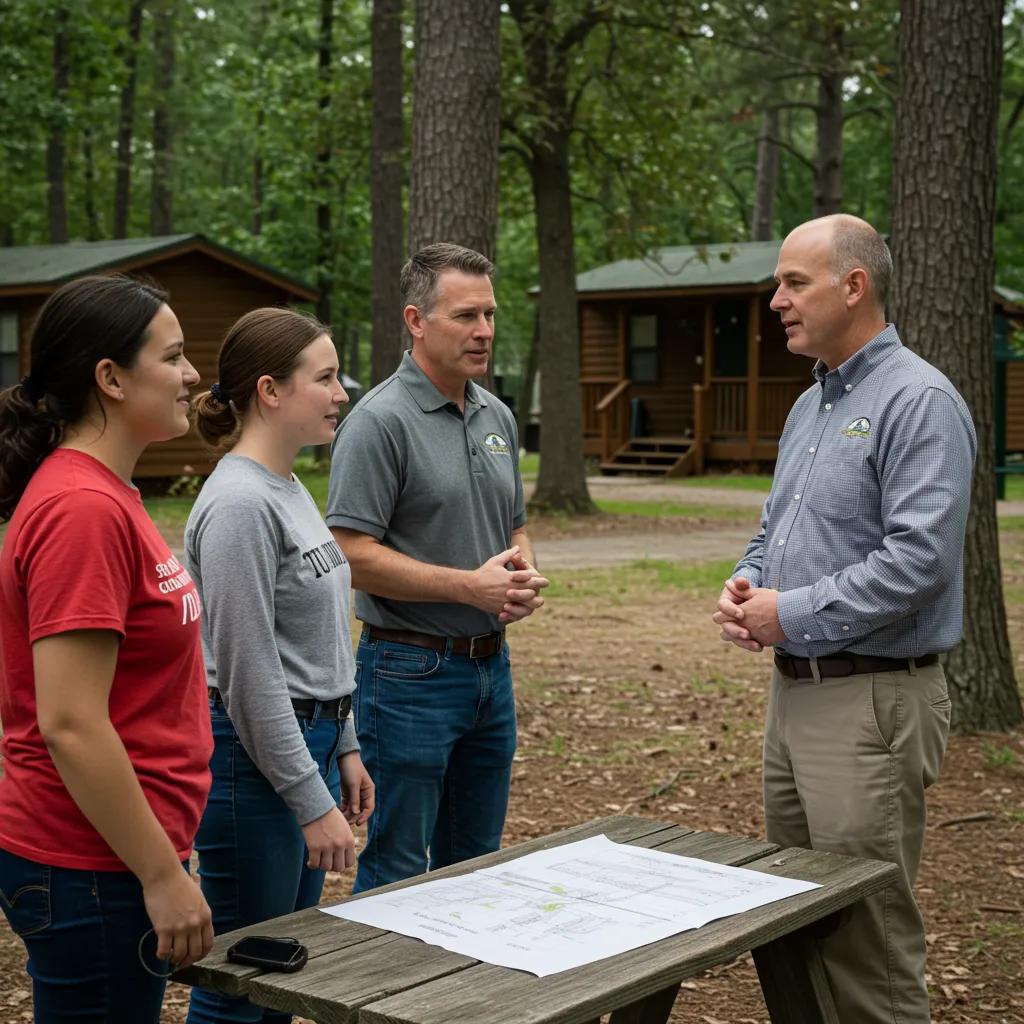
GatherGrounds Resorts’ direct acquisition of campgrounds and RV parks provides sellers a family-owned, values-driven option that emphasizes stewardship, operational continuity, and a streamlined transaction path. As a direct buyer, GatherGrounds offers confidential conversations directly with owners or operators, reducing approval layers and simplifying decision cycles compared with corporate chains or multi-tier buyers. Their approach includes commitments to preserve traditions and retain great teams where possible, making them appealing to owners prioritizing legacy and community continuity. For sellers with parks that match targeted acquisition criteria—particularly parks with 130+ sites—this direct-buyer route can reduce transactional friction and align on non-monetary transition goals.
Understanding buyer motives and tradeoffs between auction-style competitive sales and a confidential direct sale helps frame seller priorities before examining costs and fees below.
How Do Brokerage Fees and Commissions Compare Between Brokers and Agents?
Fee structures vary: traditional commercial agents and specialized brokers typically charge commissions pegged as a percentage of sale price, while direct buyers often purchase without paying commission but may offer at a lower market multiple to reflect operational synergies. Typical commission ranges for brokered commercial transactions are negotiable but often fall in a band where fees materially affect seller net proceeds; sellers must weigh net proceeds after costs versus faster, fee-free direct offers. Additionally, some brokers may structure incentives or split fees for off-market deals, while direct buyers factor in renovations or stewardship investments post-close. Evaluating net proceeds requires modeling both gross offer and all transaction costs, including commissions, closing fees, and transition-related expenses.
Comparing net outcomes across channels requires clear valuation inputs—NOI, cap rate, and site-specific revenue assumptions—which we cover in the valuation section.
How Does the 2025 Campground Market Impact Your Selling Strategy?
The 2025 campground market reflects normalized valuations after the rapid expansion of prior years, with cap rates generally higher and buyer financing more selective, so sellers should calibrate expectations accordingly. Market data and industry reporting in 2025 point to shifts toward more conservative cap rates and revenue multiples, influencing how brokers, agents, and direct buyers value parks. Sellers need to account for interest-rate-driven buyer caution, shifting demand for certain amenities, and the premium that operationally savvy buyers place on scalable parks. Adapting a selling strategy to these dynamics—timing, marketing channel, and deal terms—improves chances of a smooth sale at a fair price.
Next, we summarize current valuation trends and cap-rate ranges that sellers should use when preparing a listing or responding to a direct offer.
- Market normalization: valuations moderating from earlier peaks, emphasizing verified NOI.
- Cap-rate pressure: upward movement in cap-rate expectations across average parks.
- Financing constraints: buyers facing stricter underwriting and higher down-payment needs.
- Opportunity windows: well-positioned properties still command attention from buyers seeking scale.
These data points illustrate why specialized market knowledge matters when pricing and structuring a sale.
What Are the Current RV Park Valuation Trends and Cap Rates in 2025?
Campground valuation in 2025 increasingly emphasizes verified Net Operating Income and adjusted pro formas to reflect seasonality and ancillary revenues, which determine cap-rate-based pricing. Industry observers report a trend toward higher cap rates for average parks as lenders price risk, while parks with stable NOI, diversified amenities, or exceptional location command tighter cap rates. Buyers are comparing gross revenue multiples alongside cap-rate analysis to capture both short-term cash flow and long-term appreciation potential. Sellers should prepare clear NOI documentation and sensitivity tests to justify valuation when engaging brokers, agents, or direct buyers.
This valuation reality affects buyer pools and financing pathways, which we outline next when discussing interest rates and lender behavior.
How Do Interest Rates and Financing Challenges Affect Campground Sales?
Higher interest rates and tighter lending standards in 2025 have reduced leverage for many buyers, increasing down-payment requirements and shifting more risk to buyers and sellers in deal structuring. Lenders may require larger equity cushions, sponsor track records, and conservative pro formas that lower what financed buyers can pay without seller concessions. As a result, sale timelines can lengthen while buyer pools shrink to well-capitalized investors or direct operators willing to self-finance. Understanding these financing limitations helps sellers choose whether to pursue a brokered competitive sale to reach more cash buyers or a direct sale with an operator who can bridge financing gaps.
Because financing narrows the buyer set, specialized market knowledge becomes even more crucial, as described next.
Why Is Specialized Market Knowledge Critical in Today’s Campground Sales?
Specialized advisers translate market shifts into actionable listing strategies by stress-testing pro formas, adjusting cap-rate assumptions, and identifying amenity-driven upside that general lenders or buyers might overlook. This expertise helps sellers avoid pricing missteps and identify buyers with realistic financing paths, such as credit-worthy investors, private buyers, or operators able to offer seller-friendly terms. Specialists can also propose phased transitions, seller financing options, or earnouts that align with retirement and legacy goals while increasing buyer appeal. Applying that industry knowledge yields better-aligned offers and smoother closings in a constrained financing environment.
With market context set, the next sections describe a practical direct-sale process with a values-driven buyer to illustrate an alternative to brokered transactions.
What Is the Step-by-Step Process to Sell Your Campground to GatherGrounds Resorts?
Selling directly to an operator follows a clear operational path designed to reduce seller burden and preserve legacy while achieving a confidential close when possible. The process prioritizes an initial no-obligation conversation, a valuation based on verified NOI and physical condition, a concise offer, focused due diligence, and cooperative transition planning that often seeks to retain staff and traditions. For owners considering a direct buyer, documenting operations, financials, and key personnel roles early accelerates evaluation and reduces friction. Presenting information in a standardized way shortens timelines and improves offer clarity for both parties.
The numbered steps below outline what owners should expect and prepare for when engaging a direct buyer.
- Initial Confidential Inquiry: Owners provide a high-level overview—site count, seasonality, and recent financial summaries—while preserving discretion.
- Valuation & Offer: The buyer analyzes NOI, comps, and potential operational synergies to present a clear, itemized offer with terms and a timeline.
- Due Diligence: A targeted diligence phase verifies operations, environmental status, title, and leases with centralized communication to reduce seller workload.
- Closing & Transition: The buyer and seller plan staff retention, transition timelines, and legacy-preservation measures before finalizing documents.
How Does the Initial Inquiry and Confidential Discussion Work?
The initial confidential conversation is a structured, no-pressure exchange where owners summarize the property, recent occupancy trends, site mix, and high-level financials, enabling a buyer to assess fit quickly. Confidentiality safeguards—non-disclosure agreements and limited-information memos—protect operations and staff morale while allowing serious buyers to evaluate potential. Owners should have a summary package ready: site count, peak-season occupancy, three years of P&L summaries, and a list of amenities to facilitate rapid screening. This early screening saves time for both parties and sets expectations for valuation and next steps.
Preparing this package streamlines the valuation phase and leads into the offer presentation described next.
What Happens During Valuation and Offer Presentation?
Valuation typically begins with an NOI calculation that normalizes seasonal income and adjusts for one-time expenses, then applies a market-appropriate cap rate or revenue multiple to estimate value. The buyer presents a clear, itemized offer that includes price, proposed timeline, contingencies, and any proposed transition commitments for staff or guest-facing traditions. Sellers should expect transparent assumptions around projected NOI and any planned capital investments the buyer intends to make post-close. An itemized offer helps owners compare direct offers to broker-solicited bids and evaluate tradeoffs between net proceeds and non-monetary transition goals.
A concise, documented offer reduces ambiguity and moves transactions into a focused diligence phase that minimizes seller disruption.
How Is Due Diligence Managed for a Smooth Transition?
Due diligence for campground transactions centers on operations, environmental checks, title review, contracts, and verification of P&L statements, conducted within an agreed timeline to limit operational interruption. Buyers who manage acquisitions closely typically provide a checklist and coordinate inspections to minimize time on site and staff distraction, handling most document requests through a secure data room or centralized contact. Sellers can reduce burden by preparing organized records—leases, vendor agreements, payroll histories, and maintenance logs—in advance. Efficient project management during this phase preserves guest experience and keeps transition momentum.
Minimizing seller workload during diligence improves the odds of a timely close and enables a cooperative transition planning phase focused on legacy preservation.
How Does GatherGrounds Preserve Your Campground’s Legacy and Staff?
GatherGrounds Resorts’ direct acquisition of campgrounds and RV parks emphasizes family-owned stewardship, committing where possible to retain great teams and preserve guest-facing traditions to protect community relationships and the property’s identity. Post-acquisition plans often include operational assessments with intentions to maintain successful staff roles while investing selectively in amenities to enhance the guest experience. This stewardship-focused approach helps owners who prioritize legacy and community continuity over a rapid financial exit. Sellers who value these outcomes can discuss retention commitments and transition roles as part of the offer and closing documents.
Understanding these stewardship commitments helps owners decide whether a direct sale aligns with retirement and legacy objectives. The next section compares selling by owner to professional routes.
Why Is Choosing a Specialized Campground Broker or Direct Buyer Better Than Selling By Owner?
Selling a campground without professional representation introduces material risks: limited buyer reach, pricing errors, confidentiality breaches, and legal or disclosure missteps that can derail a sale. Specialized brokers and direct buyers provide buyer vetting, market positioning, and transaction management that reduce deal fall-through and protect net proceeds. Sellers planning retirement or looking to preserve staff and community relationships benefit from structured transition options that professionals can negotiate. Weighing FSBO tradeoffs against the benefits of specialist marketing or a values-driven direct buyer clarifies whether to pursue a DIY sale or enlist help.
- Limited Buyer Pool: Owners selling privately often reach fewer qualified buyers, reducing competitive bidding and price discovery.
- Valuation Errors: Non-specialists may misprice assets by ignoring operational metrics like NOI and ancillary revenue.
- Confidentiality Risks: Public marketing without discretion can disrupt bookings, staff morale, and community relations.
- Transaction Complexity: Legal, environmental, and lender-driven contingencies can overwhelm owners without experienced transaction managers.
After weighing these risks, owners may prefer targeted broker outreach or a confidential direct-buyer path like the one GatherGrounds offers, which we describe below.
What Are the Risks and Costs of Selling Your Campground Without a Broker?
FSBO sellers often underestimate the time and expertise required to reach qualified buyers, leading to extended marketing windows and potential price concessions to close deals. Legal and disclosure missteps during FSBO transactions can expose sellers to post-close liabilities and renegotiations that erode net proceeds. Additionally, limited vetting increases the risk of deal failure when buyers cannot secure financing or when inspections reveal operational issues. Understanding these costs helps owners decide whether to invest in professional representation or pursue a confidential direct sale that reduces such risks.
These FSBO risks make buyer-sourcing and vetting capabilities central to a seller’s strategy, which brokers and direct buyers address differently as explained next.
How Do Brokers and GatherGrounds Facilitate Access to Qualified Buyers?
Specialized brokers use curated buyer lists, industry networks, and off-market outreach to connect sellers with investors and operators who understand campground economics, improving the likelihood of credible offers. GatherGrounds Resorts’ direct acquisition process narrows outreach to an owner-to-operator conversation, providing a confidential alternative that can bypass broad marketing while still delivering a serious, vetted buyer. Both routes emphasize pre-qualification—financial capability, track record, and alignment on transition goals—to reduce wasted time and protect operational continuity. Sellers should compare the buyer-sourcing strategies of any advisor to ensure they reach the right mix of cash buyers, lenders, and operators.
Choosing between these approaches depends on priorities: maximum market exposure versus confidentiality and stewardship.
How Does a Thoughtful Transition Benefit Campground Owners Planning Retirement?
A structured transition can provide phased management handoffs, earnouts, or seller financing tailored to retirement timing, allowing owners to protect staff and community ties while realizing liquidity. Thoughtful transitions minimize operational disruption by preserving guest experience, retaining key personnel, and honoring traditions that underpin repeat visitation. Builders of long-term value often coordinate renovation plans and capital improvements that increase property appeal post-close, benefiting both seller and buyer in structured deals. For many owners, these non-monetary outcomes—stewardship, staff retention, community continuity—are as important as price when planning retirement.
If legacy preservation ranks highly, a direct buyer or a broker experienced in tailored transitions may be the preferred route. The following section shows how valuation works in practice for 2025.
How Can You Accurately Value Your Campground in 2025?
Accurate 2025 valuation starts with Net Operating Income (NOI), which isolates recurring campground cash flow, then applies a market-appropriate cap rate or revenue multiple to estimate value. Buyers and brokers adjust NOI for seasonality, non-recurring expenses, and ancillary revenue drivers such as cabins, stores, and event rentals to model realistic future cash flows. Site count and usable acreage influence scale premiums, with larger parks that meet targeted criteria often commanding stronger multiples. Preparing clear, audited financials and amenity inventories improves valuation credibility and helps sellers compare offers across channels.
Below is a practical EAV-style comparison showing illustrative valuation metrics for different park sizes to guide expectations.
This table illustrates how scale and NOI stability typically tighten cap rates and expand revenue multiples for larger, well-positioned parks. Next, we break down the primary financial metrics owners should know.
What Financial Metrics Should You Consider: NOI, Cap Rate, and Revenue Multiples?
Net Operating Income (NOI) equals gross operating revenue minus operating expenses and is the primary cash-flow metric buyers use to assess campground value. The capitalization rate (cap rate) converts NOI into value: Value = NOI / Cap Rate, making cap-rate selection critical and market-sensitive. Revenue multiples—gross revenue times a multiple—offer a sanity check, particularly when ancillary revenue comprises a large share of income. Sellers should prepare reconciled NOI statements and be ready to explain seasonality, one-time items, and areas for operational upside to support realistic cap-rate assumptions from buyers.
Having these metrics ready reduces valuation disputes and shortens negotiation cycles, as discussed when comparing buyer perspectives below.
How Does GatherGrounds Assess Campground Value Differently Than Brokers or Agents?
GatherGrounds Resorts’ direct acquisition of campgrounds and RV parks evaluates value through combined operational and stewardship lenses, factoring verified NOI and the potential for targeted upgrades that preserve legacy while improving guest experience. Unlike brokers who may price based primarily on market comps or agents who default to land-oriented valuation, a direct operator buyer often incorporates projected synergies, cost efficiencies, and renovation timelines into their offer. This can yield competitive, well-structured offers with clear transition commitments tailored to preserving staff and traditions. Sellers should compare a direct buyer’s operational assumptions against market comps to understand tradeoffs between price and long-term stewardship value.
Comparing these buyer perspectives helps owners decide whether to prioritize auction-style pricing or a direct stewardship-focused outcome.
What Amenities and Features Most Influence Campground Market Value?
Amenity-driven ancillary revenue—cabins, full hookups, pools, on-site retail, and event spaces—materially influences NOI and buyer interest, often commanding higher multiples when well-executed and marketed. Site mix (seasonal sites vs. permanent lots), usable acreage for expansion, and infrastructure quality (sewer, water, electrical capacity) affect operational flexibility and long-term upside. Proximity to demand drivers (recreation, scenic assets) and community relationships that generate repeat visitation also increase valuation. Sellers should inventory amenities, document ancillary revenue, and present maintenance histories to maximize perceived value and justify cap-rate compression.
Preparing amenity-focused evidence helps convey true operational worth and supports stronger offers from brokers, agents, or direct buyers.
What Are the Top Qualities to Look for in the Best Campground Brokers?
Top campground brokers combine industry specialization, an established buyer network, confidentiality safeguards, and transaction project management skills to deliver better sale outcomes. Sellers should prioritize brokers who provide targeted marketing—offering memoranda tailored to park economics—plus a track record of completed park transactions and buyer vetting. Confidentiality practices, clear fee structures, and demonstrated coordination of due diligence and closing logistics reduce risk and seller burden. Evaluating brokers against these criteria helps owners choose representation that aligns with timing, price expectations, and legacy priorities.
The following questions and checklist items help when evaluating prospective brokers:
- Ask about specialization: How many campground/RV park transactions has the broker closed?
- Request buyer metrics: How many pre-qualified buyers are on their park-specific list?
- Confirm confidentiality practices: What safeguards do they use for off-market listings?
- Evaluate project management: Who will coordinate diligence, inspections, and closing logistics?
How Important Is Industry Specialization and Buyer Network?
Industry specialization correlates closely with faster sales and higher-quality offers because specialized brokers target buyers who understand campground economics and financing. A deep buyer network reduces time on market by reaching cash buyers, operators, and institutional investors who can meet financing and operational requirements. When interviewing brokers, owners should request examples of targeted outreach and anonymized buyer profiles that demonstrate fit for their park type. Specialization also helps brokers anticipate diligence issues and present pro formas that resonate with buyers’ underwriting standards.
Assessing a broker’s specialization therefore directly influences sale timing, price, and transition outcomes.
Why Does Confidentiality Matter in Campground Sales?
Confidential marketing prevents operational disruption, protects staff morale, and maintains guest experience while a property is for sale, especially in communities where word spreads quickly. Uncontrolled exposure can cause booking declines, vendor unease, and employee attrition, all of which reduce NOI and weaken sale leverage. Confidential strategies—teaser summaries, NDAs, and selective buyer outreach—limit these risks while still generating serious offers. Sellers should prioritize advisors who can document a confidentiality plan and demonstrate how they manage sensitive communications during marketing and diligence.
Maintaining confidentiality is a critical tactical choice that supports value preservation and smooth transitions.
How Do Brokers Support Marketing and Transaction Management?
Brokers provide targeted offering memoranda, buyer outreach campaigns, and curated showings that highlight amenity-driven revenue and operational strengths to qualified buyers. They also coordinate due diligence, inspections, title work, and closing logistics, acting as the central project manager to reduce seller time investment and minimize disruptions. Effective brokers combine marketing assets—photography, revenue breakdowns, and amenity lists—with negotiated timelines that protect ongoing operations. Choosing a broker with structured project management improves the odds of a timely, high-quality close.
With broker qualities evaluated, many owners still have practical questions about selling; the final section addresses common FAQs.
Frequently Asked Questions
What should I prepare before selling my campground?
Before selling your campground, it’s essential to gather comprehensive documentation, including financial statements, occupancy rates, and details about amenities. Prepare a summary package that includes the site’s count, recent profit and loss statements, and any unique features that enhance its value. This information will not only help potential buyers assess the property quickly but also streamline the valuation process. Having organized records ready can significantly reduce the time spent during due diligence and improve the quality of offers you receive.
How can I ensure confidentiality during the sale process?
To maintain confidentiality during the sale of your campground, consider using non-disclosure agreements (NDAs) with potential buyers and brokers. Limit the information shared publicly and opt for off-market listings to avoid disrupting operations and staff morale. Specialized campground brokers often have strategies in place to protect your privacy while still attracting serious buyers. By controlling the flow of information, you can safeguard your business’s reputation and operational integrity throughout the selling process.
What are the common pitfalls to avoid when selling a campground?
Common pitfalls when selling a campground include overpricing the property, failing to prepare adequate documentation, and neglecting to vet potential buyers. Overpricing can deter serious buyers and prolong the sale process, while inadequate documentation can lead to valuation disputes. Additionally, not thoroughly vetting buyers may result in deal failures due to financing issues. Engaging a specialized broker can help you navigate these challenges by providing market insights and ensuring that you attract qualified buyers.
How long does the selling process typically take?
The duration of the selling process for a campground can vary significantly based on several factors, including the chosen sales route, market conditions, and the complexity of the transaction. Brokered sales may take longer due to broader marketing efforts and competitive bidding, often spanning several months. In contrast, direct sales to qualified buyers can close more quickly, sometimes within weeks, if both parties agree on terms and documentation. Preparing your property and financials in advance can help expedite the process.
What role does market timing play in selling my campground?
Market timing is crucial when selling your campground, as it can significantly impact buyer interest and pricing. Factors such as economic conditions, interest rates, and seasonal demand can influence the market landscape. For instance, selling during peak camping seasons may attract more buyers, while economic downturns can limit financing options. Staying informed about market trends and working with a specialized broker can help you identify the best time to list your property for sale, maximizing your chances of a successful transaction.
What are the benefits of using a specialized campground broker?
Using a specialized campground broker offers numerous benefits, including access to a targeted buyer network, industry-specific valuation expertise, and confidentiality practices tailored to outdoor hospitality. These brokers understand the unique dynamics of campground sales, allowing them to market your property effectively and negotiate better terms. Their experience in the field can help you avoid common pitfalls and streamline the selling process, ultimately leading to a smoother transaction and potentially higher sale price.
Can I sell my campground without a broker, and what are the risks?
Yes, you can sell your campground without a broker, but this approach carries several risks. Selling by owner (FSBO) often leads to limited buyer reach, potential pricing errors, and confidentiality breaches. Without professional representation, you may struggle with the complexities of the transaction, including legal and disclosure requirements. Additionally, the lack of a structured marketing strategy can result in prolonged selling periods and lower offers. Weighing these risks against the benefits of professional assistance is crucial for a successful sale.
What Is the Difference Between a Real Estate Agent and a Campground Broker?
A real estate agent handles a wide range of property types and often focuses on land and general commercial comps, while a campground broker specializes in outdoor hospitality transactions and understands operational drivers like NOI and ancillary revenue. Brokers bring niche buyer networks and tailored marketing that target park investors and operators, whereas agents may rely on broader MLS-style exposure. For sellers, the specialization choice affects buyer quality, valuation accuracy, and confidentiality practices. Evaluating this difference clarifies which professional aligns with your sale goals.
This distinction influences costs and the sale process, which owners also commonly ask about next.
How Much Does It Cost to Sell a Campground?
Selling costs include commissions, closing fees, due-diligence expenses, and potential advisory or legal fees; commission rates vary but are a material factor when comparing brokered sales to direct offers. FSBO sellers save on commissions but often incur higher time costs, marketing expenses, and risk of lower sale price due to limited buyer reach. Direct buyer scenarios may avoid commission but can reflect a valuation that accounts for buyer synergies or planned capital investments. Sellers should model net proceeds after all costs to compare routes effectively.
Comparing net proceeds rather than gross offers provides a clearer basis for decision-making between channels.
Is 2025 a Good Year to Sell an RV Park?
2025 presents both challenges and opportunities: higher interest rates and selective financing have compressed buyer pools, yet well-positioned parks—especially those with scale, strong NOI, and desirable amenities—remain attractive to operators and investors. Sellers with parks matching targeted buyer criteria may find direct buyers or specialized brokers willing to transact even in a tighter market. Timing, realistic valuation, and choosing the right sales channel are the primary determinants of success in 2025. Preparing comprehensive financials and amenity documentation improves sale prospects.
If legacy and confidentiality matter, a direct buyer may offer the best alignment; if maximizing price via competition is the priority, specialized brokerage may be preferable.
How Do I Find a Qualified Buyer for My RV Park?
Qualified buyers can be found through specialized campground brokerages, industry networks, off-market outreach, and direct operator buyers who maintain acquisition pipelines. Vet buyers for financing ability, operational experience, and alignment with transition goals to reduce risk of deal failure. Specialized brokers facilitate this process through curated buyer lists and pre-qualification protocols, while direct buyers provide a more targeted confidentiality-focused path to a single, vetted operator. Preparing an organized data package streamlines buyer evaluation and helps accelerate credible offers.
Selecting a sourcing route depends on whether you prioritize confidentiality, speed, or competitive pricing.
What Is the Typical Process of Selling a Campground?
The typical sale process includes preparation and documentation, targeted marketing or direct inquiry, offer evaluation, due diligence, closing, and transition planning, with timelines that vary by route and financing complexity. Brokered sales often take longer due to wider marketing and competitive bid cycles, while direct sales can close faster when both parties align on terms and documentation. Due diligence focuses on operations, environmental matters, title, and leases, and transition planning addresses staff, guest experience, and post-close capital plans. Clear planning and early organization shorten timelines and reduce transaction risk.
Sellers should match their timeline and legacy priorities to the sales route that best supports those goals.
For owners ready to explore confidential options, GatherGrounds Resorts’ direct acquisition of campgrounds and RV parks offers a no-obligation conversation focused on fit, timing, and a transition that prioritizes legacy and community. Owners considering a sale can prepare a concise summary—site count, recent financials, and amenity list—to begin that conversation. For owners seeking broader market exposure, specialized campground brokerages provide targeted buyer access and valuation expertise tailored to outdoor hospitality assets.
Conclusion
Choosing the right broker or direct buyer is essential for campground owners looking to maximize value and preserve their legacy during a sale. Specialized brokers and direct buyers like GatherGrounds Resorts offer tailored expertise, confidentiality, and a focus on operational continuity that traditional agents may lack. By understanding the unique dynamics of the campground market, sellers can make informed decisions that align with their goals. Start your journey today by reaching out for a no-obligation conversation about your campground’s future.