“`html
Top 10 Scenic Campgrounds: Capture Breathtaking Views for Your Photography
Discover a handpicked selection of scenic campgrounds perfect for photography lovers and families, offering stunning vistas and practical photo ops. We’ll guide you on how to plan your visit and snap unforgettable shots. Learn what makes a campground truly photogenic, which landscapes yield the most striking images, and essential techniques—from lighting to composition and gear—for capturing great photos. Many photographers find it challenging to locate spots that blend amazing scenery with family comforts and easy access. This guide solves that by highlighting prime landscape types, ideal timing, and specific tips for rivers, lakes, hills, and night skies. You’ll also find a real-world example showcasing photo opportunities and simple planning steps to blend family fun with focused photography. The sections cover: key photographic qualities, top campground types with a Michigan highlight, family logistics, essential technical tips, and where to view guest photos and book your stay.
What Makes These Campgrounds Perfect for Photography Enthusiasts?
A campground shines for photography when its natural beauty, lighting, wildlife, and accessible viewpoints come together to create consistently high-quality images. This happens when natural elements like river bends, shorelines, and rolling hills combine with reliable light windows such as golden hour and blue hour. Plus, amenities that allow photographers to set up and linger comfortably are key. The result? More chances to capture stunning reflections, silhouettes, and genuine family moments. Understanding these factors helps photographers choose locations that align with their creative vision and practical needs. Next, we’ll explore the most photogenic landscape types you’ll find at these top campgrounds and how to approach shooting them.
Which Scenic Landscapes Offer the Best Photo Opportunities at These Campgrounds?
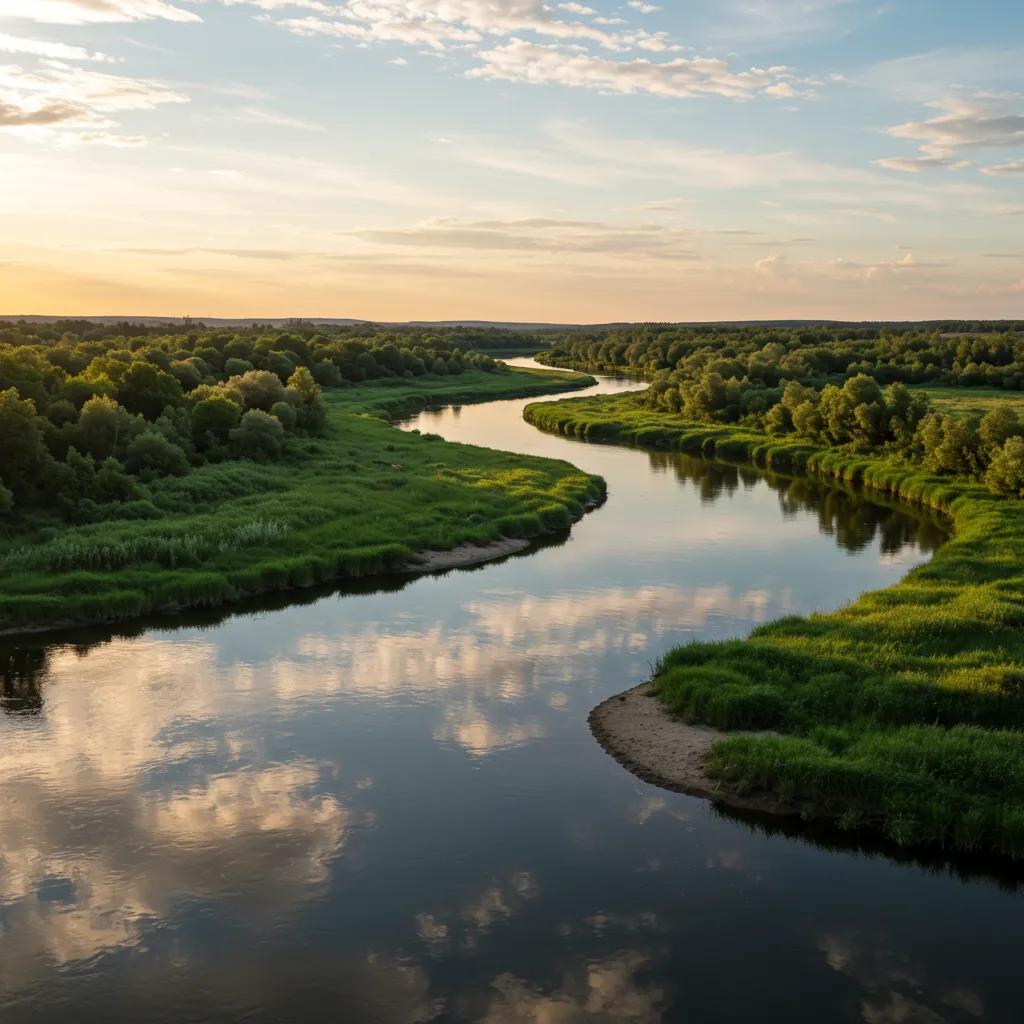
At these premier campgrounds, you’ll find stunning river views, picturesque lake and beach scenes, and captivating rolling hills, each presenting unique photographic advantages and compositional possibilities. Rivers offer dynamic leading lines and beautiful reflections from low angles, making them perfect for long-exposure and golden-hour shots. Lakes and beaches provide mirror-like reflections and vibrant sunsets, enhanced by strong foreground elements and layered compositions. Rolling hills grant elevated vantage points for sweeping panoramas, showcasing patterns of light and shadow, and are ideal for wide-angle framing. These diverse landscapes create a rich variety of photo scenarios, suitable for both expansive landscape work and more intimate telephoto compositions.
How Do Lighting Conditions Elevate Photography Opportunities?
Lighting conditions, particularly the magical golden hour and blue hour, are crucial for setting the mood, color, and texture in outdoor photography. This is why many campers eagerly anticipate early mornings and late evenings. Golden hour bathes the scene in soft, warm light, boosting color saturation in foliage and water, and sculpting the terrain with directional light for dramatic effect. Blue hour is perfect for capturing serene water reflections and achieving balanced exposures between the sky and land. Even overcast days offer diffused light that minimizes harsh contrasts, ideal for detailed shots of flora and wildlife. Planning your shoots around these prime times significantly increases your chances of capturing stunning images.
What Wildlife and Flora Can Photographers Expect to Capture?
Campgrounds situated near rivers, lakes, and forests are often home to a variety of birds, small mammals, and seasonal wildflowers, offering compelling secondary subjects for your landscape images. Early mornings and dusk are prime times to photograph birds in flight, shorebirds along lake edges, and mammals near water sources—always from a respectful distance. Wildflower blooms and shoreline vegetation add vibrant color and texture for macro and mid-range compositions. Remember to maintain ethical distances and use telephoto lenses to ensure animal welfare. Observing wildlife behavior and seasonal plant cycles can help you plan focused sessions alongside your broader landscape photography.
Which Campgrounds Offer the Most Breathtaking Views for Nature Photography?
Exceptional photo opportunities are abundant at riverfront, lakefront, hilltop, and dark-sky campgrounds, as each location provides predictable vantage points and distinctive subjects for both landscape and night photography. Our selection criteria focused on access to clear viewpoints, proximity to water features for reflections, elevation for sunset views, and amenities that allow photographers to stay longer and capture those coveted golden and blue hours.
The following table compares key photography locations and their attributes to help you scout efficiently.
This table illustrates how a combination of river, lake, and hill features offers complementary photo opportunities. Next, we’ll spotlight a specific regional example that perfectly embodies these attributes.
How Does Walnut Hills Family Campground Stand Out in Michigan?
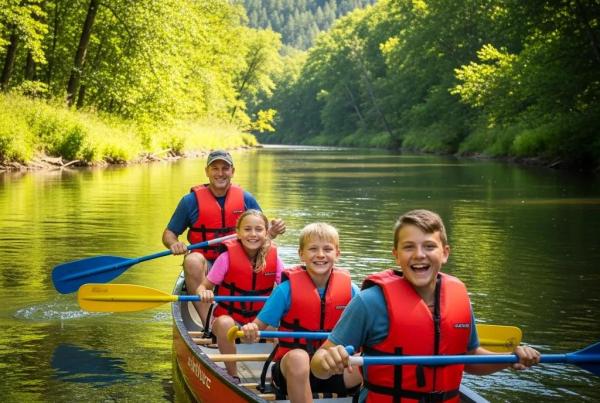
Walnut Hills Family Campground, part of the GatherGrounds Resorts family, is a standout Michigan gem. Its 42 acres boast rolling hills, direct access to the Shiawassee River, and a swimming lake with a Wibit water park, creating a diverse range of photographic subjects all in one location. The on-site canoe livery allows for intimate river-level compositions, while hilltop campsites and shorelines offer elevated sunset viewpoints. Families will appreciate the modern amenities that support longer stays, making it practical to plan multiple golden-hour sessions during your visit. For photographers seeking a rich blend of landscape, action, and family photo opportunities, Walnut Hills delivers concentrated variety.
What Are the Best River and Lake Views for Photography?
River and lake views are most impactful when composed with leading lines, reflections, and foreground interest to anchor the scene and guide the viewer’s eye. Use low-angle compositions near calm water to capture stunning reflections and symmetry, and position subjects along river bends to create natural S-curves that draw viewers into the frame. Action photography is readily available at splash zones like the Wibit water park, where your choice of shutter speed can either isolate motion or freeze activity, depending on your creative vision. Practically speaking, scouting access points and utilizing a canoe launch can reveal unique low-water perspectives for truly compelling images.
Where Can You Capture Stunning Sunset and Golden Hour Shots?
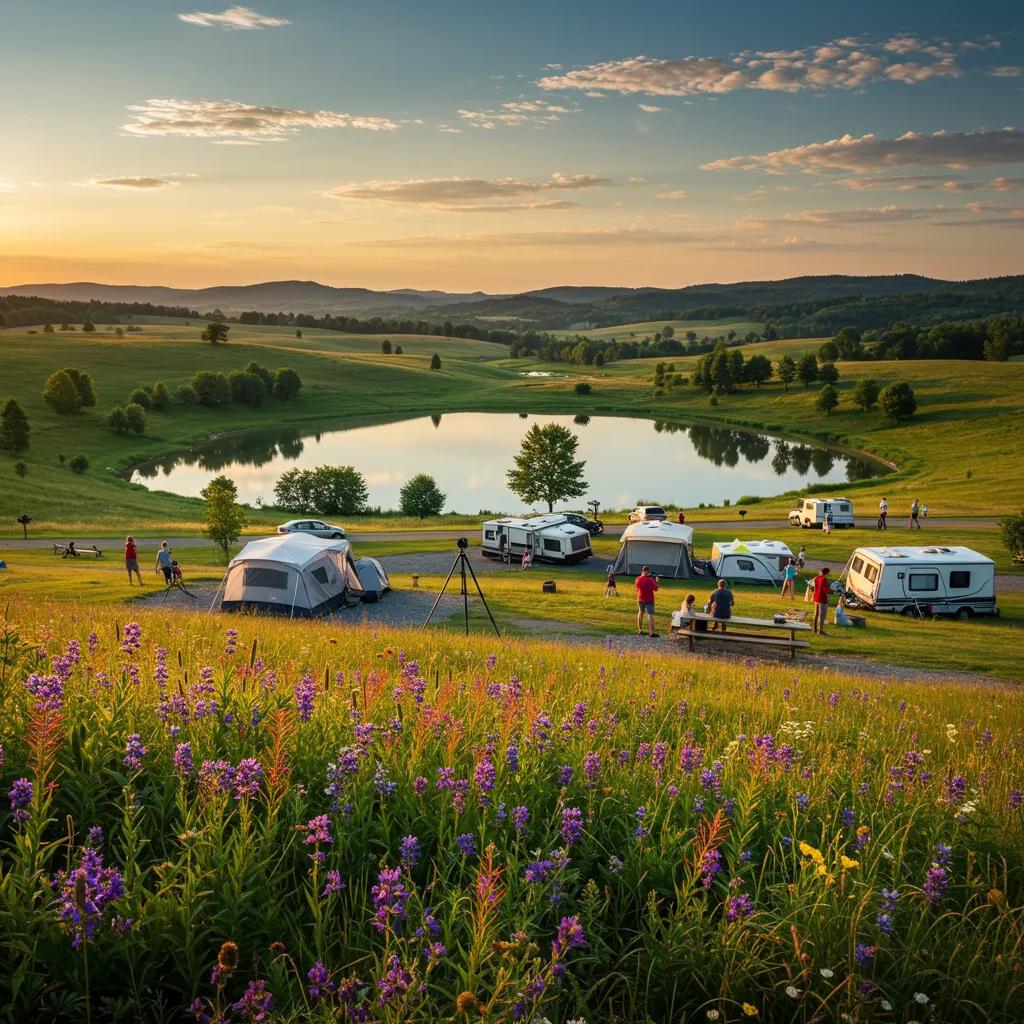
Scouting hilltops, shoreline edges, and open fields will lead you to the best sunset and golden hour vantage points, as these locations offer unobstructed sky views and layered foregrounds for added depth. Utilize sun-path apps and arrive early to set up compositions that incorporate leading lines and interesting foreground elements. Remember that seasonal foliage and water levels can dramatically alter the color palette and reflection quality, so be prepared to adapt your framing. Summer sunsets typically offer extended golden-hour warmth, while autumn brings saturated foliage that enhances foreground interest. Planning and returning for repeat visits will reward you with evolving seasonal variations.
How Can Families Enjoy Scenic Photo Spots While Camping?

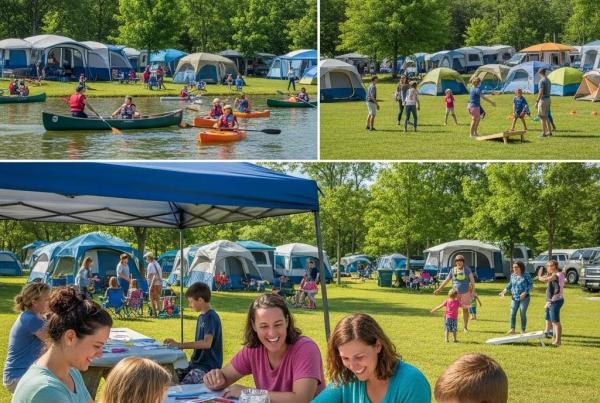
Families can effortlessly blend recreation and photography by selecting safe, easily accessible scenic spots and scheduling photo sessions that fit children’s routines and energy levels. The key is identifying shallow beaches, playground-adjacent vistas, and simple trails that allow for quick capture of candid moments without lengthy excursions. This approach yields both charming family portraits and natural, action-packed images that beautifully document the camping experience. The following subsections highlight family-friendly scenic locations and planning strategies to help you balance photography with your family’s needs.
The following list showcases family-friendly locations where photography opportunities and safety go hand-in-hand.
- Shallow beaches and lake edges offer safe, picturesque settings for kids and pets.
- Playgrounds and pavilion areas are perfect for capturing candid action shots and group interactions.
- Easy, short trails provide lovely portrait backdrops with minimal walking for younger children.
These options allow families to capture a variety of images while keeping comfort and safety top of mind. Next, we’ll outline a practical planning checklist for family trips centered on photography.
What Family-Friendly Scenic Locations Are Available?
Family-focused scenic spots often include beaches with gentle shore zones, clearings near playgrounds, and short, well-maintained trails that provide reliable backdrops for portraits and action shots. Beaches and Wibit areas create lively scenes ideal for candid and action photography, while nearby picnic pavilions and updated campground facilities serve as convenient staging areas for group photos. Dog parks and playgrounds are wonderful for capturing natural moments that tell the story of your visit, requiring minimal setup. Utilizing these accessible locations helps families capture diverse images without compromising supervision or comfort.
How to Plan a Family Camping Trip Focused on Photography?
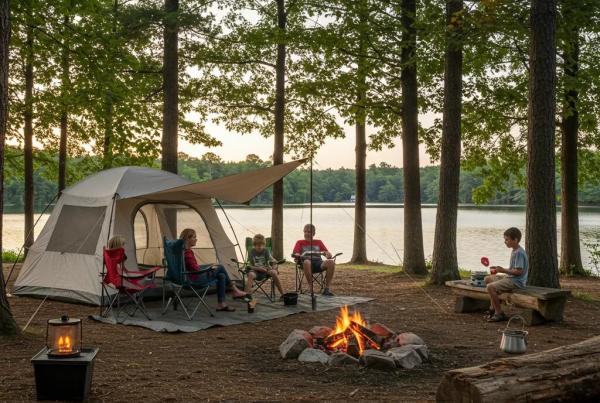
Planning a family trip with photography in mind begins with a simple checklist: pack your camera essentials, coordinate golden hour shoots around meals and naps, and choose accommodations close to key photo spots to minimize travel time. Be sure to include a tripod, spare batteries, a wide-angle and a mid-telephoto lens, and perhaps some simple, child-friendly props for portraits. Schedule brief morning and evening sessions to maximize the best light while keeping daytime free for activities. Selecting campsites that offer both scenic access and modern amenities makes it easier to pursue your photography while maintaining family routines.
What Are Essential Photography Tips for Capturing Scenic Campground Views?
Essential tips boil down to mastering composition techniques, making smart gear choices, and employing exposure strategies tailored for rivers, lakes, hills, and night skies, all designed to produce reliable results in camping environments. The core idea is to combine suitable equipment (tripod, filters, lenses) with scene-specific settings (aperture, shutter speed, ISO) and compositional choices (foreground interest, leading lines) to ensure your images are sharp, well-exposed, and emotionally resonant. Applying these fundamentals will boost your keeper rate and streamline post-processing.
The following table offers quick-reference settings and gear recommendations for common campground subjects.
This quick-reference table provides helpful starting points for settings and gear. The following subsections offer composition and astrophotography tips to further refine your results.
How to Photograph Rivers, Lakes, and Rolling Hills Effectively?
For rivers and lakes, foreground interest and leading lines are key: place rocks, logs, or shoreline vegetation in the lower third to anchor your compositions and use reflections to create symmetry. ND filters and long exposures can smooth water motion, while a polarizing filter helps reduce glare and enhance color saturation. Rolling hills benefit from layered compositions and shooting from slightly elevated positions to capture contours and light patterns. Lens choices vary: wide-angle lenses emphasize scale and depth, while telephoto lenses can compress distant features and isolate details.
Photography Composition Strategies for Excellent Works
Firstly, in photography teaching, it should guide students to refine the evaluation criteria of excellent photography works: distinctive theme, highlighting the subject and establishing visual center, concise composition and full of interest. The three points are the essential prerequisites for forming excellent works. Based on the evaluation criteria of excellent works, the students are guided to analyze and classify the targeted composition elements of photographic pictures, forming the elements such as “subject, companion, environment, color” for picture reconstruction. Through designing the main position, skillfully using the guide line and looking for comparison in the picture to reconstruct the picture, this study aim to obtain the excellent picture composition form, and take different topics as the project team to improve the students’ composition creation ability in the homework training.
Strategies to Train and Improve Students’ Composition Creation Ability in Photography Practice Teaching, 2022
Can You Do Astrophotography at These Campgrounds?
Absolutely! Many campgrounds with minimal local light pollution are perfect for astrophotography, provided you assess light pollution levels and choose nights with clear skies. Safety and comfort are essential for nighttime sessions. Use a sturdy tripod, a wide-angle lens with a large aperture, and an intervalometer or camera timer for longer exposures. Focus manually on a bright star and start with exposure settings around ISO 1600–3200 for 15–25 seconds. Dress warmly, bring headlamps with red light modes, and scout safe positions during daylight to avoid hazards after dark. Practicing these steps will help you capture stunning Milky Way and star-field images.
Where Can You See Stunning Guest Photography and Plan Your Visit?
Viewing guest galleries and seasonal examples is a fantastic way to plan which scenes to target and when to visit for peak conditions. These resources compile vantage points, seasons, and user-captured perspectives to guide your scouting. The process involves studying guest images for composition ideas and timing cues, then booking stays that align with your desired light windows. When planning your visit, consider seasonal options and accommodation types to best suit your photographic goals and family needs.
Below is a quick guide on how to practically use guest photography and booking options.
- Browse guest photography galleries to identify recurring vantage points and seasonal colors.
- Save or note effective compositions and times of day featured in user images.
- Select seasonal options and choose from diverse camping accommodations (RV, tent, and cabin sites) to match your comfort and access preferences.
After using guest photos for inspiration, book your stay and seasonal options to ensure you arrive before golden hour. GatherGrounds Resorts’ campgrounds offer a variety of accommodations to support multi-day photography trips and enjoyable family stays.
Frequently Asked Questions
What equipment should I bring for camping photography?
When preparing for camping photography, essential gear includes a DSLR or mirrorless camera, a sturdy tripod, and a variety of lenses such as a wide-angle for landscapes and a telephoto for wildlife. Don’t forget extra batteries, memory cards, and a polarizing filter to enhance colors and reduce glare. A lens cleaning kit is also useful for maintaining clarity in outdoor conditions. If you plan to shoot at night, consider bringing a headlamp with a red light to preserve your night vision while setting up your shots.
How can I ensure safety while photographing wildlife?
Safety is paramount when photographing wildlife. Always maintain a respectful distance to avoid disturbing animals and use a telephoto lens to capture close-up shots without intruding. Familiarize yourself with the local wildlife and their behaviors, and avoid approaching nests or young animals. Carry bear spray in bear country and know the emergency protocols for wildlife encounters. Additionally, be aware of your surroundings and avoid photographing alone in remote areas to ensure your safety while enjoying nature.
What are the best times of year for camping photography?
The best times for camping photography vary by location but generally include spring and fall. Spring offers vibrant wildflowers and lush greenery, while fall showcases stunning foliage colors. Summer provides opportunities for capturing action shots at lakes and rivers, but can also bring harsh lighting conditions. Winter camping can yield unique landscapes with snow and ice, perfect for dramatic photography. Research seasonal changes in your chosen area to plan your visit for optimal photographic conditions.
How can I improve my photography skills while camping?
Improving your photography skills while camping involves practice and experimentation. Take advantage of the diverse landscapes by trying different compositions and techniques, such as long exposures for water or using leading lines in your framing. Attend workshops or join photography groups to learn from others and receive constructive feedback. Additionally, reviewing your images at the end of each day can help you identify areas for improvement and refine your approach for the next shooting opportunity.
Are there specific photography techniques for night sky shots?
Yes, photographing the night sky requires specific techniques. Use a wide-angle lens with a large aperture (f/2.8 or wider) to capture more light. Set your camera to manual mode, with an ISO between 1600 and 3200, and a shutter speed of 15-25 seconds to avoid star trails. Focus manually on a bright star or distant light. A sturdy tripod is essential to keep your camera stable during long exposures. Experiment with different compositions, including foreground elements, to create more engaging night sky images.
How can I balance family activities with photography during camping trips?
Balancing family activities with photography during camping trips can be achieved by planning your schedule around key times for both. Identify family-friendly activities that allow for quick photography sessions, such as capturing candid moments during playtime or scenic spots near your campsite. Schedule dedicated photography times during golden hours when the light is best, while ensuring these sessions align with family meals and downtime. Communicate with your family about your photography goals, so they can support your creative pursuits while enjoying their own activities.
Conclusion
Choosing the right scenic campground can significantly enhance your photography experience, offering breathtaking views and diverse subjects for capturing memorable moments. By understanding the interplay of landscapes, lighting, and wildlife, you can maximize your photographic opportunities while enjoying family-friendly amenities. Planning your visit around golden hours and utilizing essential photography tips will ensure you create stunning images that reflect your adventures. Start exploring our curated list of top campgrounds today to elevate your photography journey.
“`