Top Features to Consider When Choosing the Best Campgrounds for Outdoor Adventures Nearby
Finding the best campgrounds near you for outdoor adventures means weighing amenities, activities, accommodations, and digital booking ease so families can plan confidently and quickly. This guide explains what makes certain campgrounds the best near me for outdoor enthusiasts by defining core features, how they work, and why each delivers tangible benefits for family comfort and safety. Many outdoor-seeking families struggle to compare sites objectively and secure a spot that fits their needs; this article provides clear criteria, comparison tools, and practical tips to simplify the choice. You will learn which amenities matter most, how to choose between RV, tent, and cabin options, which activities create memorable stays, why location affects experience, and what online booking tools to expect. Throughout, we highlight specific features to look for—like water play, clean bathhouses, dog parks, and river rentals—and show concrete examples to illustrate decisions. By the end you’ll be able to prioritize features, evaluate listings, and use reservation tools to lock in the right campground for your next family adventure.
What Are the Essential Amenities for Family-Friendly Campgrounds?
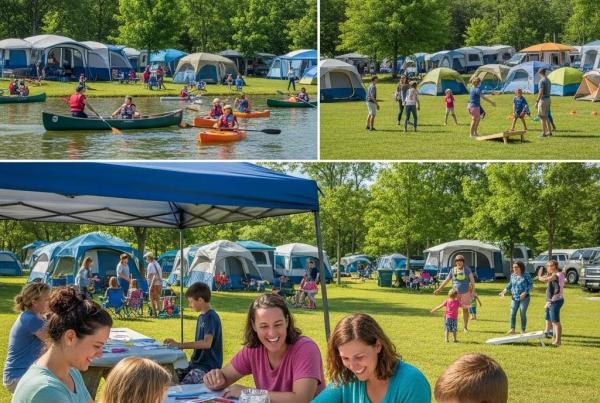
Essential amenities are the on-site facilities and services that make a campground safe, comfortable, and fun for families; they work by reducing friction, extending activity options, and increasing safety so families spend more time enjoying outdoor experiences. Prioritizing amenities such as water play areas, clean restrooms, playgrounds, pet facilities, sports courts, and on-site stores increases convenience and lowers the planning burden for multi-age groups. Below is a focused list of the most commonly sought amenities and the direct benefit each provides for family stays. These items form a quick checklist you can use when scanning listings or calling a campground to confirm specifics.
Family-friendly campgrounds usually feature the following core amenities:
- Water play areas: provide supervised swimming and aquatic play that engage kids and reduce boredom.
- Renovated restrooms and showers: improve hygiene and parental peace of mind during multi-night stays.
- Playgrounds and sports courts: expand on-site activity options and encourage social play among children.
- Dog-friendly spaces: let families bring pets while maintaining safety and cleanliness.
- On-site store and rental partners: reduce the need for emergency supply runs and enable activity rentals.
- Organized weekend events: create low-effort entertainment and opportunities for family bonding.
These amenities help families avoid logistical headaches and focus on recreation; the next paragraph shows a compact comparison table of amenity categories and on-site examples to speed decision-making.
The table below compares common amenity categories and shows concrete examples you can expect on-site at well-equipped family campgrounds.
This quick amenity map helps you compare listings at a glance and prioritize what matters for your group size and ages. Using a structured comparison like this reveals which campgrounds deliver a family-ready experience without surprises.
Walnut Hills Family Campground by GatherGrounds in Durand, Michigan provides a practical example of these amenity categories in action and can illustrate what a fully-equipped family campground looks like. Walnut Hills features a Wibit water park and a swimming lake for water play, renovated bathrooms and showers for comfort, and a large dog park for guests traveling with pets.
Which Water Activities Should a Great Campground Offer?

Water activities refer to on-site and partner-enabled aquatic options that increase recreational value; they work by offering age-appropriate thrills and supervised play that fit family schedules. High-value water features include inflatable obstacle courses, shallow beach areas, lifeguarded swim zones, and on-site rentals for kayaks or tubes. Families should expect clear signage about depth and supervision, rental availability for basic gear, and rules that prioritize child safety while maximizing fun. Considering these elements reduces risk and makes aquatic time easier to plan for parents and guardians.
When evaluating a campground’s water offerings, look for lifeguards, trained staff, and rental partners that supply properly maintained equipment. A Wibit water park—an inflatable floating obstacle course—adds a high-engagement option for older kids and teens, while a swimming lake with gradual entry suits younger children and parents who prefer shallow water play. Confirm whether rentals include life jackets in appropriate sizes and whether staff enforce age or swim-test requirements to ensure a safe experience.
How Do Playgrounds and Sports Facilities Enhance Outdoor Adventures?
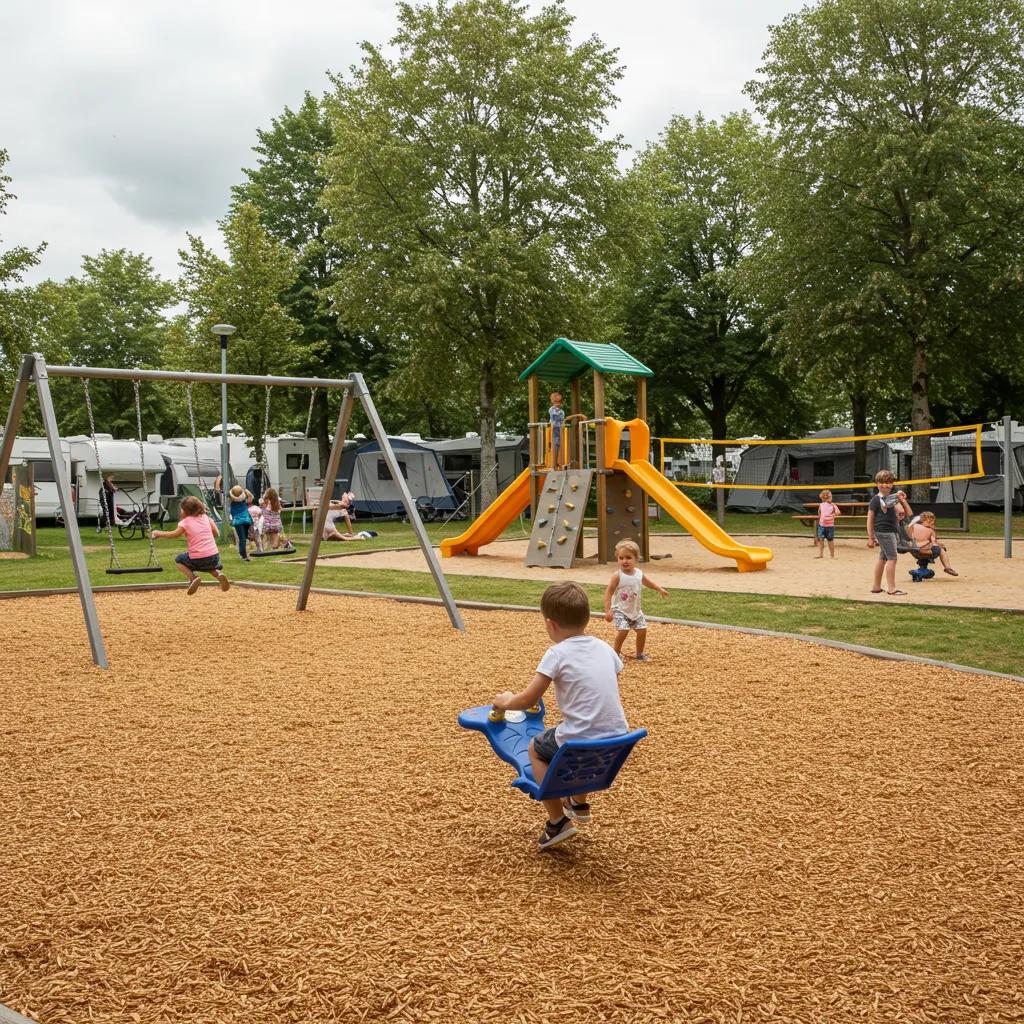
Playgrounds and sports facilities are structured recreation spaces that extend activity choices, encourage healthy competition, and support group programming; their presence increases on-site engagement and social opportunities for children and families. Typical installations include multi-age playgrounds, sand volleyball courts, basketball hoops, horseshoe pits, and gaga ball pits, each catering to different energy levels and group sizes. These facilities allow families to rotate activities without leaving the campground, reducing downtime and enabling casual tournaments or pick-up games that bring groups together. Scheduling information and equipment availability help families plan afternoons and evenings around on-site recreation.
In practice, sports courts and playground clusters work best when they’re placed away from quiet zones and have visible supervision or clear rules posted. For larger family groups, look for reservable spaces or ball fields that can host organized family games or reunions. Play features that scale—like multipurpose courts and open fields—deliver the most value because they support a wider range of ages and interests.
Why Are Clean Restrooms and Modern Facilities Important?
Clean restrooms and modern facilities are foundational comfort features that directly impact camper satisfaction by addressing hygiene, accessibility, and convenience; updated bathhouses reduce friction and make multi-night stays feasible for families. Modern facilities typically include hot water, private family stalls or changing rooms, ADA-accessible options, and reliable sanitation practices such as regular cleaning schedules. These practical improvements reduce stress—especially for parents managing young children or infants—and can be a deciding factor when choosing between otherwise similar campgrounds. Checking recent guest reports and facility photos helps confirm that advertised renovations meet expectations.
Renovated bathhouses often correlate with higher overall campground maintenance and customer service standards, signaling that management invests in guest experience. When booking, ask specifically about family stalls, accessible showers, and any timing restrictions for hot water or cleaning to ensure your group’s routines aren’t disrupted.
What Pet-Friendly Amenities Should You Look For?
Pet-friendly amenities are facilities and rules that let families bring dogs while maintaining safety, cleanliness, and neighborly comfort; they enable pets to be part of the vacation rather than a planning complication. Key features to look for include a large off-leash dog park, designated pet relief areas, pet-wash stations, and clear leash and cleanup policies. These amenities reduce stress for pet owners because they provide safe exercise spaces and practical washing options after muddy hikes or lake swims. Understanding pet rules—such as breed policies, leash hours, and noise expectations—prevents surprises at check-in.
When a campground offers a sizable dedicated dog park and pet-wash facilities, families can balance outdoor activity with pet care more easily. Verify whether the dog park is fenced and if waste stations are well-stocked, because those operational details determine how easy it will be to manage pets during your stay.
How to Choose the Right Camping Accommodations for Your Outdoor Adventure?
Choosing the right accommodation means matching your group’s comfort needs, budget, and experience level to RV sites, tent sites, or cabin rentals; the right choice reduces logistical friction and maximizes enjoyment. Evaluate attributes like space, hookups, privacy, and built-in comforts to determine which option suits your party size and desired convenience level. Below is a concise comparison of RV, tent, and cabin options and the practical pros and cons that help families decide quickly. Use this framework to identify the accommodation that balances comfort and outdoor immersion for your group.
Consider these quick accommodation comparisons when deciding:
- RV Sites: Provide hookups and on-site power and water for families who want full comforts and longer stays.
- Tent Sites: Offer direct nature immersion and lower cost but require more gear and may have fewer built-in conveniences.
- Cabin Rentals: Deliver sheltered comfort with minimal setup, ideal for families seeking a glamping-style experience without tents.
This high-level comparison helps match personalities and logistics to accommodation types; the next table breaks attributes down more concretely to guide reservations.
Walnut Hills Family Campground by GatherGrounds provides concrete examples across accommodation types, offering RV sites, tent sites, and cabin options that illustrate how each choice maps to on-site amenities and family priorities. Checking availability and site maps at a campground with diverse lodging can help families secure the layout and proximity to facilities they prefer.
What Are the Benefits of RV, Tent, and Cabin Sites?
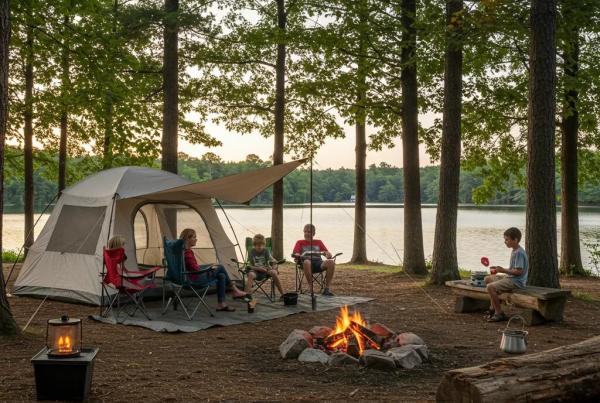
RV, tent, and cabin options each suit different family scenarios by balancing comfort, cost, and outdoor exposure; understanding those benefits helps families pick the right base for their trip. RV sites typically offer hookups, increased storage, and rapid shelter from weather, making them ideal for larger families or multi-day stays. Tent sites maximize closeness to nature and often cost less, appealing to traditional campers who value immersion and have the correct gear. Cabins provide an easy, comfortable entry point to camping for first-timers or families who prefer fixed beds and minimal setup; they also simplify nights with young children.
When selecting among these, align the accommodation to how much time you plan to spend on-site versus exploring local attractions. Families that expect lots of day trips may prioritize cabins or RVs for comfortable returns, while those focused on back-to-basics camping may choose tent sites for authenticity and cost savings.
How Do Campsite Features Affect Your Stay?
Site attributes such as shade, level ground, hookups, privacy, and proximity to facilities materially change daily life at a campground; these features determine comfort, safety, and convenience. Level ground simplifies tent pitching and RV stabilizing, while shade affects daytime comfort and tent longevity. Hookups provide power for medical devices or refrigeration, and privacy influences noise and relaxation during evenings. Proximity to restrooms and play areas matters especially for families with small children who require frequent access to facilities.
When reserving, use site maps and filter tools to select sites with your preferred features, and request clarifications on shade pattern or tree cover if photos are limited. Arriving with a short checklist of non-negotiable site features helps secure a location that supports your planned activities.
Which Outdoor Activities Make a Campground Ideal for Families and Groups?
Outdoor activities create the core memories of a campground stay by offering structured and free-form options that fit different ages and energy levels; a well-rounded activity mix helps families design days that combine adventure, rest, and togetherness. High-value activities include river floats, lake play, guided nature programs, playgrounds, and scheduled weekend events. Campgrounds that partner with local outfitters expand activity breadth—enabling canoe, kayak, or tube rentals—so families can choose guided trips or independent exploration depending on skill and comfort. Below are practical activity types and how to arrange them for family-friendly itineraries.
Key outdoor activities to look for include:
- River and lake adventures: canoeing, kayaking, and tubing via local rental partners
- On-site recreational programs: kids’ crafts, scavenger hunts, and evening family events
- Active play options: playgrounds, sports courts, and accessible trails
These activity categories form the backbone of a family itinerary; the next table links activities to required gear and on-site availability so you can plan logistics.
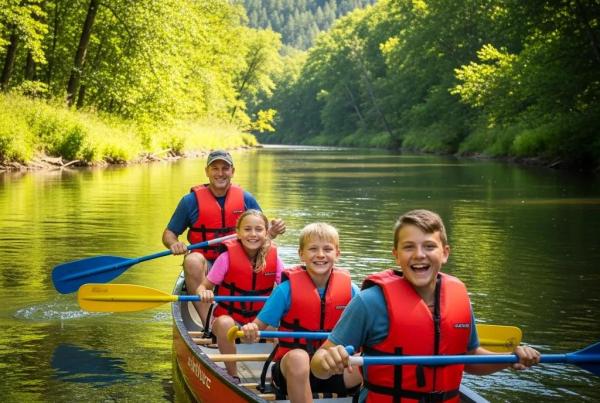
Walnut Hills Family Campground by GatherGrounds supports river adventures and family programming through river float trips on the Shiawassee River via Cheff’s Canoe Rental and recurring weekend family events, showing how a campground can integrate partners and scheduled programming to enhance guest options.
What River Adventures Are Available Near Campgrounds?
River adventures include canoeing, kayaking, and tubing trips that vary by trip length and required skill; they broaden activity choices and allow families to access scenic routes without long drives. Local rental partners typically provide gear, basic instruction, and shuttle services, reducing the need to transport bulky equipment. For families, guided or short-route options with life jackets and clear age guidelines offer a safe introduction to river travel. Confirm current water levels, trip duration, and shuttle arrangements before booking to ensure the trip matches your family’s abilities and timing.
Cheff’s Canoe Rental-style partners usually list recommended ages and required gear and can advise on calmer stretches suited for younger paddlers. Including a short river float as part of a campground stay requires coordinating launch times, life jacket sizing, and transport back to the campground, but the payoff is a memorable shared experience.
How Do Weekend Events and Themed Activities Enhance Family Fun?
Weekend events and themed programming reduce planning load while providing structured entertainment that appeals to multiple ages; these activities often include guided crafts, scavenger hunts, live performers, and kid-focused contests. Events increase social interaction among guests and create predictable highlights families can schedule around, which is especially valuable for short stays. When evaluating a campground, check whether events are included or require registration and whether they are age-targeted to match your children’s interests. Knowing the event calendar before arrival helps families prioritize which days to be on-site for peak programming.
Organized activities also make it easier for extended families or groups to coordinate gatherings and participate in joint activities without each household inventing their own entertainment schedule. Scheduling around signature weekend events can turn a simple overnight into a themed family getaway.
Why Is Location Important When Selecting a Campground for Outdoor Adventures?
Location defines access to natural attractions, travel time, and proximity to urban conveniences; it directly influences how you plan activities, day trips, and supply needs. Campgrounds near rivers, lakes, and trailheads increase immediate activity options and reduce daily driving, while sites closer to urban areas provide easier access to supplies, medical services, and cultural attractions. The ideal location balances the desire for outdoor immersion with practical considerations like drive time, emergency access, and nearby groceries. Evaluating location helps align trip goals—whether solitude or convenience—with the right campground type.
When choosing, consider both daytime activity logistics and nighttime priorities like light pollution, noise, and scenery. Mapping out likely day trips and supply needs before selecting a campground clarifies whether a remote or urban-proximate location better suits your family.
How Does Proximity to Natural Attractions Impact Your Camping Experience?
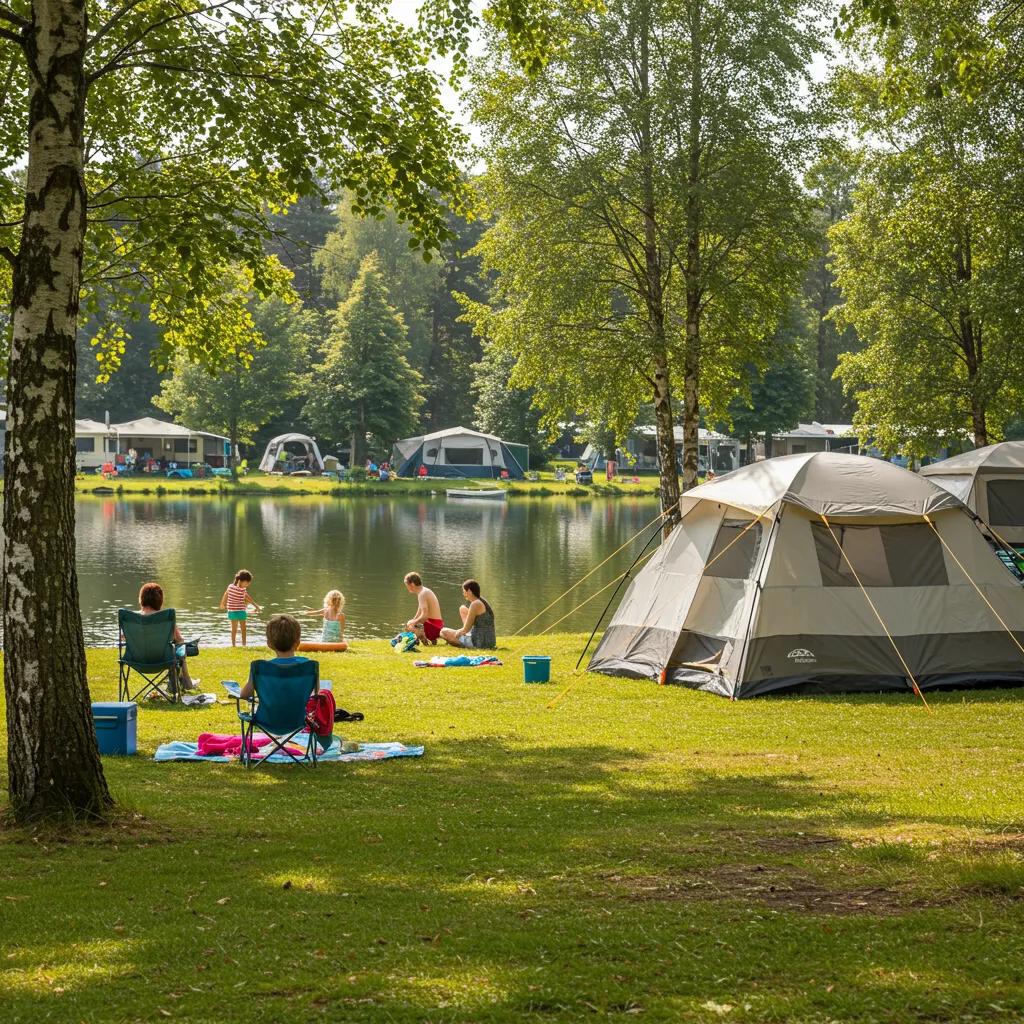
Proximity to rivers, lakes, and trails amplifies on-site activity options and reduces time spent driving, increasing the fraction of the trip spent recreating rather than commuting. Campgrounds adjacent to trailheads or waterways let families fit in short hikes, fishing, or paddling sessions between meals and naps, which is particularly useful with younger children. Close natural access also supports flexible itineraries—easy morning hikes and afternoon swim sessions—allowing families to mix rest and activity seamlessly. When planning, align campsite placement within the campground to be near the attraction you expect to use most.
Being near natural attractions also implies planning for safety elements like weather, water conditions, and seasonal closures; confirming local regulations and partner availability helps ensure planned activities are feasible during your stay.
What Are the Advantages of Campgrounds Near Urban Areas?
Campgrounds near urban areas provide shorter drive times, easy access to emergency services, and nearby supply options that lower the barrier to spontaneous trips and reduce packing stress. Urban-proximate sites are advantageous for families who want a quick getaway without extensive travel time, need easy access to pharmacies or grocery stores, or value occasional restaurants and attractions during the stay. The trade-off can include increased daytime visitors and less seclusion, but for many families the convenience outweighs reduced privacy. Choose urban-proximate campgrounds when short travel time and logistical ease are top priorities.
Urban access also supports mixed itineraries—half-day trips to regional attractions paired with campground evenings—so families can diversify experiences without long drives.
How Can Online Reservations and Digital Resources Improve Your Campground Choice?
Online reservations and digital resources streamline site selection, make availability transparent, and reduce booking friction by providing site maps, filters, and secure payments; these features help families quickly confirm that a campground meets their needs. Expect booking systems to offer visual site maps, filters for site attributes (hookups, shade, pet-friendly), real-time availability, clear cancellation policies, and secure checkout. Reviews and user-generated photos also provide practical insight into current conditions, facility cleanliness, and family suitability. Using these digital tools together speeds confident decision-making and reduces last-minute surprises.
Below is a checklist of booking features that meaningfully improve the reservation experience and what each feature means for families planning a stay.
- Interactive site maps: let you pick a specific location relative to amenities and neighbors.
- Filters for site attributes: quickly narrow options to sites with hookups, shade, or pet policies.
- Real-time availability: avoids double-booking and sets expectations for last-minute trips.
- Clear cancellation and payment options: reduces financial uncertainty and allows flexible planning.
This checklist helps you prioritize which booking features to look for when comparing campgrounds online and reduces friction during the reservation process.
Campgrounds that publish an offer catalog and have an integrated reservation CTA simplify the final step of converting interest into a booked stay; expect clear site photos, map views, and easy checkout to speed selection and ensure you secure the right site.
What Features Should You Expect from an Online Booking System?
A robust booking system provides interactive site maps, filters for site features, clear pricing and policies, and secure payment to minimize friction and support confident bookings. Interactive maps let families visualize proximity to restrooms, playgrounds, and water features so they can choose sites that match their daily routines. Filters for hookups, site size, and pet-friendliness save time by excluding unsuitable options early in the search. Transparent cancellation and payment policies reduce risk, and visible photos or recent guest uploads help verify current conditions before arrival.
Using these tools together—maps, filters, and recent photos—lets families reserve the exact site that meets their needs rather than making a generic booking and hoping for the best.
How Do Reviews and User-Generated Content Influence Your Decision?
Reviews and user photos provide ground-level signals about cleanliness, programming quality, and seasonal conditions, helping families set accurate expectations and avoid mismatches. Recent photos reveal current facility conditions like renovated bathhouses, playground upkeep, and water quality, while reviews highlight consistency of lifeguard staffing, event execution, and customer service responsiveness. Read multiple recent reviews to spot trends rather than isolated complaints, and prioritize photo-rich reviews from families with similar group sizes or ages. Checking UGC and review recency helps validate a campground’s advertised amenities and programming before booking.
Interpreting reviews with an eye for patterns—consistently praised amenities or recurring operational issues—gives families a clearer picture of what to expect and whether a campground aligns with their priorities.
Frequently Asked Questions
What should I consider when planning meals for a camping trip?
When planning meals for a camping trip, consider factors such as the availability of cooking facilities, food storage options, and dietary restrictions of your group. Opt for easy-to-prepare meals that require minimal cooking equipment, like one-pot dishes or pre-prepared items. Additionally, think about the perishability of your food items and pack accordingly, using coolers for items that need refrigeration. Don’t forget to include snacks and hydration options, as outdoor activities can increase energy needs. Planning meals in advance can help streamline your camping experience.
How can I ensure my family stays safe while camping?
To ensure your family’s safety while camping, familiarize yourself with the campground’s rules and emergency procedures. Always keep a first aid kit on hand and know the location of the nearest medical facility. Educate your family about wildlife safety, including how to store food properly to avoid attracting animals. Additionally, ensure that children are supervised near water and during outdoor activities. It’s also wise to have a plan for inclement weather, including knowing where to seek shelter. Communication devices can be helpful for emergencies.
What types of outdoor gear should I bring for a family camping trip?
Essential outdoor gear for a family camping trip includes tents, sleeping bags, cooking equipment, and appropriate clothing for varying weather conditions. Consider bringing portable chairs, a cooler for food storage, and a first aid kit. Depending on your planned activities, you may also need hiking gear, fishing equipment, or water sports gear. Don’t forget personal items like sunscreen, insect repellent, and toiletries. Creating a checklist before your trip can help ensure you pack everything necessary for a comfortable and enjoyable experience.
How can I keep my campsite clean and eco-friendly?
To keep your campsite clean and eco-friendly, practice the Leave No Trace principles. This includes packing out all trash, minimizing campfire impact, and using biodegradable soaps for washing dishes. Set up your campsite away from water sources to prevent contamination and avoid damaging vegetation. Encourage your family to use designated paths and trails to protect the surrounding environment. Additionally, consider using reusable containers and utensils to reduce waste. Teaching children about environmental responsibility can enhance their camping experience and foster a love for nature.
What are some fun activities for kids at campgrounds?
Campgrounds often offer a variety of fun activities for kids, including organized games, scavenger hunts, and arts and crafts sessions. Many campgrounds feature playgrounds, sports courts, and nature trails for exploration. Consider planning family-friendly activities like hiking, fishing, or swimming, depending on the campground’s amenities. Evening activities such as campfire storytelling or stargazing can also be enjoyable. Engaging kids in planning their activities can enhance their excitement and ensure they have a memorable camping experience.
How can I find campgrounds that cater to specific interests, like fishing or hiking?
To find campgrounds that cater to specific interests like fishing or hiking, utilize online resources and campground directories that filter by activity type. Websites often provide detailed descriptions of amenities and nearby attractions, including lakes, rivers, and trails. Reading reviews from other campers can also give insights into the suitability of a campground for your interests. Additionally, local outdoor recreation offices or visitor centers can provide recommendations based on your desired activities, ensuring you choose a campground that aligns with your family’s interests.
Conclusion
Choosing the right campground for your family adventure ensures a memorable experience filled with comfort, safety, and fun activities. By prioritizing essential amenities, evaluating accommodations, and leveraging online resources, families can streamline their planning process and enhance their outdoor enjoyment. Embrace the opportunity to explore nature while creating lasting memories with loved ones. Start planning your next camping trip today and discover the perfect campground that meets your family’s needs!