
An RV resort is more than a park with nicer sites. Pools, clubhouses, activity programs, a store, rentals and a staff to run them all add revenue, and they all add cost. When you sell, a buyer will look at both sides. This page covers what is different about selling a resort-class property, whether you list it with a broker or sell your campground or resort directly.
What makes a property a “resort” to a buyer
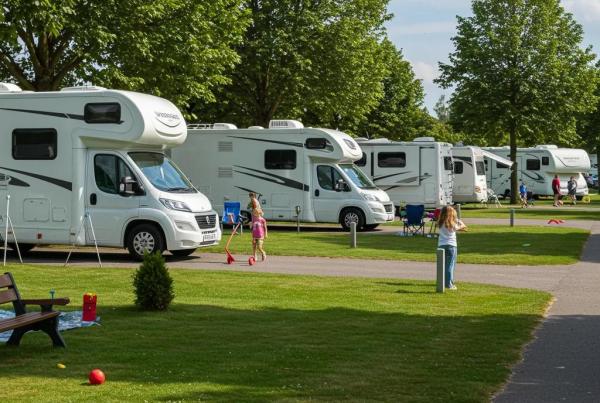
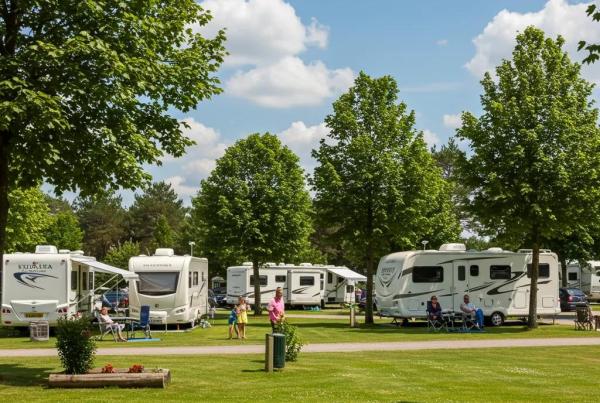
There is no legal definition. Buyers tend to use the word for parks with paved or improved sites, full hookups with 50-amp service, and amenities that guests pay a premium for: a pool or water feature, a clubhouse, organized activities, a store or café, sports courts and sometimes rental units. Resorts usually charge higher rates than nearby parks and depend more on guest experience and repeat visits.
That matters because a buyer is paying for a business, not only for land and sites. The question they will ask is whether the resort’s results come from the property itself or from the way you personally run it.
How amenities and extra revenue affect value
Buyers generally separate site revenue from everything else, because the two behave differently.
- Site revenue: nightly, monthly and seasonal stays. Buyers look at rate, occupancy by site type and how both have moved over several years.
- Other revenue: the store, rentals (cabins, park models, golf carts, boats), day passes, event fees, food service. Buyers will want each line shown with its own costs, so they can see what it really earns after staff, inventory and insurance.
An amenity that draws guests and supports your rates helps value. An amenity that costs more to staff, insure and repair than it brings in can lower it. We run floating water parks and beaches at our own parks, so we know a buyer will ask about lifeguard or attendant staffing, inspections, insurance and replacement costs.
Survey figures give a broad sense of how buyers price quality. Newmark’s 2026 survey, reported by BVWire on March 11, 2026, put going-in cap rates near 8.0% for Class A and B RV parks and near 9.0% for Class C. These are averages across many parks, not a price for yours.
Revenue and booking data buyers review
A resort lives on its rate strategy, so expect detailed questions. Have these ready from your reservation system:
- occupancy and average daily rate by month and by site type, for three years or more
- bookings on the books for next season, compared with the same point last year
- where bookings come from: your website, phone, online travel sites, memberships or discount clubs
- cancellation and refund history
- repeat-guest share, if your system tracks it
- reviews and ratings on the main sites
Staffing, management and brand
Resorts need more people: front desk, maintenance, housekeeping, activities, store and sometimes food service. A buyer will want an organization chart, payroll by role and season, any written agreements with managers, and a plain description of what you do yourself each week. If the resort depends heavily on one person, say so and explain how the work could be handed over.
If you operate under a franchise or brand, read your agreement for transfer rules. Some require the franchisor’s approval of a new owner, and some give the brand rights in a sale. Talk to your attorney before you sign anything with a buyer.
What happens to your team after a sale is something to agree on with the buyer in writing. After it buys a park, GatherGrounds aims to keep the existing staff, looking at each situation case by case.
Your capital plan
Resort amenities wear out. Buyers will price in what needs replacing soon, so get ahead of it with an honest list and dates: pools and pumps, bathhouses, electrical service, roads and pads, water and wastewater systems, rental units and golf carts. Invoices for recent work help. A short repair list with real numbers is better than a surprise in inspection.
Who buys resort-class properties
Large, high-amenity resorts draw institutional buyers and private platforms. One example: in September 2020, the 1,119-space Superstition Sunrise RV Resort in Apache Junction, Arizona, sold for $88 million (ABC15 Arizona, Sept. 23, 2020), reported at the time as a state record for that kind of property. Smaller resorts more often sell to regional operators, investor groups and experienced owners moving up. Each underwrites differently.
Broker-led sale or direct sale
For a large resort, a broker-led sale with a full marketing package and competitive bidding is often the right call. It reaches institutional buyers and lets the market set the price. A broker is also a good fit if you want someone else to run the process.
A direct sale to an operator can suit smaller resorts and owners who value privacy, a single point of contact and possibly no listing commission. You trade some competition for simplicity, so get an independent valuation either way.
GatherGrounds owns and operates three campgrounds in Michigan and Ohio and reinvests in them, from new beaches and floating water parks to renovated restrooms, online booking and a license-plate gate. We look at campgrounds and RV parks with 130 or more sites in Michigan, Ohio and other Great Lakes states, including parks that need work. If you would like to talk privately, contact us through our Sell Your Campground page.
Questions
Is an RV resort valued differently from an RV park?
Buyers use the same basic method: net operating income divided by a cap rate. The difference is in the detail. Resorts have more revenue lines, more staff and more amenities to maintain, so buyers look harder at each line’s real profit and at upcoming replacement costs.
Do amenities always increase the sale price?
No. An amenity adds value when it supports higher rates or occupancy and pays for its staffing, insurance and upkeep. One that loses money, or needs replacing soon, can lower what a buyer will pay.
Should I sell my RV resort through a broker?
Often, yes, for large resorts or owners who want competitive bidding and a managed process. Smaller resorts and owners who want a private sale may also consider a direct buyer. Get an independent valuation either way.
What happens to my staff when the resort sells?
That is up to you and the buyer, and it should be written into the purchase agreement. Ask any buyer directly about their plans for your team.
Thinking about selling your resort? Talk with us confidentially through the form on our Sell Your Campground page.