How Campground Brokers Evaluate Market Value: A Step-by-Step Breakdown of Campground Valuation Methods
Campground market value is the price a willing buyer would pay a willing seller for a campground, and brokers determine that value by combining income-based metrics, comparable sales, and property-specific adjustments to reflect risk and upside. This article explains the core valuation concepts such as Net Operating Income (NOI), Capitalization Rate (Cap Rate), and comparable-sales checks, showing why each matters and how brokers apply them to RV parks and larger campground assets. Owners gain a practical roadmap for preparing documents, normalizing financials, interpreting cap rates for 2025, and prioritizing upgrades that materially increase sale price. The step-by-step breakdown covers essential financial documents, how NOI is calculated and normalized, cap rate selection and regional ranges, non-financial value drivers, valuation adjustments and appraisals, pragmatic seller preparation, and why a broker like GatherGrounds Resorts can be a thoughtful buyer partner. Throughout, the article uses campground valuation terminology—such as NOI, SDE, occupancy, and comparable sales—and offers checklists, tables, and examples to help owners estimate what their park might fetch on the market.
What Are the Key Financial Documents Needed to Value a Campground?
Key financial documents provide the evidentiary basis for any credible campground valuation because brokers use historical financials to normalize performance, isolate owner-specific items, and forecast sustainable cash flow for buyers. Brokers typically request multi-year records so trends and seasonality are visible, which reduces uncertainty and leads to tighter valuation ranges. Clear and complete records also accelerate buyer due diligence and reduce the need for conservative risk discounts. The next subsections list the specific reports brokers analyze, explain how personal expenses get separated, and describe the role of balance sheets and P&Ls in valuation.
Which Income Statements and Tax Returns Are Essential for Valuation?

Brokers generally ask for 36 months of business income tax returns and corresponding profit & loss statements because multi-year data reveals true seasonality and average earnings. Typical line items that matter include site fees (daily, weekly, seasonal), ancillary revenue (store, propane, rentals), and one-time event income; brokers reconcile taxable income to owner-level cash flow. Providing year-over-year P&Ls with monthly summaries helps brokers detect trends such as weekday occupancy shifts or marketing-driven spikes. Accurate income documentation reduces subjectivity in SDE and NOI adjustments, which in turn strengthens buyer confidence and valuation outcomes.
How Do Brokers Separate Personal and Business Expenses?
Personal expenses commonly embedded in campground records include family utilities, owner vehicles, non-business travel, and discretionary repairs; brokers identify these through account descriptions, vendor names, and supporting invoices. The standard adjustment process removes or documents personal draws and replaces them with market-based owner compensation assumptions to generate Seller’s Discretionary Earnings (SDE) or normalized NOI. Brokers request backup such as cancelled checks or credit card statements to validate adjustments and minimize disputes. This normalization improves comparability across properties and produces a cleaner basis for cap-rate or multiple-based valuation methods.
What Role Do Balance Sheets and Profit & Loss Statements Play?
Profit & loss statements reveal operational performance metrics—revenue mix, gross margin, payroll burden, and marketing spend—that feed directly into NOI forecasting and seasonality analysis. Balance sheets identify asset condition, outstanding liabilities, and working capital needs that affect closing adjustments and future capital expenditures. Brokers use balance-sheet detail to estimate near-term replacement requirements such as septic, electrical, or paving and to assess leverage that may influence a buyer’s financing. Together, P&Ls and balance sheets form the financial narrative that informs valuation sensitivity and suggests prioritized investments.
For sellers seeking assistance organizing these documents, GatherGrounds Resorts can help owners compile tax returns, P&L statements, and occupancy reports and offers a complimentary, no-obligation review to validate readiness for valuation. This service focuses on practical organization rather than sales pressure and aims to present financials that reflect true cash flow to prospective buyers.
This document checklist clarifies the minimum records brokers expect and the role each plays in producing a credible valuation. Properly assembled records shorten due diligence and reduce valuation discounts for perceived risk.
How Is Net Operating Income Calculated for Campground Valuation?
Net Operating Income (NOI) is the operating cash flow a property generates after operating expenses but before financing, taxes, and one-time items, and brokers rely on NOI because it links directly to market-based valuation via the cap rate. The primary mechanism is simple: brokers aggregate normalized gross income and subtract recurring, property-level operating expenses to produce stabilized NOI, which investors use to compare returns across properties. Accurate NOI requires careful inclusion and exclusion rules—particularly for owner perks, non-recurring gains, and discretionary payroll—which is why brokers normalize multi-year figures. The following subsections break down typical income and expense items, detail normalization of one-offs, and show how NOI converts to value.
What Income and Expense Items Are Included in NOI?
NOI for campgrounds includes core site revenue (daily/seasonal site fees), ancillary income (store, equipment rentals, event fees), and permitted non-operating fees (resort fees allocated to operations), while expenses include payroll, utilities, grounds maintenance, repairs, insurance, and routine administrative costs. Capital expenditures and debt service are excluded from NOI, as are non-recurring gains such as land sales, which would distort ongoing operating performance. Seasonal fluctuations require multi-year averaging to produce a representative annual NOI that investors can rely on. Proper categorization of income and expenses ensures NOI reflects the campground as an operating business rather than a tax-accounting artifact.
This breakdown illustrates the primary contributors to NOI and demonstrates how income diversification and expense control drive the numerator of valuation formulas. Focusing on predictable, recurring revenue streams improves NOI reliability.
How Are Non-Recurring and Personal Expenses Adjusted in NOI?
Brokers remove non-recurring items—such as a one-off land sale or extraordinary capital projects—and document them separately so the normalized NOI reflects sustainable operations; supporting invoices and settlement statements validate these exclusions. Owner-related perks and family labor are converted into market-based salary equivalents or documented as above-market expenses to prevent overstatement of operating costs. Brokers commonly average NOI across three years, applying weighting where recent operational changes indicate a new performance baseline. This normalization reduces valuation volatility and helps buyers model realistic cash flow under new ownership.
How Does NOI Influence the Market Value of a Campground?
NOI drives market value through the capitalization-rate relationship: Market Value = NOI / Cap Rate, meaning incremental increases in stabilized NOI directly lift implied sale price, and small percentage changes in NOI can produce large valuation shifts. For example, raising annual NOI by $50,000 at a 8% cap rate would increase implied value by $625,000, demonstrating how operational improvements translate into material price gains. Brokers use sensitivity analysis to show sellers how improvements, expense trimming, or revenue diversification change expected proceeds. Clear NOI documentation therefore empowers owners to prioritize value-enhancing actions before listing.
For owners who want a quick screen, GatherGrounds Resorts can run a brief NOI-based estimate using provided revenue and expense figures and offer a follow-up explanation tied to observed revenue drivers and cost normalization. This complimentary estimate helps owners understand the primary levers affecting value before engaging in deeper diligence.
What Is the Capitalization Rate and How Does It Affect RV Park Appraisal?
A capitalization rate, or cap rate, is the ratio of a property’s NOI to its market price and functions as an investor’s expected unlevered return; brokers use cap rates to translate NOI into a market value estimate quickly. Cap rates reflect required returns given perceived risk, liquidity, and local market dynamics, so the selection of an appropriate cap rate is both data-driven and judgment-based. Lower cap rates imply higher valuations for the same NOI, and cap-rate selection depends on comparable sales, financing conditions, and property-specific attributes. The subsections below explain how brokers determine cap rates, how location and amenities shift them, and provide typical 2025 ranges.
Understanding the nuances of cap rate calculation is crucial for accurate real estate valuation.
Methods for Calculating Capitalization Rate in Real Estate
This article presents a synthetic presentation of the main methods for calculating the capitalization rate, which is a key metric in real estate property analysis and appraisal.
ESTIMATION OF THE CAPITALIZATION RATE IN REAL ESTATE PROPERTY ANALYSIS AND APPRAISAL., I Anghel, 2012
How Do Brokers Determine the Appropriate Cap Rate for a Campground?
Brokers derive cap rates by analyzing recent comparable sales, current investor demand, and prevailing financing terms to estimate the return profile buyers expect for a given asset class. They adjust raw comp cap rates for differences in location, size, occupancy stability, and amenity mix to reach an apposite rate for the subject property. Market liquidity and general commercial real estate yield compression or expansion also influence cap-rate selection—when debt is cheap and buyers are abundant, cap rates tighten. Through triangulation between comps, investor interviews, and market indicators, brokers arrive at a defensible cap rate for valuation.
This regional comparison shows how cap rates vary by market context and property quality; sellers in stronger markets and with upgraded amenities often command lower cap rates and higher prices.
How Do Location and Amenities Impact the Cap Rate?
Location quality and amenity packages reduce perceived investment risk and typically push cap rates lower because buyers expect steadier occupancy and potential for premium pricing at parks with proximity to attractions or superior utilities. Amenities such as full hookups, modern restrooms, reliable high-speed Wi-Fi, and glamping options increase guest satisfaction and ADR equivalents, which can justify a lower cap rate. Conversely, deferred infrastructure or remote locations raise operating risk and push cap rates higher to compensate buyers. Assessing which upgrades shift a property into a lower cap-rate band is a core brokerage task.
What Are Typical Cap Rate Ranges for Campgrounds in 2025?
For 2025, typical cap rate ranges for RV parks and larger campgrounds generally fall between 7% and 10%, depending on region, quality, and stability of cash flow; high-quality, well-located parks cluster at the low end while riskier assets trend toward the high end. Market conditions such as financing availability, investor appetite for hospitality assets, and recent comparable transactions will nudge a specific park’s cap rate within that band. Sellers should expect a realistic cap-rate discussion grounded in local comps and NOI trends rather than a one-size-fits-all number. Preparing to demonstrate consistent NOI and amenity quality is critical to achieving a favorable cap-rate outcome.
The specific factors influencing RV park investments are key to understanding their valuation.
RV Park Investments and Valuation Factors
Investments in RV parks currently enjoy high cap rates. The value of the campground and RV park sector are determined by three variables.
Thesis Topic: What makes a successful RV Park in the US, 2022
What Other Factors Affect the Sale Price of a Campground or RV Park?
Beyond NOI and cap rate, a range of operational and physical factors materially influence offers because buyers price in occupancy stability, expansion potential, and infrastructure condition when estimating future cash flows and capex needs. Brokers evaluate occupancy patterns, revenue diversity, on-site amenities, utility capacity, permitting, and local market trends to adjust valuations upward or downward. Market-specific considerations—zoning, environmental constraints, and nearby development—also factor into buyer appetite. The next subsections explore occupancy and cash flow, amenity and infrastructure impacts, and how expansion potential converts to quantifiable upside.
How Do Occupancy Rates and Cash Flow Influence Market Value?
Steady occupancy and diversified cash flows reduce perceived risk and typically lead to higher valuation multiples or lower cap rates, because buyers forecast more predictable revenue streams. Brokers look at multi-year occupancy trends, average daily equivalent revenue, and the mix between transient and seasonal guests to assess resilience. A campground with narrowly concentrated weekend spikes or single-event reliance will be risk-adjusted more heavily than one with balanced weekday-weekend performance and diversified ancillary sales. Demonstrating stable occupancy and a mix of revenue streams directly strengthens the investment case and the price buyers will pay.
Why Are Amenities and Infrastructure Important in Valuation?
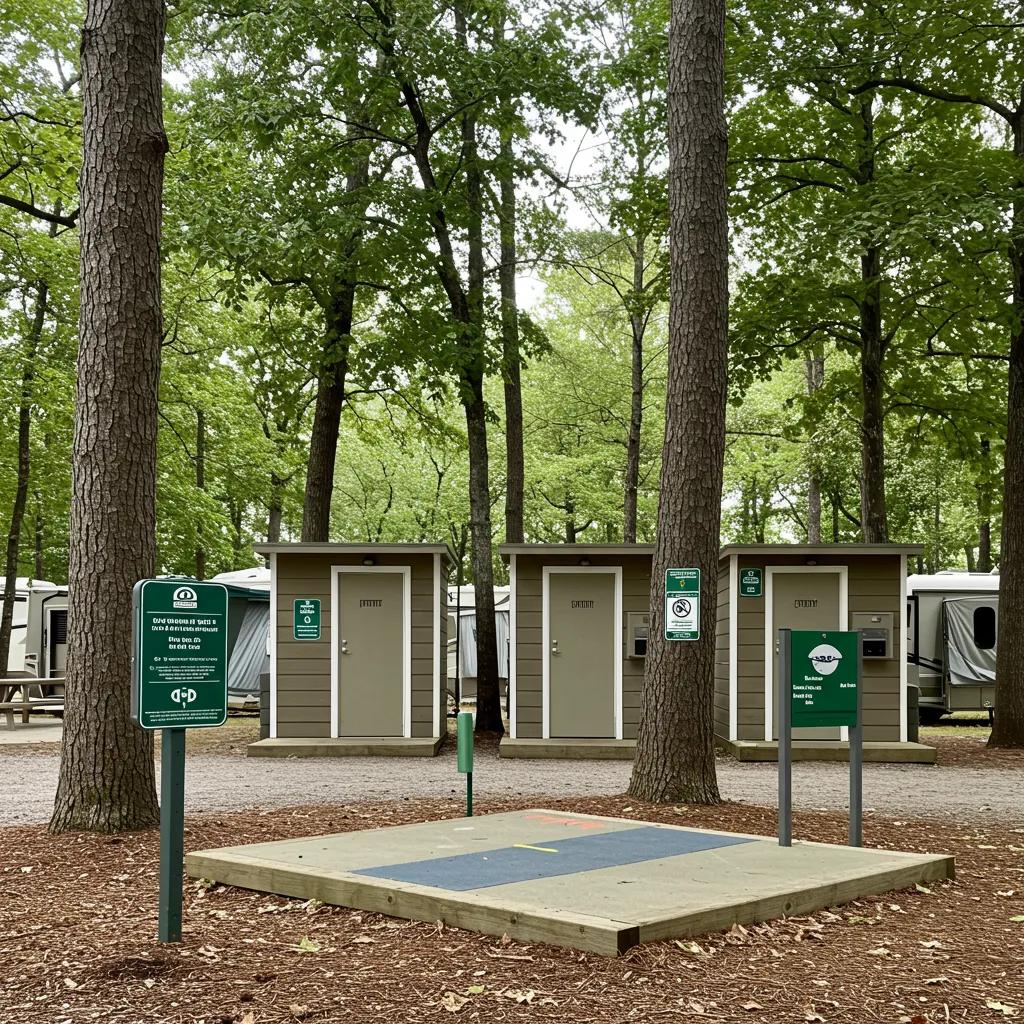
Amenities such as upgraded restrooms, reliable hookups, recreational facilities, and high-quality Wi-Fi increase guest yield and can justify higher site rates, while core infrastructure—sewer, water, electrical, and road networks—dictates near-term capital requirements and operating reliability. Buyers discount properties that require immediate large-scale capital work, whereas visible, well-maintained infrastructure reduces the buyer’s required risk premium. Brokers rank amenities by impact and quantify probable revenue uplift, prioritizing investments that convert most directly to higher NOI. Presenting recent maintenance records and utility capacity data reduces buyer uncertainty.
- Amenities and infrastructure influence both the numerator (NOI) and the perceived cap rate.
- High-impact upgrades often have measurable returns, while cosmetic items usually do not.
- Documentation of recent capital improvements shortens negotiation cycles.
These points demonstrate why sellers should focus on high-impact items that lower perceived risk and increase cash flow before marketing a property.
How Does Future Expansion Potential Affect Campground Value?
Developable acreage, approved permits, and demonstrated utility capacity create quantifiable upside that brokers can convert into pro forma NOI through modeled additional sites or new amenity revenue streams. Buyers pay a premium for documented expansion potential because incremental sites add recurring revenue with relatively predictable incremental expenses. Brokers request site plans, zoning confirmations, and utility capacity letters to validate expansion claims and use conservative build-out assumptions when calculating upside. Well-documented expansion potential becomes a differentiator in competitive processes and can materially increase sale price expectations.
How Do Campground Brokers Adjust Valuations for Accuracy and Fair Market Value?
Brokers refine valuations by normalizing financials, adjusting for depreciation and owner discretionary items, and triangulating income-based values with comparable sales and, when needed, formal appraisals. The adjustment mechanisms correct distortions, align accounting with economic performance, and produce a defensible price range. Brokers also flag scenarios that warrant a third-party appraisal or specialist review to resolve technical issues such as environmental constraints or large deferred-capital programs. The following subsections detail specific adjustments, the use of comps, and when to order a formal appraisal.
What Adjustments Are Made for Depreciation and Seller’s Discretionary Earnings?
Accounting depreciation often differs from economic depreciation, so brokers adjust for replacement-cost realities rather than book depreciation alone; this ensures capex needs are reflected in buyer underwriting. Seller’s Discretionary Earnings (SDE) is calculated for smaller operator-run parks to capture owner benefit, with adjustments for personal draws, family labor, and non-operating income. These adjustments provide a clearer metric for buyers who operate the park on a more corporate or investor-driven basis. Tax implications like depreciation recapture are noted for seller planning, though tax advice requires a specialist.
How Are Comparable Sales Used to Validate Market Value?
Comparable sales are sourced from recent transactions of similar-sized parks, preferably within the same region or with similar occupancy and amenity mixes, and adjusted for differences in size, seasonality, and infrastructure condition. Brokers reconcile income-based valuations to sales comps to check whether implied pricing is market-credible and to identify anomalies. Typical adjustment categories include location (proximity to demand generators), size/site count, and amenity differences; these adjustments help translate NOI and multiples into a market-anchored value range. Where comps are thin, brokers emphasize triangulation and conservative adjustments.
When Is a Formal Appraisal Process Recommended?
A formal third-party appraisal is recommended for complex transactions, financing-dependent deals, litigation or partnership disputes, or when a lender requires an independent value opinion. Appraisals add rigor through certified methodologies and inspect physical assets more deeply than broker opinions, covering cost, income, and comparable approaches. Brokers advise obtaining appraisals early when financing is anticipated or when significant capital improvements might change basis; conversely, simple, well-documented transactions with multiple credible comps may close without a formal appraisal. Choosing the right timing for appraisal work reduces surprises late in the deal process.
How Can Campground Owners Prepare Their Property to Maximize Valuation?
Preparing a campground for sale means aligning operations, financial reporting, and physical condition so brokers can present credible upside and minimize perceived buyer risk; this preparation materially influences both achievable NOI and the cap rate applied. Owners should prioritize organizing 36 months of records, undertake high-ROI amenity and infrastructure upgrades, and implement operational improvements that stabilize occupancy. The subsections below describe the most impactful financial records to organize, which amenity upgrades yield the best returns, and operational steps that increase buyer confidence.
What Financial Records Should Owners Organize Before Selling?
Owners should assemble three years of tax returns, monthly P&L statements, balance sheets, bank statements, and occupancy/booking reports, and clearly document any related-party transactions or owner draws so brokers can normalize earnings quickly. Providing organized records in spreadsheet format with monthly line items accelerates broker and buyer review and reduces the need for extended diligence. Including permits, maintenance logs, and recent capital expenditure documentation further reduces buyer uncertainty about deferred maintenance. Clean, auditable records increase the likelihood of competitive offers at favorable terms.
Owners looking for help compiling these materials can request GatherGrounds Resorts’ complimentary, no-obligation conversation about document readiness; the company’s campground acquisition service emphasizes respectful assessment and can suggest prioritized documentation steps that present the property in the best light.
How Can Upgrading Amenities Increase Campground Value?
Targeted upgrades—such as improving utility capacity, modernizing restrooms and laundry facilities, and installing reliable high-speed Wi-Fi—often yield outsized returns because they permit higher nightly rates, extend seasonality, and broaden guest demographics. Lower-cost changes like improving signage, streamlining check-in, or adding glamping-ready pads can also increase occupancy and per-guest spend with modest capital outlay. Presenting recent upgrades with invoices and before/after photos helps brokers quantify revenue upside for potential buyers. Prioritizing investments that directly influence NOI tends to produce the clearest valuation uplift.
- Focus on utility capacity and restrooms for core value gains.
- Implement smaller operational upgrades for quick occupancy improvements.
- Document improvements thoroughly for buyer confidence and valuation uplift.
These prioritized steps help owners allocate limited capital toward the highest-impact improvements before sale.
What Operational Improvements Boost Market Appeal?
Operational changes that increase repeat bookings and lower operating risk include adopting a modern reservation system, demonstrating effective staffing and retention plans, implementing basic revenue management to optimize rates, and maintaining positive guest-review trends. Brokers favor properties with documented SOPs, continuity plans for retained staff, and evidence of stable customer-service quality because these reduce transition risk for buyers. Clear operational metrics—such as conversion rates, average length of stay, and review scores—convert into stronger takeaways in the offering memorandum. Improving these processes can be low-cost and produce meaningful improvements to perceived value.
Why Choose a Campground Broker Like GatherGrounds Resorts for Selling Your Campground?
GatherGrounds Resorts is a family-owned operator and ownership group specializing in acquiring, managing, and enhancing campgrounds and RV parks, primarily in the upper Midwest, and its approach emphasizes respectful acquisitions that preserve property legacy while investing in meaningful improvements. The company’s core acquisition focus is on parks with 130+ sites, where they implement a “GatherGrounds experience” customer service model and invest in modernization that boosts guest satisfaction and operational efficiency. GatherGrounds offers a personalized transition process that keeps great teams in place, values community relationships, and provides a no-obligation conversation to sellers who want to explore options without pressure. For owners weighing direct-sale alternatives, this buyer profile can reduce transition friction and align incentives toward long-term stewardship.
How Does GatherGrounds’ Family-Owned Approach Benefit Sellers?
A family-owned approach promotes direct owner-to-owner conversations and often reduces corporate layering and anonymity that can worry sellers, enabling smoother negotiation and clearer transition commitments. This structure typically facilitates agreements that prioritize legacy preservation, staff retention, and continuity of guest-facing traditions. Sellers can expect more personalized attention and a collaborative planning process that acknowledges community relationships and operational nuance. These trust-building aspects often shorten diligence timelines and align expectations on handover details.
What Is the Personalized Transition Process for Campground Owners?
GatherGrounds follows a staged transition process beginning with a no-obligation conversation, followed by a transparent valuation review, collaborative transition planning, staff retention discussions, and a phased handover that can include owner involvement as desired. The process emphasizes documenting operating procedures and honoring key traditions while making targeted modernization investments to improve guest experience. This phased approach reduces operational disruption, supports staff continuity, and helps maintain revenue through transition. Sellers benefit from a predictable transfer process that balances respect for legacy with practical improvements.
How Does GatherGrounds Respect Legacy and Preserve Campground Culture?
GatherGrounds commits to preserving important traditions and local culture by keeping strong teams in place, selectively investing to enhance guest experience without erasing local character, and involving sellers in transition planning where appropriate. Their acquisition philosophy emphasizes thoughtful, respectful transitions that honor the property’s history while funding infrastructure upgrades and service improvements that benefit guests and staff. Sellers who prioritize legacy preservation find this stewardship-focused approach aligns with their goals for the property after sale. Owners interested in exploring a sale can discuss how these commitments would apply to their specific campground during a no-obligation conversation about the campground acquisition service.
- Reasonable Transition Terms: GatherGrounds aims for personalized handovers that protect staff and traditions.
- Investment with Respect: Capital is allocated to modernization while preserving core character.
- Open Dialogue: Sellers receive a no-obligation conversation to explore options calmly.
- Organize Records Early: Present 36 months of tax & P&L data to improve valuation accuracy.
- Prioritize High-ROI Upgrades: Focus on utilities, restrooms, and reservation systems to increase NOI.
- Document Operations: SOPs, staffing plans, and guest metrics reduce buyer risk and speed diligence.
Frequently Asked Questions
What is the importance of location in campground valuation?
Location plays a critical role in campground valuation as it directly influences occupancy rates and potential revenue. Campgrounds situated near popular attractions, natural parks, or urban centers typically command higher prices due to increased demand. Buyers often assess the accessibility of the site, local amenities, and the overall appeal of the surrounding area. A prime location can lead to lower cap rates, indicating a higher market value, while remote or less desirable locations may require higher cap rates to compensate for perceived risks.
How can campground owners effectively market their property for sale?
Effective marketing of a campground involves showcasing its unique features, amenities, and financial performance. Owners should prepare a comprehensive marketing package that includes high-quality photos, detailed descriptions of facilities, and a clear outline of financial records. Highlighting recent upgrades and operational efficiencies can attract potential buyers. Additionally, leveraging online platforms, social media, and industry networks can enhance visibility. Engaging a knowledgeable broker can also help craft a compelling narrative that resonates with prospective buyers, emphasizing the campground’s potential for growth and profitability.
What are the common pitfalls to avoid when selling a campground?
Common pitfalls when selling a campground include inadequate financial documentation, neglecting necessary repairs, and failing to present a clear operational narrative. Sellers should avoid overestimating property value based on emotional attachment rather than market data. Additionally, not addressing deferred maintenance can deter buyers and lower offers. It’s crucial to prepare all financial records meticulously and ensure the property is in good condition to instill buyer confidence. Engaging a professional broker can help navigate these challenges and avoid costly mistakes during the selling process.
How does seasonal demand affect campground valuation?
Seasonal demand significantly impacts campground valuation as it influences revenue stability and occupancy rates. Campgrounds that experience high seasonal fluctuations may be valued lower due to perceived risks associated with inconsistent cash flow. Brokers typically analyze multi-year occupancy trends to assess how seasonality affects income. Properties with strategies to mitigate seasonality, such as offering year-round amenities or targeting diverse customer segments, can achieve higher valuations. Understanding and presenting these dynamics effectively can enhance a seller’s position in negotiations.
What role do online reviews play in campground valuation?
Online reviews are increasingly important in campground valuation as they directly influence customer perceptions and booking decisions. Positive reviews can enhance a campground’s reputation, leading to higher occupancy rates and, consequently, increased revenue. Brokers often consider review scores and customer feedback when assessing a property’s market value. Campgrounds with strong online reputations may command lower cap rates, reflecting reduced perceived risk. Owners should actively manage their online presence and address guest feedback to maximize their campground’s appeal and valuation.
How can campground owners assess their property’s market readiness?
To assess market readiness, campground owners should conduct a thorough review of their financial records, property condition, and operational efficiency. This includes organizing three years of tax returns, P&L statements, and occupancy reports. Owners should also evaluate the state of amenities and infrastructure, identifying any necessary upgrades that could enhance value. Engaging a broker for a preliminary valuation can provide insights into market conditions and help identify areas for improvement. A well-prepared property is more likely to attract competitive offers and achieve a favorable sale price.
What are the benefits of working with a specialized campground broker?
Working with a specialized campground broker offers numerous benefits, including industry expertise, market insights, and tailored marketing strategies. Brokers understand the unique valuation metrics and trends specific to campgrounds, enabling them to provide accurate assessments and effective pricing strategies. They can also leverage their networks to reach potential buyers more efficiently. Additionally, a broker can guide sellers through the complexities of the selling process, from document preparation to negotiations, ensuring a smoother transaction and maximizing the property’s value.
Conclusion
Understanding how campground brokers evaluate market value equips owners with the knowledge to maximize their property’s potential. By focusing on key financial documents, normalizing income, and enhancing amenities, sellers can significantly influence their campground’s valuation. Engaging with a knowledgeable broker like GatherGrounds Resorts can streamline the selling process and ensure a fair market price. Take the first step towards a successful sale by reaching out for a complimentary consultation today.