Discover Michigan’s Top Family-Friendly Campgrounds for Unforgettable Outdoor Adventures
Families looking for the best camping spots in Michigan want safe sites, activities for all ages, and easy booking that fits their travel style. This guide covers what makes a campground great for families, how to compare RV sites, tent sites, and cabins, and which water and activity amenities are best for kids and multi-generational trips. You’ll get practical tips for making decisions, safety advice for water play, and a step-by-step booking checklist to secure the perfect accommodation. We review top campground features—playgrounds, swimming lakes, water-park inflatables, dog parks, and themed events—and highlight Walnut Hills Family Campground (GatherGrounds Resorts) in Durand, Michigan, as a prime example. Read on for quick comparison tables, actionable lists for parents, and planning tips to make family camping effortless and memorable.
What Are the Best Family-Friendly Campgrounds in Michigan?
A family-friendly campground offers a blend of supervised activities, diverse lodging options, and essential safety features that ease parental worries while maximizing kid enjoyment. These spots combine amenities like playgrounds and water play with clear rules, lifeguard supervision where needed, and accommodation choices suitable for everyone from toddlers to teens. When choosing the best options, look for proximity to medical services and local attractions, consistent activity schedules, and on-site conveniences that simplify logistics. Here’s a quick checklist families can use to evaluate any Michigan campground:
Families can use this quick checklist to compare campgrounds before booking:
- Amenities: Look for pools, water parks, playgrounds, and game rooms.
- Safety: Confirm lifeguards, first-aid access, and clear rules for water features.
- Accommodations: Verify available RV sites, tent sites, and cabins with family-friendly layouts.
This checklist helps parents quickly narrow down their choices and leads into a review of specific kid-focused amenities and accommodation comparisons.
Which Campgrounds Offer Kid-Friendly Amenities and Activities?

Kid-friendly amenities are features designed to safely engage children and offer structured play opportunities; examples include inflatables, playgrounds, craft programs, and themed weekend events. These amenities attract families by providing scheduled activities that suit different ages and reduce the need for constant adult planning. When assessing age-appropriateness, check minimum age limits, supervision expectations, and equipment safety certifications where available. Parents should also verify daily schedules to align activity times with nap schedules and meal plans, enhancing the overall experience for younger children.
A brief list of kid-focused amenities clarifies what to look for:
- Water play: inflatable courses, supervised swim areas, and shallow beach zones.
- Creative programs: crafts, nature programs, and scavenger hunts.
- Active play: playgrounds, sports courts, and game rooms.
Use these categories to compare offerings and prioritize amenities that match your family’s ages and energy levels.
How Do Michigan Campgrounds Cater to RV and Tent Campers?
Campgrounds serve RV and tent families differently by offering distinct infrastructure and proximity trade-offs; RV sites focus on hookups and space, while tent sites emphasize natural settings and proximity to restrooms. RV sites typically provide electrical (30/50 AMP), water, and sewer hookups, along with level pads and longer sites suitable for family rigs, reducing setup time and offering convenience for infants and elderly relatives. Tent sites often place families closer to playgrounds or lake access but may require portable power or pump-in water; parents should check restroom distance and shade. Understanding these differences helps families choose accommodations that balance comfort, outdoor immersion, and child safety.
Below is a compact comparison table to guide selection between common accommodation types.
An accommodation comparison clarifies trade-offs for family planning:
This table helps families match accommodation to travel style and child age.
The distinction between RV parks and campgrounds, especially concerning tent camping and cabin options, is an important consideration for families exploring different accommodation styles.
RV Parks vs. Campgrounds: Tent Camping and Cabin Options
a true campground also offers facilities for tent camping, many establishments referring to themselves as “RV parks” also provide tent camping or cabins
What Makes Walnut Hills Family Campground a Top Choice?
Walnut Hills Family Campground (GatherGrounds Resorts) in Durand, Michigan, exemplifies family-focused design by combining varied lodging options with weekend programming and unique aquatic features. The campground spans a sizeable property offering RV and tent sites plus cabins, suiting families who need both convenience and variety in accommodations. On-site family amenities include multiple playgrounds, a campground store, game room, and a large dog park that supports pet-friendly stays while preserving play areas. Weekend events and kid-focused schedules at Walnut Hills supply predictable entertainment that many families prioritize when choosing a Michigan campground.
Walnut Hills also highlights specific aquatic and outdoor experiences families seek, leading into the next section about water parks and swimming areas.
Which Campgrounds Feature Water Parks and Swimming Areas for Families?

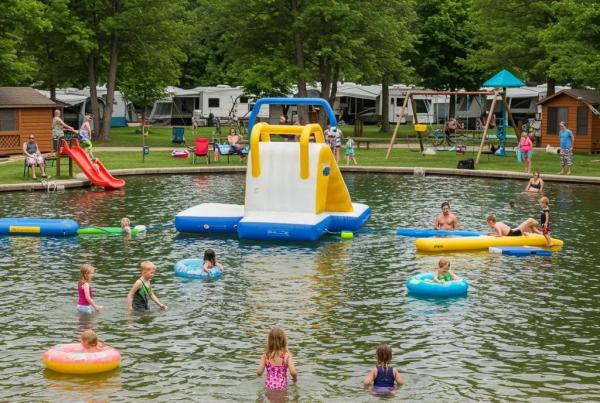
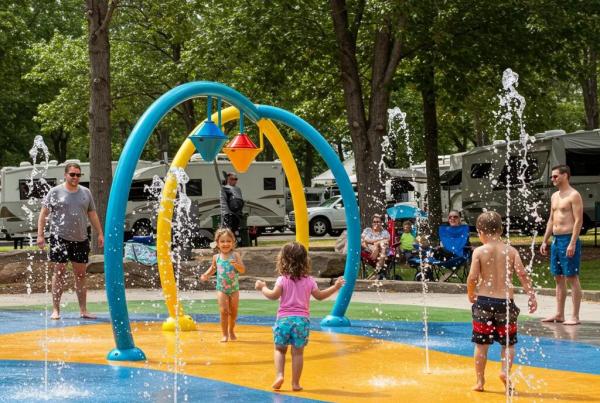
Water amenities at family campgrounds range from inflatable Wibit installations to supervised pools and natural swimming lakes, each offering different play styles and safety considerations. Water parks like Wibit provide active obstacle courses and slides that encourage group play and confidence-building but require supervision and age/weight checks. Natural lakes and beaches offer exploratory play, fishing, and sandy areas for little ones, but families must confirm lifeguard coverage and currents. Evaluating seasonal availability and lifeguard presence helps families choose water features that match their children’s swimming skills and safety needs.
Below is a table comparing common family water amenities and when they best fit family profiles.
Intro table explaining water amenity differences:
This comparison clarifies which aquatic features match family preferences and safety priorities.
What Activities Are Available at Campgrounds with Wibit Water Parks?
Wibit water park installations typically offer climbing elements, slides, balance challenges, and open play sections that encourage cooperative games and water confidence. These setups work best when the campground provides clear supervision or lifeguards and enforces age and weight limitations to minimize injury risk. Families should plan Wibit sessions around lifeguard hours and rotate children through play to prevent fatigue. Scheduling Wibit time alongside calmer lake or pool activities creates a balanced day that accommodates both high-energy and quiet play.
Consider these safety checks before Wibit play:
- Confirm lifeguard presence and published rules.
- Check age/weight limits and recommended footwear/floatation.
These steps reduce risk and maximize fun for all participants.
How Do Swimming Lakes and Beaches Enhance Family Camping Experiences?
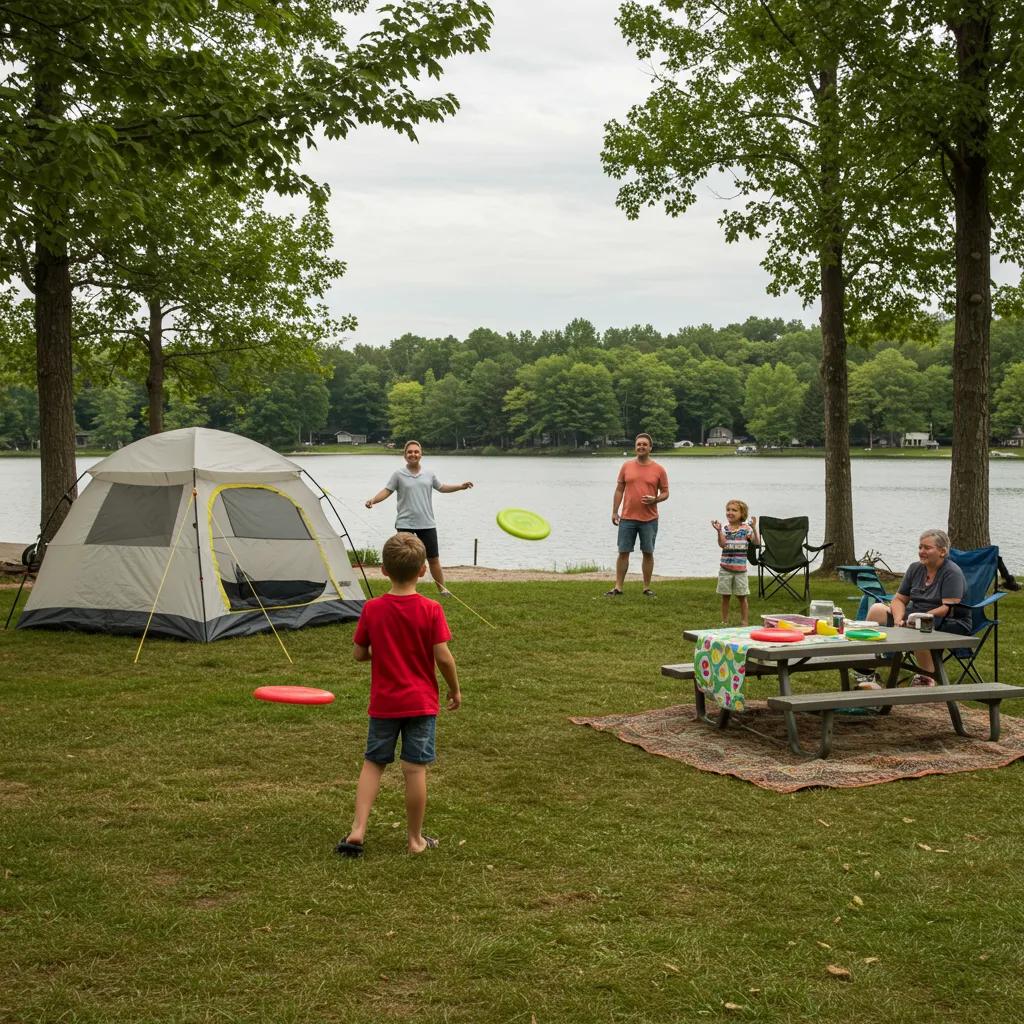
Swimming lakes and beaches provide natural exploration opportunities—sand play, beginner fishing, and shoreline wildlife observation—that broaden children’s outdoor learning and sensory play. Open water encourages family-led skill-building like wading and paddle practice, but natural settings require stricter adult supervision and a check on water conditions. Packing flotation devices, water shoes, and a simple first-aid kit prepares families for variable lake conditions while ensuring comfort. Lakes also extend activity options into low-cost adventures like picnics, sandcastle contests, and sunrise nature walks that enrich the camping experience.
Safety preparation for lakes includes the following checklist:
- Verify whether lifeguards are on duty and for what hours.
- Bring Coast Guard–approved flotation for non-swimmers.
Proper planning makes lakes a high-value addition to family camping.
Are There Safety and Accessibility Features at Family Water Parks?
Family water parks and swimming areas typically implement lifeguard staffing, shallow entry zones, and ADA-accessible ramps to enhance safety and inclusivity for a wide range of campers. When assessing a site, families should inquire about first-aid availability, shaded rest areas, and the presence of gentle-entry or zero-depth access for toddlers and guests with mobility challenges. Clear posted rules, lifejacket loan programs, and trained staff boost parental confidence and reduce incident risk. Checking policies before arrival and planning activity blocks around supervision windows helps parents balance active play with rest and hydration.
Accessibility and safety checks to confirm before arrival:
- Lifeguard schedule and first-aid station location.
- ADA access points and shade/benches near water features.
These verifications support a safer, more inclusive day at the water.
Where Can Families Find the Best RV Resorts and Kid-Friendly Camping Sites Near Me?
Finding local family campgrounds involves targeted searches using amenity filters, reading recent family-focused reviews, and assessing travel time to ensure arrival and departure are manageable with children. Prioritize filters for “playgrounds,” “water park,” “pet-friendly,” or “cabins” when searching, and use site maps to confirm site orientation relative to amenities. Local attractions and drive times are important for day trips and medical contingencies; choose campgrounds within a reasonable radius of services if traveling with infants or seniors. The next subsection outlines essential RV resort features families should prioritize.
What Amenities Should Families Look for in RV Resorts?
Essential RV resort amenities include full hookups (30/50 AMP and sewer), clean restrooms, reliable potable water, and on-site conveniences like a store and laundry to simplify family logistics. Family-enhancing features include playgrounds, pools, game rooms, and scheduled kids’ activities that reduce planning friction and create social opportunities. Convenience amenities such as Wi-Fi, shaded sites, and easy access roads help families stay connected and comfortable without sacrificing outdoor time. Prioritize features that reduce daily friction—clean restrooms, safe play areas, and predictable activity schedules—to make a camping trip smooth.
A short prioritized checklist for RV resort selection:
- Full hookups and level sites for easier setup.
- Convenient restrooms and laundry for family hygiene.
- Onsite activities and play areas to keep kids engaged.
These priorities guide families to practical, comfortable choices.
How Do Kid-Friendly Campgrounds Support Group and Seasonal Camping?
Kid-friendly campgrounds offer group sites, reservable clustered sites, and seasonal programming that foster community while providing flexible space for reunions and extended stays. Group areas often include large grassy fields, shelter houses, and nearby bathhouses to simplify catering and mixed-age logistics. Seasonal memberships or seasonal-site options can provide families with reserved space and access to peak weekend events, though families should plan around high-demand themed weekends to ensure availability. Booking early and checking calendarized events helps groups secure dates that align with children’s schedules and school breaks.
Group planning tips include advance reservations, checking event calendars, and confirming nearby parking and accessibility for multi-vehicle groups. These steps smooth coordination and help families make the most of seasonal programming.
What Are the Benefits of Pet-Friendly Campgrounds with Dog Parks?
Pet-friendly campgrounds with dedicated dog parks allow families to travel with pets while ensuring safe separation between active play areas and quieter family zones. A fenced, spacious dog park supports exercise and socialization for dogs, reducing on-site behavioral issues and helping families enjoy activities without frequent leash breaks. Families should confirm rules such as leash policies, vaccination requirements, and designated hours for off-leash play to avoid surprises. Choosing a campground with a large dog park and clear pet policies streamlines planning for families who consider their pet part of the travel group.
Practical pet tips include packing pet waste bags, checking vaccination records, and scheduling dog-park time outside peak kid-activity windows to balance noise and play.
What Family Activities and Events Make Campgrounds Ideal for Kids?
Themed weekends, daily craft sessions, and tournament-style sports keep children occupied and create shared memories that define family camping experiences. Campgrounds that structure recurring events—scavenger hunts, parades, tie-dye, and holiday celebrations—offer low-effort entertainment for parents while promoting peer interaction for kids. Daily options like the game room, playgrounds, and sports courts provide flexible alternatives when weather or nap schedules interrupt special events. Below is a compact event-reference table families can use to spot typical offerings and costs.
Intro to event quick-reference table:
This table helps families scan event types quickly and decide which campgrounds match their pace.
Which Themed Weekends and Daily Events Are Popular at Family Campgrounds?
Popular themed weekends include crafts and tie-dye, scavenger hunts, holiday celebrations, and family-friendly concerts or DJ parties; these events are designed to engage multiple age groups and create easy social experiences. Typical structures include morning crafts for younger children, midday active play sessions, and evening family entertainment, balancing energy and rest. Parents should plan around signature events that require registration and align mealtimes and naps accordingly to avoid meltdowns. Booking around key events ensures families can participate in favored activities without logistical friction.
Tips for planning around events: check registration requirements, arrive early for popular sessions, and build downtime between scheduled activities.
How Do Sports Courts and Game Rooms Enhance Family Fun?
Sports courts and game rooms provide multi-age activity hubs where siblings and parents can play together, fostering light competition and physical exercise. Common offerings include sand volleyball, basketball, gaga ball pits, and indoor/outdoor game rooms with board games and video options suitable for various weather conditions. Structured family tournaments or casual pick-up games create bonding opportunities and help children expend energy. To maximize benefit, families should confirm equipment availability and safety protocols, schedule family game times, and rotate activities to include quieter options for younger children.
Ideas for family tournaments encourage participation: short round-robin play and mixed-age teams that balance competition and inclusion.
What Outdoor Adventures Are Available on Nearby Rivers and Trails?
Nearby rivers and trails expand campground activity options to include canoeing, kayaking, river float trips, and short family hikes that teach navigation and wildlife observation skills. River float trips provide gentle outings that are often guided or self-led with local rental providers; families should verify launch points, recommended trip lengths, and safety gear requirements. Trails offer short loop hikes ideal for toddlers and beginner-level explorations for older children, with interpretive signage boosting educational value. Planning rentals and route lengths in advance ensures outings fit the family’s fitness and attention spans.
Families should pack water, sun protection, and appropriate footwear for river and trail excursions to keep adventures safe and comfortable.
How Can Families Easily Plan and Book Their Camping Getaway?
Efficient family planning begins with choosing dates that avoid peak traffic and align with school schedules, selecting the right accommodation type, and confirming essential amenities before reserving. A short booking checklist simplifies the process: choose dates, select RV/tent/cabin, confirm kid and pet amenities, and reserve online. Reading recent reviews for cleanliness and event quality, reviewing site maps, and confirming cancellation policies helps families avoid surprises. The following subsection outlines booking channels and an actionable step-by-step checklist.
What Are the Best Online Reservation Options for Family Campgrounds?
Families can book directly through campground reservation systems or use aggregator platforms; direct reservations often provide site maps and specific accommodation choices, while third-party sites can help compare availability rapidly. When choosing a booking channel, prioritize access to site maps, clear cancellation policies, and the ability to select exact site numbers for family convenience. For busy weekend events and high-season stays, reserve early and verify any additional fees or registration requirements for special activities. Cabins and RV/tent sites may have different booking flows, so confirm the accommodation type during checkout.
Booking tips summarized:
- Book early for themed weekends to secure family-preferred activities.
- Use site maps to choose proximity to amenities and restrooms.
- Confirm cancellation and pet policies to avoid last-minute issues.
These steps reduce stress and align expectations before arrival.
Where Can Families Read Reviews and Testimonials About Campgrounds?
Reliable review sources often include platform-based guest reviews and recent trip reports that highlight family-specific concerns like cleanliness, event quality, and safety. When reading reviews, prioritize recent comments mentioning kids’ activities, water-amenity supervision, and restroom condition, as these directly affect family comfort. Weigh mixed reviews by focusing on recurring themes rather than isolated complaints, and check for reviewer responses from campground management that address issues proactively. Recent-season reviews are most valuable for assessing event schedules and operational changes.
Use review patterns to verify expectations and to spot consistent strengths or weaknesses across visitor experiences.
Understanding the nuances of recreational planning and design for Michigan’s state forest campgrounds can offer valuable insights into optimizing family camping experiences.
Michigan State Forest Campgrounds: Recreational Planning and Design
Factors Relevant To More Efficient Recreational Planning And Design For Michigan’s State Forest Campgrounds.
How Do Families Find Directions and Local Attractions Near Campgrounds?
Families should map routes in advance to estimate travel time, identify grocery and pharmacy stops, and plan day trips to nearby natural or cultural attractions suitable for children. Confirm parking, road access for RVs, and any seasonal road advisories that could affect arrival times. Local tourism resources and campground-provided maps help identify short hikes, river launch points, and family-friendly attractions near the site. Packing a small logistics checklist for the drive and first 24 hours reduces stress and ensures supplies are on hand upon arrival.
A simple directions checklist includes estimating drive time, locating nearest grocery/medical stops, and planning arrival during daylight for easier setup.
When considering different camping options, it’s helpful to understand the various types of accommodations available, as highlighted in guides that explore camping with kids.
Camping with Kids: RV, Tent, and Cabin Accommodation Guide
Is sleeping in a yurt, a cabin, or an RV considered camping?
Camping With Kids: Complete Guide to Car Tent and RV Camping, 2013
Frequently Asked Questions
What should families consider when choosing a campground in Michigan?
When selecting a campground in Michigan, families should prioritize safety, amenities, and accessibility. Look for campgrounds that offer lifeguards at water features, clean restrooms, and family-friendly activities. Additionally, consider the proximity to medical services and local attractions, as well as the availability of accommodations that suit your family’s needs, such as RV sites, tent sites, or cabins. Reading recent reviews can also provide insights into the experiences of other families.
How can families ensure a safe camping experience for children?
To ensure a safe camping experience for children, families should conduct thorough safety checks before arrival. Confirm the presence of lifeguards at swimming areas, check for clear safety rules, and ensure that playground equipment is age-appropriate. Packing a first-aid kit, flotation devices, and sun protection is essential. Additionally, parents should supervise children closely during water activities and familiarize themselves with the campground layout to quickly access restrooms and emergency services.
What types of activities are typically available for kids at family campgrounds?
Family campgrounds often provide a variety of activities for kids, including organized games, arts and crafts, and themed events like scavenger hunts or talent shows. Many campgrounds also feature sports courts, playgrounds, and game rooms to keep children engaged. Additionally, outdoor activities such as hiking, fishing, and swimming in lakes or pools are common. These structured activities help children socialize and create lasting memories while allowing parents to relax.
How can families make the most of themed weekends at campgrounds?
To maximize enjoyment during themed weekends at campgrounds, families should plan ahead by checking the event schedule and registering for popular activities. Arriving early can help secure spots for crafts or games. It’s also beneficial to align meal times and nap schedules with event timings to avoid meltdowns. Engaging in themed activities together fosters family bonding and creates shared memories, making the camping experience more enjoyable for everyone.
What are the benefits of choosing a campground with pet-friendly policies?
Choosing a campground with pet-friendly policies allows families to include their furry friends in outdoor adventures, reducing the stress of leaving pets behind. Campgrounds with designated dog parks provide safe spaces for pets to play and socialize, which can enhance the overall camping experience. Additionally, pet-friendly campgrounds often have clear rules regarding pet behavior, ensuring a comfortable environment for all guests. This inclusivity can make family trips more enjoyable and memorable.
How can families find the best local attractions near their campground?
To discover the best local attractions near a campground, families should utilize online resources, such as tourism websites and campground-provided maps. Planning day trips to nearby parks, museums, or natural landmarks can enhance the camping experience. Checking for local events or seasonal activities can also provide additional entertainment options. It’s helpful to map out grocery and pharmacy stops in advance to ensure a smooth trip and to maximize time spent enjoying local attractions.
What are some tips for booking a family-friendly campground?
When booking a family-friendly campground, it’s essential to start early, especially for popular weekends or events. Use online reservation systems that allow you to view site maps and select specific accommodations. Confirm the availability of kid-friendly amenities, such as playgrounds and water features, and check cancellation policies to avoid surprises. Reading recent reviews can provide insights into the campground’s cleanliness and the quality of activities offered, helping families make informed decisions.
Conclusion
Choosing the right family-friendly campground in Michigan ensures a memorable outdoor experience filled with safety, fun, and convenience for all ages. By prioritizing amenities like playgrounds, water features, and structured activities, families can create lasting memories while minimizing stress. Take the next step in planning your adventure by exploring our curated list of top campgrounds that cater to families. Start your journey today and make the most of your family camping experience!