Breakdown of Common Fees When Using a Broker to Sell Your Campground
When you sell your campground, a broker fee is what you pay for their help in marketing, negotiating, and finalizing the deal. This covers their work connecting you with buyers and managing the risks involved. These fees typically cover getting your listing seen, reaching out to potential buyers, handling contract talks, and coordinating the due diligence process. Understanding these costs helps you figure out how much you’ll actually net and decide if selling through a broker is the right move for you. This guide will walk you through typical commission rates and how negotiable they are, other costs you might face besides commission, ways to sell without paying broker fees, how fees impact your final earnings, the documents buyers and brokers expect, and key valuation metrics like NOI, cap rates, and SDE. You’ll get practical tips for negotiation, a checklist of common and hidden fees, step-by-step alternatives to using a broker, and clear examples comparing broker-led sales with direct acquisitions. We’ll also weave in terms like “campground broker fees explained,” “average commission for selling a campground,” and “sell campground directly to buyer” to make comparisons easy and actionable for owners looking to sell in today’s 2025 market.
What Are the Typical Broker Commission Rates for Selling a Campground?

A broker commission for selling your campground is the percentage or flat fee they earn once the sale is complete. It reflects the work they put into marketing, negotiating, and managing the transaction. Essentially, brokers set their fees as a portion of the sale price to ensure their interests align with getting you the best possible price. In return, you get wider market exposure and expert deal management. Knowing the usual rates helps you estimate your net proceeds. This section will cover common percentages, different fee structures, and how you can negotiate them. Understanding commission is your first step before comparing broker sales to selling directly and looking at the paperwork that supports your campground’s value.
How Much Do Campground Brokers Charge in Commissions?
Campground brokers typically charge between 5% and 10% of the sale price. This can vary based on the deal’s size, whether the listing is exclusive, and the specific services offered. For instance, on a $1,000,000 sale, a 5% commission means $50,000, while a 10% rate means $100,000 – a significant difference in your net earnings. Brokers might use a straight percentage, a tiered percentage that decreases for higher sale amounts, or a flat fee for complex deals. Each approach affects seller incentives and negotiation flexibility. These models help you weigh the cost of a broker’s services against the potential for a higher sale price and a quicker sale, naturally leading into the factors that influence commission rates.
What Factors Influence Broker Commission Percentages?
Broker commission percentages are influenced by how complex the property is, market demand, the park’s size and amenities, how much marketing is needed, and whether the listing is exclusive. Each of these factors impacts the time and resources a broker must invest. A larger park with full-season operations and intricate lease agreements will naturally require more brokerage hours, specialized buyer outreach, and legal coordination than a smaller, seasonal site. Brokers account for this in their commission rates or flat-fee structures. Market conditions and expected cap rate trends can also affect fees, especially if finding qualified buyers is challenging or the sale requires educating buyers on campground economics. These drivers explain why it’s wise to review fee proposals alongside a clear service scope and marketing plan before signing any listing agreement.
Are Broker Commissions Negotiable When Selling Your Campground?
Absolutely – broker commissions are often negotiable. Factors like the deal size, how much support you can provide as the seller, any past relationships with the broker, and competitive offers can all play a role. Successful negotiation means lower costs for you while still getting professional service. You might propose a lower percentage for a high-value listing, offer to provide marketing materials to reduce the broker’s workload, or ask for a tiered commission structure that rewards a higher closing price. Conversely, in a slower market, brokers might be less willing to offer deep discounts. Negotiation is strongest when you can present solid financial records, clear valuation expectations, and have multiple brokers vying for your business. This naturally leads to discussing alternatives if negotiation doesn’t work out and how to sell without paying broker fees.
After looking at typical commission ranges and negotiation tactics, some owners decide to sell directly to an institutional or family-owned buyer to avoid seller-paid commissions altogether. One option is GatherGrounds Resorts‘ direct campground acquisition service. They offer a direct purchase model that emphasizes a “Family-Owned Approach” and “Direct Purchase, No Broker Fees,” aiming to preserve the campground’s legacy and reduce your transaction costs. This direct route can be particularly appealing if you prioritize a smooth transition and want to avoid the exposure and lengthy marketing periods often associated with broker commissions.
What Other Fees Should Campground Sellers Expect When Using a Broker?
Beyond commission, expect a range of closing and transaction expenses that will reduce your net proceeds. Identifying these upfront helps prevent surprises. Common fees include title and escrow charges, attorney fees, transfer taxes (depending on the location), appraisal and survey costs, marketing and listing expenses, and potential administrative or relisting fees. How these are split often depends on the contract terms. This section will detail common closing items, marketing and appraisal costs, and potential hidden fees. We’ll also provide a table to compare these items, their typical ranges, and who usually pays them. Understanding these components will help you decide if the exposure a broker provides is worth the total cost, or if a direct sale might be more cost-effective overall.
What Are the Common Closing Costs for Campground Sellers?
Common closing costs for sellers often include title insurance premiums, escrow or settlement fees, attorney or closing agent charges, recording fees, and any applicable transfer taxes or municipal assessments. Who pays for these can depend on local practices and negotiations. Title and escrow fees can range from a few hundred to several thousand dollars, depending on the sale price and complexity. Attorney fees can vary widely based on the time needed for contract drafting and negotiation. Transfer taxes are specific to the jurisdiction. It’s wise to get an early estimate of settlement costs to understand your likely out-of-pocket expenses and to negotiate which closing costs the buyer might absorb. This leads into estimating marketing and appraisal budgets, which come before closing.
- Typical closing expenses include title insurance, escrow fees, and attorney charges.
- Costs vary by location and deal complexity; always ask for a preliminary closing statement.
- Negotiation can shift some costs to buyers, but local customs often determine who pays.
Having a clear estimate of closing costs helps avoid last-minute disagreements and allows you to better compare the net outcomes of brokered versus direct sales.
How Much Do Marketing and Appraisal Expenses Add to Selling Costs?
Marketing a campground sale can involve professional photography, drone footage, listing syndication, targeted buyer outreach campaigns, and advertising in industry publications. These combined can add several thousand to tens of thousands of dollars, depending on the campaign’s scope. Appraisal costs for specialized properties like campgrounds are higher than for standard residential properties because they require income-capitalization analysis and comparable market research. Expect fees in the mid-to-high three figures to low four figures, depending on the appraiser’s expertise. While marketing adds upfront expense, effective campaigns can shorten the time on market and support higher offers. You’ll need to evaluate the expected return on your marketing investment when considering a broker listing versus a direct sale with fewer marketing needs.
- Marketing expenses typically cover photography, listing syndication, and targeted outreach.
- Appraisal costs are higher for income-producing campgrounds due to specialized analysis.
- Evaluate marketing ROI: higher spend can drive better offers but increases upfront seller costs.
Sellers who prefer a lower-fee route might accept narrower buyer exposure in exchange for lower marketing and appraisal outlays.
Are There Hidden Fees When Selling a Campground Through a Broker?
Hidden fees can pop up as administrative charges, relisting fees, escrow reserves, or unexpected due-diligence costs that you might have overlooked in the listing agreement. These can eat into your net proceeds if not disclosed upfront. Watch out for vague language about extra charges for document preparation, penalties for early contract termination, or open-ended marketing expense clauses. Always ask for a full fee schedule and a written cap on outside expenses. Having legal counsel or a neutral advisor review the agreement can reveal potential ambiguities and help you negotiate explicit limits. This is crucial before committing to an exclusive broker arrangement and naturally leads into the documentation buyers and brokers require to support valuation and minimize surprises.
- Common hidden fees include administrative charges, relisting fees, and open-ended marketing expenses.
- Ask for a written fee schedule and caps on third-party expenses before signing a listing agreement.
- Use counsel to negotiate clear terms that limit unexpected charges at closing.
How Can You Sell Your Campground Without Paying Broker Fees?
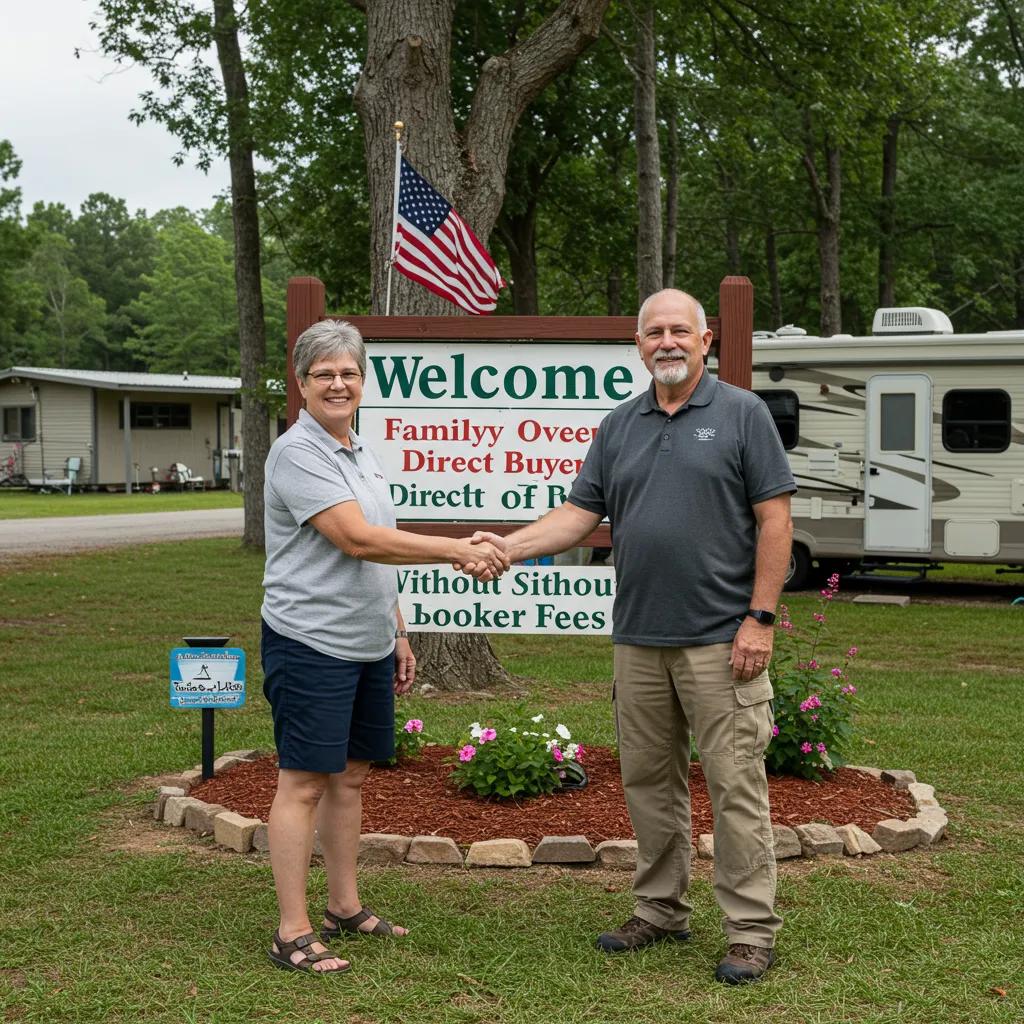
Selling your campground without paying broker fees is achievable by exploring direct-sale options. This could involve selling to private buyers, strategic acquirers, or family-owned operators who purchase directly and handle their own acquisition efforts. The main benefit is cutting out seller-paid commissions, which can significantly boost your net proceeds. A direct sale can also potentially shorten timelines and reduce marketing and listing expenses. This section will cover direct-sale options, highlight GatherGrounds’ approach as a direct acquirer, and outline the steps you should take to prepare for a direct transaction. Understanding these steps will help you determine if a direct sale aligns with your goals, timeframe, and legacy preferences.
What Are the Benefits of Selling Directly to a Buyer Like GatherGrounds Resorts?
- No seller-paid broker commissions when selling directly to an acquirer.
- Potential for lower overall transaction fees and faster closing timelines.
- Preservation-focused buyers may prioritize staff retention and community continuity.
Sellers should weigh these advantages against the market exposure and price-maximization potential a broker might deliver.
How Does the GatherGrounds Direct Acquisition Process Work?
- Initial no-obligation conversation to discuss seller goals and property scope.
- Document review and valuation leads to a written offer tailored to the campground.
- Focused due diligence and coordinated closing to minimize seller burden.
Knowing the process in advance speeds negotiation and helps sellers compare direct offers to brokered net projections.
What Are the Financial Advantages of Avoiding Broker Fees?
Avoiding broker fees can substantially increase your net proceeds. By eliminating a 5%–10% commission layer and often reducing ancillary marketing and listing expenses, you realize tangible cash benefits at closing. For example, on a hypothetical $1,000,000 sale, avoiding a 7% commission saves $70,000, even before considering additional closing and marketing cost reductions. You can reinvest this capital, pay down debt, or fund retirement with a larger lump sum. Direct sales might trade off some market exposure, but the guaranteed savings on broker commissions and often lower closing friction can outweigh incremental price gains from broader listing strategies. It’s wise to calculate your net proceeds under both scenarios to see which route best fits your financial and non-financial objectives.
How Do Broker Fees Impact the Net Proceeds from Selling Your Campground?
Broker fees and related transaction costs directly reduce the cash you receive at closing. The math is simple: Sale Price – Commissions – Closing Costs = Net Proceeds. Understanding each component helps you forecast your post-sale liquidity. Commissions are often the largest single expense, but aggregated closing, legal, appraisal, and marketing costs can cumulatively add up to several percentage points of the sale price. This section provides worked numeric examples across different sale-size tiers, a table summarizing estimated costs, and a direct comparison showing the difference between a brokered sale and a direct acquisition to quantify the impact.
How Much Can Broker Commissions Reduce Your Sale Profits?
Broker commissions can significantly reduce your sale profits. On a $500,000 sale, a 5% commission means you pay $25,000, while a 10% commission doubles that cost to $50,000. Similar proportional effects occur at higher price points. Beyond commission, adding closing costs of 2%–4% and marketing/appraisal expenses can further subtract from your proceeds. So, you should expect total transactional drag to be in the range of 7%–15% in typical brokered scenarios. These percentage impacts translate to real cash differences that affect your reinvestment plans, debt repayment, or retirement funding. This makes a careful comparison against direct-sale offers, which eliminate seller-paid commissions and often reduce other fees, very important.
- Commission examples: 5% = $25,000 on $500k; 10% = $50,000 on $500k.
- Total transactional costs commonly range from 7%–15% when combining commission and closing fees.
- Calculating net proceeds under both models clarifies which route maximizes seller outcomes.
Quantifying these impacts makes negotiation and decision-making more objective.
What Are the Total Estimated Selling Costs Including Broker Fees?
To estimate your total selling costs, combine commission, closing items, marketing, appraisal, and legal fees into a single projection. Typical combined ranges for sellers fall between 7% and 15% of the sale price, depending on complexity and region. For example, a mid-market campground might incur a 6% commission, 3% in closing/legal fees, and 1% for marketing/appraisal, totaling roughly 10% of the sale price in seller expenses. A more complex sale in a competitive region could push that percentage higher. You can reduce the effective cost by negotiating commission, limiting third-party marketing expenses, or choosing a direct acquirer that removes the commission line item entirely. This aggregation serves as the basis for numerically comparing brokered offers to direct-sale proposals.
This worked example shows how eliminating commission in a direct sale increases net proceeds, before factoring any differences in offered sale price.
How Does a Direct Sale Improve Your Net Earnings?
A direct sale improves your net earnings primarily by removing seller-paid commission and often reducing marketing and administrative overhead. Together, these factors increase the cash you receive at closing. Using the table above, a seller facing a 6% commission on a $1,000,000 property stands to preserve an additional $60,000 by completing a direct sale to a buyer that covers its own acquisition costs, such as GatherGrounds Resorts’ direct campground acquisition service. Faster closings also reduce carrying costs and seasonal revenue risk, further improving effective net proceeds compared to extended brokered listing timelines. You should weigh potential price differences against guaranteed commission savings to determine the best path for your objectives.
What Documents and Financial Records Are Needed to Support Broker Sales and Fees?
Accurate, organized documentation reduces valuation uncertainty and due-diligence time, thereby improving broker and buyer confidence and often shortening the transaction timeline. The reason is simple: better data reduces perceived risk and can support stronger offers. Buyers and brokers typically request profit-and-loss statements, tax returns, occupancy and revenue reports, utility and maintenance records, lease and vendor agreements, and capital expenditure histories. This section lists the required financial statements, explains how documentation quality affects valuation and fee negotiations, and provides a checklist you can use to prepare materials for brokered or direct-sale processes. Organized records also enable you to present a defensible NOI and SDE, which are key to valuation discussions.
Which Financial Statements Do Buyers and Brokers Require?
- Provide 3–5 years of P&Ls and tax returns, plus monthly occupancy data.
- Include utility bills, maintenance records, vendor contracts, and capital expenditure history.
- Clean records reduce due-diligence time and support stronger valuation outcomes.
Well-prepared documentation transitions smoothly into the legal documents required for closing.
How Do Accurate Records Affect Broker Valuation and Fees?
Accurate records increase valuation confidence by enabling precise NOI and SDE calculations. This reduces perceived risk and can lead to higher offers or more favorable commission negotiations because the transaction is straightforward to underwrite. Brokers value listings with transparent historical performance because these properties attract a broader set of qualified buyers and shorten the time between listing and close, potentially justifying lower commission rates or fee structures. Conversely, incomplete or inconsistent records lengthen due diligence, increase contingency risk, and may prompt higher commission demands to offset broker effort. Sellers who invest effort into record consolidation improve both valuation outcomes and fee dynamics.
What Legal Documents Are Involved in Broker-Led Sales?
This table clarifies which legal documents drive fees and where sellers should focus review to limit unexpected costs.
How Are Campgrounds Valued and How Do Valuations Affect Broker Fees?
Campgrounds are primarily valued using income-based approaches—Net Operating Income (NOI) capitalized by a market cap rate—or, for owner-operated parks, by Seller’s Discretionary Earnings (SDE) multiples. This method links operating performance to market valuation and seller expectations. Valuation outcomes inform the listing price and expected commission dollars because brokers often tie their effort to price bands and potential buyer pools. Higher valuations can justify higher absolute commissions but may enable proportionally lower percentage negotiations. This section defines NOI, cap rate, and SDE, shows simple calculation examples, and explains how valuation swings change seller net proceeds and commission negotiation room.
What Is Net Operating Income and Why Does It Matter?
Net Operating Income (NOI) is your revenue minus operating expenses (excluding financing and taxes). It’s crucial because it converts operational performance into the income stream buyers value when using capitalization-rate methods. To calculate NOI, sum your gross campground revenue and subtract operating expenses like utilities, maintenance, payroll, and management fees to arrive at the stabilized annual income that supports valuation. For example, a campground with $400,000 in gross revenue and $160,000 in operating expenses has an NOI of $240,000, which is the basis for cap-rate valuation. An accurate NOI calculation directly affects your listing price expectations and, therefore, the absolute commission paid to brokers.
How Do Capitalization Rates Influence Sale Price?
The capitalization rate (cap rate) converts NOI into value using the formula: . Small movements in cap rates can lead to significant value shifts because campgrounds are typically valued based on modest cap-rate differentials reflecting risk and demand. For instance, an NOI of $240,000 at a 6% cap rate yields a value of $4,000,000, while the same NOI at 8% reduces the value to $3,000,000, illustrating market sensitivity. Cap rates reflect location, demand, asset condition, and perceived risk. Lower cap rates indicate stronger buyer appetite and higher valuations. Sellers and brokers must align realistic expectations about cap rates to set list prices that attract qualified buyers without overpricing.
What Role Does Seller’s Discretionary Earnings Play in Broker Commissions?
Seller’s Discretionary Earnings (SDE) is mainly used for owner-operated parks and equals net income plus owner benefits and discretionary add-backs. Buyers use SDE to assess the cash flow available to a new owner and to set price multiples. Brokers use SDE to market owner-operated campgrounds to investor-operators. SDE-based valuations often result in price multiples that differ from pure NOI/cap-rate transactions, which in turn affect absolute commission amounts. For example, a park with an SDE of $150,000 sold at a 3x multiple yields a $450,000 valuation, where commission as a percentage translates differently than in large institutional cap-rate deals. Understanding SDE ensures you provide the right add-backs to maximize achievable offers and explain the basis for commission expectations.
What Are the Key Differences Between Broker Sales and Direct Sales in Terms of Fees and Process?
Broker sales and direct acquisitions differ primarily in their fee structure, timeline, confidentiality, and buyer pool. These distinctions guide a seller’s choice based on their priorities, such as price maximization, speed, or stewardship. Broker sales typically aim for broad market exposure, competitive bidding, and price optimization but incur seller-paid commission and higher marketing outlays. Direct sales prioritize certainty, shorter timelines, and potential legacy preservation but may yield less market-driven pricing. This section compares the fee and process differences, explains how GatherGrounds eliminates or reduces fees through direct purchase, and outlines the typical time savings when selling directly.
How Do Broker Sales Typically Handle Marketing and Legal Costs?
Broker sales often front-load marketing through professional collateral, listing syndication, and targeted outreach. These costs are either billed directly to the seller or recovered through commission structures. Legal costs arise from extensive buyer negotiations and contract customization. The rationale is that brokers invest in buyer outreach to maximize the sale price, which increases seller exposure but also raises upfront expenses. Sellers should request written marketing budgets and legal cost estimates to understand expected outlays and whether those costs are recoverable at closing. Clear budgeting helps owners compare the real net outcomes between brokered and direct routes.
How Does GatherGrounds Eliminate or Reduce These Fees?
GatherGrounds Resorts’ direct campground acquisition service eliminates seller-paid broker commissions by purchasing directly. It also reduces seller marketing obligations and streamlines legal steps through focused due diligence. Collectively, these actions reduce seller-paid fees and closing friction. The direct-purchase approach avoids prolonged public listings and the associated marketing spend, while emphasizing a “Family-Owned Approach” and “Preservation of Legacy” for owners who prioritize stewardship. By removing the commission layer and applying a targeted acquisition process, GatherGrounds aims to deliver a “Transparent process” with fewer seller-paid fees and a streamlined selling experience. Sellers considering this path should weigh the known commission savings against potential differences in offered price.
What Are the Time Savings When Selling Directly Compared to Using a Broker?
- Broker sale timelines commonly span 6–12+ months due to marketing and multiple buyer negotiations.
- Direct sale timelines can often compress to a few weeks or months with focused due diligence.
- Faster closings reduce carrying costs and operational uncertainty for sellers.
These distinctions help owners select the route that best matches their financial, timing, and legacy objectives.
- Prepare your financial records: Assemble P&Ls, tax returns, occupancy data, and capital expenditure history to support valuation.
- Decide your priorities: Choose between maximum market exposure (broker) and speed/fee savings (direct acquirer).
- Request full fee disclosure: Before signing any agreement, get a written schedule of commissions, marketing, and administrative fees.
These steps guide sellers toward a measured decision and connect directly to the valuation and process differences discussed earlier.
A no-obligation conversation with a potential direct acquirer can clarify whether the guaranteed fee savings and stewardship-focused transition match your goals, especially when comparing net proceeds under both sale pathways.
Frequently Asked Questions
What are the advantages of selling a campground directly to a buyer?
Selling a campground directly to a buyer, such as GatherGrounds Resorts, offers several advantages. Primarily, it eliminates the need for seller-paid broker commissions, which can range from 5% to 10% of the sale price. This means sellers can retain a larger portion of their sale proceeds. Additionally, direct sales often lead to faster closing times, reducing carrying costs and operational uncertainties. Sellers may also find that direct buyers are more focused on preserving the campground’s legacy, which can be an important consideration for many owners.
How can sellers prepare for a direct sale?
To prepare for a direct sale, sellers should first organize their financial records, including profit-and-loss statements, tax returns, and occupancy data. This documentation helps establish a clear valuation and builds buyer confidence. Next, sellers should define their priorities, such as whether they value speed or maximum market exposure. Finally, engaging in a no-obligation conversation with potential direct buyers can clarify the process and help sellers assess whether this route aligns with their goals.
What should sellers know about the due diligence process in direct sales?
The due diligence process in direct sales typically involves a thorough review of the campground’s financial and operational records. Buyers will want to verify income, expenses, occupancy rates, and any existing contracts or leases. This process is generally more streamlined than in brokered sales, as direct buyers often have a clear understanding of what they are looking for. Sellers should be prepared to provide accurate and organized documentation to facilitate a smooth transaction and minimize delays.
Are there specific marketing strategies for selling a campground directly?
When selling a campground directly, marketing strategies can be more targeted and cost-effective. Sellers can leverage online platforms, social media, and industry-specific networks to reach potential buyers without incurring high marketing costs. Creating a compelling listing that highlights the campground’s unique features, amenities, and financial performance can attract serious buyers. Additionally, word-of-mouth referrals and networking within the campground community can also be effective in finding interested parties.
What are the potential risks of selling a campground without a broker?
Selling a campground without a broker can present certain risks, including limited market exposure and the potential for undervaluation. Without professional guidance, sellers may struggle to navigate the complexities of the sales process, including negotiations and legal requirements. Additionally, sellers may miss out on valuable insights regarding market trends and pricing strategies that brokers typically provide. To mitigate these risks, sellers should conduct thorough research and consider consulting with legal or financial advisors during the process.
How do closing timelines compare between brokered and direct sales?
Closing timelines for direct sales are generally shorter than those for brokered sales. Brokered transactions often take 6 to 12 months due to extensive marketing efforts and negotiations with multiple buyers. In contrast, direct sales can often close within a few weeks to a few months, as they involve fewer intermediaries and a more streamlined due diligence process. This speed can significantly reduce carrying costs and operational uncertainties for sellers, making direct sales an attractive option for those looking to sell quickly.
Conclusion
Understanding the various fees associated with selling your campground, including broker commissions and additional closing costs, is essential for maximizing your net proceeds. By weighing the benefits of brokered sales against direct sale alternatives, you can make informed decisions that align with your financial goals. Consider exploring direct acquisition options like GatherGrounds Resorts to potentially save on commissions and streamline the selling process. Take the next step towards a successful sale by assessing your options today.