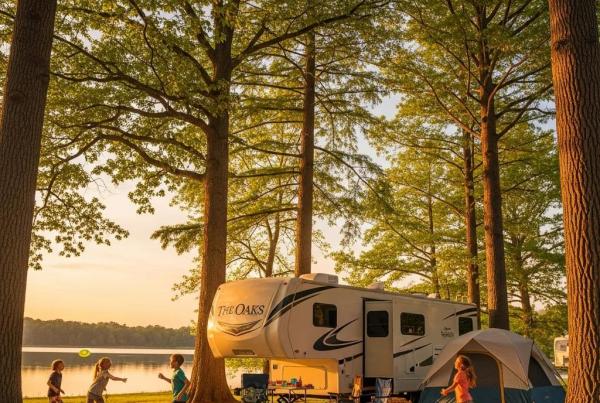
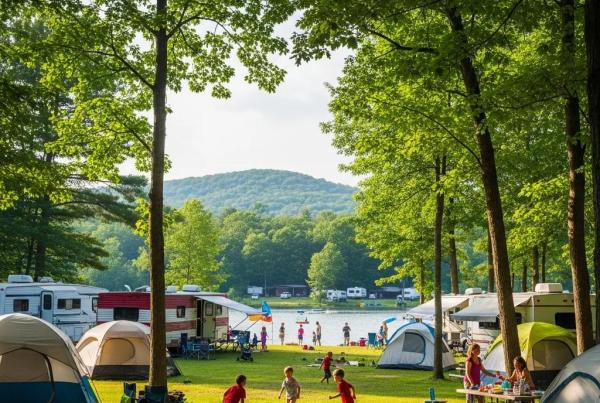
The seasonal campsite cost in Michigan depends mostly on the park’s amenity level and the site itself. At our two Michigan parks, a 2027 seasonal site runs $2,500 to $3,300 at The Oaks Campground in Munith and $3,000 to $5,500 at Walnut Hills Family Campground in Durand, where most available sites are $3,000 to $4,000. Both fees cover May 1 to October 20, let you leave your RV on the site all season, and include free winter storage if you return. Power is billed monthly by what you use.
Below is what a seasonal fee covers, what moves the price up or down, the break-even math against nightly rates, the extra fees to budget for, and how payments work, with The Oaks as the lower-priced example.
What does a seasonal site fee cover?
A seasonal site is a campsite you rent for the whole camping season instead of by the night. At our parks that means:
- May 1 to October 20 access. The season is the same at The Oaks and Walnut Hills.
- Your RV stays put. You don’t tow in and out. As a campground employee put it, “all they have to do is grab their family and their food for the weekend and head to the campground in their car.”
- Water and a drain at the site. Every Oaks seasonal site has water, 30-amp electric and a gray-water drain. Walnut Hills has a mix of full-sewer sites and gray-water-drain sites.
- Free winter storage. Returning seasonals, and new seasonals who sign up ahead of the season, leave the RV on the site over the winter at no charge.
- All the amenities and events that nightly campers get: beach, trails, playgrounds, food trucks, pavilion events and so on. Paid extras like the water park wristband stay pay-per-use for everyone.
What a seasonal fee does not cover is electricity. Every seasonal site is metered and billed monthly for actual use, so you pay for what you use and nothing more: a camper who runs the air conditioner all July pays for it, and one who visits on cool weekends pays very little.
Seasonal rates for campgrounds: what drives the price
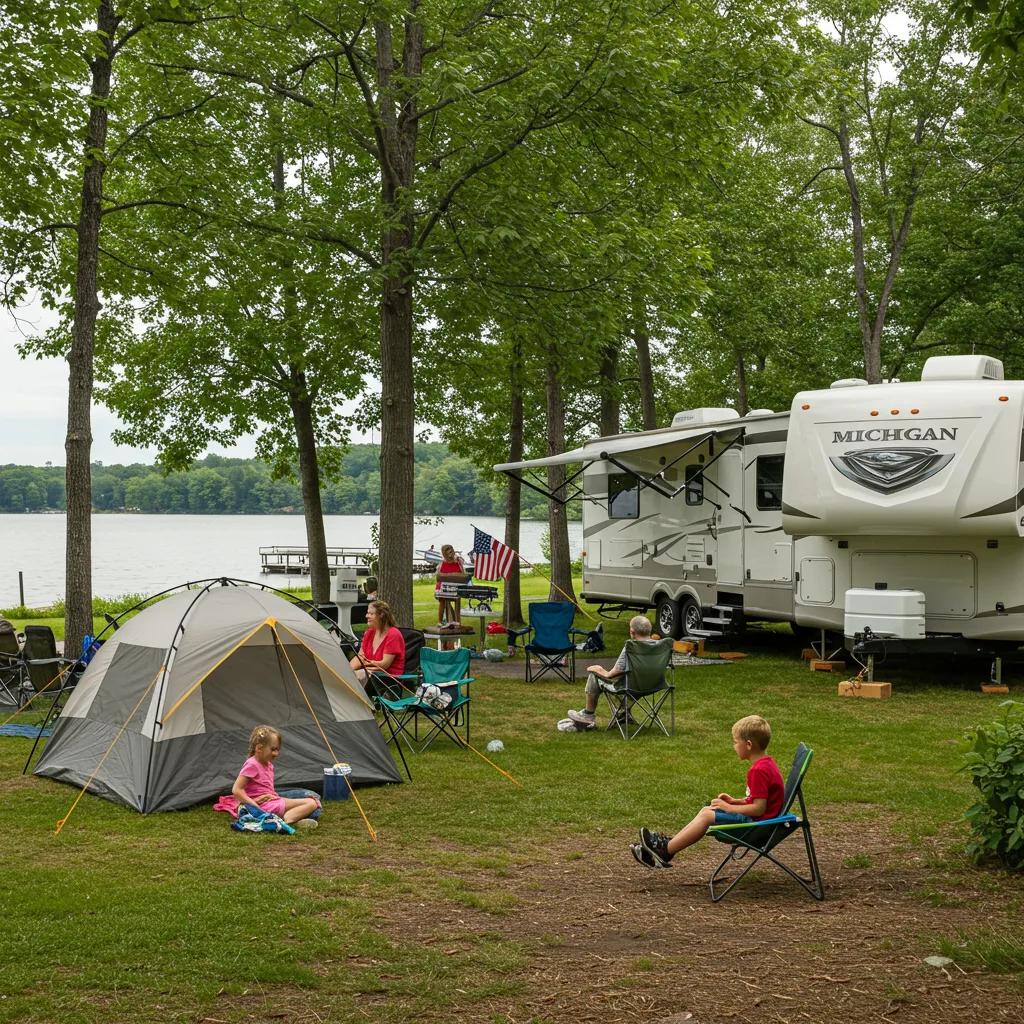
Within one park, the spread between the cheapest and most expensive seasonal site comes down to a few things:
- Waterfront. Lakefront sites at The Oaks, and lakefront (sites 101 to 103) and river-frontage sites (27 to 42) at Walnut Hills, sit at the top of each range.
- Hookups and power. Full-hookup 50-amp sites cost more than water-and-electric sites. Only Walnut Hills has full hookups; The Oaks has 30/50-amp water and electric (50 amp on short-term sites) with gray-water drains.
- Site size and privacy. At The Oaks, the row from site 46 to 61 has the largest lots in the park (40 to 55 feet wide and up to 120 feet long) with nobody behind you. At Walnut Hills, the back fence line (sites 74 to 170B) backs onto a 30-foot band of old-growth trees and a farm field where deer graze most mornings.
- Amenity level of the park. A park with a floating water park, a renovated bathhouse and a full event calendar has more to pay for, and the seasonal rate reflects it.
One pattern our team sees every year: the premium sites go first even though they cost more, so what’s left when most people start shopping is the middle of the range.
Affordable seasonal camping in Michigan: The Oaks
The Oaks is the value seasonal option of our two parks at $2,500 to $3,300, and the lower price isn’t because there’s less to do. It reflects 30-amp water-and-electric sites instead of full hookups, and a park where the upgrades are still rolling out. What you get for the fee:
- 155 acres with about 120 acres of trails through forest and grassland for hiking, mountain biking and golf carts, with deer and sandhill cranes drifting over from the neighboring Haehnle Sanctuary.
- The biggest sites in either park: 35 by 65 feet at the small end, up to 55 by 120 feet. The industry standard is about 33 by 60.
- A sand beach on a spring-fed swim lake, rebuilt in 2026 with hundreds of tons of new sand, plus the Aquaglide floating water park (wristband fee) and a free Kangaroo Jumper.
- A stocked fishing lake with a dock, bathhouses with showers and laundry, a renovated camp store with scooped ice cream, and weekend food trucks and pavilion events.
- Free boat storage for seasonals. Quite a few Oaks seasonals keep a boat, because the public launch on Portage Lake, an all-sports lake in Waterloo Recreation Area, is about 9 minutes away.
The seasonal community at The Oaks is family-focused, with a lot of grandparents whose grandkids come back weekend after weekend. See the Oaks seasonal sites page for 2027 availability, or camping near Jackson for how to get there.

Seasonal site fees compared: The Oaks vs Walnut Hills
| The Oaks (Munith) | Walnut Hills (Durand) | |
|---|---|---|
| 2027 seasonal range | $2,500 to $3,300 | $3,000 to $5,500 (most $3,000 to $4,000) |
| Season | May 1 to Oct 20 | May 1 to Oct 20 |
| Hookups | Water, 30 amp, gray-water drain | Full sewer or gray-water drain; 30/50 amp |
| Power | Metered, billed monthly | Metered, billed monthly |
| Winter storage | Free for returning seasonals | Free for returning seasonals |
| Water features | Spring-fed swim lake, beach, Aquaglide, fishing lake | Spring-fed swim lake, beach, 14-piece Wibit, Shiawassee River |
| Signature extra | 120 acres of trails, free boat storage | River float trips, three Halloween weekends |
| Seasonal golf cart fee | None currently | $300 per season |
For the Walnut Hills side of the comparison, see the Walnut Hills seasonal sites page. For a statewide list, see our guide to Michigan campgrounds with seasonal sites.
Are seasonal rates worth it? The break-even math
The simplest test: divide the seasonal fee by what you’d pay per night as a nightly camper. That gives the number of nights where seasonal and nightly cost the same.
Nightly RV sites at our parks start around the high $40s and rise on weekends, holidays and waterfront sites, so the real average for a weekend camper is higher than the starting rate. As an illustration only: if your weekend nights average about $60, a $2,800 Oaks seasonal site breaks even around 47 nights, which is roughly 16 three-night weekends. The season has about 25 weekends. A family that camps most weekends, plus a holiday week, is well past break-even; a family that camps four or five weekends a year is better off nightly.
Two things the per-night math leaves out:
- Storage. Off-site RV storage commonly runs $100 to $200 a month. Leaving the RV on your site all year is included.
- Time. Nightly campers spend part of every weekend hitching, setting up and tearing down. Seasonals walk into a camper that’s already set up and ready.
Our seasonal vs nightly camping guide goes deeper on who each option suits.
Seasonal camping fees beyond the site rate
Budget for these on top of the seasonal fee:
- Electric: metered and billed monthly through the online seasonal portal.
- Honey-wagon pump-outs on gray-water-drain sites: $19 per pump-out at all our parks starting in 2027. Because gray water goes down the drain, most seasonals need about six pump-outs a season.
- Golf cart: Walnut Hills charges seasonals $300 a season to keep a cart (it covers the park’s golf cart insurance; you also carry your own). The Oaks doesn’t charge this yet. Carts are parked at dusk at all our parks, which keeps the roads quiet and safe for kids in the evening.
- Lawn care: every seasonal keeps their lawn mowed, which is a big part of why the whole park looks cared-for. Borrow a mower from the store, trade mowing with a neighbor (very common), or opt into the staff lawn-care program at $65 a month for the whole season.
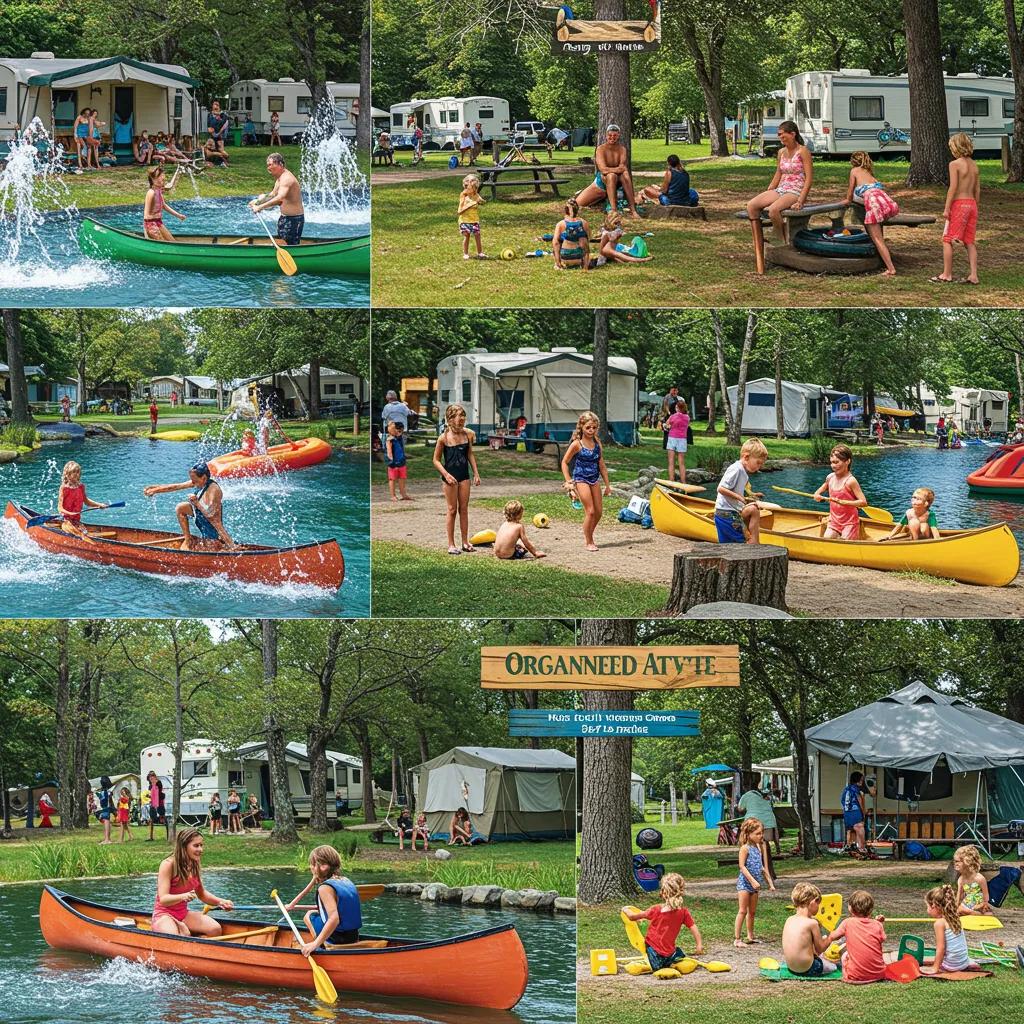
- Water park wristbands: the Aquaglide at The Oaks and the Wibit at Walnut Hills are paid separately, so seasonals who never use them aren’t paying for them.
- Visitors: guests register at the store and pay a day-visit, water-area or overnight rate. Michigan sets campground capacity per site and per park, so the office is happy to walk you through how visitors work at your site.
Sheds up to 99 square feet and decks up to the footprint of your camper are allowed under Michigan’s campground rules; a shed or deck is your expense.
How seasonal payments work
Returning seasonals renew by October 1 with a deposit, which is the largest single payment. The balance is split into six payments from November 1 to April 1. About half our seasonals pay in full by October 1 instead, and everyone can see upcoming site and power bills and set up autopay in the online portal.
If you sign up partway through the off-season, you catch up on the payments made so far and spread the rest over the remaining months. After April 1 the season is paid in full, and someone who signs up once the season has started pays a prorated amount.
When do campgrounds open for the season in Michigan?
Our Michigan parks open May 1, and seasonal access runs through October 20; short-term camping winds down a little earlier in the fall. Many private Michigan campgrounds follow a similar late-April-or-May to mid-October calendar. Michigan state park campgrounds define their peak season as May 15 to September 15.
Our parks are not open year-round, and a seasonal site is a summer place rather than a residence: Michigan’s campground rules treat campgrounds as recreation, not housing, which is why sheds are capped at 99 square feet and mailboxes and built-on rooms aren’t part of the picture. If you’re searching for year-round or long-term options, see our guide to long-term camping in Michigan and the monthly stays at The Oaks, which run 25% off nightly rates on non-beachfront sites with a 30-night minimum.
Seasonal camping vs cheap campgrounds and state parks
If the goal is the lowest possible cost per night, a Michigan state park or rustic state forest campground is hard to beat. Public parks are funded and priced differently (camping fees, the Recreation Passport and public capital investment) and keep on-site amenities simple, while a private park pays for its amenity stack, staff and utilities through the site rate. State parks also cap stays at 15 nights in peak season, so a seasonal site isn’t an option there.
A private seasonal site is a different purchase: your camper stays set up all summer at a park with a beach, trails, a store and events, surrounded by neighbors you’ll know by June. For cost comparisons see Michigan state park campground rates and our guide to affordable family camping in Michigan.
Seasonal site cost FAQ
Do seasonal fees include tent sites or cabins?
No. Seasonal sites at our parks are RV sites only. Tent sites and the Walnut Hills camping cabins are booked nightly.
Do I have to move my RV when I’m not there?
No. Some Michigan parks use a membership model where you stay two weeks and then move the RV to storage. Our seasonal sites don’t work that way; the RV stays on the site all season and over the winter.
Are there seasonal sites in West Michigan?
Ours aren’t. The Oaks is in Munith between Jackson and Ann Arbor, and Walnut Hills is in Durand between Flint and Lansing, so they serve southeast and mid-Michigan families. West Michigan has its own private parks with seasonal programs.
Can a friend use my seasonal site when I’m away?
Someone named on the camping agreement needs to be there whenever the site is in use. Two family members can sometimes both be on the agreement; ask the office.
Where do I see exact seasonal prices?
2027 availability and pricing are in the booking system linked from the Oaks and Walnut Hills seasonal pages, or call either park and a team member will match you to the right part of the campground.