Fishing vs. Camping: Why Portage Lake Campgrounds Are Perfect for Families and Outdoor Lovers
Portage Lake mixes shoreline camping with solid freshwater fishing—an easy win for families, new anglers, and seasoned outdoorspeople. This guide walks through how lake fishing compares with campground pond fishing, why Portage Lake and the surrounding recreation lands make great trip anchors, and how to pick the right campsite for your group. You’ll find quick species notes, side-by-side comparisons of Portage Lake versus managed ponds, activity ideas that pair well with a fishing-and-camping weekend, and a practical reservation checklist. Throughout, we focus on fishing campgrounds near Portage Lake, family campgrounds near Portage Lake, and lakeside camping in Michigan, with a helpful nod to a nearby campground option for beginner practice and reservations.
Why anglers and families love Portage Lake for fishing and camping
Portage Lake draws people because it’s easy to reach, offers a range of sport fish, and sits close to larger parks—so it works whether you want a quick overnight or a longer stay. The shoreline has boat ramps, public access points, and spots great for shore or pier fishing, so how you get to the water—by boat or from the bank—changes what you’ll catch and how you pack. Add nearby trails and swimming areas, and you’ve got a balanced outdoor itinerary that’s especially appealing to families looking to combine fishing with safe swimming and short hikes.
Protected lands nearby expand options for day trips and make Portage Lake an easy drive from regional population centers. If you want an all-in-one base with on-site amenities, family-focused resorts in the area offer managed ponds and sandy swim beaches that pair nicely with lake days—handy for beginners or when weather limits access to the lake. Next, we list the species you’re most likely to see and the seasons that matter.
Which fish will you find in Portage Lake and nearby waters?
Portage Lake and neighboring waters host a typical warmwater mix that responds to seasonal patterns—knowing what to expect helps with tackle, timing, and technique. Expect walleye in spring and fall, largemouth bass through the warmer months, northern pike in spring around vegetated shallows, bluegill and other panfish in summer, and yellow perch in cooler periods. Docks and shoreline structure often hold panfish and bass, while boats can reach deeper water for walleye and pike. Always check current regulations and have your Michigan fishing license before you go.
Quick-reference table below summarizes seasons and common methods for each water type.
This snapshot shows how species and access differ between open-water lakes and smaller, managed ponds—use it to match experience level to location.
Next we compare the open-lake experience with what you’ll find at on-site campground ponds.
Portage Lake vs. campground fishing ponds: what’s the difference?
Portage Lake gives you greater species variety, natural structure, and boating options. It rewards tactics like trolling, deeper jigging, and working structure. Campground ponds, by contrast, are controlled and lower-risk—ideal for families and beginners. Ponds focus on shore access, simple rigs, and steady bites from panfish or stocked fish, while the lake often requires boat safety, licensing, and weather awareness but can produce larger catches. For families, a managed pond makes a great warm-up to the lake—it builds confidence without the logistics of a boat trip.
In short: choose Portage Lake for variety and boating; pick a campground pond when convenience and supervised learning matter most. The section below highlights a nearby campground that blends both approaches and makes a good staging point.
Many families look for a campground that offers easy pond fishing for kids plus quick access to Portage Lake. The Oaks Campground by GatherGrounds is a nearby, family-focused option with a large on-site fishing pond, a swimming lake with a sandy beach, playgrounds, pavilions, and miles of trails—an excellent place to practice skills before a Portage Lake or Waterloo State Recreation Area day trip.
How The Oaks Campground makes a Portage Lake trip easier and more fun
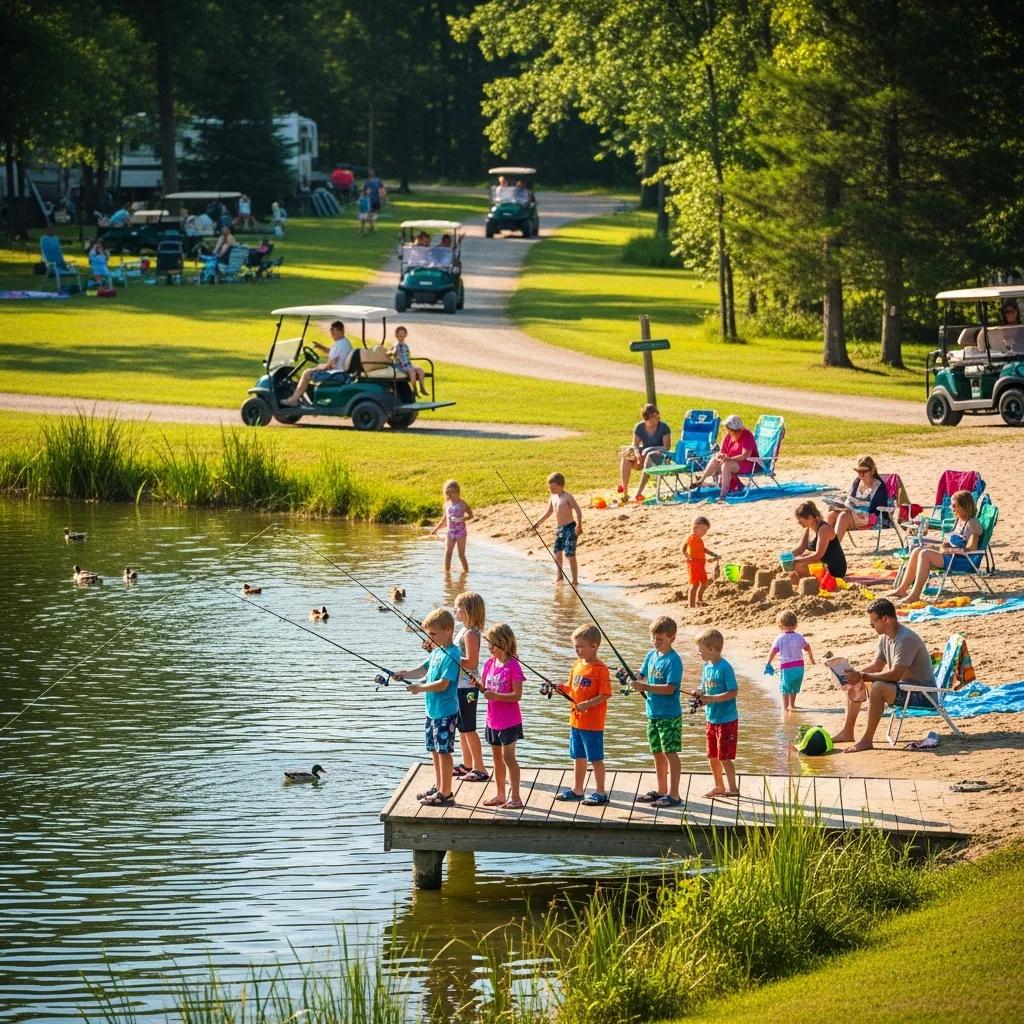
The Oaks Campground by GatherGrounds complements Portage Lake outings with predictable, family-friendly amenities that cut down on driving and keep kids entertained between fishing sessions. The large on-site fishing pond is a practical training spot for beginners, and the separate swimming lake with a sandy beach and playgrounds makes it easy to switch activities without packing up the car. Golf cart trails and a planned Wibit water park (coming in 2025) add extra reasons to base your trip here—especially when you want calm, supervised days and easy transitions from fishing to swimming and rest.
Located within a reasonable drive of regional centers, The Oaks is a convenient overnight base for short getaways or weekend trips to Portage Lake and nearby recreation areas. Smart booking choices—like reserving a full-hookup RV site or picking a campsite close to a playground—can shape how smoothly your days flow and how much time you spend on the water. Below is a checklist of family-focused features to consider when you book.
Family-friendly features at The Oaks Campground near Portage Lake
The Oaks offers a large fishing pond, a separate swimming lake with a sandy beach, playgrounds, picnic pavilions, and extended golf cart trails—features that give families a variety of low-stress activities. These amenities create safe learning zones for novice anglers, supervised swim areas for kids, and shaded spots for group meals. Planned additions like the 2025 Wibit water park will broaden the resort-style offerings without a long drive. Always pair active supervision with life jackets at water features and choose sites that minimize walking with young children.
Balancing proximity to amenities with quiet space helps everyone sleep better after full days on the pond or lake. The campground’s layout and trail network make it easier to keep activities contained and manageable for mixed-age groups. Next we explain why the on-site pond works so well for beginners.
Why the on-site fishing pond is perfect for kids and first-timers
An on-site pond is low-stress: no boat, short walks, and steady bites from smaller, teachable fish. It’s a great place to learn casting, knot-tying, and safe catch-and-release. Supervision is simpler when the pond sits near campsites and beaches—one adult can watch swimmers while another helps a child with a rod. This combined-supervision setup speeds learning and builds confidence before families try the bigger lake.
Simple tips: bring uncomplicated rods, a small tackle kit with bobbers and soft plastics or live bait, and a folding chair for patient instruction. With those basics, the pond becomes a reliable training ground before you head out to Portage Lake.
Best camping options near Portage Lake for families and RVers
Pick a campsite based on priorities: full-hookup RV sites for comfort and longer stays, tent sites for closer-to-nature lakeside immersion, or family campgrounds for predictable amenities. Full-hookup sites give you electricity, water, and sewer—great for extended trips and larger groups. Tent sites usually put you nearer the shoreline but can mean more gear carrying. Managed family campgrounds add ponds and beaches that help mixed-skill groups get the most out of their stay. Knowing these trade-offs ahead of time makes booking and daily plans easier.
Use the quick comparison table below to match site type with practical features.
Choose hookups for convenience, tenting for immersion, and pond access for beginner-friendly fishing and easier supervision. Next we cover where to find full-hookup and tent sites, plus reservation tips.
Where to find full-hookup RV sites and tent camping near Portage Lake
Regional campgrounds advertise full-hookup RV sites and tent pitches near Portage Lake and Waterloo State Recreation Area—book early for peak weekends. RV sites support longer stays and often include showers and playgrounds; tent campers usually seek lakeside spots for direct access and quieter evenings. The Oaks Campground by GatherGrounds, in Munith, MI, offers full hookups and family-focused amenities across a large property with golf cart trails and activity areas. Reserving early—especially for weekends and holidays—helps secure a site near the lake or main amenities.
When choosing a site, consider distance to potable water, restrooms, and likely evening noise from event areas: these details affect comfort during multi-day stays.
Benefits of lakeside camping with fishing access in Michigan
Lakeside camping makes fishing easy: dawn sessions without long setup, quick switches between swimming and fishing, and scenic shoreline views that relax the whole group. Being right on the water lets you take advantage of prime feeding windows at sunrise and dusk without losing time to travel—especially useful for short trips. Concentrated lakeside sites also make supervision simpler and response times to weather quicker. In Michigan, late spring and early fall are often the best fishing windows, so lakeside camping is particularly rewarding in those seasons.
Those practical and experiential wins explain why many families prioritize lakeside or amenity-rich campgrounds when planning Portage Lake trips. The next section lists complementary activities to round out a stay.
Outdoor activities that pair well with fishing and camping at Portage Lake
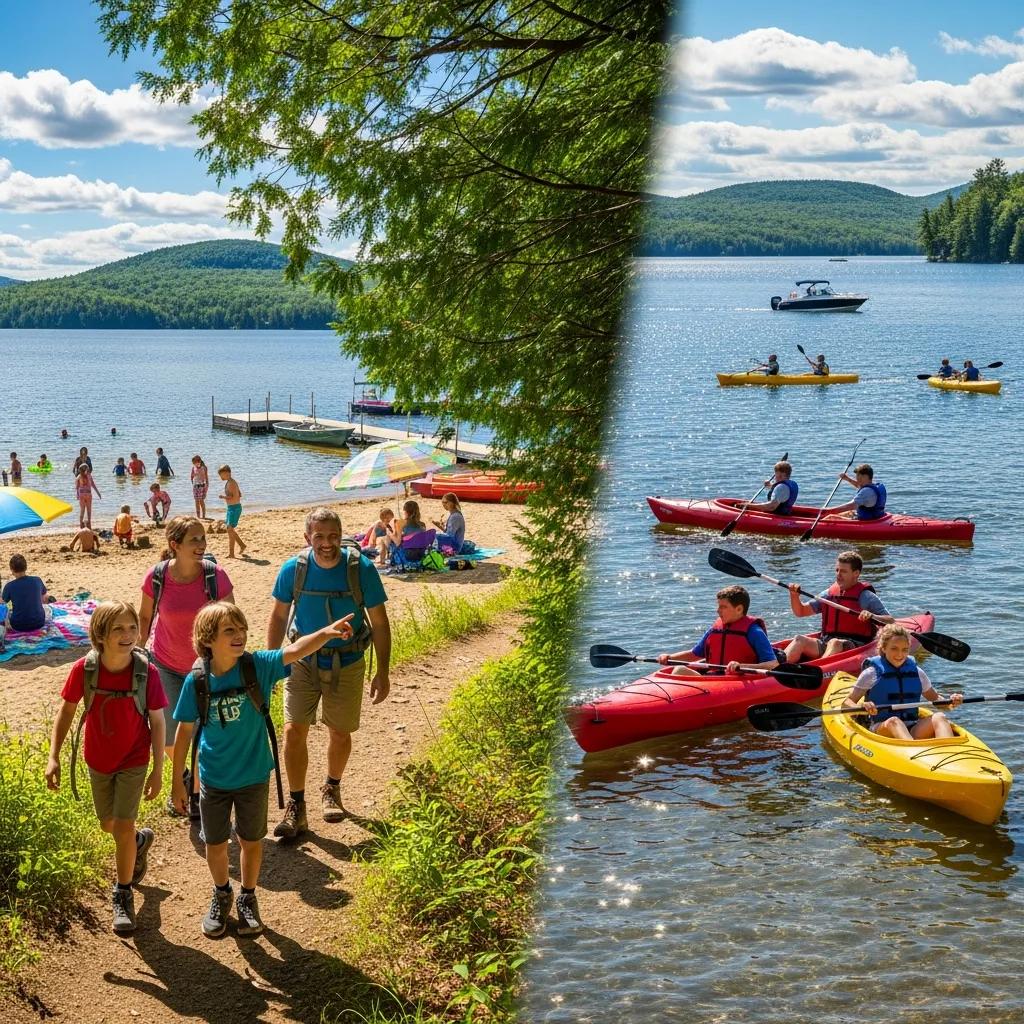
Fishing and camping fit naturally with activities that keep everyone entertained and engaged. Short hikes and nature walks, paddling, swimming, wildlife viewing, and golf cart trail rides add variety and give mixed-age groups plenty of options. A varied schedule helps prevent boredom and keeps different energy levels happy—important for multi-generation trips.
Common complementary activities and how they enhance a fishing trip:
- Hiking and Nature Walks: Great for morning or evening exercise and wildlife watching before or after fishing.
- Paddling (canoe/kayak): Lets you explore quiet coves and shoreline features where fish often congregate.
- Swimming and Beach Time: Safe, supervised recreation between fishing sessions for kids and adults alike.
- Golf Cart Trail Rides: Fun, contained exploration across larger campground properties.
Alternating active and restful periods keeps energy up for early-morning fishing and cozy evening campfires. The next subsection covers nearby trail options for different ability levels.
Trails and nature walks accessible from The Oaks Campground and Portage Lake
Trail networks around Portage Lake range from short family-friendly loops to longer day hikes through mixed hardwoods and marshy shoreline habitats. Nearby state recreation areas offer multi-mile routes for more ambitious hikers, while campground trails are ideal for casual strolls, bike rides, and golf-cart exploration. Match trail difficulty and length to your group so outings stay enjoyable. Families with young children will usually prefer short, flat, well-marked paths; experienced hikers can plan longer excursions into larger natural areas.
Trails also help anglers scout shoreline structure, reach quiet paddling entry points, or combine a morning hike with an afternoon fishing session at productive coves. Next we explain how family events and themed weekends add value to a stay.
How family events and themed weekends enhance a camping trip
Planned events and themed weekends create shared moments, structure the day, and offer kid-friendly programming that complements fishing and nature learning. Kids’ fishing clinics, nature crafts, scavenger hunts, and campfire storytelling give families scheduled options while still leaving room for independent fishing. These activities often teach useful skills—knot-tying, species ID, and basic conservation—that deepen kids’ interest. Many themed weekends fill up fast, so check schedules and book early for the best experience.
Decide whether you want a lively weekend with programming or a quieter, fishing-focused stay, and plan your campsite accordingly. The booking section below gives a clear path to finalize plans.
Plan and book your ideal fishing-and-camping trip near Portage Lake
Plan, prepare, reserve: pick dates and site type, confirm season windows and permits, assemble gear and safety items, and reserve early. Thinking ahead about campsite proximity to water, full-hookup availability, and on-site ponds makes it easier to match the trip to your group’s skill and comfort levels. Follow the practical steps below to turn a plan into a booked trip.
Steps to finalize your trip:
- Select Dates and Site Type: Choose between full-hookup RV, tent camping, or a family site near amenities.
- Check Fish Seasons and Permits: Confirm target species’ seasonal windows and buy required Michigan fishing licenses.
- Reserve Early: Book campsites and event spots well before holiday weekends; verify site features (hookups, pond proximity).
- Pack Gear and Safety Items: Gather rods, tackle, life jackets, a cooler for catches, and weather-appropriate clothing.
- Plan Daily Activities: Mix fishing with swimming, hiking, or scheduled events to keep everyone engaged.
This approach reduces last-minute stress and leaves more time for fishing and enjoying the outdoors. The next two subsections cover reservation options at a nearby campground and an essential packing checklist.
Seasonal rates and reservation options at The Oaks Campground
Most family campgrounds take online bookings and phone reservations, and rates usually rise for weekends and peak season—so book early for holidays. The Oaks Campground by GatherGrounds operates across roughly 160 acres and offers full-hookup RV sites, tent areas, a swimming lake with a sandy beach, a large fishing pond, and miles of golf cart trails—features that suit many trip styles. When booking, prioritize the site attributes that matter most—hookups, distance to playgrounds or the pond, and proximity to pavilions—and check for themed weekends that could affect availability. Review cancellation policies and peak-season windows so your expectations match reality.
Essential gear and local tips for Michigan fishing and camping
A short gear list and a few local tips make preparation straightforward: bring rods suited to your target species, a basic tackle kit with spare line and hooks, life jackets for kids, layered clothing for Michigan’s variable weather, and a valid Michigan fishing license. Also pack a small first-aid kit, insect repellent, sunscreen, and shore-friendly seating. Use a cooler and good preservation practices to keep your catch fresh and follow local rules. For families, include throwable flotation and a whistle, and designate a meeting spot in case someone wanders off during hikes or trail rides. Check the forecast, respect seasonal fish behavior, and use catch-and-release when appropriate to support conservation.
Essential gear checklist:
- Rods and reels matched to the species you’re targeting
- Tackle box with bobbers, soft plastics, and baited hooks
- Life jackets for non-swimmers and young children
- Layered clothing, rain gear, and sturdy footwear
- First-aid kit, insect repellent, and sunscreen
Covering these basics and following local licensing and safety rules sets you up for a smooth, enjoyable trip in the Portage Lake area. For specific reservations or amenity questions, contact a nearby family campground to confirm site details and event schedules.
Frequently Asked Questions
What is the best time of year to visit Portage Lake for fishing?
Spring and fall are typically the best times for Portage Lake fishing. Spring brings strong action for walleye and northern pike, and fall often offers another good walleye window. Summer is prime for largemouth bass and panfish. Each season has its highlights, so pick dates based on the species you want to target.
Are there any fishing regulations I should be aware of at Portage Lake?
Yes. Follow Michigan fishing regulations for catch limits, size rules, and seasonal restrictions. Make sure everyone fishing has a valid Michigan fishing license and check the latest rules from the Michigan Department of Natural Resources before you go.
What types of camping accommodations are available near Portage Lake?
Options include full-hookup RV sites, tent camping, and family-focused campgrounds with amenities like on-site ponds and beaches. Full-hookup sites provide electric, water, and sewer. Tent sites offer a more rustic, lakeside experience. Family resorts add predictable activities that work well for mixed-skill groups.
How can families ensure a safe camping experience at Portage Lake?
Prioritize supervision around water, use life jackets for kids and non-swimmers, and establish simple water and campsite safety rules. Pack a first-aid kit, insect repellent, and sunscreen, and learn the campground layout and emergency procedures. Planning activities that allow adults to supervise while kids play helps keep everyone safe.
What additional activities can families enjoy while camping at Portage Lake?
Beyond fishing, families can hike local trails, paddle in kayaks or canoes, swim at designated beaches, and join campground events. Golf cart trail rides are a fun way to explore larger properties. These activities give everyone something to enjoy, whatever their age or energy level.
How do I make reservations for camping at The Oaks Campground?
Reserve online through The Oaks’ booking portal or call the campground directly. Book early in peak season and for holiday weekends to secure your preferred site. When reserving, pick the site type you need—full hookup or tent—and note any must-have amenities like proximity to the pond or playground. Review cancellation and refund policies before you finalize your booking.
Conclusion
Portage Lake campgrounds offer a great mix of fishing and family camping—ideal for groups that want flexible days on the water and easy access to kid-friendly amenities. By choosing the right campsite and planning around seasons and skill levels, you can blend lake fishing with safe, convenient pond options and plenty of shore-based activities. Start planning your Portage Lake getaway and pick the campground setup that fits your family’s comfort and adventure level.