

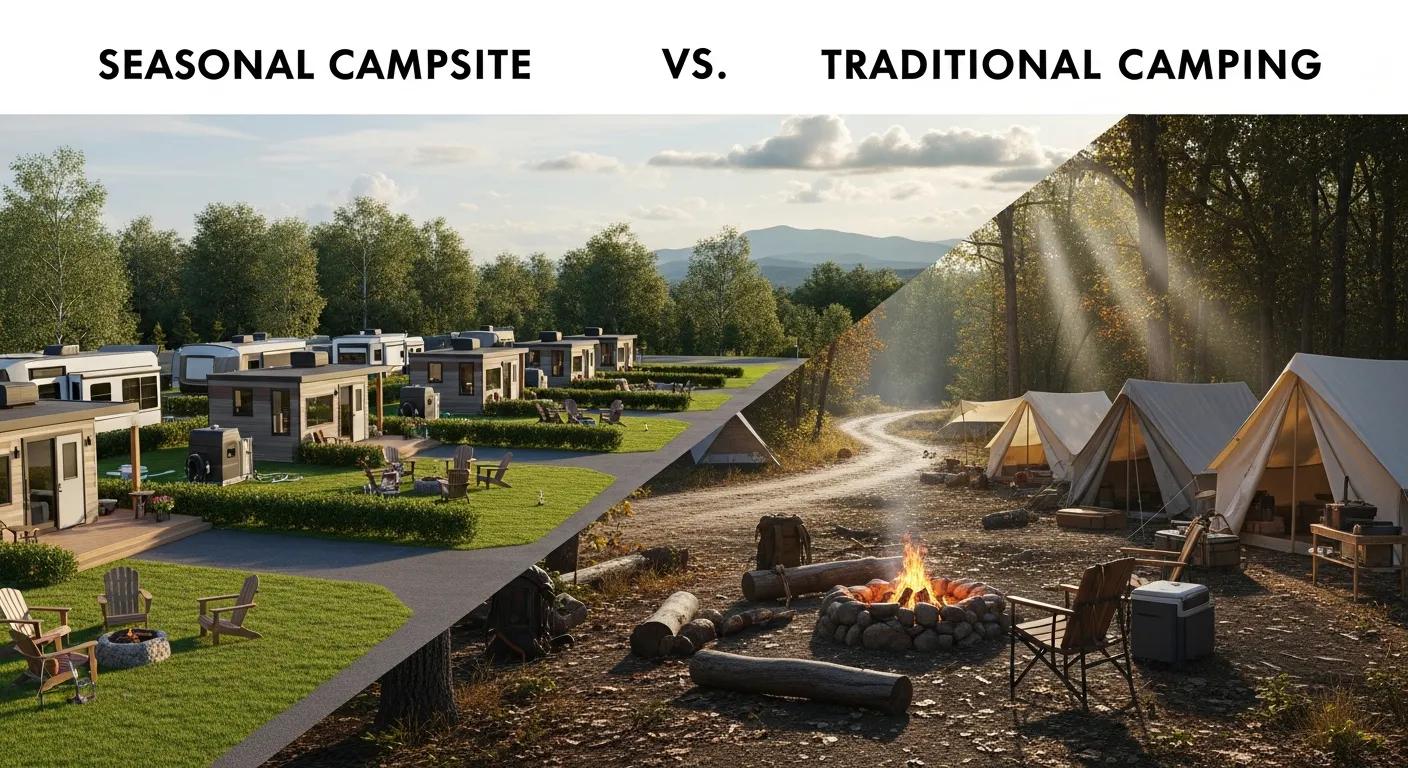
Seasonal Campsites vs. Traditional Camping — Which Is Right for You?
Seasonal campsites are long-term spots at campgrounds where a renter keeps the same site for a full season — which means less packing, fewer hookups to manage, and room for more on-site comforts. This guide explains what seasonal camping really looks like, compares it with traditional nightly or transient camping, and breaks down how utilities, site size, recreation, and support services change day-to-day life for long-term campers. You’ll learn which features most clearly set seasonal sites apart, how regular access to amenities shifts the value of a campsite, and the practical steps for evaluating seasonal versus transient options. Where helpful, we reference The Oaks Campground by GatherGrounds as a nearby example that offers seasonal RV sites and a broad mix of amenities. By the end you’ll have a simple decision checklist and directions for asking about seasonal site availability and the application process. We also use common search terms like seasonal RV sites full hookups, seasonal campsite amenities, and long-term RV sites Michigan to keep comparisons practical and searchable.
What Defines Seasonal Camping and How Does It Differ From Traditional Camping?
Seasonal camping means reserving the same campsite for an extended, continuous stretch — usually the full camping season — with utilities, storage, and site personalization set up for ongoing use. The main difference is time: a longer stay justifies stronger infrastructure and predictable utility delivery, creating a comfortable “home base” rather than a temporary stop. The biggest payoffs are less packing and setup, more creature comforts, and stronger community ties. Framing seasonal camping this way makes it easier to see why campgrounds configure sites, rules, and services differently for seasonal guests than for short-term, transient campers.
What Is a Seasonal Campsite and Who Benefits From Long-Term RV Camping?
A seasonal campsite is a designated lot held by one party for an entire season — popular with RV owners and repeat visitors who want an easy, reliable place to return to. Long-term reservations make semi-permanent improvements practical — decks, awnings, sheds — and support steady utilities for appliances and climate control. Seasonal sites work well for families who want a weekend base, retirees who prefer a regular getaway, and remote workers who need dependable power and internet. They cut down on repeated packing, let you build an outdoor living area, and help you make friends with other long-term campers. Knowing who benefits most helps you weigh the cost-versus-convenience tradeoff before committing.
How Do Seasonal and Transient Camping Durations and Commitments Compare?
The key differences are setup frequency, administrative commitments, cost models, and rules around on-site changes. Transient campers accept nightly or weekly turnover: they value flexibility and travel over permanence, and campgrounds typically limit personalization and on-site storage. Seasonal campers give up some flexibility for stability — paying a seasonal fee for continuous access, the ability to store gear, and fewer arrival/departure chores. If you use a site often, a seasonal rate usually saves money compared to many short stays, but it requires upfront planning and following campground rules. Think about how often you’ll use the site and how comfortable you are with a seasonal commitment before applying.
Which Key Facilities Distinguish Seasonal Campsites From Traditional Camping Spots?
Full utility hookups, larger lots that allow personalization, and permanent or semi-permanent infrastructure are the main facility differences that change everyday life for seasonal campers. Because seasonal occupants stay longer, campgrounds can invest in sturdier infrastructure, which increases comfort, cuts maintenance friction, and supports home-like conveniences. The core value is consistency: seasonal sites can run appliances, HVAC, and store belongings in ways transient spots usually can’t. Below are the top facility differences with quick explanations so you can compare at a glance.
- Full Hookups: Continuous water, electric, and sewer connections that support appliances and comfortable long-term living.
- Site Personalization & Space: Larger lots and allowances for decks, sheds, and outdoor setups that make the site feel like an extension of your RV.
- Permanent/Improved Infrastructure: Stabilized pads, paved drives, and dedicated parking that reduce wear-and-tear and improve access.
- Support Services on Site: Camp stores, laundry, and mail/delivery options that make living on-site practical and convenient.
Those features combine to make seasonal sites functionally different from nightly camping. Below is a concise EAV-style comparison showing technical attributes and the seasonal benefits they provide.
Use these comparisons to match technical upgrades with their real-life benefits and decide whether the extra operational overhead of a seasonal site pays off for you.
How Do Recreational Amenities and Support Services Elevate Seasonal Camping?
When amenities and services are available all season, they become part of daily life — not just occasional extras. That repeat, predictable access boosts the value of a seasonal site: a nearby lake, trail system, or community center becomes a routine, not a one-off. Seasonal campers get more return from high-use features than transient guests, who usually visit just once. This section points out which amenities matter most to long-term campers and how support services remove friction for ongoing stays.
Which Recreational Facilities Are Exclusive or Optimized for Seasonal Campers?
High-repeat-use amenities — like a swimming lake, fishing pond, and wide golf cart trails — offer the biggest lifestyle gains for seasonal campers because they support everyday or weekly recreation. Frequency is the difference-maker: walking to the lake most days makes it as valuable as a backyard. Think morning fishing at the pond, daily golf cart rides over 120 acres of trails, or regular playground time for kids. Future additions — such as The Oaks Campground’s planned Wibit water park for 2025 — also raise long-term appeal for families who prioritize play and water activities. Regular access to these features changes the cost-benefit of committing to a seasonal site.
When amenities are built for frequent use, their value compounds over a season — and that’s often the tipping point for people choosing seasonal over transient camping.
What Essential Support Services Improve Convenience for Seasonal Campsites?
Support services like a camp store, laundry, and mail or package handling turn a seasonal site into a livable place by cutting down on off-site errands. The practical benefit is time saved: having essentials close by reduces drive time and makes everyday life simpler. Typical services include a camp store stocked with basics, clean bathhouses and laundry for ongoing stays, and a straightforward mail/package process for long-term guests. Before you commit, confirm hours, fees, and any limits on deliveries or package sizes so small inconveniences don’t pile up over the season.
Ask campground management about these must-verify services:
- Laundry availability: Machines, hours, and costs to support ongoing stays.
- Camp store stock and hours: Access to things like ice, propane, and basic groceries.
- Mail/delivery policies: How packages are received, stored, and notified for long-term guests.
Checking these items ahead of time prevents frequent hassles and helps your seasonal site feel more like a second home.
What Unique Advantages Does The Oaks Campground Offer for Seasonal Campers?
The Oaks Campground by GatherGrounds is a strong example of how the right mix of amenities and location supports seasonal RV living. The Oaks offers seasonal RV sites with full hookups, a swimming lake, a fishing pond, playgrounds, pavilions, and a camp store — the kinds of seasonal campsite amenities that matter most. With 120 acres of golf cart-friendly trails, daily recreation is easy, and being next to Waterloo State Recreation Area expands access to backcountry trails. The upcoming Wibit water park (planned for 2025) adds a family-focused draw that will likely increase interest in seasonal spots. Together, these features show how campground design converts into practical, everyday benefits for long-term campers.
How Does The Oaks Campground Foster a Seasonal Camping Community?
Community forms naturally when shared spaces, regular events, and close proximity let people build social rhythms. The Oaks encourages that with pavilions, playgrounds, and a camp store that act as gathering places, helping seasonal campers form lasting connections. Scheduled events, volunteer-led activities, and informal potlucks create predictable social opportunities and make it easier for newcomers to plug in. Popular community activities include weekend barbecues, group golf cart rides, and holiday gatherings — all things that add social value that short-term stays rarely deliver.
Community activities that boost seasonal value:
- Pavilion gatherings: Barbecues and potlucks that help neighbors meet and stay connected.
- Group trail rides: Organized golf cart outings across the property’s 120 acres.
- Family days at the lake: Regular swim-and-play sessions that bring families together.
A welcoming community reduces isolation and makes seasonal campers feel safer and more at home — a big part of why people choose long-term sites.
What Future Amenities Like the Wibit Water Park Enhance Seasonal Site Value?
Planned upgrades such as a Wibit water park can noticeably increase the appeal of a seasonal site, especially for families and frequent visitors. The logic is simple: a high-engagement amenity becomes a regular attraction in summer, boosting the daily value of living on-site. With The Oaks’ Wibit water park expected in 2025, families who prioritize water play may give extra weight to booking a seasonal spot — but it’s wise to factor build timelines and opening dates into your decision. Keep an eye on announced upgrades, since they often affect early bookings and neighborhood growth.
Treat upcoming facilities as potential multipliers of seasonal enjoyment and a reason to monitor availability and application windows. New amenities frequently shift demand and community dynamics.
How Can Campers Choose the Right Seasonal Site Compared to Traditional Options?
Picking between a seasonal site and transient camping benefits from a clear decision framework that weighs use frequency, required facilities, budget, and community fit. The core exercise is tradeoff analysis: estimate how often you’ll use a site, compare that to seasonal fees, then evaluate how amenities and services affect your day-to-day satisfaction. Below we offer a concise checklist, a simple scoring method, and practical application steps so you can move from comparison to commitment with confidence.
What Factors Should Be Considered When Selecting a Seasonal Campsite?
Use a short checklist and label each item Must-Have, Nice-to-Have, or Optional based on your habits. Important factors include hookup reliability and amperage, site location relative to lakes and trails, campground rules on personalization and guests, refund and deposit policies, and winterization if you plan to keep a presence year-round. Try this scoring method: 1 point = Optional, 2 = Nice-to-Have, 3 = Must-Have. Total scores help you compare campgrounds objectively. Ask management direct questions about utility capacity, permitted structures, and any extra fees for storage or mail handling — that clarity makes tradeoffs easier to evaluate.
Working through these items and scoring each site helps you see which tradeoffs you’re willing to accept before applying.
What Is The Oaks Campground’s Seasonal Site Application Process?
If you’re interested in a seasonal site at The Oaks Campground by GatherGrounds, start by checking current seasonal availability and reading the campground’s seasonal policies. Typical steps include confirming available site types (for example, seasonal RV sites), understanding included amenities like full hookups and recreational access, reviewing community rules and any deposit or contract terms, then submitting an application or reservation request through the campground’s seasonal site channel. Proximity to Waterloo State Recreation Area adds outdoor options, and upcoming features like the Wibit water park in 2025 may affect timing. Reach out to the seasonal site office or visit the seasonal information page for up-to-date availability and instructions.
Practical steps to apply and confirm a seasonal site:
- Verify availability: Look for current openings and site types that match your setup.
- Review rules and fees: Learn site personalization limits, deposit requirements, and seasonal charges.
- Submit application: Complete the required forms and confirm payment terms to reserve the site.
Follow these steps to move from comparison to a confirmed seasonal spot with confidence.
Frequently Asked Questions
What are the typical costs associated with seasonal camping?
Seasonal camping fees vary by location, amenities, and campground policy. Generally you’ll pay a lump-sum for the season that can range from a few hundred to several thousand dollars depending on site type and services included. That fee often covers basics like water, electric, and sewer, but you should also budget for extras: site upgrades, storage, community event fees, or utility overages. Getting a complete cost breakdown before you commit helps avoid surprises.
Can seasonal campers make changes to their sites?
Many seasonal campers can personalize their sites, but permitted changes depend on campground rules. Typical allowed updates include decks, awnings, and storage sheds, though some campgrounds limit structure types, sizes, or landscaping. Always confirm specific guidelines with management so your planned improvements meet campground standards.
What should I bring for a seasonal camping experience?
Pack for comfort and routine. Essentials include outdoor furniture, reliable cooking gear, and activity equipment like fishing rods or bikes. For the RV itself, bring bedding, kitchenware, and storage solutions. Don’t forget seasonal items — sunscreen, insect repellent, and outdoor games — plus practical extras like extension cords, hoses, and tools for small site projects.
How do seasonal campsites accommodate families with children?
Seasonal campsites often cater to families with playgrounds, swimming areas, and regular family events. Campgrounds may run movie nights, organized games, or holiday activities that keep kids engaged and help families connect. These amenities and programs make seasonal camping a predictable, family-friendly option.
What are the environmental considerations for seasonal camping?
Be mindful of waste management, water use, and local wildlife. Follow campground recycling and waste rules, conserve water when you can, and use eco-friendly products. Practicing Leave No Trace principles and respecting habitat protections keeps the campground healthy for future seasons.
Are there any restrictions on pets at seasonal campsites?
Pet policies vary by campground. Some welcome pets with basic rules, while others limit the number, size, or breeds allowed. Always check the campground’s pet policy before reserving, and plan to keep pets leashed, cleaned up after, and well-behaved so everyone enjoys their stay.
How can I connect with other seasonal campers?
Joining campground events is the easiest way to meet neighbors — potlucks, game nights, and group outings build connections fast. You can also look for campground social groups online or on social platforms. Volunteering at events or simply being friendly goes a long way toward making lasting campground friendships.
Conclusion
Seasonal camping delivers real benefits: less setup, better amenities, and a stronger sense of community. If you’re looking for a reliable home base for weekends, extended stays, or work-from-site months, a seasonal site can transform how you enjoy the outdoors. For a nearby example, visit The Oaks Campground to see seasonal RV sites, full hookups, and the amenities that make long-term camping comfortable. When you’re ready, use the checklist above to compare options and take the next step toward your ideal camping season.