
National park camping rates are low compared with almost any other overnight option. In 2026, a standard campsite inside a national park usually runs about $15 to $45 a night, with the cheapest parks (Big Bend) at $16 and the busiest Yellowstone campgrounds at $38 to $45. The exception is the handful of full-hookup RV parks inside national parks, where Yellowstone’s Fishing Bridge RV Park charges $94 plus tax. Add a park entrance fee of $30 to $35 per vehicle, good for seven days, unless you hold an America the Beautiful pass. Here is how the fees break down, which parks cost the least and most, how RV sites compare, what the passes save you, and how national park rates compare with state parks and private campgrounds like our own Walnut Hills Family Campground in Michigan.
How are national park camping fees structured?
You pay two separate charges:
- Entrance fee. Charged per vehicle at most large parks ($35 at Grand Canyon and Glacier, $30 at Big Bend), per motorcycle, or per person for hikers and cyclists. It is valid for seven days. Some parks have no entrance fee at all; Great Smoky Mountains instead requires a parking tag ($5 daily, $15 weekly, $40 annual) for any vehicle parked more than 15 minutes, though campers parked at their own site don’t need one.
- Campsite fee. Charged per site per night, set by each park and campground. Reservation campgrounds book through Recreation.gov or a park concessioner; a few remain first-come, first-served.
New for 2026: visitors who are not U.S. residents pay a $100 per-person surcharge on top of the entrance fee at 11 of the most visited parks (Acadia, Bryce Canyon, Everglades, Glacier, Grand Canyon, Grand Teton, Rocky Mountain, Sequoia and Kings Canyon, Yellowstone, Yosemite and Zion), unless they enter with an annual pass. Resident entrance fees did not change.
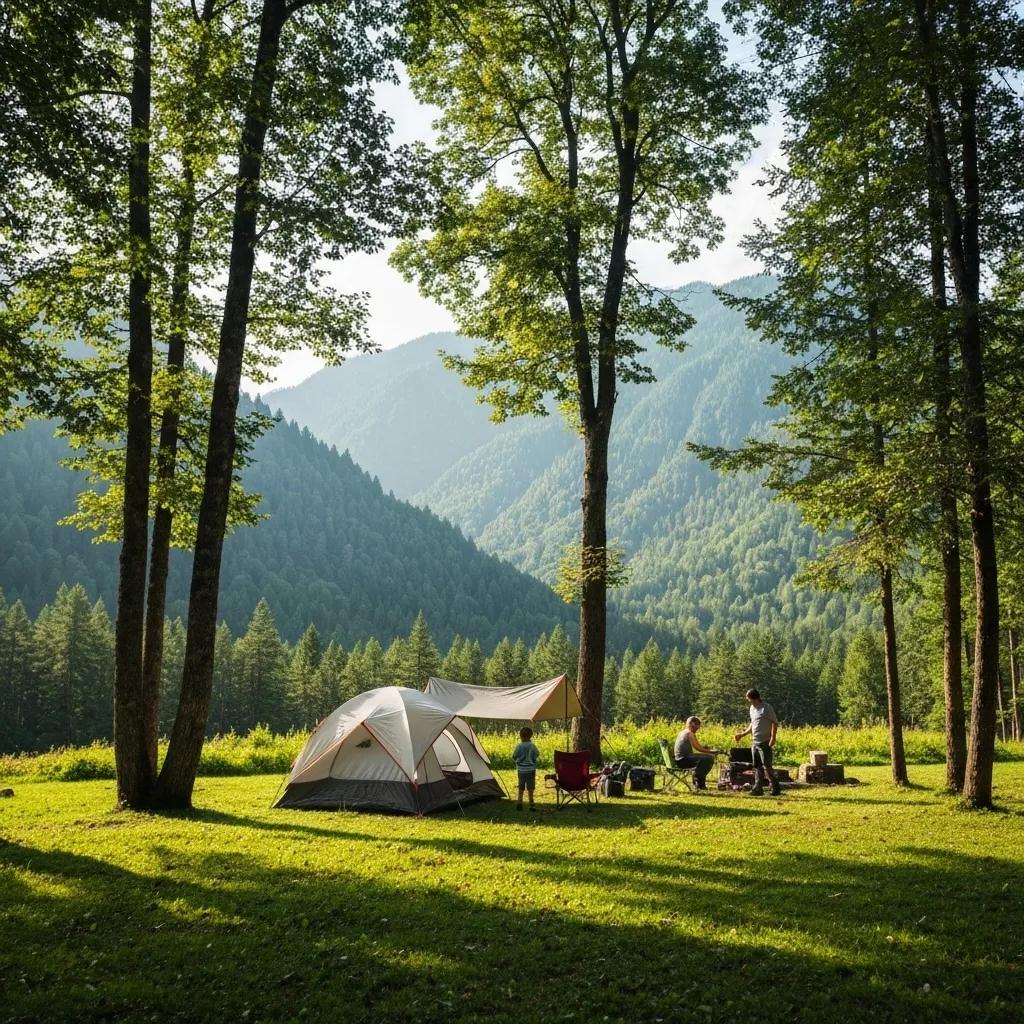
How much does it cost to camp in a national park per night?
| Park and campground | Site type | Nightly rate (2026) |
|---|---|---|
| Big Bend (Chisos Basin, Rio Grande Village, Cottonwood) | Standard, no hookups | $16 ($8 with Senior or Access pass) |
| Yellowstone (Indian Creek, Lewis Lake, Slough Creek, Tower Fall) | Standard, no hookups | $20 |
| Yellowstone (Mammoth) | Standard, no hookups | $25 |
| Yosemite (Upper Pines, Wawona, Hodgdon Meadow, Tuolumne Meadows) | Standard, no hookups | $36 |
| Yosemite (Camp 4) | Walk-in, per person | $10 per person |
| Yellowstone (Bridge Bay, Madison) | Standard, no hookups | $38 plus tax |
| Yellowstone (Canyon, Grant Village) | Standard, no hookups | $45 plus tax |
| Yellowstone (Fishing Bridge RV Park) | Full-hookup RV | $94 plus tax |
Rates are from each park’s National Park Service pages as of 2026 and change periodically; confirm on Recreation.gov or the park site before you book. Backcountry camping is priced separately: Big Bend charges $10 a night per permit, and Pictured Rocks National Lakeshore in Michigan charges a $15 reservation fee plus $5 per person per night.
Which national parks have the cheapest camping?
The least expensive developed campsites tend to be in remote parks and in the smaller, no-reservation campgrounds of big parks: Big Bend’s $16 sites and Yellowstone’s $20 Recreation.gov campgrounds are the clearest examples. Camp 4 in Yosemite, at $10 per person, is cheap for a solo traveler or a couple but not for a family of five. National forest campgrounds next door to a park are often cheaper still, and dispersed camping in a national forest is free.
Which national parks have the highest camping fees, and why?
The most expensive sites are in the most visited parks and in campgrounds with services. Yellowstone’s concessioner-run campgrounds (Canyon and Grant Village at $45, Fishing Bridge at $94) cost more than its Recreation.gov campgrounds because they add staffed registration, dump stations, showers nearby and, at Fishing Bridge, full hookups. Yosemite’s $36 flat rate reflects demand: its reservations are among the hardest to get in the system. Higher fees at these parks pay for shuttle systems, restrooms and staffing that smaller parks don’t need.
How do RV camping rates compare at national parks?
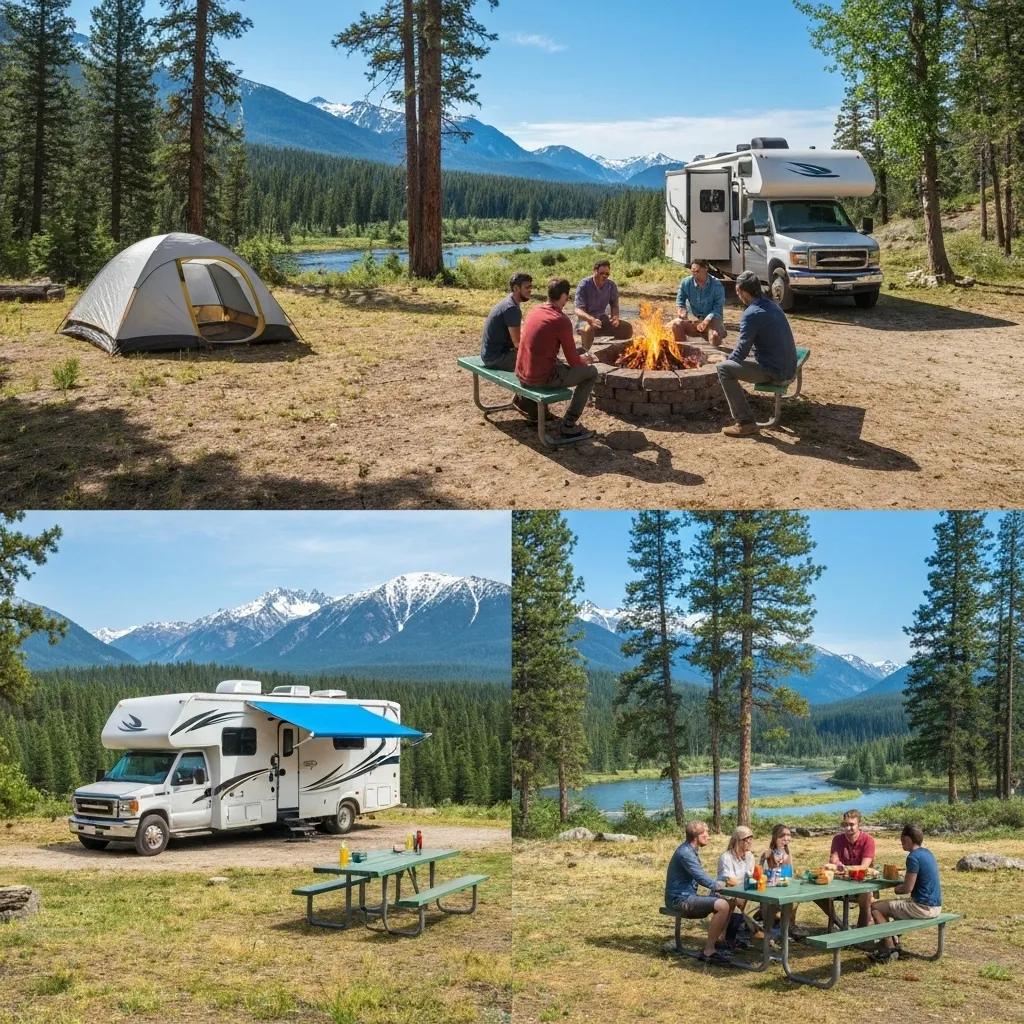
Most national park campgrounds charge RVs the same nightly rate as tents, because they offer the same thing: a pad, a picnic table and a fire ring, with no hookups. Yosemite states flatly that no campsite in the park has hookups of any kind. The trade-off is length limits (many loops cap rigs at 30 to 40 feet) and generator hours. Where full hookups exist inside a park, expect to pay several times the standard rate; Fishing Bridge’s $94 is more than double Yellowstone’s priciest standard site. Private RV parks near park gates fill the gap with full hookups at rates closer to the national private-campground range of about $55 to $90 for a full-hookup site. Our full hookup guide explains what the sewer connection is worth for a long stay.
What is camping at national parks like?
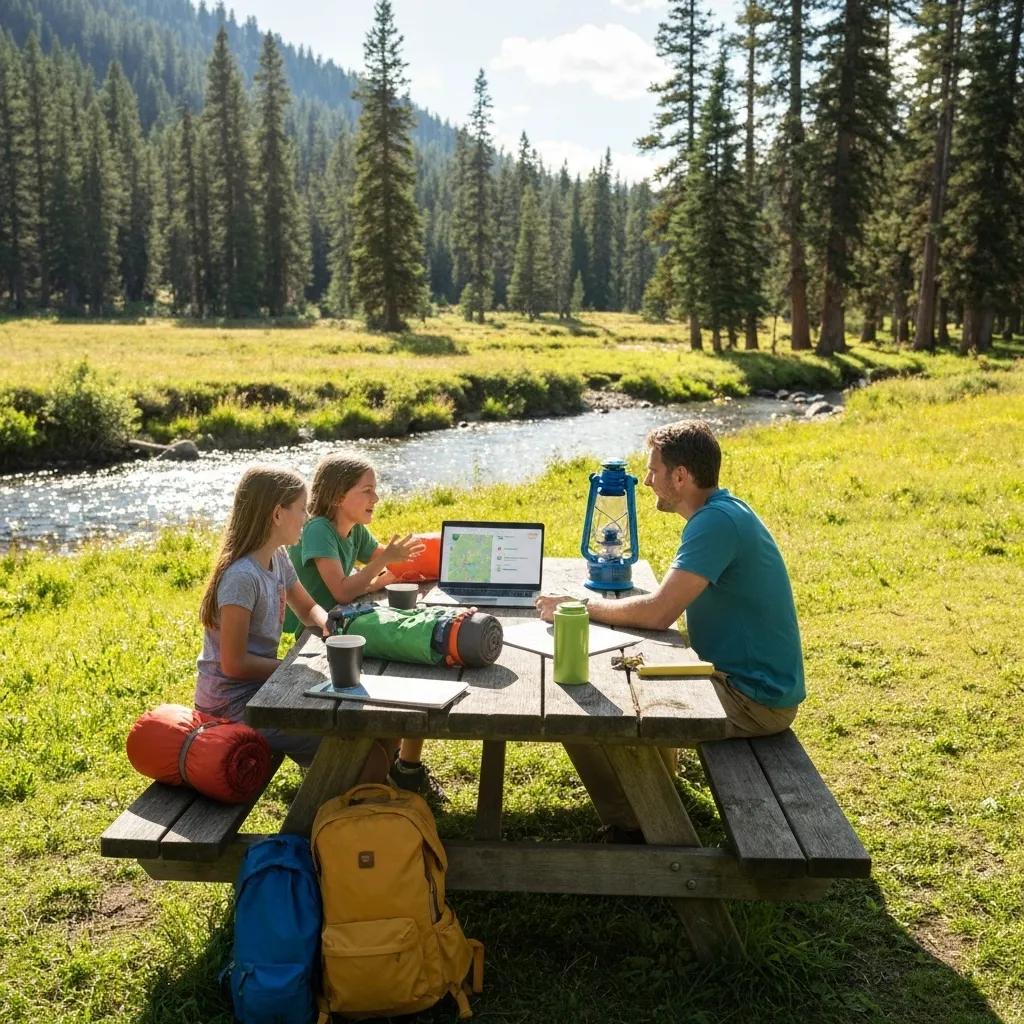
Expect a quiet, basic campground in an extraordinary setting. Standard sites have a tent pad or parking spur, a fire ring and a picnic table; restrooms are usually flush toilets, showers are often a drive away, and there is no playground, pool, store or event schedule. Food storage rules (bear boxes) are enforced in most western parks. Reservations for popular campgrounds open months in advance on Recreation.gov and go fast, while first-come, first-served loops fill by mid-morning in summer. The campground is a base for the park, not the attraction itself, which is the main difference from a private family campground.
Are national park passes worth it for camping?
The America the Beautiful pass covers entrance fees, not campsite fees, so its value depends on how many parks you visit:
- Annual pass: $80 for U.S. residents. It pays for itself after three $35 parks and also covers the new nonresident surcharge for anyone in the vehicle. Non-U.S. residents pay $250 for the annual pass.
- Senior pass: $20 annual or $80 lifetime for U.S. residents 62 and older. Beyond entrance, the National Park Service says it may provide a 50 percent discount on some amenity fees such as camping. Big Bend, for example, charges Senior and Access pass holders $8 instead of $16.
- Access pass: free for U.S. residents with a permanent disability, with the same camping discount at many campgrounds.
- Military, 4th grade and volunteer passes: free.
For a single trip to one park, the seven-day vehicle fee is cheaper than a pass. For a summer loop through three or more fee parks, or any trip with a camper over 62, the pass or Senior pass wins.
How do national park rates compare with state parks and private campgrounds?
| Campground type | Typical nightly rate | What’s included | Extra passes or fees |
|---|---|---|---|
| National park | About $15 to $45 standard; $90+ for rare full-hookup RV parks | Site, fire ring, table, restrooms; rarely hookups | Entrance fee or pass; backcountry permits |
| State park | Varies by state and hookups | Often electric; some full hookup; beaches and trails | Vehicle pass (in Michigan, the Recreation Passport) |
| Private campground | About $30 to $55 water/electric; $55 to $90 full hookup; resorts higher | Hookups, bathhouses, store, pools or lakes, events | Extra-person, pet, golf-cart or water-park fees |
National parks are the cheapest place to sleep in a spectacular landscape. Public parks are funded and priced differently, through user fees, vehicle passes such as Michigan’s Recreation Passport and public capital investment, and they offer fewer on-site amenities. A private campground pays for its amenity stack, staff and utilities through the site rate, which is why the nightly number is higher. Our Michigan state park rates and average campground cost per night guides go deeper on the other two columns.
What does camping cost at Walnut Hills Family Campground?
Walnut Hills in Durand, Michigan is the private-campground side of that comparison. RV sites start around the high $40s a night and tent sites in the low $40s, varying by site and date; the two air-conditioned camping cabins cost more on weekends than weeknights. Current numbers are on the Walnut Hills rates page. A few things explain the gap with a $20 national park site:
- Dynamic pricing. Like a hotel, we start from a base rate and add a premium or a discount by demand. Holiday weekends and full-hookup, lakefront and riverfront sites cost more; May before Memorial Day, the weekend after Memorial Day, the weekends around Labor Day and October cost less.
- What the rate pays for. 80 full-hookup 50-amp sites on a rebuilt power grid, a renovated bathhouse, a spring-fed swimming lake with a sand beach, a fenced dog park, a license-plate gate with no check-in line, and a food truck every weekend from Memorial Day through September.
- The Wibit is priced to cover itself. Putting our 14-piece floating water park on the lake each season is a real expense, so a wristband fee on Fridays through Sundays covers that cost, and campers use it free Tuesday through Thursday. It’s for ages 7 and up, with a parent present for anyone under 16 and a monitor on duty.
- Extras are posted, not hidden. Rates cover two adults and two children; extra adults are $13 and children ages 3 to 17 are $9 per night. Bringing your own golf cart is $25 a night with proof of insurance.
In short: a national park campsite is a cheap place to sleep near something worth seeing, and a park like Walnut Hills is the destination itself. People come for what is at the campground, not what is around it. See the amenities page for the full list, or Walnut Hills Family Campground for an overview.
National park camping rates FAQ
What is the average cost of an RV campsite in national parks?
The same as a tent site at that campground, typically $15 to $45 a night, because almost no national park sites have hookups. The few full-hookup RV parks inside parks cost far more; Yellowstone’s Fishing Bridge is $94 plus tax.
Does the America the Beautiful pass cover camping?
No. It covers entrance fees. Senior and Access pass holders get 50 percent off camping at many federal campgrounds; the standard $80 annual pass does not discount campsites.
How far ahead can I book a national park campsite?
Most Recreation.gov campgrounds open reservations months in advance, often six, and some parks use shorter rolling windows; check the specific campground page. Concessioner-run campgrounds such as Yellowstone’s book through the concessioner.
Do national park campgrounds have hookups?
Rarely. Yosemite has none; Yellowstone has them only at Fishing Bridge RV Park; Great Smoky Mountains has a few electric and water sites at Look Rock. Plan to dry camp or stay at a private park outside the gate.