

Gear Up: Rent or Buy Camping Equipment for Your Best Outdoor Adventure?
Choosing the right camping gear can truly make or break your outdoor escape, impacting everything from your budget to your comfort. Figuring out whether to rent or buy your essential equipment is a key step for families, groups, and anyone new to camping who wants to pack smarter, save money, and perfectly match their gear to their specific campground experience. This guide breaks down the costs, convenience, and eco-friendliness of renting versus owning camping gear, with a special look at the convenient on-site options at Ridge Ranch Campground, so you can book your stay with confidence and enjoy a truly effortless adventure.
Here’s what we’ll cover:
- The perks of renting gear for your campground visit
- When owning your equipment makes more sense
- A cost breakdown: renting versus buying
- Our top picks for gear you should rent or buy
- How to find dependable rental providers
- A simple guide to making your gear choice
- How renting or buying can elevate your stay at Ridge Ranch
Why Renting Camping Gear is a Smart Move for Your Getaway
Renting camping gear gives you access to top-notch equipment without the big upfront cost, the hassle of storage, or the responsibility of upkeep. It’s the perfect solution for those who camp occasionally or families looking for ultimate convenience.
Renting unlocks a host of benefits that can transform your camping experience:
How Does Renting Camping Gear Make Your Trip Easier?
Forget lugging bulky equipment! Renting simplifies your travel plans and makes spontaneous camping trips a breeze.
- Leave the heavy lifting behind – your gear will be waiting for you.
- Quick pick-up and drop-off means more time for adventure.
- Less planning stress lets you focus on making memories.
These conveniences fit perfectly with our campsite amenities, and they naturally lead to the financial advantages of renting.
What Kind of Savings Can You Expect When Renting Camping Gear?
Renting turns large purchases into manageable daily or weekly fees, freeing up your funds for delicious food, exciting activities, and your campsite reservation.
- For a Weekend Escape: Renting a tent and sleeping bags can be 50–70% cheaper than buying new.
- Family Fun: Bundle deals often include tents for multiple people and kitchen sets at a lower per-item price.
- Try Before You Buy: Test out gear right at the campsite to avoid costly returns.
Smith, J., “Camping Equipment Rental vs. Purchase: A Cost Analysis” (2022)
The Financial Upside of Renting Your Camping Gear
Renting camping gear can lead to significant savings, especially if you’re an occasional camper. Rental fees are often much lower than the initial investment required to purchase equipment, particularly for items like tents and sleeping bags. This approach allows you to allocate your budget more effectively towards other aspects of your trip, such as food and activities.
By cutting down on upfront costs, renting helps your camping budget go further, and it also means saying goodbye to storage headaches.
How Does Renting Eliminate Storage and Maintenance Worries?
Storing gear you only use a few times a year often means dedicating precious garage space, worrying about climate control, and keeping it clean—responsibilities you completely skip when you rent.
- No need for dedicated storage space between trips.
- Professional cleaning and repairs are handled for you.
- Get gear whenever you need it, without worrying about it degrading.
Freeing yourself from maintenance chores means you’re always ready for your next adventure, and it naturally leads to thinking about the best options for newcomers.
What Rental Gear is Perfect for Families and First-Time Campers?
Families and first-time campers will find great value in comprehensive rental packages that typically include:
- Family-sized tents (sleeps 4–6) with easy-to-set-up poles
- Cozy sleeping bags with comfortable pads
- Complete cook kits with a stove, utensils, and cookware
- Essential lighting and camp chairs
These packages provide reliable, tested gear and set the stage for exploring the eco-friendly benefits of renting.
How Does Renting Contribute to More Sustainable Camping?

Renting maximizes the use of resources and minimizes waste by allowing gear to be shared among many campers.
- Sharing equipment reduces the demand for new manufacturing.
- Professional maintenance extends the lifespan of products.
- A smaller personal gear footprint means less environmental impact.
Environmental Protection Agency, “Sustainable Camping Practices” (2023)
The Environmental Perks of Gear Rental
Renting camping equipment is a great way to support sustainability. It extends the life of gear through professional maintenance and repair, which in turn reduces the demand for new manufacturing and minimizes waste, ultimately contributing to a smaller environmental footprint. Shared equipment also promotes resource efficiency within the camping community.
This focus on sustainability naturally leads to the question of when buying your own gear becomes the smarter choice.
When Does Buying Your Own Camping Gear Make More Sense?
Buying camping gear is a great idea when you plan to camp often, want gear tailored to your specific needs, and see the long-term value in ownership. Owning your equipment means you get gear that performs exactly how you want, offers lasting cost benefits, and gives you the freedom to customize it for any condition.
How Often Should You Camp to Make Buying Your Gear Worth It?
If you’re a frequent camper (6 or more trips per season), you’ll likely recoup the cost of your gear compared to rental fees:
- Camping 8 weekends a year: Your cost per trip drops by about 40% when you factor in the amortized cost of your gear.
- Multiple Seasons of Adventure: Owning your gear pays off through repeated use year after year.
- Local Enthusiasts: Dealing with your gear at home becomes a familiar routine.
This frequency-based logic leads to a deeper look at the long-term financial returns of ownership.
What Are the Long-Term Financial Advantages of Owning Camping Gear?
Owning your gear means a fixed expense that can be spread out over many trips, and you can even resell it when you’re done.
- Durable tents and quality sleeping systems often retain 30–50% of their original price when resold.
- Buying high-quality gear upfront can lower your annual spending by 20–40%.
- You can upgrade your gear on your own schedule, rather than facing seasonal rental price increases.
Understanding these benefits highlights the essential items that frequent campers should consider owning.
Which Camping Essentials Are Best to Own for Regular Use?
Having your core gear means you can count on familiarity and reliability for every trip:
- All-season tents with sturdy rainflies and vestibules
- Sleeping bags with appropriate temperature ratings and matching pads
- Efficient camp stoves and reliable fuel systems
- Durable cookware sets and insulated drinkware
Having these key items ready to go means fewer last-minute rental costs, and it naturally leads to thinking about storage responsibilities.
What Storage and Maintenance Should You Expect When You Own Camping Gear?
Owning gear means you’ll need a place to store it securely and in a climate-controlled environment, plus you’ll need to clean and maintain it regularly:
- Keep tent seams sealed and zippers lubricated.
- Restore the loft and wash your sleeping bags properly.
- Maintain stove burners and check fuel canisters.
- Season your cookware and sanitize utensils.
Taking on these duties ensures your gear is always in top condition, and it also opens the door to personalizing your equipment.
How Does Owning Gear Allow for Better Personalization and Quality?
Purchasing your gear lets you customize features like size, weight, insulation, and color, and you can opt for premium materials that match your personal comfort and style.
- Get a custom-fit sleeping system for a better night’s sleep.
- Upgrade your cookware for more elaborate meal options.
- Choose specialty tents designed for specific terrains or weather conditions.
Personalizing your gear sets the stage for a clear comparison of costs between renting and buying.
Comparing the Costs: Renting vs. Buying Camping Gear
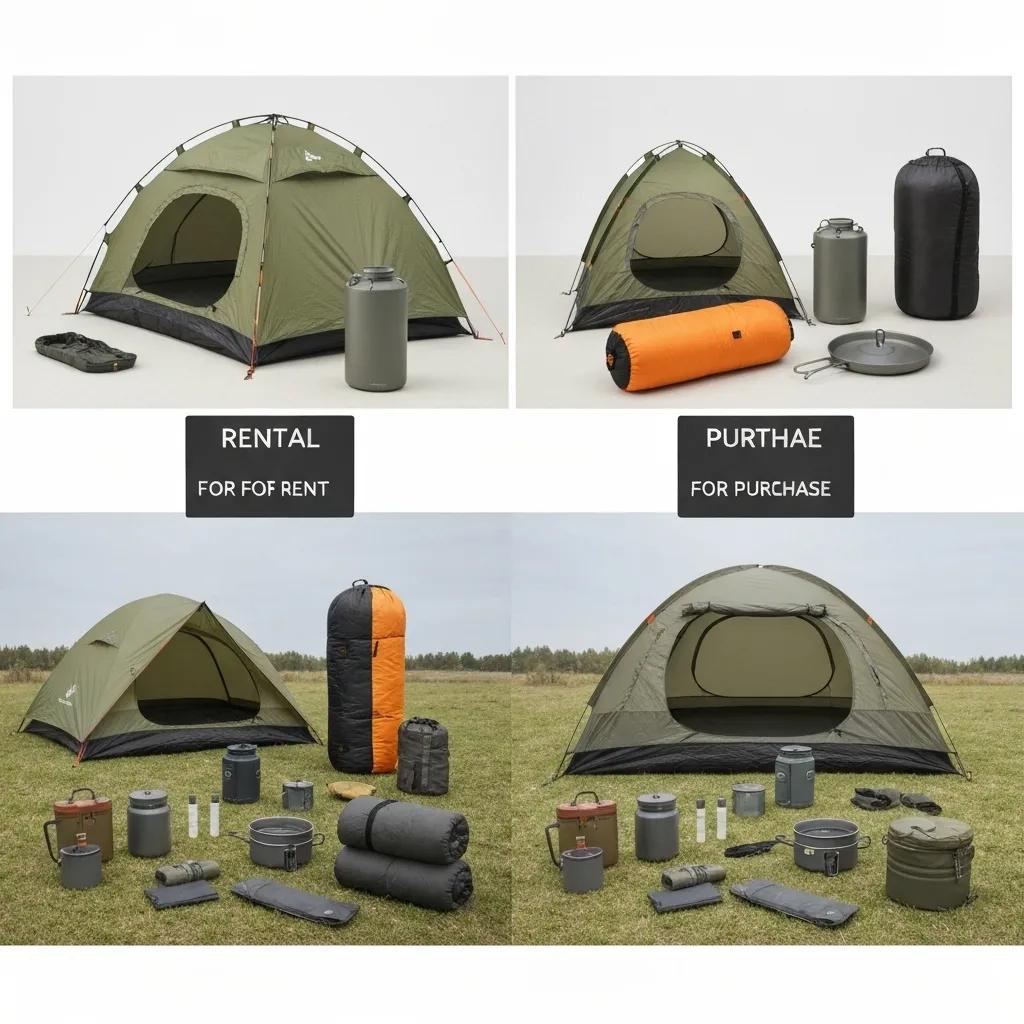
When you compare rental and purchase expenses, you can pinpoint the break-even point based on how often you camp and the type of gear you need. This direct cost analysis helps you make informed decisions with solid numbers.
Before we dive in, here’s a quick look at typical daily rental rates versus average purchase prices for essential camping gear:
Rental rates offer predictable costs for short trips, while the savings from owning your gear become apparent after multiple uses. This leads us to guidance on calculating your break-even points.
What Are Typical Camping Gear Rental Costs at Campgrounds?
Rental prices can vary depending on the campground and the package you choose:
- Basic Package: Includes a tent and sleeping bag for $25–$45 per day.
- Family Bundle: Features a 4-person tent, sleeping pads, and cookware for $70–$90 per day.
- Premium Setup: Offers a full kitchen setup, chairs, and lighting for $100–$130 per day.
Understanding these tiers helps you compare them to the upfront costs of buying.
How Do Upfront and Long-Term Costs Compare When Buying Gear?
Purchasing a full camping kit can range from $500 to $1,000, but you’ll start seeing long-term savings after about 8–12 rental days.
- Break-Even Example: A $400 tent rented at $30 per day will pay for itself in about 14 days of use.
- Ownership Maintenance: Expect to spend around $20–$50 per season on upkeep.
- Resale Value: If you take good care of your gear, you can recover 30–60% of your initial purchase price.
These figures are helpful for creating your own rent-vs-buy calculators to make the best decision.
What Are the Cost Differences for Specific Items Like Tents and Sleeping Bags?
Tents and sleeping bags show distinct patterns when it comes to break-even points:
- A lightweight backpacking tent ($350) rented at $18 per day breaks even after about 20 days of use.
- A 4-season sleeping bag ($180) rented at $12 per day breaks even after approximately 15 days.
These itemized insights highlight which gear renters or buyers tend to favor based on their usage habits.
How Can Campers Figure Out Their Break-Even Point for Renting vs. Buying?
To estimate your break-even point:
- Find the purchase price and the average daily rental rate.
- Divide the purchase price by the daily rental rate.
- Factor in any maintenance or cleaning costs for owned gear.
- Compare this to the number of days you expect to camp each year.
This simple formula helps clarify when owning your gear becomes more valuable, and it naturally leads into looking at local campground offers.
What Rental Packages and Deals Are Available at Campgrounds Like Ridge Ranch?
At Ridge Ranch Campground, our on-site gear rentals include:
- Standard Camping Kit: $60/day (includes tent, sleeping bags, and pads)
- Family Adventure Package: $120/day (includes a 4-person tent, kitchen set, and lighting)
- Specialty Add-Ons: Kayaks, fishing gear, and more for $20–$40/day
These convenient packages eliminate the hassle of booking with third parties and help you decide what gear you need based on your planned activities.
What Camping Gear Should You Rent or Buy for a Great Campground Trip?
Choosing the right gear for your trip style, how often you camp, and the amenities available at the campground will ensure your safety, comfort, and budget are all well taken care of. Here’s our advice on the best approach for renting or buying different types of gear.
Which Tents Are Best to Rent or Buy for Different Camping Styles?
- Occasional Family Trips: Rent a sturdy 4-person tent to try out different setups.
- Frequent Backcountry Treks: Invest in a lightweight, weather-rated backpacking tent for reliability and to save weight.
- Specialty Expeditions: Buy expedition-grade tents for extreme conditions; rental options might not include these advanced models.
Your tent choice should depend on the terrain, how often you’ll use it, and the expected weather conditions.
Should You Rent or Buy Sleeping Bags and Sleeping Systems?
- Casual Weekend Campers: Rent standard sleeping bags with appropriate temperature ratings and sleeping pads.
- Cold-Weather Enthusiasts: Own high-performance, insulated sleeping bags designed for low temperatures.
- Group or Family Camps: Rent matching sets to ensure everyone is comfortable without the bulk of owning multiple bags.
Your decision on sleep gear should balance your warmth needs with storage space and budget.
What Cooking and Camp Kitchen Equipment Is Best Rented or Owned?
- Infrequent Adventures: Rent a complete stove and cookware set to avoid storage and cleaning chores.
- Seasoned Camp Chefs: Own versatile cook systems and quality utensils so you can customize your meals.
- Group Gatherings: Rent larger kitchen bundles that include tables, lighting, and prep areas.
Your strategy for cooking gear should be based on how complex your meals will be and the length of your trip.
Are Specialty Items Like Kayaks or Hiking Gear Better Rented?
- For outdoor activities like paddling, climbing, or mountain biking, expensive specialty gear is often best rented on-site.
- Owning items like hiking poles, backpacks, and personal safety equipment makes sense if you’re a frequent trekker.
- Rentals allow you to try out new sports equipment without a long-term commitment.
Decisions about specialty gear often depend on the local terrain and your trip objectives.
How Do Campground Amenities Influence Your Gear Rental or Purchase Needs?
- If the campground has heated bathhouses, you won’t need to worry about portable showers or toilets.
- Easy access to a boat launch might encourage you to rent watercraft right at the campground.
- Gear storage lockers mean you can rent tools for short periods instead of transporting them.
Matching your gear choices to the campground’s services helps you use resources more efficiently.
Where Can You Find Reliable Camping Gear Rental Companies Near Campgrounds?
Finding trusted rental providers ensures you get quality equipment, timely delivery, and flexible return options for a smooth camping experience.
What Are the Top Camping Gear Rental Companies Serving Campgrounds?
Leading rental services include:
- Local Outfitters: These shops often offer curated backpacking and family kits.
- Regional Chains: Look for companies with networks that allow gear drop-off at multiple campgrounds.
- Online Platforms: Some services ship gear directly to your campsite.
Choosing reputable suppliers ensures consistent gear quality and service.
How Do On-Site Rental Services at Campgrounds Like Ridge Ranch Work?
On-site rentals at Ridge Ranch Campground are designed for your convenience:
- Reserve in advance to guarantee your gear is available.
- Visit our dedicated rental hut where trained staff can help with setup.
- Enjoy a simple drop-off and return process when you check out.
This on-site model reduces the need for coordinating with outside companies and boosts guest satisfaction.
What Should You Look for When Choosing a Camping Gear Rental Company?
Key factors to consider when selecting a rental company:
- Check the condition and maintenance records of their equipment.
- Look for flexibility in package customization and rental duration.
- Ensure pricing is transparent with no hidden fees.
- Read positive guest reviews and check for responsive customer support.
Evaluating these points will help you secure quality and value from your rental partner.
How Can You Reserve Rental Gear for Your Campground Stay?
Reserving your gear is usually a straightforward process:
- Visit the campground or rental company’s website.
- Select your dates, desired package, and any add-ons.
- Provide your camper details and payment information.
- Confirm your reservation and review pickup instructions.
Following these steps early ensures you get the right gear for your dates.
What Are the Benefits of Booking Camping Gear Rentals Online?
Booking online offers several advantages:
- Check availability and compare costs instantly.
- Enjoy secure digital payments and easy add-on customization.
- Receive automated reminders and benefit from flexible cancellation policies.
This digital convenience aligns perfectly with modern travel planning.
How Can Campers Decide Between Renting and Buying Camping Gear?
A structured approach that compares how often you camp, the costs involved, convenience factors, and personalization needs will help you choose the option that best fits your adventure style and budget.
What Factors Should Influence Your Rent vs Buy Camping Gear Decision?
Keep these key factors in mind:
- How often and for how long will you be camping?
- Do you have space to store gear, and are you willing to maintain it?
- What’s your budget flexibility, and how much can you spend upfront?
- Do you need your equipment to be customized for specific needs?
- What amenities does the campground offer that might affect your gear choices?
Evaluating these elements will help you create a personalized gear strategy.
How Does Camping Frequency Affect Your Equipment Choice?
- Seasonal Campers (1–3 trips/year): Renting is usually best to avoid having gear sit unused.
- Regular Adventurers (4–8 trips/year): Consider owning your core equipment.
- Professional Guides (10+ trips/year): Invest in specialized, highly durable gear.
The more often you camp, the more value you’ll get from owning your gear.
What Role Do Travel Distance and Storage Space Play in This Decision?
- Travelers going long distances can save money by renting gear at their destination, avoiding baggage fees.
- Campers in urban areas with limited storage space often prefer rentals to keep their living areas clear.
- Local campers with access to gear storage might find it easier to own bulkier items.
Logistics can be just as important as cost when deciding whether to rent or buy.
How Can a Camping Gear Checklist Help You Choose What to Rent or Buy?
Creating a checklist helps you identify essential items versus optional ones, making it clear which gear you should own and which you can rent. A sample checklist might include:
- Shelter essentials (tent, poles, stakes)
- Sleep system (sleeping bags, pads)
- Cooking necessities
- Lighting and seating
Using this tool ensures you don’t forget anything and helps you move on to common decision-making questions.
What Are Common Camper Questions About Renting vs Buying Gear?
Campers often ask:
- Is renting more cost-effective for how I like to camp?
- Can I try out high-end gear without making a big commitment?
- Do I need special equipment for specific campground activities?
- What happens if my rental gear gets damaged or lost?
Answering these questions helps campers make confident gear choices and prepares them to explore what Ridge Ranch has to offer.
How Does Renting or Buying Camping Gear Enhance Your Experience at Ridge Ranch Campground?
At Ridge Ranch Campground, both renting and owning gear work seamlessly with our site’s amenities to boost your comfort, convenience, and sustainability, ensuring every camping experience is memorable and stress-free.
What Rental Gear Does Ridge Ranch Campground Offer to Guests?
Ridge Ranch provides a range of on-site rentals, including:
- Weather-resistant tents and comfortable sleeping systems
- Complete cook kits and reliable lanterns
- Specialty items like kayaks and fishing poles
This full selection of equipment means you don’t have to transport bulky items, and you can count on reliable gear performance.
How Do Ridge Ranch Amenities Affect Your Gear Needs?
Our facilities, such as heated bathhouses, convenient gear lockers, and waterfront access, can influence the gear you bring or rent:
- With bathhouses available, you won’t need portable showers.
- Locker storage makes it easy to rent specialty items locally.
- Easy access to our lake means renting kayaks is simpler than bringing your own.
These amenities complement our rental services, making your planning much easier.
What Are the Advantages of Renting Gear Directly at Ridge Ranch?
Renting gear on-site offers several benefits:
- Guaranteed availability that matches your reservation dates.
- Expert staff available to help with setup and any troubleshooting.
- Integrated billing that’s combined with your campground package.
This seamless experience enhances your overall stay and makes travel planning much smoother, especially for guests coming from afar.
How Can Renting Gear at Ridge Ranch Simplify Travel for Distant Campers?
Travelers flying or driving long distances can avoid baggage fees and shipping costs by renting gear locally:
- Pick up your gear upon arrival to cut down on transportation expenses.
- Return your rental gear easily when you check out, streamlining your departure.
- Take advantage of on-site storage options if you’re planning multi-stop road trips.
These logistical advantages allow campers to focus entirely on exploring and enjoying their trip.
How Does Ridge Ranch Support Sustainable Camping Through Rentals?
By offering shared, professionally maintained gear, Ridge Ranch helps reduce equipment waste and encourages eco-friendly practices:
- Gear lifecycles are extended through frequent use by many campers.
- Shipping emissions are reduced thanks to our centralized inventory.
- We provide education on Leave No Trace principles with our rental packages.
This commitment to the environment enhances your outdoor experience and aligns with modern camping values.
Owning camping gear offers long-term value and personalization for those who adventure frequently, while renting provides unmatched convenience, cost control, and sustainability for families, beginners, and travelers coming from afar. By considering your trip frequency, storage space, and activity type—and by taking advantage of the on-site options at Ridge Ranch Campground—you can find the perfect balance of renting and owning to make every outdoor getaway even better.