Choosing the Right Campground Broker: Your Guide to Selling Your Campground
Selling a campground is a significant undertaking, blending real estate valuation, business succession, and operational transitions. This guide will walk you through what a campground broker does, how valuation and marketing influence sale outcomes, and when partnering with a broker makes sense versus selling directly to a qualified buyer. Campground owners will discover practical steps—like organizing financials, prioritizing improvements, and addressing legalities—to boost value and speed up the sale. We’ll cover broker services, direct-buyer advantages, decision-making criteria, seller checklists, and a step-by-step look at working with a family-owned acquirer like GatherGrounds Resorts. If you’re searching for terms like “experienced campground real estate agents,” “campground selling process,” or “direct buyers for RV parks,” you’ll find actionable checklists, comparison tables, and how-to guides to help you plan your exit.
What Does a Campground Broker Do and How Do They Help Sellers?
A campground broker is a specialized real estate professional who markets campground and RV park properties, handles valuation and buyer qualification, and guides the transaction to a successful close. Brokers leverage their understanding of campground revenue drivers—like NOI, occupancy rates, and seasonal demand—to explain valuation rationale and present listings to qualified buyers, which can build confidence and often lead to a higher sale price. Sellers benefit from confidential marketing, access to a curated buyer network, and expert negotiation management, reducing your time burden while ensuring operational continuity. The broker acts as your intermediary for property disposition and transaction mechanics, connecting you with buyer networks and coordinating due diligence and closing logistics.
What services do campground and RV park brokers provide?

Brokers offer a comprehensive suite of services that combine marketing, valuation, buyer outreach, and transaction management specifically for outdoor hospitality properties. They typically prepare marketing materials, distribute them confidentially to qualified buyers, conduct comparable sales analysis, and manage property showings while safeguarding your confidentiality. Brokers also coordinate due diligence requests, advise on deal structuring, and collaborate with attorneys and lenders to facilitate a smooth closing. Their focus on specialized buyer networks and campground-specific marketing channels sets them apart from general business brokers.
This table helps clarify the services and outcomes you can expect from brokers, providing a baseline for comparing them with direct sale options.
How do brokers assist with campground valuation and marketing?
Brokers employ valuation methodologies—income-based approaches, comparable sales, and asset replacement analysis—tailored to campground features like site count, hookups, amenities, and seasonal revenues. They analyze net operating income (NOI), apply relevant cap rates informed by market comparables, and create pro forma scenarios to illustrate price sensitivity to occupancy and amenity changes. Marketing channels include industry-specific marketplaces, outdoor hospitality networks, and confidential investor lists; brokers select channels to reach RV park brokers and direct campground buyers most likely to offer a premium. Clear valuation and targeted marketing work together to create a pricing strategy designed to attract competitive offers while maintaining confidentiality.
What are typical broker fees and commission structures?
Broker fees for campground sales commonly follow a percentage commission model, often tiered by sale price, though some firms offer retainer-plus-success-fee or flat-fee arrangements for specialized listings. Typical commission ranges vary by market and deal complexity and usually cover marketing, buyer qualification, negotiation, and transaction coordination services. Understanding what the commission covers—especially marketing reach, confidentiality measures, and negotiation expertise—helps sellers weigh net proceeds against the value of broker services. You should request transparent fee breakdowns and examples of what’s included to compare offers effectively.
When should you consider using a campground broker?
Consider a broker when you need broad market exposure, confidential marketing to an extensive buyer network, or assistance navigating complex financing, environmental, or regulatory issues. Brokers offer significant value for sellers who lack an established buyer network, require staged exits, or want to achieve competitive bidding to maximize sale price. If your time is limited or the campground has specialized revenue streams (resort amenities, long-term leases, or complex vendor contracts), a broker’s transaction management can be essential. Evaluate your priorities—price maximization, confidentiality, timeline—and match them to a broker’s demonstrated capabilities.
For sellers who prefer an alternative to brokered sales, a direct acquisition by a qualified buyer can eliminate commission costs and simplify timelines. Below is a practical alternative to consider after reviewing broker services.
For owners seeking a direct sale pathway, GatherGrounds Resorts offers a campground acquisition service, positioning the company as a family-owned direct buyer focused on preserving legacy and streamlining transitions. This direct-buyer option removes broker commission layers and can shorten negotiation cycles while emphasizing thoughtful operational handoffs. Sellers interested in submitting a property can prepare the same core financial and operational documents used in brokered transactions to accelerate review.
What Are the Benefits of Selling Your Campground Directly to a Buyer Like GatherGrounds Resorts?
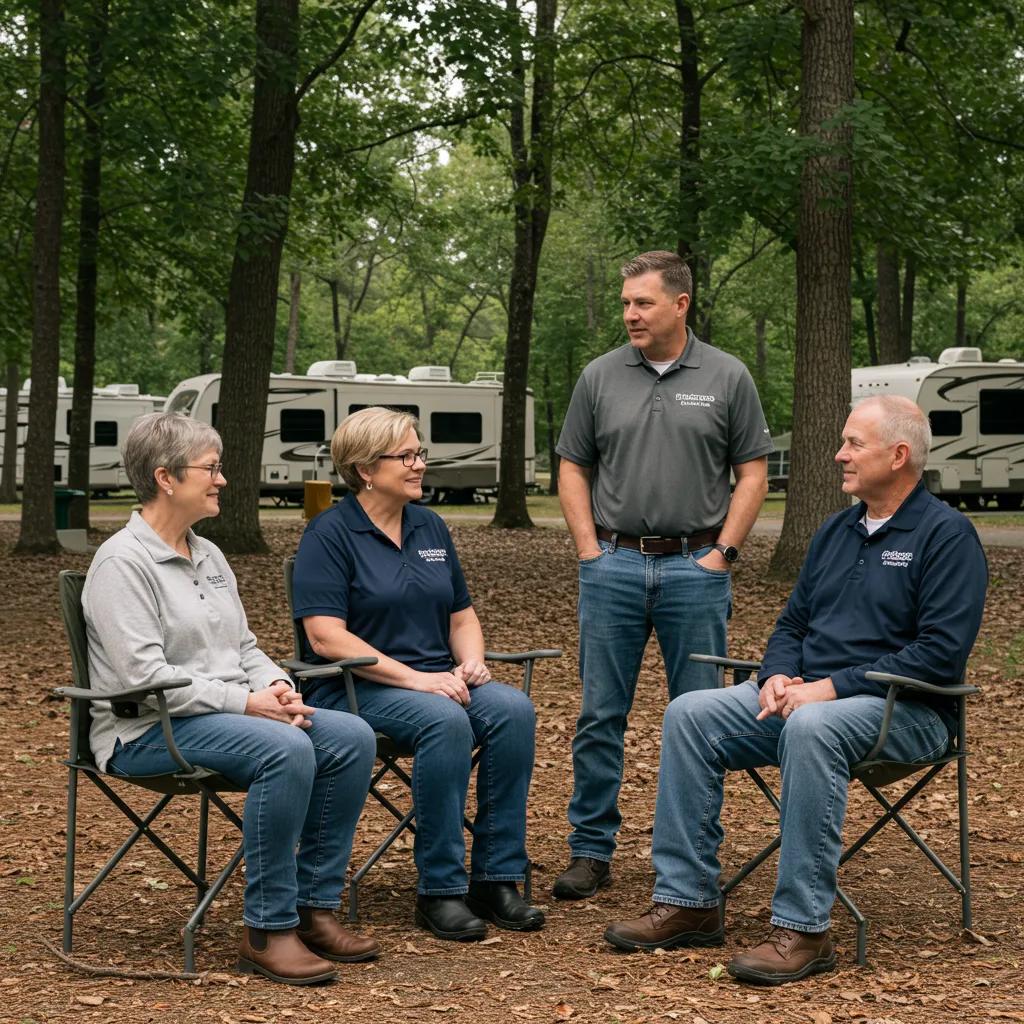
Selling directly to a buyer like GatherGrounds Resorts means transferring ownership to a family-owned acquirer that prioritizes legacy preservation and operational continuity, which can be particularly important for owners concerned about community and staff impact. Direct sales often eliminate broker commission costs, reduce the number of intermediaries, and create a more streamlined negotiation process that can shorten the overall timeline to closing. A direct buyer capable of acting as principal can offer simpler deal structures and tailor transition plans that preserve campground culture and guest experience. For many sellers, these benefits lead to higher net certainty, even if the headline price differs from a broker-driven auction outcome.
How does GatherGrounds’ family-owned approach differ from traditional brokers?
GatherGrounds Resorts, as a family-owned campground management and ownership group, approaches acquisitions with priorities that differ from what a broker seeks to accomplish on behalf of multiple buyers. The family-owned approach emphasizes thoughtful transition planning, hands-on operational continuity, and preserving the campground’s legacy rather than rapid corporate integration. That orientation can reduce the risk of disruptive changes to staff, amenities, and community relationships. Sellers seeking a legacy-preserving outcome may value this buyer profile when weighing offers.
What are the advantages of eliminating broker fees?
Eliminating broker fees directly improves your net proceeds by removing commission percentages that often vary widely across markets, translating into significant dollar savings on large-asset campground sales. Beyond pure economics, direct negotiations with a buyer can shorten timelines by reducing back-and-forth among intermediaries and accelerating decision-making. Fewer intermediaries often mean clearer confidentiality management and reduced marketing costs, enabling you to focus on transition planning. The combined financial and timeline benefits make a direct sale attractive when the buyer’s criteria align with your property profile.
How does GatherGrounds ensure a thoughtful transition preserving your campground’s legacy?
A direct buyer committed to legacy preservation typically implements operational handoff plans that include staff retention strategies, staged changes to branding or services, and communication plans for guests and vendors. GatherGrounds’ acquisition approach emphasizes continuity in day-to-day operations and aims to limit disruptive restructuring where possible. A thoughtful transition also includes shared planning around capital projects and guest experience continuity to maintain reputation and revenue stability. You can negotiate specific transition terms—employment offers, transition timelines, or phased operational changes—during the offer stage to protect legacy elements.
What types of campgrounds does GatherGrounds typically acquire?
GatherGrounds Resorts focuses its acquisition efforts on quality outdoor hospitality assets, with an explicit preference for parks exceeding a 130-site threshold. The company’s acquisition criteria prioritize well-run RV parks and campgrounds with stable NOI, attractive amenity sets, and operational histories that indicate sustainable guest demand. This focus on larger site counts enables operational efficiencies and supports GatherGrounds’ management model. Sellers should assess whether their property aligns with such site-count and operational characteristics before pursuing a direct sale conversation.
What Key Factors Should You Consider When Choosing a Campground Broker or Buyer?
Choosing between a broker and a direct buyer requires weighing experience, transparency, marketing reach, valuation methodology, and alignment with your goals. Experience and specialization in outdoor hospitality influence how a broker or buyer interprets revenue drivers, values amenities, and structures offers. Transparency—regular updates and clear valuation rationale—reduces seller uncertainty and improves decision-making. Marketing reach and buyer networks affect the pool of potential bidders and the possibility of competitive offers. Finally, the valuation method used (NOI-based cap rates, comparable sales, or asset approaches) materially changes expected outcomes and should be scrutinized.
Why is experience and specialization in outdoor hospitality important?
Specialization ensures that the advisor or buyer understands campground-specific revenue streams such as nightly seasonal rates, long-term RV leases, and ancillary amenity income. Experienced campground brokers and acquisition teams are more adept at qualifying buyers who can operate outdoor hospitality assets and avoid purchasers who may undervalue site-specific amenities. That sector knowledge helps surface pitfalls—such as underestimating utility infrastructure needs—that broader business brokers might miss. You should prioritize partners with demonstrated campground track records and relevant networked relationships.
This EAV-style comparison helps sellers focus on attributes that materially affect sale outcomes.
How does transparency and communication impact the selling process?
Transparent communication from brokers or buyers sets expectations around timelines, required documents, and decision points, which reduces friction during due diligence and closing. You should expect regular status updates, clear documentation requests, and rationale behind valuation adjustments to feel confident in negotiations. Poor communication is a red flag that often correlates with delays, missed deadlines, or unfavorable outcomes. Establishing a communication protocol at engagement—frequency, points of contact, and reporting templates—improves transaction predictability and seller control.
What role does marketing reach and buyer networks play in selling your campground?
Marketing reach determines how many qualified buyers see the opportunity and whether the sale attracts competing offers that can drive price discovery. A broker with deep connections in outdoor hospitality networks and RV park brokers can confidentially promote the asset to buyers who understand campground valuations. Conversely, a direct buyer’s internal capital and operational focus may provide a guaranteed pathway to closing but with a narrower buyer pool. You must balance the value of wide exposure against the benefits of speed and certainty that a direct buyer can offer.
How should you evaluate valuation methods and financials offered by brokers or buyers?
Evaluate NOI assumptions, cap rate justification, and comparables used to derive pricing. Request supporting schedules for revenue streams and expense line items, and verify occupancy and booking data to ensure pro forma realism. Look for red flags such as unexplained one-time revenue adjustments or aggressive expense normalization that artificially inflate value. Ask specific questions about market comparables and sensitivity analyses to understand downside risk and price elasticity.
How Do You Prepare Your Campground for a Successful Sale?
Preparation reduces friction during diligence, speeds the sale timeline, and often improves valuation by demonstrating stable operations and documented revenue history. Start by organizing financial records, occupancy and booking data, lease and contract documentation, maintenance and capex histories, and environmental or permitting paperwork. Prioritize high-ROI property improvements that address guest experience and safety—bathhouse updates, reliable utility hookups, and clear site signage—while documenting recent investments. Early legal and regulatory checks mitigate surprises during title and environmental reviews, smoothing the path to closing.
What financial records should you organize before selling?
Organize historical profit and loss statements, tax returns, operating statements, detailed revenue breakdowns by site type, occupancy records, and vendor contracts to create a transparent financial portrait of operations. Include schedules for maintenance and capital expenditures, utility bills, and payroll records to substantiate expense assumptions. Digitalizing records in a consistent format (spreadsheets and PDFs) expedites buyer review and reduces back-and-forth during diligence. A clean financial package signals professionalism and often accelerates offers.
This table identifies essential records and formats that speed due diligence and increase buyer confidence.
How can property maintenance and improvements increase sale value?
Targeted improvements that directly enhance guest experience or reduce operating expenses tend to produce the best returns on investment. Upgrades such as improved bathhouse facilities, reliable electrical/water hookups, and better site-level signage increase marketability and perceived value. Documenting recent capital projects and providing maintenance schedules reassures buyers about asset condition and future capex needs. Prioritizing visible guest-facing improvements often yields stronger buyer interest and quicker offers.
What legal and regulatory considerations must sellers address?
Address zoning and land-use compliance, septic and wastewater permits, environmental site conditions, title encumbrances, and vendor or concession agreements before marketing the property. Engage counsel familiar with campground-specific regulatory frameworks to surface issues early, such as easements or conditional use permits that may affect transferability. Pre-emptive resolution of legal matters reduces contingency-based negotiations and speeds closing. You should compile permit files and legal opinions where applicable.
How do you plan your exit strategy when selling a campground?
Clarify your goals—maximum price, timeline, post-sale involvement, and tax planning—early in the sale process so offers can be evaluated against these criteria. Consider scenarios such as a full exit, seller-financed arrangements, or earn-outs and how each affects cash flow and tax outcomes. Negotiate transition roles and employment terms for key staff if continuity is a priority. Aligning the sale structure with your personal and financial goals enables a smoother handoff and reduces post-closing stress.
What Is the Step-by-Step Process When Working with GatherGrounds Resorts for Direct Acquisition?
A direct acquisition process with a family-owned buyer follows defined stages: initial inquiry and submission, preliminary review and offer, due diligence, negotiated agreement and closing, followed by operational transition. Each stage focuses on reducing friction and preserving site legacy while verifying financial and title information. Sellers benefit from a coordinated process designed to protect confidentiality and accelerate timelines when property criteria align with the buyer’s acquisition profile. The following numbered steps provide a clear HowTo-style flow for engaging with a direct acquirer.
How do you initiate contact and submit your campground for review?
Initiating a submission typically requires a concise property summary that includes site count, high-level financials (NOI or EBITDA), key amenities, and a description of recent capital improvements to allow a preliminary assessment. Include occupancy statistics and typical seasonality to help the buyer evaluate revenue sustainability. Expect an initial review timeframe in which the buyer confirms strategic fit and requests further documentation. Clear, accurate submissions speed preliminary decisions and reduce unnecessary information requests.
- Prepare a concise property summary with site count and basic financials.
- Provide occupancy and amenity descriptions to illustrate demand drivers.
- Respond promptly to initial follow-up requests to accelerate review.
This submission stage sets expectations for next-step diligence and potential offer timelines.
What does due diligence involve in the acquisition process?
Due diligence for a direct buyer covers financial verification, site inspections, environmental reviews, title and permit checks, and vendor/contract review to confirm representations and identify liabilities. The buyer will request supporting documents—tax returns, P&Ls, occupancy reports, and maintenance records—and may commission third-party surveys or environmental assessments. Typical timelines for due diligence range from several weeks to a few months depending on scope and contingencies. Protect confidentiality through NDAs and staged document sharing to balance disclosure with privacy.
How are offers made and negotiated with GatherGrounds?
Offers from a direct buyer outline purchase price, payment structure (cash, earn-out, or other negotiated terms), contingencies for diligence, and proposed transition arrangements; these offers are usually preparatory for negotiation rather than final. Negotiation levers include allocation of closing costs, timing of possession, and employment or transition agreements for existing staff. Buyers and sellers refine terms until both parties reach an executable purchase agreement. Example term sheet items often include purchase price, earnest money, due diligence period, and post-closing transition responsibilities.
What happens during closing and post-acquisition transition?
Closing combines finalizing title transfers, satisfaction of contingencies, and funds transfer, often coordinated with escrow and legal representatives to ensure regulatory and contract obligations are met. Post-acquisition transition activities focus on operational handoffs—staffing decisions, vendor notifications, guest communications, and continuity of bookings—to preserve revenue and reputation. A staged transition plan with clear timelines and responsibilities helps maintain service levels and reduces guest disruptions. Effective communication with staff and the local community supports a successful handoff and long-term stability.
How Can You Compare Campground Brokers to Direct Buyers Like GatherGrounds Resorts?
Comparing brokers and direct buyers requires an objective look at fees, timelines, exposure, control over transition, and alignment with your goals. Brokers often provide broader market exposure and the potential for competitive bidding, which can increase sale price but typically incur commission costs and longer timelines. Direct buyers offer speed, certainty, and potentially a more controlled transition, but may present a narrower price discovery process. Use a decision checklist to map your objectives—max price, speed, confidentiality, legacy preservation, and post-sale involvement—against the strengths and trade-offs of each path.
What are the pros and cons of using a campground broker?
Brokers bring market access, expertise in valuation, and the ability to create competitive tension among buyers, which can increase sale price in some markets. However, broker-led sales commonly involve commission costs, potentially longer marketing periods, and more parties in the negotiation chain, which can extend timelines. Confidential marketing options and targeted industry networks are broker strengths for owners seeking wide exposure. You must weigh the commission expense against the potential price uplift and the broker’s ability to manage complex diligence and financing scenarios.
- Brokers provide market reach to specialized buyer networks.
- Brokers charge commissions that reduce seller proceeds.
- Brokers can extend timelines but may secure higher offers through competition.
After considering these trade-offs, you can decide whether broad exposure or a quicker, private sale better fits your goals.
What are the benefits and limitations of selling directly to a buyer?
Direct sales to a qualified buyer like GatherGrounds Resorts can streamline negotiations, eliminate broker fees, and facilitate a continuity-focused transition that protects staff and community relationships. Limitations include potentially narrower price discovery and the requirement that the property match the buyer’s acquisition profile—such as site-count thresholds or operational fit. Direct buyers may also favor outcomes that align with their operational strategy, which can be a pro for legacy preservation but a constraint for sellers seeking aggressive market bidding. Evaluate direct offers in context of your priorities and the buyer’s stated acquisition criteria.
How do fees, timelines, and control differ between brokers and direct buyers?
Fee structures differ markedly: broker commissions versus no broker fee in a direct sale, though other transactional costs still apply. Timelines for brokered sales typically include extended marketing windows and buyer due diligence that can lengthen the process, whereas direct buyers may shorten negotiation and closing orchestration if documentation is ready. Control over transition tends to be greater when selling directly to an acquirer committed to legacy preservation, as you can negotiate employment and handoff terms directly. Quantify these trade-offs against net proceeds and personal objectives.
How to decide which option best fits your campground selling goals?
Create a decision matrix that scores your priorities—maximum price, speed to close, confidentiality, legacy preservation, and post-sale involvement—then map broker and direct-buyer paths to those priorities. Consult financial advisors about tax and financing implications for different deal structures and seek legal counsel to evaluate contingencies and contract language. If legacy preservation and speed are top priorities and your property matches a direct buyer profile, a direct sale may be the best fit. If price maximization via competitive bidding is paramount, a specialized campground broker may deliver superior results.
Where Can You Find Trusted Campground Brokers and RV Park Real Estate Agents?
Trusted campground brokers and RV park real estate agents are found through industry networks, trade associations, and referrals from owners who have completed similar transactions. Evaluate potential advisors by checking their transaction track records, requesting references, and verifying relevant credentials or sector specialization. Online directories, industry publications, and targeted LinkedIn searches can surface candidates; follow up with structured interviews to compare experience, marketing plans, and communication approaches. If a broker is not your preferred path, alternatives include direct sale to acquisition teams, self-listing strategies, or general business brokers with campground experience.
How to identify qualified and licensed campground brokers?
Identify brokers with a demonstrable track record in campground or RV park transactions and request case studies or references that speak to valuation and transition outcomes. Verify licensing and membership credentials where applicable and ask for examples of similar deals managed end-to-end. A specialized broker should be able to articulate valuation rationale specific to campground attributes and demonstrate buyer network access. Matching experience to your campground’s size and amenity profile improves the probability of a successful sale.
What questions should you ask potential brokers before hiring?
Prepare a structured interview with high-value questions that reveal a broker’s approach: ask about recent comparable sales, buyer networks, marketing strategy for confidential listings, fee structure details, and how the broker manages due diligence and closing coordination. Request sample marketing materials and timelines for each phase of the sale. Good answers include specific comparable transactions, clear marketing channels, and an established communication cadence. Use answers to compare brokers on tangible metrics rather than sales pitches.
- What comparable campground sales have you handled recently?
- How will you market my property while preserving confidentiality?
- What fees are included in your commission, and how are out-of-pocket costs handled?
How to use online resources and networks to find RV park brokers?
Search industry directories, specialized publications, and professional networking platforms to compile a shortlist of brokers with campground experience. Review profiles for transaction history and client recommendations, and reach out with a concise property summary to gauge responsiveness. Trade shows and industry associations provide additional opportunities to meet brokers and ask targeted questions. Evaluate online presence alongside direct references to build a balanced view of capability and fit.
What alternatives exist if you prefer not to use a broker?
Alternatives include selling directly to a family-owned acquirer or institutional buyer, pursuing for-sale-by-owner strategies with direct marketing to operators, or engaging general business brokers with campground experience. Each alternative has trade-offs: direct buyers can offer speed and certainty, FSBO approaches require seller marketing skill and confidentiality controls, and general brokers may lack specialized networks. Choose the path that aligns with your desired balance of price, speed, and legacy-focused transition.
For sellers weighing options, remember that GatherGrounds Resorts offers a campground acquisition service as a direct-buyer pathway for properties that meet their focus on larger site counts and quality outdoor hospitality assets. Owners interested in an alternative to brokered listings can prepare the same financial and operational packages to submit for review and consider the family-owned approach for preserving campground legacy.
Frequently Asked Questions
What should I consider when preparing my campground for sale?
When preparing your campground for sale, focus on organizing financial records, improving property conditions, and addressing legal requirements. Gather historical profit and loss statements, occupancy data, and maintenance records to present a clear financial picture. Consider making high-ROI improvements, such as upgrading facilities or enhancing guest experiences, to increase marketability. Additionally, ensure compliance with zoning and environmental regulations to avoid complications during the sale process. A well-prepared campground can attract more buyers and potentially lead to a higher sale price.
How can I ensure confidentiality during the selling process?
To maintain confidentiality during the selling process, consider using a broker who specializes in campground sales, as they can discreetly market your property to qualified buyers. If selling directly, utilize non-disclosure agreements (NDAs) to protect sensitive information. Limit the distribution of financial and operational details to serious inquiries only, and prepare a property summary that highlights key features without revealing sensitive data. Establishing clear communication protocols with potential buyers can also help safeguard your campground’s identity throughout the transaction.
What are the potential risks of selling directly to a buyer?
Selling directly to a buyer can streamline the process, but it also carries certain risks. One major concern is the potential for narrower price discovery, as direct buyers may not create competitive bidding situations that could drive up the sale price. Additionally, if the buyer does not align with your campground’s operational needs or legacy goals, it could lead to disruptive changes post-sale. Sellers should carefully evaluate the buyer’s intentions and ensure that their priorities align to mitigate these risks effectively.
How can I assess the credibility of a potential buyer?
To assess the credibility of a potential buyer, start by reviewing their financial qualifications, such as proof of funds or pre-approval for financing. Look for buyers with experience in the campground or hospitality industry, as they are more likely to understand the unique aspects of your property. Request references or case studies from previous transactions to gauge their reliability and professionalism. Engaging in open discussions about their vision for the campground can also provide insights into their intentions and commitment to preserving its legacy.
What role does timing play in selling a campground?
Timing is crucial when selling a campground, as market conditions can significantly impact sale outcomes. Seasonal demand fluctuations can affect buyer interest, so consider listing your property during peak seasons when potential buyers are actively seeking campgrounds. Additionally, aligning your sale with personal timelines—such as retirement or relocation—can help ensure a smoother transition. Understanding local market trends and economic factors can also guide your decision on when to sell, maximizing your chances of achieving a favorable sale price.
What are the benefits of using a specialized campground broker?
Using a specialized campground broker offers several benefits, including access to a broader network of qualified buyers and expertise in campground valuation. Brokers understand the unique revenue drivers and operational aspects of campgrounds, allowing them to position your property effectively in the market. They can also manage the complexities of negotiations, due diligence, and closing processes, saving you time and reducing stress. Ultimately, a specialized broker can help you achieve a higher sale price while ensuring a smoother transaction experience.
How can I prepare for negotiations with potential buyers?
Preparing for negotiations with potential buyers involves several key steps. First, establish your goals, including your desired sale price and any specific terms you want to include. Gather supporting documentation, such as financial records and property improvements, to substantiate your asking price. Anticipate common buyer questions and objections, and prepare clear, concise responses. Finally, consider engaging a professional negotiator or broker to help facilitate discussions and ensure that your interests are represented effectively throughout the negotiation process.
Conclusion
Choosing the right approach to selling your campground can significantly impact your financial outcome and the legacy of your property. Whether you opt for a specialized broker or a direct buyer like GatherGrounds Resorts, understanding the benefits of each path is crucial for maximizing value and ensuring a smooth transition. By evaluating your priorities and aligning them with the right partner, you can achieve a successful sale that meets your goals. Explore your options today to find the best fit for your campground selling journey.