


Selling Your Campground: A Strategic Guide to Successful Sales
Selling a campground is more than just listing it; it requires a thoughtful exit strategy that balances valuation, documentation, and transition planning to safeguard your legacy and achieve the best possible outcome. This guide breaks down the RV park selling process into practical, actionable steps. We’ll cover everything from understanding valuation methods based on Net Operating Income (NOI) and cap rates, to the specific financial and operational records buyers expect. You’ll learn how to enhance your property to boost its per-site value, identify market trends shaping 2025 sales, and decide whether a broker or a direct buyer is the right path for you. We’ve mapped out a clear selling timeline and included checklists and tables to help you accelerate offers and minimize contingencies. Throughout, you’ll find practical advice on preparing tax and P&L records, comparing appraisal methods, and choosing the best approach for an orderly sale that honors your campground’s legacy.
What Are the Key Steps in the RV Park Selling Process?
The RV park selling process unfolds in distinct phases: initial contact and assessment, financial review and preliminary offer, thorough due diligence and negotiation, and finally, closing and transition planning. Each stage is designed to reduce uncertainty by confirming income, identifying potential risks, and aligning buyer and seller expectations, ultimately leading to a predictable timeline with fewer surprises. Clear documentation and early transparency in operations can significantly shorten each phase and the overall selling period. Understanding these steps will help you decide whether a traditional listing or a direct sale that preserves staff and traditions is the best fit for your goals.
How Does the Initial Consultation and Assessment Work?
The initial consultation is an exploratory conversation to gauge compatibility, gather high-level property data, and schedule site visits. We typically focus on site count, occupancy trends, amenities, and location. During this call, potential buyers or operators will ask for top-line financials and a brief overview of your operational practices to determine if the asset meets their acquisition criteria, such as minimum size requirements. For direct buyers looking for parks with 130+ sites, this call quickly establishes qualification and highlights key value drivers. Having basic documents and a brief site summary ready beforehand will speed up the offer process and lead to a more productive first assessment.
What Financial Reviews and Offer Procedures Should Sellers Expect?

The financial review typically starts with multi-year Profit & Loss statements and tax returns to confirm revenue and expense patterns. Buyers will then normalize EBITDA and analyze recurring versus discretionary items to calculate Net Operating Income (NOI). Preliminary offers are often based on applying an estimated capitalization rate to the adjusted NOI, along with considerations of comparable sales and per-site value ranges. These offers usually include standard contingencies, such as satisfactory due diligence and title review. When you speak with direct buyer-operators, the process can be more streamlined, potentially leading to an initial offer faster, as they aren’t reliant on brokerage listings or committee approvals. Having clear, reconciled financials and an open dialogue about adjustments will shorten the review period and reduce contingencies.
Financial Due Diligence for Campground Real Estate
This chapter describes the process of conducting financial due diligence for real estate companies, portfolios and assets. It will provide practitioners with an overview of potential issues to be investigated and provides an approach to analysing these issues.
Financial Due Diligence, 2017
How Is Due Diligence Conducted for a Smooth Transition?
Due diligence involves comprehensive reviews—financial, legal, environmental, and operational—to verify representations and uncover any liabilities. Buyers will typically request detailed P&Ls, tax returns, leases, environmental assessments, and site maps. As a seller, you should be prepared to provide organized records for utilities, vendor contracts, payroll, and maintenance logs, and to cooperate with physical inspections and title searches. Operational due diligence often includes interviews with staff and discussions about guest programs, allowing the buyer-operators to plan for continuity and retention. Proactively organizing your deliverables and maintaining transparent communication throughout this phase significantly increases the likelihood of a smooth post-closing transition.
How Long Does the Entire Selling Process Typically Take?
For many campground sales, a realistic timeline from initial contact to closing spans three to six months, depending on the complexity, financing arrangements, and any environmental or lease-related issues that may arise. Simpler transactions with well-prepared documentation and a direct buyer-operator can conclude on the shorter end, while listings requiring extensive marketing or buyer financing typically extend toward six months or more. Common delays include loan underwriting timelines, lengthy environmental assessments, and irregularities with title or permits. Preparing your documents early and engaging potential buyers with a clear operational narrative can help compress timelines and lead to more predictable closings.
Campground Valuation Determined?
Campground valuation is primarily determined by the relationship between Net Operating Income (NOI) and the capitalization rate (cap rate), using the formula: Value = NOI / Cap Rate. This formula converts the expected annual cash flow into an asset price. Buyers also consider comparable sales, per-site values, prevailing market cap rates, and non-income-related factors such as zoning, environmental condition, and the quality of amenities. Understanding how each of these elements influences offers empowers sellers to prioritize improvements and documentation that can increase NOI or reduce perceived risk. Practical examples and comparisons can help owners estimate likely market value ranges and set realistic expectations.
What Are Net Operating Income and Capitalization Rate?
Net Operating Income (NOI) represents the annual income remaining after deducting operating expenses, but before accounting for debt service and taxes. It’s a key measure of the asset’s income-generating capability. The capitalization rate (cap rate) reflects the market’s required return for similar assets and is used to convert NOI into value; it takes into account interest rates, perceived risk, and local investor demand. Value is calculated by dividing an adjusted NOI by the chosen cap rate. Therefore, increasing NOI or reducing perceived risk (which lowers the cap rate) will increase the selling price. Sellers who enhance recurring income streams or reduce operational variability make their assets more attractive to buyers using this formula.
Which Factors Influence the Market Value of Your RV Park?
The primary drivers of value include the effective site count, occupancy rates, average revenue per site, the mix of amenities offered, the quality of the location, zoning regulations, environmental conditions, and the predictability of operating expenses. Buyers favor stable historical occupancy and diversified revenue streams, such as seasonal rates, long-term leases, and ancillary income. Conversely, deferred maintenance and environmental uncertainties can depress value. Operational strengths, like a strong staff, documented processes, and reliable marketing pipelines, also reduce perceived risk and can lead to lower cap-rate assumptions. Prioritizing improvements and documentation in the most impactful categories will yield the highest return on your efforts.
The strongest value drivers include:
- Revenue Stability: Consistent multi-year occupancy and reliable per-site revenue.
- Site Quality: Well-maintained pads, functional hookups, and easily accessible layouts.
- Amenities: Highly desirable on-site facilities that justify premium rates.
- Regulatory Certainty: Clear zoning and minimal environmental encumbrances.
Sellers should focus on these top drivers first, as improvements in these areas tend to provide larger valuation uplifts and reduce buyer contingencies.
How Does Professional Appraisal Compare to Self-Assessment?
A professional appraisal offers independent market context, certified methodologies, and lender-accepted support, while owner self-assessments can help identify negotiation ranges and areas for improvement before listing. Appraisals involve a cost and are most valuable when financing, tax planning, or precise valuation defensibility is critical. Self-assessments are a cost-effective way to make preliminary decisions and prioritize efforts. Buyers often commission their own appraisals, so sellers benefit from understanding appraisal assumptions and preparing documentation that supports a higher NOI and favorable comparables. The decision between a formal appraisal and a self-assessment depends on your transaction goals, buyer expectations, and whether lender validation is necessary.
How Can Sellers Maximize Their Campground Sale Price?
Sellers can enhance value by improving NOI, minimizing operational irregularities, and presenting a compelling, well-documented package that highlights stable cash flows and low-risk operations. Prioritize low-cost, high-impact fixes like repairing sites, updating signage, and optimizing rate structures before undertaking more significant upgrades. These steps improve perceived quality and increase buyer interest. Clean, standardized financial records and site-by-site revenue summaries enable buyers to value the park with confidence, often reducing discounts stemming from uncertainty. Presenting operational stories—such as successful repeat guest programs, strong staff coverage, and reliable vendor relationships—builds buyer confidence and supports stronger offers.
What Financial Documents Are Essential for Selling a Campground?
Buyers and valuers expect organized, multi-year financial documentation that verifies revenue, expense patterns, and operational stability. Key items include Profit & Loss statements, tax returns, site-by-site revenue lists, vendor contracts, leases, and utility records. Presenting consistent formats across years and reconciling any differences between tax filings and P&Ls will shorten review times and reduce contingencies. Well-labeled files and a consolidated package for initial review facilitate faster preliminary offers and demonstrate professional management. A downloadable-style checklist tailored to campground sales can expedite valuation and help sellers prioritize what to prepare first to accelerate buyer decisions.
Which Profit and Loss Statements Are Needed?
Buyers typically request multi-year P&Ls that clearly separate site revenue, ancillary sales, and operating expense lines such as payroll, utilities, repairs, and management fees. Ideally, these should be provided in spreadsheet format for easy analysis. Important adjustments often include normalizing owner draws, one-time capital expenditures, and non-recurring marketing expenses so buyers and valuers can accurately compute an adjusted NOI. Providing a reconciled multi-year view demonstrates revenue trends and seasonality, which is particularly important for parks with significant seasonal fluctuations. Standardizing categories across years simplifies comparability and helps buyers model future cash flows.
Why Are Accurate Tax Returns Important for the Sale?
Tax returns serve to corroborate P&L statements and provide assurance to lenders and buyers regarding reported income and expense claims, thereby supporting financing and valuation assumptions. Discrepancies between tax filings and P&Ls can lead to buyer questions and may result in more in-depth adjustments or contingencies during negotiations. Sellers should prepare reconciliations that explain differences, such as those related to depreciation, owner compensation, or timing variances, to preempt surprises. Providing transparent explanations and supporting schedules for common reconciling items builds buyer trust and speeds up the underwriting process.
What Other Records Should Sellers Organize?
Operational and property records that expedite due diligence include site maps, amenity inventories, vendor contracts, maintenance logs, environmental reports, and permitting documents. These confirm the physical and regulatory condition of the park. Site-by-site revenue data and occupancy logs help buyers model future performance and calculate per-site values, while vendor and employment contracts reveal ongoing obligations. Environmental and permitting history reduces perceived risk and can shorten contingency periods, especially concerning septic, well, or wetland issues. Organizing these records with consistent filenames and a logical folder structure speeds up review and reduces negotiation friction.
Is There a Financial Preparation Checklist Available?
A focused financial preparation checklist, specifically designed for campground sales, lists essential files and prioritizes what to prepare first for initial buyer review. Utilizing such a checklist typically shortens the time to offer by enabling immediate access to verified documents. Sellers who assemble the checklist items in advance often receive quicker preliminary offers and fewer valuation contingencies because buyers can run their models with verified inputs. For owners considering a direct sale, providing this package is especially valuable, as buyer-operators can produce internal offers without lengthy initial discovery phases. Therefore, preparing this checklist is one of the most impactful pre-sale tasks a seller can complete.
Why Should You Sell Directly to GatherGrounds Resorts Instead of Using Campground Brokers?
Selling directly to a buyer-operator like GatherGrounds Resorts can offer a streamlined path that prioritizes stewardship, continuity, and faster decision-making, bypassing brokerage layers. Direct sales often reduce transaction costs and simplify negotiations. Direct buyers make decisions based on operational fit and strategic intent, which can help preserve legacy, retain staff, and commit to reinvestment. For owners evaluating their options, the choice often comes down to priorities: maximizing market exposure through brokers versus achieving speed, certainty, and a stewardship-focused outcome with a direct buyer. Understanding these differences helps sellers choose the route that best protects their legacy and optimizes their timing.
What Are the Advantages of a Family-Owned Buyer?
A family-owned buyer typically emphasizes values-driven ownership, operational continuity, and personalized stewardship over pure financial arbitrage. This focus often translates into commitments to staff retention and preserving guest-facing traditions. Decision-making within a smaller ownership group can be faster and more flexible, allowing sellers to negotiate transition terms that protect legacy and community relationships. Family-operated models frequently prioritize reinvestment in amenities and long-term stewardship rather than short-term cost-cutting. Sellers who value continuity and community ties often find this approach aligns better with their goals.
How Does Selling Directly Streamline the Process?
A direct sale reduces the number of intermediaries, which simplifies negotiations, shortens feedback loops, and typically lowers transaction costs associated with broker commissions and marketing expenses. Without the need for multiple broker-driven showings and public listings, sensitive transitions can remain discreet and be structured to protect staff and guest relationships. The reduced number of stakeholders also accelerates decision timelines, as offers come directly from buyer-operators who are prepared to close if the fit and price align. Sellers aiming for predictable timing and controlled transitions often choose direct-sale avenues for these practical efficiencies.
How Does GatherGrounds Preserve Your Campground’s Legacy and Traditions?
GatherGrounds Resorts structures acquisitions around stewardship commitments, including efforts to retain existing teams, maintain guest programs, and preserve the signature traditions that define a park’s identity. Our acquisition approach centers on operating continuity and reinvestment where it enhances the guest experience, rather than wholesale rebranding. This helps maintain community goodwill and repeat visitation. Sellers should inquire with prospective buyer-operators about specific transition plans, staff retention strategies, and reinvestment priorities to ensure alignment. An anonymized case summary of a stewardship-focused transition is available for owners seeking examples of how preservation can be structured during sale discussions.
What Are Common Seller Concerns and How Are They Addressed?
Typical seller concerns include receiving a fair price, protecting staff and traditions, and controlling the timeline. These are addressed through transparent valuation methods, written transition commitments, and clear timelines with agreed-upon milestones. Buyers can manage price concerns by presenting offer rationales based on adjusted NOI, comparable sales, and per-site valuations, ensuring sellers understand the assumptions and levers involved. Transition protections, such as retention offers or phased operational handovers, reduce the risk of staff turnover. Clear contractual protections and open communication about post-sale plans are practical mitigations that resolve most common seller anxieties.
What Are the Current Market Trends and Insights for Campground Sales in 2025?
In 2025, the market continues to show sustained investor interest in outdoor hospitality. Typical capitalization rates for well-performing parks often fall within the 8%–10% range, with per-site values varying significantly by region and amenity level. Rising interest rates and persistent travel demand influence cap-rate compression or expansion, while the regional scarcity of quality parks drives per-site values higher in desirable areas. Understanding the different buyer types and their priorities helps clarify pricing expectations and assists sellers in planning their timing. Sellers who align property improvements and documentation with current buyer preferences often secure stronger competitive offers.
How Are RV Park Capitalization Rates and Per-Site Values Trending?
Capitalization rates in 2025 commonly range from 8% to 10% for stabilized parks. Lower cap rates are typically observed for assets located in high-demand tourist corridors or those with robust ancillary income streams. Per-site values can vary broadly—often from the mid-teens to tens of thousands of dollars per site—depending on the region, site quality, and amenity mix. Macroeconomic drivers, such as financing availability and travel patterns, explain much of this variation, and local comparables remain essential for realistic pricing. Sellers should model multiple cap-rate scenarios to understand the sensitivity of valuation outcomes.
Who Are the Typical Buyers and Investors in Today’s Market?
Buyer personas include lifestyle owner-operators seeking hands-on parks, family buyers and buyer-operators focused on stewardship, corporate investors looking for scale, and real estate investors valuing stable cash flows. Each buyer type emphasizes different attributes. Lifestyle buyers prioritize the site experience and guest programming, while institutional investors focus on NOI stability and scale advantages. Family-owned buyer-operators often value legacy and staff continuity, creating opportunities for sellers who prioritize those outcomes. Matching your park’s strengths to specific buyer priorities increases the chance of an efficient sale.
How Do Economic Factors Impact Campground Sales?
Interest rates affect financing costs and cap-rate expectations, which in turn influence buyer purchasing power and offer levels. Higher rates typically put downward pressure on values unless NOI growth offsets the increased financing headwinds. Travel demand and fuel prices can create short-term volatility in occupancy and revenue per site, which buyers factor into their offers. Inflation impacts operating costs, such as payroll and utilities, and may shift buyer risk assessments. Sellers should model both revenue sensitivity and expense trends to anticipate potential buyer underwriting adjustments.
What Does the Future Outlook for Campground Sales Look Like?
The short-term outlook depends on financing availability and travel demand. Sellers who can demonstrate stable NOI and strong operational systems are well-positioned to receive better offers. In the medium term, parks that invest in amenities and operational efficiencies to boost per-site revenue will remain attractive to both lifestyle and institutional buyers. Timing a sale when documentation is complete and targeted, smaller investments have been made often yields the best combination of price and predictability. Owners should identify a one- to two-year plan that maximizes NOI stability and prepares the property package for market or direct-sale discussions.
How Can You Prepare Your Campground Property for a Successful Sale?
Preparing your property and operations involves a combination of physical improvements, documentation, and marketing presentation to convince buyers that your asset is a low-risk, revenue-generating opportunity. Priority actions include addressing any deferred maintenance, documenting site-by-site performance, and assembling professional photography and a property packet that tells your operational story. These steps help reduce valuation discounts and build buyer confidence during due diligence. Organizing improvements by estimated impact helps sellers spend efficiently and target the highest-return activities first.
What Property Enhancements Increase Sale Value?
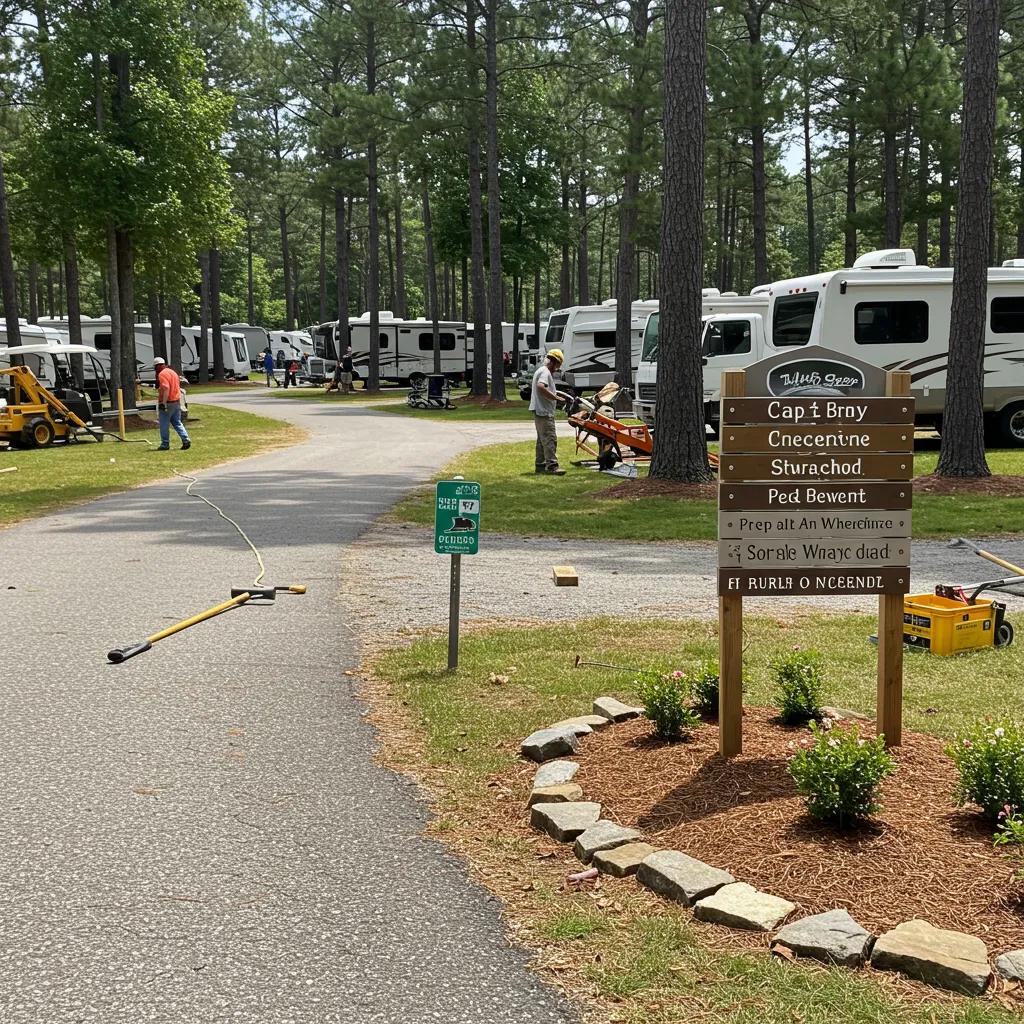
Low-cost, high-impact maintenance, such as site repairs, updated signage, and landscape cleanup, significantly improves first impressions and a buyer’s perception of management quality. Medium-impact upgrades, like showerhouse renovations, improved Wi-Fi, or electrical system enhancements, can increase per-site rates and broaden buyer interest. Larger investments—such as building new amenities or expanding hookups—require more capital but may be justified when targeting a buyer segment that pays a premium for those features. Prioritizing maintenance and small amenity upgrades typically yields the best near-term return on your efforts.
Recommended enhancement priorities:
- Site Repairs & Clean-Up: Enhances perceived value during inspection.
- Basic Amenity Upgrades: Allows for increased rates with modest investment.
- Operational Efficiency Investments: Reduces costs and stabilizes NOI.
Addressing these areas first builds buyer confidence and often reduces negotiation discounting.
The table below links typical enhancements with their estimated impact on buyer interest and a directional effect on per-site value.
How Should You Present Your Campground to Potential Buyers?
Create a concise property packet that includes an executive summary, a site map, occupancy and revenue history, recent capital expenditures, and key vendor and employee information. Professional photography and virtual tours can further enhance buyer perception. Present data in standardized spreadsheets with reconciliations to tax returns, and include a narrative explaining seasonality and operational routines that drive performance. A clear packet reduces buyer questions and enables faster preliminary offers. Sellers who curate their story with both numbers and operational context convert interest into firm offers more quickly.
What Role Do Testimonials and Case Studies Play in Building Trust?
Guest reviews, staff testimonials, and anonymized seller case studies help reduce perceived operational risk and provide qualitative support for performance metrics. These narrative elements complement quantitative financials. Structured case studies that outline a seller’s concern, the corrective action taken, and the outcome can help buyers visualize continuity and operational capability under new ownership. Respecting privacy and anonymizing sensitive details ensures compliance while still conveying proof points. Including these materials in your property packet strengthens the overall presentation and can accelerate buyer confidence during due diligence.
Frequently Asked Questions
What Should I Do to Prepare My Campground for Sale?
Preparing your campground for sale involves several key steps. Start by addressing any deferred maintenance, as this can significantly impact buyer perception. Document site-by-site performance and gather professional photography to enhance your marketing materials. Create a comprehensive property packet that includes financial data, occupancy history, and operational narratives. Prioritize improvements that yield the highest return on investment, such as minor repairs and amenity upgrades. A well-prepared property not only attracts more buyers but can also lead to higher offers.
How Can I Ensure a Smooth Transition After the Sale?
To ensure a smooth transition after selling your campground, it’s crucial to have a clear transition plan in place. This should include strategies for staff retention, continuity of guest programs, and maintaining operational practices that define your park’s identity. Open communication with the buyer about these plans can help alleviate concerns and foster trust. Additionally, providing detailed operational documentation and training for new management can facilitate a seamless handover, ensuring that the campground continues to thrive under new ownership.
What Are the Common Mistakes to Avoid When Selling a Campground?
Common mistakes when selling a campground include inadequate preparation of financial documents, neglecting property maintenance, and failing to understand market conditions. Sellers often underestimate the importance of organized financial records, which can lead to buyer skepticism and lower offers. Additionally, overlooking necessary repairs can diminish perceived value. It’s also crucial to avoid rushing the sale; taking the time to understand buyer preferences and market trends can significantly enhance the sale outcome. Proper planning and execution are key to a successful transaction.
How Do I Choose the Right Buyer for My Campground?
Choosing the right buyer for your campground involves assessing their intentions and compatibility with your operational goals. Consider whether they prioritize stewardship and continuity, especially if preserving staff and traditions is important to you. Evaluate their financial capability and experience in the campground industry, as this can impact the future success of your property. Engaging in open discussions about their vision for the campground can help ensure alignment. Ultimately, selecting a buyer who shares your values can lead to a more satisfying sale experience.
What Role Does Marketing Play in Selling a Campground?
Marketing plays a crucial role in selling a campground by attracting potential buyers and showcasing the property’s unique features. Effective marketing strategies include creating a compelling property packet with high-quality images, detailed financials, and operational narratives that highlight the campground’s strengths. Utilizing online platforms, industry networks, and targeted outreach can increase visibility and generate interest. A well-executed marketing plan not only helps in reaching a broader audience but also positions the campground favorably in the competitive market, potentially leading to higher offers.
What Are the Tax Implications of Selling a Campground?
Selling a campground can have significant tax implications, including capital gains tax on the profit from the sale. It’s essential to understand how the sale price, adjusted basis, and any improvements made to the property will affect your tax liability. Consulting with a tax professional can help you navigate these complexities and identify potential strategies for minimizing tax burdens, such as 1031 exchanges, which allow for deferring taxes by reinvesting in similar properties. Proper tax planning is crucial to maximizing your net proceeds from the sale.
How Do I Find a Buyer for My Campground?
Buyers can be found through direct outreach to buyer-operators, specialized marketplaces, industry networks, or via brokers who market widely. Each channel has its own tradeoffs regarding speed, control, and market exposure. Direct outreach to buyer-operators is efficient when the fit is clear (for example, parks meeting specific size thresholds) and offers discreet transitions. Brokers, on the other hand, increase exposure and competition but often extend timelines. Preparing a concise property packet and contacting targeted buyer types based on your park’s strengths is the most productive first step. Prioritizing outreach by buyer persona reduces wasted effort and speeds up meaningful conversations.
Should I Use a Broker or Sell Directly?
Choosing between a broker and a direct sale depends on your goals. Brokers aim to maximize exposure and competitive bidding but introduce listing timelines and commission costs. Direct buyers can offer speed, confidentiality, and potentially smoother transitions. Use a decision checklist: if broad market reach and maximizing price are your top priorities, consider a broker. If preserving staff, legacy, and timing certainty matter more, a direct buyer-operator may be preferable. Many sellers evaluate both paths simultaneously to compare outcomes before committing. Your document readiness and clarity on desired outcomes should guide your choice.
What Documents Do I Need to Complete the Sale?
Priority documents include multi-year P&Ls, tax returns, site revenue lists, utility bills, permits, leases, vendor contracts, and a current site map. Assembling these first will accelerate buyer review. Providing reconciliations between P&Ls and tax returns, along with explanations for any adjustments, will reduce questions during due diligence. Organizing files with consistent filenames and a single master index makes it easy for buyers to navigate the materials. Early preparation of these documents often shortens the entire sales process.
How Is My Campground’s Value Calculated?
Value is most commonly calculated using adjusted NOI divided by a market cap rate, supplemented by per-site value considerations and comparable sales. This calculation takes into account revenue consistency, expense normalization, and market risk. Buyers will also examine per-site pricing benchmarks, adjusted for amenities and regional demand. Understanding the key inputs allows sellers to focus on actions that increase NOI or reduce perceived risk, both of which can lead to higher offers. Reviewing multiple valuation scenarios helps set realistic expectations before soliciting bids.
What Is the Typical Timeline for Selling an RV Park?
Typical timelines range from three to six months from initial contact to closing for many transactions, although more complex deals or those requiring third-party financing may take longer. Early document readiness and a choice between a direct buyer-operator or a prepared broker process often determine whether the sale closes nearer the three-month mark or extends toward six months. Commonly encountered delays include environmental studies, buyer funding approvals, and title issues. Preparing in advance for these items can shorten the overall duration. Sellers who prepare their documentation, clarify their desired terms, and target aligned buyers usually realize more predictable timelines.
For owners ready to discuss direct-sale options, a no-obligation conversation about fit, timing, and transition can clarify whether a buyer-operator path like a Campground Acquisition is appropriate. Having your core financial and site documents ready before that conversation typically leads to faster preliminary offers and a smoother process.
Conclusion
Successfully selling your campground hinges on understanding the structured process that maximizes value while preserving its legacy. By preparing essential documentation and enhancing your property’s appeal, you can attract serious buyers and streamline negotiations. Engaging with a direct buyer-operator like GatherGrounds Resorts can offer a smoother transition and a focus on stewardship. Begin your journey toward a successful sale by reaching out to explore your options today.