How to Sell Your RV Park: Comparing the RV Park Selling Process vs Traditional Real Estate Sales
Selling an RV park is both a real estate transaction and the transfer of an operating business, so owners must balance property condition with operating performance when planning a sale. This article explains the RV park selling process, contrasts it with traditional real estate sales, and gives owners practical steps to prepare for a sale, including valuation methods like NOI and cap rate calculations. Readers will learn the key differences in buyer types, a step-by-step acquisition process tailored to direct buyers, how to assemble financial and permit documentation, and the current market context for 2025 transactions. The guide maps each stage from initial outreach through due diligence and closing while integrating practical checklists and EAV-style tables for quick comparison. Throughout, target keywords such as “rv park selling process explained,” “how to value an RV park,” and “do I need a broker to sell my RV park” are used to ensure owners find actionable guidance relevant to seller priorities and exit strategies.
What Are the Key Differences Between Selling an RV Park and Traditional Real Estate?
An RV park sale combines real estate transfer with a business acquisition, meaning buyers evaluate Net Operating Income (NOI), occupancy trends, and per-site economics alongside physical assets and site condition. This dual nature changes the negotiation mechanics because purchasers price both expected cash flow and the land, so valuation drivers include revenue diversification (store, hookups, events) and operational records in addition to comparable property sales. Sellers should expect different buyer pools—individual investors, institutional funds, brokers, and family-owned acquirers—each with different timelines, risk tolerance, and documentation preferences. The next section contrasts direct company purchases with brokered listings to help owners weigh speed, price, and legacy outcomes when choosing a sales route.
Direct sale to a buyer focuses on confidentiality and speed, while brokered sales emphasize market exposure and competitive bidding.
The following list highlights core transactional trade-offs owners face.
- Direct sales prioritize speed, confidentiality, and fewer intermediaries, often shortening timelines.
- Brokered sales provide wider market exposure and competitive offers but typically include commission fees and extended marketing.
- Institutional buyers may offer large-capacity financing but often standardize operations, affecting legacy and staff continuity.
How Does Selling Directly to a Company Like GatherGrounds Resorts Differ from Using a Broker?

Selling directly to a company such as GatherGrounds Resorts typically reduces marketing time and eliminates broker commissions, creating a more streamlined path from initial contact to closing. Direct buyers focus on targeted acquisitions and may present offers based on NOI and strategic fit rather than competing bid processes, which can shorten negotiation cycles and provide clearer timelines for owners. Brokers, by contrast, market widely, solicit competing proposals, and can sometimes drive higher sale prices at the expense of longer listing periods and commission costs. Owners balancing price versus certainty should weigh whether faster certainty and tailored transition planning outweigh potential higher net proceeds from an open-market sale.
What Are the Benefits of a Family-Owned Buyer Compared to Large Investment Firms?
Family-owned buyers, such as GatherGrounds Resorts, often prioritize legacy preservation, continuity for staff and guests, and community relationships alongside financial terms. This buyer type typically offers personalized transition plans, greater flexibility on non-price terms, and a culture-oriented approach to operations that can preserve campground identity after closing. Large investment firms may deliver operational efficiencies and scale but often standardize brands and amenities, which can change guest experience and local staffing. For sellers whose priorities include preserving a campground’s legacy and goodwill, a family-owned buyer can align more closely with non-financial seller goals.
How Does Legacy Preservation Influence the Selling Process?
Legacy preservation affects negotiation priorities by introducing non-financial contingencies such as naming rights, staff retention clauses, or phased operational handoffs into the purchase agreement. Sellers who value legacy often negotiate for transition support periods, commitments to maintain certain services, and documented staff retention plans, which buyers can include as contractual terms to reduce seller anxiety. Structuring these commitments requires transparent communication and precise documentation during due diligence so legacy clauses survive title and operational transfers. With legacy issues clarified early, sellers and buyers can focus on financial valuation while protecting the campground’s identity during transition.
Having clarified legacy priorities, the next major topic is the practical step-by-step selling process a direct buyer follows, so owners know what to expect from initial outreach through closing.
What Is the Step-by-Step RV Park Selling Process with GatherGrounds Resorts?
The GatherGrounds acquisition process begins with a confidential, non-binding conversation and proceeds through information exchange, offer construction, due diligence, and a structured transition—designed to provide sellers with predictable timelines and thoughtful handoffs. This buyer-centric process emphasizes clear documentation, straightforward negotiation based on financials, and transition planning that preserves guest continuity and staff relationships.
Owners receive a transparent outline of valuation drivers, typical contingencies, and an estimated schedule for each phase so they can plan operational and communications activities. The following numbered list presents the core stages sellers will experience during a direct acquisition.
- Initial confidential outreach and exploratory conversation to establish fit and seller priorities.
- Document exchange including P&L, tax returns, occupancy data, and site maps for preliminary underwriting.
- Offer formulation using NOI and cap rate analysis, followed by negotiation over price and transition terms.
- Due diligence (financial, environmental, title) and contingency resolution within an agreed timeline.
- Closing and a coordinated transition plan to ensure staff and guest continuity post-sale.
How Do You Initiate Contact and Start the Acquisition Conversation?
Initiating contact usually begins with a confidential outreach where owners provide a high-level property summary and key financial metrics to allow a quick fit assessment. Sellers should prepare a short executive summary that includes the number of sites, recent occupancy, typical nightly rates, and any unique amenities or constraints, which helps buyers triage opportunities efficiently. Confidentiality is paramount during early conversations, and direct buyers commonly use non-binding letters and privacy protocols to protect seller information. Owners who prefer a no-pressure initial talk can request a non-obligation conversation to explore value and transition priorities before sharing sensitive details.
What Information and Documentation Are Required from Sellers?
Buyers typically request three to five years of financial records, including profit and loss statements and tax returns, plus operational data such as occupancy, rate sheets, and vendor contracts to assess revenue stability. Additional key documents include site maps, permits and licenses, utility agreements, maintenance logs, and records of recent capital improvements, all of which feed into NOI calculations and risk assessments. Clear documentation of recurring revenue streams—store sales, hookups, events—helps buyers model cash flow and set realistic valuations. Having these items organized before outreach accelerates the underwriting process and increases buyer confidence in the property’s financials.
How Is the Offer Made and Negotiated?
Offers are typically constructed from a buyer’s estimate of stabilized Net Operating Income (NOI) divided by an appropriate cap rate, adjusted by comparable sales and qualitative factors such as market demand and property condition. Buyers present an initial offer range with supporting assumptions—projected occupancy, expense normalization, and required capital expenditures—which becomes the basis for negotiation on price and non-price terms. Negotiation levers include timing, inclusion of equipment or inventory, transition support, and staff retention commitments rather than price alone. Clear articulation of assumptions and transparent counter-offers help both parties converge efficiently toward mutually acceptable terms.
What Happens During Due Diligence and Closing?
The due diligence period focuses on verifying financial records, conducting site inspections, reviewing permits and environmental matters, and confirming title and lien status, typically within a 30–90 day window for direct transactions. Sellers should expect buyer requests for third-party inspections, utility audits, and detailed operational interviews, and should prepare by organizing documents and facilitating site visits. Closing logistics include finalizing purchase agreements, resolving contingencies, and arranging for the transfer of any operational contracts; coordinated communication plans help ensure staff and guest continuity. A thoughtful transition plan, agreed before closing, minimizes service disruption and preserves goodwill with the campground community after ownership changes hands.
With process clarity established, sellers benefit from understanding RV park valuation mechanics, which drive offer ranges and negotiation strategy.
How Is an RV Park Valued Compared to Traditional Real Estate?
RV parks are primarily valued as income-producing assets where the income approach—NOI and cap rate—dominates, while traditional residential real estate often depends on comparable sales and condition alone. Buyers calculate NOI by subtracting operating expenses from revenue, then apply a market-appropriate cap rate to estimate value; cap rates reflect market risk, growth prospects, and regional demand. Per-site value is a common shorthand in the industry, allowing quick comparisons across properties by dividing estimated value by number of sites, but it should be used in conjunction with NOI analysis.
The valuation of commercial real estate, including RV parks, relies heavily on income-based metrics, with Net Operating Income (NOI) and capitalization rates (cap rates) being central to the process.
Valuation Methods for Commercial Real Estate: Beyond Cap Rate
Estimating the value of multifamily properties and other commercial real estate properties is an important but difficult task for real estate investors and researchers. The commonly used capitalization rate model, which involves the estimation of capitalization rates, has limitations in practice, especially during periods of financial stress. This paper proposes a new property valuation methodology that directly estimates the value of multifamily properties by accounting for both market trends and property operating performance. Our results show that this new model significantly improves the valuation of multifamily properties, particularly distressed properties. This methodology can also be applied to the valuation of other commercial real estate properties.
The net operating Income, which measures how profitably the underlying property operates, excludes the mortgage payment, taxes, capital expenditures, depreciation and amortization.
Beyond the cap rate: Valuation of multifamily properties, 2020
This comparison shows why RV parks require both financial and physical assessments; next we unpack NOI and cap rate formulas so sellers can follow a sample calculation.
What Are the Main RV Park Valuation Methods: NOI and Cap Rate Explained?
NOI (Net Operating Income) equals total revenue minus operating expenses and is the primary income metric buyers use to value a campground, because it isolates cash flow available to a property owner. The cap rate represents the investor’s required return and is used in the formula: Value = NOI / Cap Rate; for example, a $200,000 NOI at an 8% cap rate implies a $2,500,000 value. Cap rates vary by market risk, growth prospects, and asset quality—lower cap rates indicate higher valuations and reflect perceived stability or growth. Sellers should present accurate NOI calculations, supported by consistent financial records, because buyers will scrutinize assumptions during underwriting.
Accurate NOI computation connects directly to how physical attributes like amenities and occupancy influence overall value, which we examine next.
How Do Location, Amenities, and Occupancy Affect RV Park Value?
Location and market demand influence per-site values and cap rates because high-demand regions with limited supply tend to lower cap rates and increase per-site valuations. Amenities—full hookups, resort features, on-site stores, or event spaces—raise average daily rates and occupancy, boosting NOI and therefore overall valuation. Operational efficiencies such as automated booking, cost-effective utilities, and diversified revenue streams reduce expense ratios and increase buyer interest. Improving occupancy and amenities are tangible levers owners can use to increase NOI prior to sale, which directly translates into higher valuation outcomes.
Having covered valuation methods, the next section compares selling routes and positions direct buyers such as GatherGrounds in the seller decision-making matrix.
This comparison clarifies trade-offs sellers face when choosing a sales path and leads to detailed advantages of selling directly to a company like GatherGrounds.
Why Choose a Direct Buyer Like GatherGrounds Resorts Over Campground Brokers?
Choosing a direct buyer can shorten the sales process, reduce transaction costs, and preserve confidentiality, while brokers expand market exposure and may secure higher gross prices through competitive bidding. For sellers prioritizing legacy and continuity, a family-owned direct buyer can provide personalized transition planning and commitments to preserve guest experience and staff relationships. GatherGrounds Resorts positions itself as a family-owned acquirer focused on properties with 130+ sites and emphasizes legacy preservation and smooth handoffs to maintain goodwill with guests. The following bulleted list outlines common advantages of direct sales for owners weighing their exit strategy.
- Faster transaction timelines and fewer intermediaries reduce seller burden and uncertainty.
- Lower transaction costs due to absent broker commissions can improve seller net proceeds.
- Tailored transition plans and legacy-preserving commitments support community and guest continuity.
What Are the Advantages of Selling Directly to a Company?
Selling directly to a company offers speed, confidentiality, and the potential for a more personalized transition, which reduces operational disruption for staff and guests. Direct buyers can provide clearer timelines and reduce marketing-related delays, allowing sellers to plan more effectively for handoff and personal exit strategies. Because direct transactions avoid listing-wide marketing, they help maintain guest confidence and competitive positioning during the sale period. Owners should weigh these practical advantages against the potential for slightly lower market-driven pricing to decide which route best meets their financial and non-financial objectives.
What Are the Typical Services Provided by Campground Brokers and Agents?
Campground brokers offer marketing, buyer vetting, valuation support, negotiation management, and transaction coordination designed to maximize sale price through market exposure. Brokers handle listing preparation, targeted outreach to potential investors, management of offers, and coordination of due diligence and closing processes, typically in exchange for a commission. While brokers can drive competitive bidding, that process can extend listing periods and introduce more public visibility, which some owners find disruptive. Sellers should evaluate broker proposals for marketing plans, buyer networks, and fee structures to determine whether the expected premium compensates for time and cost.
How Does the Seller Experience Differ Between Direct Sales and Broker Sales?
Seller experience varies primarily in control, confidentiality, and timeline: direct sales often give sellers more control over non-financial terms and preserve confidentiality, while brokered sales prioritize price discovery through market exposure. Direct buyers typically require fewer showings and less public marketing, which reduces guest disruption and maintains staff morale during the sale. Brokered transactions involve broader outreach and can create competitive tension that benefits price but may elongate the sale process and require more owner involvement. Sellers should align the chosen route with priority outcomes—speed and legacy preservation versus maximizing sale price—and communicate expectations clearly to any intermediaries involved.
With selling-route decisions framed, owners need a practical checklist to prepare their campground for sale, which is the focus of the next H2.
How Should Campground Owners Prepare Their RV Park for Sale?
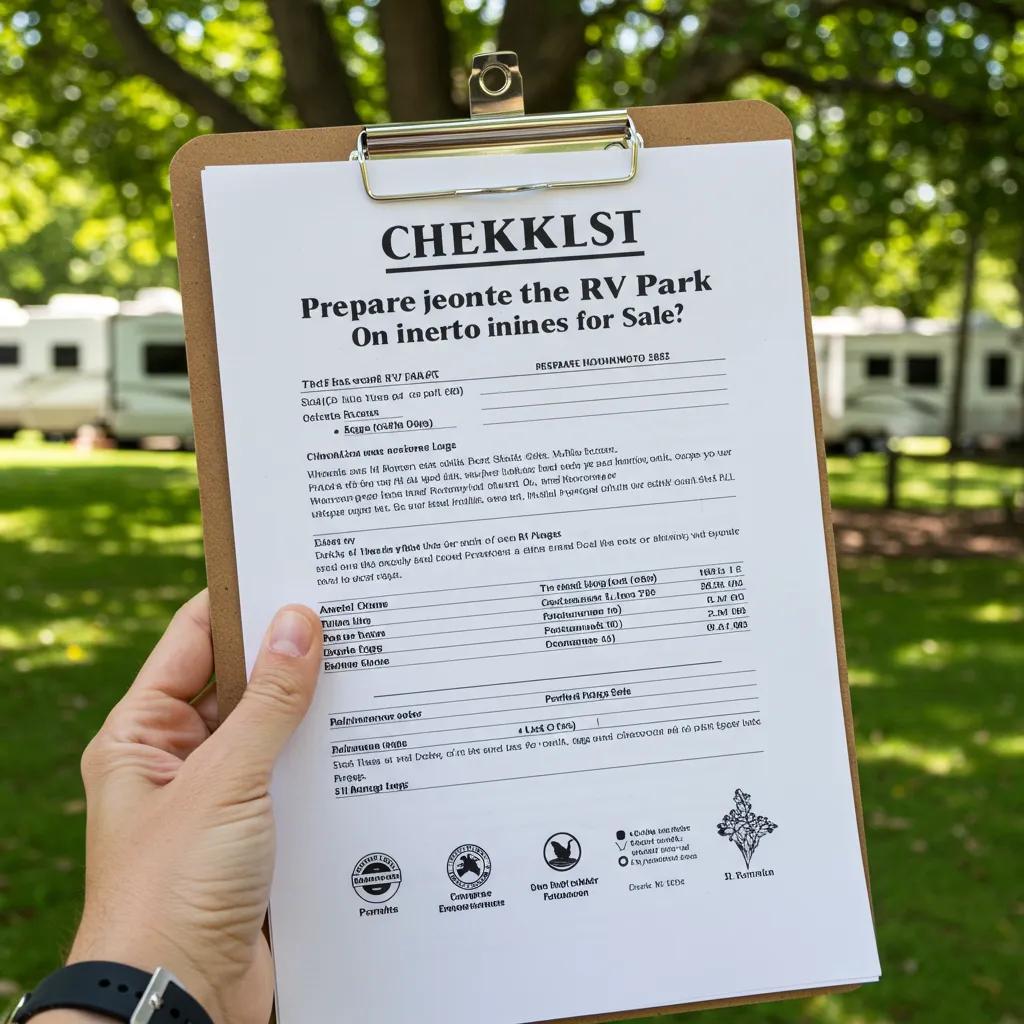
Preparation centers on organizing three to five years of financial records, ensuring permits and licenses are current, and addressing deferred maintenance to reduce buyer risk and speed due diligence. A well-prepared seller presents clear P&L statements, occupancy and rate histories, contracts, and maintenance logs, which help buyers model stabilized NOI and reduce discovery friction. Proactive repairs and permit remediation minimize contingencies and can increase offers, while transparent disclosure of known issues builds buyer trust. The table below provides a concise seller checklist pairing essential documents and items with recommended actions to streamline the sale process.
What Financial Records and Documents Are Essential for a Smooth Sale?
Essential financials include three to five years of profit and loss statements, corresponding tax returns, monthly occupancy and rate schedules, and documentation for any ancillary revenue streams. Buyers use these records to normalize expenses, calculate NOI, and validate revenue stability, so accuracy and consistency are critical. Additional useful documents are vendor contracts, utility bills, and evidence of recurring bookings or group contracts that support revenue forecasts. Presenting a clear financial package reduces back-and-forth during due diligence and improves buyer confidence, often speeding offers and closing timelines.
How Important Is Property Maintenance and Permitting Before Selling?
Maintaining current permits and addressing visible deferred maintenance materially reduces buyer-perceived risk and can shorten due diligence, often preserving or increasing offers. Common deal derails include unresolved environmental items, expired permits, or significant deferred infrastructure costs, so proactive remediation is usually cost-effective relative to delayed closings or reduced offers. Documenting recent repairs and scheduled capital projects gives buyers a clearer forecast of near-term expenditures and helps normalize valuations. Sellers who address high-impact maintenance items and confirm permit status typically achieve smoother inspections and more reliable closing schedules.
What Are Common Seller Mistakes to Avoid in the Selling Process?
Frequent seller mistakes include incomplete or inconsistent financial records, emotionally driven pricing not supported by market metrics, and failing to vet buyers for cultural fit and legacy priorities. Other pitfalls are neglecting permit issues or delaying necessary repairs, which often become negotiation points that reduce net proceeds or add contingencies. Sellers should avoid over-disclosure of sensitive information prematurely and should have a clear data room structure to control document flow. Proactive planning, realistic valuation expectations, and selecting the right sales route reduce transaction friction and protect sale value.
Having prepared a property, it’s important to understand the 2025 market trends that shape buyer behavior and valuations.
What Are Current Market Trends and Industry Insights Affecting RV Park Sales?
As of 2025, persistent demand for outdoor accommodations, limited supply in many regions, and increased institutional interest have tightened markets for RV parks and campgrounds. Cap rates in many markets commonly fall in the 8%–10% range while per-site values typically range from roughly $15,000 to $50,000 or more depending on region and amenities, creating distinct valuation bands for sellers. Regulatory factors—zoning, environmental compliance—have also become more prominent in underwriting, requiring sellers to provide stronger documentation. These macro forces increase seller leverage where financials are strong, but they also raise buyer diligence; owners who present clear records can capitalize on high demand.
The following list explains how sellers can translate these trends into actionable strategies when preparing to sell.
- Maintain updated financials and occupancy data to exploit timing in a high-demand market.
- Prioritize permits and environmental readiness to avoid transaction delays.
- Consider market-specific per-site benchmarks and cap rate expectations when setting price targets.
How Does the High Demand for RV Parks Impact Seller Opportunities?
High demand increases competition among buyers and can compress closing timelines, giving prepared sellers more negotiating leverage for price and terms. Sellers with clear documentation and strong operational records are often able to secure more favorable offers and may attract multiple potential buyers, including direct and institutional bidders. The seller’s timing and readiness—particularly assembled financials and permit status—determine how much of the market premium they capture. For owners weighing market conditions, timing a sale with complete documentation often yields the best combination of price and transaction certainty.
What Are Typical Per-Site Values and Cap Rates in 2025?
Per-site values in 2025 commonly span from approximately $15,000 to $50,000+ depending on location, amenities, and occupiable demand, while cap rates frequently range between about 8% and 10% across many markets. Premium coastal or resort-adjacent parks with full-service amenities trend toward lower cap rates and higher per-site values, while rural or lower-amenity properties sit toward the lower end of per-site ranges and higher cap rates. Buyers adjust assumptions for growth potential, operational risk, and market supply, making it important for sellers to provide compelling occupancy and ADR data to justify higher valuations. A clear example calculation ties NOI to value and shows how cap-rate shifts change outcomes.
How Are New Regulations and Investor Interest Changing the Market?
New zoning and environmental compliance requirements are increasing the diligence burden on transactions and can extend timelines or increase remediation costs, particularly in sensitive or high-growth regions. At the same time, institutional investor interest injects capital and competitive bidding into the market, often raising valuations in core geographies while standardizing deal structures. Sellers should expect more rigorous financial and environmental reviews and should be prepared to present documentation that addresses those concerns to avoid delay. Balancing regulatory preparedness with an understanding of investor dynamics helps sellers choose the appropriate sales route and negotiate effective terms.
With market context in hand, owners often have practical questions about timelines, broker necessity, legacy protection, and how to initiate conversations with a buyer like GatherGrounds Resorts.
What Are Common Questions About Selling an RV Park to GatherGrounds Resorts?
Owners commonly ask about timelines, whether a broker is necessary, how legacy preservation is handled, and how to start an initial conversation; clear answers reduce uncertainty and guide next steps. For direct acquisitions to a buyer like GatherGrounds Resorts, timelines depend on due diligence complexity and financing, but direct routes typically shorten the process compared to brokered listings. Sellers do not strictly need a broker to transact with a direct buyer, though brokers can add exposure if the owner’s priority is maximizing price. The final subsection explains how to initiate a no-obligation conversation, emphasizing confidentiality and the seller-focused nature of initial talks.
What Is the Typical Timeline for Selling an RV Park?
Typical direct-buyer timelines range from roughly 30 to 90 days from initial agreement to closing, depending on the scope of due diligence, financing arrangements, and regulatory reviews. Brokered sales often take longer because of listing periods, marketing cycles, and the time required to attract competitive bids, which can extend total time to close by several months. Complex environmental, title, or permitting issues can lengthen any timeline and should be disclosed early to avoid surprises. Sellers who organize financials and permits upfront usually see the fastest and most predictable timelines.
Do I Need a Broker to Sell My RV Park?
You do not strictly need a broker to sell to a direct buyer, but brokers can expand market exposure and potentially increase gross sale price through competitive bidding; that benefit should be weighed against broker commissions and longer timelines. Consider whether your priority is speed, confidentiality, and legacy preservation—if so, a direct buyer may better match those goals. If maximizing price through wide exposure is the primary objective, a broker’s marketing reach and buyer network can be valuable. Owners who do engage a broker should clarify commission structure and marketing expectations up front.
How Does GatherGrounds Ensure a Thoughtful Transition and Legacy Preservation?
GatherGrounds Resorts emphasizes continuity for guests and staff by offering structured transition planning, options for brand or naming continuity, and negotiated staff retention or phased handoff periods as part of the sale terms. These legacy commitments can be written into purchase agreements to protect seller priorities and minimize community disruption. The buyer’s family-owned orientation supports a personalized approach to operations and often includes open communication strategies to ease the change for guests and employees. Documenting legacy expectations early in negotiations makes those commitments clearer and more enforceable during closing.
How Can I Start a No-Obligation Conversation with GatherGrounds Resorts?
To initiate a confidential discussion, prepare a concise property summary with the number of sites, recent occupancy figures, and high-level financial metrics, then request a no-obligation conversation through GatherGrounds Resorts’ sell-your-campground page on their website. Expect an initial fit assessment that respects confidentiality and uses non-binding terms to explore valuation drivers and seller priorities. The early conversation clarifies whether GatherGrounds’ focus—direct acquisition of existing campgrounds and RV parks from owners, particularly properties with 130+ sites—aligns with your objectives. Starting with a brief executive summary helps accelerate the process and leads to clear next steps if both parties see strategic fit.
Frequently Asked Questions
What are the key factors to consider when valuing an RV park?
When valuing an RV park, key factors include Net Operating Income (NOI), occupancy rates, and the condition of physical assets. Sellers should also consider the diversity of revenue streams, such as store sales and event hosting, as these can significantly impact overall valuation. Additionally, location plays a crucial role; parks in high-demand areas typically command higher prices. Understanding these elements helps sellers set realistic expectations and attract serious buyers who appreciate the park’s full potential.
How can I improve my RV park’s appeal before selling?
To enhance your RV park’s appeal, focus on maintaining and upgrading amenities, such as clean restrooms, recreational facilities, and reliable utilities. Address any deferred maintenance issues to present a well-kept property. Additionally, improving landscaping and signage can create a more inviting atmosphere. Consider gathering positive guest reviews and testimonials to showcase the park’s strengths. These improvements not only increase buyer interest but can also lead to higher offers during negotiations.
What role does market timing play in selling an RV park?
Market timing is crucial when selling an RV park, as demand can fluctuate based on seasonal trends, economic conditions, and regional tourism patterns. Selling during peak travel seasons or when demand for outdoor accommodations is high can lead to better offers and quicker sales. Sellers should monitor local market trends and be prepared to act when conditions are favorable. Engaging with real estate professionals can provide insights into the best timing for listing your property.
What are the common challenges sellers face during the selling process?
Sellers often encounter challenges such as managing buyer expectations, navigating complex due diligence processes, and addressing potential financing issues. Incomplete or inconsistent financial records can lead to delays and negotiations falling through. Additionally, sellers may struggle with emotional attachments to their property, which can cloud judgment during pricing and negotiations. Being well-prepared with organized documentation and a clear understanding of market conditions can help mitigate these challenges.
How can I ensure a smooth transition for staff and guests after the sale?
To ensure a smooth transition for staff and guests, sellers should negotiate clear transition plans with buyers that include staff retention commitments and operational continuity. Open communication with employees about the sale and what to expect can help alleviate concerns. Additionally, maintaining guest relationships through personalized outreach and assurance of continued service quality can preserve goodwill. Documenting these commitments in the sale agreement can further protect the interests of all parties involved.
What should I do if I receive multiple offers for my RV park?
If you receive multiple offers, carefully evaluate each one based on not just the price but also the terms and conditions. Consider factors such as the buyer’s ability to close quickly, their plans for the property, and how well they align with your legacy goals. Engaging a real estate professional can provide valuable insights into negotiating strategies and help you choose the best offer that meets your financial and personal objectives.
What are the tax implications of selling my RV park?
Selling an RV park can have significant tax implications, including capital gains tax on the profit from the sale. It’s essential to consult with a tax advisor to understand how the sale will affect your tax situation, including potential deductions and strategies for minimizing tax liability. Additionally, consider the implications of 1031 exchanges, which allow for deferring taxes if you reinvest the proceeds into a similar property. Proper planning can help optimize your financial outcome from the sale.
Conclusion
Selling your RV park involves a unique blend of real estate and business considerations, making it essential to understand the nuances of the process. By leveraging insights on valuation, buyer types, and preparation strategies, owners can maximize their sale outcomes while preserving their campground’s legacy. Engaging in a no-obligation conversation with a direct buyer like GatherGrounds Resorts can provide clarity and tailored support throughout the selling journey. Take the first step today by reaching out to explore how we can assist you in achieving your selling goals.