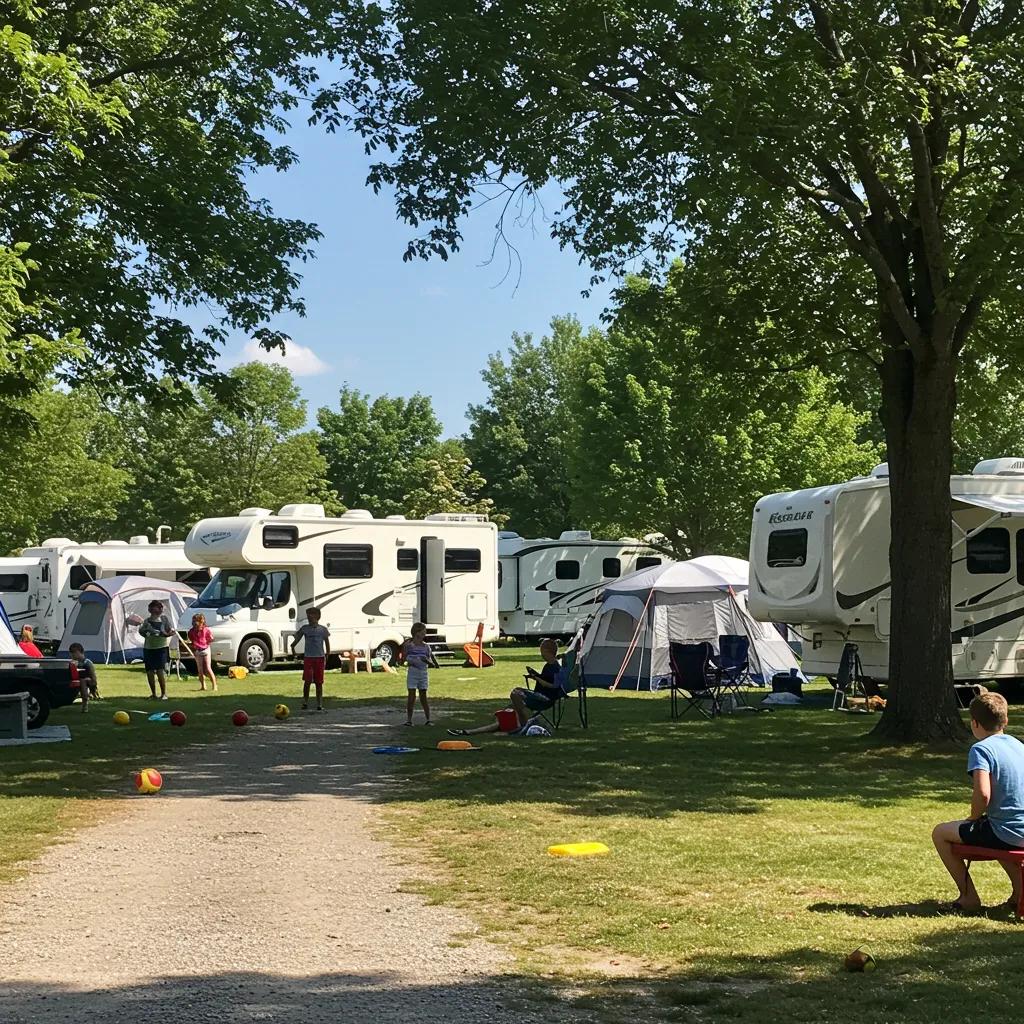
Maximizing Sale Price: Navigating Seasonal Trends for Campgrounds and RV Resorts
Seasonal trends are the heartbeat of campgrounds and RV resorts, dictating monthly revenue, occupancy rates, and how buyers perceive value, all of which directly impact sale price. This guide is designed to equip owners with the knowledge to map out their seasonal revenue cycles, normalize earnings for accurate valuation, and implement strategic upgrades and timing to achieve the best possible sale outcome. By zeroing in on seasonal revenue profiles, regional demand patterns, and amenity-driven value enhancements, sellers can transform operational seasonality into powerful negotiation leverage. Many campground owners find it challenging to present a consistent, year-round cash flow; this article provides step-by-step methods to quantify seasonality, prioritize improvements that mitigate risk, and select the ideal sale timing to secure stronger multiples. We’ll start by outlining how seasonal revenue cycles influence valuation, then move on to optimal listing timing, impactful amenity upgrades, regional demand considerations, buyer-focused due diligence, and negotiation tactics specifically tied to seasonality. Each section includes practical checklists, EAV-style comparison tables, and actionable steps so owners can prepare their documentation, present normalized forecasts, and position their property effectively for interested buyers.
How Do Seasonal Revenue Cycles Affect Campground Valuation?
Seasonal revenue cycles, which describe the ebb and flow of monthly revenue and occupancy throughout the year, significantly influence valuation by affecting revenue predictability, operating leverage, and perceived risk. Buyers place a premium on predictable revenue streams; properties with evenly distributed monthly receipts typically command higher valuation multiples than those heavily concentrated in a single peak period. Demonstrating stable shoulder-season bookings, diverse revenue streams, and a history of repeat guest loyalty can reduce risk adjustments and support stronger price expectations. Understanding these dynamics is key for sellers to present normalized revenue and articulate how their amenities or programs effectively mitigate seasonality.
Buyers evaluate seasonal dynamics through three primary mechanisms during their underwriting process:
- Revenue Concentration Risk: Properties that rely heavily on revenue from a few peak months face greater downside risk if weather or demand patterns shift unexpectedly.
- Occupancy Predictability: Consistent month-to-month occupancy rates bolster higher multiples by demonstrating reduced cash-flow volatility.
- Buyer Perception and Market Pool: Seasonality can narrow the buyer pool to specialists unless year-round attributes are clearly demonstrated.
These mechanisms directly inform how owners should map their site-level revenue and present that data to potential buyers.
What Is Your Campground’s Seasonal Revenue Profile?
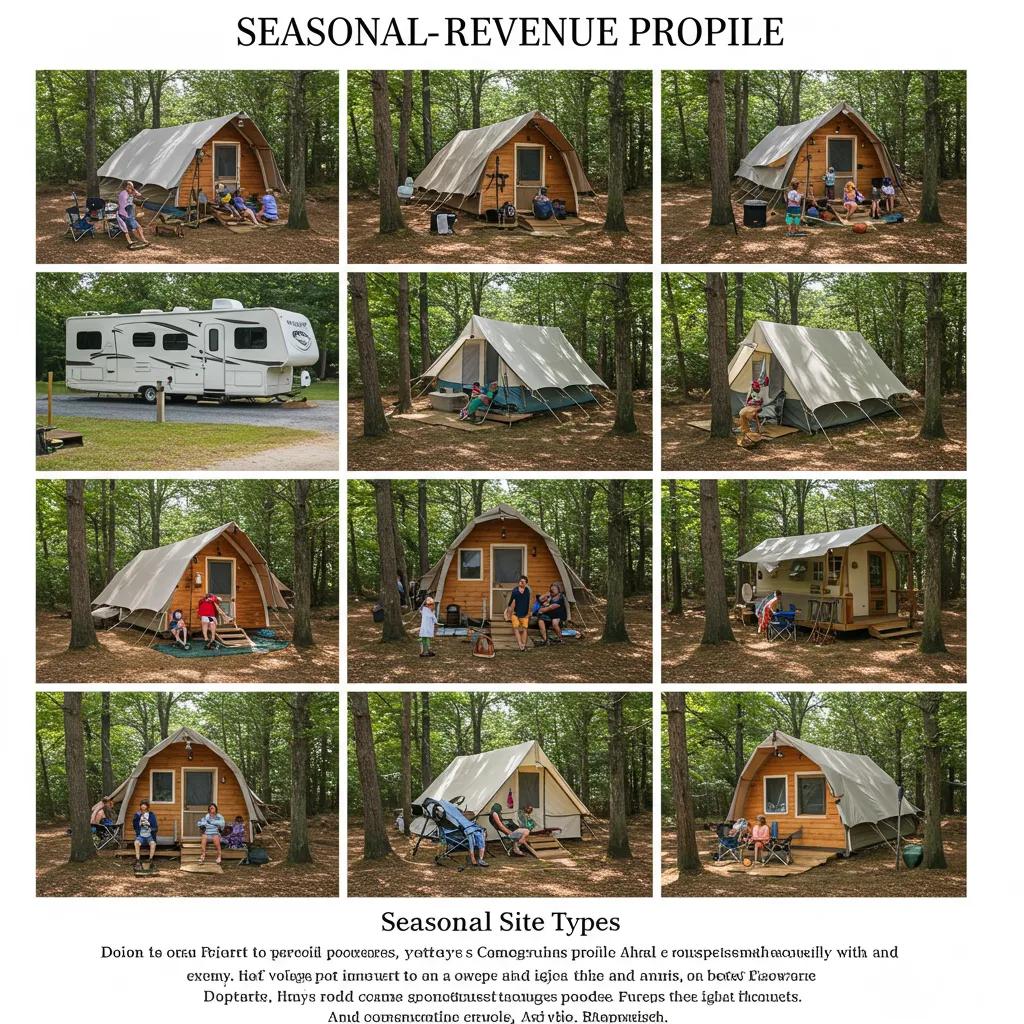
A seasonal revenue profile is essentially a month-by-month breakdown of revenue, occupancy, and average daily rate (ADR) that reveals revenue concentration and diversification across different site types. Owners should pull monthly P&L statements and reservation reports to calculate the percentage of annual revenue generated each month and plot occupancy curves to illustrate peak, shoulder, and off-peak performance. Visual charts or heatmaps can effectively highlight seasonal concentration, helping buyers understand whether revenue is heavily dependent on a few high-volume months or is more evenly spread throughout the year. Establishing this profile is the crucial first step toward revenue normalization and directly influences how valuation multiples should be adjusted for seasonality.
To effectively illustrate the impact of different site types, owners can compare typical site mixes and their respective seasonal revenue contributions before presenting normalized totals.
Different site types generate distinct seasonal revenue patterns, and these patterns influence valuation because buyers assign varying risk weights to each revenue stream.
This table clearly demonstrates how incorporating higher-ADR or year-round-capable site types can reshape the revenue mix and reduce overall seasonality risk.
Presenting a clear seasonal revenue profile lays the groundwork for valuation normalization and leads directly into the next critical step: explaining how peak and off-peak distributions affect valuation multiples.
How Do Peak and Off-Peak Seasons Influence Valuation Multiples?
The distribution of revenue across peak and off-peak seasons directly influences valuation multiples because buyers model normalized EBITDA and then apply a multiple based on revenue stability and growth potential. When annual revenue is identical but concentrated within a short peak window, buyers often apply a discount to multiples to compensate for the increased risk associated with single-month dependency. Conversely, properties exhibiting steady shoulder-season bookings or well-documented off-season programming can justify higher multiples, as their cash flow appears more resilient to market shocks. Owners should prepare a comprehensive normalization schedule that clearly separates recurring seasonal patterns from one-off events and present conservative forecasts to support a higher multiple.
Explaining this logic with straightforward numeric scenarios can significantly help buyers and sellers align expectations during negotiation.
Which Seasonal Occupancy Trends Impact Sale Price Most?
Buyers typically focus on a select few occupancy trends that materially affect sale price: peak occupancy levels, shoulder-season growth trajectory, and off-season operational capability. High peak occupancy alone is often insufficient if repeatability isn’t clearly proven, whereas steady gains in shoulder months signal market expansion and support premium pricing. Off-season capability—such as the presence of winterized facilities or year-round attractions—effectively reduces seasonal volatility and is frequently weighted heavily in underwriting. Owners should prioritize these trends by order of impact and prepare supporting documentation, including monthly occupancy reports, nightly rates by site type, and guest demographic breakdowns.
Recognizing which occupancy trends buyers value most can inform both operational investments and how owners craft their sales narrative.
After thoroughly defining valuation effects and site-level seasonality, owners will benefit from understanding the timing trade-offs involved when launching a sale.
For sellers seeking a buyer’s perspective on seasonal profiles, GatherGrounds Resorts meticulously evaluates monthly revenue patterns when discussing potential acquisitions and can engage with owners about the acquisition of campgrounds and RV parks as a thoughtful transition option.
When Is the Best Time to Sell a Campground or RV Resort?
Timing a sale effectively requires a careful balance between showcasing peak performance, managing practical due diligence logistics, accounting for regional seasonality, and understanding buyer search behavior. Selling during peak months allows for the demonstration of maximum revenue, seamless operational flow, and peak occupancy, all of which can impress buyers and justify aggressive pricing. However, peak-season listings can introduce logistical challenges for showings, increase operational distractions, and create potential scheduling conflicts for due diligence. The optimal window ultimately depends on whether your priority is to highlight maximum visible performance or to opt for a quieter period that allows for deeper negotiation and smoother transition planning.
Understanding the distinct advantages and disadvantages of peak versus off-season sales is crucial for owners to select a strategy that aligns with their goals and local market dynamics.
The following concise pros and cons will help owners evaluate the two primary timing approaches:
- Peak-season selling advantages and drawbacks:
Advantages: Showcases highest revenue generation and full operational capabilities.Drawbacks: Busy operations can complicate showings and extend buyer visits.When to use: Ideal for owners aiming to maximize apparent revenue and attract experienced operator buyers. - Off-season selling advantages and drawbacks:
Advantages: Less competition, more flexible inspection scheduling, and opportunities for buyers to plan upgrades or development.Drawbacks: Lower visible revenue may necessitate stronger normalized forecasts.When to use: Best for sellers prioritizing a smooth transition or buyers focused on redevelopment potential.
These lists clarify that timing is a strategic decision, and presenting normalized data can effectively mitigate many of the disadvantages associated with off-season sales.
What Are the Pros and Cons of Selling During Peak Season?
Listing your property during the high season allows buyers to witness full operations firsthand, verify reservation patterns, and assess staff and guest flows in real time, which often accelerates buyer confidence. Peak-season visibility can support higher asking prices when occupancy and ADRs are at their strongest, but it can also lengthen the sales process due to the need to coordinate showings with operational demands and the owner’s limited bandwidth for extensive due diligence requests. Peak listings are most effective when reservation systems, repeat-booking metrics, and guest reviews clearly demonstrate sustainable demand. Preparing staff, meticulously documenting operational procedures, and ensuring clean, representative data can significantly reduce buyer friction and make peak-season listings more effective.
Sellers should carefully weigh these trade-offs against their personal timing objectives and the advantages of off-season sales discussed in the next section.
How Can Off-Season Sales Unlock Hidden Value?
Selling during the off-season can attract buyers who are focused on value, development potential, or a more discreet transition, often resulting in more deliberate offers and flexible closing timelines. Buyers who evaluate properties during the off-season have ample time to analyze normalized revenue models, plan capital improvements, and design phased transitions without disrupting peak operations. Off-season transactions may also allow owners to negotiate terms that include transition support or phased management handoffs, thereby capturing value beyond the headline price. To unlock this hidden value, owners must present robust monthly financials, demonstrate infrastructure readiness for year-round operation or planned upgrades, and articulate a realistic transition timeline.
Off-season sales therefore appeal to buyers who prioritize predictability and meticulous planning, which naturally leads into regional timing considerations.
How Do Regional Seasonal Variations Affect Sale Timing?
Regional climate patterns and local tourism calendars dictate peak months and recommended listing windows. Therefore, sellers must tailor their timing to local trends, such as strong summer peaks in colder regions or more consistent demand in milder climates. School calendars, local festivals, and regional events also drive short-term demand spikes that can be leveraged to highlight demand if timed strategically. Mapping your region’s peak months and recommended listing windows helps align marketing efforts and buyer outreach with periods when occupancy evidence is strongest. Preparing a regional calendar and integrating it into your listing plan increases the likelihood of attracting the right buyer pool at the opportune moment.
Sellers who value flexibility should remember that buyers often prioritize consistent financials over a single strong month, and flexible timing can facilitate a more thoughtful transition.
GatherGrounds Resorts evaluates potential acquisitions during both peak-season operations and off-season periods and is available to discuss timing and valuation flexibility with owners considering the acquisition of campgrounds and RV parks from owners.
How Can You Increase Campground Value Through Seasonal Amenity Upgrades?
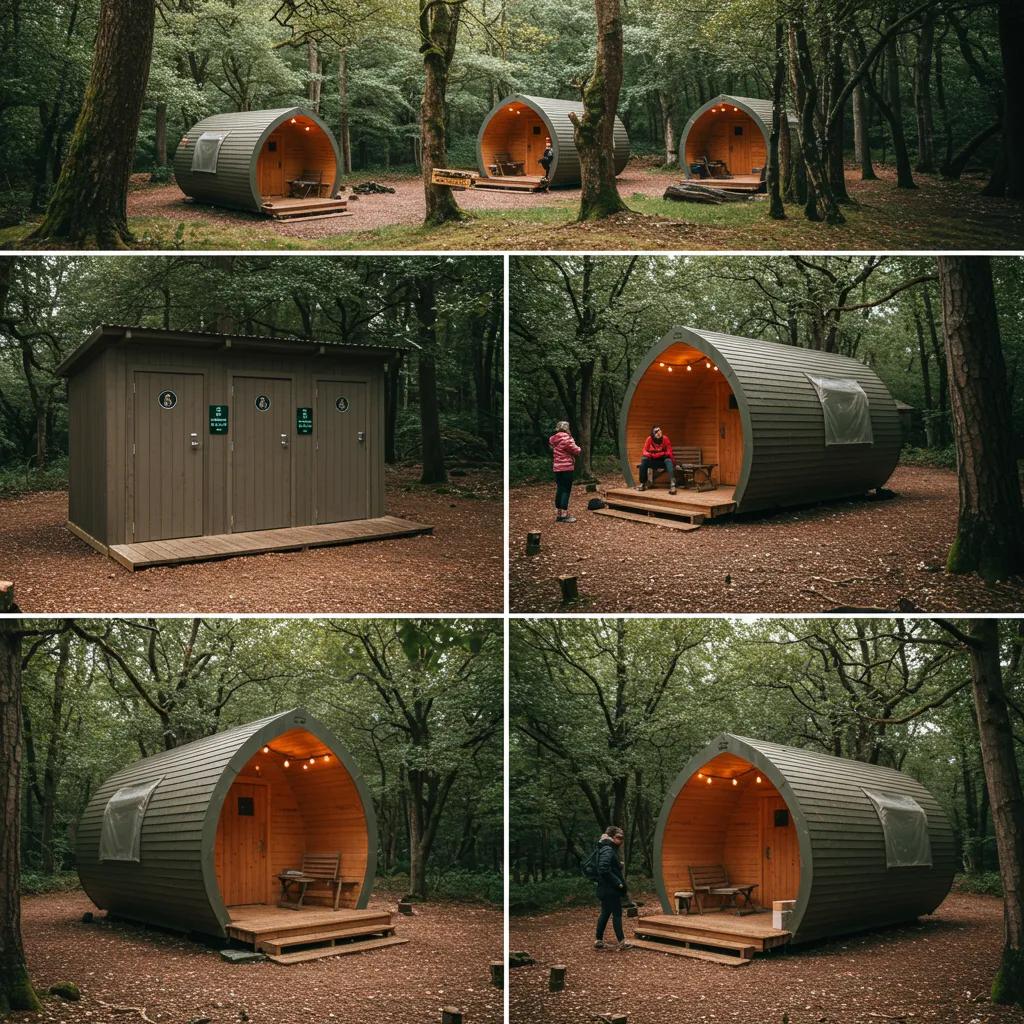
Targeted amenity upgrades are instrumental in transforming seasonal businesses into more all-season assets by extending the operating window, increasing average daily rates (ADR), and broadening guest demographics. Adding heated facilities, covered activity spaces, and winterized hookups effectively reduces off-season attrition and signals to buyers that revenue potential extends well beyond traditional peak months. Emerging offerings such as glamping pods and turnkey RV rental programs can significantly boost ADR and attract new customer segments, factors that buyers weigh favorably during valuation. Owners should prioritize upgrades that deliver measurable increases in occupied nights or ADR uplifts and prepare detailed ROI estimates for buyer review.
These upgrade categories align closely with buyer preferences and can be presented as staged investment plans during negotiations.
Which Year-Round Amenities Boost Sale Price?
Year-round amenities that most consistently enhance sale price include heated restrooms and showers, indoor or covered activity centers, and upgraded utilities designed to support winter operations. Heated and insulated common facilities reduce the risk of closure during colder months and cultivate a perception of durability for year-round guests and operators. Investments in reliable utilities, effective drainage systems, and robust Wi-Fi also appeal to remote workers and families, thereby expanding midweek demand and making the revenue stream more predictable. Owners should meticulously document usage metrics and any incremental revenue generated by these amenities to substantiate valuation increases.
Demonstrating consistent year-round amenity usage helps buyers envision the potential for stabilized income and leads directly into evaluating emerging trends like glamping.
How Do Emerging Trends Like Glamping and RV Rentals Impact Value?
Glamping pods and turnkey RV rental programs often command higher nightly rates and attract demographics willing to pay a premium for convenience, thereby increasing per-site revenue and smoothing shoulder-season demand. These offerings diversify revenue streams beyond traditional campers and tenters, creating opportunities for incremental F&B or on-site activity revenue. Buyers view proven glamping performance and rental occupancy as strong indicators of a more resilient business model, which can justify premium multiples. Owners who can present detailed booking data, ADR differentials, and repeat-renter metrics for these trends significantly strengthen their negotiation position.
Documenting trend-driven revenue streams supports a narrative of diversification that appeals strongly to both operators and investors.
To assist owners in comparing expected uplifts, the following table outlines common upgrades and their typical buyer appeal and value impact:
These comparisons are invaluable for prioritizing investments that effectively reduce seasonal risk and justify higher sale prices.
What Seasonal Upgrades Are Most Attractive to Buyers?
Buyers typically favor a prioritized mix of low-cost user experience (UX) and operational improvements, mid-cost site enhancements, and high-cost lodging conversions that collectively demonstrate both immediate and long-term revenue potential. Low-cost items such as improved booking UX, clear occupancy reporting, and updated signage reduce friction and enhance perceived professionalism. Mid-cost investments like upgraded pads, better sewer/water hookups, and shaded areas improve guest satisfaction and can support higher ADR. High-cost conversions—such as adding cabins or glamping lodges—deliver the largest per-unit revenue uplift but require solid occupancy evidence and careful capital planning to appeal to risk-averse buyers.
A well-structured, staged improvement plan that clearly links costs to expected additional nights or ADR makes buyer conversations more concrete and supports stronger valuation claims.
What Is the Impact of Regional Seasonal Demand on RV Park Sale Price?
Regional demand profiles significantly shape buyer pools and valuation assumptions because climate, local tourism drivers, and regional competition influence operating windows and marketing opportunities. In colder regions with pronounced summer peaks, buyers meticulously underwrite the repeatability of peak-month revenue and prefer properties with reservation histories demonstrating year-over-year consistency. In milder southern regions, steadier year-round demand typically reduces seasonality risk and supports higher multiples, provided the infrastructure is capable of continuous operations. Mapping regional patterns to their valuation impacts helps owners target prospective buyers—whether they are local operators, national chains, or investors—with tailored financial narratives.
Below is a concise regional comparison to help owners anticipate how seasonality translates into valuation outcomes and influences buyer types:
How Does Midwest Summer Demand Influence Valuation?
Midwest campgrounds often experience concentrated summer revenue, which can produce strong headline numbers but also raises concerns about off-season vulnerability and weather dependence. Buyers will closely examine reservation lead times, repeat-booking rates, and refund/discount policies to ensure peak months are sustainable. If a Midwest seller can document consistent year-over-year reservation patterns and demonstrate successful shoulder-season initiatives, the property can achieve higher multiples despite seasonal concentration. Preparing event calendars, cancellation data, and marketing programs that drove those peaks helps underwriters feel confident in the repeatability of demand.
Demonstrating resilience in shoulder months directly supports a higher adjusted multiple in a Midwest sale context.
What Are Year-Round Demand Patterns in Southern Regions?
Southern regions frequently exhibit steadier demand across a greater number of months, which effectively reduces volatility and often justifies a higher valuation multiple due to predictable cash flow. Buyers in these markets expect infrastructure capable of supporting continuous operation, including robust utilities, reliable drainage, and facilities that function effectively in varied weather conditions. Demonstrating consistent monthly revenue and occupancy, along with evidence of diversified guest segments, positions southern properties as lower-risk acquisitions. Owners should compile documentation proving year-round usage and any infrastructure investments that enable extended stays.
Clear evidence of steady southern demand simplifies underwriting and can significantly increase buyer interest from a national operator pool.
How Do Buyer Preferences Vary by Region and Season?
Buyer types and their priorities shift based on region and season: local operator buyers may prioritize operational continuity and community fit, developers often seek off-season purchase windows for redevelopment opportunities, and hospitality investors focus on normalized cash flows and multiples. In peak-season markets, operator buyers tend to dominate because they can leverage existing systems and staff; in off-season or redevelopment scenarios, investors and developers emerge as buyers interested in land-use changes. Tailoring your sale presentation to the likely buyer persona in your region—highlighting operational strengths for operators or zoning and infrastructure for developers—increases conversion chances. Understanding these buyer types allows sellers to craft relevant data packs and negotiation levers.
Matching the sale narrative to the expected buyer type enhances perceived value and can expedite the transaction process.
Why Choose a Direct Buyer Like GatherGrounds Resorts for Seasonal Campground Sales?
Opting for a direct buyer who possesses a deep understanding of seasonality can simplify the sale process, preserve the property’s legacy, and ensure a thoughtful transition. GatherGrounds Resorts is a family-owned company dedicated to acquiring and operating campgrounds and RV parks, primarily in the upper Midwest, with a steadfast focus on preserving the “heart and soul” of properties and creating memorable experiences for campers. As a direct buyer, they offer distinct advantages over brokered listings, including speed, privacy, and seamless operational continuity during the transition period. Their approach emphasizes respectful handovers, clear communication with the community, and alignment with the owner’s wishes, which can be particularly valuable when seasonality complicates timing and handover logistics.
- Lower Intermediary Costs: Direct sales can significantly reduce or eliminate brokerage fees and streamline the negotiation process.
- Faster Execution: Operators often move more quickly because they possess a thorough understanding of the business model and due diligence requirements.
- Operational Continuity: A buyer who actively operates parks can maintain existing staffing and guest relationships, minimizing disruption.
- Legacy Preservation: Family-owned buyers often prioritize maintaining traditions and community ties over aggressive restructuring.
How Does GatherGrounds Preserve Legacy and Family Values in Sales?
GatherGrounds Resorts champions a family-owned approach that actively seeks to preserve traditions and local community relationships when acquiring properties, focusing on a thoughtful transition that deeply respects owner intentions. Their communication practices include honoring legacy features and collaborating with existing staff and community stakeholders to maintain the property’s unique identity. For owners who prioritize legacy preservation, a direct sale to an operator like GatherGrounds can provide invaluable peace of mind and ensure continuity for guests and employees. This approach significantly reduces the risk of abrupt operational changes that could alienate loyal campers.
Preserving legacy often complements value retention, as strong community goodwill directly supports future bookings and reputation-driven revenue.
What Are the Advantages of Selling Directly Versus Using Brokers?
Selling directly to a qualified operator offers tangible advantages: fewer intermediaries lead to clearer negotiations, enhanced confidentiality throughout the process, and potentially faster closings. While brokers can expand market reach, they may also prolong the process and expose operations to public listing distractions, especially during peak seasons. Direct buyers with operational expertise can assess seasonal revenue normalization more efficiently, reducing the burden on sellers to educate multiple inexperienced bidders. Sellers should carefully weigh the cost savings and operational continuity of a direct sale against the potential for broader market exposure from a brokerage, depending on their priorities regarding speed, privacy, or achieving the maximum market price.
Choosing the right path begins with clearly defining seller priorities—timing, price, privacy—and matching them to the capabilities of potential buyers.
How Does GatherGrounds Navigate Seasonal Sale Complexities?
GatherGrounds employs seasonality-aware valuation methods that normalize revenue across months, meticulously evaluate site-mix contributions, and strategically plan transitions to minimize guest disruption during peak periods. Their process typically involves a thorough review of monthly financials, an assessment of infrastructure for year-round operations, and the proposal of transition timelines that respect seasonal sensitivities. By focusing on normalized revenue and operational continuity, GatherGrounds aims to reduce transaction friction and preserve the property’s unique character while completing the acquisition. Owners considering a sale can discuss the acquisition of campgrounds and RV parks from owners to explore a tailored transition plan that comprehensively accounts for seasonal dynamics.
A direct buyer with extensive experience in campgrounds can therefore significantly simplify negotiation and effectively manage seasonality in valuation conversations.
What Due Diligence Should Campground Owners Perform Considering Seasonality?
Seasonality-focused due diligence empowers sellers to proactively address the questions buyers will prioritize, thereby reducing potential valuation discounts and accelerating offers. Key areas include providing comprehensive monthly financial statements, detailed occupancy reports by site type, thorough maintenance logs, and copies of contracts for utilities or long-term vendors that impact off-season costs. Buyers also meticulously examine marketing channels and guest acquisition data to understand how bookings are generated across different seasons. Preparing thorough documentation and demonstrating repeatable demand patterns across all months streamlines buyer underwriting and supports stronger price outcomes.
Below is a checklist-style approach owners can utilize to organize their seasonality-related due diligence materials:
- Monthly Financials: Provide P&Ls broken down by month and site type for at least two to three years.
- Occupancy and ADR Reports: Present nightly occupancy and ADR trends by month and by site category.
- Contracts and Vendor Agreements: Include utility, maintenance, and seasonal staffing contracts that affect off-season costs.
- Maintenance and Winterization Records: Document upgrades and systems that enable year-round operation.
- Marketing and Booking Channel Data: Supply channel mix, repeat guest metrics, and reservation lead times.
How to Assess Seasonal Financial Performance for Accurate Valuation?
Accurate seasonal assessment requires normalizing revenue by clearly separating one-off events from recurring patterns, calculating the average monthly contribution to annual revenue, and presenting adjusted EBITDA that accurately reflects sustainable operations. Owners should identify any large single-event revenue spikes and either amortize or exclude them from normalized forecasts, then demonstrate how shoulder-season initiatives or amenity additions will translate into incremental nights. Clear formulas—such as average nightly rate multiplied by normalized occupied nights per month—help buyers replicate the seller’s forecast. Proper normalization aligns buyer expectations with realistic revenue streams and significantly reduces the likelihood of multiple rounds of price adjustments.
A transparent normalization method makes negotiation more straightforward and positions owners to confidently justify a premium multiple.
What Seasonal Market Trends Should Sellers Monitor?
Sellers should actively monitor trends such as the growing demand for glamping, increases in RV rentals, shifting demographics of campers, and regional tourism initiatives that influence shoulder-season demand. Tracking reports and data releases from industry sources on occupancy, ADR movement, and camper preferences provides crucial evidence to support forecasts and upgrade priorities. Regularly updating competition analysis and pricing intelligence helps sellers demonstrate market positioning and future potential to buyers. Maintaining a consistent cadence of market monitoring ensures forecasts remain current and defensible throughout negotiations.
Staying attuned to evolving trends allows sellers to adjust their offerings and present a forward-looking revenue case to prospective buyers.
How to Prepare Your Campground for Seasonal Buyer Expectations?
Preparing for buyer inspections involves meticulously compiling site maps, infrastructure reports, winterization documentation, amenity inventories, and clear booking-channel reports that effectively illustrate month-by-month performance. Owners should create a comprehensive buyer packet that includes normalized financials, lifecycle capital expenditure (capex) projections tied to seasonal upgrades, and employee transition plans that address peak staffing continuity. Demonstrations—such as showing how winterized systems function or how glamping units perform during shoulder months—are vital for building buyer confidence. Thorough preparation significantly reduces negotiation friction and positions the seller as credible and cooperative.
These preparations complete the due diligence readiness that buyers expect when seasonality is a defining characteristic of the business.
How Can Understanding Seasonal Trends Help Maximize Your Campground’s Sale Price?
Understanding seasonal trends empowers sellers to negotiate using normalized revenue figures, present compelling evidence of diversified income streams, and recommend targeted upgrades that effectively convert seasonality into tangible value drivers. Buyers evaluate the sustainability of peak revenue, the success of revenue diversification into glamping or rentals, and the infrastructure that enables year-round operation; sellers who can quantify these elements are positioned to achieve better pricing. Negotiation tactics include presenting conservative normalized forecasts, offering staged transition support, and backing all claims with meticulously documented occupancy and ADR trends. Avoiding common mistakes—such as overstating peak numbers, under-documenting off-season costs, or failing to present a clear transition plan—is crucial for preserving credibility and bargaining power.
Below are key seasonal factors buyers typically weigh heavily, and how sellers can effectively address them:
- Sustainability of Peak Revenue: Provide multi-year data and booking lead-time evidence to definitively prove repeatability.
- Revenue Diversification: Highlight glamping, rentals, and F&B as key non-peak revenue drivers.
- Infrastructure Readiness: Showcase winterization and utility systems that demonstrably support extended operations.
- Occupancy Volatility: Present clear strategies that have reduced month-to-month swings, such as implemented events or off-season programming.
By integrating these insights into negotiations, sellers can utilize language and documentation that emphasize conservative normalization, verified bookings, and amenity-driven upside to justify higher multiples. Common seller mistakes—relying solely on peak months or lacking clear documentation—can be easily rectified by following the steps outlined above, thereby strengthening the seller’s negotiating position. For owners ready to explore their options, GatherGrounds Resorts remains open to no-pressure conversations about the acquisition of campgrounds and RV parks from owners and can discuss seasonality-aware valuation and transition planning.
This research proposes a model to evaluate revenue management practices specifically for the camping industry, highlighting the importance of a structured approach to maximizing profitability.
MERMCAMP: Enhancing Campsite Revenue Management and Profitability
Revenue Management (RM) maximizes revenue and profitability in industries with perishable goods. This study proposes the MERMCAMP model (Model for Evaluation of Revenue Management in Camping Industry), a framework developed to evaluate RM implementation in outdoor hospitality. The model is based on previous research and was further refined through an expert consensus in a qualitative Delphi survey. A panel of 10 experts participated in several rounds of interviews to identify and evaluate key RM practises for the camping sector. MERMCAMP comprises 119 items categorized under eight key elements: culture, forecasting, segmentation, pricing, distribution channels, competitors, evaluation and digitalization. The model provides a practical and scalable approach for campsite operators to improve pricing, inventory management and business performance.
Frequently Asked Questions
What are the key factors to consider when preparing for a campground sale?
When preparing for a campground sale, owners should concentrate on several critical factors: compiling accurate financial statements, meticulously documenting occupancy trends, and showcasing seasonal revenue profiles. It is paramount to present normalized earnings that accurately reflect consistent cash flow throughout the entire year. Furthermore, owners should prepare comprehensive maintenance records, vendor contracts, and marketing strategies that clearly illustrate how bookings are generated across all seasons. This thorough preparation not only streamlines the due diligence process but also significantly enhances the property’s appeal to potential buyers.
How can campground owners effectively demonstrate off-season revenue potential?
To effectively demonstrate off-season revenue potential, campground owners should prominently highlight any year-round amenities and programs designed to attract guests during less popular months. This includes showcasing winterized facilities, unique events, or strategic partnerships with local attractions that drive visitor traffic. Owners can also present detailed data on past off-season occupancy rates and average daily rates (ADR) to illustrate existing demand. By providing clear, verifiable evidence of off-season performance, sellers can confidently reassure buyers of the property’s resilience and its potential for consistent income throughout the year.
What role does marketing play in maximizing campground sale price?
Marketing plays an absolutely crucial role in maximizing a campground’s sale price by effectively communicating the property’s unique value propositions to potential buyers. A well-crafted marketing strategy should prominently feature seasonal trends, occupancy rates, and revenue diversification. Utilizing professional photography, immersive virtual tours, and detailed property descriptions can significantly enhance buyer interest. Additionally, showcasing positive guest reviews and evidence of strong community engagement can further elevate the property’s appeal. A robust marketing approach not only attracts a wider pool of buyers but can also lead to more competitive offers, ultimately driving up the sale price.
How can campground owners assess the impact of local events on seasonal demand?
Campground owners can effectively assess the impact of local events on seasonal demand by meticulously analyzing historical occupancy data during event periods and comparing it to non-event times. Gathering direct feedback from guests about their reasons for visiting can also provide invaluable insights into how events influence bookings. Furthermore, owners should proactively track local event calendars and collaborate with event organizers to promote their campground as a preferred lodging option. This proactive approach allows owners to strategically capitalize on local events, thereby enhancing revenue during peak times and improving overall valuation.
What are some common mistakes to avoid when selling a campground?
Common mistakes to avoid when selling a campground include overstating peak revenue figures, under-preparing essential documentation, and neglecting to present a clear and comprehensive transition plan. Sellers must ensure that their financial forecasts are realistic and rigorously backed by data to maintain credibility. Failing to adequately highlight off-season revenue potential can also lead to significant undervaluation. Additionally, not proactively addressing buyer concerns about operational continuity can deter potential offers. By diligently avoiding these pitfalls, sellers can significantly enhance their negotiating position and achieve a more favorable sale outcome.
How can campground owners leverage technology to improve their sale process?
Campground owners can effectively leverage technology to improve their sale process by utilizing advanced property management software to generate detailed financial reports and occupancy analytics. Online marketing tools can significantly enhance visibility and attract potential buyers through precisely targeted advertising campaigns. Virtual tours and drone footage can provide immersive property experiences, making it easier for buyers to visualize the campground’s full potential. Furthermore, employing customer relationship management (CRM) systems can help track interactions with interested buyers, streamlining communication and follow-ups throughout the entire sale process.
Conclusion
A deep understanding of seasonal trends is absolutely essential for campground owners aiming to maximize their sale price, as it enables the strategic presentation of normalized revenue and diversified income streams. By thoughtfully highlighting amenity upgrades and operational readiness, sellers can effectively demonstrate the intrinsic value of their property to potential buyers. Engaging in meticulous preparation and comprehensive documentation can significantly enhance negotiation outcomes and preserve credibility. For those ready to explore their options, GatherGrounds Resorts warmly invites you to discuss tailored acquisition plans that thoughtfully consider seasonal dynamics.