
The cheapest way to camp in Ohio is a primitive or non-electric site at a state park, or free dispersed camping in Wayne National Forest if you’re comfortable with no facilities at all. But the cheapest site isn’t always the best value. For families who would otherwise spend money on day trips, a private campground with a beach, a lake and weekend activities can work out cheaper per day of fun, even at a higher nightly rate. Below is how Ohio campground pricing works, where the real savings are, and how to tell a good deal from a low price. Plan your stay at Ridge Ranch Campground in Newton Falls.
What are the cheapest campgrounds in Ohio?
From lowest to highest cost, Ohio camping generally breaks down like this:
- Dispersed camping on national forest land. Wayne National Forest in southeast Ohio allows dispersed camping (no restrooms, water or hookups) in parts of the forest. Stays are limited to 14 days in any 30-day period, and the Forest Service asks campers to follow Leave No Trace practices. It’s the lowest-cost option, but it isn’t for everyone.
- Non-electric state park sites. Ohio state parks charge no entrance fee, and a basic site is usually the cheapest developed camping in the state. Electric and full-hookup sites cost more, and prices vary by park, season and site.
- Private campgrounds. Prices range widely, from simple RV stopovers to resort-style parks. You usually pay more per night, but more of what you want to do is already on site.
Search phrases like “cheapest campground near me” usually lead to the first two. If you want a lake, a beach and something for the kids to do every day, read on before you decide on price alone.

Ohio state parks vs. private campgrounds: what you actually pay
State parks are hard to beat on the price of a basic site, the trails and the scenery. Private campgrounds tend to win on hookups, longer stays and things to do without leaving the campground. A few things affect the real cost of each:
| Cost factor | Ohio state parks | Private campgrounds |
|---|---|---|
| Entrance fee | None | Usually included in your site fee; day visitors may pay a pass |
| Booking fee | $6.50 plus tax on every Reserve Ohio reservation, non-refundable | Varies by campground |
| Weekend minimum | 2 nights (3 on Memorial Day and Labor Day weekends) | Set by each park |
| People per site | Set by park rules | Often a base number of guests, with a fee for extras |
| Long stays | Maximum 14 days in any 30-day period | Weekly, monthly and full-season sites at many parks |
| Senior discount | Ohio Golden Buckeye cardholders get 50% off camping fees, except Friday and Saturday nights | Varies; ask each park |
For current state park site prices, check reserveohio.com. Our guides to Ohio state park camping fees and public vs. private campground pricing go into more detail.
How site type changes the price
- Primitive and tent sites are the cheapest at most campgrounds because there’s no water or electric at the site. They’re the most affordable way for a family to get access to everything else a campground offers.
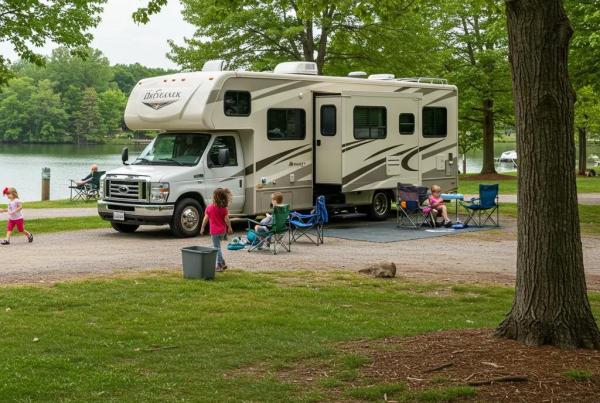
- Electric (30 or 50 amp) sites cost more. A 50-amp site matters if you run two air conditioners in a big rig. Most smaller trailers do fine on 30 amp.
- Full-hookup sites (water, electric and sewer) cost the most per night. They save you trips to the dump station, which matters more the longer you stay.
- Lakefront and premium sites carry a higher rate almost everywhere. If the view isn’t the point of your trip, a site one row back can save real money.

Ways to make an Ohio camping trip cheaper
Camp on weekdays and in the shoulder season
Sunday-to-Thursday stays are easier to book and, at state parks, have no minimum night requirement. Late spring and September are also less crowded than mid-summer. Holiday weekends sell out first and rarely come with deals.
Stay longer
Many private campgrounds price weekly, monthly and seasonal stays well below the nightly rate. If you camp most summer weekends, a seasonal site is often the single biggest saving available. You pay once for the season, leave your camper set up, and stop paying nightly rates and towing costs every weekend.
Use camping clubs if you travel a lot
Discount clubs such as Passport America offer half-price nights at participating private parks, usually with limits on which dates and how many nights qualify. They pay off for RVers who travel often. For one or two trips a year, they usually don’t.
Read the fine print on what’s included
The nightly rate is only part of the cost. Before booking, check how many people the rate covers, the fee for extra guests or vehicles, the cancellation policy and whether the beach, pool or activities cost extra. Our guide to extra campground fees covers the common ones.
Cook your own meals and bring your own gear
Food is usually the biggest cost after the site. A camp stove, a cooler and a plan for each meal keep it down. If you have kayaks, canoes or tubes, bring them to a campground that allows them on the water instead of paying for an outing elsewhere.
Value vs. cheap: what to look for in an affordable campground
A low nightly rate is only good value if the campground is clean, safe and has something to do. Look for:
- Clean, recently updated restrooms and showers. Recent reviews and photos are the quickest check.
- Free on-site activities: a swimming beach, playground, fishing, sports courts and scheduled weekend events.
- A clear rate sheet with the number of guests included and the cancellation terms spelled out.
- A location that cuts driving. A campground an hour from home costs less in fuel and gives you more time at the site.

Affordable family camping in Northeast Ohio
Northeast Ohio has good low-cost state park options. West Branch State Park near Ravenna has a campground with electric and full-hookup sites, its own small beach, a boat launch and miles of hiking and mountain bike trails. Mosquito Lake State Park near Cortland has full-service, electric and non-electric sites on one of the state’s largest inland lakes. Both are strong picks for boating and trails at state park prices.
Ridge Ranch Campground (Newton Falls)
Ridge Ranch Campground sits in Trumbull County just off I-80 and the Ohio Turnpike, about 20 minutes from Warren, 40 from Youngstown, under an hour from Akron and about an hour and 15 minutes from Cleveland. It isn’t the cheapest campground in the area, and it doesn’t try to be. The goal is a resort-style family park at a price that’s competitive for what’s included. Here’s where the value comes from:
- Nightly sites start in the low $40s, for tent and RV sites alike, and the rate covers two adults and two children. See the rates page for current pricing by site and date.
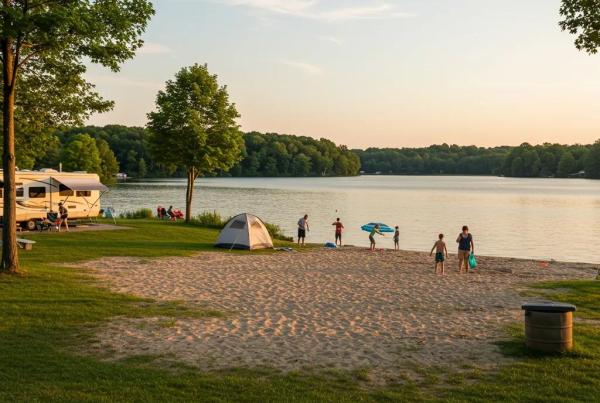
- The beach and lake come with your site. The 17-acre lake has a new sand beach, a spring-fed swimming area dredged to 8–10 feet, and calm, shallow water elsewhere for your own kayaks, canoes and tubes. The playground, Kangaroo Jumper bounce pillow, basketball and volleyball courts, horseshoes, dog park and catch-and-release fishing are also on site.
- The Wibit is pay-per-use on purpose. The inflatable water park on the lake costs a lot to operate each year. Building it into every site rate would raise prices for guests who never use it, so it’s priced separately, and Thursdays are free for campers. It runs through Labor Day and returns for the 2027 season.
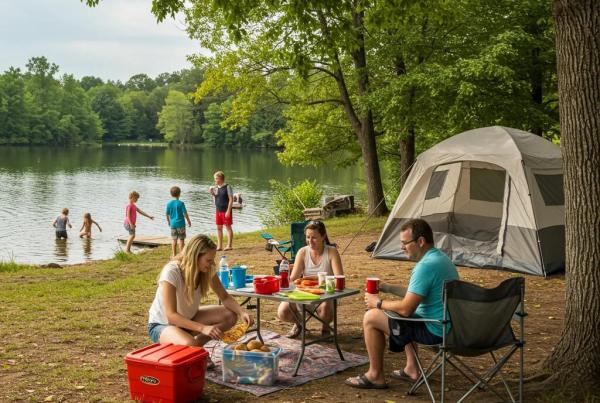
- Tent camping is the budget way in. Tent sites get the same beach, playground and events as RV sites. One tent area is up front near the Kangaroo Jumper, which is easiest with kids. The other is wooded and quieter, between the full-hookup sites and the creek.
- Monthly and seasonal stays. Monthly stays are available at regular nightly rates (there is no monthly discount at Ridge Ranch). Seasonal sites run May 1 through October 20 and work out to a fraction of the nightly rate. Water and sewer come from the park’s own wells and sewer plant, so seasonals don’t pay for them. Electric is sub-metered and billed for what you actually use. Returning seasonals also get free winter storage, which saves the cost of storing a camper off site. Details are on the seasonal sites page.
- Gray-water drain sites cost less to run. Some seasonal sites have a gray-water drain instead of a sewer hookup. About 95% of your wastewater goes down the drain, so a typical seasonal camper needs only about six black-tank pump-outs a season.
- Free weekend entertainment. Most summer weekends have themed events at the lakeside pavilion, like bingo, crafts, karaoke and DJs, plus food trucks on scheduled weekends. The events page has the calendar.
Ridge Ranch is also about 10 minutes from Nelson Ledges State Park, one of the best free day trips in the region.
Affordable camping in Ohio FAQ
Do you need a pass to enter Ohio state parks?
No. Ohio state parks don’t charge an entrance fee. You pay only for camping, cabins or rentals, plus a $6.50 reservation fee when you book through Reserve Ohio.
What is the cheapest way to camp in Ohio?
Dispersed camping in Wayne National Forest costs the least, but it has no facilities. For developed camping, a non-electric state park site on a weeknight is usually the lowest price.
Do Ohio state parks have a senior camping discount?
Yes. Ohio residents with a Golden Buckeye card get 50% off state park camping fees, except on Friday and Saturday nights.
Is a seasonal site cheaper than camping every weekend?
Usually, if you camp more than a handful of weekends a summer. Compare the seasonal rate, plus electric, with what you’d spend on nightly rates and fuel for towing over the same months.