

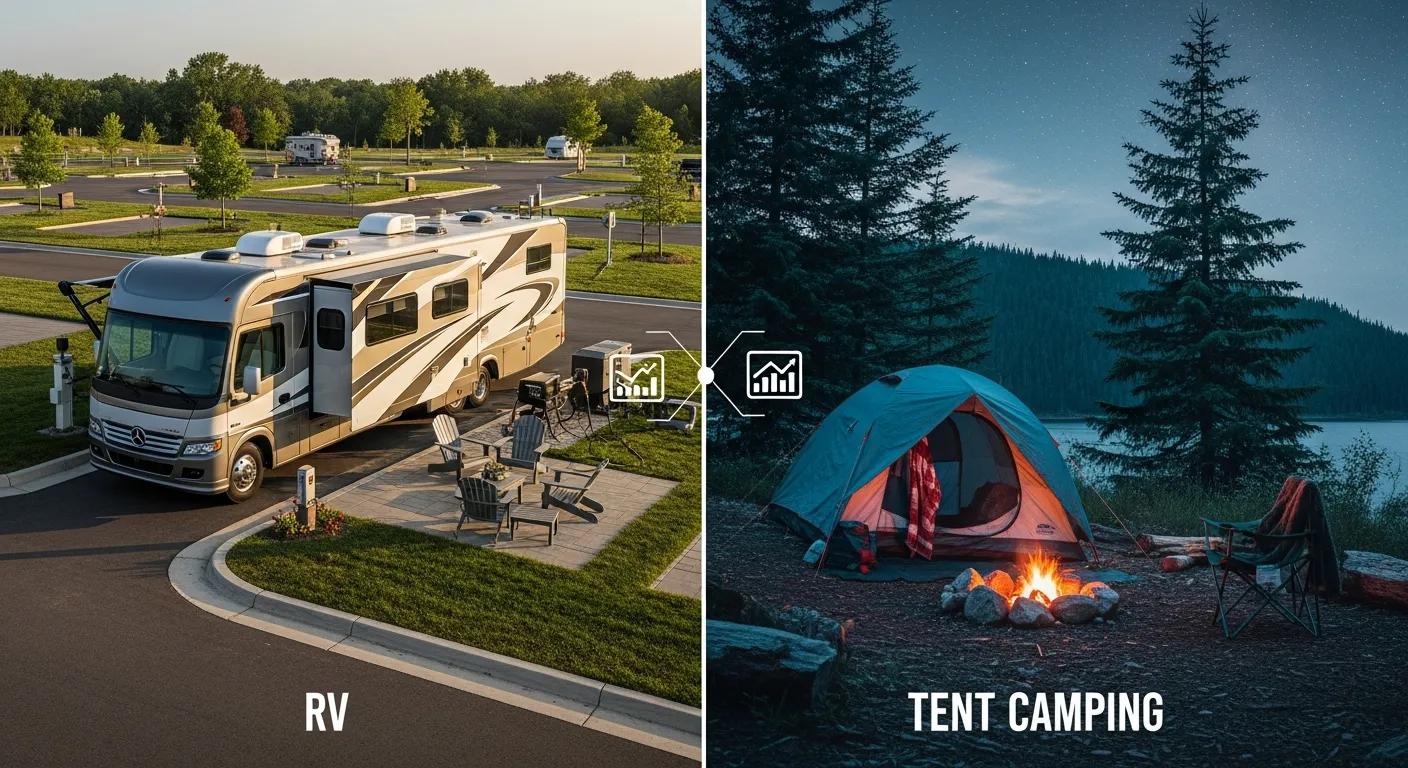
RV vs. Tent Camping Costs
Deciding between an RV and a tent usually comes down to money and comfort: are RV sites pricier once you include upfront buys, nightly rates, and ongoing bills? This guide breaks costs into clear buckets—initial investment, nightly and seasonal site fees, operating expenses, comfort and amenity value, hidden charges, and family budgeting—so you can compare RV vs tent camping in plain terms. We use a local, practical example—The Oaks Campground by GatherGrounds in Munith, Michigan—so anyone searching for campground rates in Munith or RV campsite costs in Michigan gets real context along with general budgeting tips. You’ll learn which purchases are one-time, which repeat each trip, and roughly when frequent use makes an RV pay off. Read on for side-by-side comparisons, gear checklists, money-saving ideas, and how The Oaks’ amenities and booking options can change what you spend.
What Are the Initial Investment Costs for RV Camping Versus Tent Camping?
Initial investment covers what you buy before you ever pull into a site: an RV (or a long-term rental) versus the gear needed to camp in a tent. Tent basics—tent, sleeping pads or bags, a stove, cooler, and safety items—tend to be lower one-time costs and can be upgraded over time. RV costs are dominated by the vehicle purchase or extended rental plus accessories like hitches, hoses, and leveling gear. Those RV costs can be spread across many trips, but the upfront number is much higher. Thinking in amortized terms—dividing purchase price by expected trips each year—helps families decide if RV ownership makes sense versus repeating tent trips.
Below is a compact comparison that highlights typical purchase or rental differences and the kinds of items each option requires. It focuses on ranges and cost drivers rather than exact dollar amounts, since buying choices and how often you camp drive the per-trip math.
In short: tents usually need less upfront cash, while RVs require a larger initial outlay that only starts to look cost-effective if you use it often or travel with it beyond camping trips. The sections below show examples and simple amortization scenarios to help you estimate a per-trip figure.
How Do Tent Camping Gear Expenses Compare to RV Purchase or Rental Costs?
Tent gear spending is modular and upgradeable: you can start with a basic tent, sleeping bags, a camp stove, and a cooler, then add comforts over time. Buying used or choosing entry-level options keeps the first cost low, and with good care many items last multiple seasons. RV ownership—or a long-term rental—is a very different scale of cost, though short-term rentals can be a low-risk way to try the RV lifestyle.
Think about frequency: if an RV is costly but you camp 20 weekends a year, the per-trip capital cost falls; if you only go a few times a year, tent camping usually wins on price. Higher use favors RV ownership; occasional trips make tent camping and targeted gear purchases smarter financially.
What Are the Essential Equipment and Setup Costs for Each Camping Style?
Both styles have day-of setup items that add to the effective per-trip cost. Tent campers should budget stakes, a mallet, tarps, extra guy lines, and reliable lighting—low-cost items but occasionally replaced. RV travelers commonly need leveling blocks, sewer hoses, adapter cords, and route- or site-specific towing hookup gear—costlier items that last longer. A clear pre-trip checklist and basic maintenance reduce the chance of pricey, last-minute buys at the campground store.
A short setup checklist keeps surprise purchases down and preserves the cost advantage of tent camping when it exists. In either case, planning and maintenance keep amortized costs lower over time.
How Do Nightly and Seasonal Site Fees at The Oaks Campground Differ Between RV and Tent Sites?
Nightly and seasonal site fees are the most obvious recurring expense and vary by accommodation type and amenities. RV sites with full hookups usually cost more than primitive tent pads because they include water, electricity, sewer, and a level pad. Prices also change by site location (lakefront, near playgrounds or restrooms) and by season or holiday demand. At family campgrounds, features like full hookups, higher amp service, or premium placement justify higher nightly rates than basic tent spots.
For locals and people searching “RV site fees The Oaks Campground” or “tent site rates The Oaks Campground,” The Oaks by GatherGrounds offers a range of tent and RV options across 160 family-friendly acres near the Waterloo State Recreation Area. On-site perks include a swimming lake, fishing pond, 120 acres of golf-cart trails, playgrounds, and a camp store; a Wibit water park is planned for 2025 and could push peak demand. Check The Oaks Campground page for live rates, availability, and seasonal discounts—those details matter because amenities and timing strongly affect nightly pricing.
What Are the Current Tent Site Rates and Amenities at The Oaks Campground?
Tent options range from basic primitive pads to tent sites located close to family amenities. Typical tent sites include a picnic table and fire ring, with varying distances to restrooms and play areas. Sites near the swimming lake or pond and family activity zones often carry a small premium compared with more secluded, rustic pads—tradeoffs worth considering if convenience matters to your group.
A quick checklist of what tent rates usually include helps with decisions: fire ring and picnic table, restroom/shower access, and sometimes a parking space. If lake access or minimal walking to facilities matters, expect to pay a little extra for those placements.
How Do Full Hookup and Seasonal RV Site Prices Compare at The Oaks Campground?
Full-hookup RV sites typically supply water, electric (30A or 50A), and sewer access, plus a level pad and room for slide-outs—features that explain higher nightly charges versus primitive or electric-only sites. Seasonal and long-stay deals change the math: weekly or seasonal bookings lower the average nightly cost, which can make RV stays more economical for extended visits or snowbird-style use. Location on the loop—near family facilities, on a quieter road, or with a better view—also shifts price.
When you budget for The Oaks, note whether you need 30 amp or 50 amp service, how easy sewer access is, and whether your rig needs extra width for slide-outs. For families who plan many long weekends, seasonal rates and multi-night discounts can significantly reduce the effective per-night RV cost.
What Are the Ongoing Operational Expenses Beyond Campsite Fees for RV and Tent Camping?
Ongoing operational expenses include fuel, maintenance, insurance, storage (for RVs), and replacement of wear-and-tear gear. These recurring costs often sway the decision: RVs have higher recurring bills like fuel, oil changes, and inspections, while tent campers mostly see occasional gear replacement and consumables. Knowing how these expenses scale with trip distance and frequency makes per-trip comparisons practical and helps families plan an annual camping budget.
Turning annual totals into a per-trip number (annual cost divided by trips per year) helps you decide whether to rent, buy, or stick with tents.
How Do Fuel, Maintenance, and Insurance Costs Impact RV Camping Budgets?
Fuel often represents the largest per-trip cost for RVs, especially on long drives; your per-100-mile spend depends on your rig’s fuel economy and local gas prices. Maintenance—oil changes, brakes, appliance servicing—adds predictable yearly costs, and storage or winterization are extra fixed items for owners. Insurance and registration are recurring annual expenses that should be included in any amortized per-trip calculation so you don’t underestimate the true cost of ownership.
Model fuel and maintenance alongside nightly site fees to see the whole picture. Smart route planning, fuel-saving habits, and using rentals occasionally can lower annual spending compared with full-time ownership, depending on how often you camp.
What Are the Typical Replacement and Maintenance Costs for Tent Camping Gear?
Tent gear usually needs less frequent and lower-cost replacement: a well-kept tent and sleeping bags can last several seasons, while stoves and coolers are inexpensive to replace or upgrade. Routine care—cleaning, seam repairs, replacing stakes—keeps expenses small. Because these costs are incremental, tent campers can often invest in a few comfort upgrades instead of a large capital purchase.
Simple habits—drying gear before storage, fixing small tears quickly, and rotating sleeping bags—extend gear life and shrink per-trip amortized costs. That low ongoing spend is a big reason many budget-minded families choose tent camping.
How Do Comfort, Amenities, and Camping Experience Affect the Value of RV Versus Tent Camping?
Comfort and amenities create the non-monetary value that determines whether a higher price is worth it. RVs give indoor sleeping, climate control, and built-in kitchens or bathrooms, which cut down on restaurant and motel spending and make bad-weather trips workable. Tent camping offers deeper nature immersion and lower overall costs, but matching RV-level comfort requires extra gear. Comparing value means weighing dollars against convenience, safety, and the kind of experience your group wants.
At family campgrounds with strong amenities—play areas, swim spots, and on-site activities—paying more for an RV site can make sense for groups that want ease and access. The Oaks’ family-focused features and the planned Wibit water park for 2025 boost amenity-driven demand and can justify premium pricing for some sites.
What Comfort and Convenience Features Do RV Sites Offer Compared to Tent Sites?
RVs bring climate control, indoor kitchens, and private bathrooms that reduce reliance on campground facilities and local businesses—especially helpful on cold or rainy weekends and for families with little ones or mobility needs. Tent campers can recreate some comforts (air mattresses, camp kitchens, heated blankets) but each upgrade increases packing and initial cost.
Compare per-person costs by accounting for saved meals out, avoided hotel nights, and lower weather-related cancellations—those savings offset some of the RV premium for many families. In the end, it’s a personal choice: people who want full nature immersion usually prefer tents; those who prioritize consistent comfort often pick RVs.
How Does Nature Immersion Differ Between Tent Camping and RV Camping?
Tent camping usually offers the fullest nature experience—sleeping under the stars, hearing the woods, and being steps from the fire or water. RVs soften those elements, offering protection from bugs and weather and a secure indoor space some families value. Where you place your campsite—lakeside tent pads versus interior RV loops—also changes how immersed you feel.
At The Oaks you can choose sites to maximize either experience: lakeside tent pads for early mornings by the water, or RV loops that keep you close to playgrounds and conveniences. Picking the right site is as important as picking the accommodation type when it comes to perceived value.
What Hidden Costs Should Campers Consider When Choosing Between RV and Tent Camping?
Hidden costs are the small, frequent charges that quietly raise your per-trip total. Both styles face consumables like firewood and propane, activity or rental fees, laundry, and occasional shower tokens or pavilion rentals. RVs can add dump station fees, electrical overages, or adapter needs; tent campers might pay platform upgrades or site placement fees. Knowing these possibilities helps you budget accurately and avoid surprises that erase expected savings.
The Oaks lists several on-site amenities and optional activities that may carry separate fees; check current disclosures before booking. Reviewing the campground’s policies and packing to avoid on-site purchases is one of the best ways to protect your planned budget.
Which Additional Fees, Such as Firewood and Activity Charges, Affect Both Camping Types?
Shared extras include firewood (often sold on-site at a premium), rental or activity fees for kayaks or fishing gear, and laundry or shower charges. Bringing essentials—propane, wood, detergent—reduces dependence on the camp store. Treat the camp store as a convenience, not a primary supply source, because prices there are usually higher.
Simple ways to cut these common extras: buy bulk firewood locally, share gear across families, and schedule paid activities into single days to avoid repeated fees. These tactics lower your per-day cost and preserve the financial benefits of either camping style.
Are There Unique Hidden Expenses Specific to RV or Tent Camping at The Oaks Campground?
RVs may face dump station charges, electrical overages, or needs for specialized sewer hoses and adapters, while tent campers might encounter platform-upgrade fees or premiums for prime tent spots. At The Oaks, optional rentals and planned attractions—like the future water park—could add extra fees for activities or equipment; the campground posts many fee details in booking materials and on property pages. Always consult the current fee schedule when reserving to avoid surprises.
Ask about per-service charges when you book and pack to minimize on-site purchases. Checking the campground’s fee schedule before arrival helps families set a realistic per-trip budget and fairly compare tent versus RV costs.
How Can Families Budget Effectively for RV or Tent Camping at The Oaks Campground?
Start budgeting by clarifying how often you’ll go and what matters most, then break costs into one-time purchases, recurring operating expenses, nightly fees, and discretionary on-site spending. For families, sharing costs (carpooling or sharing an RV), choosing off-peak dates, and grouping activities into fewer days all boost value per dollar. Pre-trip planning reduces emergency purchases at higher on-site prices and helps you decide whether an RV’s comfort premium is worth the savings from fewer restaurant meals or avoided hotel stays.
Try these practical budgeting steps to keep trips affordable while enjoying amenities:
- Plan frequency first: Estimate trips per year to calculate per-trip amortized capital costs.
- Choose off-peak dates: Weekdays and shoulder seasons usually have lower nightly rates.
- Bundle activities: Group paid activities into single days to avoid repeat fees.
These steps clarify whether to rent an RV occasionally, buy one, or invest in tent upgrades that give more comfort for less money. For families planning many stays or a long seasonal visit, exploring seasonal RV site options can yield strong per-night savings.
What Money-Saving Tips Are Available for Affordable RV Camping?
Smart RV savings include careful route planning to cut fuel use, combining errands and attractions into one loop, booking longer stays for weekly discounts, and traveling with other families to share fuel. Preventive maintenance prevents costly breakdowns, and offseason storage deals lower yearly carrying costs. Using the RV kitchen instead of dining out also trims daily spending.
These tactics turn fixed RV costs into manageable annual budgets and can make ownership or long-term rental viable for families who camp often. A simple per-trip worksheet covering fuel, maintenance amortization, insurance, and site fees makes comparisons to tent camping straightforward.
How Can Tent Campers Maximize Value While Enjoying The Oaks Campground Amenities?
Tent campers get more value by packing multifunctional gear, choosing sites close to the amenities they plan to use, and taking advantage of free campground features like trails and fishing. Sharing gear across family groups lowers per-person equipment costs, and simple meal planning reduces camp store trips. Picking non-holiday dates and midweek stays at a family campground like The Oaks keeps rates down while still giving access to playgrounds, the lake, and trails.
Small tent upgrades—better sleeping pads, a basic camp kitchen, and solid lighting—often deliver the biggest comfort boost per dollar, letting families capture many RV-like comforts while keeping costs lower. When you’re ready to book, visit The Oaks Campground page to check live availability and reserve your site; this guide is meant to help you compare options and move toward a confident booking at The Oaks Campground by GatherGrounds.
Frequently Asked Questions
What are the environmental impacts of RV camping compared to tent camping?
RVs typically leave a larger environmental footprint because of fuel use and greater waste output (sewage and greywater). Tent camping usually uses fewer resources and creates less waste. That said, both styles can be done responsibly: follow Leave No Trace, limit campfires when needed, and manage waste carefully to minimize impact.
How can families choose between RV and tent camping based on their needs?
Pick based on family size, comfort needs, and budget. If convenience and indoor facilities matter—especially with small kids or mobility needs—an RV makes sense. If you want lower costs and a closer connection to nature, tent camping is a strong choice. Consider how often you’ll go and what comforts you can’t do without, then weigh those against the costs.
What are the best practices for maintaining camping gear for longevity?
Care extends the life of both tents and RVs. For tents: clean and fully dry before storage, check seams and zippers, and repair small damage quickly. For RVs: stick to a maintenance schedule—check fluids, tires, and appliances regularly—and use protective covers when stored. Proper care keeps costs down and trips running smoothly.
How do seasonal changes affect camping costs and experiences?
Seasons matter. Peak times (summer, holidays) usually mean higher site fees and busier campgrounds. Off-peak and shoulder seasons offer lower rates and fewer crowds but bring different weather and activity options. Choose timing based on your priorities—cost savings, crowd levels, or specific seasonal activities.
What are some common misconceptions about RV and tent camping costs?
One myth is that RV camping is always more expensive. While RVs cost more upfront, frequent campers can find ownership economical when costs are amortized across many trips. Another misconception is that tent camping can’t be comfortable—good gear and a few upgrades can make tent trips cozy and affordable. The key is understanding the full set of costs, including hidden fees.
How can campers effectively manage their budget while camping?
Manage budgets by planning and prioritizing. Estimate trip frequency, categorize costs into one-time and recurring items, and track discretionary on-site spending. Use off-peak discounts, share costs with others, and bring essentials from home. A clear budget worksheet that lists potential costs helps keep spending on track without cutting enjoyment.
Conclusion
Choosing between RV and tent camping comes down to balancing money and experience. By looking at initial investments, ongoing costs, and what amenities are worth to your family, you can pick the option that fits your goals. Whether you want full comfort or maximum nature time, both styles have real benefits. Ready to compare sites or book a stay? Visit The Oaks Campground page to check availability and reserve your ideal campsite.