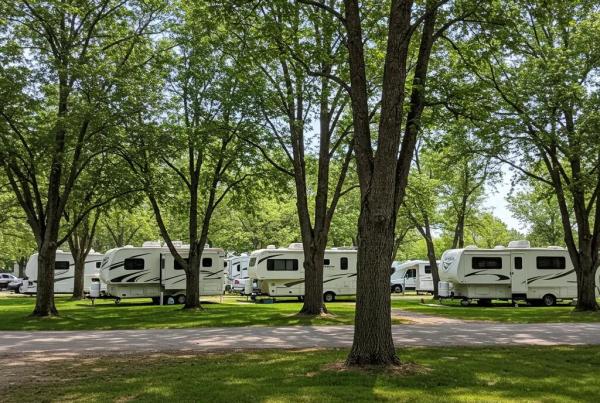
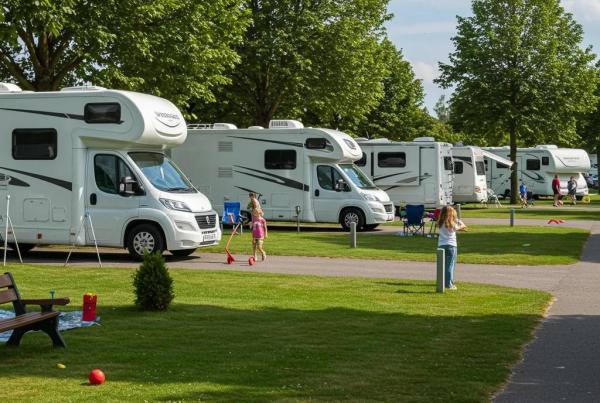
Boost Your Campground’s Appeal Before Selling for Better Returns
First impressions at a campground start at the entrance and extend through campsites, bathhouses, and common areas. In this context, curb appeal is the visual and functional attractiveness of these elements, signaling care and revenue potential to buyers. This guide explains how targeted campground curb appeal improvements work—they increase perceived quality, drive occupancy and ADR, and reduce perceived deferred maintenance. We’ll cover why these changes matter for valuation metrics like Net Operating Income (NOI) and cap rate, and which low-cost projects reliably lead to better offers. You’ll get a prioritized checklist for entrance, campsite, bathhouse, landscaping, and lighting upgrades, clear guidance on the financial documents buyers expect, and a strategic exit timeline to maximize your sale price. Later sections include practical photography and marketing tips to amplify your improvements, a buyer’s perspective on valuation, and a direct-buyer option for owners seeking a legacy-preserving sale. Throughout, we’ll weave in concepts like campground curb appeal improvements, campground valuation NOI cap rate, and campground improvements ROI into actionable steps you can apply before listing.
What Key Campground Curb Appeal Improvements Boost Sale Value?
Campground curb appeal improvements are targeted upgrades to the entrance, campsites, bathhouses, landscaping, lighting, and communal amenities that shift buyer perception and often increase revenue potential through higher occupancy or rate adjustments. The mechanism is straightforward: visible, well-maintained features reduce buyer-identified risk and justify stronger underwriting assumptions for NOI and cap rate, producing a higher implied value. The specific benefits include faster listings, more competitive offers, and fewer inspection contingencies when documentation supports the physical improvements. Below is an ordered list of the highest-impact areas to focus on first, followed by a comparison table mapping typical cost ranges to expected ROI or buyer-perception impact.
- Entrance and Signage Upgrades: A clear, attractive gateway signals effective management.
- Campsite Surface and Amenity Refreshes: Leveled pads, picnic tables, and delineation improve guest experience.
- Bathhouse and Common-Area Renovations: Clean, modern facilities reduce perceived deferred maintenance.
- Landscaping and Pathway Maintenance: Consistent greenery and mulched beds communicate care.
- Exterior Lighting and Safety Enhancements: Better lighting increases perceived safety and usability.
Intro to cost vs impact table: The table below summarizes typical improvement categories, illustrative cost ranges, and the common valuation or buyer-perception effect to help you prioritize projects.
How Does the Campground Entrance Influence Buyer First Impressions?
The campground entrance acts as the initial quality signal, showing buyers whether you prioritize maintenance, signage readability, and guest flow. It directly affects perceived long-term upkeep and revenue potential. A well-designed entrance clarifies branding, traffic patterns, and accessibility. Simple investments—new sign materials, cleared sightlines, consistent landscaping, and defined gate treatments—can produce outsized perception gains. Buyers interpret a clean, well-signed entrance as an indicator that routine maintenance systems are in place, which can reduce assumed cap rate risk and strengthen offers. Consider before-and-after photos to document changes; these images often translate to more listing views and faster buyer engagement.
Upgrading the entrance tends to cost less than structural renovations yet delivers one of the highest impression-to-cost ratios, making it a frequent “do this first” item during pre-listing improvements. The next crucial area to address is the condition and consistency of individual campsites, which further reinforces the impression set at the entrance.
Which Campsite Enhancements Increase Visual Appeal and Attract Buyers?

Campsite enhancements include pad leveling or new gravel, uniform picnic tables, defined RV hookups, shade plantings, and consistent site delineation. These changes improve guest experience and are visible proof of operational standards. Mechanically, better site amenities support higher average daily rates or occupancy by delivering predictable guest experiences and reducing complaints—both of which buyers value in underwriting. Small, repeatable upgrades applied consistently across a park often outperform a single bespoke amenity in buyer perception because they demonstrate scalable operations. For quick wins, standardize a site checklist (pad, table, fire ring, signage) and document per-site costs to show buyers how improvements affect revenue.
Standardizing sites also simplifies maintenance scheduling and reduces variability in guest satisfaction scores, which buyers use as both a qualitative and quantitative input when assessing NOI uplift potential. After campsites, common areas and bathhouses are the next focus because they frequently determine guests’ willingness to pay premium rates.
How Can Common Areas and Bathhouses Be Updated for Better Appeal?

Common areas and bathhouses are amenity centers that materially influence guest satisfaction, length-of-stay, and repeat visitation. Clean, well-lit, and accessible facilities reduce perceived operational risk and justify value adjustments. Renovation priorities should address safety and health first (plumbing, ventilation, non-slip surfaces), then appearance (paint, fixtures, lighting), and finally accessibility (ramps, clear signage). Buyers often view modern, low-maintenance materials and energy-efficient fixtures as signs of forward-looking management that support better NOI projections. Documenting renovation scopes, warranties, and maintenance plans helps underwriters adjust assumptions positively during evaluation.
Showcase before-and-after images and include metrics—such as reduced maintenance calls or improved guest ratings—to link aesthetics to measurable operational improvements. The next natural improvement layer is landscaping and exterior maintenance, which ties together the entrance, campsites, and common spaces.
What Cost-Effective Landscaping and Exterior Maintenance Tips Deliver High ROI?
Low-cost landscaping actions—pruning, fresh mulch, native low-maintenance plantings, sunflower or pollinator beds, and cleared pathways—deliver quick visual upgrades while keeping ongoing maintenance predictable. The mechanism is that consistent, simple landscaping signals active stewardship without large capital outlays, lowering perceived deferred maintenance and appealing to operators who underwrite based on operating margins. Use durable, low-water plant palettes to minimize future expense and document maintenance schedules to present to buyers. Seasonal tasks like leaf removal, mowing consistency, and visible signage cleaning can be scheduled and demonstrated with before/after photos to evidence management quality.
Implementing standardized landscape beds at entrances and main common areas often produces the fastest perceptual returns for minimal capital and helps listings convert more inquiries into site visits.
How Do Campground Curb Appeal Improvements Affect Property Valuation and Sale Price?
Curb appeal improvements affect valuation primarily by influencing two underwriting pillars: Net Operating Income (NOI) and perceived risk, which together determine the applied cap rate. Improvements that drive revenue or reduce expected capital expenditures increase implied value. In practice, a visible enhancement that increases occupancy or average daily rate (ADR) directly lifts NOI, while reduced signs of deferred maintenance decrease the buyer’s risk premium and can tighten the cap rate. Presenting documented revenue changes and conservative uplift assumptions helps buyers and direct acquirers alike move faster and with higher confidence. Below is a short table mapping valuation methods and how curb appeal improvements influence each metric.
Buyers typically rely on NOI and cap rate frameworks, supplemented by revenue multiples and comparable sales, so you should prepare the financials that align with these approaches to accelerate offers.
What Are the Main RV Park Valuation Methods Buyers Use?
Buyers commonly use three valuation approaches for campgrounds and RV parks: the NOI/cap rate model, revenue multiples based on stabilized income, and comparable sales adjusted for amenity and condition differences. Each method emphasizes different data and documentation. The NOI/cap rate model focuses on sustainable operating performance and market cap rate assumptions; revenue multiples are useful in thin markets or for niche asset types; comparable sales provide market context and adjustments for quality differences. Sellers should note that buyers in 2025 emphasize NOI evidence and documented operational metrics due to increased RV demand and competition for high-quality assets.
Providing consistent, organized financial statements and occupancy records reduces friction across valuation methods and helps buyers apply tighter cap rates or higher multiples to the property.
How Does Enhanced Curb Appeal Influence Net Operating Income and Cap Rates?
Enhanced curb appeal influences NOI by enabling higher ADRs, improving occupancy through better guest reviews and repeat stays, and reducing marketing friction that drives vacancy. For example, a modest investment that increases average occupancy by 3% on a 150-site park at a given ADR can create a meaningful NOI uplift that, when capitalized, yields a substantial increase in implied value. Improved appearance also lowers perceived capital expenditure needs, prompting buyers to assume a lower risk premium and accept a compressed cap rate—both effects boost sale price. Buyers will quantify these uplift scenarios in underwriting, so you should present conservative, documented evidence linking improvements to revenue or expense reductions.
Preparing simple sensitivity tables showing NOI under different occupancy/ADR scenarios can help buyers see how curb appeal translates to value.
What Financial Documents Should Sellers Prepare to Showcase Property Value?
You should assemble at least three years of P&L statements, occupancy and ADR reports, tax returns, site maps, rent rolls for leased cabins or lots, maintenance logs, and capital expenditure histories to expedite due diligence and support underwriting. These documents let buyers map historical performance, normalize one-time items, and project stabilized NOI under improved management assumptions. Presenting a concise dossier with executive summary metrics (RevPAR-style figures adapted for campgrounds, average occupancy, ADR, and operating expense ratios) streamlines buyer analysis and can reduce the scope or cost of buyer due diligence. Accurate, well-organized records demonstrate operational discipline and often shorten the offer timeline.
An organized financial package is a force multiplier: it converts curb appeal improvements into documented economic uplift that buyers can readily value.
Why Should Campground Owners Consider Selling Directly to GatherGrounds Resorts Instead of Brokers?
Selling directly to an operator like GatherGrounds Resorts can reduce transaction friction by aligning the buyer’s operational knowledge with your goals, potentially avoiding brokerage fees and delivering a smoother stewardship transition. GatherGrounds Resorts is a family-owned company specializing in the acquisition, management, and operation of campgrounds and RV parks primarily in the upper Midwest. Our approach emphasizes preserving each property’s character while improving amenities and guest experience. From a seller’s perspective, a direct sale to us can offer continuity for staff and guests, transparent negotiation focused on operational realities, and a respectful handover process that honors legacy. Below is a comparison of typical brokered sale elements versus a direct buyer approach to highlight situational advantages.
Sellers considering a direct offer should weigh timing, certainty, and legacy objectives against the broader exposure a broker might provide. The following list outlines common seller priorities to help you decide.
- Timing and Certainty: Direct buyers often offer faster timelines and fewer contingencies.
- Fees and Net Proceeds: Avoiding brokerage fees increases your net proceeds.
- Operational Continuity: A strategic operator can minimize staff disruption and sustain guest relationships.
How Does Selling Directly to a Family-Owned Buyer Maximize Seller Returns?
Selling to a family-owned operator can maximize your net proceeds by eliminating brokerage commissions and by aligning purchase terms with operational synergies that a strategic buyer values, such as known cost structures and renovation pathways. Our relationship-driven approach typically emphasizes fair terms, thoughtful transition plans, and recognition of your legacy investments—factors that can translate into favorable non-price terms like earn-outs tied to performance or retention clauses for staff. From a value perspective, strategic buyers may also pay a premium for well-documented, turnkey operations that fit their portfolio, because integration costs and ramp-up uncertainty are lower. Sellers focused on preserving a property’s soul and ensuring a respectful transition often find these qualitative benefits weigh heavily alongside price.
To decide whether a direct sale is right for you, compare net proceeds after fees and the value of continuity commitments against the broader buyer pool a broker might access.
What Is the Transparent Acquisition Process Offered by GatherGrounds Resorts?
Our transparent acquisition process typically includes an initial confidential conversation, an operational review, a preliminary offer, a due diligence period focused on key revenue drivers, and a mutually agreed closing and transition plan. This structured pathway reduces ambiguity for sellers. For GatherGrounds Resorts, the emphasis is on thoughtful evaluation—reviewing tangible site conditions, financial records, and community impacts—so you know what documentation and physical improvements add the most value. Clear timelines and checklists for required documents (P&Ls, occupancy reports, site maps) help you prepare and often speed up the process. This predictable workflow benefits sellers by reducing negotiation surprises and providing a framework for preserving staff and guest continuity post-closing.
Sellers prepared with organized records and demonstrated curb appeal are more likely to receive timely, well-underwritten offers under this transparent approach.
How Does GatherGrounds Preserve Campground Legacy and Community Identity?
GatherGrounds Resorts emphasizes legacy preservation by prioritizing operational continuity, respectful guest communication, and the retention of staff and community traditions that define a property’s character. Our family-owned approach frames acquisitions as stewardship rather than asset flipping, with planned investments that aim to modernize amenities while keeping the property’s local identity intact. In practice, this can include phased improvements, commitments to honor seasonal events, and collaboration with prior owners on transition messaging to regular guests. For sellers for whom community and legacy are primary concerns, these qualitative protections are central to the value proposition of a direct sale to an operator like GatherGrounds.
Next, you should focus on best practices to prepare curb appeal and visual assets that support both brokered and direct-sale pathways.
What Are the Best Practices for Preparing Your Campground’s Curb Appeal Before Listing?
Preparing curb appeal before listing requires a prioritized, staged plan that addresses safety and functionality first, aesthetics second, and documentation third. Combining physical improvements with professional visual assets yields the best buyer interest. The mechanism here is that buyers respond strongly to high-quality photography and organized presentation—showing both the physical upgrades and the supporting financial/maintenance documentation speeds offers and reduces contingencies. Below are practical checklists for staging photography, prioritized maintenance tasks, and seasonal timing considerations to guide you. Implementing these steps before outreach creates a confident listing and makes both broker and direct-buyer conversations more productive.
Start with a shot list and a short maintenance checklist, then execute quick-win projects before capturing professional photos.
- Professional photography shot list and staging tips to follow prior to listing.
- Prioritized maintenance and repair tasks ordered by impact-to-cost ratio.
- Seasonal timing guidance to decide when to list or when to showcase peak-season performance.
This trifecta—visual assets, repairs, and timing—transforms the improvements into demonstrable value during buyer conversations. For owners who want an objective, confidential review of ROI on improvements and next-step valuation, GatherGrounds Resorts can provide a discreet conversation about how specific upgrades affect offer terms under our campground acquisition service.
How Can Professional Photography and Visual Storytelling Enhance Buyer Interest?
Professional photography and visual storytelling translate physical improvements into measurable listing performance by increasing click-through rates, lengthening site visits, and improving initial buyer perceptions of condition and revenue potential. A strategic shot list should include the entrance, representative campsites, bathhouses, main common areas, aerial layout shots, and before-and-after detail images that document improvements. Drone and map images help buyers quickly assess site density and circulation, which are important underwriting inputs. High-quality visuals paired with concise captions and data points (site counts, recent occupancy, ADR) create a narrative that links curb appeal investments to operational outcomes and often results in stronger initial buyer engagement.
After securing photography, ensure maintenance and repairs are prioritized so onsite visits confirm the listing images.
What Maintenance and Repair Tasks Should Be Prioritized for Maximum Impact?
Prioritize safety and health items first—electrical hookups, potable water systems, sewer integrity, and non-slip surfaces—because buyers penalize unresolved infrastructure issues heavily during underwriting. Next, address visible cosmetic items: fresh paint in bathhouses, repaired roofing on common structures, leveled pads, and cleaned signage, which boost perceived condition quickly. Order tasks by impact-to-cost ratio: safety and systems (high impact), bathhouse appearance (high impact), campsite consistency (moderate impact), and decorative landscaping (low–moderate impact). Decide whether to disclose or fix issues based on cost and buyer perception; minor cosmetic fixes usually pay back via more competitive offers, while major systems repairs may be better disclosed with adjusted pricing if cost-prohibitive to complete pre-sale.
A clear remediation log and a prioritized scope sheet help buyers evaluate residual risk and often shorten negotiation timelines.
How Can Seasonal Timing Affect Curb Appeal and Sale Success?
Seasonal timing affects both the ability to showcase peak revenue months and the logistical ease of showings. Listing during or immediately after peak season provides strong occupancy and revenue evidence but can complicate your availability for site tours. Peak-season photos and performance metrics are persuasive to buyers and can justify higher pricing, while off-season listings require robust financial documentation and perhaps temporary staging to simulate peak conditions. Consider scheduling professional photos during the best visual season for landscaping and occupancy and arranging flexible showing windows for buyers. If listing off-season, include projected seasonality adjustments and historical peak-season occupancy data to reassure buyers.
Balancing visual presentation with accessible showings and clear seasonal financials produces the best platform for both brokered and direct-buyer approaches.
How Can Sellers Strategically Plan Their Exit to Maximize Sale Price?
Strategic exit planning combines immediate presentation fixes, medium-term revenue enhancements, and longer-term capital projects tied to documentation and timing that together maximize sale price and smooth the transition. The core mechanism is aligning physical improvements, organized financial records, and marketing assets with a timeline that supports stabilized NOI assumptions at the time of sale. You should map actions across short (0–3 months), medium (3–12 months), and long (12+ months) horizons to sequence investments that have the best impact-to-cost ratios. The table below lays out a practical exit timeline including tasks and expected outcomes to help you plan.
Use the timeline to coordinate improvements, documentation, and marketing so buyer conversations focus on value rather than fixable deficiencies.
What Is an Effective Campground Exit Strategy Timeline?
An effective timeline staggers low-cost, high-impact improvements first, then invests in medium-term projects that demonstrate stabilized revenue increases, and finally schedules major capital projects only when you can hold long enough to realize the benefit. Immediate actions (0–3 months) should focus on curb appeal, documentation, and photography to optimize listing traction. Medium-term actions (3–12 months) aim to produce measurable revenue changes—improved occupancy or ADR—that buyers can underwrite. Long-term projects (12+ months) like major infrastructure upgrades are only advisable if you plan to realize revenue improvements before selling, since buyers will price in near-term capex otherwise.
Sticking to a sequence that produces verifiable NOI uplift maximizes sale price while keeping capital expenditures aligned with expected buyer valuations.
How Should Sellers Address Common Concerns About Selling Campgrounds?
Sellers commonly worry about staff retention, guest continuity, legacy, and financing contingencies. Proactive, transparent plans that include staff transition options, guest communication templates, and clear disclosures reduce buyer pushback and preserve goodwill. Use simple legacy-preserving clauses or phased management handovers to reassure stakeholders and document commitments in sale agreements where appropriate. For financing concerns, present conservative cash-flow models and be prepared to supply supporting data to lenders or strategic buyers to lower financing friction. Clear, empathetic communication with staff and the community ahead of listing often reduces surprises that can derail negotiations.
Addressing these concerns early creates a smoother transaction and preserves property value beyond mere purchase price.
What Role Do Real Estate Agents and Campground Brokers Play Compared to Direct Buyers?
Real estate agents and campground brokers provide market exposure, buyer sourcing, and transaction management, which can increase the number of competing offers and drive price discovery, but they add time and cost via commissions and broader marketing processes. Direct buyers, by contrast, offer speed, operational expertise, and potentially lower transaction costs; they may also offer assurances about continuity and legacy. The optimal route depends on your goals: maximize sale price and market reach through brokerage channels, or maximize certainty and continuity with a strategic direct buyer. You should weigh net proceeds after fees, desired timeline, and legacy concerns when choosing the pathway to market.
A hybrid approach—preparing the property as if for broad marketing while entertaining confidential direct inquiries—can capture benefits from both routes depending on your priorities.
What Are the Latest Market Trends Impacting Campground Sales and Curb Appeal in 2025?
In 2025, sustained RV travel demand, supply constraints in high-quality locations, and buyer interest in remote-work-friendly amenities and sustainability features are shaping buyer preferences and valuation assumptions. These trends increase the premium for parks with strong digital presence, high-quality bathhouses, reliable WiFi, and differentiated guest experiences such as glamping or family zones. Buyers also favor properties with documented demand-driven revenue growth and energy-efficient infrastructure that reduces operating costs. You should align curb appeal investments with these trends—for example, enhancing communal workspaces or improving connectivity—and document how changes affect guest behavior and revenue.
Understanding these market dynamics helps you prioritize improvements that buyers are actively paying for in 2025.
How Does Increased RV Travel Demand Influence Campground Valuation?
Increased RV travel demand raises occupancy baselines, strengthens comparable sales, and can compress cap rates as competition for quality assets grows, which collectively increases valuation multiples for well-positioned parks. Buyers underwrite higher stabilized NOI assumptions in markets with demonstrable demand increases, but they also scrutinize amenities and infrastructure capacity to ensure the park can sustain higher visitation without disproportionate capex. Sellers who can demonstrate demand-driven occupancy growth and manageable upgrade paths often command stronger pricing or receive faster offers.
Documenting local demand trends and tying them to on-property amenities improves the credibility of projected NOI improvements.
What Amenities and Features Are Buyers Prioritizing in Today’s Market?
Buyers prioritize quality bathhouses, reliable high-speed internet, full hookups, remote-work-friendly communal spaces, glamping or cabin offerings, and sustainability measures that reduce operating costs. These features support higher ADR and longer stays. The cost-to-benefit ratio varies—WiFi and bathhouse quality often deliver strong returns, while large-scale amenity builds require careful demand validation. Rank prospective investments by buyer interest and implementation complexity to ensure capital is allocated where buyers will value it most.
Aligning curb appeal upgrades with these amenity priorities helps you present a market-ready asset to both brokers and direct buyers.
How Can Digital Marketing Complement Physical Curb Appeal Improvements?
Digital marketing—professional photography, updated listings, SEO for “how to prepare campground for sale” and related queries, and curated guest reviews—amplifies physical curb appeal by increasing listing visibility and delivering qualitative proof of guest satisfaction. Trackable metrics such as click-through rate, listing inquiries, and conversion to site visits provide data buyers can use to validate marketing-driven revenue uplift. Integrating before-and-after visuals and occupancy/ADR improvements into marketing materials creates a compelling narrative and can accelerate buyer interest.
Combining strong visuals with measurable marketing metrics converts physical investments into demonstrable increases in buyer engagement.
How Can Sellers Measure the Return on Investment of Curb Appeal Improvements?
You should measure ROI using both financial metrics (NOI uplift, ADR, occupancy) and marketing/inquiry KPIs (listing CTR, lead volume, site visits, and offer timing), triangulating results to attribute improvements to specific investments. Track baseline metrics, timestamp improvements, and monitor changes over successive booking periods to isolate effects. The ranked improvements below list typical impact-to-cost ratios and expected timeframes to realize returns. Afterward, a short table suggests KPIs and tracking approaches you can use to present results to buyers.
A disciplined tracking approach lets you convert visual improvements into documented performance changes that buyers can underwrite confidently.
- Rank of typical ROI by improvement to guide prioritization and monitoring.
- KPIs to track before and after each improvement project.
- Suggested timeframe to expect measurable changes in inquiries or revenue.
This measurement framework enables you to demonstrate how capital invested in curb appeal contributed to value creation.
Which Improvements Typically Yield the Highest ROI for Campgrounds?
Entrance and signage upgrades usually yield immediate perception benefits and can produce the quickest increases in listing inquiries, while bathhouse renovations often unlock higher ADRs and occupancy improvements over a medium-term horizon. Campsite standardization offers steady returns as guests prefer consistency, and lighting/pathway improvements have modest but meaningful safety and usability benefits that support longer stays. Rank these by impact-to-cost: entrance/signage (high), bathhouse refresh (high), campsite amenities (moderate), landscaping (moderate), lighting (low–moderate). Time-to-recover varies from one listing cycle for entrance work to multiple seasons for bathhouse investments.
Selecting improvements with clear, short-term measurement windows improves your ability to show ROI during negotiations.
How Can Sellers Track Increased Buyer Interest and Offers After Enhancements?
Track listing analytics (CTR, time-on-page), lead volumes, the timing of first offers after a listing update, and the conversion rate from inquiry to site visit to offer to create a simple funnel metric set that attributes buyer interest to improvements. Maintain a spreadsheet that timestamps each improvement and records weekly or monthly KPIs to visualize correlations. Also log qualitative buyer feedback during tours to capture perception shifts that analytics might miss; these notes can be used to refine presentation or to support revised pricing. Presenting this tracked evidence to buyers or brokers substantiates claims about the impact of curb appeal work on market interest.
Documented increases in leads and faster offer timing are persuasive evidence of effective curb appeal investment.
How Can Sellers Track Increased Buyer Interest and Offers After Enhancements?
You can deploy a simple tracking template to monitor key performance indicators and correlate them with improvement timestamps to show causation rather than coincidence. Use columns for date, improvement description, listing metrics (CTR, inquiries), on-site visit counts, and offers received. Analyze weekly or monthly trends to assess whether the investment yielded measurable buyer interest improvements. Be sure to keep a photographic record and a short narrative describing marketing changes so buyers understand the full context of any performance shifts.
Consistent tracking and clear visual documentation convert curb appeal investments into verifiable evidence for buyers and lenders.
This article provides a detailed roadmap for improving campground curb appeal with an eye toward valuation mechanics, buyer expectations, and practical execution. For owners seeking a confidential conversation that links specific improvements to valuation and to explore a family-owned, legacy-preserving sale, GatherGrounds Resorts offers a campground acquisition service focused on thoughtful transitions and operational enhancement.
Frequently Asked Questions
What are the most common mistakes campground owners make when preparing for sale?
Common mistakes include neglecting essential repairs, failing to enhance curb appeal, and not organizing financial documents. Owners often underestimate the importance of first impressions, which can deter potential buyers. Additionally, overlooking the need for professional photography can result in poor online listings that fail to attract interest. Lastly, not preparing a clear narrative around improvements and their impact on revenue can lead to undervaluation. Addressing these areas can significantly enhance the sale process and outcomes.
How can campground owners effectively communicate improvements to potential buyers?
Effective communication of improvements involves documenting changes with before-and-after photos, maintaining detailed records of upgrades, and presenting clear financial metrics that demonstrate the impact of these enhancements. Owners should prepare a comprehensive marketing packet that includes visual evidence, maintenance logs, and performance data. This transparency builds trust and helps buyers understand the value of the improvements, making them more likely to make competitive offers.
What role does seasonal timing play in selling a campground?
Seasonal timing is crucial as it affects both the visual appeal and the financial performance of the campground. Listing during peak season can showcase high occupancy rates and revenue, making the property more attractive to buyers. Conversely, off-season listings may require additional staging or marketing efforts to simulate peak conditions. Sellers should consider timing their listing to align with peak performance periods to maximize buyer interest and perceived value.
How can campground owners ensure a smooth transition for staff and guests after the sale?
To ensure a smooth transition, owners should develop a clear communication plan that outlines changes to staff roles and guest experiences. This may include retaining key staff members, providing training for new management, and maintaining existing guest programs. Additionally, creating a transition timeline that includes guest notifications and staff meetings can help alleviate concerns. A thoughtful approach to transition fosters goodwill and preserves the campground’s reputation, benefiting both the seller and the new owner.
What are the benefits of selling directly to a campground operator versus using a broker?
Selling directly to a campground operator can streamline the process by reducing transaction costs and avoiding brokerage fees. Direct buyers often have operational expertise, which can lead to a smoother transition and better alignment with seller goals. This approach can also foster a more personal relationship, allowing for transparent negotiations that honor the seller’s legacy. Ultimately, it can result in a quicker sale with fewer contingencies, benefiting both parties.
How can campground owners measure the success of their curb appeal improvements?
Owners can measure success by tracking key performance indicators (KPIs) such as listing click-through rates, inquiry volumes, and the timing of offers received after improvements. Maintaining a log of enhancements alongside these metrics allows owners to correlate specific changes with increased buyer interest. Additionally, gathering qualitative feedback from potential buyers during tours can provide insights into how improvements are perceived, further validating the effectiveness of the investments made.
What are the latest trends in campground amenities that sellers should consider?
Current trends emphasize the importance of high-quality bathhouses, reliable Wi-Fi, and remote-work-friendly spaces. Buyers are increasingly looking for unique offerings such as glamping options and sustainable practices that reduce operating costs. Campgrounds that incorporate these features can command higher average daily rates and longer stays. Sellers should align their curb appeal improvements with these trends to enhance marketability and meet buyer expectations in today’s competitive landscape.
Conclusion
Enhancing your campground’s curb appeal can significantly boost its market value and attract more competitive offers. By implementing targeted improvements, you not only elevate the visual appeal but also demonstrate operational excellence that buyers value. For a seamless transition and to maximize your sale price, consider discussing your options with GatherGrounds Resorts today. Explore how our family-owned approach can help preserve your legacy while achieving your financial goals.