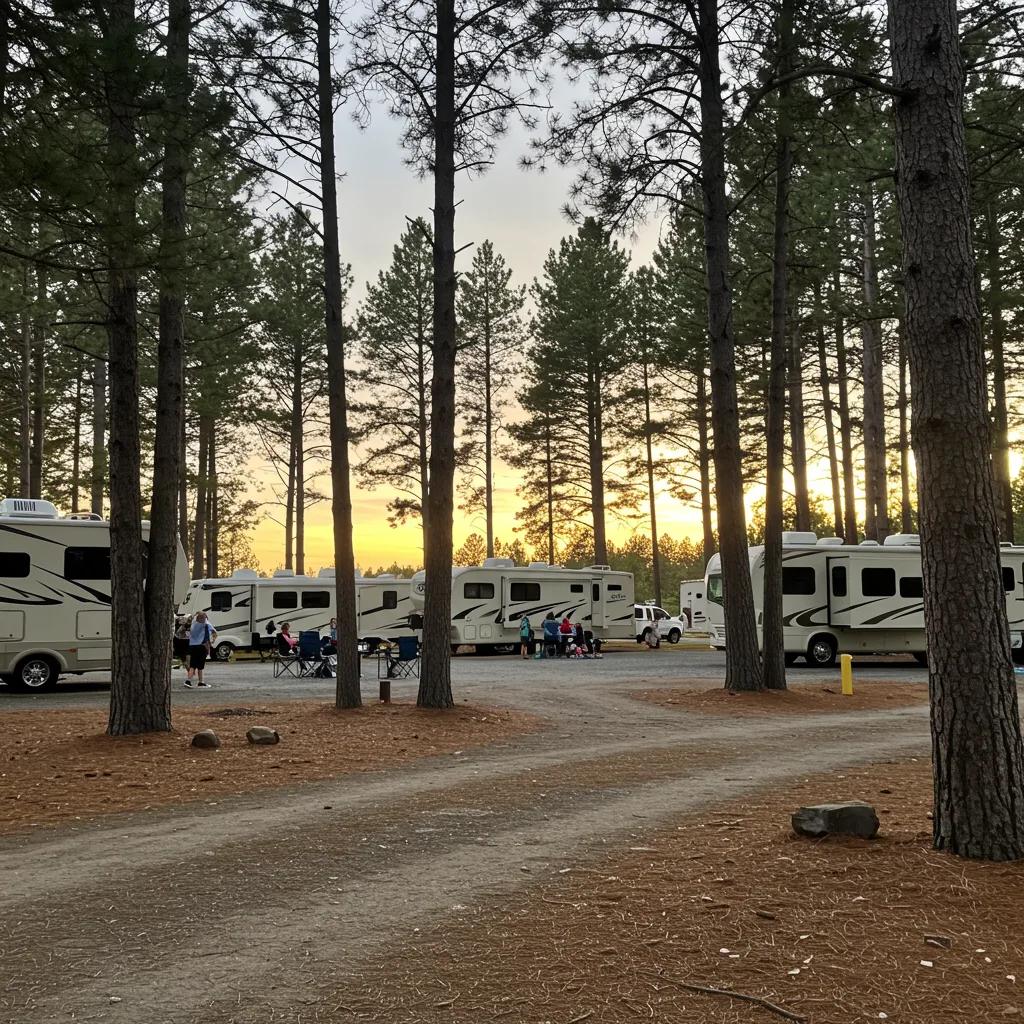
Selling Your Campground or RV Resort: A Clear Path to a Successful Transaction
Selling a campground or RV resort is a unique journey, blending the personal touch of stewardship with the practicalities of a commercial sale. We’ve put together this guide to help you navigate the process smoothly, covering everything from understanding your property’s worth to preparing for the transition. You’ll learn how selling a campground differs from typical commercial real estate deals, discover clear steps for getting ready, valuing your asset using Net Operating Income (NOI) principles, managing the transaction, and planning for what comes next. We’ll show you which features most impact price, how to gather the financial and legal documents buyers expect, and what current 2025 market trends, including typical cap rate ranges, mean for your sale. Plus, we’ll compare working with a broker versus selling directly to a buyer like us, who values legacy and stewardship. With practical checklists and step-by-step guidance, we aim to equip you to achieve the best possible outcome, minimize disruption, and choose the selling path that feels right for you.
What Are the Key Steps in Selling Your Campground or RV Resort?
The process of selling a campground or RV resort is a multi-stage journey. It starts with careful preparation, moves through valuation and offers, proceeds to due diligence and closing, and concludes with a well-managed transition. This sequence works because buyers look closely at property condition, cash flow (NOI), and operational continuity. By aligning your documentation and property readiness with buyer expectations, you’ll be positioned to receive stronger offers. Clear initial steps help reduce friction and shorten timelines while protecting your confidentiality and legacy. The following numbered steps outline the core flow you can expect, and the next section dives deeper into preparing your property.
Approaching the sale deliberately is key, and this roadmap helps organize your actions and expectations.
- Prepare: Gather your financials, address any critical infrastructure needs, and document your operations.
- Value & Market: Determine your valuation method and reach out to suitable buyer types.
- Offer & Negotiate: Review preliminary offers, discuss terms, and agree on contingencies.
- Due Diligence: Facilitate buyer inspections, financial reviews, and legal checks.
- Closing & Transition: Finalize closing documents, complete the transaction, and implement your transition plan.
These steps provide a foundational sequence to set your expectations before we explore the practical preparation phase.
How Do I Prepare My Campground for Sale?

Getting your campground ready for sale means ensuring your financial records are transparent, your operations are well-documented, and your property is in good condition to maximize its perceived value and minimize any friction for buyers. Start by gathering 3–5 years of your Profit & Loss statements, tax returns, occupancy reports, and vendor contracts to showcase consistent performance. At the same time, focus on high-impact property items like septic systems, road conditions, utility reliability, and any safety concerns that buyers will naturally inspect. Often, addressing these critical repairs yields better net proceeds than cosmetic updates. Operational readiness includes having written procedures, clear staff role descriptions, and documented booking systems to assure buyers of continuity. Preparing these elements can significantly reduce due diligence time and position your property for stronger offers, leading directly into how valuation is determined.
To make preparation feel more manageable, use this prioritized checklist.
- Financial records: Compile P&Ls, tax returns, and monthly revenue/occupancy reports.
- Critical repairs: Address safety, septic, electrical, and access road conditions.
- Operational files: Organize staff lists, vendor agreements, and reservation procedures.
- Amenity inventory: Document cabins, hookups, trails, and unique guest experiences.
These preparation steps build buyer confidence, which in turn helps streamline the valuation and offer stage.
What Is the Valuation Process for Campgrounds and RV Parks?
Valuing campgrounds and RV parks primarily involves analyzing cash flow, with Net Operating Income (NOI) and cap rates being key drivers of pricing. Gross sales multipliers and comparable sales can serve as secondary checks. A practical valuation typically follows the logic of defining NOI, understanding its relationship to the property, and then applying a cap rate to arrive at a price. NOI captures your recurring operating performance, while the cap rate reflects buyer return expectations. Many buyers will apply a cap rate range to a normalized NOI (adjusted for owner-specific benefits) to estimate value. Others might use gross sales multipliers, especially in asset classes where expense data is less reliable. Market context—like seasonality, occupancy trends, and site mix—also influences the applicable cap rate. Understanding these mechanics helps you present normalized financials and realistic price expectations, preparing you for offers and negotiations.
This table highlights why an NOI-focused valuation is generally the most defensible method when selling to professional buyers and lenders.
How Does GatherGrounds’ Direct Acquisition Process Work?
Our direct acquisition service for campground and RV park owners is designed to be confidential and owner-focused, aiming to preserve your property’s legacy while offering a streamlined sale path. The process typically begins with an initial, no-obligation conversation to understand your property’s basics and your goals. We then move to an information exchange and a preliminary offer based on our NOI-focused assessment. If we both feel there’s a good fit, we’ll conduct a site visit and due diligence, focusing on operational continuity and respectful transition planning. This concludes with a final offer and closing, including agreed-upon transition terms. Selling directly to an owner-operator like us can reduce marketing exposure and potentially accelerate timelines compared to public listings. This direct approach differs from brokered processes in several ways, which we discuss in the next subsection.
This comparison illustrates how a direct acquisition can reduce time and exposure while aligning with your transition goals.
What Happens During Due Diligence and Closing?
Due diligence is where we validate the representations that form the basis of an offer. This involves verifying financial records, title, environmental conditions, and physical systems—it’s essentially the buyer’s final assessment before closing. Common diligence items include financial reconciliation (confirming NOI), title and easement review, environmental screenings (septic, wetlands), and operational checks (permits, vendor contracts). Timelines typically range from 30–90 days, depending on the complexity of contingencies and financing requirements. Buyers may also present a list of items for deferred maintenance discovered during site visits. Closing mechanics involve finalizing purchase agreements, setting up escrow, transferring title, and executing any agreed-upon transitional service agreements. Providing clear, timely responses during due diligence helps reduce buyer friction and supports a smoother closing, naturally leading into planning the post-sale transition.
Understanding common contingencies helps you prepare targeted documentation to expedite closing and move into the transition phase.
How Is the Post-Sale Transition Managed?

A thoughtful post-sale transition is crucial for protecting the guest experience, preserving staff knowledge, and maintaining the property’s goodwill. This typically involves phased handovers, potential retention incentives, and documented plans for operational continuity. Common transition models include a brief seller stay for knowledge transfer, consulting agreements for seasonal handovers, or a gradual operational handover over several weeks or months. Retaining key staff with clear role continuity and communicating changes to regular guests helps stabilize revenues during the ownership transfer. Documented vendor introductions, reservation system credentials, and marketing handoffs are practical elements of any transition checklist. Sellers who plan a staged transition increase the likelihood of legacy preservation and reduce the risk of post-sale revenue disruption.
These transition approaches complete the operational cycle that began with preparation and valuation, setting clear expectations for buyer-seller roles after closing.
How Do I Accurately Value My Campground or RV Resort?
Accurately valuing your campground or RV resort means prioritizing normalized Net Operating Income (NOI), understanding cap rate mechanics, and using secondary methods like gross sales multipliers or comparable sales for triangulation. The core valuation relationship is NOI → relationship → value: NOI determines cash flow, investors apply a cap rate, and that calculation yields the price. Valuation hinges on consistent financial normalization—removing owner perks, non-recurring expenses, and adjusting for deferred maintenance—to present an investor-ready NOI. You should prepare illustrative calculations and sensitivity ranges to show how changes in occupancy, ADR, or operating expense ratios might affect value. The next subsection compares the main valuation approaches in a concise table.
What Are the Main Campground Valuation Methods?
The primary methods—NOI/cap rate, gross sales multiplier, and comparable sales—each have distinct mechanics and use cases that you should understand. The NOI/cap rate method multiplies normalized NOI by the inverse of the cap rate to produce value and is favored because it reflects true operating performance and aligns with buyer financing. Gross sales multipliers apply a factor to total revenue and can be simpler but may misrepresent value when expense structures vary significantly. Comparable sales rely on market comps and are most effective when recent, similar campground transactions exist nearby. You should present your NOI calculations with clear normalizations to support cap-rate-based pricing and to preempt disputes during diligence.
A clear presentation of NOI and normalization helps buyers and lenders reconcile valuation quickly and leads into which property factors affect those calculations.
Which Factors Most Influence Campground Value?
Property-level, operational, and market drivers collectively determine where your campground sits within cap rate ranges and which buyers will be most interested. Location and seasonality drive demand—proximity to attractions, accessibility, and climate all affect occupancy trends. Site mix, hookups, cabins, and amenity inventory influence both Average Daily Rate (ADR) and ancillary revenue. Operational performance metrics like occupancy rate, ADR, ancillary revenue streams, and expense ratios directly shape your NOI. Regulatory factors—zoning, permits, and environmental constraints—affect expansion potential and risk assessment. Buyers evaluate these attributes to position the asset within cap rate bands, and the next subsection explains preparing financial records that capture these influences.
Understanding these key components (NOI, occupancy, site count) enables you to target improvements that can favorably move valuation.
How Can I Prepare Financial Records for Valuation?
Preparing your financial records involves assembling multi-year P&L statements, tax returns, monthly occupancy and ADR reports, utility bills, payroll files, and vendor agreements. You’ll then need to normalize owner-specific items to produce an investor-grade NOI. Ideally, you should supply 3–5 years of financials, annotate any one-off items, and present reconciliations between tax returns and management reports to minimize buyer questions. Normalization steps often include removing excessive owner salaries, adjusting discretionary expenses, and capitalizing deferred maintenance where appropriate to provide a clearer NOI picture. Presenting clean, organized documents speeds up the valuation process and supports efficient due diligence. The next subsection compares why NOI is generally preferred over gross-sales methods for most buyers.
Organized financial packages reduce negotiation risks and shorten the buyer’s underwriting timeline.
Why Is Net Operating Income Preferred Over Gross Sales Multipliers?
NOI captures the actual cash flow available to owners and investors after operating expenses, making it a more reliable foundation for valuation than gross sales multipliers, which often overlook cost structures. Because lender underwriting and investor return expectations rely on predictable cash flow, the fundamental valuation relationship in this asset class is NOI → determines → value. Gross sales multipliers can overstate value when operational expenses are high or vary widely, whereas NOI normalizations reflect the true earnings potential a buyer can expect. For example, two parks with identical revenues can have very different NOIs due to differing expense ratios, leading to different cap-rate-based valuations. Emphasizing NOI in your marketing materials aligns expectations with investor and lender analysis.
This rationale explains why many professional buyers insist on NOI reconciliations early in the process.
Why Should I Sell Directly to GatherGrounds Instead of Using a Broker?
Selling directly to an owner-operator like GatherGrounds Resorts can offer enhanced confidentiality, speed, and a buyer who is committed to stewardship and legacy preservation. Direct sales often reduce public listing exposure and the marketing cycle, enabling faster preliminary offers and fewer negotiation rounds because decision-makers are directly accessible. GatherGrounds is family-owned and operated, and we emphasize preserving legacy and values—attributes that appeal to sellers who prioritize cultural fit and continuity for their staff and guests. For owners focused on a thoughtful transition rather than extensive market testing, a direct buyer can minimize disruption while still delivering a market-based outcome. The next subsections detail our benefits, legacy preservation practices, process efficiencies, and acquisition criteria.
These differentiators can help you decide whether to pursue a brokered listing or a direct-owner sale.
What Are the Benefits of Selling Directly to an Owner-Operator?
Selling to an owner-operator typically reduces transaction friction and aligns cultural objectives, such as keeping teams and traditions intact, which can be particularly important for family-run campgrounds. Direct buyers can offer confidentiality, eliminating public listings that might alarm staff or regular guests, and provide faster decision cycles because fewer intermediaries are involved. Owner-operators often value non-financial outcomes—like preserving legacy and guest experience—which can lead to a better post-sale outcome for sellers who care deeply about continuity. The combination of reduced public exposure, potential speed, and cultural alignment often makes a direct sale attractive to sellers with strong community ties.
These benefits set the stage for a closer look at how GatherGrounds specifically articulates legacy preservation.
How Does GatherGrounds Preserve My Campground’s Legacy and Team?
GatherGrounds Resorts approaches acquisitions with a stewardship mindset, focusing on honoring a property’s family memories, retaining strong teams when appropriate, and enhancing amenities while preserving the campground’s unique identity. Our stewardship model emphasizes keeping the existing guest experience intact and working with sellers on phased transitions that may involve retaining key staff or documenting critical operational knowledge. You can expect discussions about operational continuity and potential consulting arrangements that protect traditions and community relationships. This owner-operator orientation addresses both emotional and financial seller goals.
Understanding these preservation practices supports sellers who prioritize a values-aligned transfer and leads into how the direct process saves time.
How Does the Streamlined Process Save Time and Hassle?
A streamlined direct acquisition reduces the number of intermediaries, concentrates due diligence on targeted items, and leverages direct access to decision-makers for faster offer cycles. Eliminating broad marketing and public listings means confidentiality is maintained, reducing the time needed to create, review, and respond to multiple offers. Direct buyers typically request specific documentation early, accelerating diligence, and focus on operational continuity rather than speculative redevelopment, which simplifies negotiations. Faster timelines and lower marketing overhead often translate into a reduced seller burden and a more predictable closing schedule.
These efficiencies explain why many sellers weigh direct offers seriously alongside brokered listings.
What Properties Does GatherGrounds Typically Acquire?
GatherGrounds seeks quality properties with natural features and a history of family memories. We focus on campgrounds and RV parks with a significant number of sites—specifically those around or above 130 sites—and amenity sets that support family-oriented stays. We have a geographic emphasis in the upper Midwest and prefer assets where preserving legacy and improving guest service offer clear upside potential. Properties that align with these criteria typically result in offers that blend market-based valuation with transition-minded terms. Sellers whose assets match these attributes may find a direct approach particularly well-suited to their goals.
This acquisition profile clarifies the kinds of assets that are most likely to attract GatherGrounds’ direct interest.
How Do I Prepare Financial and Legal Documents for Selling My Campground?
Preparing your financial and legal documents is a core part of reducing buyer friction and supporting an accurate valuation. It requires early organization of your financials, permits, and title-related records. Buyers and lenders expect multi-year P&Ls, tax returns, monthly occupancy and ADR reports, utility records, vendor agreements, and clear title documentation. On the legal side, compiling permit inventories, lease schedules, easement maps, and environmental screenings helps avoid surprises that can delay closing. The following table provides a concise document checklist to guide you as you assemble dossiers for buyers and advisors.
Organizing these documents into a single, labeled package significantly reduces diligence time and improves buyer confidence.
What Financial Documents Are Required?
Buyers typically request 3–5 years of Profit & Loss statements, corresponding tax returns, monthly occupancy and ADR reports, utility bills, payroll records, and vendor contracts to validate revenue and expense stability. You should also prepare reconciliations that explain differences between tax filings and management reports, and present normalized adjustments that convert Seller’s Discretionary Earnings (SDE) to lender-ready NOI. Presenting this organized financial package with clear notes on owner-specific expenses and one-time items expedites valuation and reduces back-and-forth during due diligence. The next subsection outlines key legal considerations to address before listing.
A complete financial package both speeds diligence and supports stronger offers.
What Legal Considerations Should I Know Before Selling?
Legal checks focus on title clarity, easements, deed restrictions, permit inventories, zoning compliance, and potential environmental liabilities. Unresolved legal issues can materially affect saleability and price. You should run a title check, assemble copies of permits and health/safety certificates, and consider environmental baseline assessments if the property has sensitive features like wetlands or legacy fuel storage. Lease reviews for tenant-owned cabins or concessions and a review of vendor contract assignability are practical pre-sale actions. Addressing legal issues proactively reduces closing delays and improves buyer confidence.
Resolving legal items early creates a smoother path into negotiating timelines and transition planning.
How Should I Plan My Exit Strategy and Timeline?
Effective exit planning involves setting a realistic timeline, typically beginning preparation 6–12 months before an anticipated sale. Recognize that transactions often take 3–9 months to complete, depending on complexity and buyer type. You should weigh the pros and cons of selling the business and real estate together versus selling the real estate only. Selling business + real estate can command higher multiples but adds complexity, while real estate-only sales attract different buyer pools. Tax and financial planning with advisors can help optimize net proceeds and structure (for example, considering installment sales). Building a timeline that schedules document assembly, property repairs, and marketing windows helps keep the process on track.
A thoughtful exit plan aligns valuation goals, tax strategy, and transition preferences to produce the best overall outcome.
What Are the Current Market Trends Affecting Campground and RV Resort Sales in 2025?
In 2025, the campground and RV resort sector continues to benefit from strong RV industry demand, constrained site supply in many regions, and sustained investor interest seeking predictable cash flows. These factors influence cap rates and buyer competition. Reported cap rate ranges for RV parks in 2025 commonly sit around 8%–10%, with lower cap rates for premium, stable assets and higher rates for riskier or deferred-maintenance properties. Macroeconomic factors—interest rates, consumer discretionary spending, and fuel prices—affect financing costs and travel behavior, while local tourism trends determine seasonality and occupancy windows. Sellers who understand these dynamics can time their marketing and position operational improvements to reduce perceived risk and compress cap rates. The next subsections unpack industry growth, cap rate implications, investor behavior, and economic considerations.
These market signals shape realistic pricing expectations and buyer pools.
How Is RV Industry Growth Impacting Demand?
Sustained RV sales and ongoing interest in outdoor recreation increase demand for camping sites, creating a supply-demand imbalance in many areas where new site development lags RV ownership growth. Higher RV ownership translates into stronger occupancy and ancillary revenue potential for well-located campgrounds, driving buyers to compete for stabilized assets. This dynamic attracts both institutional investors seeking yield and owner-operators looking for operational upside, expanding the pool of potential buyers. Sellers who can demonstrate stable occupancy and growth pathways often command better offers, which connects to the discussion of cap rates next.
Rising demand for RV sites supports valuations when coupled with demonstrable operational performance.
What Are Typical Cap Rates for RV Parks in 2025?
Cap rates in 2025 broadly range between 8% and 10%, reflecting investor return requirements, interest rate environments, and asset-specific risk. Premium locations with strong tourism demand and low operating risk tend toward the lower end of the range, while assets needing capital investment or having seasonal volatility trend higher. Sellers can move toward lower cap rates by improving NOI—through occupancy growth, ADR optimization, and cost control—and by addressing operational risks that buyers penalize. Understanding where your property sits in that cap-rate spectrum informs your pricing strategy and negotiation posture.
Cap-rate awareness helps sellers set realistic expectations and prioritize value-enhancing improvements.
How Does Investor Interest Influence Selling Opportunities?
Increased investor interest creates more competitive buyer pools, often resulting in faster sales and multiple-offer scenarios that benefit sellers. However, different buyer types value different attributes. Institutional or REIT buyers focus on scalability, predictable cash flow, and site expansion potential, whereas owner-operators may pay premiums for legacy or operational synergies. You should tailor your marketing materials to highlight the attributes that matter most to your target buyer type—stable NOI for investors, operational continuity and guest experience for owner-operators. Matching buyer expectations to your asset’s attributes increases the probability of a favorable transaction.
Targeted positioning attracts the buyer mix most likely to deliver your objectives.
What Economic Factors Should Sellers Consider?
Sellers must monitor interest rates (which influence financing costs and cap rates), consumer discretionary spending (which affects travel and camping demand), fuel prices (which can impact RV travel costs), and local tourism trends that determine seasonality and occupancy. High interest rates can compress buyer buying power and push cap rates upward, while favorable consumer spending and low fuel prices can increase occupancy and ADR. Local economic development or infrastructure projects can change demand fundamentals quickly, so you should incorporate macro and micro indicators into your timing decisions and negotiation flexibility. Monitoring these variables helps sellers identify optimal windows to market.
Economic context informs both pricing and timing decisions for a sale.
What Are Common Questions About Selling Campgrounds and RV Parks?
Sellers commonly ask about timelines, tax implications, the choice between selling the business versus real estate, make-ready improvements, and cap-rate expectations. Concise, practical answers help owners plan and prioritize. Clear timelines and realistic expectations reduce surprises, and a basic understanding of tax considerations and sale structures (asset sale vs. real estate sale) guides early advisor selection. The following short Q&A entries provide quick answers sellers often seek and point them toward deeper sections of this guide for more detail.
These concise answers target commonly searched questions and lead into further reading where appropriate.
How Long Does It Typically Take to Sell a Campground or RV Resort?
Typical sale timelines range from about 6 months to 1 year from initial preparation to closing. However, direct sales to owner-operators can be faster (3–9 months), and complex brokered transactions with expansive marketing can take longer. Timelines depend on preparation quality, valuation clarity, legal and environmental issues, and buyer financing speed. Early document readiness and targeted marketing can materially shorten these windows. Sellers who prepare in advance create more predictable timelines and fewer delays.
Understanding timelines helps sellers prioritize pre-sale actions that accelerate closing.
What Are the Tax Implications of Selling My Campground?
Tax implications often include capital gains tax and potential depreciation recapture, and outcomes differ materially between asset sale structures (selling business and real estate together versus real estate only). You should consult a CPA and tax attorney to model scenarios such as installment sales, 1031 exchanges for real estate-only sales, and entity-level considerations. Early tax planning informs deal structure and after-tax proceeds expectations. Working with advisors prior to signing an offer reduces surprises at closing.
Professional tax counsel is essential to optimize net proceeds and structure.
Should I Sell My Campground as a Business or Real Estate Only?
Selling the business plus real estate often yields higher total consideration because operating goodwill and recurring revenue streams are transferred, but it requires deeper diligence and seller involvement. Selling real estate only may be simpler but attracts different buyer types and tax outcomes. Sellers prioritizing legacy preservation and continued operation often favor a combined sale, while those seeking faster liquidity may choose real estate-only transactions. The decision should be driven by your objectives, tax planning, and market appetite, as discussed in the exit planning section.
Align your sale structure with personal goals, tax strategy, and the buyer market.
How Can I Make My Campground More Attractive to Buyers?
Targeted, cost-effective improvements typically deliver the best ROI: fix safety and utility issues, improve road access and parking, tidy common areas, document revenue streams, and highlight growth opportunities like additional cabins or expanded hookups. Operational transparency—clean financials and documented processes—also increases buyer confidence and perceived value. Small amenity upgrades and clear expansion plans often shift buyer perception from riskier to investable. Prioritizing these items accelerates interest and improves pricing outcomes.
A focused make-ready program balances cost against value uplift and reduces buyer objections.
What Is a Good Cap Rate for RV Parks in 2025?
A reasonable cap-rate expectation for 2025 falls in the 8%–10% range, with lower rates near 8% for premium, stable assets and higher rates toward 10%+ for assets with higher operational or capital risk. Factors that push a property toward lower cap rates include consistent occupancy, diversified ancillary revenue, strong location demand, and documented growth potential. You should present normalized NOI and risk mitigants to justify a lower cap-rate assumption during negotiations.
Cap-rate clarity helps set pricing and prepares sellers to justify valuation to buyers.
How Can I Start a No-Obligation Conversation with GatherGrounds About Selling?
Starting a no-obligation conversation is a low-friction first step that typically involves providing essential property data so a potential buyer can offer preliminary feedback and an indication of interest. GatherGrounds Resorts’ direct acquisition service encourages an initial, confidential exchange focused on property basics and seller goals. We then move to a targeted request for financial summaries and photos if preliminary alignment exists. This process respects confidentiality and intends to move from a high-level review to a more detailed assessment only with your consent. The next subsections list the initial information GatherGrounds will request, explain transition assurances, and describe likely next steps after contact.
Sellers should gather a minimal set of documents to accelerate the preliminary review and preserve confidentiality.
What Information Will GatherGrounds Need Initially?
To begin a confidential, no-obligation review, sellers are typically asked to provide basic property details such as site count, location region, recent revenue or NOI highlights, owner objectives and timeline, and optional photos or a brief P&L summary for faster feedback. This minimal dataset allows GatherGrounds Resorts’ acquisition team to evaluate high-level fit against our stated acquisition preferences (site counts near 130+ and family-oriented legacy properties) without requiring a public listing. Sellers who provide concise financial snapshots often receive more timely, specific preliminary feedback. Confidentiality is preserved during these early exchanges to protect staff and guest relationships.
Providing this focused information speeds preliminary alignment and opens the door to a deeper dialogue.
How Does GatherGrounds Ensure a Thoughtful Transition?
GatherGrounds emphasizes phased transitions, retention of strong teams when appropriate, and preserving property identity as part of our stewardship approach. We offer options such as short-term consulting arrangements or staged operational handovers to reduce disruption. Our model balances enhancing amenities and customer service with honoring the existing guest experience, and transition terms are discussed early to align owner and buyer expectations. These practices aim to protect legacy while allowing operational improvements that increase long-run value. Sellers interested in a sensitive, values-aligned transfer often find this approach reassuring.
A clear transition plan discussed early reduces uncertainty and supports smoother post-closing operations.
What Are the Next Steps After Initial Contact?
After an initial confidential exchange, the typical next steps include a preliminary offer or indication of interest based on provided summaries, followed by a site visit and more detailed due diligence if both parties agree to proceed. You should be prepared to share detailed financial records and grant reasonable access for inspections during the diligence phase, and to negotiate timing and transition terms that match your objectives. A streamlined communication plan and organized documentation keep the transaction moving efficiently toward closing. Being ready with documents and a transition preference helps convert preliminary interest into a timely, respectful sale.
These next steps convert initial alignment into a controlled, transparent transaction that protects legacy and maximizes value.
Impact of Other Revenue on Hotel NOI Profit Margin
Hotel ‘Other Revenue’ category is often overlooked as a means to improve NOI through heightened profit margin contribution. This study investigated the impact of ‘Other Revenue’ on NOI profit margin in 3,271 full and limited service U.S. hotels. A decision tree analysis was conducted to gain insight of various departmental expense ratios (independent variables) to NOI (dependent variable). Results indicated room and undistributed expense ratios had a greater impact on NOI than ‘Other Revenue’ in limited-service hotels, while food and beverage, undistributed, and room expense ratios had a greater impact on NOI profit margin than ‘Other Revenue’ in full-service hotels.
Exploratory Analysis of” Other Revenue” Impact on Full and Limited Service Hotel NOI, TA Maier, 2018
Frequently Asked Questions
What Should I Consider When Choosing a Buyer for My Campground?
When selecting a buyer for your campground, consider their experience in the industry, financial stability, and alignment with your values. A buyer who understands the unique aspects of campgrounds and RV resorts can better appreciate the property’s value. Additionally, assess their intentions regarding legacy preservation and operational continuity, especially if you have a family-run business. Engaging with potential buyers to discuss their vision for the property can help ensure a smooth transition and maintain the community’s trust.
How Can I Improve My Campground’s Curb Appeal Before Selling?
Enhancing your campground’s curb appeal can significantly impact buyer interest and perceived value. Focus on landscaping improvements, such as planting flowers, maintaining lawns, and ensuring pathways are clear and inviting. Repair any visible infrastructure issues, like fences or signage, and consider adding amenities that enhance guest experience, such as picnic areas or fire pits. A clean, well-maintained environment not only attracts buyers but also instills confidence in the property’s operational potential, making it more appealing during showings.
What Are the Risks of Selling My Campground Without a Broker?
Selling your campground without a broker can save on commission fees, but it also comes with risks. You may lack access to a broader buyer network, which can limit your sale options and potentially reduce your sale price. Additionally, navigating the complexities of the selling process, including valuation, negotiations, and legal documentation, can be challenging without professional guidance. Missteps in these areas could lead to delays or unfavorable terms, so weigh the benefits of direct sales against the potential pitfalls carefully.
How Do I Handle Buyer Inquiries During the Selling Process?
Managing buyer inquiries effectively is crucial during the selling process. Prepare a comprehensive information package that includes property details, financial performance, and operational insights to streamline responses. Establish a clear communication protocol to ensure timely replies to inquiries, which can help maintain buyer interest. Additionally, consider scheduling open house events or private tours to showcase the property, allowing potential buyers to experience its value firsthand. Being responsive and organized can enhance your reputation and facilitate smoother negotiations.
What Should I Expect During the Closing Process?
The closing process involves finalizing the sale agreement, transferring ownership, and ensuring all legal and financial obligations are met. Expect to review and sign various documents, including the purchase agreement, title transfer, and any necessary disclosures. You may also need to address any contingencies outlined in the agreement, such as repairs or financial verifications. It’s essential to have legal and financial advisors present to guide you through this process, ensuring that all aspects are handled correctly and efficiently for a successful transaction.
How Can I Ensure a Smooth Transition for the New Owner?
To facilitate a smooth transition for the new owner, create a detailed operational manual that outlines daily procedures, staff roles, and vendor contacts. Consider offering training sessions for the new owner and key staff to ensure continuity in operations. Additionally, communicate openly with your team and guests about the transition to maintain trust and stability. Establishing a clear timeline for the handover and being available for questions post-sale can also help the new owner acclimate and preserve the campground’s legacy.
Conclusion
Successfully selling your campground or RV resort requires a strategic approach that maximizes value while ensuring a smooth transition. By understanding the unique selling process, preparing essential documentation, and aligning with the right buyer, you can achieve your goals with confidence. Consider starting a no-obligation conversation with GatherGrounds to explore how their direct acquisition process can benefit you. Take the first step towards a successful sale today.