Family Camping Activities and Outdoor Fun to Enjoy at Seasonal Campgrounds
Seasonal campgrounds offer families concentrated access to outdoor activities designed around the changing weather and local landscapes, creating repeatable opportunities for play and relaxation. This guide explains what families can expect from seasonal campgrounds, why those settings amplify outdoor recreation, and how simple planning reduces stress while increasing memorable experiences. Many families struggle to balance varied ages and interests on camping trips; targeted activity ideas and safety guidance help every family member take part confidently. Below we map water-based options, land recreation, themed weekend events, lodging choices, and Michigan-specific seasonal recommendations so you can plan a trip that fits your family’s pace and energy. The article integrates practical safety tips, packing checklists, and local provider notes to help readers book and prepare for river floats, beach days, playground time, and more. Throughout, related terms like Wibit water park, Shiawassee River float trips, and family swimming lake campground are used to connect semantic concepts and help with planning choices.
What Water Activities Can Families Enjoy at Seasonal Campgrounds?
Water activities at seasonal campgrounds combine low-effort options like beach play with higher-adventure choices such as river floats, giving families a range of experiences suited to ages and comfort levels. These activities work because they pair natural settings with scalable equipment and supervision — shallow beaches support toddlers while inflatable obstacle courses and guided floats engage older kids and adults. Families gain benefits that include physical activity, bonding through cooperative play, and sensory experiences that reduce stress and create lasting memories. Understanding safety basics and booking requirements makes it easier to choose the right water experience for your group and to plan daily rhythms around splash time and rest.
This section compares three common water options families encounter and outlines practical distinctions to guide selection and safety.
Different water activities meet different family needs:
- Wibit-style inflatable courses: High-energy obstacle play suited for older children and adults.
- Shiawassee River float trips: Scenic, relaxed floats for mixed-age groups using canoes, kayaks, or tubes.
- Swimming lake and beach: Accessible swimming and shoreline play for all ages.
How Does the Wibit Water Park Enhance Family Camping Fun?
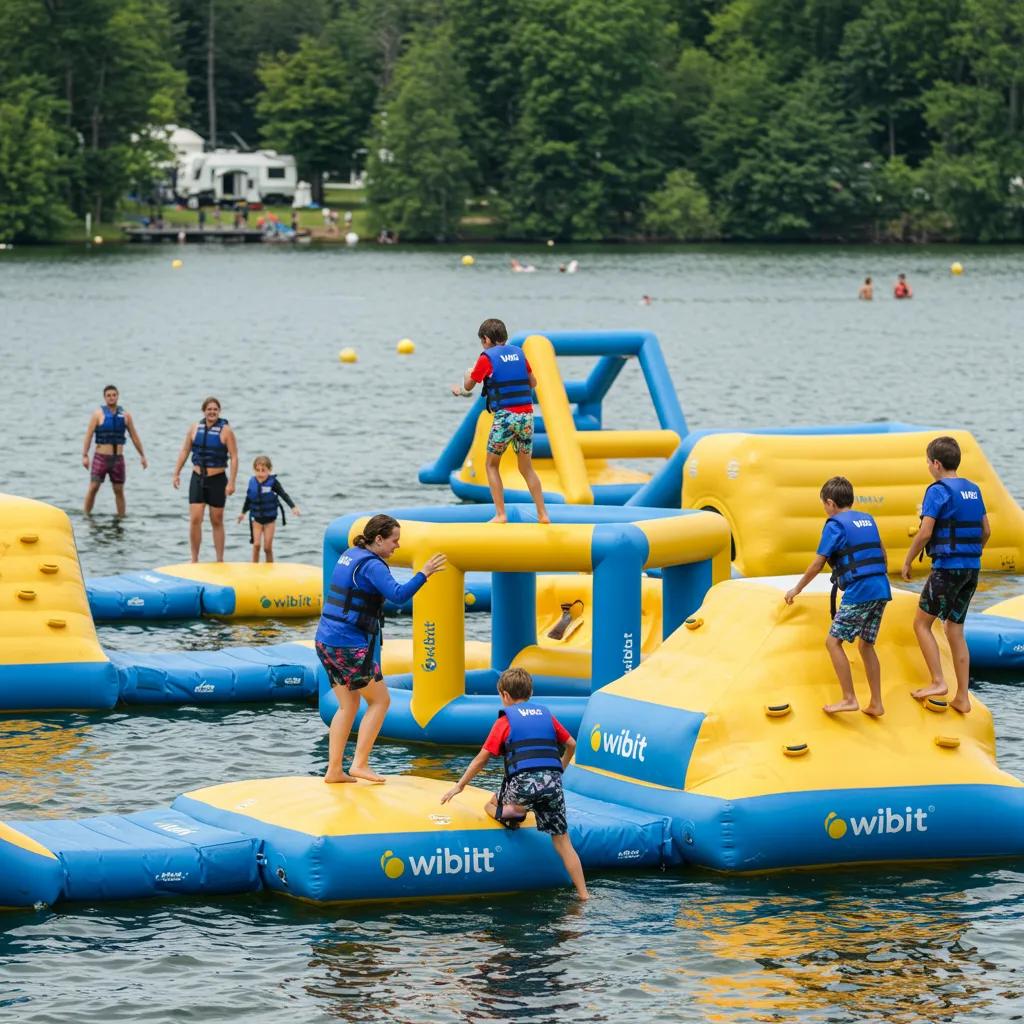
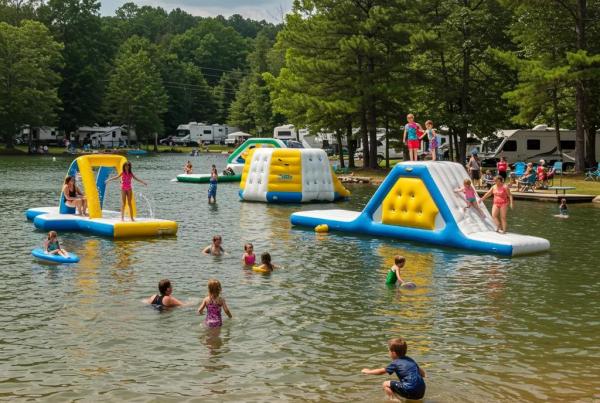
A Wibit water park is an inflatable obstacle course on water that creates dynamic play for older children and adults, boosting confidence and cooperative play. The mechanism is straightforward: modular floating elements form a climbing, sliding, and balance challenge that rewards teamwork and repeated attempts, which strengthens family engagement through playful competition. Safety relies on lifejackets, close supervision, and age-appropriate rules to prevent collisions and ensure gradual skill building, and these precautions make Wibit attractions suitable for supervised family sessions. Families often pair short Wibit rotations with calmer lake time so younger kids have alternatives while older siblings use the course.
What Are the Benefits of Shiawassee River Float Trips for Campers?
Shiawassee River float trips combine gentle current travel with scenic views, offering families a low-effort outdoor activity that encourages conversation and nature observation. Providers like Cheff’s Canoe Rental make logistics simpler by supplying boats and equipment, which reduces packing burdens and lets families focus on safety and fun. Typical floats emphasize relaxed pacing, wildlife watching, and the shared rhythm of paddling or drifting, which supports multi-generational bonding and photo opportunities. Practical tips include wearing lifejackets, bringing sun protection, and packing water-resistant essentials to keep the trip comfortable.
Intro to the water-activity comparison table: the following table helps families compare Wibit, river floats, and lake swimming by suitability and booking needs.
After exploring water options, families planning a stay should note on-site features that simplify participation: Walnut Hills Family Campground in Durand, Michigan, lists a Wibit water park, a swimming lake with beach, and Shiawassee River float access with Cheff’s Canoe Rental as a provider. These amenities reduce planning friction and allow families to reserve activity windows when booking campground stays or online reservations.
What Land-Based Recreation Activities Are Popular at Seasonal Campgrounds?
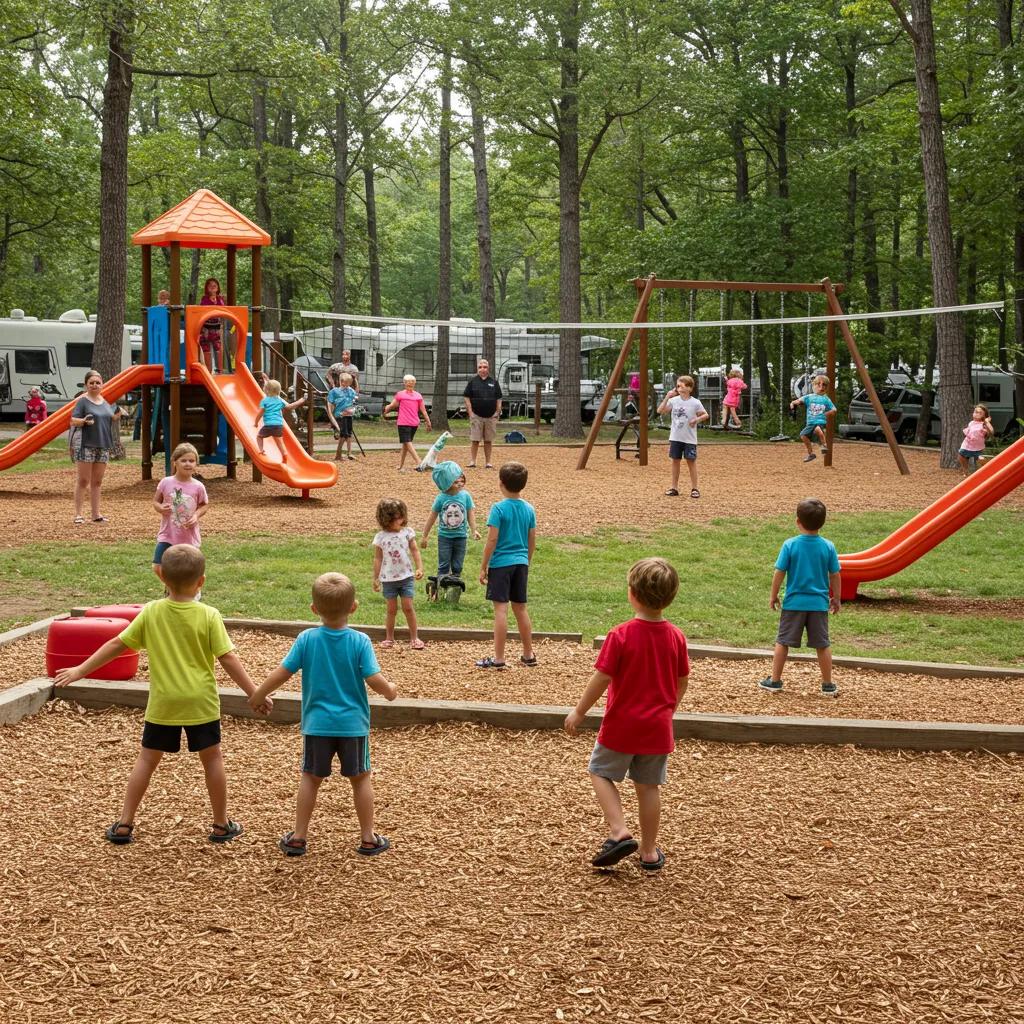
Land-based recreation at seasonal campgrounds often centers on inclusive, low-equipment games and play areas that provide active breaks from water-based days and accommodate different stamina levels. Such activities work because they require minimal setup, encourage turn-taking, and create casual competitive formats that younger and older family members can enjoy together. Benefits include gross-motor development for children, social play skills, and opportunities for family tournaments that add structure to a camping weekend. Knowing which facilities are available and how to adapt rules helps families plan meaningful play sessions that respect rest and meals.
Typical campground land amenities support varied family play and activity flow.
- Playgrounds and gaga ball pits: Ideal for short, energetic sessions that engage multiple kids.
- Sports courts and lawn games: Provide structure for mixed-age matches in volleyball, basketball, or cornhole.
- Nature trails and exploration areas: Offer quieter options for learning and discovery.
Which Playground and Gaga Ball Activities Are Best for Kids?
Playgrounds and gaga ball pits give children safe spaces to burn energy and develop social rules such as turn-taking and fair play, providing both physical and social benefits. Gaga ball is played in an enclosed pit where players strike a soft ball with open hands, aiming to eliminate opponents; the simple rules make it accessible and competitive for mixed age groups. Safety includes soft surfaces, age-appropriate grouping, and supervision to reduce collisions, which ensures younger children can participate in adapted formats. Rotating short play sessions with quieter activities helps maintain enthusiasm and reduces arguments about turns.
What Sports Courts and Lawn Games Can Families Play Together?
Sports courts like sand volleyball and basketball, plus lawn games such as cornhole and bocce, enable families to organize quick matches or mini-tournaments that accommodate varied skills and ages. Simple formats — for example, rotating teams or point caps — keep games moving and inclusive, while equipment portability allows spontaneous play near campsites. Families benefit from mixed-ability rules that prioritize fun over strict scoring and from scheduling short matches to preserve energy for other activities. Bringing basic gear and establishing safety zones prevents interference with nearby campsites and supports respectful shared use.
How Do Dog Parks and Pet-Friendly Activities Enhance the Camping Experience?
On-site dog parks and pet-friendly areas let families include four-legged members in the trip while providing controlled spaces for exercise and socialization that reduce strain on owners. Pet policies typically emphasize leash use, waste cleanup, and designated play zones to maintain safety and courtesy for all guests, and these practices protect wildlife and maintain cleanliness. Owners should bring water, shade options, and familiar toys to ease dogs into the campground environment and plan short activities like scent walks or fetch sessions. Integrating pet time into daily schedules keeps dogs settled and makes family outings more relaxed for everyone.
After describing land recreation, consider on-site facilities that make these options practical: Walnut Hills Family Campground features multiple playgrounds, a gaga ball pit, sports courts including sand volleyball and basketball, and a dog park that supports pet-friendly camping activities and family play.
How Do Seasonal Campground Events Create Memorable Family Experiences?
Seasonal campground events create memorable family experiences by bundling activities, themed entertainment, and social moments that appeal across ages and reinforce community. The mechanism is predictable scheduling of themed weekends, crafts, and group games that let families plan around signature events, increasing the chance of shared memories and repeat visits. Events also provide low-barrier opportunities for families new to camping to connect with neighbors and structured activities that reduce planning fatigue. Knowing event types and timing helps families choose dates that match desired experiences and prepare supplies or reservations.
Event programming varies by campground but commonly follows repeatable weekend formats designed for family engagement.
- Themed weekends: Seasonal celebrations, costume days, and sport tournaments.
- Crafts and kids’ activities: Short workshops like tie-dye or nature crafts.
- Evening gatherings: Campfire s’mores, story hours, and music nights.
What Family-Friendly Weekend Themed Events Are Offered?
Typical family-friendly weekend themed events include seasonal festivals, holiday celebrations, and friendly competitions that invite participation from all ages and create photo-ready memories. Themes often map to local seasons — such as summer splash weekends or harvest festivals in fall — and include structured activities like parades, scavenger hunts, and family relay races that scale by age group. Arriving early, registering for limited-capacity contests, and checking event calendars helps families secure spots and plan meal times around activities. Bringing small prizes and team identifiers increases engagement and turns casual events into lasting traditions.
Intro to the events EAV table: the short table below summarizes common event types and logistical notes to help families pick weekends that match their interests.
Which Crafts, Games, and Campfire Activities Engage Kids and Adults?
Crafts, simple games, and campfire activities engage families by offering adaptable complexity that suits preschoolers through adults, enabling shared experiences and teachable moments. Examples include scavenger hunts tailored by age, timed relay games that emphasize teamwork, and campfire programs like guided storytelling and supervised s’mores sessions that include safety briefings. Materials lists are brief — paper, crayons, rope, and marshmallow sticks — and activities can be rotated to prevent fatigue and keep energy steady across a long weekend. Structured evening programs provide natural wind-down periods that help children relax before bedtime and prepare for the next day.
Seasonal events and on-site programming are often highlights that encourage return visits and give families a clear reason to plan around specific weekends.
What Accommodations and Amenities Support Outdoor Activities at Seasonal Campgrounds?
Accommodations and amenities at seasonal campgrounds determine how easily families can access activities, store gear, and maintain comfort during active days, influencing trip satisfaction and repeat bookings. The mechanism is logistical support — hookups, storage, rental providers, and nearby facilities — that lowers friction and lets families spend more time on activities and less on setup. Choosing the right accommodation type aligns with your family’s needs for space, privacy, and proximity to activity zones, and knowing amenity offerings helps decide what to pack versus what to rent or buy on-site. Clarity about site attributes reduces last-minute surprises and ensures daily rhythms remain predictable.
The next table compares common accommodation types to help families match lodging with activity access and needs.
How Do RV and Tent Sites Cater to Family Campers?
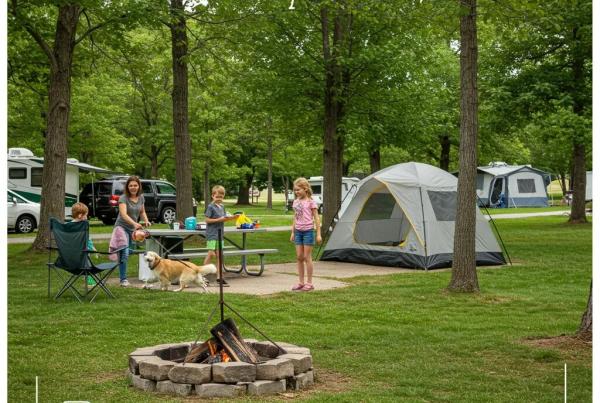
RV and tent sites cater differently: RV sites often provide hookups and built-in sleeping areas that reduce setup time, while tent sites offer closer contact with nature and flexible layouts for kids to play nearby. Families should evaluate proximity to restrooms, play areas, and activity hubs when reserving sites to limit long walks with gear or tired children. Packing and setup tips include creating shaded play zones, bringing modular storage, and planning meals that accommodate post-activity hunger. Reserving early for peak weekends ensures better placement near desired amenities and reduces daily transit time between activities.
What Cabin Rental Options Are Available for Families?
Cabin rentals give families fixed beds and sheltered spaces that simplify meal prep, bedtime routines, and gear storage, making them a strong choice for younger children or multi-generational groups. Cabin features commonly include multiple beds, simple kitchenettes, and private bathrooms, which reduce dependence on shared facilities and shorten transitions between activities. Booking cabins often fills earlier than sites for themed weekends, so families should consider reservation timing and group size when choosing cabins over sites. A cabin can serve as a comfortable home base that balances adventure with predictable routines for children.
Which Campground Amenities Enhance Outdoor Recreation?
Supportive amenities such as a camp store, equipment rentals, restrooms, and laundry reduce packing loads and enable spontaneous participation in activities without returning to town. Equipment rentals and local providers allow families to access canoes, tubes, or other gear without transporting bulky items, lowering cost and logistical barriers. Amenities also contribute to safety and convenience — for example, sunscreen, lifejackets, and basic first-aid supplies can be purchased on-site if forgotten. Knowing which amenities are available ahead of arrival helps families plan what to bring and what to rely on the campground to provide.
Walnut Hills Family Campground offers RV and tent sites as well as cabin rentals, providing families multiple lodging options that support easy access to activities and on-site amenities; guests are encouraged to make online reservations for peak themed weekends.
What Seasonal Outdoor Activities Are Ideal for Michigan Family Campers?
Seasonal outdoor activities in Michigan vary by temperature and foliage, with spring, summer, fall, and limited winter options each offering distinct attractions that align with family priorities. The mechanism is seasonal resource availability: spring brings wildflowers and birding, summer enables swimming and river floats, fall offers leaf-peeping and harvest events, and winter supports low-volume outings and festival weekends where offered. Families benefit from tailoring clothing, gear, and activity pacing to seasonal conditions to maximize comfort and safety. Planning checklists tied to seasons reduce overpacking and ensure children have age-appropriate options that align with weather and event timing.
- Spring/Summer: Focus on Wibit play, river floats, beach days, and outdoor games.
- Fall: Prioritize leaf-peeping, harvest festivals, and shorter hikes.
- Winter: Choose off-season festivals or low-key cabin stays when available.
Which Spring and Summer Activities Are Best for Families in Michigan?
Spring and summer are ideal for active water play, river floats, beach days, and outdoor games that take advantage of warm weather and longer daylight hours. Families should book popular weekends early, especially those with themed programming, and pack sun protection, quick-dry clothing, and water shoes to stay comfortable during mixed activities. Planning alternating high-energy mornings with quieter afternoons prevents burnout and keeps younger children engaged without overstimulation. Reserving activity time or equipment in advance often reduces wait times and lets families coordinate meals and rest more predictably.
What Fall and Winter Activities Offer Unique Camping Experiences?
Fall camping in Michigan highlights leaf color, harvest events, and cooler-weather hikes that are rich in sensory experiences, while winter options may include festival weekends or quiet cabin stays that emphasize indoor crafts and cozy campfire gatherings. Families should layer clothing, bring insulated gear for evening events, and expect shorter daylight windows that affect scheduling for hikes and outdoor games. Off-peak visits can provide more space for nature exploration and lower crowding, though some amenities may be limited, so checking event schedules and amenity availability is important. Fall festivals and harvest-themed weekends often pair well with family-friendly programming and local seasonal foods.
How Can Families Plan Their Camping Trips Around Seasonal Events?
Effective planning aligns booking timelines, packing checklists, and activity priorities with the campground’s event calendar so families can secure spots for favorite themed weekends and minimize last-minute stress. Practical timeline guidance recommends reserving busy summer and holiday weekends several weeks in advance and checking event details for age recommendations and registration needs. A basic packing checklist includes layered clothing, lifejackets or flotation aids for river and lake activities, sunscreen, and simple craft supplies for event participation. To finalize plans, families should monitor the campground’s event schedule and complete online reservations early for weekend themed events to ensure desired placement and participation.
Families interested in themed weekend events and reliable on-site activities may consider Walnut Hills Family Campground in Durand, Michigan; the campground hosts family- and kid-friendly events every weekend and provides online reservations for RV and tent sites as well as cabin rentals, offering reasons to plan visits around seasonal programming and community gatherings.
Frequently Asked Questions
What should families pack for a successful camping trip?
When planning a camping trip, families should create a comprehensive packing list that includes essentials like clothing suitable for varying weather, sleeping bags, cooking gear, and personal items. Additionally, consider packing outdoor games, first-aid supplies, and safety gear such as life jackets for water activities. Don’t forget items for comfort, like portable chairs and blankets, as well as food and snacks that cater to all family members. A well-thought-out packing list can enhance the camping experience and ensure everyone is prepared for fun and safety.
How can families ensure safety during water activities?
Safety during water activities is paramount for families. Always ensure that children wear life jackets, regardless of their swimming ability, and that adults supervise them closely. Familiarize yourself with the specific water conditions and any potential hazards, such as currents or underwater obstacles. It’s also wise to establish clear rules about safe play areas and to communicate these to all family members. Additionally, having a first-aid kit on hand and knowing basic water safety tips can help prevent accidents and ensure a fun experience for everyone.
What are some tips for managing different age groups during camping activities?
Managing different age groups during camping activities requires thoughtful planning and flexibility. Choose activities that can be scaled in difficulty, allowing younger children to participate alongside older siblings. Schedule a mix of high-energy and quieter activities to cater to varying energy levels. Establish a buddy system where older kids can help supervise younger ones, fostering teamwork and responsibility. Lastly, be open to adjusting plans based on the group’s dynamics and interests, ensuring that everyone feels included and engaged throughout the trip.
How can families find the best seasonal campgrounds for their needs?
To find the best seasonal campgrounds, families should consider factors such as location, available amenities, and the types of activities offered. Research campgrounds that cater specifically to families, looking for features like playgrounds, water access, and organized events. Online reviews and campground websites can provide insights into the experiences of other families. Additionally, consider the campground’s proximity to local attractions and natural features that align with your family’s interests, ensuring a well-rounded and enjoyable camping experience.
What are the benefits of participating in campground events?
Participating in campground events offers numerous benefits for families. These events foster community engagement, allowing families to meet and connect with other campers. They often include structured activities that cater to various age groups, ensuring everyone can participate and have fun. Events can also provide unique experiences, such as themed weekends or crafts, that enhance the overall camping experience. Additionally, they help reduce planning fatigue by offering ready-made activities, allowing families to focus on enjoying their time together in nature.
How can families make the most of their time at seasonal campgrounds?
To maximize time at seasonal campgrounds, families should plan a flexible itinerary that balances activities with downtime. Prioritize must-do activities while leaving room for spontaneous fun. Arriving early allows families to settle in and explore the campground before activities begin. Utilize campground amenities, such as rental equipment or organized events, to enhance the experience without the hassle of packing everything. Lastly, encourage open communication among family members to ensure everyone’s interests and energy levels are considered, creating a more enjoyable camping experience for all.
Conclusion
Seasonal campgrounds provide families with diverse outdoor activities that cater to all ages, ensuring memorable experiences through water play, land recreation, and themed events. By understanding the available amenities and planning around seasonal offerings, families can maximize their enjoyment while minimizing stress. Embrace the opportunity to create lasting memories by exploring the unique features of campgrounds like Walnut Hills Family Campground. Start planning your next family adventure today!