

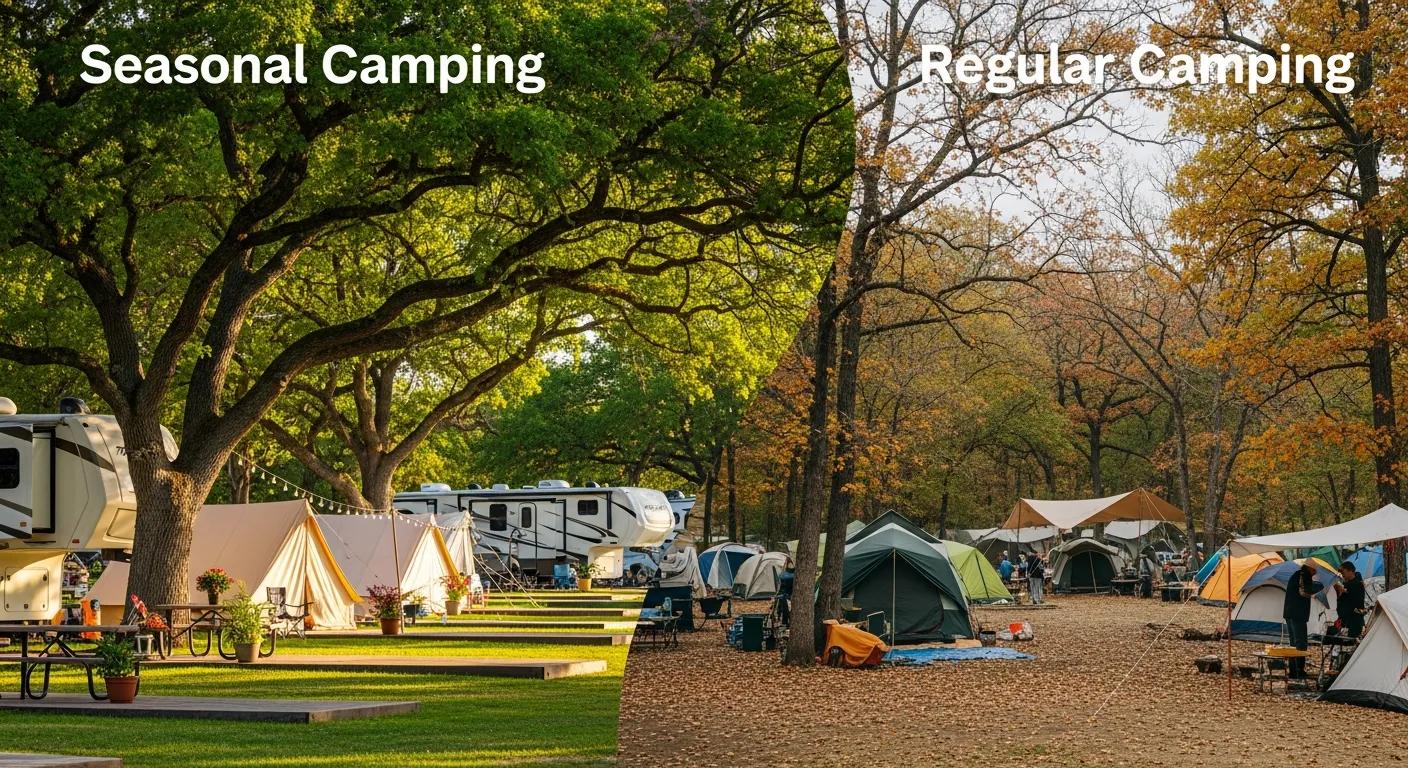
Seasonal vs Regular Camping: The Oaks
Seasonal and regular (transient) camping set up very different experiences for RV owners and families. This guide lays out the practical differences — site size, utility hookups, personalization rules, and community life — so you can pick the option that fits your needs. Those distinctions matter: from full hookups to whether decks are allowed, facility rules shape daily comfort, travel flexibility, and long‑term value at The Oaks Campground by GatherGrounds. Below we compare facility features, show which amenities each camper type uses most, list the pros and cons, explain how to book, outline typical pricing at The Oaks, and describe how nearby Waterloo State Recreation Area complements both stays. By the end you’ll know which site type fits your lifestyle, what to expect from hookups and layouts, and the steps to reserve a seasonal or regular spot at The Oaks.
What Are the Key Differences Between Seasonal and Regular Camping Sites?
The main differences come down to intended length of stay, how permanent the site can be, and the level of services on site. Seasonal sites are built for extended stays and usually allow more personalization, bigger pads, and reliable full hookups — all of which support long‑term living. Regular (transient) sites are designed for turnover: smaller footprints, easier reservations, and flexibility for nightly or weekly stays. Those structural and service differences influence how you’ll use appliances, store gear, and connect with neighbors — and they help you decide whether you want a steady community or the freedom to travel.
- Seasonal sites support longer stays and often include larger pads, permitted decks, and full hookups.
- Regular camping spots focus on short‑term convenience, compact footprints, and flexible reservation windows.
- Utility access and personalization rules are the operational details that most affect cost and lifestyle.
Below is a straightforward side‑by‑side table that highlights technical attributes planners and RV owners care about.
The following table highlights specific site technical differences for planners and RV owners.
This matrix shows how site design and services shape everyday living at each site type. Next we dig into pad sizes and hookup details so you know what to expect on arrival.
How Do Site Sizes and Layouts Compare for Seasonal and Regular Sites?
Site size and layout affect privacy, storage, and how much you can personalize your space. Seasonal sites usually offer larger footprints — bigger gravel or concrete pads, extra landscaping, and room for small storage sheds or decks where rules allow — so they feel more like an extension of your home. Transient sites are deliberately compact to maximize campground capacity and speed up turnover, generally offering a paved or graveled pad and a modest picnic area. That difference influences privacy and noise: seasonal parcels tend to give you more separation and mature plantings that soften sightlines.
Before you commit, measure your rig and think about how you want to use the outdoor area. If you want extra outdoor living features, a seasonal site supports that; if you prefer mobility and quick setup, a transient pad is easier to work with. Check campground rules to confirm what’s allowed at your chosen site.
What Utility Hookups Are Available in Seasonal Vs Regular Camping?
Hookups are a big factor in the seasonal vs regular decision because they determine daily comfort and what appliances you can run reliably. Seasonal sites more often include full hookups — water, 30/50 amp electric, and sewer or dedicated dump access — so you can operate HVAC, washers, and kitchen appliances without constant management. Regular sites vary: some transient spots have full hookups, many offer only electric and water, and primitive sites have no direct utilities and rely on shared dump stations and potable taps. Metering and billing also differ: seasonal agreements often bundle utilities or use stable metering, while transient stays usually include hookups in the nightly rate or apply a utility surcharge.
If you want a low‑maintenance, home‑like setup, full‑hookup seasonal sites make extended stays much easier. If you value travel freedom and lower short‑term cost, you may accept fewer hookups in exchange for mobility.
With that context, let’s look at how The Oaks matches amenities to seasonal and transient campers.
What Amenities and Facilities Does The Oaks Campground Offer for Each Camping Type?
Amenity choices shape which camping style makes sense. The Oaks Campground by GatherGrounds spans about 160 acres next to Waterloo State Recreation Area and features full hookup sites, a swimming lake with a sandy beach, a large fishing pond, more than 120 acres of golf‑cart riding trails, playgrounds, pavilions, a camp store, weekend events, and family activities. A Wibit water park is planned for 2025. Those amenities support both long‑term residents and short‑stay guests — and how you plan to use them will influence whether seasonal or transient camping is the better fit. Below is a practical inventory and a quick map showing which camper types typically use each amenity and why.
The Oaks maps amenities to camper types as follows:
That table separates built infrastructure from programming and shows how each asset supports seasonal value or transient enjoyment. With full hookups and family programming, The Oaks works well for people who want community and comfort — and it still serves weekenders and travelers who want easy access to recreation.
- The Oaks offers full hookup sites, a swimming lake with a sandy beach, and a large fishing pond for both seasonal and transient guests.
- Recreation includes over 120 acres of golf‑cart riding trails, playgrounds, pavilions, a camp store, and family weekend events.
- The planned Wibit water park (2025) is likely to increase family demand and affect booking patterns for both seasonal and regular stays.
Seasonal campers gain daily convenience and steady access to events; regular campers get concentrated recreational access during short stays. The Oaks accepts reservations for both seasonal and regular sites — check availability and policies before planning long‑term occupancy.
How Do Full Hookup Sites Enhance Seasonal Camping Experiences?
Full hookups change daily life at a seasonal site. With steady water, 30/50 amp electric service, and sewer access, you can run climate control, full kitchen appliances, and even laundry without constant trips to a dump station. That reliability reduces setup and teardown time and makes it practical to add outdoor furniture or small structures where allowed. Less logistical overhead means more time for socializing, hosting family, and enjoying campground events.
Because full hookups let you live much closer to “home” while on site, many RV owners pick seasonal spots specifically for that comfort — as long as the price and commitment make sense for their lifestyle.
What Family-Friendly Activities and Amenities Are Accessible to All Campers?
Shared amenities and programs give families reasons to return — and make it easy for newcomers to join in. Playgrounds and pavilions host gatherings; weekend events create chances to meet neighbors; the swimming lake and fishing pond offer low‑barrier outdoor fun; and the camp store covers last‑minute needs. Trails and open spaces are safe for family bike rides and golf‑cart outings. Because these resources are open to both seasonal and transient guests, families can expect similar activities whether they stay one night or the whole season.
Those shared resources broaden The Oaks’ appeal and make it simple for new guests to plug into community life while giving seasonal residents a steady stream of programming and visits from friends and family.
What Are the Benefits and Drawbacks of Seasonal Camping Compared to Regular Camping?
Picking between seasonal and regular camping comes down to a few clear trade‑offs: convenience and community versus flexibility and variety. Seasonal camping reduces packing and setup, builds stronger social ties, and supports a home‑like setup. Regular camping keeps costs and commitments low and lets you move from place to place. Below are short pros and cons lists to help you decide quickly.
Seasonal camping offers several advantages:
- Long‑term convenience: a consistent setup that cuts down on packing and setup time.
- Community and events: steady neighbor relationships and campground programming.
- Home‑like utilities: full hookups and permissible personalization for comfortable living.
Regular camping provides clear benefits:
- Flexibility: freedom to travel and change locations without a long contract.
- Lower short‑term cost: avoid season‑long fees if you only visit occasionally.
- Variety: sample different parks and landscapes on each trip.
TL;DR: Choose seasonal sites for convenience, community, and home‑like living; choose regular camping for flexibility, lower commitment, and variety. That trade‑off leads into how seasonal community life feels and what travel options transient camping keeps open.
How Does Seasonal Camping Provide Convenience and Community?
Seasonal convenience comes from a stable setup and reliable utilities so you can treat the site like a second home. With less repetitive packing, seasonal residents save time and can keep small amounts of gear on site where allowed. Community grows naturally: neighbors form routines, host gatherings, and participate in campground events that build lasting relationships. That social fabric supports shared childcare, activity swaps, and informal maintenance of shared spaces — all of which deepen the feeling of belonging.
For families and retirees who value predictability and connections, seasonal camping often feels more rewarding than short stays. Familiarity encourages personalization and makes it easier to host extended visitors.
What Flexibility and Travel Opportunities Do Regular Camping Sites Offer?
Regular (transient) camping maximizes mobility. Short stays let you explore different regions, chase events or seasons, and change plans without being tied to a long contract. Transient campers skip long‑term storage and occupancy responsibilities, cutting administrative overhead and upfront costs. If you prefer varied scenery and new experiences, transient camping delivers the freedom to roam.
Because transient stays focus on exploration and low commitment, they remain the best choice for travelers who value variety over a single campground home base.
How Does The Oaks Campground Support Booking and Planning for Seasonal and Regular Sites?
The Oaks offers clear booking paths for both seasonal applicants and transient guests. Seasonal reservations usually start with an inquiry, site selection, a deposit and contract, and adherence to set season dates and occupancy rules — all to secure your spot for the season. Regular bookings are handled by nightly or weekly reservations with standard check‑in/check‑out times. Below is a simple step‑by‑step process to help both seasonal and transient campers plan.
- Send an initial inquiry with your desired dates and site type to check availability.
- Pick a site from available options and review site‑specific utilities and rules.
- Submit required deposit or payment and complete the seasonal contract or nightly booking.
- Confirm check‑in/check‑out procedures and review campground policies for arrivals and departures.
Following these steps reduces surprises when you arrive. The Oaks manages both seasonal and transient bookings and recommends confirming availability well before peak dates.
What Is the Reservation Process for Seasonal Camping Sites?
Reserving a seasonal site usually starts with an inquiry or site tour, followed by a deposit and a contract that spells out season dates and occupancy rules. Expect to provide desired season dates, discuss allowed personalization and utility arrangements, and sign an agreement that details payments and responsibilities. Deposits typically hold the site while final payment schedules and season start/end dates are confirmed. Because seasonal slots are limited and demand may rise as new amenities appear, early planning and clear communication with staff improve your chances of getting a preferred pad.
Reading the contract carefully and confirming which utilities and amenities are included helps avoid misunderstandings and makes the move‑in smooth.
What Should Campers Expect When Booking Regular Camping Spots?
When booking nightly or weekly sites, expect flexible reservations, clear check‑in/check‑out times, and a range of site classes offering different hookups and space. Transient guests should bring essentials — ID, reservation confirmation, power cord adapters, water hoses, and standard campsite gear — to simplify arrival. Reserve early for holidays and popular summer weekends; midweek stays usually offer more availability and lower rates. Review site details like amperage, pad size, and distance to facilities so you pick a spot that fits your rig and needs.
Being prepared shortens setup time and helps you get the most out of a short stay.
How Do Costs and Pricing Models Compare Between Seasonal and Regular Camping at The Oaks?
Seasonal and regular pricing differ by duration, inclusions, and expected use. Seasonal rates typically cover a multi‑month period and may bundle full hookups, event access, and storage privileges for a predictable seasonal expense. Nightly and weekly rates are optimized for short stays and are usually cheaper if you visit infrequently. The table below outlines typical pricing attributes to help you match the model to your budget and usage.
Value comes down to how often you use the site. Seasonal sites often lower your per‑night cost if you visit frequently and add convenience; regular rates avoid long commitments and are usually cheaper for occasional stays. At The Oaks, the mix of full hookups and family amenities makes seasonal occupancy attractive for frequent visitors, while weekenders and travelers will find transient rates that match short‑term needs.
What Are the Seasonal Camping Rates and Value Propositions?
Seasonal pricing reflects reserved occupancy and bundled services, which can be a strong value for campers who visit repeatedly throughout the season and need stable utilities. Included perks often go beyond hookups — event access and proximity to recreation can multiply the practical value for families and long‑stay residents. Run the numbers: total nights you expect to use the site versus the season rate to see where the break‑even point lies. For many who plan frequent weekends or extended stays, seasonal occupancy delivers both savings and convenience.
Balancing cost and lifestyle will help you decide if the upfront seasonal commitment pays off for your plans.
How Do Daily and Weekly Rates for Regular Camping Compare?
Daily and weekly rates prioritize flexibility. Nightly pricing lets you pick dates and locations without long‑term financial commitment, and weekly discounts often apply for extended short stays. Transient campers should watch for off‑peak rates and midweek specials to maximize value. Compare the total nights you expect to use a site in a season against seasonal pricing to determine which model saves you money. For low‑frequency campers, strategic transient bookings — switching locations or using off‑peak periods — can be more economical.
Use this cost framework to match your travel rhythm and amenity needs to the right pricing model.
How Does Proximity to Waterloo State Recreation Area Enhance Camping Experiences?
Being next to public recreation expands what you can do beyond the campground, and The Oaks’ adjacency to Waterloo State Recreation Area is a major advantage. Waterloo’s trail systems, lakes, and birding habitats pair naturally with The Oaks’ on‑site features, letting you plan day trips for hiking, fishing, or wildlife viewing. Short drives to trailheads and water access make spontaneous outings easy and widen your activity choices during a stay. Below are common nearby activities and sample ways to combine campground time with regional exploration.
- Hiking and trail rides in Waterloo offer varied terrain for families and seasoned outdoor enthusiasts.
- Fishing and lakeside day trips complement The Oaks’ pond and swimming lake for multi‑site outings.
- Birdwatching, seasonal wildflower viewing, and scenic drives are close by and add nature‑focused options.
Those nearby resources make The Oaks a great basecamp for campers who want campground comforts plus broader outdoor options.
What Outdoor Activities Are Available Near The Oaks Campground?
Waterloo State Recreation Area gives you hiking, multi‑use riding trails, lakes for paddling and fishing, and rich wildlife habitat — all of which extend recreation beyond The Oaks. Typical day plans include a morning trail ride and an afternoon at the campground beach, or an angler’s day that pairs fishing at the nearby pond with evening casting at surrounding waterways. Seasonal highlights — spring migrations, summer trail conditions, or fall foliage — influence the best activities at different times of year. Combining on‑site and nearby options makes the most of both resources.
These choices help you balance quiet campsite time with regional exploration.
How Will the Planned Wibit Water Park Impact Seasonal and Regular Campers?
The planned Wibit water park (2025) will likely increase family interest and shift reservation patterns as guests seek water‑park access. For seasonal campers, the park will add entertainment value to long‑term stays; for transient visitors, weekends tied to water‑park use may become more popular. Expect higher competition during peak season and for weekend dates after the park opens — early booking will become more important for both seasonal applicants and short‑stay guests. Keep an eye on announcements and adjust plans early to secure the dates and site types you want.
As amenities change, understanding demand shifts will help you time reservations and choose the site type that gives you the access you want.
Frequently Asked Questions
1. What should I consider when choosing between seasonal and regular camping?
Consider how often you’ll camp, your budget, and the lifestyle you want. Seasonal camping gives you stability, community, and everyday convenience — good for families or people wanting a second home. Regular camping gives flexibility, lower short‑term cost, and the freedom to travel. Think about nights per season, which amenities you use most, and whether you prefer a consistent community or exploring different parks.
2. Are there any restrictions on personalization for seasonal camping sites?
Yes. Many parks allow some personalization — decks, landscaping, small storage — but these changes must follow campground rules. Check The Oaks’ specific guidelines on permitted structures and improvements so you stay compliant and avoid surprises.
3. How can I maximize my experience at The Oaks Campground?
Plan around the amenities you care about: enjoy the swimming lake, fishing pond, and golf‑cart trails; join weekend events to meet neighbors; and use the camp store for essentials. If you prefer quieter visits, aim for off‑peak times. Explore nearby Waterloo State Recreation Area for hiking and wildlife viewing to round out your trip.
4. What are the typical costs associated with seasonal camping at The Oaks?
Seasonal costs usually come as a flat fee for the season and may include utilities, amenity access, and event participation. While the upfront cost can be higher than a single night, it often becomes more economical if you visit frequently. Ask about any extra fees for personalization or specific services so you have the full cost picture.
5. How does the planned Wibit water park affect future bookings?
The Wibit water park, planned for 2025, is expected to raise demand for both seasonal and regular stays. Families may book around water‑park dates, increasing competition during peak times. To secure preferred sites, book early and follow updates about the park and any related events.
6. What types of outdoor activities can I enjoy near The Oaks Campground?
Near The Oaks you can hike, fish, birdwatch, bike, and paddle in Waterloo State Recreation Area. The region has extensive trails and lakes, plus seasonal highlights like spring migrations and fall colors. These activities make the area appealing to nature lovers and active families year‑round.
7. Can I bring my pets to The Oaks Campground?
Many campgrounds, including The Oaks, allow pets, but policies vary. Rules may cover leash requirements, designated pet areas, and potential fees. Check The Oaks’ pet policy ahead of your visit so you and your pets have a smooth stay and follow campground guidelines.
Conclusion
Choosing between seasonal and regular camping at The Oaks comes down to how you want to spend your time. Seasonal sites offer daily convenience, community, and home‑like amenities; regular sites give you flexibility, lower commitment, and the chance to explore. Use the comparisons above to match your budget, travel habits, and lifestyle to the right option — then start planning your next visit to The Oaks.